


Factory sound systems often leave vehicle owners frustrated by muffled vocals, flat acoustics, and muddy mid-bass frequencies that seem trapped down in the footwells. Upgrading factory sound usually prompts listeners to ask what are component speakers and how they differ from standard drop-in replacements. Unlike basic all-in-one drivers, a component setup physically separates the audio spectrum into dedicated drivers designed specifically for individual frequency ranges. Listeners exploring dedicated component audio sets quickly discover that distributing high notes and midrange signals creates an immediate improvement in sonic depth and vocal articulation. This architectural difference allows each audio element to operate within its ideal acoustic comfort zone.
A standard component package splits sound between a standalone woofer, an independent tweeter, and an external passive crossover network that directs frequencies where they belong. This physical separation allows drivers to mount in optimal acoustic locations throughout a vehicle cabin, elevating the soundstage toward ear level rather than burying clear dialogue near the floorboards. High-frequency sounds travel directionally, so positioning tweeters on the upper dash or A-pillars dramatically clarifies percussion, vocals, and acoustic instruments. While installing these multi-part packages requires more planning than dropping in basic speakers, the resulting sonic staging and tonal balance represent the gold standard for custom mobile audio upgrades.
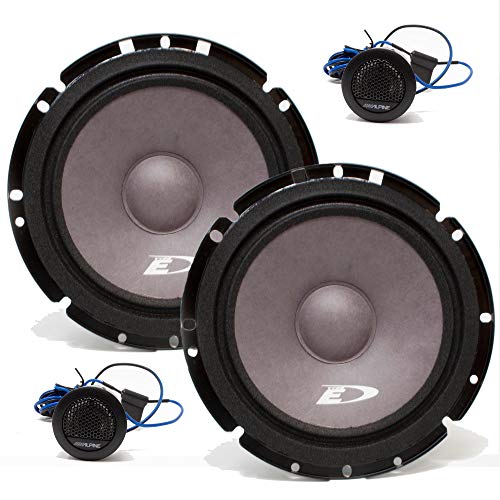
Pros
- Impressive 45W RMS power for distortion-free volume
- Wide 60Hz-20kHz response captures detailed highs and solid lows
- Component setup allows optimal tweeter placement for better imaging
- High 4.8-star rating signals top-tier quality
- Affordable path to premium car audio performance
Cons
- 60Hz low-end limits deepest bass without a subwoofer
- Requires installation tools and wiring for full setup
- Best with an external amp to unlock maximum potential
The Alpine SXE-1751S is a 6.5-inch 2-way component speaker system designed for car audio enthusiasts looking to elevate their in-vehicle sound. With 45W RMS and 280W peak power, plus a 60Hz-20kHz frequency response, it replaces lackluster factory speakers with superior clarity and dynamics.
Perfect for daily commuters, weekend road trippers, and entry-level audiophiles, these speakers shine in sedans, trucks, and SUVs. The separate woofers and tweeters allow flexible mounting for optimized sound staging, making your dashboard feel like a stage.
In real-world drives, expect punchy mids for podcasts and vocals, bright highs for rock tracks, and enough low-end punch for highways. Paired with a decent head unit, they handle cruising volumes effortlessly without fatigue.
Verdict: A budget-friendly powerhouse that punches above its weight, delivering pro-level car audio for under $50. Essential upgrade if your stock speakers sound flat.
Bass response kicks in at 60Hz for solid thump on bass-heavy tracks, though it pairs best with a sub for ultimate rumble. Mids are forward and detailed, ensuring vocals cut through traffic noise on commutes.
Highs sparkle up to 20kHz, revealing nuances in guitars and cymbals during spirited drives. 45W RMS power keeps everything clean even at highway speeds, with 280W peaks handling sudden bursts.
Wired component design offers rock-solid connection stability over Bluetooth, with wide dispersion for full cabin fill. Volume scales smoothly for quiet talks or party-level blasts.
Sleek black cones and grilles blend into any dashboard or door panel, with 6.5-inch woofers fitting standard cutouts. Separate tweeters mount flexibly for aimed sound, enhancing stage presence.
Built tough for car vibrations and temperature swings, these speakers endure daily use without rattling. 4-ohm impedance matches most vehicles for plug-and-play power draw.
As a wired car system, no batteries needed; it thrives on your head unit or amp power for unlimited runtime on drives. Lightweight design simplifies DIY installs without added bulk.

Pros
- Superior heat dissipation in oversized tweeter voice coils for reliable highs
- Strong magnetic field ensures efficient power use and loud output
- High-temp adhesive coupling prevents cone separation during intense use
- One-year warranty backs quality for peace of mind
- Versatile adjustments optimize sound for personal listening preferences
Cons
- Requires professional installation for optimal fit and wiring
- Sized specifically for 6.5-inch locations, limiting universal use
- Lacks built-in amplifier, needing external power source
The RECOIL REM65 Echo Series is a 6.5-inch component speaker system designed for car audio upgrades, replacing lackluster factory speakers with pro-level performance. It pairs two woofers and tweeters, handling 200 watts peak power for pairs, making it a smart pick for drivers wanting richer sound without breaking the bank.
Targeted at everyday commuters, weekend road trippers, and entry-level audiophiles, these speakers shine in sedans, trucks, and SUVs. The lightweight polypropylene cones and butyl rubber surrounds deliver responsive mids and impactful bass, while silk dome tweeters ensure smooth highs that stay clear even on highways.
In real-world use, expect enhanced clarity during podcasts, punchier beats in rock tracks, and fatigue-free listening on cross-country drives. The triple-level tweeter adjustment lets you fine-tune for dash placement or personal taste, compensating for imperfect installs.
Verdict: A top budget upgrade that punches above its weight, transforming dull car audio into an immersive experience backed by a one-year warranty.
Bass response hits deep in the mid-bass range thanks to durable butyl surrounds and poly cones, providing thump for hip-hop and rock without muddiness. Midrange is fast and detailed, pulling vocals forward in country tunes or podcasts for natural clarity on the go.
Highs from silk soft-dome tweeters are smooth and extended, avoiding harshness at high volumes. With 100W RMS per pair, it pushes loud without distortion, ideal for open-road cruising or crowded tailgates with windows down.
Triple volume controls on tweeters allow precise balancing, ensuring stable performance regardless of speaker angle. Power handling supports amps up to 200W peak, rewarding upgrades with car-filling energy.
Built rugged for car environments, the thermal-formed cones and high-temp adhesives endure vibrations and power surges. Butyl rubber surrounds add longevity, resisting separation in daily drives or spirited sessions.
Compact ferrite magnets create a potent field while fitting tight spaces in doors or dashes. Tweeter mounts offer flush or surface options with unmatched flexibility for custom installs.
No battery required; draws clean power from your car's system for unlimited runtime. Weighs light for easy handling during swaps, with a one-year warranty ensuring reliability on American roads.

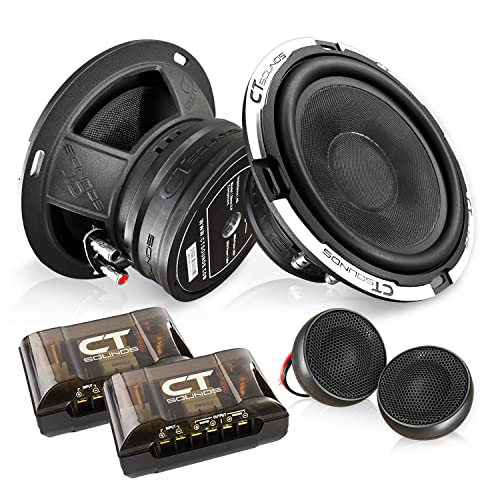

Pros
- Noticeable improvement in vocal clarity and volume over stock paper car speakers
- Easy to power efficiently directly from factory dashboard receivers
- Durable polypropylene cone construction resists moisture and temperature fluctuations
- Compact coaxial layout fits cleanly behind most OEM vehicle grilles
Cons
- Lacks deep sub-bass frequencies, requiring an external subwoofer for low-end rumble
- High volumes can cause distortion if pushed beyond the 50W RMS limit without a high-pass filter
- May require vehicle-specific mounting brackets or wire harness adapters depending on the car make and model
The ORION Cobalt CT-CK655 6.5-inch 2-way coaxial speaker set is designed for drivers looking to replace tired factory car audio without the complexity of component systems. Factory car speakers frequently feature fragile paper cones that deteriorate under seasonal temperature changes, leaving drivers with muffled dialogue and muddy music. This matched pair serves as a reliable replacement, engineered to restore high-frequency detail and midrange clarity right out of the box.
On the road, the CT-CK655 demonstrates Orion's automotive audio experience by providing an energetic and open sound. The polypropylene injection cone offers tight, responsive midbass, making rhythm sections and acoustic guitars feel lively. Podcast dialogue and vocal tracks cut through highway wind noise cleanly, aided by the elevated dispersion of the integrated half-inch Mylar dome tweeter. The overall output is vibrant, making daily commutes much more engaging.
With a continuous power rating of 50 Watts RMS and a maximum threshold of 450 Watts, these 4-ohm speakers are efficient enough to run directly off an OEM car stereo. However, they also respond nicely to small aftermarket amplifiers, which allow them to project louder with minimal effort. This flexibility makes them a practical choice whether you are performing a quick repair or beginning a multi-stage audio overhaul.
For automotive DIY enthusiasts, the ORION Cobalt CT-CK655 provides solid sound quality without breaking the bank. While serious bass lovers will still want a dedicated subwoofer to handle the lowest octaves, this coaxial set accomplishes its primary mission: delivering crisp, reliable, and musical sound for vehicle door speaker locations.
Acoustically, the Cobalt CT-CK655 is tuned to project clearly over vehicle ambient noise. The 1/2-inch Neodymium Mylar dome tweeter delivers bright, energetic treble, adding sparkle to cymbals, brass, and upper vocal registers. The polypropylene cone provides a well-defined midrange, ensuring that vocals remain centered and intelligible rather than getting swallowed by the vehicle cabin acoustics.
In terms of low-end response, the 6.5-inch woofer supplies punchy, rhythmic upper-bass and midbass rather than window-shaking sub-bass. Setting a high-pass filter on your receiver will allow these speakers to play noticeably louder and cleaner by relieving them of sub-60Hz frequencies. This results in an organized, wide soundstage that brings balanced stereo imaging to standard passenger compartments.
Automotive door panels present challenging conditions, including direct sun, freezing temperatures, and condensation. Orion addresses this by crafting the CT-CK655 with an injection-molded polypropylene cone and a resilient surround that resist environmental wear. The central tweeter housing is powered by a compact neodymium magnet, keeping the overall assembly lightweight while minimizing protrusion behind OEM speaker grilles.
With a nominal impedance of 4 Ohms and a standard 6.5-inch diameter, these speakers align with the most common automotive cutouts in cars, trucks, and SUVs. Standard terminal tabs make manual wiring or harness connection straightforward for home mechanics. Their 50W RMS capability ensures long-term thermal reliability when driven by standard head unit amplification.

Pros
- Rich bass and detailed highs from 2-way component design
- High power handling up to 280W peak without distortion
- Simple installation with marked connections and versatile tweeter
- Durable polypropylene cone and Butyl surround for longevity
- Efficient 4-ohm impedance pairs well with most car stereos
Cons
- External crossover adds a minor step to installation
- Bass rolls off below 70Hz, best with subwoofer for deepest lows
- Requires amplifier to reach full 70W RMS potential
The ORION CB65C is a pair of 6.5-inch 2-way component car speakers from the Cobalt Series, featuring a dedicated woofer, silk dome tweeter, and external passive crossover for superior sound separation. Perfect for American drivers tired of weak factory audio, these speakers upgrade sedans, trucks, or SUVs with full-range performance.
Designed for DIY enthusiasts, the CB65C installs quickly in most vehicles thanks to universal mounting and flexible tweeter options like surface or flush mounting. In real-world use, they deliver powerful audio during long highway drives or city traffic, with enhanced bass that fills the cabin without muddiness.
While best paired with an amp for maximum output, they shine on stock head units too, offering 88dB sensitivity for loud, clear playback. Overall verdict: A top budget pick for car audio upgrades that punches above its weight in clarity and power.
Expect enhanced bass from the 6.5-inch polypropylene woofer starting at 70Hz, paired with crisp highs up to 20kHz from the 1-inch silk dome tweeter. The 2-way design and external crossover provide balanced vocals and instruments, making podcasts sharp and music dynamic during drives.
With 280W peak and 70W RMS power handling at 4 ohms, these speakers push high volumes without distortion, ideal for open-road cruising. The 88dB sensitivity ensures efficient performance from factory stereos, delivering room-filling sound in your vehicle's cabin.
Built tough with a Butyl rubber surround and rigid polypropylene cone, the CB65C withstands daily road vibrations and temperature swings common in US climates. No IP rating needed as it's car-mounted, but the premium materials ensure durability for years of use.
Weighing in at a standard size for 6.5-inch components, they fit easily in door panels or rear decks. As car speakers, there's no battery; they draw power directly from your vehicle's system for unlimited playback during drives, with no charging downtime.
The external passive crossover and versatile tweeter mounting add flexibility, suiting various truck or car interiors without bulk.
The Anatomy and Acoustics of Component Speaker Systems
A component speaker system is an audio setup where individual drivers handle distinct slices of the frequency spectrum rather than cramming all elements into a single physical basket. Instead of forcing one driver cone to reproduce low bass notes, complex vocal harmonies, and sparkling cymbal crashes simultaneously, a component package separates these jobs across distinct specialized speakers. A standard two-way kit features independent mid-bass woofers, separate high-frequency tweeters, and dedicated passive crossover units. Understanding this architectural distinction explains why vehicles equipped with dedicated component packages achieve much greater clarity, realism, and spatial balance than standard factory systems.
Defining Component Audio: Separation of Drivers and Frequencies
Acoustic physics dictates that speaker cones must vibrate at specific speeds and amplitudes to reproduce different sound frequencies accurately. Low frequencies require a larger cone surface to push substantial volumes of air, while high frequencies require a tiny, lightweight dome capable of vibrating tens of thousands of times per second. When a single speaker attempts to handle the entire audible spectrum, physical limitations cause acoustic compromises, intermodulation distortion, and muddy transitions. By splitting these duties between dedicated hardware pieces, each driver operates strictly within its ideal mechanical range.
The starkest comparison occurs between component sets and traditional coaxial designs found in factory vehicle locations. Standard coaxial drivers place a small tweeter on a bridge directly suspended over the center of a woofer cone, producing a compact package that drops easily into factory openings. You can contrast this unified approach with compact coaxial car speakers that combine both drivers onto one physical frame for space savings. While coaxial units simplify mounting, the central tweeter post physically obstructs the woofer cone, causing minor phase cancellations and limiting driver orientation inside the door cavity.
Component systems eliminate that mechanical interference by housing the mid-bass woofer and tweeter in completely distinct assemblies. The woofer cone remains completely unobstructed, allowing its full surface area to reproduce warm mid-bass notes and vocal fundamentals without turbulence or acoustic shadowing. Meanwhile, the standalone tweeter can be angled directly toward listeners to preserve delicate upper-frequency details. This separation provides listeners with cleaner instrumentation, natural acoustic separation, and far less listening fatigue during extended drives.
The Essential Role of the Passive Crossover Network
An audio amplifier outputs a full-bandwidth electrical signal containing every frequency from sub-bass rumbles to ultrasonic harmonics. If high-energy low frequencies reach a delicate tweeter voice coil, the driver will quickly overheat, distort, and suffer permanent mechanical damage. Conversely, feeding high frequencies into a large woofer cone results in sluggish response and harsh, muffled acoustic reproduction. The crossover network acts as an intelligent traffic director, splitting that composite signal into safe, tailored frequency pathways before reaching the voice coils.
Most component packages include passive crossover networks built with inductors, capacitors, and internal resistors that filter electrical frequencies without requiring external power. Capacitors naturally block low frequencies while allowing highs to reach the tweeter, functioning as a high-pass filter. At the same time, inductors block harsh high frequencies while sending midrange and mid-bass energy to the main woofer cone through a low-pass filter. Premium sets such as the CT Sounds Meso utilize dedicated 12 dB per octave crossover networks to create steep, clean transition slopes between drivers.
Manufacturers package crossovers in several physical formats depending on installation convenience and acoustic precision. Kits like the Rockford Fosgate Prime R165-S utilize compact in-line crossover modules built directly into the wiring harness, simplifying installation inside tight door cavities. Larger external crossover enclosures, such as those found on the ORION Cobalt Series CB65C, often provide internal circuit protection and cleaner component separation. Certain advanced external crossovers, including the design on the RECOIL REM65, also feature multi-level tweeter attenuation switches that let users trim brightness to compensate for reflective windshield glass or off-axis mounting angles.
Acoustic Staging: Raising the Soundstage from the Floorboards
Human ears localize sounds based on subtle timing differences, phase variations, and frequency intensity arriving at each ear canal. Low-frequency sound waves wrap around physical obstacles easily, making the physical placement of mid-bass woofers relatively forgiving inside a car cabin. High-frequency sound waves, however, behave like narrow light beams that reflect off glass, absorb into fabric seats, and lose clarity when blocked by upholstery or passenger legs. Factory speaker locations placed low in door panels naturally direct critical treble frequencies directly into the driver’s ankle rather than toward the ear.
Component speakers solve this physical dilemma by allowing complete freedom over tweeter placement. Installers can position the main mid-bass woofers in the factory lower door cutouts while mounting the tweeters higher up on the dashboard, A-pillars, or sail panels near the side mirrors. Elevating the high-frequency drivers creates a lifelike soundstage that appears to spread wide across the windshield at eye level. Vocals sound like they originate from a live performer directly ahead of you rather than leaking out of the footwells.
This wide spatial presentation mimics the realistic acoustic staging experienced with dedicated multi-driver stereo loudspeakers in balanced listening rooms. Achieving this acoustic elevation transforms the vehicle interior from a closed, muffled cabin into an open, expansive listening environment. Instruments gain distinct positions across the virtual stage, making guitars sound separated from drums and backup singers. This realistic imaging represents one of the primary reasons audio enthusiasts choose component architectures over standard replacement speakers.
Driver Materials and Construction: Cones, Surrounds, and Domes
The physical materials used to build component drivers directly influence their tonal warmth, transient speed, and long-term environmental durability. Vehicle doors endure extreme thermal swings, intense sun exposure, and moisture ingress from window seals, requiring materials that resist degradation. Polypropylene injection cones, featured on models like the ORION Cobalt CT-CK655 and RECOIL REM65, remain popular because they offer low mass, excellent rigidity, and total moisture resistance. Rockford Fosgate enhances this concept in their Prime series by injecting mica minerals into the polypropylene matrix to further stiffen the cone without adding significant weight.
The flexible ring securing the cone to the outer speaker basket is known as the surround, and its composition determines excursion damping and longevity. Cheap factory speakers often utilize treated paper cones with foam surrounds that dry out, crack, and rot within several years of sun exposure. In contrast, modern component systems employ durable butyl rubber surrounds that maintain flexibility across freezing winters and sweltering summer afternoons. Butyl rubber provides excellent mechanical damping, absorbing unwanted cone vibrations and supporting deeper, punchier mid-bass impacts during aggressive music passages.
Tweeter dome design represents another critical sonic variable, separating smooth acoustic reproduction from sharp, aggressive treble. Silk soft-dome tweeters, such as those found on the CT Sounds Meso and RECOIL REM65, provide natural, warm high-frequency reproduction that reduces ear fatigue over long listening sessions. Mylar balanced domes, used in designs like the Rockford Fosgate Prime R165-S, offer slightly crisper transient attacks that cut cleanly through road noise and ambient engine rumble. Many high-performance tweeters also suspend voice coils in liquid ferrofluid paired with neodymium motor assemblies to dissipate heat rapidly during intense playback.
Power Handling, Sensitivity, and Amplification Demands
Evaluating power specifications requires looking past inflated peak wattage numbers and focusing entirely on continuous RMS power ratings. Peak power figures represent instantaneous electrical bursts that a voice coil can survive for fractions of a second before melting. Continuous RMS wattage indicates the true thermal power capacity that the speaker can handle reliably during normal musical reproduction. For example, the Alpine SXE-1751S is rated at 45 watts RMS with 280 watts peak, making it well-suited for modest power sources.
Speaker sensitivity measures how efficiently a driver converts electrical wattage into acoustic volume, typically expressed in decibels at one watt of power at a one-meter distance. A set rated around 88 dB sensitivity, such as the ORION Cobalt Series CB65C, requires clean wattage to produce full dynamic range and impactful volume levels. Speakers with higher sensitivity ratings deliver respectable volume when driven directly by standard factory head units or aftermarket stereos. Lower sensitivity drivers, however, demand external multi-channel amplifiers to reveal their full acoustic potential without introducing unwanted noise.
Pairing high-demand component sets like the CT Sounds Meso, rated at 160 watts RMS per pair, with an outboard amplifier protects speakers from catastrophic clipping damage. When a low-powered factory radio is pushed past its maximum output limit to achieve volume, it outputs clipped, square-wave electrical signals. Clipped signals generate intense direct-current heat inside voice coils, destroying tweeters far faster than clean, undistorted amplifier power ever would. Providing proper clean amplification ensures that the drivers operate effortlessly with crisp transients and punchy mid-bass response.
Installation Complexities: Mounting, Wiring, and Vehicle Cabin Challenges
Installing a component speaker set requires significantly more labor and planning than swapping in simple coaxial replacements. Technicians must locate safe, dry mounting positions for external crossover boxes, keeping them clear of moving window tracks, door locks, and moisture drainage holes. Running fresh speaker wire from the crossover box through the factory door boot into the cabin dashboard presents one of the most tedious installation hurdles. While in-line crossover systems streamline this process, external crossover boxes deliver cleaner internal electrical separation that many audiophiles prefer.
Tweeter mounting also offers diverse options that require careful aesthetic and spatial choices inside the cabin. Most manufacturers include versatile hardware pods that accommodate flush-mount, surface-mount, or angled surface-mount configurations. Flush-mounting requires cutting clean circular holes into door cards or A-pillar interior trim panels, yielding a sleek factory-style appearance. Surface-mounting and angled pods provide easier installation paths without permanent vehicle modifications, allowing users to direct high-frequency dispersion patterns toward the cabin center.
Acoustic treatment inside door cavities makes a dramatic difference in how well new component woofers perform. Automotive door panels consist of thin, flexible sheet metal that resonates, vibrates, and cancels out valuable mid-bass frequencies when pushed by rigid driver cones. Applying self-adhesive butyl sound-deadening damping sheets to inner and outer door skins eliminates these metallic resonances, creating a pseudo-sealed acoustic enclosure. Sealing large service holes in the inner door frame keeps the rear out-of-phase sound wave from canceling front-wave energy, tightening bass response significantly.
System Integration and Matching Drivers to Listening Habits
Matching a component speaker package to your vehicle starts with identifying your favorite music genres and desired volume thresholds. Listeners who favor acoustic folk, classical music, or jazz often prefer silk soft-dome tweeters that emphasize nuanced instrumental air and smooth vocal warmth without harshness. Fans of hard rock, heavy metal, or electronic music may appreciate the snappy transients and biting clarity delivered by balanced Mylar or metallic dome designs. Reviewing the frequency response specifications, such as the 60Hz to 20kHz range on the Alpine SXE-1751S, helps ensure smooth frequency coverage.
System synergy plays an equally vital role when building out the rest of your mobile audio equipment. While 6.5-inch component woofers provide rich, articulate mid-bass down into the 60Hz or 70Hz range, they cannot reproduce physical sub-bass rumbles below 50Hz. Adding a dedicated powered subwoofer in the trunk relieves the door woofers from struggling with ultra-low frequencies, allowing them to focus entirely on clean midrange and punchy upper bass. Adjusting active high-pass filters on your amplifier or receiver directs low-end bass to the subwoofer while keeping component door speakers clear and distortion-free.
Taking the time to install, position, and calibrate a dedicated component speaker system fundamentally redefines how music feels during your daily commute. Separating high-frequency tweeters from mid-bass woofers unlocks realistic imaging, lifelike vocal articulation, and dynamic frequency control that single-cone speakers simply cannot replicate. Confirming mounting depths, evaluating impedance matching, and selecting suitable amplification will ensure your audio setup delivers reliable, fatigue-free performance for years to come. Investing in dedicated components turns every routine drive into an engaging, high-fidelity acoustic performance.





Write Your Review
No reviews yet. Be the first to share your experience!