


Setting up sound equipment for outdoor gatherings, vehicle audio, or custom portable projects often raises questions about electrical power sources. Audio enthusiasts and mobile listeners frequently ask whether audio hardware can connect directly to direct current sources without requiring a bulky power inverter. Determining whether can speakers run off dc power supply hardware is safe requires distinguishing between bare passive drivers and powered speaker enclosures. Choosing the right electrical configuration prevents costly voice coil damage while delivering consistent sound output for your listening space.
Connecting an audio component to an incompatible power source can quickly burn out delicate electronic parts or introduce severe signal distortion. If you are configuring a mobile sound station or integrating Bluetooth PC speakers into a workspace, checking electrical ratings is a critical first step. While active units often run on direct current internally, many large party speakers rely on an alternating current cable that feeds an integrated transformer. Understanding these differences allows you to choose compatible power accessories and protect your audio gear across different listening environments.
Pros
- No distortion at peak volumes
- Fast reliable Bluetooth pairing
- Real-world battery matches claims
- Tough build withstands outdoor abuse
- Enhanced charging with copper-core cords
Cons
- Heavy at 10.8 lbs limits ultra-mobility
- No app for sound customization
- Bass emphasis overshadows mids slightly
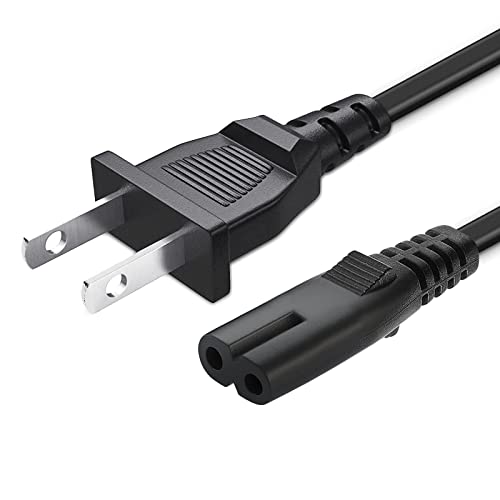
The JBL PartyBox 100 stands out as a beastly party speaker tailored for American tailgaters, beachgoers, and backyard hosts craving massive sound from a semi-portable rig. It fits perfectly with replacement power cords for ONN 100008736 and JBL models to extend playtime indefinitely.
Aimed at music lovers who prioritize volume and bass over featherweight design, it excels in real-world scenarios like pre-game parking lots or summer barbecues, where its output turns heads.
Performance shines with chest-thumping lows and party lights that pulse to the beat, keeping energy high for hours. Stable power delivery via quality 2-prong cords ensures no dropouts during peak usage.
Verdict: Essential for epic gatherings; grab a durable 3FT replacement cord to keep this speaker rocking non-stop.
Bass depth comes from dual radiators, pounding out powerful lows perfect for hip-hop at tailgates or EDM by the pool, with felt vibrations that immerse listeners.
Vocal clarity holds up well amid the boom, delivering crisp mids and bright highs across genres, while volume pushes to deafening levels without breakup.
Bluetooth stability reaches 30 feet reliably, supporting seamless multi-device connections for DJ switches or group playlists.
Rugged enclosure with IPX4 splashproof rating shrugs off beer spills and light rain, ideal for messy outdoor parties.
Built-in handle aids carrying despite 10.8 lb weight, suiting car-to-venue hauls but not long hikes; compact enough for home storage.
12-hour playback at moderate levels covers full events, recharging fully in 3.5 hours or indefinitely via a thickened 18AWG 2-prong cord for all-night reliability.
Complete Guide to Powering Audio Speakers with DC Power Supplies
Directly answering whether audio speakers can operate using direct current depends entirely on whether the speaker cabinet is passive or active. A passive speaker cannot run directly from a direct current power supply because its voice coil requires alternating current audio waveforms to generate acoustic sound waves. Active speakers, in contrast, rely on direct current internally to energize their integrated amplifier circuits. An active speaker can run from an external direct current power supply whenever the cabinet includes a dedicated DC input jack that matches the required voltage, current capacity, and polarity.
The Electrical Difference Between Passive Drivers and Active Systems
Passive speakers consist of one or more raw loudspeaker drivers, an internal passive crossover network, and exterior binding posts or spring terminals. These components receive an amplified audio signal sent through speaker wire from an external receiver or integrated amplifier. Audio signals sent to passive drivers are alternating current voltages that constantly shift direction and magnitude to match the recorded sound. Because passive speaker enclosures contain no internal power converter or active electronics, they have no way to process raw direct current power.
Connecting a direct current power supply directly to passive speaker binding posts creates an immediate electrical hazard for the driver. When direct current passes through a copper voice coil, the electrical energy moves strictly in a single direction without alternating oscillation. The voice coil deflects to its mechanical limit and holds that static position, converting electrical energy into extreme thermal heat instead of sound. This intense thermal buildup quickly melts the protective enamel insulation on the voice coil windings, leading to a burnt voice coil or permanent driver failure.
How Active Speakers Process Alternating and Direct Current
Active speakers differ fundamentally from passive designs because they house an internal power amplifier directly inside the speaker cabinet. Every audio amplifier circuit, regardless of whether it uses Class AB or efficient Class D architecture, requires steady direct current to power its transistors. However, how that direct current reaches the internal circuit board depends heavily on the physical power architecture of the speaker enclosure. Some active units accept direct current straight from an external power supply, while others take standard household alternating current through a mains power cord.
Large powered speakers, such as studio monitors, home theater soundbars, and high-output party speakers, typically incorporate an integrated power transformer and rectifier board. When you plug a standard alternating current cord into a wall outlet, this internal power supply steps down the voltage and converts alternating current into smooth direct current. Attempting to supply direct current into a mains alternating current port will prevent the speaker from powering up and can damage internal transformer windings. Unless an active speaker features an external DC input receptacle, you should always power it through a certified alternating current cable.
Identifying DC Power Input Connectors on Powered Speakers
Active speakers designed to run from external direct current power sources feature specific connection ports on their rear or bottom control panels. The most common connector standard across desktop monitors, small soundbars, and portable speakers is the coaxial cylindrical barrel jack. These barrel connectors are manufactured in various standardized dimensions, such as 5.5 millimeters outer diameter with a 2.1 millimeter or 2.5 millimeter center pin. The physical dimensions of the plug must match the socket precisely to ensure a snug mechanical fit and prevent intermittent power dropouts.
Modern compact speakers and wireless audio equipment frequently utilize USB Type-C ports for direct current power delivery and internal battery recharging. Unlike older fixed-voltage USB connections, USB-C Power Delivery ports communicate digitally with compatible power adapters to negotiate optimal voltage and current levels. Depending on the power requirements of the internal amplifier, a USB-C port might request standard 5-volt direct current or scale up to 9, 12, 15, or 20 volts. Using a certified USB-C power supply ensures that the internal power management circuitry receives steady, regulated direct current without risking overvoltage damage.
Matching Voltage, Amperage, and Polarity Requirements
Operating an active speaker safely with an external direct current power supply requires matching three critical electrical parameters. The first essential rating is voltage, which is measured in volts and represents the electrical potential supplied to the amplifier. The direct current voltage rating of your power supply must match the voltage specified on the speaker label exactly. Supplying lower voltage than required causes early amplifier clipping and audio distortion, whereas supplying excessive voltage will overheat components and destroy internal circuit traces.
The second critical specification is current capacity, which is measured in amperes or milliamperes on the equipment data badge. Unlike voltage matching, where the number must be identical, a power supply amperage rating indicates its maximum current output capability. An active speaker draws only the amount of current necessary to reproduce sound at a given volume setting. Using a DC power supply with an amperage rating equal to or greater than the speaker requirement ensures reliable operation without overheating the power brick.
The third mandatory factor to verify before connecting an external direct current power supply is plug polarity. Most consumer audio devices use center-positive barrel plugs, where the inner contact pin delivers positive voltage and the outer barrel acts as negative ground. However, some specialized audio hardware and musical instrument equipment employ center-negative barrel connections instead. Connecting a reverse-polarity power adapter can immediately blow internal protection diodes or destroy amplifier integrated circuits, making careful inspection of the polarity diagram essential.
Off-Grid and Automotive Power Applications
Mobile audio setups in camper vans, overland vehicles, and marine vessels frequently run audio equipment from 12-volt direct current auxiliary battery banks. Powering active audio components directly from direct current storage eliminates the conversion losses associated with running an alternating current power inverter. An inverter consumes standby power and creates electrical inefficiencies by converting direct current to alternating current, only for the speaker power adapter to convert it back to direct current. Connecting compatible speakers directly to direct current storage maximizes battery runtime during extended off-grid listening sessions.
If you are constructing a comprehensive mobile sound system, installing dedicated component speakers for vehicles paired with an automotive power amplifier provides an ideal solution. Car audio amplifiers are engineered from the ground up to operate reliably on direct current supplied by vehicular electrical systems. These dedicated mobile amplifiers contain specialized internal power supplies that convert fluctuating automotive battery voltages into stable internal rails. They deliver clean alternating current audio power to passive component drivers without risking voice coil damage.
Powering Portable Speakers and Battery Management Systems
Modern portable Bluetooth speakers function as direct current devices because they rely on rechargeable lithium-ion battery packs for mobile operation. The chemical cells inside these portable units provide direct current voltage, typically configured from 3.7 volts for single cells up to 14.8 volts for multi-cell packs. When you connect an external direct current power source, the incoming current flows through an integrated battery management system. This specialized circuit board regulates charging current, monitors thermal conditions, and balances cell voltages to protect battery health.
Using a portable speaker while it is connected to a direct current charger produces different operating conditions depending on internal engineering. Many modern speakers feature pass-through power circuitry that routes power directly to the amplifier while simultaneously trickle-charging the battery pack. This smart design minimizes battery wear and prevents excessive thermal buildup during loud playback sessions. Reviewing manufacturer documentation ensures you pair your portable speaker with a direct current supply capable of supporting full acoustic output while preserving internal battery life.
Preventing Electrical Hum and Noise with DC Power Supplies
Audio playback equipment is inherently sensitive to electrical noise and ripple present on direct current power lines. Most modern direct current power supplies utilize switch-mode power supply topology, which rapidly switches voltage on and off at high frequencies to regulate output. While switch-mode adapters are compact and lightweight, budget units with poor filtering can introduce high-frequency switching hash into the audio signal path. This interference frequently manifests as a persistent high-pitched whine, hiss, or buzzing sound coming directly from the speaker drivers.
Ground loops represent another frequent cause of unwanted audio noise when powering active speakers with direct current supplies. When a powered speaker and its audio source device are connected to separate power adapters sharing different ground potentials, stray electrical currents circulate along signal cables. This circulating current introduces a stubborn 60-hertz hum that remains present regardless of volume knob adjustments. Powering both devices from a shared power source, running the source device on internal battery power, or installing a ground loop isolator resolves this issue cleanly.
Replacement Power Cables and Dual-Input Cabinets
Many large active party speakers that consumers associate with portable use actually rely on standard alternating current power cords to run internal power supplies. Replacement cables, such as two-prong figure-8 power cords manufactured with thick 18 AWG copper conductors, provide steady alternating current from standard household wall receptacles. These cables feature standardized IEC320 C7 connectors that plug securely into matching recessed sockets on the speaker cabinet. Durable PVC jacketing and reinforced strain relief collars ensure that the cable maintains safe, reliable electrical contact during transport and regular setup.
Owners of dual-input party speakers must understand the functional difference between alternating current mains sockets and secondary direct current input ports. On hybrid cabinets, the two-prong figure-8 socket routes alternating current straight into an internal transformer board that steps down the voltage to feed the amplifier. The adjacent 12-volt direct current input, however, bypasses that internal transformer to power the amplifier and charge the battery directly from an external battery or car socket. Connecting cables to both power inputs simultaneously should be avoided unless the manufacturer manual explicitly approves concurrent power connections.
Practical Verification Steps Before Connecting Power
Following a structured inspection checklist before connecting any direct current power supply protects your audio equipment from preventable electrical damage. Start by examining the identification label on the rear or bottom panel of the speaker cabinet. Verify that the input port is labeled for direct current rather than alternating current, and note the precise voltage specification. Check the current rating to make certain that your power supply delivers equal or greater amperage than the minimum requirement indicated on the speaker housing.
Next, inspect the polarity diagram printed near the direct current input barrel connector to determine pin configuration. The graphic typically illustrates three linked circles, with the center pin and outer sleeve marked with corresponding positive and negative symbols. Verify that the polarity diagram on your direct current power supply matches the speaker graphic exactly. Testing the output of an unfamiliar direct current power supply with a digital multimeter provides an extra layer of verification before connection, ensuring the measured voltage and polarity match the equipment label.
Verifying electrical compatibility between your speaker cabinet and power supply guarantees dependable performance and prevents costly voice coil damage. Active speakers featuring dedicated direct current input ports operate smoothly from batteries, mobile power banks, or regulated DC adapters when voltage, current, and polarity align. Passive speakers, on the other hand, should never be connected to direct current power sources because their voice coils require alternating current audio signals from an amplifier. Taking a few moments to inspect port markings, review manufacturer specifications, and match electrical ratings will keep your sound equipment performing at its best.








Write Your Review
No reviews yet. Be the first to share your experience!