


Setting up a sound system often leads to a situation where a single playback source needs to reach several different listening zones at once. Whether you are expanding stage monitors for a live performance or distributing background sound through a venue, knowing %how to split audio to multiple speakers% prevents costly equipment mistakes. Connecting several cabinets directly to one output changes electrical resistance and signal strength in ways that can strain your playback hardware. Choosing the right routing path keeps audio clear while protecting your amplifiers from unexpected overloads.
The right method depends entirely on whether your audio signal is amplified power or an unamplified line-level feed. Integrating equipment like dedicated home music speakers or commercial public address cabinets requires careful attention to impedance ratings and connector standards. Hardware splitters, distribution blocks, and specialized speaker cables each solve distinct routing problems across different environments. Taking time to map out your wiring path ensures clean sound distribution without frustrating dropouts or amplifier shutdowns.

Complete Technical Guide to Splitting Audio to Multiple Speakers
Splitting an audio signal requires matching your physical cabling to the exact electrical tier of your sound chain. When planning %how to split audio to multiple speakers%, the first task is identifying whether you are dividing an unamplified line signal or an amplified speaker load. Splitting line-level audio feeds multiple amplifiers or powered cabinets without electrical resistance hazards. Dividing speaker-level power alters the electrical impedance seen by your amplifier, which demands strict impedance math to avoid hardware shutdown.
Distinguishing Line-Level Signals from Speaker-Level Power
Audio equipment operates across distinct electrical tiers that dictate how cables and splitters must be deployed. Line-level signals originate from source components such as media players, preamplifiers, mixers, audio interfaces, and digital converters. These line feeds carry minimal current and feed the high-impedance inputs of amplifiers or powered monitors. Because line connections transfer voltage rather than heavy current, splitting a line signal rarely creates immediate electrical safety hazards.
Speaker-level signals emerge from power amplifiers and carry significant wattage intended to drive physical speaker cones. Amplifiers deliver substantial current into low-impedance voice coils, generating magnetic forces that move speaker drivers. Splitting a speaker-level line means dividing this active power between two or more physical cabinets. Attempting to feed a speaker-level signal into line-level inputs will quickly destroy sensitive input circuitry through extreme voltage overload.
Identifying which tier of audio you are handling determines the exact routing hardware you need. Powered speakers contain built-in amplifiers and accept only line-level or microphone-level connections. Passive speakers lack internal power circuits and require dedicated speaker cables directly from an external power amplifier. Conflating these two operational categories is a frequent mistake when planning multi-speaker distribution across a venue.
Managing Impedance When Splitting Speaker-Level Power
Connecting more than one passive speaker cabinet to a single amplifier channel changes the total impedance load on that amplifier. Most standard audio installations wire multiple speakers in parallel, where positive and negative terminals of each cabinet connect to corresponding amplifier terminals. Wiring speakers in parallel decreases total electrical resistance, causing the amplifier to supply more current. If the resulting impedance drops below the amplifier’s minimum rated load, the amplifier may overheat, engage protection circuits, or suffer damage.
Calculating parallel impedance follows a straightforward mathematical rule that every sound operator should understand. When connecting two identical speaker cabinets in parallel, the total nominal impedance is cut in half. Connecting two 8-ohm speaker cabinets in parallel presents a 4-ohm nominal load to the amplifier channel. Connecting two 4-ohm cabinets in parallel drops the load to 2 ohms, which many standard stereo amplifiers cannot handle safely without overheating.
Impedance calculations become even more critical when working with uneven cabinet ratings or three or more speaker loads. Combining an 8-ohm cabinet and a 4-ohm cabinet in parallel creates a total nominal load of approximately 2.67 ohms. Before connecting multiple cabinets to one output channel, verify the minimum impedance rating stamped on the rear panel of your amplifier. Operating near or below that threshold produces excessive thermal buildup and introduces audible harmonic distortion.
Using Speakon Splitters for Professional PA Cabinets
Live sound environments and stage productions rely heavily on locking Speakon connections for reliable power delivery. The CNCESS Speakon 1 Male to 2 Female Splitter is designed specifically for these high-power professional environments where standard jacks could easily pull loose. Featuring one male plug that branches into two female chassis-compatible sockets, this adapter allows an audio operator to distribute a single amplifier channel output to a pair of compatible stage monitors or main cabinets. The twist-lock mechanism prevents accidental disconnections caused by cable snagging or heavy stage vibration during a performance.
Cable construction plays a crucial role in maintaining clean signal transfer when splitting heavy speaker loads. The flexible cable design on the CNCESS splitter helps reduce mechanical strain directly on the amplifier output jacks and rack panels. Rigid plastic adapters can exert downward leverage on amplifier binding posts or Speakon chassis sockets, potentially cracking internal circuit boards over time. Using flexible cable-based splitters keeps rack wiring tidy while permitting natural bends inside crowded road cases.
Using a pair of these splitters allows sound technicians to mirror routing setups across both left and right amplifier channels. A stereo amplifier can comfortably drive four total 8-ohm cabinets by splitting each stereo output into two parallel lines, presenting a safe 4-ohm load per channel. This configuration works well for live sound reinforcement where extra vocal coverage is required across a wide stage footprint. Always verify that your speaker cabinets utilize standard 2-pole or 4-pole Speakon wiring compatible with your specific splitter setup.
Step-by-Step Procedure for Splitting Passive PA Speakers
Connecting passive speaker cabinets with cable splitters requires a systematic setup sequence to safeguard your equipment. Start by ensuring that the power amplifier is completely switched off and disconnected from main electrical power. Inspect the impedance specifications labeled on each speaker cabinet to verify that their combined parallel load remains within your amplifier’s safe limits. Prepare heavy-gauge speaker cables with genuine locking connectors to link the splitter outputs to each remote cabinet.
Insert the male connector of your splitter into the designated channel output on the rear panel of your power amplifier. Twist the connector firmly clockwise until the internal metal latch clicks into its locked seating position. Next, attach individual speaker cables into the female ports of the splitter, locking each connection securely. Route the opposite ends of those speaker cables directly to the input jacks on your first and second speaker cabinets.
Check that all speaker wires run clear of foot traffic, sharp edges, and power supply cables to prevent physical damage or induced hum. Turn your amplifier gain controls completely down to zero before applying electrical power to the system. Power on your audio mixer and audio sources first, allowing signal chains to stabilize before turning on the power amplifier. Slowly advance the amplifier gain control while listening carefully for clean, balanced playback across both connected cabinets.
Methods for Splitting Line-Level Audio to Powered Speakers
Routing audio to multiple powered speakers follows a completely different set of physical rules because amplification occurs inside each cabinet. When feeding studio monitors or powered public address speakers, your splitter divides low-voltage audio signals rather than high-current power. Passive Y-cables featuring RCA, balanced 1/4-inch TRS, or balanced XLR connectors can route one mixer output to two separate powered cabinets. Because powered speaker inputs present very high input impedance, typically 10,000 ohms or higher, dividing line signals rarely causes amplifier overload.
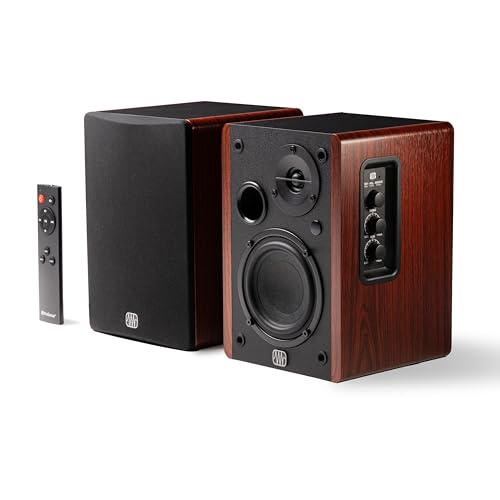
Passive line splitting does come with minor electrical compromises that sound designers must manage. Dividing an analog line signal across several destinations can cause a small drop in overall signal voltage, often reducing level by approximately 3 to 6 decibels. If you split a line signal across three or more powered units over long cable distances, high-frequency audio detail may degrade due to cumulative cable capacitance. In professional studio environments, pairing active monitors with dedicated stereo speaker setups helps preserve natural transient response and soundstage imaging.
Active distribution amplifiers offer an effective solution when distributing line audio across large facilities or numerous powered speakers. An active distribution amplifier accepts a master line-level input, buffers the incoming signal through clean operational amplifiers, and outputs multiple isolated copies with dedicated gain trim controls. This active isolation prevents impedance loading between connected devices and eliminates signal loss over extensive cable runs. Commercial venues, sports bars, and multi-zone entertainment centers rely on distribution units to maintain consistent signal integrity everywhere.
Multi-Zone Speaker Selectors for Architectural Installations
Distributing sound throughout a home or commercial building often requires feeding audio to four, six, or eight speaker pairs simultaneously. Connecting that many speakers in simple parallel would drop total system impedance below 1 ohm, which would quickly destroy a typical home receiver. Multi-zone speaker selectors solve this issue by incorporating internal impedance-matching circuitry, such as autoformers or high-power series resistors. These selector boxes allow you to switch individual rooms on or off while presenting a safe, steady 8-ohm load to your central amplifier.
Selecting the appropriate hardware for architectural audio depends on your specific layout and speaker types. When installing permanent distributed systems, incorporating wall hanging speakers provides broad audio dispersion without consuming valuable floor or shelf real estate. Dedicated impedance-matching selector switches often feature independent volume knobs for each room, allowing users to balance listening levels between a quiet hallway and an active patio. Checking that the selector box can handle your amplifier’s continuous output wattage prevents internal transformer overheating.
Commercial installations covering dozens of background speakers typically bypass low-impedance splitters entirely in favor of 70-volt or 100-volt constant-voltage systems. In a constant-voltage system, step-up transformers at the amplifier and step-down transformers at each speaker allow dozens of speakers to connect in parallel across a single wire pair. Each speaker transformer features selectable wattage taps that govern individual speaker volume without altering the overall system impedance balance. While high-fidelity stereo reproduction is limited in constant-voltage setups, they remain common for large-scale commercial paging and background sound.
Addressing Common Signal Loss and Ground Loop Humming
Splitting audio lines across multiple destinations frequently introduces unwanted noise into an otherwise clean playback system. Ground loop hum is the most pervasive issue, manifesting as a low-frequency 60 Hz or 50 Hz buzz through your speakers. Ground loops occur when connected audio components are plugged into different electrical wall outlets, creating slight voltage differentials across safety ground paths. The shield of your audio cable ends up carrying stray ground currents, which leak directly into the audible playback signal.
Eliminating ground loop hum requires breaking the electrical ground loop without interrupting the audio signal path. Passive audio isolation transformers installed along the line-level splitter feed use magnetic induction to transfer audio while physically isolating equipment grounds. Never attempt to solve ground loop issues by removing the safety ground prong on an electrical power cord, as this creates severe electrical shock hazards. Direct boxes equipped with ground-lift switches also provide a safe, effective method for isolating balanced lines running to remote powered speakers.
Phase cancellation is another subtle acoustic artifact that occurs when splitting mono signals across adjacent speaker cabinets. If speaker wiring is reversed on one cabinet so that positive connects to negative, the two speaker cones will move in opposite physical directions. This out-of-phase condition causes low-frequency sound waves to cancel each other out in the listening space, resulting in thin, weak bass response. Verifying that all cable conductors follow consistent polarity matching from amplifier terminals to speaker jacks ensures rich, impactful low-end reproduction.
Practical Verification and Listening Balance Checks
Once your multi-speaker split is physically connected, conducting a deliberate verification sequence confirms that every component is operating properly. Set all input source faders, master volumes, and amplifier gain attenuators to their lowest positions before testing. Play a familiar, well-mastered audio track with balanced frequency distribution to serve as an objective audio baseline. Slowly raise master playback levels until sound emerges softly from each connected speaker cabinet across the installation.
Walk through the entire listening area to evaluate volume balance and overall clarity from each speaker location. Listen closely for unwanted distortion, crackling, or unexpected volume discrepancies that might suggest an impedance mismatch or loose cable contact. Place your hand near the ventilation grilles of your power amplifier after twenty minutes of moderate playback to confirm that operating temperatures remain normal. If the amplifier feels unusually hot to the touch or switches into protect mode, immediately power down the system and recalculate your connected speaker impedance.
Successful sound distribution relies on matching the right hardware to your specific signal level, whether you split line feeds to active cabinets or share amplified power across passive speakers. Using dependable locking hardware like Speakon splitters ensures that physical connections remain secure under demanding performance conditions. Careful planning of electrical impedance, wire gauge, and grounding paths delivers clean, reliable audio distribution across every corner of your venue. Taking the time to calculate loads and test signal lines methodically guarantees seamless sound performance without risking hardware damage.



Write Your Review
No reviews yet. Be the first to share your experience!