

Acoustic hardware often creates confusion for newcomers trying to build a clean sound setup for presentations, karaoke, or recording. While examining how gear captures or projects voices, many people wonder: are microphones and speakers the same in their underlying mechanical design? At a fundamental physical level, both tools rely on electromagnetic induction to interact with sound waves. A microphone turns physical air pressure into electrical fluctuations, whereas a speaker receives an amplified electrical waveform and converts it back into physical air movement. Because they perform opposite duties in the signal chain, their operational goals, construction details, and electrical demands diverge dramatically.
Connecting audio gear without recognizing these mechanical boundaries can lead to silent setups, severe distortion, or damaged internal components. A microphone serves as an input transducer designed to register subtle pressure variations, while a speaker acts as an output transducer built to move significant air volume across a room. Distinguishing an input device from an output driver helps you choose the right cables, preamps, and interfaces for your specific audio environment. When configuring a desktop audio workspace, exploring reliable Bluetooth PC speaker options provides a clear picture of how dedicated output hardware operates in everyday listening environments.

Pros
- Massive bass response from 10-inch subwoofer shakes the ground at parties
- Versatile connectivity including Bluetooth, AUX, USB/SD for any audio source
- Portable design with wheels and handle simplifies moving to outdoor venues
- Two wireless mics ready for immediate karaoke or speeches
- Party lights add visual excitement without extra setup
Cons
- Peak power rating may lead to distortion if pushed beyond moderate volumes continuously
- Larger size makes it less ideal for small indoor spaces
- Battery life varies with usage and lights on, requiring recharges for all-day events
The Pyle PPHP101WMB is a beast of a portable PA speaker designed for anyone who wants to turn any gathering into a full-blown event. With 600W peak power driving a 10-inch subwoofer and 1-inch tweeter, it pumps out surround stereo sound that's perfect for backyard barbecues, tailgates, or karaoke parties. American party hosts and event organizers will love its all-in-one features like dual wireless mics, party lights, and rolling wheels for easy mobility.
In real-world use, this speaker shines outdoors where its impressive bass response cuts through ambient noise, making vocals clear even in crowds. The Bluetooth connectivity pairs quickly with iPhones or Androids, while USB/SD and AUX inputs handle playlists from any device. Flashing LED lights sync with the beat, elevating nighttime events without needing extra gear.
While it's rechargeable and portable, it's built for power over subtlety, so it's not for quiet listening. Overall, the Pyle PPHP101WMB earns top marks for delivering pro-level sound and fun features at a fraction of venue rental costs. If you're hosting the next big bash, this is your go-to speaker.
Powered by a 10-inch subwoofer and 1-inch tweeter, the Pyle PPHP101WMB offers deep bass that thumps down to party-shaking lows, clear mids for vocal intelligibility during karaoke, and crisp treble that keeps highs lively without harshness. The full-range stereo reproduction creates a wide soundstage ideal for open outdoor spaces, filling areas up to 100 feet with ease.
At max volume, it handles 600W peak power for crowd control or DJ sets, maintaining punchy dynamics across genres from hip-hop bass drops to rock anthems. Bluetooth streaming ensures low-latency wireless audio, while inputs support high-quality playback from USB drives or AUX sources. Expect room-filling volume without muddiness, though sustained max output may warm the unit.
Acoustic engineering prioritizes portability and power, making it a standout for live events where bass depth and projection matter most.
Rugged yet mobile, the Pyle PPHP101WMB features a durable cabinet with rolling wheels and an extending handle, weighing in at a manageable size for one-person transport to beaches or patios. The built-in rechargeable battery supports hours of cord-free operation in power-save mode, perfect for off-grid parties.
Connectivity is comprehensive: Bluetooth for wireless pairing, 3.5mm AUX input, 6.5mm mic jack, plus USB flash drive and SD card readers for direct MP3 playback, and FM radio tuner. Dual UHF wireless mics offer reliable range up close, with a remote for full control over volume, lights, and inputs.
Multi-color flashing DJ LED lights integrate seamlessly into the housing, adding flair without bulk. No HDMI or advanced codecs here, but for battery-powered PA use, the hardware nails portability and versatility for US outdoor enthusiasts.

Pros
- Exceptional 4-mic array for omnidirectional, noise-free pickup
- Rich 3W audio fills rooms evenly with full duplex clarity
- Effortless daisy chaining expands coverage for larger groups
- Long 10-hour battery supports extended meetings on the go
- Universal compatibility with major conferencing apps
Cons
- 3W output prioritizes voice clarity over high-volume music playback
- No built-in display for call status or controls
- Daisy chain limited to compatible EMEET models
The EMEET M0 Plus is a portable conference speakerphone designed for modern hybrid work environments, featuring four AI-powered microphones in a 360-degree array for comprehensive voice capture. It shines in home offices, small meeting rooms, or business travel, supporting up to eight participants per unit and expandable via daisy chain for larger groups.
In real-world use, the upgraded VoiceIA algorithm excels at filtering background noise and echo, delivering conversations that feel in-person. Setup is instant with USB-C plug-and-play or Bluetooth 5.0, working flawlessly with Zoom, Microsoft Teams, and other platforms without drivers.
Its 3W speaker provides even sound distribution, and the 10-hour battery ensures reliability during long sessions. While optimized for voice calls rather than music, it offers professional-grade performance for professionals seeking a compact, versatile audio solution.
Verdict: A top pick for remote teams wanting clear, hassle-free conferencing without breaking the bank.
The M0 Plus emphasizes midrange clarity for natural voice reproduction, with AI-enhanced noise reduction ensuring crisp intelligibility even in noisy environments. Bass is controlled for speech without muddiness, while treble remains detailed without harshness, creating a balanced profile ideal for meetings.
Full duplex technology supports simultaneous talk and listen, fostering a wide soundstage that picks up voices from all directions up to eight feet away. At max volume, the 3W driver maintains clarity without distortion, filling small to medium rooms effectively.
Acoustic engineering via the four-mic array and 2023 VoiceIA upgrade minimizes echo and reverb, delivering professional-grade performance comparable to larger systems when daisy-chained.
Compact and portable, the M0 Plus sports a sleek, durable plastic build suited for desk or travel use, with a lightweight design that includes a large-capacity battery for over 10 hours of talk time. Dimensions allow easy placement in any setup without dominating space.
Connectivity is straightforward: USB-C for wired plug-and-play and Bluetooth 5.0 for wireless pairing with PCs, phones, or tablets, supporting standard protocols across brands. No additional power adapters needed beyond USB charging.
Daisy chain functionality via USB links multiple units for expanded mic and speaker coverage, compatible with EMEET models like M3 or Meeting Capsule, making it scalable for conference rooms.
Pros
- Exceptional sound clarity and background noise rejection
- Durable, comfortable build with pop filter
- Wide device compatibility and easy plug-and-play use
- Noise-free shielded cable delivers reliable performance
- Convenient ON/OFF switch for quick control
Cons
- Wired design restricts movement compared to wireless mics
- Basic dynamic type lacks advanced features for studio pros
- 2.5m cable may limit reach in larger venues
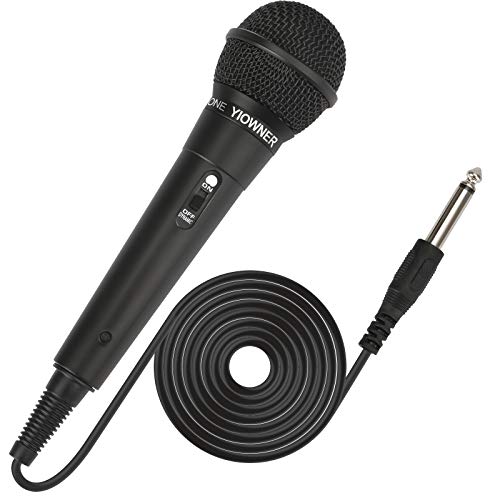
The YIOWNER Wired Microphone is a straightforward dynamic vocal mic tailored for karaoke lovers, party enthusiasts, and casual performers. It connects easily to speakers, amps, mixers, or DVD players, delivering reliable performance without batteries or complex setup.
In everyday scenarios like home KTV nights, company gatherings, or outdoor sing-alongs, it shines by picking up clear vocals while cutting background noise. The rugged construction holds up to lively use, and the pop filter keeps plosives in check for smooth delivery.
For budget-conscious users seeking fun, no-fuss audio input, this mic punches above its weight in value. While not for high-end recording, it excels in social settings. Final verdict: Highly recommended for effortless karaoke enjoyment.
Its oxygen-free copper cable ensures clean signal transfer, making every performance feel professional without the premium price.
The YIOWNER mic prioritizes vocal clarity with a dynamic capsule that focuses on midrange frequencies for natural singing tone. It reduces background noise effectively, ensuring your voice cuts through in party environments without distortion.
Expect strong noise rejection and feedback resistance at moderate volumes, ideal for karaoke tracks where lyrics need to shine. The overall sound signature is punchy and direct, revealing nuances in your performance while handling energetic belting well.
Paired with decent amplification, it fills rooms with confident vocal projection, making it a go-to for live fun rather than subtle studio work.
Built with a rugged metal body and ergonomic shape, the mic feels solid and comfortable for extended handheld use. The integrated pop filter minimizes breath pops, and the overall design withstands drops and rough handling at events.
The standout 2.5m oxygen-free copper cable features shielding to eliminate hum and interference, providing flexible reach for stage or living room setups. It uses a standard plug compatible with most amps, mixers, speakers, and DVD audio outputs.
Power is purely passive with no batteries required, plus a handy ON/OFF switch for instant control. Compact dimensions make it portable for tours, buses, or home storage.

Pros
- Clear audio and echo mode deliver professional karaoke feel
- Dual Bluetooth and cable connections ensure reliable performance
- Easy multi-function buttons for quick mode switching
- High compatibility with all major singing apps
- Portable and lightweight for home or outdoor use
Cons
- Micro SD card not included, requiring separate purchase
- Best suited for casual karaoke, not studio recording
- Battery life details not specified in manual
The BONAOK Q37 Rose Gold is a 3-in-1 wireless Bluetooth karaoke microphone that doubles as a portable speaker and recorder, designed for fun-filled home parties, birthdays, and family sing-alongs. Tailored for American families, it connects effortlessly to smartphones and PCs via Bluetooth or cable, supporting popular singing apps for instant karaoke action.
In real-world use, it shines during casual gatherings, with its built-in echo creating a surround-sound immersion that elevates tracks from Spotify or YouTube. The comfortable ergonomic design ensures fatigue-free handling, making it a hit with kids and adults alike. Switch songs seamlessly and adjust volumes on the fly for non-stop entertainment.
While perfect for budget-conscious buyers seeking portable joy, it prioritizes fun over audiophile precision. Overall verdict: A stellar pick for holiday gifts or party essentials, delivering high value in a cute, rose gold package that sparks joy at every use.
The Q37 delivers clear, vibrant vocals with a focus on midrange clarity ideal for karaoke, where lyrics take center stage. Adjustable echo mode adds depth and reverb, simulating a live stage for immersive performances without distortion at party volumes.
Bluetooth connectivity ensures stable 10m range with vivid sound effects, while the built-in speaker handles music playback crisply. It excels in balanced output for pop and rock tracks, filling small rooms effortlessly, though bass depth suits casual listening over deep subwoofer thump.
High compatibility with apps means quick song switching and reliable playback, making it a go-to for dynamic home KTV sessions.
Crafted with a particular ergonomic shape, the rose gold handheld mic fits comfortably in any hand, promoting extended use during parties. Its compact, portable build includes multi-function buttons for easy control of mic, echo, music volume, and modes.
Connectivity options shine with Bluetooth 10m range, AUX cable for wired reliability, and a micro SD slot supporting up to 32GB for offline tunes. Includes audio cable, charge cable, user manual, and colorful box for gifting.
Built-in high-quality Bluetooth module powers speaker, MP3 player, and recorder functions, with simple power via USB charging. Durable yet lightweight, it's tailored for kids, teens, and adults in everyday American homes.

Pros
- Effortless auto pairing for quick dual-mic use
- Stable 160ft 2.4G wireless range without dropouts
- 8 hours of runtime supports long classes or performances
- Includes 3.5mm to 6.35mm adapter for broad compatibility
Cons
- Not compatible with iPhone, Bluetooth speakers, PCs or laptops
- Requires device with mic jack like amplifiers or PA systems
- No built-in amplifier included
The oxxyeeKS wireless microphone system is a dual headset setup designed for two users, perfect for karaoke enthusiasts, yoga instructors, teachers, and fitness leaders who connect to speakers, amplifiers, or PA systems. It uses 2.4G technology for reliable transmission up to 160 feet, freeing you from cables during dynamic activities like guiding tours or leading classes.
In real-world use, it shines in settings where mobility matters, such as school presentations, conference calls via mixers, or outdoor events. The plug-and-play design means no complex setup; just pair the headsets to the receiver and connect via 3.5mm jack (with adapter for 6.35mm devices). Users appreciate the freedom to move while delivering clear vocals without feedback issues common in wired mics.
Overall, this system delivers value for active professionals and entertainers needing dependable, hands-free audio. It earns high marks for ease and range, making it a smart pick for anyone enhancing their PA or speaker setup.
Expect solid vocal clarity from these headsets, optimized for speech, singing, and instruction with minimal distortion even at longer ranges. The 2.4G connection ensures stable performance up to 160 feet, ideal for covering large rooms during yoga flows or karaoke parties without signal drops.
Volume levels match well with amplifiers and PA systems, providing room-filling projection for groups. Dual-mic support lets two people share the stage seamlessly, great for duets or instructor-assistant scenarios, with auto-pairing keeping things interference-free.
The lightweight, comfortable headsets prioritize portability, letting you stay active without bulk during fitness classes or tours. The compact receiver plugs easily into gear, and included adapters expand compatibility to standard audio setups.
Battery life hits about 8 hours per charge, covering full-day events like teaching seminars or weekend karaoke. Recharge both units simultaneously in just 2-3 hours via the dual micro USB cable, ensuring you're always ready for the next session.

Pros
- Exceptional clarity and power without distortion, even at high volumes
- Seamless dual mic operation with customizable sound effects
- Broad connectivity supports multiple sources for flexible use
- Compact and portable design with comfortable carrying options
- Fast Type-C charging for quick top-ups between sessions
Cons
- Battery life limited to 5 hours at full volume, may need recharging for longer events
- Best suited for small to medium venues, not stadium-level power
- No built-in lights or advanced app control for enhanced party features
The ResponseBridge S99 is a versatile 100W portable PA system designed as a voice amplifier with two wireless microphones, doubling as a Bluetooth speaker and karaoke machine. It targets educators, coaches, tour guides, event hosts, and musicians who need reliable, portable audio for classrooms, gyms, churches, tours, or small gatherings.
In real-world use, it shines during presentations and sing-alongs, where the dual mics capture voices clearly over background music, and the 360-degree sound fills spaces evenly. Connectivity is a standout, handling Bluetooth streaming, USB/TF playback, Aux inputs, and even guitar for impromptu performances. Battery-powered operation keeps it wireless and mobile.
Build quality feels premium with its metal casing, and sound modes like Acoustic or Hip-hop adapt to any vibe. While not for massive crowds, it punches above its weight for portable needs. Overall verdict: a top pick for professionals needing pro audio on the go, earning strong marks for value and performance.
Powered by a 6.5-inch woofer and 2-inch tweeter, the S99 delivers deep, punchy bass that rumbles through low-end tracks and vocals, paired with crisp treble for detailed highs without harshness. Midrange stays clear for speech intelligibility, making it ideal for announcements or karaoke where lyrics must cut through.
The 360-degree omnidirectional design creates a wide soundstage, ensuring even coverage in rooms or outdoors. At 100W, it reaches high volumes without distortion, filling medium-sized spaces effortlessly. Sound effect modes fine-tune output for genres, from professional presentations to hip-hop beats.
Echo function and independent mic/speaker volume controls enhance versatility, revealing nuances in music and amplifying voices naturally for engaging listener experiences.
The S99 boasts a rugged metal casing with an iron mesh grille for protection and a high-end look, paired with an ergonomic adjustable handle and strap for easy transport. Its portable footprint suits on-the-go use without sacrificing stability.
Inputs include Bluetooth 5.0 for wireless streaming, USB/TF card slots for offline playback, 3.5mm Aux, 6.35mm mic jacks for wired options, and dedicated guitar ports. Dual wireless mics operate up to 30 feet away with stable signal.
Power comes from a built-in rechargeable battery offering 5 hours of playtime, recharged via Type-C fast charging. No external amp needed; it's fully self-contained for plug-and-play convenience in any setup.
The Technical Distinction: Are Microphones and Speakers the Same?
Microphones and speakers share identical foundational physics, but they are not the same piece of audio hardware. Both devices utilize magnets, voice coils, and vibrating membranes to interact with sound waves, which technically classifies them both as electroacoustic transducers. However, their primary purposes run in opposite directions through an audio signal path. A microphone operates exclusively as an input device collecting acoustic information, while a speaker acts as an output device projecting sound into a physical space.
Transducer Physics and the Reversible Nature of Sound
Every dynamic sound transducer operates on Michael Faraday’s law of electromagnetic induction. When sound waves hit a microphone diaphragm, the attached coil moves back and forth through a magnetic field generated by a permanent magnet. This kinetic motion induces a small alternating electrical current within the wire coil that mirrors the acoustic waveform. In a dynamic loudspeaker, this process runs in reverse. An electrical current sent through the voice coil creates an alternating magnetic field that interacts with the stationary magnet, driving the cone forward and backward to create acoustic sound pressure.
Because dynamic drivers work on symmetrical principles, they are theoretically interchangeable under laboratory conditions. Audio engineers have famously utilized dynamic loudspeaker cones as makeshift microphones to capture deep low frequencies from bass drums and bass guitar cabinets. Known as sub-kick microphones, these reversed drivers capture massive sub-bass impact because their larger surface area responds well to slow, heavy air movements. Similarly, if you plug a pair of passive headphones into a microphone preamplifier jack, speaking loudly into the earcup will generate a faint, audible signal on your recording meter.
Despite this theoretical symmetry, practical execution prevents general interchangeability across everyday consumer systems. A dedicated microphone diaphragm must remain exceptionally lightweight and thin to respond accurately to high frequencies and subtle vocal consonants. If you attempt to use that delicate diaphragm as a conventional loudspeaker, feeding it standard amplifier power will instantly melt the fine voice coil or tear the suspension. Specialized engineering priorities ensure that microphones excel at sensitive capture, while speakers are built to withstand mechanical stress and continuous heat dissipation.
Signal Levels and Voltage Differences
Understanding signal strength clarifies why microphones and speakers require distinct wiring and amplification stages. An audio signal travels through different standardized voltage tiers between its original capture and final acoustic playback. Microphones output a microscopic voltage known throughout the audio industry as mic level, which typically measures only a few thousandths of a volt. This faint electrical signal is far too weak to drive a speaker cone directly, meaning it cannot produce audible sound without intermediate amplification.
A microphone preamplifier boosts that delicate mic level signal up to line level, which operates around one volt. Line level represents the standard operating voltage for audio mixers, audio interfaces, digital signal processors, and media players. Once audio signals are processed at line level, they travel to a power amplifier. The power amplifier multiplies the voltage and supplies substantial current, converting the line level signal into a robust speaker level output that can drive voice coils against air resistance.
Plugging a speaker level source into a microphone input will instantly overdrive the preamplifier circuitry and can permanently damage the audio hardware. Conversely, connecting a passive microphone directly to a passive speaker terminal yields absolute silence because the microphone generates virtually zero wattage. This strict signal hierarchy explains why dedicated input channels and high-power output stages remain completely separated on modern mixers and amplifiers. Keeping these signal levels distinct ensures clean audio transmission without noise floor contamination or blown electronic components.
Impedance and Electrical Power Handling
Electrical impedance represents the opposition an alternating current encounters while traveling through an audio circuit, measured in ohms. Microphones and speakers sit on vastly different sides of the impedance spectrum to optimize their specific circuit duties. A standard dynamic microphone, such as the YIOWNER Wired Microphone, typically features an output impedance between 150 ohms and 600 ohms. This design matches standard mixer preamplifiers with higher input impedances, ensuring maximum voltage transfer with minimal frequency loss across balanced cable runs.
In contrast, standard passive loudspeaker drivers operate at much lower nominal impedances, commonly rated at 4 ohms, 8 ohms, or 16 ohms. Low impedance voice coils allow power amplifiers to deliver significant electrical current, which is necessary to move rigid speaker cones back and forth. Delivering that volume of current requires heavy-gauge copper wiring and durable voice coil formers capable of handling substantial thermal energy. A microphone voice coil is wound with microscopic wire that would instantly burn up if exposed to typical speaker current.
Power handling differences also highlight why output drivers require heavy mechanical construction. While a microphone consumes negligible energy from physical air waves, high-power speakers convert large electrical wattage into acoustic energy and thermal waste. For example, a heavy-duty cabinet like the Portable Bluetooth PA Speaker System features a 10-inch woofer and internal amplification designed to handle significant peak power. Trying to push that magnitude of audio energy through a standard microphone capsule would be catastrophic, illustrating their contrasting electronic builds.
Diaphragm Design and Acoustic Dispersion
Physical construction dictates how effectively each device interacts with ambient air pressure. A microphone capsule uses a diminutive diaphragm made from thin mylar, aluminum, or specialized polymer film suspended within a protective housing. This diaphragm is tuned to capture sound waves arriving from specific physical angles, creating intentional polar pickup patterns such as cardioid, supercardioid, or omnidirectional. Built-in elements like the internal pop filter found in the YIOWNER Wired Microphone help diffuse harsh plosives and breath blasts before they strike the delicate membrane.
Speakers, on the other hand, require durable cones constructed from paper composite, polypropylene, treated cloth, or aluminum to project sound evenly. Because reproducing full-range sound across human hearing requires shifting varying volumes of air, speakers frequently divide the audio spectrum into multiple driver sizes. A small tweeter reproduces fast, high-frequency ripples, while a larger woofer moves slow, expansive air masses for deep bass frequencies. A single microphone capsule can capture these combined frequencies simultaneously, but a single speaker driver struggles to project both extremes without distortion.
Acoustic dispersion also separates the practical roles of these two devices. Microphones are engineered to isolate sound sources and reject off-axis room reverberation, while speakers are designed to disperse sound widely across a room or outdoor gathering. Enclosure design plays an indispensable role for loudspeakers, utilizing tuned bass reflex ports and sealed cabinets to control rear acoustic energy. Microphones rely on acoustic ports strictly to shape their directional polar response rather than to amplify resonance.
Integrated All-in-One Audio Hardware
Consumer demand for portable communication and entertainment has produced hybrid devices that house both microphones and speakers in a single physical chassis. Handheld singing machines like the BONAOK Wireless Bluetooth Karaoke combine a vocal pickup capsule, an internal amplifier, and integrated speaker drivers inside a single handheld wand. While this compact tool looks like a unified piece of gear, the microphone head and the body speaker remain electrically separate components wired to an internal circuit board. The onboard electronics receive vocal input, apply digital effects such as echo, mix the voice with background audio, and route the combined signal to the internal speakers.
Modern office environments rely heavily on desktop conferencing solutions that merge multi-element capture with clear speech playback. The EMEET Conference Speakerphone M0 illustrates how engineering solves the challenge of placing sensitive microphones right next to an active loudspeaker. This unit integrates a four-microphone circular array with a central speaker, utilizing advanced digital signal processing algorithms to filter background noise and eliminate acoustic echoes. Without sophisticated real-time processing, placing microphones in direct proximity to a speaker would cause continuous feedback screeching.
Teaching, tour guiding, and fitness instruction often demand personal amplification without bulky floor equipment. Wearable units like the 100W Powerful Voice Amplifier with 2 pair compact body speakers with wireless transmitters to deliver clear projection in active environments. Similarly, dedicated multi-user microphone sets like the oxxyeeKS Wireless Microphone System for 2 supply paired transmitters that connect straight into portable PA systems. These specialized systems demonstrate that while microphones and speakers frequently collaborate within shared enclosures, their underlying functions remain distinctly divided between audio capture and audio projection.
Preventing Acoustic Feedback and Phase Cancellation
Whenever microphones and speakers share the same acoustic space, feedback represents the most persistent operational challenge. Acoustic feedback occurs when a microphone captures the amplified sound coming out of a nearby speaker, sends it back through the amplifier, and creates an endless electronic loop. This rapid loop results in the deafening howl or high-pitched squeal familiar to anyone who has handled a live public address system. Managing this interaction requires careful physical positioning, directional discipline, and proper gain adjustment.
Positioning speakers ahead of the microphone pickup zone is the most reliable method for preventing runaway feedback in live sound setups. Cardioid microphones reject sound arriving directly from their rear, making it essential to point speaker enclosures away from the back of the microphone body. When using a rolling rig like the Portable Bluetooth PA Speaker System, placing the speaker box several feet ahead of performers prevents the microphones from catching direct cabinet projection. Adjusting channel gain carefully rather than simply pushing the master volume slider also preserves headroom before feedback develops.
Room acoustics and surface reflections introduce further complications through acoustic phase cancellation and delayed feedback loops. Hard drywall, glass windows, and uncarpeted floors reflect amplified sound back toward the microphone capsule, triggering feedback even when speakers face outward. In conference units with full-duplex support, onboard digital signal processing continuously subtracts the incoming speaker waveform from the microphone input signal in real time. For standalone setups, adding absorptive materials and maintaining reasonable distance between input capsules and output cabinets remains essential for clean sound.
Practical Setup Considerations Across Audio Systems
Determining how to configure inputs and outputs depends heavily on your primary listening or recording task. If your objective centers on general desktop media or gaming audio, standalone output cabinets provide accurate spatial imaging and low-distortion reproduction. For users seeking broader options across personal entertainment, investigating balanced portable Bluetooth speakers highlights how manufacturers balance battery life, driver rigidity, and wireless fidelity without microphone complexity. Dedicated playback speakers prioritize smooth frequency response across a wide listening sweet spot.
When live vocal projection or public speaking takes priority, selecting matched hardware reduces setup friction and prevents signal mismatches. A dedicated vocal microphone requires an amplifier with the appropriate input impedance, whether through a 3.5mm jack, a 6.35mm connection, or a balanced XLR terminal. Portable PA setups often incorporate multiple input jacks alongside Bluetooth streaming, enabling users to play background accompaniment while speaking over the mix. Confirming that your amplification equipment provides independent volume and tone controls for both the microphone channels and the auxiliary audio helps achieve a balanced presentation.
Mobile users should also verify battery capacity and wireless transmission ranges when choosing audio components. Wireless systems operating on the 2.4 GHz band or UHF frequencies require clear line-of-sight communication between transmitters and base receivers to avoid signal dropouts. Meanwhile, integrated voice amplifiers and conference units depend on internal lithium-ion cells that must supply sufficient runtime for all-day presentations. Evaluating whether your workflow calls for separate modular audio components or an all-in-one hybrid solution ensures reliable sound delivery tailored to your environment.
Recognizing the boundary between sound capture and sound projection simplifies audio troubleshooting and keeps your hardware safe from electronic damage. While microphones and speakers rely on the same electromagnetic principles, their inverse roles as input and output transducers demand distinct physical builds, signal voltages, and operating circuits. Matching your microphones to dedicated preamplifiers and pairing your speakers with suitable amplification ensures crisp, dynamic audio performance across every presentation, recording, or karaoke session.




Write Your Review
No reviews yet. Be the first to share your experience!