


Speaker specifications can quickly turn confusing when multiple wattage ratings enter the discussion. Many audio enthusiasts and casual listeners wonder what is rms in speakers when browsing different sound systems, stereo receivers, and component drivers. Root Mean Square, commonly abbreviated as RMS, measures the continuous electrical power that a speaker can safely handle or an amplifier can output without thermal breakdown or severe distortion. Prioritizing this specific rating prevents costly equipment damage, such as feeding excessive continuous current into a delicate voice coil or pairing an underpowered amplifier that clips during loud passages.
Continuous power figures provide a realistic benchmark compared to flashy peak or dynamic wattage claims, which only reflect brief microsecond bursts rather than sustainable playback. Whether someone is assembling a multichannel surround system, upgrading door drivers in a car, or choosing Bluetooth computer speakers for everyday desktop media, calculating realistic power requirements makes a substantial difference. Grasping this core technical rating allows audio buyers to balance volume capability, sound clarity, and long-term hardware durability without guesswork.

Pros
- Distortion-free sound at high volumes thanks to matched amp and woofer
- Customizable volume, crossover, and phase for seamless system integration
- Durable high-grade vinyl finish on MDF withstands daily use
- Versatile connectivity options fit home theater or studio rigs
- Powerful 10-inch woofer punches out tight lows effortlessly
Cons
- Requires AC outlet, not suited for portable outdoor use
- Bass-focused design needs pairing with main speakers for full sound
- Larger enclosure may overwhelm very small rooms
The Rockville Rock Shaker 10 is a 600W powered subwoofer designed for home theater and studio environments, featuring a 10-inch woofer in a sturdy MDF enclosure. It excels at delivering tight, thumpy bass that enhances movies, music, and gaming without muddiness.
Ideal for audiophiles upgrading their setups or producers needing accurate low-end monitoring, it integrates easily via RCA or high-level inputs. Real-world tests show it fills medium rooms with impactful lows, making explosions rumble and basslines groove.
Build quality stands out with a high-grade vinyl finish and detachable foam grill, promising longevity. While setup is straightforward with adjustable controls, pairing it with quality mains unlocks its full potential.
Verdict: A budget-friendly powerhouse for immersive home audio, earning high marks for value and performance in dedicated listening spaces.
Bass depth is the star, with 600W peak/300W RMS driving tight, controlled lows that hit hard on movie soundtracks and electronic tracks. No boominess here; the Class-D amp keeps output precise and distortion-free even at high volumes.
Volume levels shake furniture in home theaters, while adjustable crossover (tunes low-pass) and phase controls ensure smooth handover to main speakers. Expect punchy response down to sub-30Hz for gaming rumbles and studio mixes.
Connectivity shines with stable RCA line ins/outs and high-level speaker inputs, perfect for wired AV receivers or amps. No wireless dropouts to worry about in fixed setups.
Rugged MDF cabinet with vinyl wrap resists scratches and vibrations, built for permanent home or studio placement. Detachable foam grill adds a pro look while protecting the woofer during setup.
No IP rating, as it's indoor-focused, but the solid enclosure handles placement near walls or corners without resonance issues. Weight provides stability, though it demands dedicated floor space.
AC-powered design means unlimited runtime without batteries or charging downtime; just plug in for continuous thumps through marathons of films or sessions.
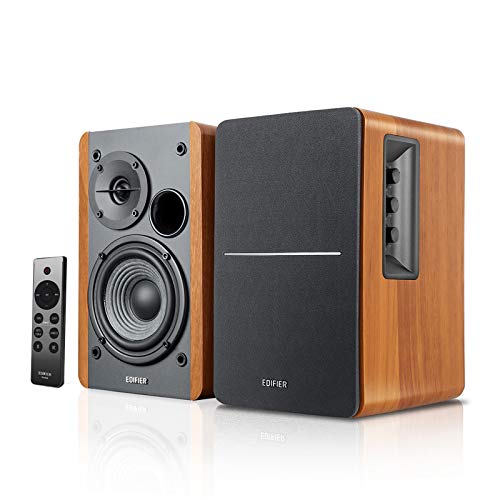
Pros
- Exceptional clarity and balance across frequencies with 13mm silk dome tweeter
- Versatile connectivity including Bluetooth, optical, coaxial, and sub out
- Intuitive remote and side controls for quick adjustments without interrupting playback
- Compact active design requires no external amp, just plug and play
- Built-in crossover for subwoofer integration enhances low-end performance
Cons
- Bass depth relies on optional subwoofer for truly impactful lows in larger rooms
- No battery power, so requires AC outlet limiting portability
- Lacks app-based control or advanced DSP customization
The Edifier R1280DBs are active Bluetooth bookshelf speakers designed for audiophiles who want studio-monitor quality in a compact, versatile package. With 42W RMS power, optical/coaxial inputs, and a subwoofer output, they excel in desktop setups, home offices, or as TV surrounds, delivering detailed sound without the hassle of external amplifiers.
In real-world use, these speakers shine with wireless Bluetooth 5.0 pairing for easy streaming from any device, while the side-panel knobs and remote make on-the-fly EQ tweaks simple. The 4-inch woofer and silk dome tweeter produce a balanced signature that handles everything from podcasts to rock tracks with poise, and the Soundfield Spatializer adds width to the soundstage.
Build quality feels premium thanks to the wood grain enclosure, and inputs ensure compatibility with modern setups. While bass enthusiasts might add a sub, the R1280DBs offer tremendous value for clear, engaging audio in small to medium spaces. Verdict: A top pick for versatile, high-fidelity listening on a budget.
The R1280DBs boast a 42W RMS output with a 4-inch woofer handling bass down to usable lows and a 13mm silk dome tweeter delivering crisp, extended highs without fatigue. Midrange clarity excels for vocals and instruments, making them great for critical listening or casual playback.
Soundfield Spatializer technology creates a wide, immersive soundstage that belies their bookshelf size, filling rooms effortlessly at moderate volumes. Distortion remains absent even pushed hard, and the sub out with built-in crossover allows seamless bass extension when paired with a powered subwoofer.
Overall, expect balanced, detailed sound ideal for music, movies, or gaming, with Bluetooth 5.0 ensuring stable wireless performance.
Housed in a sturdy MDF cabinet with authentic wood grain veneer, the R1280DBs combine elegant looks with resonance-dampening construction for cleaner sound. Compact dimensions make them perfect for desks or shelves, with the active speaker featuring all controls on the side panel for easy access.
Connectivity is robust: Bluetooth 5.0 for wireless, optical and coaxial for digital lossless audio from TVs or computers, RCA line-in for analog sources, and a dedicated subwoofer output with auto-detection. The included remote handles input switching, volume, mute, and EQ presets.
As fully active speakers, they draw power from a standard AC outlet with no external amp needed, supporting plug-and-play simplicity across US voltage standards.

Pros
- High 180W RMS and 360W peak power for room-filling car sound
- Low impedance extracts max power from stock head units
- Complete three-way system with midrange and tweeter for balanced audio
- Sturdy build with 20 oz magnet and heat-resistant components
- Easy installation with included hardware
Cons
- Requires car stereo amplifier for full power potential
- Basic design lacks premium materials for audiophiles
- Wired setup demands professional install for best results
The Pyle PL63BL is a pair of 6.5-inch three-way coaxial car speakers designed for upgrading factory audio systems. With 180W RMS and 360W peak power handling, these blue speakers feature a poly injection woofer cone, neodymium midrange dome, and piezo tweeter for full-spectrum sound.
Ideal for DIY enthusiasts and budget-conscious drivers seeking louder, clearer audio during commutes or road trips. The low 4-ohm impedance ensures efficient power draw from most car stereos, while the robust 20 oz magnet structure handles high volumes reliably.
In real-world use, they deliver punchy bass and detailed highs that transform bland stock speakers into a lively setup. Installation is straightforward with included grills, wires, and hardware, making them accessible for weekend warriors.
Verdict: A solid value pick for everyday car audio boosts, offering pro features without breaking the bank. Perfect if you want big sound on a budget.
These triaxial speakers shine with a balanced sound signature: the 6.5-inch woofer provides solid bass depth for thumping tracks, while the 1-inch midrange dome and 3/4-inch piezo tweeter ensure vocal clarity and sparkling highs.
At 180W RMS, they reach high volume levels with low distortion, thanks to the high-temperature ASV voice coil. The 4-ohm impedance optimizes power from car amps, creating an open soundstage perfect for dynamic music on the go.
Performance holds up in demanding drives, maintaining fatigue-free playback with smooth frequency response across lows, mids, and highs.
The PL63BL sports a striking blue poly injection cone for lightweight stiffness and durability in car environments. The round shape fits standard 6.5-inch mounts, with a 20 oz magnet for stable, vibration-resistant operation.
Build quality emphasizes ruggedness: high-temp voice coils resist heat from prolonged use, and the overall design withstands road vibrations better than basic speakers. Includes essential mounting hardware for secure installs.
No battery needed as these are wired car speakers, drawing power directly from your stereo for unlimited playback during drives. Compact and lightweight at under a pound per speaker, they enhance any vehicle without added bulk.

Pros
- Exceptional 100W output with Class-D amps for distortion-free volume
- Hi-Res audio support delivers detailed, faithful sound reproduction
- Multiple inputs make it a hub for PC, TV, and streaming devices
- Easy subwoofer expansion for customizable bass depth
- Intuitive app and remote control for precise audio tweaks
Cons
- Requires AC power outlet, lacking portability for on-the-go use
- Multipoint Bluetooth disabled by default, needs app activation
- Compact size may not fill very large rooms without subwoofer
The Edifier M90 is a compact 100W RMS active speaker system designed for desktop enthusiasts, delivering pro-level audio in a space-saving form factor perfect for PC setups, smart TVs, or home offices. With dual drivers including a 4-inch aluminum woofer and 1-inch silk dome tweeter, it punches above its size for music, movies, and gaming.
Targeted at tech-savvy users who demand versatility, the M90 shines as a connectivity hub with HDMI eARC for TV remote control, Optical, USB-C, and AUX inputs, plus Bluetooth 6.0 with LDAC for Hi-Res wireless from Android devices. The included remote and EDIFIER ConneX app let you fine-tune EQ and modes effortlessly.
In real-world use, it provides robust, clear sound with solid bass extension, especially when paired with a subwoofer via the dedicated SUB OUT port. Setup is straightforward, and the build feels premium for daily desk duty.
Verdict: A top pick for anyone upgrading desktop audio without sacrificing space or flexibility. Highly recommended for immersive home entertainment.
The Edifier M90 excels with 100W RMS from Class-D amplifiers, offering deep bass from the 4-inch driver, clear mids, and sparkling highs from the silk dome tweeter. Hi-Res Audio certification via LDAC ensures detailed streaming over Bluetooth 6.0, rivaling wired quality for compatible devices.
Volume levels reach effortlessly loud without distortion, ideal for gaming explosions or movie soundtracks. Vocal clarity stands out in podcasts or vocals, while the SUB OUT port allows bass boosts for thunderous lows in action scenes.
Bluetooth range is stable up to 30 feet, with multipoint support for switching between PC and phone seamlessly once enabled in the app.
Sleek and compact black design fits neatly on desks or under TVs, with a premium build using quality materials for everyday durability. No IP rating, so best for indoor use away from spills or dust.
As powered speakers, there's no built-in battery, providing unlimited playback when plugged into a wall outlet. Charging isn't applicable; simply connect to AC power for continuous operation.
Weight is manageable for desktop placement, and the included remote adds convenience without needing to reach for controls. Overall, it's rugged enough for home office rigors.

Pros
- Clear full-range reproduction with silk dome tweeters
- Integrated mounting hardware and cut-out template for simple setup
- Adjustable treble switch for personalized audio tuning
- Durable ABS construction with urethane-coated grills
- Wide frequency response from 45Hz to 20kHz
Cons
- Requires wall or ceiling cutouts for installation
- Wired setup needs external amplifier
- Fixed power handling may limit ultra-high volume use
The Pyle 6.5-inch in-wall or in-ceiling speakers come as a pair, designed for high-quality stereo audio in home theaters, offices, or studios. With 250W peak power and a two-way design featuring a poly cone woofer and pivoting silk dome tweeter, they deliver balanced sound without taking up floor space.
Ideal for homeowners or installers seeking a clean, custom look, these speakers mount flush with stain-resistant grills that blend into any decor. The included cut-out template makes precise installation straightforward, even for DIY projects.
In real-world use, they shine in multi-room setups or surround sound systems, providing rich stereo reproduction that enhances movie nights or background music. While they require an external amp, the easy terminals ensure reliable connections.
Overall verdict: A solid choice for budget-conscious audiophiles wanting professional-grade sound in a discreet package.
These speakers boast a 45Hz-20kHz frequency response, with the 6.5-inch poly cone woofer handling solid mid-bass for impactful movie effects and music rhythms. The 1-inch silk dome tweeter pivots to focus highs, ensuring vocal clarity and detailed treble across the listening area.
At 125W RMS and 250W peak, they push high volume levels without distortion in medium-sized rooms, making them perfect for home theater immersion. The adjustable treble control (+3dB, 0, -3dB) lets you tweak for brighter or warmer sound based on room acoustics.
With 4-8 ohm impedance, they pair well with most receivers for stable, full-range stereo performance.
Built from sturdy ABS plastic with urethane film-laminated cloth grills, these speakers resist stains and fingerprints for long-lasting appeal in high-traffic areas. The flush mount design measures 9.37 inches total diameter with an 8.07-inch cutout, sitting just 3.34 inches deep once installed.
Weighing lightly for their size, the pair supports easy handling during installs on walls or ceilings. No battery is needed as passive speakers; they draw power directly from your amplifier for continuous play without recharging worries.
Rugged enough for custom home installs, they prioritize seamless integration over portability, delivering reliable performance in fixed setups.
Understanding Continuous Power Ratings in Modern Audio Systems
Understanding electrical power ratings is essential when setting up an audio system, yet numbers printed on speaker boxes often cause confusion. Continuous power measurement, known as Root Mean Square or RMS, serves as the standard baseline for evaluating how much sustained energy an audio component handles or produces. Unlike peak measurements that represent split-second energy spikes, continuous ratings show what equipment can deliver during normal, everyday listening. Knowing how to read these specifications helps you assemble a system that sounds clean, avoids distortion, and lasts for years.
The Fundamental Definition of Root Mean Square in Audio
Root Mean Square is a mathematical method used to calculate the effective value of alternating current (AC) electrical signals. In an audio system, music signals constantly oscillate in complex waveforms rather than flowing as steady direct current. An RMS calculation determines the continuous equivalent heating power of that alternating audio wave, giving a realistic measure of usable energy. Audio engineers rely on this standard because it directly reflects the thermal limits of voice coils and amplifier power supplies.
When an audio component lists an RMS rating, it describes the amount of continuous power the system can handle or generate over extended periods. A speaker with an accurate continuous rating can play music at that level without melting voice coil adhesives or burning wire insulation. Amplifiers rated in continuous watts deliver clean signals without collapsing internal power rails or overheating output transistors. For this reason, continuous power remains the most honest baseline specification across consumer and professional audio hardware.
Continuous RMS Versus Peak Power and Marketing Figures
Audio packaging often features inflated numbers designed to catch the attention of shoppers browsing retail shelves. Peak power ratings, maximum wattage, and dynamic output figures represent the maximum electrical burst a component can survive for a few milliseconds before failing. These figures are typically double or even quadruple the continuous rating, giving an inaccurate impression of everyday capability. Relying strictly on peak figures when buying audio equipment frequently leads to mismatched amplifiers, excessive distortion, and burned-out voice coils.
Practical audio specifications clearly separate continuous limits from short burst thresholds. For example, the Rockville Rock Shaker 10 Black 600W Powered subwoofer carries a 600-watt peak rating but operates on a 300-watt continuous output from its internal Class-D amplifier. Similarly, the Pyle 6.5″ Three-Way Sound Speaker System-180 W lists 360 watts of peak power handling alongside its 180-watt continuous rating. Examining the continuous figure reveals the true thermal capacity of the driver, whereas the peak rating merely notes how it handles sudden musical transients like a sharp drum hit.
How RMS Applies to Active Powered Speakers
Active speakers integrate internal power amplifiers directly inside their enclosures, which simplifies the relationship between power ratings and driver performance. In these powered designs, the manufacturer pairs internal amplifier modules to match the exact thermal and mechanical limits of the drivers. An active monitor rated at a specific continuous wattage indicates the sustained clean output the built-in amplification can deliver into the speaker units. This self-contained engineering minimizes the risk of clipping or accidental thermal overload during playback.
Compact powered bookshelf designs offer a clear illustration of continuous power management in everyday desktop setups. The Edifier R1280DBs Active Bluetooth Bookshelf system supplies 42 watts of continuous undistorted power to its combination of 13mm silk dome tweeters and 4-inch woofers. For listeners who need more robust output for gaming or multimedia production, the Edifier M90 Computer Speakers deliver 100 watts of continuous power through dual Class-D amplifiers. Because these internal amplifiers match their drivers precisely, listeners enjoy clean sound reproduction without worrying about external amplifier compatibility.
Passive Speaker Power Handling and Amplifier Pairing
Passive speakers do not generate audio power; instead, they consume electrical energy delivered from an external stereo receiver or power amplifier. Consequently, the continuous rating on a passive speaker indicates its maximum safe power handling capability rather than its sound output. If a passive speaker lists a continuous rating of 100 watts, it means the voice coil can safely dissipate that much continuous electrical heat without failing. Matching your external amplifier to this rating requires understanding both underpowering and overpowering hazards.
Architectural installations demonstrate how passive power handling functions in permanent residential spaces. The Pyle 6.5” In-Wall / In-Ceiling Speakers specify 125 watts of continuous power handling alongside a 250-watt peak rating. Connecting these architectural drivers to a receiver capable of delivering clean power within that recommended window provides clear sound across living areas or home theaters. Ensuring the amplifier provides adequate continuous wattage protects the drivers from clipping distortion while maintaining vocal clarity.
Electrical Impedance and Its Direct Impact on RMS Power
Speaker impedance, measured in ohms, represents the electrical resistance a driver presents to an incoming audio signal. Continuous power ratings are directly tied to this impedance specification, meaning you cannot evaluate wattage in isolation. An amplifier delivers different continuous wattages depending on the impedance load connected to its speaker terminals. Most home audio systems operate around 8 ohms, while car audio and specialized monitors often run at 4 ohms to draw more current from lower-voltage power sources.
Automotive components illustrate the tight relationship between low impedance and continuous power efficiency. The Pyle 6.5″ Three-Way Sound Speaker System-180 W features a 4-ohm nominal impedance designed to compensate for the smaller gauge wiring found in vehicle doors. Drawing more continuous wattage from a car stereo amplifier allows the 1-inch ASV voice coil and 20-ounce magnet structure to produce loud, dynamic sound. Connecting a 4-ohm speaker to a home receiver rated strictly for 8 ohms can cause the amplifier to overheat as it struggles to supply extra continuous current.
Managing Low Frequencies and Dedicated Subwoofer Wattage
Reproducing deep bass frequencies requires moving substantial volumes of air, which demands significantly more continuous power than reproducing midrange or high frequencies. Human hearing is less sensitive to low frequencies, so a subwoofer requires robust continuous amplification to achieve balanced volume alongside bookshelf or desktop speakers. Bass drivers feature larger voice coils, heavier cones, and stiffer suspensions that require steady electrical current to maintain precise mechanical control. Without sufficient continuous wattage, bass notes sound muddy, loose, and poorly defined.
Dedicated powered subwoofers use high-efficiency amplifiers to deliver the sustained current required for deep acoustic impacts. The Rockville Rock Shaker 10 Black 600W Powered subwoofer uses a 300-watt continuous Class-D amplifier to drive its 10-inch woofer within an MDF enclosure. That continuous power reserve allows the subwoofer to reproduce demanding movie effects and bass lines with tight control and minimal distortion. Systems like the Edifier R1280DBs and Edifier M90 also feature dedicated sub-out ports, allowing listeners to offload bass demands from main speakers to an active sub.
In-Wall, Vehicle, and Custom Architectural Audio Demands
Installing audio hardware into walls, ceilings, or vehicle doors introduces unique acoustic and thermal conditions that affect continuous power handling. Unlike freestanding speakers that radiate heat directly into the open room, enclosed drivers must dissipate voice coil heat within tight structural cavities. Selecting speakers with appropriate continuous ratings and heat-resistant components ensures long-term reliability in these restricted environments. In vehicle doors, exposure to temperature fluctuations makes durable voice coil construction especially critical.
Upgrading factory car audio frequently involves balancing continuous amplifier capability with replacement driver capacity. When drivers search for door speakers with punchy bass, understanding continuous power handling prevents disappointing audio results. High-temperature voice coils, such as the 1-inch ASV coil used in the Pyle PL63BL triaxial system, withstand prolonged playback without thermal fatigue. Pairing these drivers with an amplifier that matches their continuous power rating produces crisp audio that cuts through road noise effectively.
Architectural installations also benefit from adjustable frequency controls to tailor continuous output to room acoustics. The Pyle 6.5” In-Wall / In-Ceiling Speakers include an adjustable treble switch with positions for +3dB, 0dB, and -3dB. This adjustment allows installers to compensate for acoustic absorption from heavy carpets or reflection from hardwood floors without pushing the amplifier to deliver excessive continuous high-frequency energy. Matching physical placement and continuous power handling creates an even, immersive sound field throughout the home.
Realistic Room Volume, Efficiency, and Practical Sound Levels
A common misconception in audio is that doubling continuous wattage doubles perceived loudness. In acoustic physics, doubling amplifier continuous power produces only a modest 3-decibel increase in sound pressure level, which listeners perceive as a subtle volume bump. Achieving a noticeable doubling in perceived loudness requires approximately ten times the continuous electrical power. Because of this relationship, driver sensitivity plays just as significant a role in room volume as continuous wattage ratings.
Sensitivity describes how efficiently a speaker converts electrical wattage into acoustic sound pressure, typically measured at one meter with one watt of input. Highly efficient drivers produce substantial volume with modest continuous power, making them ideal for living spaces and home studios. In professional stage setups or live performance venues, heavy-duty powered loudspeakers utilize high sensitivity drivers paired with high-output amplifiers to reach concert sound pressure levels. For standard home environments, clean continuous power in the 40 to 100-watt range easily provides room-filling sound.
Evaluating your listening room size helps you determine how much continuous power your setup realistically requires. A compact desktop monitor like the 42-watt continuous Edifier R1280DBs delivers ample volume for an office or bedroom where you sit just a few feet away. In a larger open-concept living area, stepping up to the 100-watt continuous output of the Edifier M90 provides the dynamic headroom needed to maintain clarity across the room. Assessing your physical listening distance prevents overspending on unnecessary wattage while ensuring clean audio reproduction.
Common Power Matching Mistakes and How to Avoid Them
One of the most frequent mistakes audio buyers make is focusing entirely on peak marketing labels while ignoring continuous ratings. Buying an amplifier based on an exaggerated peak wattage claim often leaves the system underpowered during demanding dynamic passages. When that amplifier struggles to sustain volume, it generates harsh clipping distortion that can quickly ruin delicate speaker tweeters. Always identify the verified continuous wattage at the specified impedance before pairing an external amplifier with passive speakers.
Another widespread error involves connecting speakers with an impedance lower than what the receiver is rated to handle. Connecting 4-ohm speakers to an amplifier designed exclusively for an 8-ohm load forces the amplifier to push more continuous current than its heat sinks and power supply can dissipate. This mismatch triggers protection modes, causes thermal shutdown, and can permanently damage internal output stages. Taking a moment to verify impedance compatibility on the rear panel of your equipment protects your investment from accidental electrical stress.
Listeners also run into trouble when they attempt to compensate for poor speaker placement by pushing amplifier volume beyond continuous limits. Corner boundaries, wall reflections, and room dimensions dramatically shape bass response and vocal clarity. Instead of cranking the volume knob into distortion to hear dialogue, optimizing speaker placement and using basic tone controls often resolves clarity issues naturally. Operating your audio system within its intended continuous power window ensures clean sound and extends component lifespan.
Essential Verification Steps When Selecting Audio Components
Before purchasing or connecting any speaker hardware, take time to review the manufacturer technical documentation for clear continuous power specifications. Look specifically for continuous or RMS wattage ratings rather than dynamic or peak estimates, and note the corresponding impedance rating. If you are selecting powered monitors for a desk or TV setup, verify that the built-in continuous wattage aligns with your room size and intended listening volume. For passive systems, confirm that your external amplifier provides clean continuous output that comfortably covers the speaker recommended power handling range.
Pay close attention to system connectivity and input compatibility alongside power specifications. Modern powered speakers frequently feature optical, coaxial, USB-C, and HDMI eARC inputs alongside wireless Bluetooth streaming, allowing direct connection to TVs and computers without separate external amplifiers. If you anticipate expanding your setup down the road, choosing speakers with dedicated subwoofer outputs provides an easy upgrade path for low-end reinforcement. Inspecting physical dimensions, mounting requirements, and included hardware ensures the speakers fit your listening area smoothly.
Approaching audio specifications with an understanding of continuous power removes guesswork from your buying and setup process. Prioritizing realistic continuous ratings over marketing claims protects your hardware from thermal overload and signal clipping while delivering crisp, dynamic sound. Whether you are installing in-ceiling speakers for whole-house audio, upgrading vehicle drivers, or placing compact active monitors on your desk, matching continuous power ratings ensures reliable performance every time you press play.





Write Your Review
No reviews yet. Be the first to share your experience!