


Walk into any electronics showroom, recording studio, or living room setup, and you will notice an overwhelming visual pattern across audio equipment. Audio enthusiasts and casual listeners often ask why are speakers black when browsing modern audio hardware. From compact desktop units to large floorstanding monitors, dark enclosures dominate store shelves and entertainment centers. This dark appearance is neither an accident nor a lack of design imagination, as manufacturers balance visual distractions, room lighting, and structural materials.
Visual camouflage plays a massive role in home theater rooms, where bright cabinets can reflect television screens or projector beams and ruin your immersion. Dark cabinets also coordinate seamlessly with televisions, gaming consoles, and AV receivers, which makes setting up home entertainment speakers far easier in diverse living spaces. Beyond visual integration, chemical additives like carbon black improve the physical strength and UV stability of speaker materials. Examining manufacturing methods, material science, and aesthetic practicalities explains why dark finishes remain the undisputed standard in modern loudspeaker manufacturing.
Pros
- AI-optimized sound for bigger volume without distortion
- IP68 ruggedness for water, dust, and 1m drops
- Extended 14-hour battery with Playtime Boost
- Auracast enables easy multi-speaker syncing
- App-customizable ambient lights enhance any setting
Cons
- Bass punch limited by compact size versus larger models
- Light themes and brightness need JBL Portable app
- Auracast requires other compatible JBL speakers
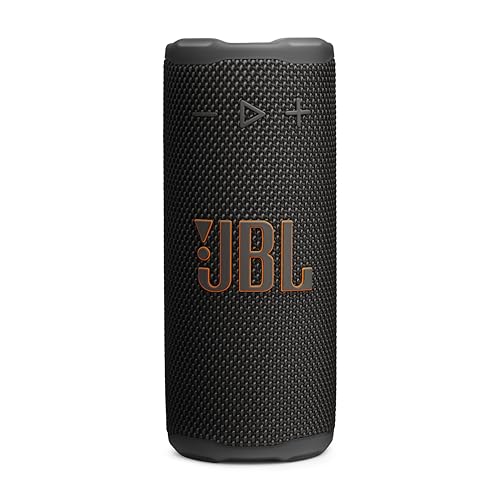
The JBL Grip is a pint-sized powerhouse designed for Americans who live for outdoor adventures, from beach bonfires to tailgate rallies. Small enough to grip in one hand, it cranks out professional-grade JBL sound that rivals bigger speakers, thanks to real-time AI analysis that boosts clarity and cuts distortion.
Perfect for active lifestyles, it thrives in real-world chaos like sandy shores or dusty campsites. Pair it with friends' speakers via Auracast for a shared playlist that fills the air, or let ambient lights pulse to your playlist for instant party vibes. The JBL Portable app lets you tweak lights and sound on the fly.
In performance tests, it holds up through long sessions without faltering, delivering consistent bold audio even after drops or dunks. Battery life stretches to cover full days of fun, making it a go-to for road trips or workouts.
Verdict: If you need tough, portable sound that survives everyday thrills, the JBL Grip earns top marks for value and versatility. Grab it for non-stop audio on the move.
Bold JBL Pro Sound shines with AI Sound Boost, analyzing tracks in real time to maximize output and minimize distortion. Expect punchy bass that thumps for beach jams, clear vocals for podcasts or calls, and highs that cut through outdoor noise without muddiness.
Volume reaches party levels from this compact body, filling small to medium spaces like patios or tents. Bluetooth stays stable over typical ranges, even around water or crowds, with quick reconnects.
Auracast takes it further by linking multiple units for wider stereo imaging or synced playback, turning solo sessions into group soundtracks effortlessly.
Built like a tank, the JBL Grip boasts IP68 waterproof and dustproof ratings, fully submersible for pool parties or rain-soaked hikes. It shrugs off 1-meter drops onto concrete, with a grippy exterior that stays secure in wet hands or cupholders.
Compact and lightweight, it weighs next to nothing for clipping to bags or tossing in coolers, yet feels premium with integrated ambient lights on the back panel for mood-setting glows.
Battery delivers up to 14 hours of playtime, with Playtime Boost adding 2 more hours when needed, perfect for all-day events. Charges fully between adventures, keeping downtime short.
Pros
- Ultra-compact footprint tucks discreetly under rooflines and patio beams
- Durable weather-resistant ABS housing withstands harsh weather conditions
- Clear vocal articulation makes background music and dialogue easy to hear
- Included swiveling hardware allows for fast and flexible mounting angles
Cons
- Bass response rolls off sharply below 100Hz due to the compact driver size
- Requires a standalone stereo receiver or amplifier to provide audio power
- Spring-loaded wire terminals can be tricky to use with thick gauge speaker cables
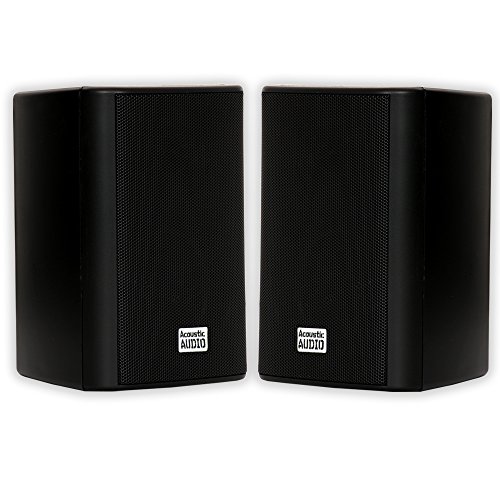
The Acoustic Audio by Goldwood AA351B speaker pair offers an accessible, durable sound solution for outdoor living areas and compact indoor setups. Designed as a traditional wired passive speaker set, these mini monitors require an external amplifier or receiver to operate. They are engineered to solve the common challenge of finding weather-resistant audio gear that does not dominate the visual aesthetic of your outdoor space.
These speakers are an ideal match for homeowners outfitting a patio, poolside pergola, covered deck, or detached workshop. Thanks to their compact 6-inch height, they blend effortlessly into corners or tuck neatly underneath roof eaves. Beyond outdoor settings, their balanced midrange also makes them a practical selection for indoor surround-sound channels or retail background music setups where unobtrusive hardware is a priority.
In real-world use, the AA351B speakers deliver surprising volume levels for their miniature footprint. While they are not meant to provide concert-grade low end, they reproduce acoustic tracks, podcasts, and casual playlists with solid clarity and minimal harshness at moderate volumes. The included mounting brackets allow you to tilt and swivel the audio directly toward your favorite seating spots, maximizing audio dispersion across open spaces.
Ultimately, the Acoustic Audio AA351B punches well above its size for listeners seeking dependable ambient audio on a budget. For deep sub-bass performance, adding a separate subwoofer to your receiver is recommended, but as standalone ambient speakers, they offer fantastic value and straightforward reliability.
Acoustic performance on the AA351B is driven by a two-way design featuring a 3-inch Poly Mica woofer and a 0.5-inch PEI dome tweeter. The high frequencies remain crisp and airy, lending sparkle to acoustic guitars, cymbals, and vocal tracks. Midrange reproduction is notably forward, which keeps spoken dialogue, sports broadcasts, and melodic instruments easy to understand even in open-air environments with ambient wind or yard noise.
With a rated frequency response spanning 100Hz to 20kHz, these speakers focus on tonal clarity rather than earth-shaking bass. The 3-inch woofer delivers tight, punchy upper bass that prevents the sound from feeling hollow, but true low-end sub-bass drops off naturally around the 100Hz mark. When paired with a dedicated subwoofer in an outdoor or garage audio system, the tonal balance becomes remarkably rich and full.
Efficiency is solid with an 89dB sensitivity rating at an 8-ohm load. This allows the AA351B to achieve clean, room-filling sound without pushing modest amplifiers into heavy distortion. The soundstage provides wide horizontal dispersion, ensuring that you do not need to sit directly in front of the speakers to enjoy balanced stereo imaging across your deck or patio.
The exterior of the AA351B is built around a sealed ABS plastic cabinet engineered specifically to resist seasonal weather swings. From scorching sun to winter frost and rain, the sealed enclosure safeguards sensitive internal components against moisture intrusion. The speaker measures a modest 6 inches high by 4.25 inches wide and 4 inches deep, weighing under two pounds per speaker for stress-free mounting on virtually any wall or post.
Installation is straightforward using the included powder-coated mounting brackets and hardware. The brackets facilitate multi-angle adjustment, letting you mount the units vertically or horizontally depending on clearance constraints. The butyl rubber woofer surrounds are an important hardware highlight, providing long-term elasticity and defense against humidity and UV degradation where traditional foam surrounds often rot.
Connectivity is handled via rear spring-loaded raw wire terminals. These terminals accept bare wire leads from standard audio cables or in-wall CL3-rated speaker wire. To get optimal results, drive these passive speakers with an amplifier or AV receiver capable of delivering between 20 and 250 watts per channel at 8 ohms.

Pros
- Compact 3.5x3.5x4.5-inch size fits anywhere without dominating space
- High-quality polypropylene woofers for reliable full-range sound
- Mountable with included brackets for versatile home installs
- Handles 20-200W per channel for powerful output
- Spring-loaded connectors make wiring hassle-free
Cons
- Requires separate amplifier or receiver - no built-in power
- Wired setup only, lacks wireless Bluetooth convenience
- Limited low-end bass due to 150Hz frequency start and small woofers
The Acoustic Audio AA321B is a pair of mountable indoor bookshelf speakers designed for traditional passive audio systems. These compact black units connect via raw speaker wire to any amplifier or receiver, delivering up to 400 watts of total power handling for enhanced home listening.
Perfect for American homeowners seeking affordable upgrades to bedrooms, home offices, or small living areas, they offer full-range sound from 2.5-inch polypropylene woofers. With 88dB sensitivity at 8 ohms, they punch above their size when paired with a capable amp.
In real-world use, expect clear mids and highs suitable for music, podcasts, or TV audio in intimate spaces. The sealed ABS cabinets and mounting brackets allow secure wall or shelf placement, making them a smart choice for clutter-free setups.
Overall verdict: A budget-friendly entry into quality bookshelf audio that shines in powered home environments, though best for those already owning an AV receiver.
These speakers provide full-range coverage from 150Hz to 20kHz, emphasizing clear vocals and highs with decent midrange from the 2.5-inch woofers. Bass is present but not deep, suiting casual listening over bass-heavy genres.
Volume levels scale well with 20-200 watts per channel, reaching room-filling output without distortion in small areas thanks to 88dB sensitivity. Ideal for steady performance in home offices or kitchens.
As wired passive units, they excel with stable amp connections, avoiding Bluetooth dropouts for consistent playback during long sessions.
Built with rugged black ABS sealed cabinets, these speakers endure indoor placement with a compact 3.5 x 3.5 x 4.5-inch footprint per unit, keeping them lightweight and unobtrusive.
Included mounting brackets and spring-loaded raw wire connectors ensure durable, secure installs on walls or shelves. No IP rating, but sealed design protects against dust in home settings.
No battery required - they run continuously as long as your amp is powered, eliminating charge times and offering unlimited playback for all-day home use.

Pros
- Durable IPX44 weather-resistant enclosure built for outdoor living spaces
- Crisp vocal reproduction and clear highs that cut through outdoor ambient noise
- Included swivel brackets make vertical and horizontal positioning effortless
- Passive wired design means zero worry about battery degradation or charging cycles
Cons
- Requires a standalone home receiver or amplifier since these are passive wired speakers
- Compact 4-inch woofers do not produce sub-bass frequencies without an external subwoofer
- 4-ohm load requires checking amplifier compatibility when running multiple speaker pairs
The Rockville HP4S BK outdoor and indoor speakers offer a practical, high-value audio solution for homeowners looking to extend their entertainment beyond the living room. Built to handle everyday weather while maintaining a discrete aesthetic, this matched pair is tailored for patios, backyards, garages, or secondary surround channels. With heavy-duty brackets included in the box, installation on exterior walls, pergolas, or eaves is straightforward and hassle-free.
In everyday use, the HP4S BK performs admirably across a wide variety of music genres, podcasts, and sports broadcasts. Vocals stay articulate and distinct, cutting cleanly through ambient outdoor noises like conversational chatter or gentle breezes. While they need an external stereo amplifier or multi-zone receiver to supply power, their standard 4-ohm design pairs efficiently with mainstream audio gear without complicating the setup.
Ultimately, these speakers hit the sweet spot for listeners seeking reliable, weather-ready sound on an accessible budget. They will not rattle the ground with visceral sub-bass, but their balanced delivery and flexible aiming make them a solid addition to any outdoor living space or home media area.
Audio performance on the Rockville HP4S BK is engineered for clarity and projection. With a combined capability of 360 watts peak and 120 watts RMS, the system can reach satisfying volume levels without breaking into harsh distortion. Vocals, acoustic instruments, and dialogue project with crisp articulation, making them great for backyard barbecues, background music during dinners, or television audio on an outdoor patio.
Due to the compact 4-inch driver enclosure, low-end bass response is punchy rather than deeply resonant. Mid-bass tones carry enough weight for rock, pop, and country, but serious audiophiles seeking earth-shaking rumble will want to pair them with a dedicated outdoor or indoor subwoofer. Directing the swivel brackets toward corner boundaries can also help maximize natural acoustic reflection and low-end richness.
Engineered for outdoor durability, the HP4S BK features an IPX44-rated weather-resistant housing that holds up against wind, rain, splashing water, and snow. The removable rustproof grilles protect the internal components from moisture and outdoor debris, ensuring the drivers look sharp and remain fully functional season after season.
As passive speakers, these units do not rely on an internal battery, eliminating the hassle of recharge cycles, battery degradation, or limited runtimes. Instead, continuous power is supplied directly through your amplifier using gold-plated spring-loaded wire terminals. Weighing in at a manageable size, each cabinet mounts securely onto wood, brick, or vinyl siding without causing structural strain.
Pros
- Surprisingly powerful HD sound for its compact size
- Up to 24 hours playtime keeps music going all day
- Effortless TWS pairing for stereo bliss
- IPX5 rating handles rain, splashes, and sweat
- Fun colorful lights enhance every party moment
Cons
- Battery life drops faster with lights on and high volume
- IPX5 protects from splashes but not full submersion
- Bass punch limited compared to larger premium models
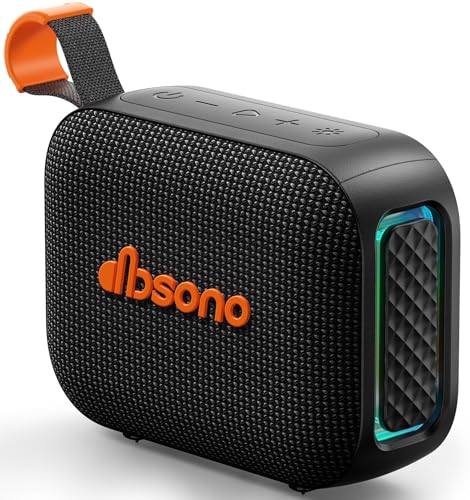
The dbsono portable speaker packs pro-level features into a budget-friendly design, making it a go-to for Americans who live outdoors. At just 0.7 pounds and pocket-sized, it delivers HD sound with deep bass, mids, and highs that punch above its weight class. Pair two for TWS 360-degree stereo, and you've got party-ready audio anywhere from tailgates to dorm rooms.
Ideal for hikers, beachgoers, campers, and gym rats, this speaker thrives in real-world action. Its IPX5 rating shrugs off sweat and splashes during runs or poolside hangs, while RGB lights add flair to birthdays, holidays, or casual vibes. Bluetooth 5.3 ensures quick, drop-free pairing with your phone or tablet.
In performance tests, it holds steady at moderate volumes for hours, with lights optional to save juice. No app needed, just pure plug-and-play fun. Verdict: A stellar value for everyday adventures and thoughtful gifts that wow without breaking the bank.
Expect surprisingly rich audio from this compact powerhouse: deep bass thumps for hip-hop or rock on the trail, full mids keep vocals clear during podcasts, and crisp highs shine in pop tracks. TWS pairing two units creates true 360-degree stereo, filling backyards or beach setups with balanced, distortion-free sound even at 70% volume.
Bluetooth 5.3 delivers stable connections up to 30 feet, skipping-free for workouts or drives. Volume peaks loud enough for small groups but shines in personal or intimate settings like home office calls or solo hikes. No EQ tweaks needed; out-of-box tuning suits most genres for everyday American listening.
Built rugged for US lifestyles, the IPX5 waterproofing withstands water jets, sweat, and rain - perfect for beach volleyball, fishing trips, or gym sessions without worry. At 4.53 x 1.97 x 3.43 inches and 0.694 pounds, it's featherlight and space-saving, clipping to bags or pockets effortlessly for cycling or camping.
A massive built-in battery cranks up to 24 hours at 30% volume with lights off, powering full-day parties or weekend getaways. Real-world use varies with louder levels or light shows cutting time to 12-15 hours, but quick USB-C recharges keep you going. Durable shell and grippy design ensure it survives drops and daily abuse.
Understanding Speaker Enclosure Design and Color Selection
Loudspeaker enclosures are built primarily to isolate rear sound waves from front sound waves while disappearing into their environment. Audio enthusiasts and casual buyers frequently wonder why cabinet designers default to dark shades rather than offering broad color palettes. Dark color schemes serve a dual purpose by satisfying optical requirements in listening rooms and meeting structural standards in material manufacturing. While listeners may assume cabinet coloration is purely a decorative choice, acoustic engineers and industrial designers treat enclosure surfaces as functional components. Understanding the factors behind this standard reveals a blend of cinema physics, polymer chemistry, and consumer electronics history.
Visual Immersion and Light Absorption in Theater Environments
Dedicated listening rooms and modern living rooms prioritize visual clarity when video content is playing. A bright or reflective speaker enclosure positioned adjacent to a high-definition television or projection screen catches stray illumination. This reflected light draws the listener’s eyes away from the screen, breaking visual immersion during movies or gaming sessions. Matte black finishes absorb ambient room lighting effectively, which allows the physical cabinets to fade into the background shadows.
Multichannel surround setups expand this optical requirement across the entire room. Center channel speakers sit directly beneath screens, while satellite and surround speakers often flank viewer sightlines. A glossy white cabinet or polished natural wood cabinet near a display creates distracting hot spots whenever bright scenes appear. Using dark finishes on indoor bookshelf speakers ensures that sound remains the focal point while the physical audio hardware stays visually unobtrusive.
Professional cinema design standards enforce strict limits on ambient room reflections to maintain projector contrast ratios. Stray light bouncing off light-colored front speaker baffles directly degrades black levels on projection screens. Commercial theaters wrap acoustic walls and stage baffle boxes in dark fabrics to prevent light bounce. Consumer home theater speakers adopt these exact principles so home cinema enthusiasts achieve comparable theatrical black levels.
Material Science: The Role of Carbon Black in Plastics and Resins
Polymer engineering provides one of the strongest technical explanations for dark speaker enclosures. Many modern speakers, including models like the Acoustic Audio AA321B and AA351B, utilize molded acrylonitrile butadiene styrene, commonly known as ABS. In its raw form, ABS resin is a translucent milky white or off-yellow substance that degrades when exposed to heat and environmental stress. Manufacturers blend raw plastic resin with industrial carbon black, an additive that reinforces tensile strength and increases impact resistance.
Carbon black particles act as an exceptional ultraviolet stabilizer by absorbing damaging light rays before they break polymer chains. Without this additive, outdoor enclosures and portable speaker bodies would become brittle, chalky, and structurally weak over time. Adding black pigment is not merely an aesthetic finish but an essential chemical process that prevents structural cracking. For outdoor wall mounts and rugged enclosures, this additive ensures the cabinet maintains an airtight acoustic seal over years of environmental exposure.
Thermal management in outdoor listening spaces also depends on consistent material behavior. Dark pigments distribute thermal energy uniformly throughout molded resin structures, reducing the risk of localized warping under strong direct sunlight. Molded speaker enclosures retain their dimensional stability around rubber gaskets, terminal cups, and front grille tabs when reinforced with carbon black. This structural longevity makes dark polymers the default engineering choice for high-volume speaker production.
Manufacturing Efficiency and Production Yield Rates
Industrial manufacturing relies heavily on repeatable quality control and predictable yield rates across thousands of units. Dark finishes conceal subtle surface variations, minor mold seams, and microscopic tool marks that occur during injection molding. Lighter plastics, especially white or pastel tones, tend to reveal internal knit lines, resin flow patterns, and uneven wall cooling during fabrication. Producing consistent white or colored cabinets requires purer raw materials and tighter molding parameters, which raises overall production scrap rates.
Assembly lines also run more efficiently when hardware coatings and fasteners share a uniform palette. Black anodized screws, dark mounting brackets, and dark rubber gaskets integrate cleanly without requiring custom color-matching runs. A factory can produce thousands of outdoor brackets, swivel assemblies, and terminal cups without worrying about color batch drift. This manufacturing consistency keeps high-performance audio hardware accessible for budget-conscious home and commercial installations.
Acoustic and Enclosure Materials: From MDF to Molded Polymers
Cabinet construction materials have evolved significantly from traditional timber boxes to advanced composite panels and engineered polymers. Medium-density fiberboard, or MDF, remains the dominant material for wooden speaker boxes due to its uniform density and acoustic damping qualities. Raw MDF has an unfinished light brown appearance that requires a protective outer layer to seal the wood fibers against moisture. Black vinyl wraps and textured dark laminates provide a durable barrier that adheres smoothly to fiberboard seams without bubbling.
Compact satellite speakers and outdoor enclosures frequently use sealed ABS enclosures instead of heavy wood fiber panels. The Acoustic Audio AA321B demonstrates how a compact ABS sealed cabinet controls internal air pressure to deliver accurate driver response. Molded cabinets eliminate internal joint leaks while maintaining the rigid boundary needed to prevent unwanted cabinet resonance. Applying a dark, non-resonant textured finish across these polymer shells preserves structural integrity and dampens superficial surface vibrations.
Surface texture on speaker cabinets also plays a secondary role in controlling edge diffraction effects. Sharp cabinet edges can scatter high-frequency acoustic waves, creating minor ripples in the speaker’s on-axis frequency response. Textured matte black vinyl and micro-textured plastics soften microscopic surface reflections better than smooth, high-gloss lacquers. This practical acoustic advantage allows speaker designers to optimize baffle geometry without relying on costly finishing techniques.
Wear, Staining, and Long-Term Maintenance Advantages
Audio gear often occupies high-traffic areas where physical contact, dust accumulation, and airborne pollutants are inevitable. Dark enclosures naturally disguise surface scuffs, finger oils, and everyday airborne grime far better than lighter alternatives. White speakers installed in kitchens, workshops, or outdoor patios often suffer from yellowing caused by grease, smoke, or sunlight exposure. Black finishes help equipment retain a clean, professional aesthetic for years with only basic dusting required.
Mounting and adjustments also introduce physical friction that can damage delicate cabinet coatings. Models designed with swivel brackets, such as the Rockville HP4S BK, require regular physical handling during installation to aim sound toward the listening zone. Dark powder-coated metals and textured plastics resist visible gouges when tools or hands tighten the mounting hardware. Choosing dark hardware reduces owner maintenance while keeping wall-mounted or shelf-mounted speakers looking tidy over decades of operation.
Component Matching: Cones, Domes, Grilles, and Hardware
Loudspeakers consist of multiple exposed mechanical parts that must work in harmony, including woofers, tweeters, surrounds, and protective grilles. Many driver components, such as butyl rubber surrounds and polypropylene or poly mica cones, are inherently dark due to their constituent compounds. When audio designers build a speaker without a protective front cloth, dark cones blend seamlessly into a dark baffle plate. Pairing dark woofers with matching PEI dome tweeters creates a clean, unified presentation across the entire front baffle.
Removable or fixed grilles serve as another critical visual and mechanical layer for speaker longevity. Perforated metal grilles, such as the rustproof front mesh on the Rockville HP4S BK, protect delicate voice coils and suspension spiders from accidental physical impact. Black paint or powder coating on metal mesh hides the dark internal drivers resting directly behind the perforations. Listeners who evaluate compact stereo speakers appreciate how uniform dark components look coherent whether the front grilles are attached or removed.
Internal driver hardware like stamped steel or cast aluminum baskets also benefits from dark anti-resonance coatings. When raw metal driver frames sit inside ported or semi-translucent enclosures, untreated metal reflections can look unsightly through grille openings. Applying black powder coats or electrophoretic deposition to driver baskets minimizes internal light reflection and provides corrosion resistance. Every mechanical interface from terminal posts to voice coil dust caps coordinates aesthetically with a dark cabinet theme.
Outdoor Weatherability and Ultraviolet Radiation Protection
Outdoor audio installations subject enclosures to extreme shifts in temperature, driving rain, seasonal ice, and intense solar radiation. Sealed enclosures like the Acoustic Audio AA351B and IPX44-rated Rockville HP4S BK depend on resilient materials to protect internal crossovers and wiring. Black ABS plastic containing concentrated carbon black prevents solar radiation from breaking down molecular bonds within the cabinet walls. In contrast, white outdoor plastics often degrade prematurely, developing chalky residue and micro-fissures that allow moisture ingress.
Portable audio gear faces even harsher treatment during travel to pools, lakes, and backyard parties. Compact models like the JBL Grip feature IP68 dust-proof and waterproof seals, along with drop-proof bumpers engineered to survive impact on concrete. Rugged outdoor hardware relies on heavy-duty dark elastomers that absorb shock without revealing stains, dirt, or abrasions. Readers investing in waterproof outdoor speakers gain peace of mind knowing that dark protective coatings maintain their weather resistance through years of outdoor exposure.
Historical Evolution: From Furniture Cabinets to Studio Aesthetics
The dominance of dark speaker cabinets represents a major historical transition in audio consumer culture. Mid-twentieth-century hi-fi systems were built inside elaborate wooden furniture cabinets finished in walnut, cherry, or teak to match living room sideboards. During the late 1970s and 1980s, professional recording studios popularized utilitarian matte black monitors designed strictly for acoustic accuracy. Consumer electronics companies quickly adopted this functional studio aesthetic to signal high fidelity, modern engineering, and serious technical capability.
Live performance audio, touring road cases, and guitar amplifier cabinets also reinforced the utility of dark finishes. Stage gear wrapped in heavy black Tolex vinyl or dark industrial carpeting proved capable of withstanding rough handling by road crews. Musicians and sound engineers associated black equipment with roadworthy durability, minimal stage distraction, and functional dependability. This pro-audio ruggedness gradually migrated into residential home audio and commercial installation gear.
The rise of home entertainment hardware in the late 1980s cemented black as the consumer industry standard. Televisions, VHS players, CD transports, and integrated stereo amplifiers abandoned brushed silver aluminum in favor of black anodized metal and molded plastic. Matching audio speakers to this emerging black component ecosystem created visual symmetry across home entertainment racks. Today, black enclosures remain the safest neutral standard for industrial audio designers worldwide.
When Non-Black Speakers Make Sense in Audio Installations
Dark cabinets remain standard, but non-black speakers serve practical roles in specific architectural settings. In-wall or in-ceiling installations frequently use paintable white magnetic grilles designed to blend flush against white drywall or plaster ceilings. Bright residential living rooms decorated in Scandinavian or minimalist styles may benefit from crisp white or natural timber bookshelf speakers. Architectural installations often require audio hardware to camouflage into light masonry, pale wood paneling, or white patio siding.
Portable lifestyle speakers also break from tradition by offering colorful housings and dynamic illumination. The dbsono portable Bluetooth speaker exemplifies this category by combining a compact black housing with integrated multi-color lighting shows. Similarly, the JBL Grip incorporates an ambient back-panel light that allows users to customize mood lighting through a companion application. These modern designs demonstrate that while the protective cabinet foundation remains black for durability, creative accents provide visual versatility.
Practical Takeaways for Integrating Audio Hardware
Deciding on speaker finishes ultimately comes down to your installation environment, lighting conditions, and surrounding equipment. When assembling a multichannel cinema room or mounting outdoor speakers under eaves, dark enclosures provide unmatched light control, UV resistance, and longevity. Verifying proper amplifier power matching, nominal impedance ratings, and safe mounting techniques matters far more to your acoustic experience than cabinet color alone. Dark speaker cabinets simply offer the most reliable, durable, and acoustically neutral foundation available for any home or outdoor sound system.
Routine maintenance on dark speaker enclosures requires minimal effort compared to lighter alternative finishes. Lightly dusting speaker grilles and wiping molded ABS cabinets with a dry microfiber cloth prevents dust accumulation without dulling the protective finish. Checking speaker wire connections for clean contact and ensuring mounting brackets remain securely fastened guarantees reliable audio performance over time. Choosing standard dark finishes allows you to expand or upgrade individual audio components in the future without visual mismatches.


Write Your Review
No reviews yet. Be the first to share your experience!