


Listening to unfamiliar spoken languages often reveals surprising acoustic traits, especially when reproduced through home audio gear. Understanding how chinese sounds to non chinese speakers involves exploring how pitch, tonal inflection, and consonant articulation strike ears accustomed to non-tonal languages. While native English relies heavily on sentence stress and intonation for emotional nuance, languages like Mandarin use lexical pitch variations within individual syllables to change word meanings entirely. When playing spoken dialogue or pronunciation tracks through home sound systems, evaluating clear vocal reproduction helps listeners distinguish these subtle auditory shifts. Many audio enthusiasts even use spoken tracks alongside audio tracks to demo speaker clarity to gauge dialogue articulation.
Audio reproduction systems play a major role in whether speech sounds distinct or muddled. Subtle tonal rises, falling inflections, and sharp sibilants require balanced midrange frequencies and crisp high-end response from your drivers. Unbalanced audio hardware with bloated bass can easily swallow delicate voice inflections, making spoken Chinese sound flat or indistinct to non-native ears. Choosing proper listening setups, exploring dedicated audio CD courses, and fine-tuning speaker placement ensure every spoken syllable remains clear and engaging.


Understanding Acoustic Perception and Audio Reproduction of Spoken Chinese
Spoken Chinese presents a distinctive acoustic landscape that sounds radically different from Indo-European tongues to an unfamiliar ear. People hearing Mandarin or Cantonese for the first time often describe the sound as melodic, percussive, rhythmic, or sharply accented. These impressions stem directly from phonological traits like lexical tones, syllable-timed meter, and a dense concentration of high-frequency sibilants. Reproducing these acoustic details accurately requires audio speakers capable of transparent midrange response and precise high-frequency control. Without clean sound reproduction, the delicate pitch glides and consonant bursts that give the language its identity blur together into indistinct audio.
The Auditory Profile of Chinese to Non-Native Ears
To someone unfamiliar with Sino-Tibetan languages, spoken Chinese often sounds like a sequence of musical pitches shifting rapidly within short vocal bursts. In Mandarin Chinese, every syllable carries one of four distinct lexical tones, plus an unstressed neutral tone, which alter both pitch height and contour. The first tone maintains a high, level pitch, while the second rises sharply like an inquisitive inflection in English questions. The third tone dips down before rising again, and the fourth drops abruptly with decisive vocal energy. Because pitch variation governs word meaning rather than general emotional emphasis, vocal delivery features continuous pitch modulations that strike non-native listeners as unusually sing-song or undulating.
Cantonese expands this tonal variety further with six to nine distinct tonal contours, creating even more microtonal shifts in everyday conversation. These pitch movements occur across narrow frequency windows within the fundamental human voice range, typically falling between 85 Hz and 255 Hz. When listening to voice recordings on low-quality speakers, these rapid tonal inflections can easily flatten out if the cabinet or driver cannot resolve quick dynamic shifts. Non-native listeners then struggle to hear where words begin and end, perceiving only an unbroken stream of unfamiliar pitches. Clear acoustic playback highlights these micro-variations, making the individual syllables audible as discrete phonetic units.
Syllable-Timed Cadence Versus Stress-Timed Languages
Acoustic rhythm shapes how human speech registers in the brain. English, German, and Russian are stress-timed languages, meaning the rhythm flows between stressed syllables while unstressed syllables compress into shorter durations. In contrast, Chinese varieties are syllable-timed, meaning each syllable occupies a relatively uniform duration in spoken cadence. This steady, metronomic pacing often strikes non-native ears as staccato, machine-like, or percussive. Rather than swelling and receding in lengthy sentence arcs, spoken Chinese delivers steady rhythmic pulses that create a distinctive clipped momentum.
This rhythmic structure directly influences audio listening fatigue when heard through harsh or unrefined speaker drivers. Because each syllable lands with comparable acoustic energy, poorly damped tweeters or peaky upper midrange drivers can sound aggressive during extended listening sessions. A listener trying to follow audio course recordings needs a speaker system with controlled transient response to prevent listener fatigue. Balanced speaker drivers reproduce the steady tempo naturally without emphasizing the percussive impact of each syllable boundary.
Vocal Consonants and High-Frequency Sibilants
Consonant distribution in Chinese creates another defining acoustic impression for outside listeners. Mandarin features an unusually high number of sibilant fricatives and affricates, transcribed in standard romanization systems as x, s, sh, z, c, zh, j, and q. Sounds like the dental sibilant “s” and the alveolo-palatal “x” require rapid airflow against the teeth or hard palate, producing sound energy concentrated between 3,000 Hz and 8,000 Hz. For someone accustomed to languages with wider consonant distribution across the entire vocal tract, Chinese speech can sound sharp, hissing, or intensely crisp.
Aspirated consonants like p, t, k, and ch also release intense bursts of air that generate rapid transient spikes in the upper frequencies. If you play voice recordings through audio equipment with cheap, unshielded tweeters, these high-frequency sounds can turn into harsh sibilance or distorted splashiness. Soft dome tweeters and well-engineered crossovers smooth out these spikes while keeping the consonants legible. Proper high-frequency reproduction lets listeners appreciate the crisp consonant definition of the language without enduring piercing acoustic glare.
Midrange Driver Performance and Speech Intelligibility
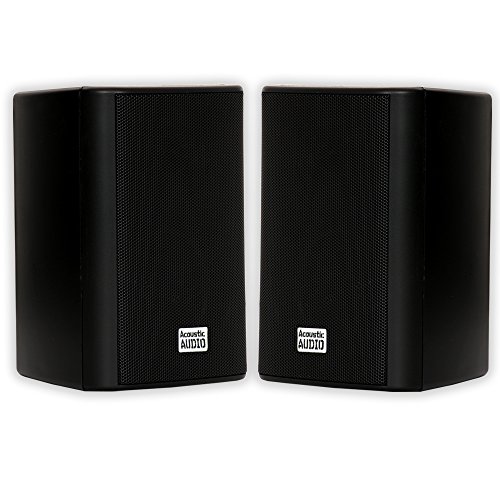
The human voice centers its fundamental frequencies and critical speech harmonics across the midrange band from 300 Hz to 4,000 Hz. When listening to vocal training programs or spoken dialogue, speaker midrange accuracy determines overall intelligibility. Standard two-way bookshelf speakers or dedicated stereo loudspeakers often use dedicated midrange cones or balanced mid-bass drivers to keep this band linear and uncolored. A speaker with a recessed midrange causes vocals to sound distant, hollow, or buried behind background instrumentation.
Pronunciation nuances require faithful harmonic tracking so the listener can separate throat resonance from nasal vowels. Chinese uses both front nasal endings, like the “n” sound, and back nasal endings, like “ng”, which rely on subtle shifts in vocal tract resonance between 1,000 Hz and 2,500 Hz. If a speaker cabinet vibrates excessively or suffers from poor internal bracing, cabinet coloration masks these fine nasal distinctions. Investing in rigid enclosures with well-tuned crossover networks ensures that voice fundamentals remain authentic and cleanly separated from cabinet resonances.
Why Subwoofer Crossover and Bass Bloat Distort Spoken Tones
Low-frequency performance might seem secondary for spoken word tracks, but improper bass handling frequently ruins vocal clarity. Many consumer speaker systems feature boosted mid-bass around 100 Hz to 200 Hz to make music sound punchy and warm. However, this bass hump exaggerates vocal chest resonance, producing a boomy, muffled quality often called the proximity effect. When listening to male speakers in instructional audio, excessive mid-bass muddies the fundamental frequencies, obscuring the rapid pitch shifts that define lexical tones.
Subwoofers with crossover points set too high can also pull vocal weight away from the front stereo image. If low vocal fundamentals route through a poorly placed subwoofer, speech loses its pinpoint acoustic location and clarity. Dialing in a lower crossover frequency, typically around 80 Hz, prevents chest resonance from bleeding into the sub. Desktop setups using a compact desktop multimedia speaker system benefit greatly when the bass volume is calibrated conservatively, keeping dialogue crisp rather than overwhelmed by unnecessary low-end rumble.
Audio Format Differences for Spoken Word Learning
Audio source quality directly affects how speech sounds when played through accurate speakers. Physical media packages like the Living Language Chinese, Essential Edition provide three dedicated audio CDs designed to deliver uncompressed 16-bit, 44.1 kHz PCM audio. Uncompressed CD audio preserves the entire dynamic envelope of the speaker’s voice, including quiet breath intakes and the natural decay of nasal syllables. Highly compressed digital files or low-bitrate online streams often discard these delicate micro-details through aggressive lossy encoding algorithms.
Lossy compression frequently smears high-frequency transients, turning sharp affricates like “q” and “zh” into watery, phase-shifted digital artifacts. When studying a new language or evaluating speech tone, these compression artifacts can mislead non-native ears into hearing incorrect phonetic cues. Similarly, courses like Living Language English for Chinese Speakers rely on clean CD audio tracks so learners can perceive subtle English vowel distinctions without compression haze. Playing physical audio discs through a dedicated CD transport or lossless player connected to quality stereo speakers guarantees maximum acoustic fidelity.
Acoustic Demands of Classical Poetry Recitation
Listening to classical Chinese recitation reveals an entirely different dimension of the language’s acoustic character. In poetic anthologies like How To Read A Chinese Poem, spoken Tang poetry follows strict meter, tonal balance, and rhyming schemes that highlight the musicality of Chinese phonetics. Classical recitation often elongates specific vowel sounds and emphasizes tonal contrasts, creating sustained vocal resonances that test a speaker system’s decay characteristics and stereo imaging. These sustained vowel tones require clean acoustic reproduction so each poetic stanza retains its melodic shape.
A speaker system with good transient speed handles the transitions between elongated level tones and abrupt falling tones with grace. Poorly controlled speaker drivers linger too long on resonant vowel sounds, creating acoustic overhang that blurs the start of the following poetic line. High-quality paper, polypropylene, or woven composite speaker cones damp internal resonances quickly, allowing poetic cadence to breathe naturally. Hearing classical verses through responsive drivers lets non-native listeners appreciate why Chinese poetry was historically composed to be sung or chanted aloud.
Speaker Placement and Room Reflections for Vocal Precision
The listening room exerts just as much influence over spoken sound quality as the speakers themselves. Hard surfaces like bare walls, windows, and hardwood floors reflect sound waves, creating early reflections that interfere with direct sound from the speaker drivers. This reflection phenomenon, known as comb filtering, causes specific vocal frequencies to cancel out while boosting others unnaturally. In an untreated room, spoken dialogue can sound echoey or hollow, making it difficult for an unfamiliar listener to track fast pronunciation.
Positioning speakers properly helps mitigate these acoustic issues without requiring expensive room treatments. Angling the speakers inward toward the primary listening spot, an adjustment called toe-in, focuses direct high frequencies toward the listener’s ears and minimizes side-wall bounces. Keeping bookshelf speakers away from rear walls also reduces artificial bass reinforcement that thickens spoken dialogue. Placing speakers on dedicated isolation pads or stands prevents vibrations from transferring into desks or shelving, maintaining a focused and stable vocal phantom center.
Practical Audio Checks for Language Listening Systems
Evaluating an audio speaker system for vocal accuracy requires a few simple, targeted listening tests. Begin by playing a clean, uncompressed spoken voice track at a moderate conversational volume between 65 dB and 75 dB SPL. Listen carefully to the sibilant consonants to ensure the “s” and “sh” sounds do not buzz, hiss unnaturally, or cause ear discomfort. Next, focus on the pitch contour of individual syllables to verify that rising and falling tones sound smooth and distinct rather than flat or robotic.
If speech sounds muffled or difficult to understand, check your amplifier’s tone controls or equalizer settings. Reducing mid-bass frequencies slightly around 125 Hz to 250 Hz often clears up vocal murkiness instantly. If the highs sound harsh, verify that tweeters are positioned at ear level rather than pointing directly at hard surfaces. Taking time to fine-tune speaker positioning, source material, and volume levels transforms how foreign speech sounds, allowing non-native listeners to perceive the true melodic depth and structural elegance of spoken Chinese.






Write Your Review
No reviews yet. Be the first to share your experience!