


Expanding home audio across multiple living spaces often leads listeners to evaluate proprietary streaming platforms alongside existing wireless gear. When setting up a multiroom system, questions frequently arise regarding how proprietary platforms communicate with standard consumer hardware. Many listeners specifically want to know if can heos connect to any bluetooth speaker so they can repurpose portable gear they already own. Connecting diverse wireless units seems like a convenient way to save money and expand coverage without buying duplicate hardware.
Proprietary network ecosystems operate on synchronized Wi-Fi architecture, which differs substantially from standard short-range Bluetooth streams. While many buyers hope to link third-party hardware freely, wireless audio standards enforce strict boundaries between network-synchronized playback and ad-hoc pairing. Comparing integrated smart gear against flexible standalone Bluetooth speaker hardware reveals why network ecosystems maintain closed multiroom environments. Understanding how platforms like HEOS handle incoming and outgoing signals helps prevent costly purchasing mistakes before investing in new audio hardware.

Pros
- Ultra-compact profile easily tucks beneath TVs without blocking screens or IR sensors
- Outstanding vocal clarity and detailed soundstage for movies, shows, and podcasts
- Built-in HEOS unlocks high-resolution multi-room audio and top streaming apps
- Dolby Atmos and DTS:X support creates an expansive listening atmosphere
Cons
- Deep low-end rumble requires adding an external wireless subwoofer
- Virtual Atmos height effects cannot fully match dedicated up-firing physical ceiling speakers
- Higher investment compared to standard entry-level standalone soundbars
The Denon Home 550 is an ultra-compact smart soundbar speaker engineered to bring true cinematic audio into rooms where space is at a premium. Measuring just under 26 inches across, this sleek soundbar eliminates the bulky footprint of traditional home theater receivers and oversized audio bars. Denon tailored this speaker specifically for movie buffs, apartment dwellers, and discerning music fans who desire immersive audio without cluttering their living environment.
In real-world testing, the Denon Home 550 excels with its seamless plug-and-play setup and comprehensive connectivity. Connecting directly to your 4K television through eARC HDMI, it instantly takes command of TV audio while passing high-dynamic-range video formats like Dolby Vision and HDR10 directly through without signal degradation. Built-in Amazon Alexa makes everyday control effortless, responding swiftly to voice commands for adjusting volume levels, switching music tracks, or controlling compatible smart home gear.
Beyond movies, the built-in HEOS multi-room platform turns this television speaker into a versatile whole-home music powerhouse. Streaming tracks from services like Spotify, TIDAL, and Pandora is fluid and lag-free, allowing the speaker to double as your primary living room stereo. While serious home theater purists might eventually crave a dedicated wireless subwoofer for bone-shaking rumble, the speaker operates brilliantly on its own right out of the box.
Overall, the Denon Home 550 strikes a magnificent balance between compact form and high-fidelity sound. It serves as an exceptional standalone solution for smaller living rooms, bedrooms, or gaming stations, with the welcome flexibility to expand into a full wireless surround system down the road.
Under the acoustic fabric, the Denon Home 550 packs a four-driver configuration supported by passive bass radiators that deliver a rich, balanced sound profile. Dialog emerges with pristine clarity, ensuring that hushed conversations in dramatic films remain clearly intelligible without needing to constantly turn up the volume. The integration of Dolby Atmos and DTS:X digital processing broadens the perceived soundfield well beyond the 26-inch chassis, creating height and width cues that bring video games and blockbuster films to life.
Bass response is surprisingly punchy and controlled for a speaker of this size. While it avoids the artificial, boomy distortion common in budget soundbars, the dual passive radiators provide enough mid-bass warmth to give explosions and rhythm sections satisfying presence. Even when pushed toward higher volume thresholds, the digital signal processing keeps distortion in check, preserving vocal separation and acoustic instrument textures cleanly.
Wireless connectivity remains rock-solid whether streaming via Wi-Fi, Apple AirPlay 2, or standard wireless pairing. The speaker maintains stable synchronization with video content over HDMI eARC, completely eliminating distracting lip-sync delays. When linked to other HEOS speakers across different rooms, audio stays perfectly locked in phase without annoying drops or stutter.
Engineered for clean placement in modern entertainment centers, the Denon Home 550 features a refined 26-inch footprint and weighs a solid 7.3 pounds. Its understated dark fabric wrap and rounded corners blend effortlessly into contemporary home decor, fitting neatly beneath most TV displays without blocking the screen or television infrared receivers. Capacitive touch controls on the top surface illuminate smoothly when your hand approaches, providing an intuitive tactile experience.
Unlike portable outdoor speakers that require battery packs and water-resistant rubber coatings, the Denon Home 550 is designed specifically for stationary home theater setups and runs on standard AC wall power. This continuous power supply delivers uncompromised dynamic amplifier performance, driving its multiple acoustic drivers at peak efficiency without ever throttled output to preserve battery life or requiring recharges between movie nights.
While it is strictly an indoor speaker not meant for pool decks or wet environments, the premium construction materials ensure long-term durability on your console or wall-mounted beneath your display. For homeowners prioritizing persistent audio power and an uncluttered setup, the tethered power design provides complete reliability without ever worrying about playback time limits.
Wireless Compatibility Guide: Can HEOS Connect to Any Bluetooth Speaker?
The short answer is no, a HEOS system cannot connect to any arbitrary Bluetooth speaker to create a synchronized multiroom audio network. HEOS relies on local Wi-Fi data transfer rather than open-ended Bluetooth transmission to manage multi-speaker playback across living spaces. While you can stream audio from a smartphone into a HEOS component using Bluetooth, that same device cannot broadcast synchronized multiroom audio out to generic third-party Bluetooth receivers. Knowing this limitation early prevents frustration when attempting to pair mismatched wireless devices throughout your home.
The Direct Answer on HEOS and Third-Party Bluetooth Pairing
Denon designed the HEOS platform as a closed, high-resolution Wi-Fi multiroom network that requires mutual handshaking between certified HEOS components. When listeners ask if can heos connect to any bluetooth speaker, they usually imagine grouping a battery-powered speaker on a patio with a soundbar in the living room. Standard Bluetooth speakers lack the network hardware, proprietary HEOS firmware, and clock-synchronization protocols necessary to join that unified Wi-Fi group. As a result, the HEOS mobile application will never detect a standard third-party Bluetooth speaker as an available audio zone.
The primary design goal of HEOS is delivering zero-latency, high-resolution audio across multiple rooms simultaneously. Standard Bluetooth connections introduce variable signal buffering and compression that would degrade synchronized playback. If the platform allowed arbitrary Bluetooth units to join a multiroom Wi-Fi group, the resulting audio delay would create intolerable room-to-room echo. Denon therefore restricts multiroom grouping exclusively to hardware running dedicated HEOS software.
Some buyers assume that modern smart speakers can automatically bridge between different wireless technologies through cloud software. While voice assistants can control certain basic playback commands, they cannot force two fundamentally incompatible streaming protocols to share synchronized audio channels. A standard Bluetooth speaker operates as a single-point slave device, waiting for an audio host to send an encoded stream. Because HEOS is not a universal Bluetooth host transmitter for whole-home groupings, third-party speakers remain outside the ecosystem.
Network Streaming Architecture vs Point-to-Point Bluetooth
To understand why this compatibility barrier exists, listeners must evaluate how Wi-Fi multiroom networks fundamentally differ from standard Bluetooth links. Wi-Fi audio operates across your home local area network, utilizing substantial bandwidth to move uncompressed or high-resolution audio files between connected zones. Devices communicate through router-managed data packets, allowing a master unit to synchronize playback timestamps across dozens of endpoints. This local network foundation ensures that every speaker plays identical notes at the exact same millisecond.
Bluetooth takes an entirely different technical approach by establishing a direct point-to-point radio link between a single transmitter and a single receiver. Standard consumer Bluetooth operates with limited radio frequency bandwidth, necessitating heavy codec compression like SBC or AAC to transmit digital music. Furthermore, Bluetooth links introduce noticeable latency due to internal digital signal processing and buffer queues. These latency figures fluctuate constantly based on interference, physical distance, and individual receiver processing chips.
Attempting to join a high-bandwidth Wi-Fi network with a compressed, latency-prone Bluetooth connection undermines the entire concept of whole-home audio. When investigating advanced powered wireless audio setups, listeners often note that robust multiroom platforms prioritize stability and timing accuracy above broad universal pairing. Denon prioritized uncompromised acoustic alignment across rooms over loose compatibility with generic battery-powered accessories. This structural choice ensures seamless music playback, but it requires consumers to purchase compatible hardware within the same family.
Bluetooth Input vs Bluetooth Output on Modern HEOS Devices
Much of the ongoing confusion surrounding HEOS and Bluetooth stems from the fact that modern Denon devices actually include Bluetooth hardware. Hardware like the Denon Home 550 Wireless Smart Soundbar for TV features integrated Bluetooth, but it acts primarily as a receiver rather than an outgoing multiroom transmitter. A listener can easily pair a mobile phone, tablet, or laptop directly to the soundbar to stream podcasts, personal music libraries, or streaming apps. In this scenario, the soundbar acts as an audio destination, playing whatever source the handheld device transmits.
Once a HEOS device receives an incoming Bluetooth stream from your phone, an interesting feature becomes available within the HEOS app. The soundbar can digitize that incoming Bluetooth stream and rebroadcast it over the local Wi-Fi network to other HEOS-compatible speakers in your house. For instance, you can stream music via Bluetooth to your soundbar and simultaneously hear it on a Denon Home speaker in the kitchen. However, this re-streaming happens over Wi-Fi to authenticated HEOS hardware, not over Bluetooth to external third-party speakers.
Some newer Denon AV receivers and select components offer a secondary feature known as Bluetooth Headphone Transmission. This specialized mode allows the receiver to send stereo audio to a single pair of wireless headphones or an external Bluetooth speaker for private listening. Even when this feature is active, it functions as an independent, single-destination broadcast rather than an integrated multiroom zone. The system cannot synchronize that Bluetooth output with the rest of your home speakers without introducing audible delay.
How the Denon Home Ecosystem Achieves Synchronized Multiroom Playback
If you want true multiroom audio within the Denon environment, building around certified hardware is the only supported path. The platform revolves around the Denon Home series, including standalone models like the Home 150, 250, and 350, alongside specialized soundbars and subwoofers. When hardware shares native HEOS processing, the HEOS mobile app allows you to drag and drop rooms into groups within seconds. Every connected component locks into master-clock synchronization, ensuring seamless acoustic transition as you walk between different living spaces.
The Denon Home 550 Wireless Smart Soundbar for TV exemplifies how this ecosystem operates in a modern living room entertainment center. Designed as a compact 26-inch soundbar, it incorporates a 4.0 driver configuration consisting of two .75-inch soft dome tweeters, two 2.15-inch full-range drivers, and three passive radiators measuring 2.15 by 3.5 inches. It handles demanding formats like Dolby Atmos and DTS:X, delivering immersive 3D surround sound from movies and music. Because it contains built-in HEOS, it integrates directly with other Denon Home speakers across the home network.
This soundbar also highlights how multi-channel setups function without physical speaker wires running across the living room floor. You can wirelessly pair two Denon Home 150 speakers as dedicated rear surround channels, and connect the dedicated Denon Home Subwoofer for low-frequency extension. Trying to integrate generic Bluetooth speakers into this type of home theater arrangement is technically impossible because Bluetooth cannot handle the low-latency multi-channel decoding required for spatial audio. Dedicated HEOS networking guarantees that surround channels and front soundstages remain perfectly in phase.
Workarounds for Bridging Non-HEOS Speakers into Your Audio Setup
Listeners who already own premium third-party Bluetooth speakers often seek creative workarounds to bridge their gear with a HEOS soundbar or receiver. One viable method for Apple users involves taking advantage of AirPlay 2 rather than relying on the proprietary HEOS app. Modern Denon Home components support AirPlay 2, which is an open platform supported by many other audio manufacturers. If your non-HEOS wireless speaker also supports AirPlay 2, you can group them together directly through the Apple Control Center interface.
Using AirPlay 2 bypasses the HEOS multiroom grouping screen entirely, shifting the master synchronization responsibility to your iPhone, iPad, or Mac. Through this approach, your Denon Home 550 soundbar and a compatible third-party Wi-Fi speaker can play the same music stream simultaneously. However, this method only works if the third-party speaker connects to your home Wi-Fi network and supports the AirPlay protocol. Standard Bluetooth-only speakers that lack Wi-Fi hardware cannot participate in an AirPlay 2 multiroom broadcast.
Another mechanical workaround involves connecting an external Bluetooth transmitter to a physical audio output on a HEOS component or AV receiver. If your component features an analog line-level output or a dedicated zone output, a small transmitter can broadcast that signal to an external Bluetooth speaker. While this setup successfully transfers sound to non-HEOS hardware, it introduces substantial practical drawbacks. The analog conversion and subsequent Bluetooth transmission create an unavoidable audio lag, preventing the external speaker from playing in acoustic harmony with the main room.
Latency and Acoustic Phase Issues in Mixed Setups
Audio latency represents the biggest technical obstacle when attempting to mix network streaming with standard Bluetooth transmission. Sound travels quickly, and human ears are remarkably sensitive to timing discrepancies as small as ten to fifteen milliseconds between audio sources. When two speakers in nearby rooms or within the same open-concept living area play slightly out of time, listeners perceive a disorienting comb-filtering or echo effect. HEOS prevents this issue on native hardware by implementing continuous time-stamping and clock adjustments across the Wi-Fi connection.
Bluetooth connections cannot maintain this microsecond-level synchronization because they rely on dynamic buffer windows to prevent dropouts. If your Bluetooth speaker experiences slight radio interference, its internal processor delays playback momentarily to fill the buffer. Meanwhile, the HEOS network continues streaming on its fixed master clock, causing the two audio streams to drift further apart. This timing drift makes mixed playback unpleasant for music listening and entirely unwatchable for synchronized television sound.
Proper phase alignment and delay management become even more critical when managing multi-channel surround sound speaker configurations in home entertainment rooms. In a high-definition movie setup playing Dolby Atmos or DTS:X, audio cues must travel precisely between front and surround drivers to create a believable spatial soundstage. Any signal delay introduced by an ad-hoc Bluetooth adapter would destroy the directional illusion and compromise dialogue intelligibility. This is why soundbars like the Denon Home 550 rely strictly on dedicated Wi-Fi channels to link wireless surrounds and subwoofers.
Selecting the Right Wireless Architecture for Your Home Audio Needs
Evaluating your broader listening requirements helps determine whether investing fully in the HEOS ecosystem makes sense for your household. If your primary goal is effortless whole-home music coverage with high fidelity, building around a unified network like HEOS offers undeniable advantages. You gain access to integrated streaming services like Spotify, Pandora, TIDAL, and TuneIn directly within one centralized mobile interface. Furthermore, smart home integrations with platforms like Control4, Crestron, and Amazon Alexa simplify daily operation for every member of the family.
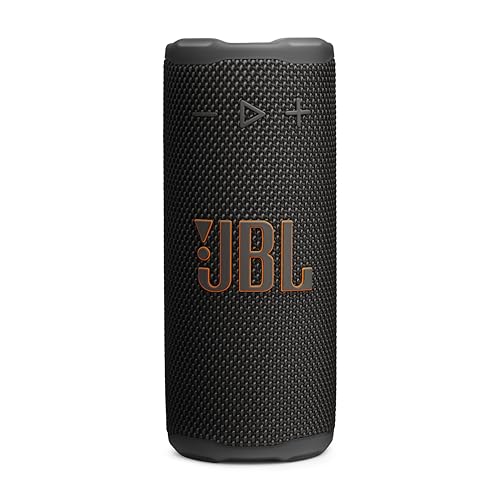
Listeners who prioritize portability and casual listening across multiple outdoor locations might find a proprietary network system less adaptable. Battery-powered Bluetooth speakers can be tossed in a backpack, taken to a park, or moved effortlessly out to a patio fire pit without relying on home Wi-Fi coverage. If you primarily use portable gear on the go, expecting those units to seamlessly link with your premium indoor soundbar will only lead to disappointment. Recognizing the clear distinction between portable point-to-point accessories and permanent home network audio ensures realistic expectations.
For those seeking cinematic television sound alongside synchronized music playback, an integrated smart soundbar serves as an exceptional system anchor. The compact 26-inch footprint of the Denon Home 550 fits comfortably beneath modern 4K televisions while delivering Dolby Vision and HDR10 video passthrough. Its four active drivers and three passive radiators generate dynamic, balanced output without demanding a bulky traditional receiver cabinet. Expanding that foundation with matching Denon Home satellite speakers provides true multiroom freedom without the connectivity headaches of mixed wireless protocols.
Choosing the right wireless audio foundation ultimately comes down to understanding protocol boundaries and matching hardware to your listening habits. While HEOS cannot link directly to any arbitrary third-party Bluetooth speaker for multiroom playback, its dedicated Wi-Fi platform delivers unmatched synchronization, high-resolution audio support, and effortless room grouping. By pairing certified Denon Home hardware or utilizing platform-agnostic tools like AirPlay 2 where supported, you can build a stable, great-sounding audio environment that performs reliably for years to come.


Write Your Review
No reviews yet. Be the first to share your experience!