

Filling a living space with balanced, continuous sound often brings up questions about network audio compatibility and multi-device management. Homeowners frequently want to play a single podcast or playlist across the kitchen, patio, and living room without running long cables or dealing with awkward sound delays. When planning a whole-home setup, exploring modern Bluetooth speaker configurations and Wi-Fi networks can reveal multiple ways to distribute sound. This raises a primary operational question for smart home audio: can you sync google home speakers to create a unified listening environment?
The straightforward answer is yes, smart devices built around Google Assistant support synchronized playback through wireless grouping and stereo channel separation. Whether deploying dedicated hardware like the Nest Audio or integrating bedside units with voice capabilities, network configuration plays a decisive role in acoustic performance. Listeners balancing performance against cost often consider budget-conscious wireless speakers to expand their sound systems. Understanding how multiroom speaker grouping operates helps prevent common headaches such as wireless dropouts, uneven volume levels, and acoustic echo across adjoining rooms.
Pros
- Dedicated hardware button quickly activates phone voice assistants from across the room.
- Fully customizable internal sound machine memory allows drag-and-drop audio replacement via USB-C.
- Clock auto-syncs upon pairing and can be dimmed to complete darkness for sensitive sleepers.
- Soft fabric-wrapped exterior blends cleanly into modern bedroom and office decor.
Cons
- Compact driver enclosure provides limited low-end sub-bass for bass-heavy music genres.
- Six-hour battery life is modest if taken on extended trips away from a charger.
- Relies on a paired smartphone connection rather than standalone Wi-Fi for smart assistant queries.
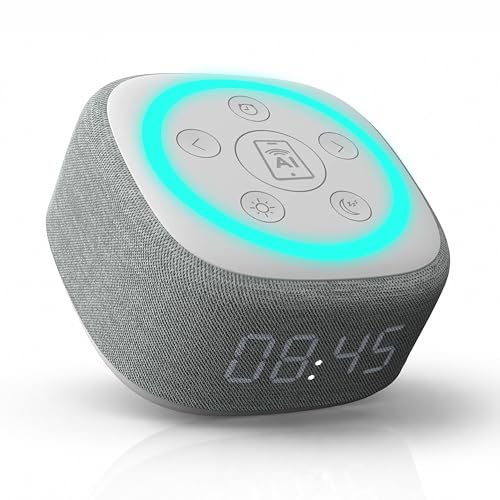
The Gemini BRS-180 represents a smart fusion of bedroom utility and personal audio. Designed to replace multiple nightstand clutter items, it consolidates a Bluetooth speaker, a customizable white noise sound machine, a responsive digital clock, and ambient lighting into a clean, modern form factor. Rather than forcing you to download proprietary apps or create another online account, the device focuses on frictionless setup, pairing immediately with iOS, Android, and PC devices right out of the box.
For everyday operation, the speaker stands out with its dedicated AI activation button. A single tap summons Siri or Google Assistant through your connected phone, turning this compact bedside companion into a voice-controlled hub for alarms, music queuing, and smart home adjustments. Nighttime usability is equally well thought out, with an auto-syncing digital clock that allows you to shut off the LED display entirely so bright digits will not disrupt your sleep cycle.
Where the BRS-180 truly separates itself from standard bedside audio gear is in its sound machine functionality. While it comes preloaded with 16 peaceful nature and noise tracks, you are not locked into factory presets. Placed into PC mode via the supplied USB-C cable, the internal drive opens up, allowing you to load your own field recordings, guided meditations, or favorite ambient loops. Backed by built-in sleep timers that gently fade the audio out, it serves as an exceptionally competent sleep wellness tool and everyday audio companion.
Acoustically, the Gemini BRS-180 is voiced for close-range clarity, vocal reproduction, and soothing ambient soundscapes. The midrange profile is deliberately forward and clean, making podcasts, audiobooks, and vocal-heavy genres easily understandable even at whisper-quiet volumes. High frequencies are smooth and fatigue-free, which is essential for ensuring that sleep tracks like rainfall or rushing water do not sound harsh or tinny during prolonged listening sessions.
Given the enclosure's diminutive dimensions, deep sub-bass frequencies are physically limited, meaning high-energy dance tracks will lack heavy physical punch. However, upper bass frequencies remain articulate without rattling the nightstand. The speaker produces more than enough clean, undistorted volume to fill an average bedroom or dorm room, delivering an immersive nearfield listening experience tailored specifically for personal spaces.
Measuring just 3.94 x 3.94 x 2.26 inches and weighing a mere 0.625 pounds, the BRS-180 sports a modest, decor-friendly footprint. The cabinet is wrapped in a textured acoustic fabric paired with clean matte accents, allowing it to seamlessly match modern nightstands and shelving without resembling an intrusive piece of tech hardware. Tactile top-mounted controls provide easy navigation in low light for volume, playback, lighting effects, and sound machine presets.
Hardware connectivity centers around a modern USB-C port, which handles continuous power delivery, recharging, and high-speed data transfer for custom sleep sound management. For wireless flexibility, the integrated rechargeable battery offers up to 6 hours of continuous cord-free audio playback, making it easy to transition from the bedside to a home office desk, patio, or travel bag whenever needed.

Pros
- Even 360-degree audio dispersion provides consistent sound quality throughout the room.
- Clear midrange and crisp treble performance make spoken content and acoustic tracks shine.
- Compact footprint fits effortlessly on crowded nightstands and narrow bookshelves.
- Straightforward wireless stereo linking creates a substantially wider soundstage.
Cons
- Compact cabinet size limits deep sub-bass reproduction on hip-hop and electronic tracks.
- Lacks physical auxiliary inputs such as a 3.5mm jack or optical connection for legacy gear.
- Requires constant tethered wall power, offering no internal battery for portable outdoor use.
The Google Premium Audio Speaker is designed from the ground up to solve a common dilemma in modern home audio: how to deliver clean, engaging sound without cluttering living spaces with bulky black boxes. Taking full advantage of its compact enclosure, this speaker prioritizes omnidirectional sound reproduction, allowing listeners to enjoy consistent tonality regardless of where they stand or sit in the room. Wrapped in an organic, fabric-forward aesthetic, it bridges the gap between home decor and personal listening gear.
In everyday use, this speaker serves as an exceptionally capable companion for casual listeners, home office professionals, and podcast lovers. Whether placed on a kitchen island during meal prep or on a bedside table for winding down in the evening, it presents spoken word and background playlists with clarity and poise. Its voice-tailored tuning ensures dialogue never gets swallowed by murky bass, making talk radio, news briefings, and audiobooks thoroughly enjoyable.
For those looking to expand their listening field, the hardware supports wireless stereo pairing. Coupling two units unlocks genuine left-right stereo separation, giving instruments dedicated placement across the horizontal plane and noticeably lifting acoustic depth. While it does not aim to replace a dedicated multi-channel home theater rig, it easily outperforms typical built-in device speakers by providing balanced, fatigue-free audio that fills small to medium-sized rooms effortlessly.
Ultimately, the Google Premium Audio Speaker is a well-engineered option for listeners who value straightforward wireless audio and modern home integration. It avoids unnecessary complexity, focusing instead on consistent 360-degree sonic coverage, neat design lines, and effortless everyday operation.
Acoustically, the Google Premium Audio Speaker focuses on tonal balance and wide-dispersion audio engineering. Rather than firing audio strictly forward in a narrow directional cone, its internal acoustic assembly is configured to radiate sound outward in a full 360-degree arc. This creates a uniform dispersion pattern that prevents dramatic treble fall-off when moving around the room, making it exceptionally pleasant for active, ambient listening environments.
In terms of frequency response, the midrange takes center stage. Vocals are rendered with intimate clarity, keeping dialogue crisp and acoustic guitars rich with transient detail. High frequencies are tuned to be smooth rather than sharp, successfully avoiding listener fatigue even during hours of continuous playback. Low-end reproduction is punchy and clean within the mid-bass registers, though physics naturally prevents sub-bass rumble below 60Hz. It easily achieves sufficient volume to saturate bedrooms, home studies, and kitchen areas without introducing harsh harmonic distortion at elevated levels.
Measuring an ultra-compact 4.2 by 4.2 by 3.4 inches, this speaker features a soft, rounded silhouette engineered to harmonize with modern living spaces. The exterior is wrapped in a durable, acoustically transparent fabric mesh that protects internal components while minimizing acoustic diffraction. Its weighted base and anti-vibration rubber footing keep the enclosure firmly anchored, preventing unwanted desk resonance when playing rhythmic tracks.
On the hardware side, this speaker is built around simplicity and wireless convenience. Operating on a tethered power setup, it draws consistent AC power from a dedicated wall adapter, eliminating the performance throttling and battery degradation associated with rechargeable devices. While it eschews legacy analog inputs like 3.5mm AUX or optical inputs, its robust wireless streaming architecture provides a stable, low-latency link to mobile devices and smart networks for uninterrupted daily playback.
Pros
- Completely subscription-free with no mandatory companion apps required
- PC-accessible internal storage allows replacing default sleep sounds with custom audio
- Clock display can be turned completely off for total bedroom darkness
- Fast, reliable Bluetooth pairing with automatic clock synchronization
- Soft fabric finish complements modern home decor better than plastic clock radios
Cons
- Compact driver size limits low sub-bass impact for bass-heavy electronic tracks
- Six-hour battery life is best suited for around-the-house portability rather than long trips
- Relies on paired smartphone connection for voice assistant features rather than standalone Wi-Fi
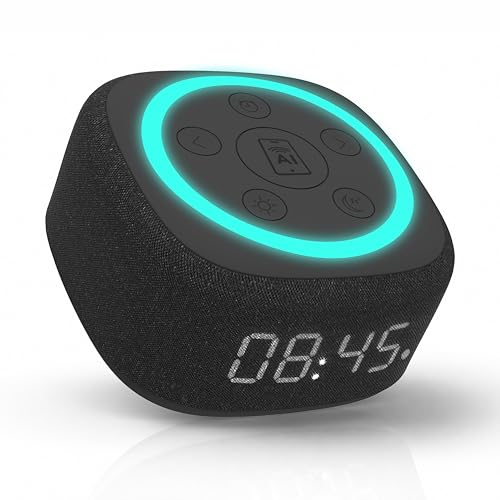
Bedside audio is often an afterthought, usually dominated by harsh phone speakers or sterile digital clocks. The Gemini BRS-180 redefines this space by merging an articulate Bluetooth speaker, an auto-syncing digital clock, and an onboard sleep sound machine into a compact, attractive package. Designed for bedrooms, dorms, and home offices, it delivers practical everyday functionality without the bloat of proprietary apps or recurring subscriptions.
Daily usability is where this unit stands out. The speaker pairs instantly with iOS and Android devices, immediately grabbing and setting the accurate time on its 12-hour LED screen. A dedicated AI button placed conveniently on top allows you to activate Siri or Google Assistant on your phone across the room. Whether you need to set a morning reminder, adjust your thermostat, or skip a track, the voice pass-through ensures you do not have to fumble for your phone in the dark.
For rest and wellness, the BRS-180 operates as a standalone sleep sound conditioner. It comes preloaded with 16 therapeutic profiles, including brown noise, rain, and ocean swells. Unlike most closed-system sound machines, connecting the BRS-180 to a computer via USB-C exposes the internal memory, letting you drag and drop your own custom relaxation files. Paired with gradual sleep timers and a dimmable display that can go completely dark, it respects your sleep hygiene.
Ultimately, the Gemini BRS-180 provides immense value by consolidating multiple nightstand essentials into a cohesive, warm audio device. For listeners wanting easy voice commands, reliable alarm clock features, and soothing soundscapes in an attractive form factor, it easily earns its place on the nightstand.
The Gemini BRS-180 is voiced specifically for nearfield bedside listening, placing a heavy emphasis on mid-range clarity and fatigue-free treble. Spoken word content, including audiobooks, morning news broadcasts, and podcasts, cuts through with crisp vocal articulation. High frequencies are gently contoured to eliminate sibilance, making acoustic tracks and ambient soundscapes comfortable to listen to even at low volume levels in quiet rooms.
Given its compact dimensions, the speaker targets clean, tight upper-bass reproduction over room-shaking low-end rumble. It delivers a balanced acoustic output that prevents muddy resonance on hollow nightstands and wooden dressers. While it is not designed to power a loud living room party, it easily fills a medium-sized bedroom with warm, cohesive audio that remains clear without breaking into distortion at higher volumes.
Acoustic performance during sleep mode is equally refined. The digital amplifier maintains an exceptionally low noise floor, avoiding the faint static or electrical hum that plagues many budget white noise generators. Furthermore, the built-in sleep timer utilizes a smooth fade curve over 15, 30, or 60 minutes, easing audio levels down so subtly that you drift off without noticing the transition to silence.
With a footprint measuring just 3.94 x 3.94 x 2.26 inches and weighing roughly 10 ounces, the Gemini BRS-180 is exceptionally compact. Instead of generic shiny plastic, the exterior is wrapped in a tactile, furniture-grade fabric enclosure that mimics premium Scandinavian home audio gear. It sits comfortably on crowded nightstands without looking cluttered or out of place alongside your favorite decor.
The front-facing 12-hour LED clock is designed with sleep sensitivity in mind. Users can cycle through full brightness, a gentle low-light dim, or shut the display off entirely to maintain a pitch-black sleeping environment. Directly behind the fabric, an integrated multi-mode RGB light ring offers soft ambient illumination for reading, as well as an optional audio-reactive mode that pulses gently along with your daytime music playlists.
Hardware interfaces are streamlined and modern. The speaker is powered via a standardized USB-C port, allowing continuous bedside operation from any standard wall adapter. The internal rechargeable battery provides up to 6 hours of cord-free listening, making it effortless to carry out to the patio or kitchen. Additionally, the USB-C connection acts as a direct mass storage interface when plugged into a PC, providing direct hardware access to customize your onboard sound library.

Pros
- Powerful 30W output with woofer and tweeter for clear, balanced audio
- Multi-room grouping creates a custom home sound system
- Voice assistant integration for hands-free smart home control
- Stable wireless streaming and easy device compatibility
Cons
- Designed for stationary home use, requires power outlet
- No waterproof or dustproof rating for outdoor adventures
- Lacks portability despite keychain accessory
The Google Nest Audio Speaker in Chalk is a smart home audio powerhouse designed to fill your living spaces with rich, powerful sound. It pairs perfectly with other Nest devices or Chromecast-enabled gear to create a seamless multi-room system, making it a go-to for American households craving whole-home music without wires.
Targeted at tech-savvy families and home entertainment buffs, it shines in real-world scenarios like dinner parties where you blast tunes room-to-room or quick voice queries for weekend weather during family gatherings. The included LED keychain adds a practical touch for everyday utility.
Performance-wise, setup is a breeze, and the tuning software ensures punchy, distortion-free playback even at high volumes. While it's not built for on-the-go adventures, its smart features like broadcasting messages turn it into a household communicator.
Verdict: A solid pick for elevating home audio with smart integration, delivering value for indoor vibes and family connectivity.
Expect deep bass from the 30W woofer paired with crisp highs from the dedicated tweeter, creating a full-spectrum sound signature that fills medium to large rooms effortlessly. Vocals come through clear and natural, ideal for podcasts, news updates, or casual listening sessions.
Volume levels crank high without muddiness, thanks to advanced tuning software, making it great for background music during home workouts or lively gatherings. Bluetooth range stays stable up to 30 feet, with reliable multi-device switching for uninterrupted streaming.
Pair it with other speakers for stereo or multi-room modes, and it handles complex tracks with punchy dynamics, though it prioritizes balanced home playback over extreme highs.
Sleek Chalk finish blends into modern American homes, with a compact form factor that's easy to place on shelves or tables. The bonus LED keychain (color varies) provides portable light for keys or bags, adding everyday versatility.
Not ruggedized for outdoors, it lacks IP ratings, so keep it indoors away from spills or dust. Weight is manageable for stationary spots, emphasizing home stability over portability.
AC-powered for continuous playback without battery limits, it charges via standard outlet with no downtime. Perfect for all-day home use, from morning routines to evening unwind sessions.

Pros
- Room-filling 360-degree dispersion eliminates acoustic dead zones in small to mid-sized rooms
- Crystal-clear vocal projection makes spoken-word audio and podcasts exceptionally legible
- Effortless stereo pairing creates a true stereo image when combining two units
- Minimalist modern styling blends cleanly into contemporary interior decor
Cons
- Compact acoustic enclosure limits deep sub-bass extension on bass-heavy tracks
- Lacks physical analog auxiliary inputs for wired turntable or legacy audio connections
- Requires two matched units to achieve true discrete stereo channel separation
The Google Premium Audio Speaker in Porcelain is engineered to bring versatile, ambient sound into contemporary living spaces. Designed primarily for casual music lovers, podcast enthusiasts, and anyone looking to enhance their daily audio environment, this speaker prioritizes simple usability and balanced acoustics. Its compact footprint ensures it sits neatly on a bookshelf, nightstand, or kitchen counter without drawing unnecessary attention to itself until the music starts playing.
In day-to-day listening, the speaker excels at mid-forward content. Spoken dialogue in audiobooks and podcasts comes through with pristine clarity, free from the hollow, boxy resonance that frequently plagues small home speakers. Background listening during work or study sessions is remarkably fatigue-free, thanks to smooth treble reproduction that stays composed even after hours of continuous playback.
For users seeking an expanded soundstage, the integrated stereo pairing feature stands out as a major strength. Linking a second compatible speaker allows the system to split audio into dedicated left and right channels, transforming a pair of modest desktop speakers into an expansive stereo setup capable of filling larger living rooms or home offices with convincing depth and instrument separation.
Ultimately, this Google audio speaker represents a smart balance between discreet modern design and reliable sound quality. While it will not replace a dedicated high-fidelity audiophile rig for critical listening sessions, its acoustic poise, straightforward operation, and tasteful aesthetic make it an outstanding choice for everyday home audio.
Acoustically, the Google Premium Audio Speaker is tuned to deliver an omnidirectional 360-degree dispersion pattern. By radiating sound evenly in all directions, it avoids the directional beaming typical of traditional forward-firing bookshelf drivers. This acoustic design means listeners enjoy consistent tonal balance whether sitting directly in front of the unit or moving around the kitchen and living room.
Frequency response is clearly prioritized around the vocal midrange and upper registers. High frequencies offer sufficient detail to give cymbals and acoustic guitars natural sparkle without bordering on harsh sibilance. In the lower registers, the speaker leverages internal acoustic tuning to generate punchy, articulate mid-bass that anchors pop and acoustic tracks well. However, due to its compact volume, frequencies falling into the sub-bass territory roll off predictably, meaning bassheads may find deep electronic sub-drops somewhat restrained.
Measuring just 4.2 by 4.2 by 3.4 inches, the speaker features an exceptionally compact, domed architecture that takes up minimal surface area. The Porcelain finish delivers a clean, warm-white tone wrapped in an acoustically transparent, tactile fabric that blends seamlessly with modern American interior design palettes. The build feels dense and solidly assembled, resisting cabinet vibrations when pushed to higher listening levels.
Connectivity centers around streamlined wireless streaming, tailored for modern wireless homes. The speaker is built purely for wire-free audio transmission, deliberately omitting traditional 3.5mm auxiliary jacks, optical inputs, or USB audio inputs in favor of a clean, minimalist setup. Power is supplied via an included low-profile AC power connection designed to keep desktop cord clutter to a minimum.

Pros
- Effortless multi-room grouping and rock-solid Wi-Fi audio synchronization
- Clear, natural midrange response that makes vocals and podcasts shine
- Stereo pairing significantly widens the soundstage for dedicated listening rooms
- Responsive far-field microphones reliably capture commands over music playback
Cons
- Lacks a 3.5mm auxiliary port or optical input for direct wired audio sources
- Requires constant AC wall power with no built-in battery for outdoor portability
- Low sub-bass compresses at peak volumes to prevent acoustic distortion
The Google Nest Audio 3-Pack provides an accessible, high-performance pathway into multi-room home audio without the complicated wiring or expensive amplifiers traditionally required. Tailored specifically for modern households, this bundle allows users to set up independent audio zones in the living room, kitchen, and bedroom, or group them collectively for whole-house entertainment during gatherings.
Day-to-day operation is anchored by the Google Home platform, offering rapid setup and intuitive control. The built-in Google Assistant functions with impressive speed, utilizing sensitive far-field microphones that pick up voice instructions even across noisy spaces. Beyond individual room duties, combining two of the units into a wireless stereo pair provides an elevated listening experience with distinct left-right separation that outclasses single all-in-one smart speakers.
Ultimately, this 3-pack delivers exceptional daily convenience and solid audio reproduction for users immersed in the Google smart home ecosystem. While it cannot replace a dedicated audiophile tower setup for high-volume sub-bass impact, its cohesive acoustic profile, reliable connectivity, and clean footprint make it an outstanding multi-room audio investment.
Each Nest Audio enclosure houses a custom 75mm mid-woofer and a 19mm tweeter, driven by custom tuning software designed to maximize dynamic range. The overall sound signature emphasizes clarity and balance, steering clear of the muddy, boomy bass that plagues many consumer smart speakers. Vocals, acoustic guitars, and piano passages emerge with crisp separation and pleasant warmth across the midrange.
Bass response is punchy and tight through the upper and mid-bass registers, delivering sufficient kick for pop, jazz, and rock genres. At extreme volumes, dynamic compression kicks in to protect the drivers from clipping, meaning deep sub-bass frequencies take a slight backseat. When deployed in a stereo pair, the acoustic output expands noticeably, providing a broad sweet spot and authentic stereo imaging that easily fills medium to large living spaces.
Standing 6.89 inches tall with a slim 3.07-inch depth, each speaker sports a soft, rounded aesthetic that fits naturally onto bookshelves, kitchen counters, or nightstands. The cabinet is wrapped in a durable, acoustically transparent fabric composed of recycled materials. Google opted for clean minimalism by hiding capacitive touch controls beneath the top surface for tap-based volume adjustment and playback management.
Hardware interfaces are purely wireless, driven by dual-band Wi-Fi (802.11 a/b/g/n/ac) and Bluetooth 5.0 streaming capabilities. The rear chassis includes a physical privacy switch that mechanically disconnects the microphones when voice assistant features are not required. Power is supplied via an included 30W external DC power adapter, meaning continuous wall outlet access is necessary for each speaker in the bundle.
Synchronizing Google Home and Nest Speakers for Multiroom and Stereo Audio
Synchronizing audio hardware across multiple living areas transforms individual speakers into a unified acoustic network. Understanding how Google Home devices link together ensures you get clean music playback without timing mismatches or channel cancellation. A properly configured wireless audio setup keeps your favorite music playing smoothly as you move between rooms.
The Core Mechanism: How Google Home Synchronization Operates
Google Home and Google Nest devices synchronize sound by communicating over a local Wi-Fi network rather than relying on point-to-point Bluetooth connections. When you ask whether can you sync google home speakers, the technology behind the answer relies on the Google Cast protocol. The Cast software manages network timestamps, ensuring that every connected speaker decodes and outputs the digital audio stream at the exact same millisecond. This network synchronization prevents the jarring echo that typically happens when multiple standalone wireless units play unsynchronized streams in adjacent spaces.
Native smart speakers such as the Google Nest Audio process these shared network packets independently while checking timing signals against a designated master speaker in the group. Because the audio stream originates from cloud services or local Cast-enabled applications, your phone or tablet serves merely as a remote control. This architectural design frees up your mobile device for other tasks without interrupting the synchronized audio playback. The master device dynamically manages audio buffering to keep every grouped unit aligned even if minor Wi-Fi jitter occurs on the local network.
Speaker Groups versus Stereo Pairs: Distinct Audio Approaches
Before grouping your equipment, recognizing the operational difference between a multiroom speaker group and a dedicated stereo pair is essential. A multiroom speaker group distributes an identical monophonic or summed audio signal to multiple speakers spread across different rooms or open zones. This configuration suits casual background music, social gatherings, or household chores where you move between living areas. Each speaker in the group outputs the complete musical mix, ensuring that no instruments or vocal tracks disappear as you walk down a hallway.
In contrast, a stereo pair links two identical speakers placed in the same room into a dedicated two-channel system. The Google Home software splits the incoming stereo audio stream, assigning one speaker to reproduce only the left channel and the other to handle the right channel. This split creates a proper stereo soundstage with distinct acoustic imaging, directional instrument separation, and greater depth. Listeners seeking critical music reproduction benefit far more from a stereo arrangement than from standard multiroom grouping.
Hardware compatibility rules differ significantly between these two operational modes. Multiroom speaker groups are remarkably flexible, allowing you to combine different generations of Google Home, Google Nest Mini, Nest Audio, and third-party Cast-enabled sound systems into one shared group. Stereo pairing, however, requires two physically identical speaker models to maintain balanced frequency response and acoustic symmetry. Pairing a standard Nest Audio with an older Google Home original model is not permitted by the software, as mismatched drivers and tuning profiles would disrupt the stereo image.
Creating and Managing Multiroom Speaker Groups
Building a multiroom group takes only a couple of minutes within the Google Home mobile application on an Android or iOS device. After ensuring that all speakers are powered on and assigned to the same digital home, tap the add button and select the option to create a speaker group. The application scans your local network and displays a list of all compatible Cast-enabled audio hardware. Checking the box next to each desired speaker adds it to the synchronized distribution list.
Assigning an intuitive name to your newly created group simplifies daily playback and voice control. Labels such as Everywhere, Downstairs, or Entertaining Zone work reliably with voice recognition routines. Once saved, the group appears alongside individual speakers in compatible streaming applications like Spotify, YouTube Music, and Pandora. Selecting the group name inside your favorite audio application immediately routes the stream to every designated speaker simultaneously.
Volume management across grouped speakers requires attention to both global output and individual room levels. Adjusting the master volume slider inside the Google Home app scales the sound level across the entire group proportionally. If the kitchen requires higher volume over cooking noise while a study needs gentle background sound, you can adjust each speaker individually in its device card. Learning this volume balance ensures comfortable listening without blasting quieter areas of the house.
Setting Up a True Stereo Pair for Enhanced Audio
Positioning two identical Google speakers correctly within your listening environment creates the foundation for an expansive soundstage. Placing the units approximately six to eight feet apart at seated ear level generally yields the cleanest stereo imaging. Angling the speakers slightly inward toward your primary listening position helps focus high-frequency treble and vocal clarity. Proper spacing prevents the sound from collapsing into a narrow acoustic point while maintaining solid center-channel presence.
Configuring the stereo pair begins by opening the device settings for one of the two identical speakers in the Google Home app. Scroll to the audio menu and select the speaker pairing option, which prompts the system to search for a matching partner. The application plays an acoustic chime through one speaker and asks you to identify whether it sits on the left or the right side. Once you confirm the physical orientation, the software binds the two units into a single logical audio component.
After pairing completes, the two physical speakers behave as a single entity in your device list and streaming menus. Adjusting the volume on either physical touch surface automatically updates both units to maintain balanced left-right output. If you frequently explore advancements in smart audio technology, you will appreciate how digital signal processing optimizes the frequency crossover between paired speakers. When you no longer need stereo separation, you can separate the pair back into standalone mono units through the device settings without losing your saved network preferences.
Wi-Fi Network Requirements, Dual-Band Routing, and Latency
Because synchronized audio relies on rapid network packet delivery, the stability of your home Wi-Fi directly dictates playback quality. High-resolution multiroom audio streams generate continuous local data traffic between your router and grouped endpoints. A congested wireless network can drop data packets, leading to audible stuttering or temporary speaker dropouts. Providing sufficient wireless bandwidth ensures seamless streaming across all grouped zones.
Dual-band routers operating both 2.4 GHz and 5 GHz frequencies require thoughtful configuration for smart speaker fleets. While 2.4 GHz signals travel farther through interior walls, the band is susceptible to interference from household appliances and neighboring networks. Connecting Google speakers to the 5 GHz band where coverage allows provides cleaner throughput and lower latency. In mesh Wi-Fi environments, ensuring that all grouped speakers connect to the same local subnet prevents communication barriers between mesh nodes.
Acoustic latency can sometimes occur if speakers are placed in acoustically open floor plans or receive varying Wi-Fi signal strengths. Google includes a dedicated group delay correction tool within the advanced sound settings of each device. By listening to the grouped playback and adjusting the timing slider in millisecond increments, you can perfectly eliminate minor phase delays or lingering echoes. This calibration step ensures crisp, unified sound even when speakers sit in adjacent, open-concept living spaces.
Third-Party and Hybrid Speakers: Native Cast versus Bluetooth
Not all audio hardware connects to the Google Home ecosystem in the same structural manner. Dedicated third-party speakers engineered with Google Cast built-in integrate directly into the Google Home app just like first-party hardware. These certified devices join speaker groups, respond to synchronized broadcast commands, and support the same multiroom latency adjustments. Checking manufacturer specifications for native Cast support confirms whether a non-Google speaker can join multiroom groups seamlessly.
Hybrid units and bedside companion devices approach voice assistant connectivity from an entirely different angle. For example, bedside models like the Gemini BRS-180 feature a dedicated AI voice button that wakes Google Assistant on a paired smartphone or tablet via Bluetooth. While this feature provides convenient voice commands and clock functions, the speaker itself operates as a Bluetooth receiver rather than a native Wi-Fi Cast endpoint. As a result, such units cannot be added directly into a Google Home multiroom Wi-Fi speaker group.
You can, however, use a native Google Nest speaker to bridge audio wirelessly to an external Bluetooth speaker. Within the Google Home app, navigating to a Nest device and selecting default audio output allows you to pair any standard Bluetooth speaker as its sound target. When you issue a command to the Nest unit, it processes the request and routes the audio wirelessly to the paired external speaker. This hybrid technique expands your listening options, though it does not provide the same ultra-low latency timing needed for mixed multiroom groups.
Voice Controls, Stream Transfers, and Playback Management
Controlling grouped audio playback becomes intuitive once you master essential voice command syntax. Speaking to any Google Assistant microphone on your network with commands like play jazz on the Downstairs group automatically initiates the stream on every speaker assigned to that group. You can pause, resume, or skip tracks across the entire group with a single verbal prompt. This hands-free convenience eliminates the need to carry your mobile phone from room to room while working or hosting guests.
Google also supports dynamic stream transfers, allowing you to move active playback from one speaker or group to another seamlessly. If you start listening to an audiobook in the kitchen and wish to move into the home office, asking Google to move the music to the office shifts the stream without restarting the track. You can also expand an active single-speaker stream into a multiroom group on the fly by commanding Assistant to add additional rooms. This dynamic routing provides incredible flexibility throughout the day.
Major streaming platforms integrate tightly with Google Home group routing. Services like Spotify allow you to select your named speaker groups directly from their native connect menus on desktop or mobile apps. When hosting events where continuous, energetic sound is desired, pairing grouped speakers with high-output party audio systems or wall speakers creates broad room coverage without dead zones. Robust streaming protocol integration guarantees that your playlists transition smoothly between individual rooms and whole-home arrays.
Troubleshooting Synchronization Dropouts, Delays, and Echoes
Occasional network hiccups can disrupt synchronized playback, causing one speaker to fall out of step and produce an annoying acoustic echo. The most common culprit is temporary Wi-Fi congestion or an access point dropping multicast discovery packets. If a speaker group begins echoing, check whether one of the units is struggling with weak Wi-Fi signal reception. Moving the affected unit closer to a router or access point often resolves intermittent packet loss immediately.
Rebooting your networking hardware and smart speakers provides a safe, reversible diagnostic step when groups fail to appear in your app. Power cycling your router clears stale network caches and refreshes local IP address leases across all connected audio endpoints. Similarly, unplugging your Google speakers for twenty seconds resets their internal wireless radios and forces a clean reconnection. This simple maintenance routine resolves a large percentage of temporary discovery failures without erasing your customized settings.
If persistent synchronization errors remain after network restarts, deleting and recreating the speaker group within the Google Home app often clears corrupted configuration data. Software updates to the Google Home app or speaker firmware can occasionally alter group handshake tokens, leading to pairing mismatches. Removing the problematic group, waiting two minutes, and creating a fresh group with the same members rebuilds these tokens cleanly. This quick reset ensures that all endpoints communicate with identical protocol rules.
Placement Strategies for Cohesive Multiroom Sound
Physical speaker positioning directly influences how cohesive your multiroom audio sounds as you walk through your home. Placing compact speakers near room corners reinforces lower bass frequencies through acoustic boundary loading, which can make smaller units sound fuller. However, placing one speaker in an open hallway and another tucked inside a deep bookshelf can create mismatched tonal profiles. Striving for consistent placement height and clear line-of-sight across doorways helps maintain natural sound balance between adjoining areas.
Acoustic isolation between adjacent rooms also demands careful volume calibration to prevent competing sound fields. When two grouped speakers operate in nearby rooms with an open floor plan, setting their volumes to identical levels may create confusing overlapping sound. Attenuating the secondary speaker slightly lets the primary listening area lead the soundstage while providing gentle fill in the background. Taking a few moments to walk between rooms while audio plays allows you to fine-tune individual volume sliders for seamless transitions.
Integrating different speaker styles into a coherent multiroom network requires balancing power output and driver capabilities. While full-range units like the Nest Audio easily anchor main living spaces, smaller companion speakers or bedside units work best for intimate listening zones. Checking that each speaker operates within its comfortable acoustic range prevents distortion and preserves vocal intelligibility throughout the house. A well-balanced speaker distribution creates an inviting sound environment that enhances daily living across every room.
Syncing Google Home and Nest speakers provides an exceptionally versatile, wire-free method for whole-home entertainment and focused stereo listening. Verifying network reliability, choosing the right group or stereo configuration, and understanding the role of native Cast versus Bluetooth bridging ensures consistent, room-filling sound. Taking time to calibrate room delays and balance individual volume sliders lets your audio flow smoothly from one space to the next.





Write Your Review
No reviews yet. Be the first to share your experience!