


Upgrading standard vehicle audio often begins when dull vocals, thin midbass, and abrasive high frequencies make daily driving uninspiring. Drivers seeking cleaner sound from compact dash locations regularly ask: are audio control speakers good? AudioControl earned wide recognition over decades for signal processors and system amplifiers before engineering dedicated driver lineups such as the PNW and Altitude series. These compact drivers aim directly at enthusiasts who want crisp acoustic definition without tearing apart vehicle doors or fabricating custom speaker brackets.
Modern vehicle cabins present difficult acoustic challenges, including shallow mounting depths, glass reflections from windshields, and mismatched factory impedance. Anyone considering upgrading truck cab audio or passenger car sound needs to verify driver efficiency, impedance compatibility, and frequency handling before buying. While AudioControl drivers deliver glass fiber cones, silk dome tweeters, and shallow baskets, their true value depends on your power source and system goals. Understanding how these drivers interact with stock head units versus dedicated outboard amplifiers will help you decide whether this equipment fits your sound upgrade.
Pros
- Ultra-shallow mounting depth fits tight factory dashboard and pillar cavities effortlessly
- Exceptional vocal clarity and detailed treble extension up to 20 kHz
- Sturdy glass fiber cone paired with durable butyl rubber surround resists automotive moisture and heat
- Includes passive in-line crossovers for immediate, worry-free installation
Cons
- Inherently lacks sub-bass response below 125 Hz, requiring a dedicated door woofer or subwoofer
- Needs clean amplifier power closer to 50W to unlock full dynamic headroom compared to stock factory head units
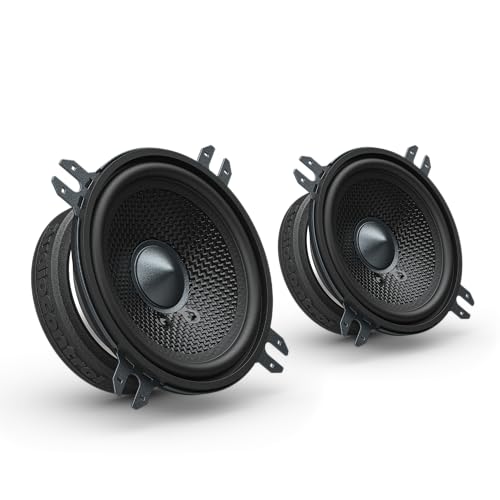
The AudioControl Altitude Series 3.5-inch component speakers are engineered to overcome one of the biggest hurdles in modern automotive audio: achieving genuine high-fidelity sound inside shallow, space-constrained factory locations. Designed for car audio enthusiasts looking to replace lackluster dashboard, upper door, or A-pillar drivers, this pair provides an immediate and dramatic upgrade over muddy OEM paper cones.
In practical installation scenarios, these drivers shine through their compact dimensions and wide-bandwidth acoustic capability. Because they cleanly reproduce sound from 125 Hz all the way up to 20,000 Hz, they can serve as standalone wideband dash drivers or as the articulate midrange anchor in an advanced 3-way component sound system. AudioControl thoughtfully bundles dedicated in-line crossover filters with the set, ensuring that excessive low-frequency energy is filtered out in passive installations before it can stress the voice coils.
Whether driven directly by a factory head unit or paired with a dedicated multi-channel amplifier, the Altitude Series drivers bring vocalists and lead instruments right onto the top of your dashboard. While a complementary mid-bass driver or subwoofer is essential to round out the lower registers, the combination of shallow-mount versatility, premium build materials, and clear acoustics makes this pair an outstanding value for any vehicle upgrade.
Built around a precision-molded glass fiber cone and a lightweight aluminum dust cap, these 3.5-inch drivers create an open, transparent soundstage with rapid transient attack. Vocals sound articulate and forward, completely avoiding the muffled, boxy characteristics typical of standard factory drivers. The aluminum dust cap effectively broadens upper-register dispersion, allowing the speaker to extend smoothly to 20,000 Hz with sweet, airy treble reproduction.
Handling up to 50 watts of amplifier power across a standard 4-ohm load, these drivers offer substantial dynamic headroom for highway listening. While they operate cleanly on modest radio power, driving them with dedicated amplification reveals snappy snare drums and intricate string textures without harshness. The included high-pass in-line crossover keeps the cone composed and distortion-free, even when pushed to high volume levels.
Compact engineering is where the AudioControl Altitude 3.5-inch pair truly stands out for retrofit applications. With an ultra-shallow mounting depth of just 1.35 inches (34.5 mm), a 2.95-inch cutout diameter, and a slim overall profile, these drivers fit cleanly behind OEM grilles where standard aftermarket speakers bottom out. The enhanced steel slimline basket ensures solid structural rigidity while dampening parasitic frame vibrations.
To survive the harsh temperature fluctuations and humidity common in car interiors, the assembly utilizes a moisture-resistant glass fiber cone backed by a resilient butyl rubber surround. System integration is straightforward thanks to direct wiring leads and the included inline crossover filters. Operating at a standard 4-ohm nominal impedance, they integrate smoothly with factory systems, aftermarket head units, or high-end DSP amplifiers.


Pros
- Exceptional wideband frequency range eliminates the need for separate dash tweeters in tight spaces.
- Shallow mounting depth easily fits restrictive OEM dash speaker locations.
- Durable glass fiber cone and butyl rubber surround provide long-term reliability against cabin heat.
- Included in-line passive crossovers simplify installation on factory wiring.
Cons
- Requires pairing with dedicated door woofers or a subwoofer since output rolls off below 125 Hz.
- Passive in-line filters lack the slope customization of a dedicated active digital signal processor.
The AudioControl Altitude Series 2.75-inch component speakers deliver audiophile-grade engineering directly into vehicle locations often overlooked by aftermarket manufacturers. Factory dashboard and corner-pillar speakers are notorious for muddy response and fragile paper cones. AudioControl tackles this bottleneck by offering a high-fidelity wideband driver engineered to elevate your car's soundstage right up to ear level.
Aimed at car audio enthusiasts and DIY upgraders who want significant acoustic improvements without hacking into their vehicle trim, these speakers serve as an effortless drop-in solution. The compact footprint allows them to slip behind factory grilles in modern trucks and sedans where dashboard depth is severely compromised. Whether running on modest factory head-unit power or connected to a dedicated multi-channel amplifier, their sensitivity ensures quick, clean response.
In real-world listening tests, these drivers excel at lifting vocals, guitars, and percussion out of the floorboards and placing them directly across the windshield. The presentation is detailed without turning harsh or fatiguing during long highway commutes. When paired with high-pass filtering, the driver remains remarkably composed even as volume levels push toward highway speeds, retaining clean separation across complex musical passages.
For listeners seeking an immediate upgrade to vocal clarity and front-stage precision, the Altitude 2.75-inch pair is a standout option. It turns difficult factory locations into a high-performance acoustic anchor for both 2-way and 3-way automotive audio configurations.
Acoustically, the standout feature of this Altitude Series driver is its expansive bandwidth, spanning 125 Hz to 20,000 Hz. By handling both critical midrange frequencies and upper-register treble, it acts as an authentic point-source transducer. Vocals sound coherent, natural, and anchored, free from the phase anomalies that often occur when splitting vocal ranges between separate door woofers and high-mounted tweeters.
The integration of an aluminum center dust cap helps disperse high frequencies evenly across the cabin. This wide dispersion is especially critical in automotive environments where speakers fire straight up into windshields or cross-cabin from pillar locations. Treble frequencies stay crisp and airy, while brass instruments and snare hits carry realistic attack without graininess.
While the speaker can operate cleanly on as little as 10 watts of input power, feeding it a clean 50 watts brings out noticeably superior dynamic punch. Transient response tightens, micro-details in acoustic recordings emerge clearly, and overall headroom expands, allowing you to enjoy your favorite tracks distortion-free at elevated volumes.
Built to overcome vehicle space constraints, the Altitude 2.75-inch speaker features a stamped steel slimline basket engineered for rigid structural support without adding bulk. It requires a mounting depth of only 1.28 inches (32.5 mm) and a cutout diameter of 2.55 inches (65 mm), ensuring compatibility with tight factory speaker cavities across a wide variety of domestic and import vehicles.
The moving assembly utilizes a precision-molded glass fiber cone coupled with a resilient butyl rubber surround. This material pairing delivers optimal internal damping to minimize cone flex while standing up to high humidity, cold mornings, and scorching summer dashboard heat. Direct wiring leads simplify connection points within tight dash recesses.
Each pair includes dedicated in-line passive crossover modules. Designed to filter out sub-midrange bass frequencies, these filters protect the voice coils from mechanical over-excursion and ensure minimal distortion when integrated into passive factory wiring. For advanced builds, the 4-ohm impedance makes them equally suited for active crossover setups driven by a digital signal processor.
Evaluating AudioControl Car Speakers for Vehicle Sound Upgrades
AudioControl speakers are high-caliber aftermarket drivers designed specifically to solve space and clarity limitations in modern vehicles. While the company established its legacy through signal processors and equalization hardware, their loudspeaker lineup translates that acoustic expertise into physical transducers. If you seek refined upper midrange and pristine treble from restrictive factory dash corners or center channels, these drivers provide a marked improvement over standard factory paper cones. Deciding whether they are right for your car requires examining their impedance profiles, power requirements, and system crossover tuning.
These compact speakers stand out primarily for their shallow mounting profiles, high-efficiency motors, and thoughtful acoustic engineering. Instead of producing boomy or bloated sound, the drivers focus on clean dispersion, vocal intelligibility, and seamless handoffs to larger door woofers. They work exceptionally well when paired with dedicated amplification, yet certain models also integrate cleanly with factory stereo heads. Understanding how the Altitude and PNW series behave in real vehicle cabins will help you determine if they match your listening goals.
Acoustic Performance and Sonic Character
The primary sonic strength of AudioControl drivers lies in their articulate reproduction of human vocals, acoustic instruments, and high-frequency transients. Factory car speakers typically rely on treated paper cones with tiny whizzer cones that distort at moderate listening volumes. In contrast, AudioControl equips their drivers with rigid cone structures and dampening surrounds that resist mechanical breakup under dynamic musical peaks. Listeners who enjoy detailed acoustic recordings, podcasts, or vocal-heavy music will notice enhanced separation and staging across the front dashboard.
High frequencies through these drivers remain remarkably smooth rather than shrill or fatiguing. The PNW series incorporates a rear-dampened hybrid silk dome tweeter paired with a custom sonic diffuser, which distributes high notes evenly across off-axis angles. In a car cabin where speakers fire toward a windshield or across the dashboard, wide off-axis dispersion prevents the sound from becoming harsh or localized to one corner. Testing your system with dedicated reference demo tracks makes it easy to hear how cleanly these hybrid tweeters separate delicate cymbal decay from energetic midrange vocals.
Bass output from these 2.75-inch and 3.5-inch drivers is intentionally limited to upper midbass and midrange fundamentals. Because of their compact physical diameters, they are engineered to play cleanly down to approximately 125 Hz rather than attempting to generate sub-bass frequencies. Expecting heavy thump from compact dash speakers will lead to disappointment and potential driver damage if bass frequencies are not filtered away. When supported by capable door woofers or a dedicated vehicle subwoofer, these drivers handle the critical speech and instrument spectrum with remarkable poise.
Altitude Series Versus PNW Series Engineering
AudioControl divides its compact vehicle lineup into distinct tiers that cater to different installation requirements and acoustic objectives. The Altitude series focuses heavily on universal component integration, utilizing a precision-molded glass fiber cone and a durable butyl rubber surround. Glass fiber provides a superior stiffness-to-weight ratio, allowing the cone to react instantly to musical signals without flexing. This series also features a lightweight aluminum dust cap that extends effective bandwidth up to 20,000 Hz, making it capable of acting as a wideband midrange driver in two-way or three-way setups.
The PNW series steps into higher-fidelity coaxial territory by combining a rigid poly-mica coated cone with a linear double-roll rubber surround. Poly-mica dampens unwanted resonances across the cone surface while maintaining structural stability under thermal stress. At the center of the PNW driver sits a concentric point-source silk dome tweeter equipped with a radiant collar. This concentric alignment ensures that sound waves from both the midrange cone and the tweeter originate from the same acoustic axis, preventing phase cancellation at the crossover transition.
Motor construction also differs meaningfully between the two product families. The PNW drivers utilize a finite element analysis motor structure paired with a black anodized voice coil former for enhanced heat dissipation during spirited listening sessions. Meanwhile, the Altitude drivers prioritize a slimline steel basket designed specifically for shallow dash pockets and tight pillar housings. Both series utilize stamped steel frames with structural edge enhancements that minimize frame flex when secured against uneven factory sheet metal or plastic dash baffles.
Power Handling, Impedance, and Amplifier Matching
Evaluating whether these speakers perform well in your vehicle requires a close look at electrical specifications. The Altitude series models operate at a nominal 4-ohm impedance and are rated for continuous power handling up to 50 watts. A 4-ohm load represents the universal standard for aftermarket car audio, making the Altitude line safe and compatible with virtually any factory radio or aftermarket amplifier. Even with modest factory head unit power ranging between 10 and 15 watts per channel, these drivers remain responsive and articulate.
The PNW 3.5-inch coaxial driver takes a different electrical approach by featuring a 2-ohm nominal impedance. Lower impedance draws increased current from your amplifier, allowing the speaker to extract more wattage from a given power supply. AudioControl recommends approximately 25 watts RMS for the PNW 3.5-inch driver, with maximum thermal handling up to 50 watts. While modern multichannel aftermarket amplifiers handle 2-ohm loads effortlessly, you must verify that your factory stereo or OEM amplifier is stable into 2 ohms before connecting them directly.
Driving either series with clean amplifier power produces noticeable improvements in dynamic headroom and soundstage definition. When powered solely by an underpowered factory radio chip, volume increases can induce clipping distortion long before the speaker reaches its mechanical limits. Connecting these drivers to a clean external amplifier or an integrated digital signal processor amplifier unlocks their full acoustic potential. Proper gain calibration ensures the voice coils operate within their linear stroke without overheating during long listening periods.
Shallow Mounting Depths and Cabin Fitment
One of the greatest engineering advantages of AudioControl speakers is their focus on compact physical dimensions. Modern vehicle dashboards often leave minimal clearance between the factory speaker grille and underlying air ducts, structural brackets, or wiring harnesses. The Altitude 2.75-inch driver features a mounting depth of only 1.28 inches, while the 3.5-inch Altitude component requires just 1.35 inches of depth. These shallow dimensions allow audio enthusiasts to drop high-quality drivers into tight dash corners where bulkier aftermarket speakers simply cannot fit.
The PNW 3.5-inch coaxial model requires a slightly deeper mounting cavity of 1.55 inches to accommodate its concentric motor structure and magnet assembly. Even with this additional depth, it remains significantly slimmer than traditional bulky coaxial drivers that feature protruding tweeter bridges. Included mounting brackets and universal sizing facilitate clean drop-in replacement across many domestic and import vehicle dashboards. If you are comparing various aftermarket sizes, our review of compact dash speakers illustrates how subtle depth and bracket differences impact installation ease in tight spaces.
Vehicle owners should always measure physical clearance before undertaking an installation. While AudioControl designs these speakers for universal compatibility, windshield rake angles and factory grille clips can present unexpected clearance hurdles. Using an angled screwdriver or low-profile ratchet is often necessary when securing mounting screws near sloped windshield glass. Ensuring the speaker basket sits flush against the baffle prevents mechanical buzzing and acoustic short-circuiting around the driver frame.
In-Line Crossover Filters and System Protection
Passive protection is vital when installing compact wideband or midrange speakers into full-range audio systems. The Altitude series drivers package dedicated in-line crossover filters directly in the box to safeguard the small voice coils. These passive filters act as high-pass crossovers, blocking low bass frequencies that would otherwise cause excessive cone excursion and severe thermal distortion. Omitting this filter in a passive installation risks bottoming out the voice coil former against the motor backplate during bass-heavy musical passages.
When building an active car audio system controlled by a digital signal processor or active amplifier crossovers, the in-line filters can be bypassed in favor of electronic crossover slopes. A digital crossover allows custom setting of the high-pass frequency and slope, such as a 24 dB per octave Linkwitz-Riley filter set around 250 Hz. This flexibility lets experienced installers tailor the acoustic blend precisely between the dash speakers and the door midbass drivers. For standard plug-and-play installations without outboard processing, using the supplied in-line filter guarantees safe and distortion-free operation.
Crossover protection also directly enhances speech intelligibility and overall system volume capability. By removing the burden of reproducing demanding low-frequency notes, the speaker motor works exclusively within its optimal mechanical range. This reduction in cone motion lowers intermodulation distortion, keeping vocal frequencies clear even when you turn up the stereo volume on the highway. Consistent crossover protection preserves the delicate voice coil winding and prevents premature thermal failure.
Acoustic Integration with Full-Range Audio Systems
AudioControl engineered these speakers to function as part of a cohesive multi-driver sound ecosystem. In many modern cars, the factory audio configuration places 2.75-inch or 3.5-inch speakers in the dash corners while placing 6×9-inch or 6.5-inch woofers in the lower front doors. Replacing only the dash speakers with AudioControl drivers lifts the perceived soundstage up to ear level, creating the sensation that musicians are performing across the hood rather than down by your ankles. This elevated soundstage represents one of the most rewarding acoustic upgrades available for modern vehicles.
Achieving complete tonal balance still requires pairing these compact dash drivers with capable low-frequency equipment. AudioControl designs their speaker families to blend naturally with their Space and Spike series subwoofers as well as standard door midbass drivers. Because the Altitude drivers reproduce frequencies smoothly up to 20,000 Hz, they can serve as standalone front-stage drivers in vehicles that lack separate tweeter sail panels. In three-way active systems, they function as dedicated midrange units handling the vital 300 Hz to 4,000 Hz frequency band.
Proper acoustic phasing between your dash speakers and door woofers is critical for a smooth frequency response. If the dash speakers are wired out of phase with the door woofers, cancellation will occur in the lower midrange frequencies around the crossover point. This acoustic cancellation leaves vocals sounding thin, hollow, and detached from the rest of the mix. Verifying electrical polarity during installation ensures all drivers work in unison, pushing and pulling air together to create rich, balanced cab sound.
Decision Factors and Final Vehicle Audio Takeaways
Determining whether AudioControl speakers are a smart investment depends heavily on your vehicle layout and sound expectations. If your vehicle features restrictive 2.75-inch or 3.5-inch dash locations and suffers from muddy dialogue, these speakers offer an ideal acoustic solution. Their shallow baskets, durable cone materials, and smooth treble dispersion directly resolve the most common acoustic bottlenecks in modern factory audio systems. For vehicle owners seeking noticeable vocal clarity without cutting metal or altering interior panels, their drop-in compatibility provides immense value.
Conversely, buyers who expect heavy bass output from dash locations should reconsider their expectations. Compact speakers of this diameter physically cannot reproduce sub-bass frequencies, and attempting to force bass through them will simply cause distortion. Additionally, those planning to use the 2-ohm PNW series drivers must verify that their factory head unit or aftermarket amplifier is rated to drive low-impedance loads safely. Taking the time to evaluate your amplifier stability and system crossover strategy ensures you get the rewarding sound experience AudioControl engineered these speakers to deliver.
AudioControl speakers represent an exceptionally capable, well-engineered option for listeners seeking elevated clarity, refined staging, and trouble-free shallow mounting. By combining durable materials like glass fiber and poly-mica with silk dome tweeters and protective crossovers, they effectively bridge the gap between factory convenience and aftermarket fidelity. When properly integrated with suitable amplification and matched to your vehicle’s physical dimensions, these drivers provide a dependable, highly satisfying foundation for any vehicle audio upgrade.





Write Your Review
No reviews yet. Be the first to share your experience!