


Home audio setups frequently evolve when remodeling projects or outdoor patio updates leave homeowners with surplus equipment. A common question among audio enthusiasts is whether can i use bose outdoor speakers indoors without compromising audio fidelity or damaging household equipment. Because weather-resistant speakers are built to withstand rain, extreme temperatures, and direct sunlight, listeners often wonder if their internal acoustic voicing works properly inside drywall rooms. Exploring how these rugged enclosures interact with indoor boundaries can help you decide whether to integrate them with clean sounding passive audio equipment or invest in purpose-built indoor hardware.
Outdoor loudspeakers rely on the same fundamental electromagnetic principles as standard home audio cabinets, converting amplified signals into mechanical driver vibrations. Weatherproof materials like glass-filled polypropylene and treated composite cones protect delicate internal components from humidity, which makes them surprisingly practical for specific high-moisture indoor locations. Selecting the right amplifier power, matching nominal impedance, and considering room reflection points remain the primary technical requirements for a successful indoor installation. Understanding the balance between environmental protection and acoustic response ensures your indoor sound stays balanced, articulate, and dynamic across every listening session.


Pros
- Exceptional weatherproofing built to handle snow, intense heat, and salt air
- Clear, articulate vocal reproduction that cuts through ambient outdoor noise
- Sturdy multi-angle brackets allow versatile vertical or horizontal mounting
- Durable composite cabinet resists peeling, cracking, and sun fading
Cons
- Requires dedicated speaker wire and an external stereo receiver or amplifier
- Compact driver size produces modest low-end bass depth
- No built-in wireless or Bluetooth connectivity without an external receiver
The Bose 151 SE Environmental Speakers are engineered specifically for homeowners, boaters, and outdoor entertainers who demand high-fidelity sound that can withstand the elements all year long. Designed to replace fragile indoor gear on patios, decks, and poolside cabanas, these sleek architectural speakers mount securely to exterior surfaces while blending seamlessly into your outdoor aesthetic.
In open-air settings, projecting clean and balanced sound can be a major challenge. The Bose 151 SE tackles this with full-range drivers tuned to disperse audio across a wide listening plane rather than beaming it in one narrow direction. Whether you are hosting a lively neighborhood gathering or relaxing quietly on the porch, vocals and acoustic melodies remain intelligible without harshness or distortion.
Mounting and setup are simple thanks to the included weather-resistant hardware. The adjustable brackets support both vertical and horizontal placement, allowing you to tuck them discreetly beneath roof eaves or place them out in the open on deck posts. Because these are passive speakers, they integrate straight into your existing multi-zone home amplifier or stereo receiver with standard in-wall speaker wire.
For anyone seeking permanent outdoor sound that can endure sub-zero blizzards, torrential summer storms, and baking heat waves without skipping a beat, the Bose 151 SE remains a standout performer. While listeners seeking floor-shaking bass might want to add a dedicated outdoor subwoofer, their overall vocal clarity and bulletproof durability make them a reliable long-term backyard upgrade.
The acoustic performance of the Bose 151 SE centers around its proprietary 2.5-inch full-range glass-filled speaker cones. These drivers are voiced to produce a uniform, wide-dispersion soundfield that easily fills outdoor spaces. Vocal clarity is exceptional, ensuring podcasts, sports broadcasts, and vocal-heavy music tracks stay crisp and easy to hear over rustling trees, wind, and pool splashing.
Because the speaker utilizes compact environmental enclosures, low-end bass response is tight and controlled rather than deeply resonant. It delivers plenty of punch for background pop, jazz, and classic rock, but it will not duplicate the deep sub-bass frequencies of large indoor floorstanding cabinets. When paired with a reliable 10 to 100-watt per channel receiver, these speakers sustain clean, distortion-free output even when turned up to project across wide lawns.
Engineered to handle seasonal punishment, the Bose 151 SE cabinet is manufactured from high-impact, glass-filled polypropylene. This housing is impervious to water penetration, rust, and ultraviolet sun bleaching. Bose subjects these speakers to rigorous military-grade environmental testing, proving they can withstand heavy snow, freezing rain, salt spray, and temperature extremes spanning from -40 degrees Fahrenheit to 158 degrees Fahrenheit.
Unlike portable battery-operated units that run down after several hours and require continuous recharging, the Bose 151 SE uses a hardwired architectural design. Powered directly by your home amplifier, it delivers infinite listening time with zero battery degradation or charge cycles to worry about. At roughly eleven and a half pounds for the pair, they feel reassuringly solid and remain locked into place once mounted to your siding, brick, or deck frame.


Pros
- Exceptional sound dispersion for broad coverage
- Maintains deep lows in outdoor settings
- Rugged construction withstands extreme weather
Cons
- Requires separate amplifier for power
- Not portable for on-the-go use
- Fixed installation limits flexibility
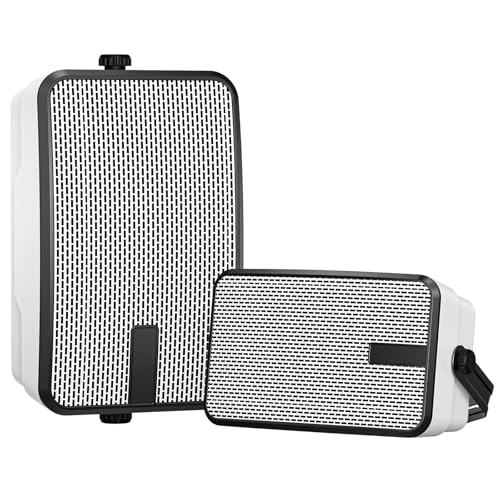
The Bose 251 Environmental Speakers are premium outdoor speakers designed for fixed installations like patios, decks, and gardens. They excel in delivering high-quality stereo sound in open-air environments where typical speakers falter.
Perfect for homeowners who host backyard gatherings or simply want immersive audio while relaxing outside, these white speakers blend durability with Bose's signature sound engineering. The multi-chambered enclosure keeps bass punchy despite wind and echoes.
In real-world use, they provide a wide listening area, allowing freedom of movement without losing stereo balance. Weatherproofing handles rain, sun, and salt spray effortlessly.
Verdict: A top choice for dedicated outdoor audio setups, offering pro-level performance that outshines basic weather speakers.
Bose 251 speakers shine with deep low frequencies preserved by the multi-chambered design, ensuring bass stays rich and undistorted outdoors. Vocals and mids remain clear across a wide area, creating true stereo imaging.
Volume levels scale impressively for parties, filling large patios without muddiness. The angled drivers optimize dispersion for even coverage from multiple spots.
As wired speakers, they deliver stable, high-fidelity performance without wireless dropouts, ideal for consistent outdoor playback.
These speakers feature a rugged, articulated design with weatherproof materials that defy snow, sun, rain, ice, and saltwater spray. Mount them securely on walls or poles for a sleek, unobtrusive look.
Lightweight yet sturdy build suits permanent outdoor installs, with no IP rating needed thanks to specialized environmental shielding.
No battery required; they draw power via standard speaker wire, ensuring uninterrupted play without recharging worries.

Pros
- Remarkable low-end punch and vocal clarity for an ultra-compact chassis
- PositionIQ automatically compensates sound profile based on speaker placement
- Extremely durable silicone exterior with true IP67 water and dust resistance
- Reliable Bluetooth 5.3 multipoint pairs seamlessly with two devices simultaneously
Cons
- Mono output requires a second Bose unit to achieve true left-right stereo separation
- Silicone casing tends to attract lint and dust particles over time
- 12-hour battery life falls short of some bulkier outdoor alternatives
The Bose SoundLink Flex (2nd Gen) updates one of the most capable ultra-portable outdoor speakers on the market today. Dressed in the limited-edition Dewdrop Mint finish, this sleek speaker is engineered for active listeners who refuse to compromise on sound quality when leaving home. Whether slipped into a backpack water bottle sleeve or hanging from a tent pole, it produces an unexpectedly expansive soundstage that punches far above its physical dimensions.
Designed for beachgoers, hikers, and weekend campers, this second-generation edition incorporates the latest Bluetooth 5.3 architecture. Multipoint pairing allows you to effortlessly transition from a tablet movie stream to a phone call without breaking a sweat. The integrated utility loop and ergonomic 1.1-pound build ensure that transport is effortless, while the streamlined top-mounted controls offer tactile feedback in any weather condition.
In real-world environments, the SoundLink Flex proves its mettle. Its IP67 rating means it can survive falls into the pool, unexpected rain showers, and gritty sand without skipping a beat. Using the Bose companion app, listeners can fine-tune EQ settings, grab over-the-air firmware updates, or sync a second compatible speaker for true dual-channel stereo playback that easily fills an entire backyard gathering.
Overall, the SoundLink Flex (2nd Gen) sets a high benchmark for portable audio engineering. It pairs balanced, fatigue-free sound with genuine outdoor durability. For anyone seeking premium acoustic performance in a compact, travel-ready design, this Bose speaker represents an exceptional value.
Acoustic performance is where the SoundLink Flex separates itself from typical compact portables. Powered by a custom-engineered transducer alongside dual passive radiators, this speaker reproduces low frequencies with surprising authority and control. Kick drums and synth bass lines hit with a tight, tactile resonance that avoids muddying the midrange. Vocals and acoustic guitars remain crisp, natural, and distinct, while the treble retains its sparkle without sounding harsh at elevated volumes.
The centerpiece of its audio presentation is Bose PositionIQ technology. Built-in gyroscopic sensors detect whether the speaker is standing upright on a picnic table, laying flat on its back, or hanging from a carabiner. The system automatically recalibrates internal EQ settings on the fly, guaranteeing optimal frequency distribution and stereo imaging regardless of how you position it. Even at high volumes, digital signal processing prevents distortion, ensuring your outdoor playlists remain clear and engaging.
Built to handle genuine wear and tear, the SoundLink Flex measures an ultra-portable 3.56 by 7.93 by 2.06 inches and weighs a travel-friendly 1.13 pounds. The body is wrapped in a thick, impact-absorbing silicone shell combined with a powder-coated steel grille. This robust enclosure provides full IP67 ingress protection, shielding internal components from dust, sand, rust, and water submersion up to one meter for 30 minutes.
Hardware functionality is anchored by modern Bluetooth 5.3, delivering an ultra-stable 30-foot connection range with low latency and quick multi-host pairing. The speaker is powered by an internal rechargeable lithium-ion battery offering up to 12 hours of playtime per charge. Charging is handled through an exposed, water-sealed USB-C port, eliminating the hassle of rubber flaps while maintaining complete environmental protection.


Pros
- Rigorous environmental testing guarantees survival through extreme winters, coastal salt fog, and humid summers.
- Even sound dispersion blankets broad outdoor living spaces with clean, distortion-free audio.
- Clean white aesthetic and compact dimensions integrate unobtrusively under roof eaves and along deck railings.
- Included hardware supports both vertical and horizontal placement with easy directional adjustment.
Cons
- Requires a standalone stereo receiver or amplifier as these are traditional passive speakers without Bluetooth.
- Compact driver dimensions cannot deliver deep sub-bass frequencies without an auxiliary outdoor subwoofer.
- Spring-clip style wire terminals can be tight when feeding thicker heavy-gauge speaker cables.
The Bose 151 SE Environmental Speakers bring high-fidelity outdoor audio to backyards, verandas, and marine vessels. Built to overcome the acoustic challenges of open air, these compact passive speakers focus on balanced sound propagation and rugged environmental durability. Rather than requiring frequent maintenance or off-season indoor storage, they are specifically engineered to remain mounted outdoors 365 days a year.
For homeowners who already own an outdoor amplifier or a multi-zone home receiver, the Bose 151 SE serves as an ideal acoustic extension. Installation is straightforward thanks to the included mounting hardware, which allows you to place each enclosure either vertically on support posts or horizontally beneath soffits. Once installed, the speakers point audio directly toward your pool, patio, or outdoor dining table, keeping dialogue and instrumentation clear even amidst wind and ambient neighborhood noise.
In everyday use, the speakers excel at reproducing acoustic tracks, podcasts, live sporting broadcasts, and casual party playlists. Voices cut through ambient rustling with crisp clarity, and acoustic guitars sound lively and detailed. While they do not provide the club-level floor-shaking bass of a dedicated outdoor subwoofer, their clean tonal balance makes them fatigue-free for hours of continuous outdoor entertaining.
Ultimately, the Bose 151 SE stands out as a dependable, set-it-and-forget-it audio upgrade for outdoor spaces. If your goal is to enhance your backyard gatherings with rich sound coverage and proven resistance to Mother Nature, these speakers provide exceptional long-term value.
Acoustic performance outdoors requires a very different approach than indoor listening, where walls reinforce low-end bass and contain reflections. The Bose 151 SE utilizes 2.5-inch full-range, glass-filled speaker cones tuned specifically to distribute an expansive stereo field. Midrange frequencies, where human vocals and primary melodic instruments live, come through with pristine clarity and natural warmth, ensuring speech and lyrics remain intelligible from across the patio.
High frequencies remain smooth and airy without tipping into harshness, which is essential when listening at elevated volumes in open-air conditions. Because the enclosure is tuned for wide acoustic projection, listeners do not need to sit directly in a narrow sweet spot to enjoy rich stereo imaging. The sound wraps around outdoor spaces cleanly, avoiding the dead spots common to traditional directional bookshelf speakers.
When it comes to low-frequency performance, the 151 SE offers tight, articulate upper bass that gives rhythmic drive to pop, rock, and jazz tracks. However, physics dictates that these compact enclosures roll off before reaching subterranean bass octaves. Paired with a standard 10 to 100-watt per channel receiver, these speakers comfortably fill medium-to-large outdoor entertaining zones with full-bodied sound that remains composed and clear as you turn up the volume.
The physical construction of the Bose 151 SE emphasizes rugged durability. The cabinet is crafted from a rigid glass-filled polypropylene compound that withstands extreme weather shifts from -40°F (-40°C) up to 158°F (70°C). This housing resists discoloration from harsh solar UV exposure and prevents moisture ingress from heavy downpours, thick coastal fog, and blowing snow.
Measuring approximately 6.1 x 9.1 x 5.9 inches, each speaker presents a sleek, understated footprint in an elegant white finish. The included mounting brackets are fabricated with weather-resistant materials to prevent corrosion and rust streaking down your exterior walls. The brackets feature slotted mounting points that let you swivel the speaker horizontally or vertically to optimize dispersion toward listening zones.
On the rear panel, the 151 SE features secure wire terminals designed to accommodate standard two-conductor outdoor-rated speaker wire. As a passive speaker system, it draws power directly from your amplifier or receiver, eliminating the need for outdoor AC outlets and ensuring long-term hardware reliability free of internal digital boards that could fail in damp environments.
Using Bose Outdoor Environmental Speakers Indoors: Performance, Setup, and Practical Considerations
Repurposing outdoor speakers for indoor living areas is entirely practical, electrically safe, and acoustically viable when planned properly. A loudspeaker designed for the outdoors is still fundamentally a high-fidelity sound transducer built around standard voice coils, magnets, and crossover networks. The primary differences lie in the physical housing, weather-resistant cone materials, and specialized dispersion tuning intended to project sound across wide open spaces. By understanding how these design traits behave inside an enclosed room, you can achieve impressive indoor audio performance while taking full advantage of the extreme durability that outdoor cabinets offer.
Core Feasibility: Why Outdoor Enclosures Work Indoors
Loudspeakers designed for environmental exposure operate on the exact same acoustic and electrical foundations as standard indoor bookshelf or floorstanding cabinets. The internal crossover components, copper voice coils, and magnet assemblies receive amplified audio signals from a receiver and translate that electrical energy into mechanical sound waves. Bringing a weatherized cabinet into a living room, bedroom, or basement creates no electrical danger or technical incompatibility for your existing home audio source. You can safely deploy can i use bose outdoor speakers indoors as long as your receiver matches the power handling and nominal impedance ratings specified by the manufacturer.
The primary physical distinction between indoor and outdoor audio hardware lies in the protective outer housing rather than the fundamental driver mechanics. Cabinets crafted from glass-filled polypropylene and grilles stamped from powder-coated aluminum resist physical impacts, humidity, and extreme temperature swings. When installed inside a residential space, these heavy-duty enclosures simply operate well below their rated environmental stress levels. The sealed or specially baffled structural shells keep interior dust and household moisture away from internal driver suspensions without hindering acoustic output.
Audio signals travel through standard multi-strand copper speaker wire regardless of whether the physical cabinet sits on a patio deck or an interior bookshelf. Standard home AV receivers and integrated stereo amplifiers detect the nominal load resistance in the exact same manner. A passive speaker does not alter its electrical impedance simply because the ambient air temperature or humidity levels differ from an outdoor backyard. Approaching this installation with standard audio principles ensures clean power delivery and reliable long-term performance.
Acoustic Tuning: Outdoor Voicing Against Indoor Room Boundaries
Outdoor listening environments lack reflective ceilings and side walls, which causes acoustic energy to radiate outward into an infinite open boundary. Audio engineers typically tune outdoor speakers with slightly emphasized lower frequencies and forward upper-midrange output to overcome wind, open space, and distant ambient noise. When that same speaker operates within enclosed interior rooms, sound waves reflect immediately off drywall, glass windows, and hardwood floors. These boundary reflections create natural acoustic amplification, which occasionally results in a thicker or bass-heavy presentation compared to purpose-built indoor studio monitors.
Corner placement significantly amplifies lower octaves through a physical phenomenon known as quarter-space acoustic loading. Placing a bass-tuned environmental cabinet directly in a room corner can exaggerate low frequencies, occasionally making spoken dialogue or acoustic instruments sound boomy. Moving the cabinet several inches away from interior boundary intersections allows reflected waves to disperse more evenly across the listening space. Proper positioning balances the natural low-end output of the enclosure with the structural dimensions of your room.
Several environmental models incorporate specialized driver angles, such as the proprietary articulated array geometry found in select Bose cabinets. This driver layout intentionally projects high and midrange frequencies across an ultra-wide coverage angle to eliminate dead spots in broad outdoor yards. Inside a smaller bedroom or study, this wide horizontal dispersion creates a very expansive stereo soundstage that fills the entire room. Listeners who prefer moving freely around the room rather than sitting in a tight central sweet spot often appreciate this spacious sonic presentation.
Amplifier Matching and Power Considerations for Passive Models
Most environmental loudspeakers, including models like the Bose 151 SE Environmental Speakers and the Bose 251 Environmental Speakers, are entirely passive devices. Passive designs contain no internal power amplifiers and depend completely on an external stereo amplifier or AV receiver to produce sound. Verifying that your amplifier delivers clean wattage within the recommended manufacturer power band prevents audible distortion during high-volume playback. Underpowering a passive speaker and driving an amplifier into clipping can damage high-frequency transducers much faster than modest overpowering.
Nominal impedance matching remains crucial when integrating outdoor hardware into a residential audio system. Most consumer residential environmental speakers operate within a standard four to eight ohm impedance range, which aligns smoothly with modern home theater receivers. Connecting multiple pairs of outdoor speakers to a single amplifier channel requires careful impedance calculation to avoid dropping below the minimum stable load of your receiver. Utilizing dedicated speaker selector switches with impedance-matching protection safeguards your amplifier when powering several rooms simultaneously.
Commercial-grade architectural models present an entirely different wiring consideration that buyers must recognize before purchasing. The Bose Professional FreeSpace FS4SE Surface-mount loudspeaker features internal multi-tap transformers engineered for 70-volt and 100-volt commercial distributed systems. If connected directly to a standard consumer home receiver while set to a 70-volt tap, the speaker will produce extremely low volume or distorted sound. Fortunately, this commercial model includes an integrated eight-ohm bypass tap, which allows proper operation with standard home amplifiers once the rotary tap switch is set correctly.
Active Wireless Convenience: Evaluating Portable Bluetooth Models Indoors
Not all outdoor audio solutions require speaker wire runs, wall anchors, or bulky external amplifiers. Compact active designs like the Bose SoundLink Flex Bluetooth Speaker (2nd Gen) incorporate internal digital signal processing, amplification, and rechargeable lithium-ion battery cells into one portable chassis. While engineered to handle dust, swimming pool splashes, and outdoor excursions, portable wireless units transition effortlessly into interior living spaces. Listeners who want versatile audio without complex installations frequently compare these rugged portables against portable outdoor Bluetooth options designed for grab-and-go listening.
Acoustic performance in modern portable units relies heavily on intelligent onboard equalisation sensors. Bose integrates PositionIQ technology into the SoundLink Flex architecture to detect the physical orientation of the speaker automatically. Whether you place the unit standing upright on a kitchen island, lying flat on a nightstand, or hanging from a bathroom hook, the digital processor recalibrates frequency curves in real time. This orientation sensing prevents boundary reflections from muddying the mid-bass response when the speaker is resting against indoor walls.
Battery-powered portable speakers offer unmatched convenience for moving music between the patio, kitchen, and home office. However, stationary listeners seeking dedicated stereo imaging for personal computing or seated music listening may find limitations in a single compact driver. In dedicated stationary workstations, pairing indoor music listening systems provides wider channel separation and direct wired connectivity than a single mono portable unit. Evaluating whether your primary indoor use case demands fixed stereo imaging or portable flexibility helps determine if a rugged Bluetooth speaker fits your lifestyle.
Where Outdoor Bose Speakers Excel Inside the Home
Certain household environments subject audio equipment to high humidity, airborne moisture, and elevated temperatures that quickly ruin standard indoor wood cabinets. Master bathrooms, home steam showers, and indoor swimming pool enclosures represent challenging environments where ordinary MDF cabinets expand and delaminate over time. Environmental speakers engineered with weather-sealed cabinets and water-resistant cone materials thrive in these damp spaces without degradation. Installing units like the Bose 151 Indoor/Outdoor Speaker Pair (White) in high-moisture zones ensures years of reliable operation where traditional bookshelf speakers would fail.
Residential workshops, garages, and hobby sheds also present harsh conditions that make ruggedized outdoor enclosures exceptionally practical. Airborne sawdust, automotive fumes, and sudden temperature fluctuations can easily penetrate the fabric grilles and open voice coil gaps of standard indoor speakers. Environmental enclosures feature sealed ports and protective mesh grilles that prevent workshop debris from settling inside the acoustic chamber. The impact-resistant polypropylene outer shells also resist accidental bumps from ladders, garden tools, or workshop equipment.
Enclosed three-season sunrooms, screened porches, and transitional dining patios represent another ideal indoor application for environmental audio gear. These spaces often experience wide shifts in seasonal humidity and ambient temperature even though they remain protected from direct rain. Standard indoor components can suffer from paper cone deterioration or edge foam rot when exposed to seasonal condensation cycles. Outdoor-rated environmental speakers provide complete immunity to these atmospheric shifts while maintaining consistent vocal reproduction throughout every season.
Comparing Specific Bose Environmental Models for Indoor Applications
Understanding the specific hardware architecture of each environmental model helps you match the right speaker to your indoor listening goals. The Bose 151 SE Environmental Speakers utilize a compact curved profile housing three 2.5-inch full-range environmental drivers in an articulated array configuration. Because these drivers rely on glass-filled cones rather than separate oversized woofers, they excel at vocal reproduction, podcasts, and acoustic background music. Their slim dimensions make them easy to tuck beneath interior crown molding or mount inconspicuously in dining corners without visually overpowering the room.
Listeners who desire fuller bass extension and higher volume capabilities indoors will find a substantial upgrade in larger dual-driver enclosures. The Bose 251 Environmental Speakers feature a multi-chambered enclosure incorporating a 5.25-inch woofer alongside two 2.5-inch Twiddler drivers. This multi-chamber cabinet minimizes audible distortion at low frequencies, providing rich bass notes that fill spacious basements, open-concept living rooms, or home gym spaces. Purchasing bundles like the Bose 2 Pack 251 Outdoor Environmental Speakers provides the necessary hardware and dedicated 16 AWG speaker wire spool to wire a complete indoor stereo zone.
For architectural installations requiring wide commercial coverage and high aesthetic integration, surface-mount commercial speakers offer distinct advantages. The Bose Professional FreeSpace FS4SE features a 4.5-inch full-range transducer capable of throwing sound across an ultra-wide 125-degree by 125-degree pattern. This wide dispersion pattern means a single pair can provide uniform sound coverage across an expansive home recreation hall or finished basement without leaving dead spots. Its commercial mounting bracket also allows secure vertical or horizontal orientation against interior walls, ceiling joists, or masonry surfaces.
Installation, Wiring, and Equalisation Calibration for Indoor Rooms
Wiring environmental speakers indoors requires standard high-purity copper speaker wire sized appropriately for your overall cable run distance. For indoor runs under fifty feet, standard 16 AWG two-conductor speaker cable provides sufficient current capacity and low resistance for clean signal transmission. Running wires through interior drywall, ceilings, or crawlspaces requires verifying that your cable carries appropriate in-wall fire-safety ratings such as CL2 or CL3. Securing cable ends with clean banana plugs or tightly twisted bare wire terminations prevents stray strands from creating dangerous short circuits across amplifier terminals.
Tuning the frequency response of outdoor speakers inside an enclosed room often requires modest receiver adjustments. Because environmental enclosures are tuned for open-air performance, indoor room gain can cause upper-bass frequencies around one hundred to two hundred hertz to sound slightly thick. Accessing your receiver tone controls to dial down the bass by two or three decibels quickly restores natural tonal balance to dialogue and acoustic tracks. If your AV receiver features automatic room calibration software, running the microphone setup will automatically compensate for room resonance and boundary reflections.
Physical mounting inside the home requires anchoring brackets directly into wooden wall studs or utilizing heavy-duty drywall anchors. While outdoor brackets are constructed from weather-resistant materials to resist corrosion, their robust locking knobs allow precise directional aiming in interior spaces. Angling the cabinets slightly downward toward the primary seated listening area improves high-frequency clarity and reduces unwanted ceiling reflections. Verifying that all mounting hardware is tightened securely eliminates annoying mechanical rattles and vibrations when playing music at enthusiastic volume levels.
Practical Recommendations for Long-Term Indoor Ownership
Repurposing environmental speakers indoors provides an exceptionally durable and cost-effective audio solution for demanding rooms. While their rugged industrial styling may look less refined than polished walnut or piano-black indoor bookshelf cabinets, their physical durability is unmatched. They resist accidental splashes in bathrooms, withstand high humidity in sunrooms, and endure airborne debris in garages without skipping a beat. Weighing the functional benefits of environmental protection against room decor aesthetics helps ensure complete satisfaction with your installation.
Before driving mounting screws into interior walls, test the sound profile by placing the speakers temporarily on shelves at your intended listening height. Verify that your stereo amplifier delivers appropriate power without running hot, and ensure all impedance settings match your receiver guidelines. Simple tone control tweaks and thoughtful placement away from extreme room corners will reward you with clear, spacious audio performance. Outdoor speakers are fundamentally high-performance audio reproducers, making them a capable and resilient choice for many indoor listening applications.



Write Your Review
No reviews yet. Be the first to share your experience!