


Upgrading the audio system in a classic Fox body Ford often brings up specific fitment questions regarding factory speaker cavities. If you are asking can i fit 6×8 speakers back 1986 mustang builds, the direct answer involves examining your specific body style, mounting depth, and original bracket hardware. Factory audio setups from this era utilized varying speaker enclosures across coupes, hatchbacks, and convertibles, making physical verification an essential initial step before purchasing new drivers. Upgrading older audio components with modern coaxial units can restore crisp fidelity and improve road-trip enjoyment without altering the classic aesthetic of your interior.
Many owners explore options ranging from compact speaker replacements in the front dash to full-range drivers in the rear cabin. Because Ford engineering frequently shared mounting configurations between 5×7 and 6×8 speaker footprints, modern aftermarket units often line up with factory bolt points or standard adapter plates. Understanding how voice coil impedance, magnet clearance, and sensitivity ratings interact with your existing stereo receiver ensures a clean installation that delivers dependable daily performance.

Pros
- Super easy plug-and-play install with included harnesses
- Ultra-clean bass and full-range sound from high-sensitivity design
- Direct fit for Ford F-150 1999-2014, no modifications needed
- Powerful 200W max output elevates factory audio
- Complete 4-pack kit offers best value for full door upgrade
Cons
- May need an amplifier for maximum volume in noisy truck environments
- Coaxial design prioritizes clarity over extreme sub-bass depth
- Requires basic tools for door panel removal during install
This KICKER DS Series upgrade kit includes four 6x8-inch 2-way coaxial speakers and matching harnesses, designed specifically for the front and rear doors of 1999-2014 Ford F-150 trucks. It's the go-to solution for owners tired of weak factory speakers, delivering a straightforward path to pro-level audio without guesswork.
Car audio experts crafted this bundle for seamless compatibility, ensuring every component fits perfectly. Truck enthusiasts love how it transforms cabin sound for road trips, work commutes, or towing adventures, filling the F-150 with rich, balanced audio that stands up to engine rumble and wind noise.
In real-world use, the high-sensitivity drivers punch out clear highs and tight bass, making every drive more enjoyable. Installation takes under an hour per door with the plug-and-play harnesses, no splicing required. Verdict: A top pick for F-150 owners wanting reliable, value-driven sound upgrades that last.
The DS Series speakers shine with ultra-clean bass and full-range response, thanks to their 2-way coaxial design and high sensitivity. They handle all frequencies effortlessly, producing detailed vocals and instrument separation that cuts through truck cabin noise on highways or off-road trails.
With 200 watts max power per pair, they deliver impressive volume levels from the factory head unit, ideal for country roads or city traffic. Bluetooth range isn't a factor here, but stability comes from direct wiring, ensuring consistent performance without dropouts during long hauls.
Expect punchy lows for bass-heavy playlists and crisp mids for podcasts or calls, making this kit perfect for F-150 drivers craving dynamic, fatigue-free listening.
Built tough for truck life, these 6x8-inch speakers feature a rugged coaxial design that withstands vibrations from rough terrain and daily use in Ford F-150s. No IP ratings needed as they're securely mounted inside doors, protected from elements.
Compact size ensures a flush fit without rattles, while the included Vixen Go harnesses simplify wiring for pro results. Weight is optimized for easy handling during DIY installs.
Car-powered with no battery required, they draw directly from your F-150's system for endless playtime on every drive, recharging via the alternator. Focus on durability means they hold up for years of heavy use.

Pros
- High sensitivity easily boosts volume and clarity without an external amplifier
- Direct drop-in replacement simplifies DIY installation in standard 6x8 vehicle mounts
- Clear midrange reproduction ensures podcasts and vocals stand out effortlessly over engine hum
- Reliable Pioneer acoustic engineering at an entry-level investment
Cons
- Top-end response caps at 14 kHz, lacking the extreme airiness of high-end component tweeters
- Bottom-end rolls off at 72 Hz, requiring a dedicated subwoofer for deep, sub-bass rumble
- 40W RMS handling is not designed for high-output competition amplifiers
Factory vehicle audio systems frequently rely on paper-cone speakers that deteriorate over time, leaving drivers with muffled vocals and paper-thin dynamics. The Pioneer TS-G6820S 6x8-inch 2-way coaxial system is built specifically to address this pain point, offering a direct-fit acoustic upgrade that breathes new life into daily commutes and long highway road trips. Designed as an effortless swap for standard 6x8-inch door and rear-deck openings, these speakers target car owners who demand instant acoustic improvements without tearing apart their vehicle wiring.
In everyday driving conditions, the TS-G6820S shines when powered directly from a factory head unit or a modest aftermarket receiver. Thanks to an efficient 92 dB sensitivity rating, they do not require massive wattage to produce punchy, room-filling sound inside the vehicle cabin. Highway wind and tire noise are effectively overcome, allowing acoustic guitars, radio dialogue, and energetic playlists to project forward with clean separation and renewed vitality.
While these speakers are not engineered to generate chest-thumping sub-bass on their own, they provide respectable mid-bass snap and well-defined upper frequencies that vastly outclass factory hardware. Installation is straightforward for DIY enthusiasts, dropping right into existing factory brackets. For commuters and music lovers seeking an affordable, dependable sound boost that makes tracks crisp and engaging, this Pioneer G-Series pair offers exceptional overall value.
Tuned with an acoustic frequency band spanning 72 Hz to 14 kHz, the Pioneer TS-G6820S directs its acoustic energy right where the human ear is most perceptive. The 2-way coaxial layout delegates higher frequencies to a dedicated tweeter while leaving the mid-woofer free to handle percussive strikes and lower midrange tones. This separation eliminates the muddy blending typical of single-cone factory speakers, creating a noticeably cleaner soundstage across your car interior.
The mid-bass output is snappy and controlled, providing solid rhythmic drive for rock, pop, and electronic tracks, though listeners craving deep sub-bass rumble will want to pair these speakers with a compact powered subwoofer. The treble register avoids the harsh metallic bite common in entry-level aftermarket speakers, prioritizing non-fatiguing clarity that lets you enjoy long road-trip playlists at elevated volumes without ear strain.
Crafted to withstand the challenging conditions found inside vehicle doors, the TS-G6820S features resilient materials capable of enduring rapid temperature fluctuations, moisture exposure, and constant road vibration. Its shallow basket profile and integrated mounting holes conform precisely to the 6x8-inch industry standard, making installation into compatible door shells or rear decks straightforward and fast.
With a continuous power handling rating of 40 watts RMS and a peak handling capacity of 250 watts, these 4-ohm passive drivers match effortlessly with factory wiring and stock stereos. The high-efficiency motor structure extracts maximum volume per watt of input, ensuring you enjoy clear, articulate sound reproduction without the cost or complexity of adding external multi-channel amplifiers.
Pros
- Superior factory fit with FlexFit slots and OEM adapters
- High-output 3-way design for balanced car audio upgrades
- Includes all mounting hardware for hassle-free installation
- Proven Rockford Fosgate reliability in a coaxial package
- Efficient 4-Ohm impedance matches most vehicle head units
Cons
- Best with amplifier for maximum 130W peak power
- 6x8 size limits fit to compatible vehicles only
- Passive design requires factory or aftermarket head unit power
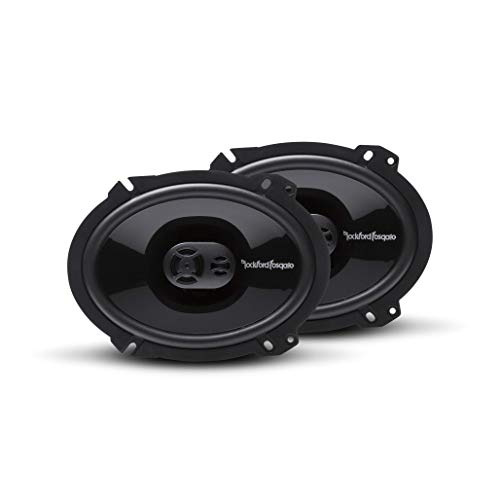
The Rockford Fosgate P1683 Punch series speakers are 6x8-inch 3-way coaxial full-range units designed as premium factory replacements for car audio fans. Coming as a pair in black, they pack 65 Watts RMS power handling and include all necessary mounting hardware plus OEM adapter plates for straightforward installs.
Targeted at drivers tired of weak stock sound, these speakers shine in sedans, trucks, and SUVs needing better clarity on highways or city streets. The FlexFit basket allows minor adjustments to align with existing holes, making swaps faster than custom fab work.
In real-world use, they reproduce frequencies accurately with high output, turning commutes into concerts and road trips into immersive experiences. No need for major rewiring; just drop them in and enjoy the upgrade.
Verdict: A top pick for value-driven audio upgrades, delivering pro-level sound without the pro price. Grab this pair if your factory speakers disappoint.
With a PEI dome tweeter and built-in crossover, the P1683 excels in vocal clarity and sparkling highs that cut through road noise. The mineral-filled polypropylene cone paired with butyl rubber surround ensures tight bass and mids, perfect for rock, country, or podcasts on long drives.
Handling 65W RMS up to 130W max, these speakers push impressive volume levels without breakup, ideal for open-road blasting or tailgate pre-games. Their 4-Ohm design pairs seamlessly with stock head units for immediate gains.
Full-range 3-way performance means balanced output across genres, from thumping bass lines to detailed instrumentals, elevating every drive.
The rugged black FlexFit basket uses slots over fixed holes for flexible mounting, ensuring a secure fit in varied OEM setups. At 6x8 inches, the pair is lightweight yet sturdy, built to handle vibrations and temperature swings in any vehicle.
Durability comes from the injection-molded cone and rubber surround, resisting wear for years of reliable service. Includes adapter plates and hardware, so no extra trips to the auto store.
Rockford Fosgate's signature build quality shines with a full 1-year warranty, giving confidence for daily drivers or weekend warriors.
Fitment Analysis and Rear Audio Upgrade Guide for the 1986 Mustang
Installing 6×8 speakers into the rear cavity of a 1986 Ford Mustang is entirely possible, but success depends on whether your car is a notchback coupe, a hatchback, or a convertible. Factory audio systems during this production era relied on body-specific mounting trays that accommodated either 6×9 or 5×7 oval drivers. Because the 6×8 profile shares exterior dimensions and bolt spacing with 5×7 openings, modern drivers frequently fit directly into existing factory bracket locations. You only need to verify that physical magnet depth and basket clearance match your interior space.
Hatchback models house rear speakers inside plastic interior quarter-trim panels, whereas notchback coupes utilize the rear package shelf above the trunk. Convertibles feature unique side-well cavities that impose strict space limits due to the folding top mechanism. Drivers with oversized magnets or extended tweeter protrusions can occasionally contact interior grilles or structural braces behind the upholstery. Careful pre-installation measurement prevents cosmetic damage to vintage trim panels and guarantees a secure physical mount.
Fox Body Body Styles and Rear Mounting Locations
The 1986 model year represents a distinctive era for the Fox body Mustang platform, featuring unique rear interior layouts across its three primary body configurations. In hatchback models, the rear speakers sit behind perforated plastic grilles integrated into large rear quarter trim panels flanking the cargo area. These enclosures typically offer moderate mounting depth, but the plastic mounting pods can become brittle after decades of heat exposure. Removing these trim panels requires gentle pressure around vintage retainers to prevent cracking the surrounding plastic.
Notchback coupes present a completely different installation environment by positioning rear speakers horizontally on the package shelf beneath the back glass. These factory locations drop through cutouts in the underlying sheet metal into the upper trunk space, where clearance is generally generous. However, owners must monitor clearance between the speaker magnets and trunk lid tension bars or hinge assemblies. A speaker basket that hangs too low into the luggage compartment can easily contact moving trunk hardware.
Convertible models feature the tightest spatial constraints of any Fox body configuration due to the hydraulic cylinders and frame rails operating the folding soft top. The rear speakers in convertibles mount vertically into small side armrest cavities next to the rear passenger bench seat. Installing 6×8 speakers in these convertible locations often requires customized mounting plates or shallow-mount designs to clear the top linkage. Inspecting your vehicle body type helps narrow down the exact physical clearances you will encounter during installation.
Dimensional Geometry of 5×7 and 6×8 Speaker Enclosures
Ford vehicles produced during this era famously utilized an oval speaker form factor often grouped together as 5×7 or 6×8. The physical mounting bolt pattern between these two designations is practically interchangeable across most aftermarket audio lines. While a 6×8 cone provides slightly more active surface area for mid-bass reproduction, its outer basket tabs align with standard 5×7 mounting holes. This dimensional crossover allows aftermarket 6×8 coaxial speakers to install cleanly into factory Ford 5×7 speaker openings.
Manufacturers design contemporary aftermarket drivers with slotted mounting tabs to simplify installation across subtle vehicle variations. For instance, the Rockford Fosgate P1683 features a specialized FlexFit basket design that incorporates slots rather than standard single-screw holes. These elongated slots allow slight adjustments when aligning the speaker frame against aged factory sheet metal or pre-existing bracket holes. That rotational flexibility saves significant time when working with classic vehicles where factory tolerance variations are common.
Some 1986 Mustangs originally left the assembly line equipped with large 6×9 rear brackets, especially in premium audio packages or specific hatchback trim levels. If your vehicle originally housed 6×9 speakers, dropping a 6×8 directly into the oversized hole leaves substantial air gaps that eliminate low-frequency response. In that scenario, purchasing an inexpensive 6×9 to 5×7/6×8 adapter plate or fabricating a rigid baffle provides the necessary structural backing. Acoustic isolation between the front and rear of the cone remains vital for generating balanced sound.
Rear Deck Depth, Basket Dimensions, and Magnet Clearances
Top-mount depth and bottom-mount clearance represent the two most critical physical measurements when selecting replacement speakers for classic Mustangs. Top-mount depth refers to the distance the speaker basket and magnet assembly extend downward below the mounting flange. If the magnet assembly is excessively wide or deep, it can collide with the vehicle inner quarter panel sheet metal or trunk support brackets. Measuring the vertical drop inside your rear cavity ensures your replacement drivers seat flush against their mounting surfaces.
Tweeter protrusion height is an equally vital dimension that vehicle restorers occasionally overlook during audio planning. Coaxial speakers feature a center-mounted high-frequency driver that sits suspended directly above the main mid-bass woofer cone. If the tweeter assembly stands too proud of the speaker rim, it will press firmly against the factory interior grille or trim cloth. This physical interference can distort the speaker frame, vibrate against the trim panel, or crack brittle original interior pieces.
Compact coaxial models like the Pioneer TS-G6820S are engineered with slim profiles that accommodate restricted factory openings without demanding sheet metal cutting. Avoiding physical alterations protects the structural integrity and historical value of your Fox body Mustang. If you discover that your chosen speakers sit slightly too deep, installing thin dense-foam spacer rings can raise the mounting flange just enough to achieve proper clearance. Always verify that your interior panel snaps or screws fully into position without stressing the speaker cone.
Matching Speaker Sensitivity to Receiver Power Output
Electrical matching between your audio source and your replacement speakers dictates the overall volume and clarity you experience inside the cabin. Factory 1986 Ford head units produce very modest continuous output, often supplying less than ten watts RMS per audio channel. When driving speakers with low-output factory amplification, speaker sensitivity becomes the defining specification for achieving acceptable listening levels. Sensitivity indicates how efficiently a speaker converts electrical wattage into acoustic volume measured at a distance of one meter.
The Pioneer TS-G6820S provides a high sensitivity rating of 92 dB alongside a continuous power handling capacity of 40 watts RMS and 250 watts maximum. That high sensitivity rating allows the Pioneer speaker to generate loud, distortion-free output even when powered by modest head units. If you plan to retain your original dashboard stereo for a classic appearance, choosing high-sensitivity speakers prevents the audio from sounding thin or quiet. Speakers with lower sensitivity ratings demand considerably more amplifier wattage to achieve the exact same volume levels.
When pairing modern aftermarket drivers with dedicated amplifiers, continuous root-mean-square power handling determines system reliability. The Kicker 43DSC6804 package provides capable full-range performance with a sound output rating of 200 watts maximum per pair, while Rockford Fosgate P1683 drivers handle 65 watts RMS per side. If you operate modern passive speaker systems driven by external stereo amplifiers, matching your amplifier output wattage to the continuous rating of your speakers prevents thermal voice coil damage. Balanced power delivery produces clean dynamic peaks while cruising with the windows rolled down.
Coaxial Driver Configurations: 2-Way Versus 3-Way Options
Deciding between 2-way and 3-way coaxial speakers influences the tonal balance and soundstage presentation within the Fox body cockpit. A 2-way coaxial design features a primary woofer cone dedicated to low and midrange frequencies, paired with a central tweeter that handles high frequencies. The Pioneer TS-G6820S and Kicker DS Series utilize this balanced 2-way configuration to deliver cohesive full-range sound across broad frequency sweeps. The Pioneer speaker specifically lists a frequency response span from 72 Hz to 14 kHz, offering solid vocal reproduction and defined mid-bass presence.
A 3-way coaxial design introduces an additional intermediate driver, typically designated as a super-tweeter or dedicated midrange element. The Rockford Fosgate P1683 Punch utilizes a 3-way arrangement featuring a PEI dome tweeter with built-in crossover circuitry to divide acoustic spectrum duties cleanly. Its injection-molded mineral-filled polypropylene cone and durable butyl rubber surround maintain stiff, accurate piston motion during demanding musical transients. Distributing audio frequencies across three separate elements can enhance high-end detail, which helps cut through wind and exhaust rumble.
Cabin acoustics in a 1986 Mustang present unique challenges, as hard glass surfaces and angular rear quarters create distinct acoustic reflections. In hatchback cabins, sound radiates forward from the cargo bay, making smooth high-frequency dispersion particularly valuable for rear passengers. In notchback coupes, the package tray points speakers directly upward into the angled rear windshield, reflecting treble forward toward the front seats. Selecting a well-engineered 2-way or 3-way driver helps balance these interior reflections without creating harsh or piercing high-frequency tones.
Wiring Harness Integration and Polarity Management
Original 1986 Mustang speaker wiring utilized proprietary Ford snap-together female terminal plugs that do not slide directly onto modern aftermarket speaker tabs. Slicing into factory wiring harnesses degrades the original vehicle harness and increases the risk of loose crimp connections down the road. Utilizing vehicle-specific wiring adapters allows you to connect new speakers directly to factory plugs without cutting a single original wire. Many aftermarket bundles, including the Kicker DSC680 package, supply specialized quick-connect wiring harnesses that simplify the upgrade into a direct plug-and-play process.
Maintaining proper acoustic polarity across all vehicle audio channels is crucial when connecting your new rear speakers. Every speaker features a positive terminal and a negative terminal that correspond to identical positive and negative outputs on the stereo receiver. If you reverse the polarity on one rear speaker, its cone moves inward while the opposite speaker moves outward during bass passages. This mechanical cancellation drastically reduces low-frequency punch, leaving your audio sounding thin, hollow, and devoid of bottom-end impact.
Inspecting factory wiring for insulation degradation or corrosion is another wise precaution before finalizing your rear speaker installation. Decades of temperature fluctuations and humidity inside the trunk or quarter panels can turn original copper wire brittle. If you discover corroded or pinched wires along the sill plates, repairing the damaged sections ensures consistent signal delivery. Clean electrical continuity prevents unexpected channel dropouts and keeps your sound system performing reliably under all driving conditions.
Step-by-Step Installation and Vibration Prevention
Beginning any automotive electrical work requires disconnecting the negative terminal of your vehicle battery to prevent accidental short circuits. Once electrical safety is established, prepare your workspace by clearing out the trunk or folding down the rear hatchback seats for unobstructed access. In hatchback models, carefully unscrew the upper seat belt anchors and unclip the lower quarter trim retainers to expose the speaker pods. In notchback coupes, access the package tray from inside the vehicle or work directly from inside the trunk compartment depending on your grille style.
Remove the original retaining screws holding the factory speaker or bracket assembly in place, keeping the hardware organized for reassembly. Gently detach the factory wiring connector by depressing its plastic locking tab, taking care not to pull directly on the copper wires. Position your new 6×8 speaker into the cavity to test physical fitment, verifying that the frame sits flat without wobbling against sheet metal seams. Connect your wiring harness adapter to the speaker terminals, ensuring the positive and negative spades seat firmly into place.
Secure the speaker frame using appropriate mounting screws, tightening them evenly in an alternating cross-pattern to prevent warping the speaker basket. Reconnect your vehicle battery momentarily before reinstalling any trim panels so you can verify audio output across both left and right channels. Test balance and fader controls from the driver seat to confirm that sound shifts correctly to the rear corners. Once functional audio output is confirmed, reinstall your interior trim panels, grilles, and seat belt hardware securely.
Upgrading the rear sound system in your 1986 Ford Mustang with capable 6×8 speakers delivers a dramatic improvement in clarity, power handling, and musical enjoyment. By confirming your specific body style dimensions, selecting sensitive drivers with compatible mounting depths, and using proper wiring harnesses, you can achieve a factory-clean installation that respects the classic lines of your Fox body interior. Take time to double-check polarity, secure all mounting fasteners, and apply damping where needed to enjoy dependable, high-fidelity sound on every journey.




Write Your Review
No reviews yet. Be the first to share your experience!