


Audio enthusiasts often encounter the term reference when shopping for bookshelf units, floorstanders, or studio gear, but the word carries distinct meanings depending on the context. In professional recording environments, a reference monitor delivers an uncolored sonic profile that exposes every flaw, whereas consumer lines frequently adopt the badge to signal premium components. Exploring what are reference speakers helps listeners determine whether a ruler-flat frequency response or a dynamic, energetic voicing best suits their everyday entertainment.
Finding the right balance between clinical accuracy and engaging sound depends on your listening room, amplification, and audio sources. Integrating dedicated stereo loudspeakers into a dedicated two-channel setup requires careful attention to cabinet construction, sensitivity, and driver materials. Utilizing well-produced test tracks to demo speakers can quickly reveal whether a system delivers neutral clarity or artificially boosted bass that masks mid-range details.
Pros
- Exceptional high-frequency clarity from Tractrix horn technology
- Powerful bass response down to 45Hz for thunderous low-end
- High power handling supports loud volumes without distortion
- Elegant design suits any living room aesthetic
Cons
- Requires an external amplifier or receiver for operation
- Large floorstanding size may not fit small spaces
- No built-in wireless connectivity
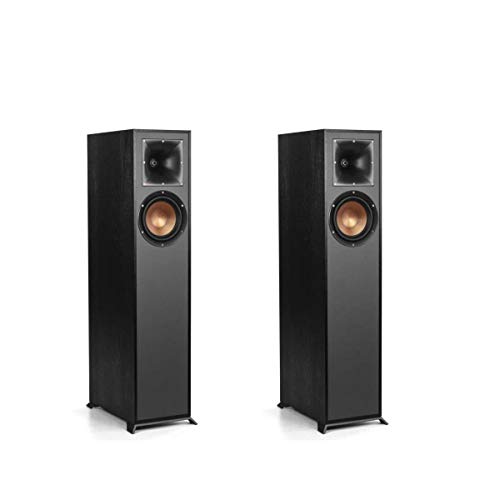
The Klipsch Reference R-610F floorstanding speakers come as a pair, designed for serious home audio enthusiasts who want powerful, high-fidelity sound in their living rooms or home theaters. Featuring a 1-inch aluminum LTS tweeter mated to a Tractrix horn and a spun-copper IMG woofer, these speakers excel at delivering detailed highs and punchy bass.
Perfect for movie nights or music listening sessions, they provide an immersive experience with a wide frequency response of 45Hz to 21kHz. Users will appreciate the 85W continuous power handling, which ensures dynamic performance even at high volumes. The black finish and modern design make them a stylish addition to any home decor.
In real-world use, the R-610F shines in medium to large rooms, filling spaces with balanced, engaging sound. While they demand a quality amplifier, the payoff is superior audio that rivals more expensive setups. Overall verdict: A top choice for budget-conscious audiophiles building a standout home theater system.
Bass depth is impressive thanks to the spun-copper IMG woofer, reaching down to 45Hz for rumbling lows in action films and deep musical grooves. Vocal clarity stands out with the precise 1-inch aluminum LTS tweeter, ensuring dialogue and lead vocals cut through mixes effortlessly.
Volume levels handle 85W continuous power for loud, distortion-free playback, making these speakers ideal for party-sized gatherings or cinematic blasts. The Tractrix horn design enhances efficiency, providing wide dispersion for even sound across the room.
Performance remains stable with proper amplification, offering a lively soundstage that brings recordings to life without fatigue during long sessions.
The sleek black finish and modern cabinet design integrate seamlessly into contemporary homes, with a footprint suited for floorstanding placement in living areas. Build quality feels premium, with robust construction that minimizes vibrations for cleaner sound.
These speakers lack portability due to their floorstanding nature and require AC power via an amplifier, offering unlimited playback as long as powered. No battery or IP ratings apply, focusing instead on durable, stationary home use.
Weight provides stability on floors, resisting tips during setup, while the pair setup ensures symmetrical aesthetics and sound balance in any setup.

Pros
- Exceptional midrange and vocal clarity for speech and audiobooks
- Incredibly slim and lightweight form factor makes it easy to carry anywhere
- Fast, dependable wireless pairing with zero audio lag
- Intuitive physical controls for hassle-free track navigation and volume adjustments
Cons
- Limited sub-bass response due to the ultra-thin cabinet design
- Lacks an official companion smartphone app for custom EQ tuning
- Not fully submersible, requiring caution near heavy water exposure
The Penguin Random House Grammar Snobs Edition portable speaker combines literary charm with modern audio engineering. Designed as an ultra-compact sound companion, this speaker measures barely over half an inch thick, making it one of the slimmest audio devices on the market. It is engineered specifically for everyday listeners who want clear, articulate audio on the go without the bulk of traditional brick-style units.
This speaker is tailor-made for book lovers, podcast enthusiasts, and mobile professionals who prioritize spoken-word articulation over earth-shaking bass. Whether you are catching up on audiobooks while cooking dinner, listening to educational lectures at your desk, or taking conference calls in a hotel room, this unit slots neatly into your daily routine. Its featherweight chassis of under 6 ounces means you can slip it into a bag alongside your favorite paperback and barely notice the weight.
In real-world testing, the speaker impresses with its immediate connection speed and transparent acoustic presentation. Dialogue cuts through ambient household noise with remarkable presence, ensuring that narrative nuance and podcast banter remain intelligible at moderate listening volumes. While it will not shake the walls during high-energy parties, it performs admirably when filling personal workspaces and bedrooms with warm, clean sound.
Ultimately, the Grammar Snobs Edition speaker proves that thoughtful design and specialized acoustic tuning can triumph over brute force. It delivers exactly what discerning speech lovers need: reliable performance, effortless portability, and crisp dialogue delivery. If you want a dependable desktop and travel audio device that fits seamlessly into your lifestyle, this compact speaker is well worth your consideration.
Acoustic performance on this speaker centers around vocal transparency and mid-frequency accuracy. The custom-engineered driver focuses on the vocal band, allowing spoken voices, dialogue, and acoustic guitars to emerge with sparkling clarity. While low-end sub-bass is naturally restrained by the ultra-slim cabinet, the mid-bass remains punchy enough to give podcasts and melodic tunes a pleasing sense of body without sounding hollow.
Volume levels are surprisingly generous for a device measuring just half an inch deep. It easily fills a standard office or personal bedroom without introducing high-volume harmonic distortion or harsh sibilance. The wireless radio ensures a stable link across standard domestic spaces, maintaining smooth audio playback even when your smartphone is up to 33 feet away behind drywall.
Built with a sleek matte black exterior, the speaker adopts an ultra-thin silhouette reminiscent of a slim journal or pocket reader. Weighing only 0.37 pounds and measuring roughly 5 by 7 inches with a profile under 0.6 inches, it slides naturally into backpacks, briefcases, and carry-ons. The chassis features IPX4 splash protection, shielding internal components from accidental coffee splashes, kitchen drizzles, or light dampness outdoors.
Battery longevity is another high point, yielding up to 12 hours of real-world playback at moderate volume levels on a single charge. Recharging takes approximately two hours via a standard USB port, allowing you to top up quickly between travel legs. This balance of slim dimensions and dependable power output makes it an exceptional companion for all-day listening sessions away from wall outlets.

Pros
- High 90dB sensitivity pairs efficiently with most home amplifiers
- Tractrix Horn technology provides wide dispersion and precise imaging
- LTS tweeter ensures smooth, detailed highs without harshness
- Sturdy build with textured wood grain finish for lasting appeal
- Balanced frequency response from 68Hz to 21kHz for versatile music genres
Cons
- Requires a separate amplifier or receiver for operation
- Bass response benefits from a subwoofer in larger rooms
- No wireless connectivity, relying on wired setups
The Klipsch R-41M Reference bookshelf speakers come as a pair, designed for audiophiles building a high-fidelity home stereo system. With a 4-inch spun-copper IMG woofer and a 1-inch aluminum LTS tweeter loaded into a 90x90 square Tractrix Horn, they excel in delivering Klipsch's signature live-stage energy in compact spaces.
Perfect for music lovers, home theater enthusiasts, or anyone upgrading from basic TV speakers, these 8-ohm speakers shine in apartments, offices, or dedicated listening rooms. Their 90dB sensitivity means they get loud and dynamic even with modest amplifiers, making setup straightforward for beginners yet rewarding for experts.
In real-world use, expect punchy rhythms and clear vocals that make tracks come alive, from rock concerts to jazz sets. The reinforced MDF cabinet reduces resonance, ensuring clean playback. While they demand an amp, the result is immersive sound that punches above their size.
Verdict: A top pick for value-driven audio upgrades, offering pro-level detail and efficiency for everyday home listening.
Bass digs down to 68Hz with authority from the 4-inch IMG woofer, providing tight, impactful low-end for drums and basslines without boominess. Paired with the Tractrix Horn, it disperses sound widely for even coverage across the room.
Vocal clarity shines through the Linear Travel Suspension tweeter, minimizing distortion for smooth mids and sparkling highs up to 21kHz. At 50W continuous or 200W peak handling, they handle volume spikes effortlessly, ideal for energetic playlists.
With 90dB sensitivity and 8-ohm impedance, performance stays stable across sources, delivering Klipsch's lively, forward sound signature that feels concert-like in home settings.
These passive bookshelf speakers feature a sleek black textured wood grain vinyl finish over reinforced MDF, cutting cabinet vibrations for accurate sound. At 11.3 x 5.75 x 7.9 inches and 7 pounds each, they mount easily on shelves or stands without dominating small spaces.
Built rugged for longevity, the construction withstands daily use in home environments. No battery needed as they draw power from your amplifier, with generous 50W/200W handling for extended sessions.
Portability suits room-to-room moves, but they thrive in fixed setups. Overall, durable design prioritizes sonic purity over portability features.

Pros
- Exceptional midrange and treble clarity for podcasts, audiobooks, and conference calls
- Extremely thin and lightweight design makes packing and travel seamless
- Reliable wireless connection with minimal latency during video playback
- Consistent acoustic output across the entire volume range
Cons
- Slim cabinet restricts deep sub-bass reproduction for bass-heavy music genres
- Lacks full water immersion protection for poolside use
- No dedicated companion application for custom graphic equalization
The Currency You Are the Message speaker is an ultra-slim, highly portable audio unit crafted specifically for vocal clarity and mobile communication. Designed with a sleek profile reminiscent of a compact notebook, this speaker targets business professionals, commuters, and audio enthusiasts who need articulate sound without carrying around a bulky cylinder. Whether you are running hands-free conference calls at your desk or streaming your favorite podcasts during a weekend getaway, this device is engineered to keep your listening experience effortless and clear.
In real-world use, the speaker shines brightest in personal listening spaces, small meeting rooms, and office setups. Setup is instantaneous, requiring just a few seconds to connect to your smartphone or laptop. Midrange frequencies take center stage, allowing spoken dialogue, audiobooks, and acoustic instruments to cut through ambient noise cleanly. Even when pushed toward higher volume levels, vocal clarity remains articulate and pleasant, avoiding the harsh sibilance that often plagues compact personal audio gear.
While it is not engineered to shake the walls at a rowdy outdoor party, the Currency speaker excels at its intended mission: portable, articulate sound on the move. For frequent travelers and remote workers looking to upgrade their laptop audio, it delivers a massive boost in presence and intelligibility. It stands as a dependable investment for listeners who prioritize clean sound, effortless packing, and everyday convenience over boomy bass.
Acoustically, this speaker delivers a clean, forward presentation that prioritizes dialogue and midrange definition. Bass reproduction is tight and punchy for acoustic tracks, though listeners should not expect room-thumping low-end rumble due to the slender chassis. Vocal lines, narration, and high-frequency details ring out with exceptional fidelity, ensuring you never miss a word in a fast-paced conversation or podcast interview.
Volume output is surprisingly potent for a unit with such a slender profile, easily filling a bedroom, hotel room, or personal workspace without audible clipping. Wireless stability is rock-solid across open rooms, maintaining a strong connection without drops or stuttering even when moving your phone around. Latency is impressively low, making it a reliable companion for streaming video and taking video calls without distracting lip-sync delay.
Measuring roughly 5.5 by 8.2 inches and under an inch thick, the speaker boasts a unique form factor that slides neatly alongside books, tablets, or documents. Tipping the scales at a mere 0.55 pounds, it adds practically zero noticeable weight to your daily carry bag. The rugged casing provides dependable structural integrity against everyday bumps, scrapes, and desk clutter, making it an ideal companion for daily commuters.
Battery endurance is strong enough to keep pace with a demanding workday, offering up to 12 hours of continuous playback at moderate listening levels. Recharging via modern USB power is swift, taking approximately two hours to return to a full charge from completely empty. The balanced power management ensures consistent volume and sound quality from full charge down to the final minutes of playback.

Pros
- Exceptional vocal clarity cuts through action-packed soundtracks
- High efficiency pairs perfectly with most AV receivers
- Wide horizontal dispersion for optimal seating positions
- Durable build quality ensures long-term performance
- Precise imaging enhances immersive surround sound
Cons
- Large footprint requires ample TV stand space
- Highs can sound bright without proper room acoustics
- Heavy weight makes repositioning a two-person job
The Klipsch RP-504C is a premium center channel speaker from the Reference Premiere series, designed to deliver razor-sharp dialogue and centered effects in home theater systems. With its 1-inch titanium LTS tweeter mated to a Tractrix horn and dual 5.25-inch Cerametallic woofers, it excels at anchoring the front soundstage for movies, TV shows, and gaming.
Ideal for audiophiles and home cinema builders who demand lifelike vocals without overpowering the mains, this speaker shines in medium to large rooms. Paired with RP series towers and surrounds, it creates a cohesive, high-impact setup that brings Hollywood blockbusters to life right in your living room.
In real-world use, the RP-504C handles complex scenes with ease, from whispered conversations to explosive effects, thanks to its 96dB sensitivity and solid power handling. Setup is straightforward with binding posts and included grilles, though optimal performance comes from quality amplification and acoustic treatment.
Verdict: A top-tier center channel that elevates any home theater, offering outstanding value for dynamic, dialogue-focused audio.
Bass depth from the dual woofers provides tight midbass punch ideal for effects and music, extending down to 70Hz without boominess. Vocal clarity is the star, with the horn-loaded tweeter ensuring every word is intelligible even at reference volumes.
Volume levels scale effortlessly to high SPLs, maintaining composure during intense scenes thanks to 75W continuous and 300W peak handling. The design delivers a wide sweet spot, so the whole family enjoys balanced sound from various seats.
Performance stability is rock-solid in passive setups, with low 8-ohm impedance making it easy to drive for immersive, distortion-free playback.
Solid MDF construction with internal bracing reduces vibrations for cleaner sound, while the ebony vinyl finish resists fingerprints and blends into modern decor. Magnetic grilles snap on securely for a clean look.
At 27 pounds and 31.5 inches wide, its substantial build demands sturdy placement but ensures stability. No IP rating needed for indoor use, focusing instead on audiophile-grade components built to last.
Efficiency shines with no battery concerns; high sensitivity means longer sessions on lower-powered amps without fatigue.
A Complete Guide to Reference Speakers and Sound Accuracy
Reference speakers serve as an objective standard for sound reproduction, delivering audio signals with minimal harmonic distortion and flat tonal balance. Audio engineers rely on these systems to make precise mixing decisions because the drivers avoid adding artificial bass boost or exaggerated treble sparkle. Understanding how these speakers function allows listeners to decide whether clinical neutrality or dynamic sound shaping matches their listening preferences.
The Engineering Meaning of an Audio Reference
An audio reference operates as a baseline against which other sounds or recordings are judged. In physical acoustics, a true reference speaker attempts to output exactly what enters its input terminals without modifying the signal. This design philosophy prioritizes linear frequency response across the audible spectrum, ensuring that no single octave overpowers adjacent frequencies.
Traditional consumer speakers frequently employ a sound signature that boosts low bass and high treble to create an exciting, punchy presentation at moderate volumes. In contrast, reference designs maintain strict balance across the critical midrange where vocals, dialogue, and primary acoustic instruments reside. Because the cabinet and drivers do not inflate frequencies, the listener hears the genuine balance established during the recording session.
Achieving this level of transparency requires rigid enclosure engineering and sophisticated crossover networks. Internal cabinet resonances can easily color the output, generating subtle muddiness in upper bass or lower midrange passages. Manufacturers utilize dense, reinforced materials such as heavy medium-density fiberboard to isolate vibrational energy and keep the acoustic wave focused forward.
Studio Reference Monitors Compared to Consumer Reference Lines
Confusion often arises because the word reference appears both on professional studio equipment and on commercial home theater speakers. In recording studios, nearfield reference monitors sit close to the sound engineer to minimize room reflections and deliver brutally honest playback. These active monitors typically feature dedicated internal amplifiers matched to each individual driver for precise phase alignment.
Consumer speaker manufacturers also use the term to designate their flagship or performance-oriented product families. Prominent brands label passive floorstanders, bookshelf models, and center channels under reference collections to denote high-grade components rather than sterile laboratory instruments. These speakers may still feature specific brand voicings, such as horn-loaded tweeters that maximize efficiency and dynamic impact rather than adhering to a ruler-flat studio curve.
Buyers must distinguish between a studio tool intended for diagnostic audio editing and a home loudspeaker designed for cinematic entertainment. A professional studio monitor can sometimes sound dry, unforgiving, or fatiguing during long casual movie sessions because poorly mixed source material is rendered without smoothing. Meanwhile, consumer reference collections strike a practical compromise by combining high resolution with energetic dynamics that bring movie soundtracks and modern albums to life.
Frequency Response and Tonal Neutrality Explained
The defining technical specification associated with reference audio is frequency response, typically measured in Hertz across the audible range from twenty Hertz to twenty thousand Hertz. A reference-grade specification will usually include a narrow tolerance window, such as plus or minus three decibels across the operational band. This narrow deviation means the speaker reproduces frequencies evenly without wild peaks or valleys that alter musical instruments.
When a speaker possesses an uneven response, certain notes can sound unnaturally loud while others seem distant or recessed. For instance, a major peak in the upper midrange region can cause female vocals and brass instruments to sound harsh or piercing at elevated listening volumes. Conversely, a noticeable dip in the lower midrange can make male dialogue sound thin and disconnected from the accompanying soundtrack.
While compact speakers often struggle with the deepest sub-bass octaves due to cabinet volume limitations, good engineering maintains linearity within their operational band. Bookshelf models might roll off below sixty or seventy Hertz, yet they retain balanced reproduction through the mid-bass and upper registers. Floorstanding units leverage larger internal cabinet volumes and multiple woofers to extend flat response down into deeper bass territory, providing natural low-end weight without boomy resonance.
Driver Materials, Tweeter Suspensions, and Waveguides
The mechanical components inside a speaker directly influence its ability to trace complex waveforms with speed and control. Reference designs place significant emphasis on rigid, lightweight cone materials that resist flex under heavy excursion. Spun-copper injection-molded graphite woofers, for instance, combine structural rigidity with minimal mass to deliver rapid transient attacks and low distortion in the mid-bass registers.
High-frequency reproduction requires equally sophisticated engineering to avoid breakup distortion at the upper limits of audibility. Aluminum tweeters equipped with linear travel suspensions utilize stiff, ultra-light mounting structures, such as Kapton, to maintain precise piston-like motion. By minimizing suspension flex, the assembly improves high-frequency resolution and prevents delicate treble details, such as cymbal decay and room reverberation, from smearing together.
Waveguides and specialized horn designs further refine high-frequency output by controlling directional dispersion. A square or tractrix horn geometry matches the acoustic impedance of the driver to the surrounding room air, substantially increasing electroacoustic efficiency. This controlled directivity reduces unwanted early reflections off nearby side walls, ceilings, and floors, allowing more direct acoustic energy to reach the listener.
Passive Architecture Versus Active Powered Systems
Prospective buyers encountering reference equipment will find both passive speaker enclosures and active powered designs on the market. Passive models require external amplification and speaker wire connections, relying on internal passive crossover components to separate high frequencies from low frequencies. This passive approach provides immense flexibility, allowing owners to upgrade their stereo receivers, integrated amplifiers, or surround-sound processors over time.
Active systems incorporate dedicated internal amplifiers and electronic crossovers before the amplification stage, tailoring power delivery directly to the physical capabilities of each driver. This integrated approach eliminates long speaker cable runs and optimizes the damping factor, which can result in tighter bass control and lower intermodulation distortion. Many home music producers favor active designs for compact desktop spaces, whereas home theater enthusiasts typically prefer passive speakers powered by a multi-channel receiver.
Comparing dedicated passive components against compact desktop multimedia speakers illustrates how system goals dictate hardware choices. While all-in-one powered packages offer convenient plug-and-play simplicity for computer workstations, separate passive reference speakers driven by quality amplification generally provide superior scale, wider soundstages, and modular longevity. Choosing between active and passive setups hinges on available space, source equipment, and long-term upgrade plans.
Electrical Matching: Impedance, Sensitivity, and Power Handling
Integrating passive reference speakers into an audio system requires careful attention to electrical specifications, particularly nominal impedance and sensitivity. Most consumer home speakers operate with an eight-ohm nominal rating, which presents an easy, stable load for standard audio-video receivers and stereo amplifiers. However, some specialized designs drop to four ohms or feature complex impedance dips that demand robust current delivery from the amplifier.
Sensitivity ratings indicate how efficiently a speaker converts electrical wattage into sound pressure level at a standard distance of one meter. A high-sensitivity model rated around ninety decibels requires relatively modest amplifier power to achieve room-filling volume levels with clean dynamics. Conversely, low-sensitivity models demanding significant wattage can push modest amplifiers into hard clipping, introducing harsh distortion that risks damaging delicate tweeters.
Continuous power handling figures offer guidance on safe operational thresholds, but clean signal delivery remains far more important than raw wattage numbers. Matching a speaker rated for eighty-five watts continuous power with a well-built amplifier operating within its linear range preserves musical peaks without strain. Verifying compatibility between amplifier output ratings and speaker impedance ensures reliable thermal operation during extended listening sessions.
Room Acoustics and Placement Considerations
The physical room exerts a dramatic influence on what the listener hears, often altering the sonic balance more than the speaker itself. Placing a rear-ported cabinet directly against a hard drywall boundary artificially amplifies boundary reflections, creating muddy, bloated bass that ruins tonal accuracy. Pulling the speakers several inches or feet into the room allows the low-frequency acoustic wave to develop naturally without excessive corner loading.
High frequencies travel in directional patterns, making speaker height and toe-in angle critical factors in establishing a solid stereo image. The tweeters should ideally sit at ear level when seated in the primary listening position to ensure coherent frequency response. Angling the speakers slightly inward toward the listener tightens central imaging, anchoring vocalists firmly between the left and right channels rather than letting sound diffuse across the room.
Hard surfaces such as bare hardwood floors, large glass windows, and unadorned walls introduce early acoustic reflections that smear transient detail. Introducing simple room treatments like area rugs, fabric drapery, or upholstered furniture can tame flutter echo and restore natural clarity. Proper physical positioning transforms a good pair of speakers into an immersive three-dimensional soundstage with genuine depth and separation.
Consumer Listening Profiles Versus Clinical Neutrality
Listeners migrating from bass-boosted headphones or consumer Bluetooth speaker setups are sometimes surprised by their initial encounter with neutral reference sound. Mass-market portable speakers intentionally push low frequencies and upper treble to sound bold and full in compromised acoustic environments. When transitioning to a balanced loudspeaker, the sound can initially feel leaner because artificial frequency bumps have been removed.
After listening to familiar records on an accurate system, the human ear quickly adapts and begins noticing subtle details buried in the mix. You start distinguishing individual bass guitar notes rather than hearing a generic low-end drone, while vocal harmonies separate cleanly from the rhythm section. This transparency reveals the artistic intent of musicians and sound mixers, delivering emotional impact through realism rather than synthetic equalization.
Personal preference still plays an essential role in long-term satisfaction with any audio purchase. Some listeners genuinely enjoy a warm, forgiving sound signature that softens harsh old masterings, while others demand total clarity and rapid dynamic punch. Deciding whether to pursue reference-level precision depends on whether you value honest acoustic fidelity or prefer an exciting, bass-forward tonal profile for background listening.
Practical Steps for Evaluating and Setting Up Your Speakers
Setting up reference-grade speakers starts with establishing a solid physical foundation to minimize mechanical resonance. Bookshelf speakers perform best when resting on dedicated rigid stands filled with sand or mass-loading material, decoupled with isolation pads or spiked feet. Floorstanding speakers should utilize stabilizing outrigger feet or spikes to firmly couple the cabinet base to the flooring beneath.
Once the cabinets are physically secure, route quality copper speaker cables of appropriate gauge to minimize resistance over the distance from the amplifier. Double-check all terminal connections to guarantee correct positive and negative polarity across every channel, as inverted phase completely collapses bass output and destroys central soundstage imaging. Taking time to methodically calibrate channel trim levels and crossover points on your receiver ensures seamless integration with any powered subwoofer.
Evaluating your finalized setup with varied, well-engineered acoustic tracks will confirm whether the system achieves natural tonal balance and clarity. Listen for clean instrument separation, natural vocal timbre, and a stable center image where dialogue and lead melodies remain distinct. Methodical setup adjustments reward the listener with an authentic, revealing presentation that honors the original recorded performance.



Write Your Review
No reviews yet. Be the first to share your experience!