


Many audio enthusiasts ask whether can sonos speakers be hardwired when planning a clean home listening setup or dealing with frustrating wireless dropouts. While Sonos built its stellar reputation on seamless wireless streaming, physical cables still play a vital role across the ecosystem. Depending on the exact hardware in your setup, hardwiring can refer to plugging in Ethernet cables for network stability, connecting analog line-in sources, or running physical copper speaker wire to architectural components. Exploring these connection pathways helps you determine the best approach for integrating on-wall speaker installations alongside existing audio gear.
Reliable connectivity ensures your sound never cuts out during a gathering or while watching high-action movies. Traditional Wi-Fi setups can struggle when multiple family members stream media simultaneously or when thick walls block wireless signals. Unlike standard Bluetooth speakers that rely on short-range transmissions, Sonos equipment offers versatile wired alternatives that bypass crowded wireless frequencies entirely. Understanding how these wired connections operate empowers you to build an ultra-dependable sound system with minimal latency and superior acoustic coverage throughout every room.

Pros
- Effortlessly integrates vintage audio gear with modern smart speaker setups
- Pristine, uncolored audio conversion with high-fidelity digital output
- Rock-solid multi-room synchronization with zero latency across zones
- Instant setup and smooth streaming via Apple AirPlay 2 and the Sonos app
Cons
- Requires external amplification or active powered speakers to produce audio
- Lacks native Bluetooth audio input, relying strictly on Wi-Fi and AirPlay 2
- Higher investment cost compared to entry-level streaming adapters
The Sonos Port is a dedicated wireless streaming component engineered to bridge the gap between traditional stereo gear and modern smart multi-room speaker systems. Whether you have high-end vintage floorstanders, an integrated amplifier, or an audio-video receiver, the Port plugs into your existing setup to provide full access to streaming music services, internet radio, and multi-room grouping.
This device is tailor-made for audio enthusiasts who already own beloved traditional speaker rigs or turntables and want the convenience of Sonos without abandoning their existing components. Thanks to the integrated analog audio line-in, you can hook up a vinyl turntable or CD player and stream that physical media wirelessly to other Sonos smart speakers located throughout your home.
In everyday use, the Sonos Port delivers rock-solid connectivity and hassle-free operation through the Sonos app or Apple AirPlay 2. Setting it up takes only minutes, and the included 12V trigger output can automatically wake up compatible power amps when you start streaming from your smartphone or tablet, providing an intuitive, hands-off listening experience.
If you want to expand your home audio without sacrificing the power and tone of your current speaker setup, the Sonos Port is the premier smart audio bridge on the market today. It provides reliable performance, pristine sound transfer, and unmatched ecosystem integration that justifies the investment for any dedicated home audio setup.
The Sonos Port features an upgraded digital-to-analog converter that preserves the original depth of your tracks, delivering deep, well-defined bass notes and clear, textured vocals. Because it acts as a transparent audio bridge, it does not color or compress the signal, allowing your connected amplifier and speaker system to reproduce dynamic, room-filling sound with complete detail.
Operating over high-speed Wi-Fi rather than standard Bluetooth, the Sonos Port ensures lossless transmission across vast home spaces without dropouts or range limitations. You get full output volume control directly through the Sonos app, maintaining pristine audio clarity from whisper-quiet background acoustics up to concert-level amplification with zero audible hiss or background hum.
Built with a minimalist, matte-black finish, the Sonos Port measures just 1.61 inches high and weighs just over one pound, making it easy to tuck onto an AV rack, bookshelf, or media console alongside your speaker gear. While not designed for outdoor poolside use or rugged off-grid portability, its durable polycarbonate chassis protects the internal audio components from dust and daily wear in indoor home environments.
Unlike portable battery-powered speakers that require frequent recharging and face battery degradation over time, the Sonos Port is engineered for continuous, always-on household operation using an included AC power adapter. This permanent power connection ensures zero downtime and instant wake times, keeping your entire multi-room speaker network ready to stream music 24 hours a day without ever worrying about battery limits.


Pros
- Seamless Trueplay room calibration unlocks tailored sound through the Sonos Amp
- Remarkably wide dispersion pattern fills entire rooms without localized audio hotspots
- Discreet, paintable magnetic grilles provide a clean and upscale architectural finish
- Impressive bass extension down to 36 Hz with integrated Sonos digital signal processing
Cons
- Requires a Sonos Amp to access Trueplay tuning and optimized DSP profiles
- Passive in-ceiling design requires running in-wall speaker wire and cutting drywall
- Alternative square grilles are sold separately rather than included in the box
The Sonos in-Ceiling by Sonance represents a premier partnership between one of the most recognized names in wireless multi-room audio and a pioneer of custom architectural sound. Built from the ground up to integrate into the modern smart home, these in-ceiling speakers eliminate the visual footprint of traditional box speakers while maintaining the sonic refinement audiophiles expect. Whether you are outfitting a newly built kitchen or retrofitting an existing living room, these speakers deliver high-end audio directly from above.
Targeted at homeowners, designers, and AV enthusiasts who demand clean living spaces, these speakers solve the age-old dilemma of bulky audio equipment versus sound quality. Because they are fully passive, they wire back to a central amplifier, making them ideal for multi-room background audio or as height and surround channels in a Sonos-powered home theater configuration alongside a Sonos Arc or Beam soundbar.
In real-world testing, the true magic occurs when pairing these speakers with the Sonos Amp. This unlocks Sonos Trueplay tuning, which utilizes the microphone on an iOS device to measure how sound reflects off walls, hardwood floors, and furniture. The system automatically corrects acoustic anomalies, turning what is usually a compromised ceiling setup into a remarkably balanced, full-bodied listening experience. Vocals stay intelligible, instruments maintain separation, and ambient music feels completely immersive.
For anyone wanting an uncluttered home audio system without forfeiting the convenience of streaming services and whole-home grouping, the Sonos in-Ceiling speakers are a standout choice. Their blend of Sonance acoustic engineering and Sonos software intelligence makes them an outstanding long-term investment in your home entertainment setup.
Acoustically engineered by Sonance, each speaker features a 6.5-inch (165 mm) polypropylene woofer coupled with a high-performance 1-inch (25 mm) polyurethane dome tweeter. Together with the active digital signal processing inside the Sonos Amp, the system delivers an extended frequency response ranging from 36 Hz up to 20 kHz (plus or minus 3 dB). Low-end bass notes are warm, punchy, and surprisingly deep for a flush-mount speaker, meaning casual listening sessions rarely require an immediate subwoofer pairing.
Ceiling speakers often suffer from an unwanted spotlighting effect, where the listener must stand directly underneath the speaker to hear full treble clarity. Sonance solves this with a wide 90-degree nominal coverage angle. The soundstage spreads out broadly across the room, providing consistent frequency response and even volume levels regardless of where you are seated or standing. Midrange frequencies, specifically male and female vocals, remain crisp and forward without becoming abrasive at higher output levels.
Each Sonos in-Ceiling speaker measures 9.13 inches across with an installation depth requirement of 4.76 inches (120 mm), ensuring compatibility with standard residential ceiling joists and drop ceilings. The build incorporates durable, non-resonant polymer frames with heavy-duty mounting doglegs that secure firmly against ceiling drywall. Each speaker weighs approximately 5 pounds, giving it a reassuringly dense, rattle-resistant construction.
From a visual perspective, these speakers disappear into your architecture. They come standard with round micro-perforated steel grilles that attach magnetically to the rim. Both the grille and frame flange can be spray-painted to match any custom ceiling color or texture. Underneath the grille, robust spring-loaded terminal connectors easily accommodate standard 14-gauge or 16-gauge in-wall speaker wire. While compatible with third-party amplification, these 8-ohm speakers are specifically optimized for the Sonos Amp, which allows up to three pairs to be safely wired in parallel to a single amplifier unit.

Pros
- Remarkable vocal clarity and dedicated speech enhancement mode for movies and television.
- Ultra-compact form factor fits easily beneath virtually any TV without blocking the screen or sensors.
- Seamless integration with the broader Sonos multiroom audio ecosystem and Apple AirPlay 2.
- Durable, precision-perforated polycarbonate grille that is easy to wipe down and clean.
Cons
- Lacks upward-firing drivers, relying on psychoacoustic virtualization for Dolby Atmos height effects.
- Single HDMI eARC port offers no passthrough inputs for external media streamers or game consoles.
- Does not support standard Bluetooth audio streaming, requiring a home Wi-Fi network for playback.
The Sonos Beam Gen 2 represents a masterclass in modern compact soundbar engineering, purpose-built for entertainment enthusiasts who want cinematic sound without dominating their living space. Designed primarily for small to mid-sized rooms, bedrooms, and apartments, this sleek unit refines everything that made the original Beam popular while adding advanced processing power. It bridges the gap between tinny television speakers and massive multi-component theater rigs, appealing directly to modern streamers and casual audiophiles alike.
In real-world everyday use, the Beam Gen 2 immediately elevates movie nights and casual television viewing. The inclusion of a faster processor allows the soundbar to deploy five distinct speaker arrays rather than the previous three, projecting sound across the room with convincing directional panning. Watching modern Dolby Atmos content reveals ambient cues placed strategically beyond the borders of your screen, while the dedicated Speech Enhancement mode ensures whispers and low-tone dialogue remain articulate without constantly reaching for the volume button.
Beyond television entertainment, the Beam Gen 2 functions as a standalone high-fidelity music speaker. With comprehensive support for the Sonos app, Spotify Connect, and Apple AirPlay 2, music playback exhibits a pleasing, energetic character with articulate mids and sparkling highs. While bass lovers may eventually crave the deep sub-bass of an added Sonos Sub, the standalone bar produces respectable punch that exceeds expectations for its size.
Ultimately, the Sonos Beam Gen 2 stands out as one of the best all-around compact soundbars available today. Its combination of painless setup, pristine dialogue rendering, and expandable wireless ecosystem makes it an investment that grows with your entertainment needs. For anyone seeking a space-saving audio powerhouse that delivers true premium performance, this soundbar comes enthusiastically recommended.
Acoustically, the Sonos Beam Gen 2 punches well above its modest dimensions. The internal configuration features one central tweeter for crisp high-frequency reproduction flanked by four elliptical midwoofers that manage middle frequencies and mid-bass. Three integrated passive radiators optimize airflow inside the sealed cabinet to produce surprisingly deep, resonant low-end response. Each active driver is powered by its own calibrated Class-D digital amplifier, providing distortion-free clarity even as volume levels approach room-filling peaks.
The soundstage performance is where the Beam Gen 2 truly shines, utilizing psychoacoustic frequency processing to emulate 3D surround sound and overhead Dolby Atmos audio. While it lacks physical upward-firing drivers, the phased speaker arrays direct audio cues horizontally and vertically around the listening environment. Bass reproduction is tight and controlled, preventing muddy dialogue, while the treble remains smooth and fatigue-free during extended gaming or movie sessions.
Measuring just 25.6 inches wide, 2.7 inches tall, and 3.9 inches deep, the Beam Gen 2 easily tucks under most desktop monitors and TV consoles without obstructing infrared sensors. Its exterior shell replaces the traditional fabric cloth with a precision-perforated polycarbonate grille. This update not only lends the soundbar a modern, premium aesthetic matching the flagship Sonos Arc, but it also resists dust, pet hair, and discoloration over prolonged use.
Connectivity centers on a high-bandwidth HDMI eARC port located on the rear panel, accommodating uncompressed surround audio formats such as Dolby TrueHD and multi-channel LPCM. Sonos also includes an optical audio adapter in the box for legacy televisions lacking HDMI ARC. Wireless capabilities include dual-band Wi-Fi and Apple AirPlay 2, while intuitive capacitive touch controls on the top surface allow for quick adjustments to volume, playback, and built-in microphone muting.


Pros
- Significantly more bass depth and warm midrange authority than standard 6.5-inch ceiling speakers
- Pivoting tweeter design resolves off-axis listening issues typical of overhead placement
- Trimless, paintable magnetic grilles provide a truly flush, minimalist aesthetic
- Seamless integration with Sonos ecosystem and Trueplay software when paired with the Sonos Amp
Cons
- Requires separate amplification and in-wall speaker wire runs as these are passive speakers
- Larger 8-inch cutout dimensions require adequate ceiling joist clearance and pre-planning
- Trueplay acoustic calibration features require an iOS device
The Sonos 8-inch In-Ceiling Speakers by Sonance represent a premier acoustic collaboration designed to bring robust, high-performance sound into modern living spaces. Combining Sonance architectural expertise with Sonos smart-audio versatility, these passive speakers disappear into your ceiling while projecting an immersive, wide-dispersion soundfield. They are an ideal solution for homeowners and design-conscious audiophiles who want audiophile-grade fidelity without giving up floor or shelf space to bulky cabinet speakers.
In real-world installations, the 8-inch format delivers an immediate performance advantage over standard in-ceiling models. The larger cone area moves significantly more air, resulting in rich, full-bodied musical playback and crisp dialogue clarity that does not sound thin or hollow. Connecting the speakers to a Sonos Amp unlocks advanced DSP profiles and Sonos Trueplay calibration, which uses an iOS device to measure how sound waves reflect off walls and furniture, tailoring the output for clean, balanced playback in any architectural environment.
While standard ceiling speakers often struggle with directional imaging, the pivoting tweeter assembly allows you to point high frequencies toward primary listening spots, such as a dining table, kitchen island, or sofa. This thoughtful acoustic feature produces realistic stereo separation and crisp vocal presence for ambient background playlists and high-energy gatherings alike. For anyone investing in high-end, discreet architectural audio, this pair offers an exceptional balance of acoustic depth and subtle design.
Acoustic performance is anchored by the 8-inch custom-engineered polypropylene woofer, which delivers surprisingly authoritative low-frequency impact. Bass drops with satisfying punch and control, handling complex low-end lines in modern music and cinematic soundtracks with ease. The expanded cone displacement minimizes cone breakup, ensuring that the midrange remains transparent and open even during bass-heavy sequences.
High frequencies are handled by a precision-engineered 1-inch polyurethane dome tweeter housed in an adjustable, pivoting mount. This directional design ensures treble details, acoustic string plucks, and vocal consonants remain clear rather than muffled overhead. With a robust power capacity of 225 watts into 8 ohms, these speakers offer wide dynamic range, effortlessly handling sudden volume transitions with clean articulation and zero harshness.
Architectural elegance is central to the design of the Sonos INCL8WW1. The speakers feature a bezel-less, micro-perforated steel grille that attaches magnetically to the outer rim, creating a smooth transition to the ceiling surface. The factory matte white finish looks clean out of the box, but the grilles can also be spray-painted with standard ceiling paint to blend invisibly into any color scheme.
As passive architectural speakers, they require in-wall rated speaker wire connected to external power. While compatible with any third-party stereo receiver or multichannel amplifier supporting 8-ohm loads, they are engineered to deliver their full potential when driven by the Sonos Amp. Installers should note that the 8-inch woofer necessitates a larger ceiling cutout and approximately 5.5 inches of mounting depth, requiring careful verification of joist spacing and overhead ductwork before installation.
Pros
- Massive stereo sound and deep bass in a portable form
- Impressive 24-hour playback with optimized power management
- IP67 rating for true worry-free outdoor use
- Seamless WiFi and Bluetooth connectivity options
- Built-in Alexa for hands-free voice control
Cons
- Bass-forward sound may slightly overshadow mids on vocal tracks
- Full Sonos features require companion app setup
- Battery swap process adds minor complexity for casual users
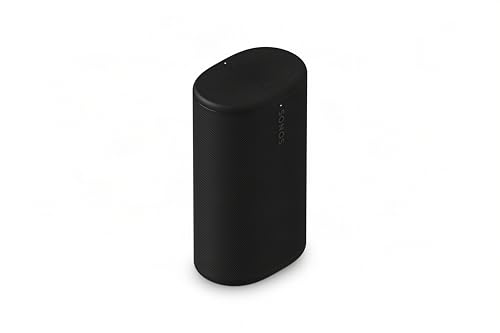
The Sonos Play redefines portable audio with its blend of massive stereo sound, deep bass, and rugged portability. Designed for music lovers who refuse to compromise on quality whether at home or on the go, this speaker shines in scenarios like beach gatherings, backyard barbecues, or even as a home office companion syncing seamlessly with your Sonos setup.
In real-world testing, it delivers consistent power without faltering, filling open spaces with rich audio that punches above its size. The IP67 protection and drop resistance make it a reliable pick for active lifestyles, while the 24-hour battery ensures it outlasts your adventures.
Targeted at audiophiles and Sonos ecosystem users seeking a mobile powerhouse, the Play excels in versatility. Its WiFi and Bluetooth dual connectivity, plus Alexa integration, add smart convenience. Overall verdict: a top-tier portable speaker that brings premium Sonos sound outdoors, earning strong recommendation for quality-focused buyers.
Sonos Play boasts seriously big stereo sound with deep, rumbling bass that anchors tracks during beach parties or tailgates. Vocals stay clear amid the low-end thump, making it ideal for genres like hip-hop, EDM, or rock where bass drives the energy.
Volume levels reach party-ready heights without distortion, even outdoors. Bluetooth streaming holds steady over typical ranges, switching effortlessly to WiFi for lossless Sonos home playback. Stability impresses during movement, perfect for active use.
This bass-heavy signature suits lifestyle listening, though it prioritizes fun over analytical detail. Expect immersive audio that elevates any gathering.
Built for the wild with IP67 waterproof and dustproof rating, Sonos Play laughs off poolside dunks, beach sand, or rainy hikes. Drop-resistant construction adds toughness, ensuring it survives daily knocks without a scratch.
Compact and take-anywhere design balances portability with substance, though its robust build gives a premium feel over ultra-light rivals. The included wireless charging base snaps it back to full in hours, ready for next use.
Battery delivers true 24-hour playback at moderate volumes, stretching further with smart power management. Quick-swap replacement batteries mean endless runtime for multi-day trips, outpacing standard portables.
Direct Answer and Technical Guide to Wiring Sonos Audio
The short answer to whether can sonos speakers be hardwired is a definitive yes, but the method depends entirely on the specific device and the type of signal you want to carry. Sonos devices accommodate physical wiring in three distinct ways: Ethernet networking, audio signal inputs, and traditional copper speaker wire. Ethernet connections bypass local Wi-Fi congestion to provide rock-solid streaming stability across your living space. Audio input cables allow external physical media players to broadcast sound across your system, while passive architectural speakers require dedicated speaker wire connected to an amplifier.
Network Hardwiring: Connecting Sonos Hardware via Ethernet
Plugging an Ethernet cable into a Sonos speaker or component instantly changes how that device communicates across your home network. Most powered Sonos devices, including soundbars like the Sonos Beam Gen 2 and streaming components like the Sonos Port, feature dedicated RJ45 Ethernet ports on their rear panels. When you run a Cat6 network cable from your router or network switch directly into one of these units, the speaker establishes a wired data path that avoids local Wi-Fi interference. This physical network link is particularly useful in homes with dense building materials, such as plaster walls or concrete floors, that typically degrade wireless signal strength.
Hardwiring one or more components alters your overall network topology by enabling a dedicated wireless mesh known as SonosNet on compatible units. Instead of every individual speaker competing for bandwidth on your primary Wi-Fi router, the hardwired unit acts as a bridge that broadcasts an isolated wireless signal specifically for other Sonos players. This arrangement frees up your central router to handle phones, laptops, and smart television traffic without buffering audio playback. Modern installations in larger homes often utilize multiple hardwired drops to ensure high-bandwidth playback remains completely uninterrupted during synchronized multiroom sessions.
Homeowners must remain aware of how managed network switches interact with multiple hardwired Sonos devices. Sonos hardware utilizes Spanning Tree Protocol, commonly abbreviated as STP, to prevent network data loops between the physical Ethernet cables and internal wireless antennas. If you connect several Sonos units to an unmanaged network switch that lacks proper STP configuration, your network can experience a broadcast storm that temporarily disables local internet access. Checking your network hardware documentation and verifying that STP settings match Sonos recommendations ensures smooth communication across your entire digital audio ecosystem.
Audio Input Wiring: Integrating Physical Sources Through Line-In and HDMI
Physical wiring is not limited to network cables, as several Sonos components also accept hardwired analog and digital audio feeds. Dedicated components like the Sonos Port feature traditional RCA analog line-in jacks that allow listeners to connect standalone audio gear directly into the digital ecosystem. This capability makes it straightforward to hardwire a preamplified vinyl turntable, a CD player, or a vintage cassette deck directly into your multiroom setup. Once an external source sends audio through the physical line-in port, that sound can be streamed synchronously to any other Sonos speaker across your home.
Soundbars within the product line utilize high-bandwidth digital connections to receive pristine multichannel soundtracks from modern televisions. The Sonos Beam Gen 2 includes an HDMI eARC port designed to carry uncompressed audio formats, including Dolby Atmos, directly from compatible television displays. Unlike basic wireless audio transmissions, an HDMI eARC hardwired connection provides sufficient bandwidth for immersive 3D surround sound without audio compression or noticeable synchronization delay. For older televisions lacking HDMI ARC or eARC ports, Sonos provides an optical audio adapter that converts the digital optical output into a clean wired feed.
The Sonos mobile application gives users precise software control over how physical audio line-in signals are processed and distributed. Within the app settings, users can select between uncompressed audio for the absolute highest fidelity or compressed audio to reduce network strain in complex setups. You can also adjust audio delay buffers to prevent lip-sync mismatches when routing line-in signals from video sources. Exploring these connection pathways proves that modern systems can easily blend vintage physical media with modern multiroom speaker innovations across a single unified control platform.
Architectural Speaker Wiring: Connecting Passive In-Wall, In-Ceiling, and Outdoor Models
A common point of confusion arises when comparing standalone powered speakers with the brand’s architectural lineup. Unlike standalone wireless speakers that contain internal amplification and plug into standard wall outlets, Sonos by Sonance architectural models are completely passive speakers. The Sonos In-Wall, Sonos in-Ceiling 6.5-inch, Sonos in-Ceiling 8-inch, and Sonos Outdoor models feature traditional binding posts rather than power cords or network ports. These passive units must be physically hardwired using standard two-conductor copper speaker wire routed directly to an external power source like the Sonos Amp.
Running physical speaker wire through structural framing requires careful attention to wire gauge and fire safety ratings. Installers generally recommend using 16 AWG oxygen-free copper speaker wire for runs up to fifty feet, while longer cable runs benefit from thicker 14 AWG wiring to minimize signal loss. Building codes strictly mandate the use of CL2 or CL3 rated cable jackets when pulling speaker wires through walls or across ceiling joists to ensure compliance with residential fire safety standards. Taking the time to conceal these wires cleanly behind baseboards or drywall results in a minimalist aesthetic where audio hardware blends seamlessly into your home decor.
Connecting architectural speakers to a dedicated Sonos Amp unlocks unique software advantages that standard third-party amplifiers cannot provide. The manufacturer explicitly engineered the Sonos Amp to recognize these specific Sonance architectural models, enabling custom DSP curves and Trueplay room calibration. Furthermore, a single Sonos Amp possesses the electrical capability to power up to three pairs of these architectural speakers wired in parallel without overheating. This capability makes it remarkably efficient to provide balanced, multi-speaker sound coverage across wide-open living rooms, expansive outdoor patios, or finished basement entertainment suites.
Optimizing Network Performance: Ethernet Versus Wireless Mesh
Deciding between a fully wireless deployment and a hardwired configuration requires evaluating your living environment and existing network equipment. While pure wireless setups offer maximum flexibility when repositioning hardware, hardwiring key devices eliminates the packet loss that occasionally plagues crowded 2.4 GHz and 5 GHz wireless bands. In dense suburban neighborhoods or multi-tenant apartment complexes, dozens of neighboring Wi-Fi networks can congest available wireless channels. Hardwiring central audio hubs or television soundbars guarantees that your highest-priority audio streams maintain a clean, dedicated transmission route at all times.
Hardwiring one component does not require running physical network cables to every single speaker in your house. Once the primary bridge unit connects to your router via Ethernet, the resulting SonosNet mesh network creates an isolated communication path for surrounding wireless players. This hybrid design delivers the reliability of a wired backbone while preserving the convenient placement of wireless satellite speakers in bedrooms or bathrooms. However, fully portable units like the Sonos Play portable model rely entirely on standard Wi-Fi or Bluetooth, meaning they operate independently of proprietary SonosNet mesh arrangements.
Advanced users occasionally consider turning off the Wi-Fi radio on hardwired Sonos units through the mobile application settings. While disabling the wireless radio ensures the speaker operates exclusively through its physical Ethernet cable, it also prevents that unit from acting as a wireless bridge for other nearby Sonos players. If you intend for a hardwired soundbar to wirelessly communicate with a wireless subwoofer or wireless surround speakers, the Wi-Fi radio must remain enabled. Only disable the wireless interface if every single component in that zone connects to an Ethernet switch and no wireless subwoofers or surrounds are linked.
Step-by-Step Guide to Hardwiring Sonos Components
Executing a successful hardwired installation begins with thorough planning of your physical cable paths and network ports. Start by placing your primary audio hardware in its intended room location and measuring the physical distance to your nearest network switch or router. Ensure that you purchase high-quality Cat6 Ethernet patch cables with sturdy RJ45 connectors to prevent intermittent data disconnections caused by loose jack contacts. If you are wiring architectural speakers, confirm that your in-wall speaker cables are accurately labeled at both ends to avoid channel phase reversal during final amplifier hookup.
Power down your audio components before connecting physical cables to protect internal sensitive circuitry from unexpected electrical surges. Insert the Ethernet cable firmly into the port on your Sonos device until the plastic locking clip audibly clicks into place. If you are wiring passive architectural speakers, strip approximately three-eighths of an inch of insulation from each conductor and twist the copper strands tightly before inserting them into the terminal posts. Double-check that positive red terminals on the amplifier connect directly to positive red terminals on the speaker to maintain proper acoustic polarity.
Once physical connections are complete, restore electrical power to your hardware and open the official Sonos app on your smartphone or tablet. The system should automatically detect the newly established wired connection and reconfigure its routing tables within a couple of minutes. Navigate to the system settings menu to verify that each hardwired component displays an active network status and test audio playback across multiple zones. If you have connected architectural speakers or a soundbar, initiate the Trueplay acoustic tuning process using a supported mobile device to calibrate sound reproduction to your specific room geometry.
Troubleshooting Common Hardwired Connection Challenges
Even the most carefully planned wired installations can occasionally encounter configuration hurdles that disrupt audio streaming. One frequent problem occurs when a hardwired speaker suddenly disappears from the Sonos app shortly after plugging in an Ethernet cable. This symptom often stems from an IP address conflict or a strict security setting on your primary router that blocks multicast network traffic. Restarting your network router, switches, and the affected Sonos hardware in sequence typically forces the router to assign fresh DHCP addresses and clears up lingering communication errors.
Another common issue involves audio delay or buzzing sounds when utilizing analog line-in cables with external turntables or media players. If you notice a low-frequency hum through your speakers, your turntable may require a dedicated grounding wire attached to an external phono preamplifier. For synchronization mismatches where audio lags behind television dialogue, navigate into the line-in settings within the Sonos app and lower the source buffer delay. Resolving these minor configuration details ensures that your physical inputs deliver the crisp, transparent audio clarity that discerning listeners expect from modern home equipment.
Physical damage to Ethernet or speaker cables represents another potential point of failure that requires methodical diagnostic isolation. If an architectural speaker fails to produce sound, test the amplifier channel by connecting a known working speaker or measuring the line with an electrical multimeter. For network cables concealed inside walls, a basic RJ45 continuity tester can quickly confirm whether all eight internal data conductors remain intact. Users seeking simpler setups without running in-wall wires often turn to portable battery-powered speakers for secondary listening spaces where structural cabling is impractical.
Practical Considerations for Planning Your Audio Infrastructure
Designing an optimal home sound system requires balancing the permanent reliability of physical wiring with the ease of wireless placement. Permanent living spaces, primary home theater rooms, and outdoor entertainment patios benefit immensely from dedicated wired infrastructure that eliminates wireless dropouts. Conversely, secondary guest bedrooms, home offices, and rental properties often call for the flexibility of wireless standalone speakers that can easily move between rooms. Evaluating your long-term living plans and aesthetic preferences helps clarify where investing in physical cable runs delivers the greatest functional value.
Budgeting time and resources for professional installation assistance can be worthwhile when undertaking complex in-wall or in-ceiling speaker deployments. Running cables through exterior walls with fiberglass insulation or fishing wires between finished building levels can present structural and safety challenges. If you are uncertain about navigating electrical junction boxes, fire barriers, or attic framing, consulting a licensed low-voltage audio installer guarantees clean, code-compliant workmanship. Proper planning and professional execution ensure that your hardwired audio system delivers flawless multiroom entertainment and enduring property value for years to come.







Write Your Review
No reviews yet. Be the first to share your experience!