


Marine towers demand high acoustic output and clean signal routing across wakeboard bars or off-road roll cages. Learning how to hook up wake tower speakers ensures you get loud, balanced sound without damaging your marine amplifier or draining battery systems. Whether you are outfitting a boat for water sports or wiring an off-road vehicle for trail rides, proper installation keeps water out and clean sound flowing over engine rumble. High-power projection requires solid mechanical clamps alongside careful wire runs to survive constant vibration and moisture, much like setting up durable outdoor audio setups in harsh environments.
Tower speakers like the Rockville WB65 or RWB80B series rely on passive 4-ohm designs, meaning an external marine-grade amplifier must supply clean RMS wattage to drive them properly. Beyond simple speaker wire leads, several modern tower pods also feature integrated multi-color or blue LED lighting that demands separate 12-volt accessory wiring and remote receiver modules. Matching amplifier output, grounding properly to prevent alternator whine, and routing cables through tubular tower pipes represent the core fundamentals of a dependable build. Taking the time to plan your wiring path and secure every swivel clamp prevents loose pods and distorted playback when you hit rough water or bumpy trails.
Pros
- Fully waterproof and UV-resistant for reliable marine and off-road use
- Powerful 150W RMS per speaker with wide 50Hz-20kHz response for full-range sound
- Easy 360-degree swivel mounting fits most tower bars effortlessly
- Stylish LED lighting enhances nighttime rides without extra accessories
- Rubber surround and large magnet ensure long-term durability
Cons
- Requires external amplifier to reach full 600W potential
- Wired power setup needed, not plug-and-play wireless
- Larger 6.5-inch size best for bigger bars over slim ones
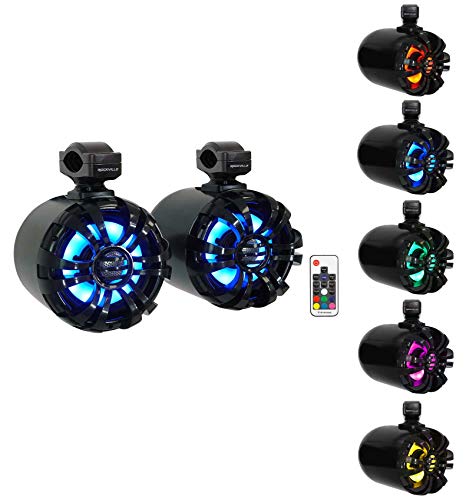
The Rockville WB65KLED is a pair of 6.5-inch marine wakeboard tower speakers designed for boats, ATVs, UTVs, and Jeeps. With 600W peak power handling, built-in blue LED lights, and full waterproof construction, they bring high-energy audio to open-air adventures where standard speakers fail.
Targeted at water sports fans and off-road warriors, these speakers excel in harsh environments, resisting saltwater corrosion, UV damage, and fresh water splashes. The 360-degree swivel aluminum brackets make installation straightforward on bars from 1 to 2.5 inches, aiming sound precisely where you need it most.
In real-world use, they deliver booming bass and sharp highs that overpower engine noise and wind, turning lake cruises or desert runs into concert-like experiences. The included remote simplifies LED control for that extra flair during evening outings.
Overall verdict: A top pick for anyone prioritizing rugged power and style in marine audio, offering unbeatable value for thrill-seekers who demand audio that matches their lifestyle.
Powered by a 1-inch titanium dome tweeter and long-excursion woofer, the WB65KLED speakers produce crisp, detailed highs and deep, rumbling bass that fills open spaces on boats or UTVs. The 50Hz-20kHz frequency response ensures balanced sound across genres, from rock anthems to country trailside jams.
At 90dB sensitivity and 4-ohm impedance, they handle high volumes with minimal distortion, maintaining clarity even at peak 300W per speaker. The polypropylene mica-injected cone and rubber surround keep bass tight and punchy, cutting through waves or wind without muddiness.
Ideal for marine towers, their acoustics shine in outdoor settings, providing stable performance when paired with a quality amp for all-day listening without fade.
Built for battle, these speakers feature marine-grade materials fully sealed against saltwater, freshwater, rust, and UV rays, ensuring they thrive in brutal boat and off-road conditions. The 15 oz magnet and 1-inch voice coil add to their robust power handling for years of abuse-free use.
Aluminum brackets with 360-degree swivel and ABS black grilles offer flexible, secure mounting on various bar sizes, while the sleek black finish with blue LEDs adds a custom, high-end look to any setup. Weighing in sturdy for stability, they stay put during rough rides.
No onboard battery means endless playback powered directly by your boat or vehicle system, eliminating recharge worries for non-stop weekend adventures on the water or trails.

Pros
- Outstanding clarity from 1-inch titanium dome tweeters
- True marine durability resists water, salt, and UV damage
- Vibrant LED lighting with remote for easy customization
- Quick swivel mount fits most tower setups effortlessly
- High 88 dB sensitivity for loud output with moderate power
Cons
- Requires external amp or head unit for full power
- No built-in Bluetooth; relies on wired connections
- Bass may need subwoofer support for deepest lows
The Rockville WB65KLS is a pair of premium 6.5-inch marine wakeboard tower speakers designed for boats, ATVs, Jeeps, and UTVs. Each speaker packs 150W RMS and 300W peak power, featuring polypropylene mica-injected woofers and titanium dome tweeters for superior sound quality in harsh outdoor environments.
Targeted at boating enthusiasts, wakeboarders, and off-road adventurers, these speakers shine where standard audio fails. Their fully waterproof black stainless steel enclosures and aluminum brackets withstand salt water, fresh water splashes, and UV exposure, making them a reliable upgrade for anyone blasting tunes during lake days or trail rides.
In real-world use, the 88 dB sensitivity and 4-ohm impedance deliver punchy volume without distortion, while integrated multi-color LEDs add flair with remote-controlled patterns. Installation is straightforward thanks to water-tight wire leads and 360-degree swivel mounts that grip 1-2.5 inch bars securely.
Overall, the WB65KLS stands out for its blend of audio prowess, durability, and style. It's a top pick for marine audio setups craving power and visuals without complexity.
With 6.5-inch woofers boasting mica-injected cones and rubber surrounds, these speakers produce solid bass depth suitable for open-air boating or ATV cruising. The 1-inch titanium dome tweeters ensure vocal clarity and sparkling highs that cut through wind and waves.
At 150W RMS per speaker and 88 dB sensitivity, they reach impressive volume levels for party-sized sound on wakeboard towers. The 4-ohm impedance pairs well with standard marine amps, maintaining stability even at high outputs with minimal distortion.
Performance holds up in dynamic conditions, delivering consistent audio whether wired to a head unit or amp. Expect reliable playback for all-day adventures, though pairing with a sub enhances low-end thump.
Built with a rugged marine-grade design, the black stainless steel enclosures and aluminum swivel brackets resist corrosion from salt and fresh water, plus UV fading for years of exposure. The compact size fits tight spaces without sacrificing presence on boats or UTV roll cages.
Fully waterproof construction with sealed wire leads ensures no leaks during dunks or sprays. The 360-degree swivel mounts adjust to any angle on 1-2.5 inch bars, offering versatile positioning for optimal sound direction.
As passive speakers, they draw power directly from your boat or ATV's audio system, providing unlimited runtime without battery concerns. Just connect and play, with CE and RoHS certification guaranteeing safe, efficient operation.

Pros
- Exceptional waterproofing handles splashes and salt spray effortlessly
- Secure mounting with adjustable brackets and long screws for various bars
- High SPL and wide frequency response for loud, clear playback anywhere
- Durable components like Kapton voice coils and Santoprene surrounds
- 4-ohm impedance pairs well with most marine amps
Cons
- Requires external amplifier for full power output
- Wired setup lacks wireless Bluetooth convenience
- Larger 8-inch size may not suit smaller roll bars
The Rockville RWB80B is a pair of 8-inch 2-way marine wakeboard tower speakers designed for boats, Jeeps, and ATVs. Built with a fully marinized construction, they feature polypropylene mica cones, polymide dome neodymium tweeters, and stainless steel terminals to conquer water, salt, and rust in harsh outdoor conditions.
Ideal for watersports enthusiasts and off-road adventurers, these speakers mount securely on bars from 1.26 to 2.05 inches using adjustable nylon brackets with embedded steel. The 600W peak power (200W RMS per speaker) and 4-ohm impedance make them perfect for amplifying your playlist over waves or rough terrain.
In real-world use, they deliver high-fidelity sound with a 60-20,000 Hz response and 98dB SPL, cutting through ambient noise for immersive listening. While they shine in marine setups, pairing with a quality amp unlocks their full potential.
Verdict: A top pick for reliable, loud audio on the water or trails, offering pro-level durability without breaking the bank.
With 8-inch polypropylene mica cones and 1-inch polymide dome neodymium tweeters, the RWB80B provides punchy bass starting at 60Hz and sparkling highs up to 20kHz. The built-in 2-way crossover ensures smooth transitions for balanced sound across genres, from rock anthems to country tunes on the boat.
Boasting 98dB SPL at 1W/1m, these speakers reach ear-splitting volumes without distortion, overpowering boat engines or wind noise. The high BL magnet motor and 1.25-inch Kapton voice coil maintain clarity even at max output.
Stable 4-ohm impedance works seamlessly with marine amplifiers for consistent power delivery, making them a go-to for high-performance outdoor audio.
Engineered for extremes, the RWB80B features a waterproof coating, rubber gaskets, and Santoprene surrounds to shrug off submersion, UV exposure, and corrosion. Y30 magnets and stainless steel terminals add longevity in salty marine environments.
Adjustable nylon brackets with steel inserts offer a precise fit for wakeboard towers or Jeep roll bars, including longer screws for thicker setups. The rugged build weighs in sturdy for stability but remains manageable for installs.
As powered speakers, they run continuously when connected to an amp, with no battery limitations. Focus on endless playtime during long days on the water or trails, recharging only your adventure spirit.
Pros
- Superior waterproofing resists salt, fresh water, rust and UV rays
- Versatile 360-degree swivel for flexible aiming on towers or roll bars
- High power handling with 150W RMS per speaker for loud outdoor playback
- Durable metal build with ABS grill stands up to harsh conditions
- Easy compatibility with marine amps via 4-ohm impedance
Cons
- Requires a separate amplifier for power, not self-powered
- Wired setup lacks wireless Bluetooth convenience
- Tower-specific design not ideal for handheld or indoor use
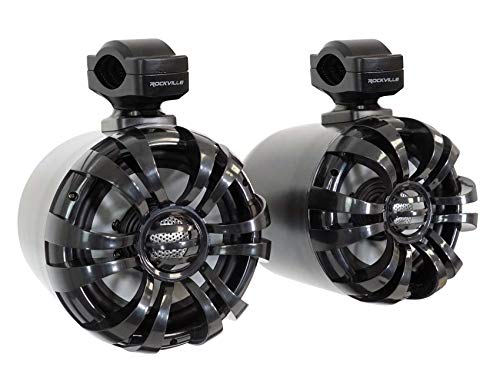
The Rockville WB65 is a pair of 6.5-inch marine wakeboard tower speakers built for high-performance audio in tough outdoor settings. Featuring 300W peak power per speaker, a titanium dome tweeter, and a long-excursion woofer, they pump out clear sound that stands up to wind, waves, and engine roar on boats, ATVs, and UTVs.
These speakers target adventure seekers like boat owners, wakeboarders, and off-road drivers who demand reliable audio during long days on the water or trails. The fully waterproof polypropylene cone and rubber surround shrug off salt spray, freshwater dunks, and relentless sun, while the metal enclosure adds style and strength to any setup.
In real-world use, installation is straightforward with included hardware for bars from 1.75 to 2.5 inches, and the 360-degree swivel lets you direct sound exactly where riders need it most. Paired with a marine amp, they deliver balanced mids, deep bass, and sharp highs across a 50Hz-20kHz range, making music a highlight of every trip.
Overall, the WB65 pair excels as a durable, powerful choice for marine tower audio, blending pro-level sound with bulletproof construction. If you live for watersports or off-roading, these speakers elevate your adventures without compromise.
Expect powerful, distortion-free audio with 300W peak and 150W RMS power per speaker, where the 1-inch titanium dome tweeter shines on crisp highs and the 6.5-inch woofer pounds out strong bass and mids. This setup cuts through outdoor noise on fast boats or bumpy trails, providing full-range 50Hz-20kHz response for everything from rock anthems to country tunes.
Volume levels reach party-ready heights without muddiness, ideal for groups wakeboarding or cruising ATVs. The 4-ohm impedance ensures efficient pairing with marine amps, delivering stable performance even in choppy conditions.
Users praise the balanced sound signature that maintains clarity at high volumes, making these a top pick for open-air listening where lesser speakers falter.
Crafted with a sleek black metal enclosure and UV-coated aluminum brackets, the WB65 boasts ruggedness for marine and off-road abuse. Fully waterproof with a polypropylene mica-injected cone and rubber surround, it resists corrosion from salt water, freshwater, and sun exposure, earning CE and RoHS certification for reliability.
The 360-degree swivel mount offers flexible positioning on wakeboard towers or roll bars, with hardware included for fast setup. At a sturdy build suited for vehicles, these speakers prioritize continuous powered use via amps, eliminating battery life worries for all-day adventures.
Weighing in as robust tower units, they stay secure through vibrations and impacts, focusing on long-term durability over portability for boats and UTVs.
Complete Guide on How to Hook Up Wake Tower Speakers
Hooking up wakeboard tower speakers requires balancing mechanical clamping, clean electrical wire routing, and proper marine amplifier matching. Because open water and trail riding generate massive ambient noise from wind and exhaust, these speakers operate under intense acoustic and environmental demands. Following a structured installation sequence protects your equipment from water intrusion, prevents electrical shorts, and maximizes audio projection.
Understanding Wake Tower Speaker Architecture and Power Demands
Wake tower speakers operate as high-efficiency passive speaker systems requiring dedicated external amplification. Models such as the Rockville WB65 series or the larger RWB80B feature durable polypropylene mica-injected cones and titanium dome tweeters engineered for directional throw over open distances. Passive enclosures lack internal amplifiers, meaning you cannot run them directly off a low-powered marine head unit without sacrificing volume and risking signal clipping. Supplying adequate RMS power allows the heavy voice coils and long-excursion drivers to push sound waves past the boat’s wake or behind an off-road vehicle.
Electrical impedance plays a pivotal role when pairing tower pods with your marine amplifier. Most standard wakeboard speakers, including the Rockville models in this lineup, feature a nominal impedance of 4 ohms per enclosure. Running a single pair in stereo presents a standard 4-ohm load to each amplifier channel, which modern multi-channel amplifiers handle comfortably. If you choose to hook up four tower pods to a two-channel amplifier, wiring them in parallel drops the load to 2 ohms per channel, requiring an amplifier officially rated for 2-ohm stability.
Clean continuous power handling dictates how loud your speakers can play before acoustic distortion occurs. Rockville models specify between 150 watts and 200 watts RMS per speaker, which reflects continuous thermal capacity rather than short burst peaks. Matching your amplifier channels to deliver roughly 75 to 100 percent of that RMS value provides clean headroom without straining output transistors. Underpowering speakers while aggressively pushing amplifier gain controls frequently leads to clipped waveforms, which overheats voice coils far faster than clean, matched power.
Selecting Marine-Grade Wire and Essential Installation Hardware
Marine environments expose cabling to moisture, temperature swings, and chemical corrosion that quickly destroy automotive-grade copper wire. Tinned oxygen-free copper wire represents the standard choice for boat and powersports audio because tin plating stops green oxidation from creeping along copper strands. Copper-clad aluminum wire should be avoided entirely on tower installations due to higher internal resistance, brittleness under mechanical vibration, and rapid corrosion rates in humid conditions. Choosing high-purity tinned marine wire ensures minimal voltage drop over long runs from the cabin or helm to the top of the tower.
Wire gauge selection directly influences signal integrity across extended physical runs through boat hulls and wakeboard frames. For runs under twenty feet delivering around 150 watts RMS, 16-gauge tinned marine wire provides adequate conductivity for a 4-ohm load. Longer wiring paths or high-output installations exceeding 200 watts per channel benefit from thicker 14-gauge or 12-gauge conductors to reduce resistance. When shopping for installation supplies alongside other budget-friendly audio components, investing in genuine marine-rated wiring packages pays off in long-term reliability.
Essential hardware includes waterproof heat-shrink tubing, marine-grade silicone or polyurethane sealant, nylon zip ties, and rubber wiring grommets. Split-loom tubing shields exposed wire sections from direct sun exposure and mechanical rubbing where cables exit structural tubing. Tinned copper butt connectors or closed-end crimp terminals with adhesive heat shrink create watertight splices that prevent moisture from wicking into wire bundles. Keeping a bottle of medium-strength blue thread-locking compound on hand ensures clamp bolts remain tight despite constant hull pounding against waves.
Mechanical Mounting and Securing Clamps to Tower Bars
Structural mounting must occur before any electrical wiring connects to the speakers. Wakeboard towers and vehicle roll cages feature varying tube diameters, commonly ranging from 1.26 inches up to 2.5 inches. Rockville pods include cast aluminum brackets or steel-reinforced nylon clamps paired with rubber sizing inserts to achieve a snug fit around specific tube profiles. Selecting the correct spacer insert ensures the clamp makes complete circumference contact with the metal pipe, preventing slippage or surface scratching when tightened down.
Adjusting the angle of projection determines how effectively sound reaches listeners behind the vessel or vehicle. Many tower brackets feature integrated 360-degree swivel mechanisms that allow you to rotate the speaker housing horizontally and vertically. Pointing the pods directly toward the wakeboarder’s riding sweet spot, roughly seventy to eighty feet behind the stern, optimizes acoustic clarity over engine roar. Once you identify the desired angle, tighten the primary swivel set screws firmly to lock the housing orientation into place.
Securing mounting bolts requires deliberate torque and vibration countermeasures. Apply blue thread-locking fluid to all stainless steel fasteners before threading them into the aluminum clamp collars. Tighten the bolts evenly in an alternating pattern to avoid pinching the rubber gasket or warping the clamp assembly. For elevated marine towers, attaching a temporary nylon safety tether between the speaker pod and the tower bar during installation prevents catastrophic drops onto fiberglass decks or passengers below.
Drilling Access Holes and Routing Wire Through Tubular Bars
Concealing speaker cables inside tubular tower pipes creates a clean appearance and shields wiring from UV exposure and snag hazards. Most factory wakeboard towers include pre-drilled wiring access ports near the mounting points and base hinges. If your tower or roll bar lacks existing entry holes, you must drill clean entry and exit access points using a stepped drill bit. Drill slowly, deburr the metal edges thoroughly with a round file, and insert tight rubber grommets to eliminate sharp edges that could slice wire insulation over time.
Pulling wire through tubular structures requires patience and the right guiding tools. Feed a flexible nylon fish tape or a weighted string attached to a small cotton ball through the upper access hole toward the tower base. A wet-dry shop vacuum held at the lower exit hole can quickly pull the light string through complex bends and pipe welds. Once the pull line passes through the tube, tie and tape your tinned marine speaker wire to the line, pulling the harness gently through the bar while avoiding sharp friction against internal weld seams.
Managing cable exit points near the speaker clamps requires proper slack and water-deflection loops. Leave approximately six to ten inches of wire slack exiting the tower bar so the speaker’s swivel mount can rotate without straining the electrical leads. Form a small downward bend in the cable before it enters the speaker enclosure or terminal cup, creating a natural drip loop. This downward curve forces water droplets running down the cable to drip off the bottom bend rather than flowing directly into the wire entrance seals.
Terminating Audio Connections and Maintaining Correct Polarity
Connecting your speaker leads to the amplifier requires strict attention to polarity markings on both ends of the run. Most wake tower speaker leads use standard color coding, such as red for positive and black for negative, or a raised stripe along the positive insulation jacket. Reversing polarity on one speaker causes it to play 180 degrees out of phase with its mate, resulting in severe acoustic cancellation that eliminates midbass punch and hollows out vocal clarity. Double-check that positive amplifier channel terminals connect directly to positive speaker leads, and negative connects to negative across all installed pods.
Watertight connections at the speaker pod prevent internal terminal oxidation and signal resistance. Rockville speakers feature sealed wire leads or marine-grade terminal cups equipped with rubber gaskets. When joining the speaker leads to your newly pulled tower wire run, use adhesive-lined heat-shrink butt connectors crimped with a proper ratcheting tool. Heating the sleeve causes the internal sealant to liquefy and mold around the wire jacket, forming an airtight and waterproof barrier against humid marine air.
Terminal strip connections at the amplifier chassis require clean, well-crimped spade or ferrule connectors. Never jam bare, frayed wire strands into amplifier set-screw terminals where stray copper hairs could bridge adjacent channels and cause an amplifier protection fault. Applying a light coating of dielectric grease across exposed metal terminal blocks repels stray moisture in damp bilge compartments or under-seat storage lockers. Secure the amplifier end of the harness with nylon wire clamps to prevent cable weight from pulling against the terminal blocks during hard rides.
Wiring Integrated LED Lighting and Remote Control Modules
Models equipped with multi-color or blue illumination, such as the Rockville WB65KLED and WB65KLS series, incorporate secondary low-voltage wiring circuits. These lighting circuits operate independently from audio signals and require a clean, constant 12-volt direct current power source. Never attempt to tap speaker wire leads to power the LEDs, as alternating audio voltages will destroy the LED diodes and distort your sound output. Running a dedicated four-conductor marine wire bundle allows you to carry both amplified audio signals and low-voltage lighting power through a single clean loom.
Integrating lighting requires a dedicated control module and an inline fuse placed close to the primary power source. Run the positive 12-volt power lead from your vehicle’s marine fuse block through an inline 3-amp or 5-amp fuse before connecting it to the LED control box. Connect the negative ground lead directly to the main marine negative distribution bus bar. Installing an illuminated rocker switch on the helm or dashboard along the positive power lead allows you to cut power completely to the LED controller, preventing parasitic battery draw when the boat sits parked.
Synchronizing multi-color lighting patterns relies on the included radio frequency remote and receiver module. Mount the LED receiver box in a dry, accessible compartment beneath the helm or inside an electronics box where radio signals can easily reach it. Connect the color-coded output wires from the controller box to the corresponding LED leads on each wake tower pod, ensuring matching color continuity between left and right channels. Test every color mode, flash pattern, and brightness setting on the remote control before sealing panels and securing final wire ties.
Tuning Amplifier Crossovers and Gain for Open-Air Projection
Proper amplifier calibration ensures wake tower speakers deliver loud, undistorted audio across open water without blowing voice coils. Because wakeboard speakers operate in open-air environments without cabin acoustic boundary reinforcement, low sub-bass frequencies below 70 Hz simply waste amplifier wattage and cause excessive cone excursion. Switch your marine amplifier’s crossover filter to High-Pass Filter mode rather than Full-Range or Low-Pass mode. Setting the high-pass frequency cutoff knob between 80 Hz and 100 Hz filters out destructive low sub-bass, allowing the 6.5-inch or 8-inch drivers to focus strictly on punchy midbass and vocal projection.
Setting the amplifier input gain correctly prevents clipped audio signals from overheating voice coils during high-volume playback. Begin by turning the amplifier gain dial completely down to its minimum position while setting your marine head unit volume to approximately seventy-five percent. Play a dynamic, well-recorded audio track and slowly turn the amplifier gain dial clockwise until you perceive subtle acoustic distortion or harshness in the upper frequencies. Back the gain dial off slightly below that distortion threshold to establish a clean maximum volume ceiling that protects the speakers even when passengers crank the helm volume knob.
Equalization settings at the head unit should remain relatively flat to prevent early signal clipping. Boosting bass sliders or activating aggressive loudness functions forces the amplifier to output exponential wattage in narrow frequency bands, rapidly inducing signal clipping. If you desire deeper low-end thump to complement your tower sound, integrate a dedicated marine subwoofer rather than forcing small tower pods to reproduce sub-bass frequencies. Listeners who alternate between watercraft and other recreational rides often compare these multi-driver setups to specialized setups like compact wireless systems that balance driver power and enclosure tuning for outdoor clarity.
Diagnosing Common Tower Audio and Wiring Faults
Troubleshooting dead speakers or distorted sound starts with safe, methodical checks along the signal path. If one speaker fails to produce sound while the other plays normally, swap the left and right speaker leads at the amplifier output terminals. If the silence moves to the opposite speaker, the amplifier channel or source input RCA cable is at fault. If the same speaker remains silent, inspect the tower wiring run for broken crimp connectors, pinched insulation inside the tower pipe, or a loose terminal connection at the speaker pod itself.
Alternator whine and electrical buzzing that increase with engine RPM stem from ground loops or inductive interference. Ensure the marine amplifier grounds directly to the central battery distribution block rather than a remote structural metal frame with inconsistent resistance. Keep low-voltage RCA signal cables physically separated from heavy 12-volt battery power cables and engine ignition wiring looms. If signal cables must cross power lines, cross them at a ninety-degree angle to minimize electromagnetic noise coupling into your audio path.
Intermittent sound that cuts out during heavy wave chop or bumpy trail riding points toward physical connection failure or amplifier thermal protection. Check all clamp wiring entry points to verify that internal conductors have not fatigued from repetitive vibration. Ensure the marine amplifier has sufficient airflow around its heat sink fins, as overheating causes the internal protection circuit to mute sound output until temperatures drop. Inspect the inline power fuse holder for loose spring tension or corrosion that could restrict current draw during high-demand volume spikes.
Routine Inspection and Marine Weatherproofing Upkeep
Maintaining wake tower speakers requires routine mechanical and electrical inspections throughout the boating and riding season. Saltwater spray leaves corrosive salt crystals on speaker grills, clamp hardware, and exposed wiring jackets as moisture evaporates. Rinse the speaker housings and mounting brackets gently with fresh, low-pressure tap water after every saltwater outing to dissolve salt deposits before they pit aluminum surfaces. Avoid using high-pressure spray nozzles or harsh chemical solvents, which can degrade waterproof speaker cone surrounds and wash away silicone wire seals.
Inspecting clamp tightness and fastener torque prevents hardware loosening caused by persistent engine rumble and wave impacts. Check the hex bolts on your tower clamps and swivel brackets every few outings, re-torquing them to ensure the rubber dampening pads remain firmly compressed. If you notice any rotational play or bracket wobble, remove the bolts, clean the threads, and apply fresh blue thread locker before retightening. Inspecting the rubber wiring grommets where cables penetrate tower tubing ensures the rubber has not dried, cracked, or slipped out of position.
Storing tower speakers during off-season months protects delicate titanium tweeters and LED light rings from freeze-thaw cycles and UV degradation. If your speaker models feature quick-disconnect wiring plugs and removable clamp pins, store the pods indoors during extended winter layups. For permanently mounted speakers, fit breathable, UV-resistant neoprene tower speaker covers over the housings while the boat sits moored or trailered. Taking these preventive measures preserves both sound quality and cosmetic appeal, keeping your sound system ready for peak performance season after season.
Taking a systematic approach to mounting, wire pulling, and amplifier tuning ensures your wake tower audio system performs reliably across harsh marine and off-road conditions. Verifying wire polarity, installing watertight splices, and dialing in appropriate crossover settings protects both your investment and your ears from unwanted distortion. With durable marine-grade components securely clamped and cleanly wired, your sound system will deliver clear, commanding audio that carries effortlessly across every wake and trail.


Write Your Review
No reviews yet. Be the first to share your experience!