


Setting up a home audio system or desktop listening station often brings up unfamiliar terminology that confuses new listeners. Many audio enthusiasts wonder exactly what are non powered speakers and how they differ from the self-amplified gear found on modern desks. Unlike active models that plug directly into an electrical wall outlet, non-powered units rely entirely on an external power source to drive their internal speaker components. Understanding this core operational distinction makes it much easier to select suitable compact shelf speakers without buying incompatible components.
Non-powered speakers, widely referred to as passive speakers, receive both their audio signal and necessary electrical wattage through standard copper speaker cables. This architectural setup gives listeners incredible flexibility when matching dedicated receivers, preamps, and dedicated amplification units for custom acoustic sound profiles. Conversely, many listeners building affordable speaker setups gravitate toward powered units that house internal amplification within a single cabinet. Examining how passive equipment operates alongside self-contained powered monitors ensures you configure the ideal listening environment for your specific room.
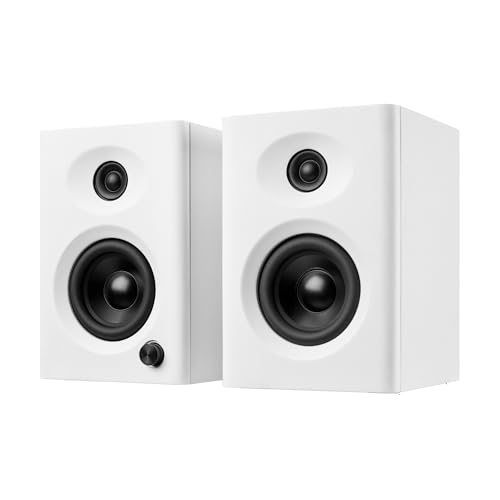
Pros
- Powerful 60W output with distortion-free sound
- Stable Bluetooth 5.3 connectivity with low latency
- Easy plug-and-play setup with simple controls
- Compact size fits any desk without clutter
- Universal compatibility with PCs, TVs, and gaming consoles
Cons
- Bass may lack depth for large rooms without a subwoofer
- Requires power outlet or USB source, not fully wireless
- No companion app for advanced sound customization
The NSY Audio 60W computer speakers are compact powered bookshelf pairs designed for desktops, delivering immersive stereo sound with bass in small spaces like home offices, dorms, or living rooms. Ideal for remote workers needing clear audio for calls, gamers seeking dynamic effects, students for music and studying, or anyone upgrading basic PC sound.
In real-world use, they excel at providing balanced audio for everyday tasks: crisp dialogue in videos, punchy bass in games, and detailed music playback without overwhelming small areas. The multiple connectivity options make them versatile for laptops, TVs, or consoles, ensuring seamless integration into various setups.
Setup is effortless with plug-and-play USB or Bluetooth pairing, and the front controls keep adjustments simple. While not suited for audiophiles craving ultra-deep bass, they offer excellent value for casual listening and productivity, earning high marks for clarity and convenience in compact form.
Verdict: A top pick for budget-conscious users wanting reliable, space-saving speakers that punch above their size for office, gaming, and media use.
These speakers produce a balanced sound signature with crystal-clear highs, present mids for vocal clarity, and punchy bass from well-tuned drivers, handling 60W max output without distortion in small to medium rooms. They shine in gaming for immersive effects, music for detailed playback, and movies for dynamic range.
Bluetooth 5.3 ensures stable connectivity up to 33 feet with low latency, perfect for wireless freedom from PCs or phones. Wired options like 3.5mm AUX, RCA, and USB deliver consistent performance, making them reliable for high-resolution audio streaming or direct connections.
Volume levels fill desks or small offices effortlessly, with sufficient power for bedtime stories, audiobooks, or casual parties, though bass tightens at higher volumes for clean output.
The sleek white compact design measures just 3 inches per speaker, maximizing desk space while blending into modern home offices, dorms, or minimalist setups. The clean aesthetic focuses on function with a durable build suited for daily desktop use.
No battery is needed as these are powered speakers via USB or outlet, allowing continuous play without recharging worries - simply plug in for always-on performance during long workdays or gaming marathons.
Lightweight and space-saving, they prioritize portability on desks without rugged IP ratings, making them ideal for indoor stationary use rather than outdoor adventures.

Pros
- Exceptional clarity from 8-inch woofer and piezo driver
- Lightweight 11-lb design with ergonomic handle for easy carry
- Multiple wired inputs for seamless multi-device connections
- Built-in EQ and gain controls for quick sound adjustments
- Clip protection ensures reliability during long performances
Cons
- No Bluetooth or wireless options for cable-free setups
- 30W power best for small spaces, not large outdoor events
- Requires AC power outlet, limiting fully untethered use
The Gemini AS-2108P is a compact 30W powered PA speaker designed for musicians, DJs, and performers who need reliable sound on the move. At just 11 pounds, its molded ABS cabinet makes it perfect for loading into cars and setting up quickly at practices, small gigs, church services, or casual events. With dual-channel inputs and onboard controls, it functions as a floor monitor, main PA, or instrument amp without extra gear.
In real-world use, it shines in rehearsal spaces and intimate venues where precise audio matters most. Connect microphones, guitars, or phones via XLR, 1/4-inch, RCA, or AUX inputs, and the mix output lets you daisy-chain multiples. The high-temp voice coil and piezo driver provide balanced sound that stays clear even during extended sets, thanks to clip LED protection against overloads.
For gigging pros and hobbyists alike, this speaker offers pro-level features in a budget-friendly, portable form. It eliminates the hassle of unreliable wireless connections, delivering rock-solid performance every time. Verdict: A top pick for anyone prioritizing wired reliability and portability over bells and whistles.
Expect accurate, fatigue-free sound with deep bass from the 8-inch woofer and sparkling highs via the piezo compression driver. Vocals cut through cleanly, making it excellent for lead singers or monitors during band practice. The 30W peak power fills small rooms effortlessly without muddiness.
Onboard bass and treble EQ plus dual-channel gain let you tweak tone on the fly for instruments or DJ mixes. Wired connections ensure zero latency or interference, outperforming Bluetooth in live scenarios. Volume levels handle intimate gigs reliably, with clip protection maintaining clarity at peaks.
Built tough with impact-resistant ABS housing, ergonomic top handle, and standard 35mm pole mount, this speaker withstands the rigors of transport from car to stage. At 11 pounds, it's one of the lightest powered options, perfect for solo setups at practices or events.
As an AC-powered unit, it offers unlimited playback without battery concerns, ideal for plugged-in rehearsals or gigs. No charging downtime means it's always ready, though you'll need a nearby outlet. Road-ready design prioritizes durability and portability over wireless freedom.

Pros
- Natural sound reproduction from premium tweeter and driver
- Multiple input options for versatile connectivity
- Full remote and side controls for easy adjustments
- High-quality wooden enclosure for premium look and resonance
Cons
- No Bluetooth or wireless connectivity
- Requires AC power outlet, not portable
- Limited to wired AUX inputs only
The Edifier R1280T are powered bookshelf speakers designed as active near-field studio monitors, featuring a wooden enclosure and 42W RMS power for accurate audio playback. Ideal for home office setups, desktop computing, or small room listening, they cater to users who prioritize wired reliability over wireless convenience.
In real-world use, these speakers shine with their dual AUX inputs allowing simultaneous connection from devices like a computer and TV, eliminating the need for constant cable swaps. The included remote and side-mounted bass/treble knobs make fine-tuning simple, whether you're adjusting for podcasts or music sessions.
Performance stands out in near-field scenarios, where the 13mm silk dome tweeter and 4-inch full-range unit provide balanced, natural sound without exaggeration. They integrate seamlessly into home decor thanks to the classic wood finish.
Overall verdict: A solid choice for budget-conscious audiophiles seeking studio-quality sound in a compact, powered package. Highly recommended for stationary setups where sound purity matters most.
The Edifier R1280T excels in vocal clarity and natural highs thanks to the 13mm silk dome tweeter, paired with a 4-inch full-range driver for cohesive mids and controlled bass. Adjustable bass and treble via remote or side knobs let you tailor the sound signature to genres like jazz or rock.
Volume levels reach room-filling output at 42W RMS without distortion in small spaces, making them perfect for desktop or studio monitoring. Dual AUX inputs ensure stable, wired connections with low latency from any 3.5mm or RCA source.
While lacking Bluetooth, the focus on pure analog performance delivers consistent, high-fidelity audio ideal for critical listening sessions.
Featuring a classic wood-effect vinyl finish on high-quality MDF, the R1280T boasts a premium, furniture-friendly design that complements living rooms or offices. Compact bookshelf size keeps them unobtrusive yet resonant.
Side panel controls on the active speaker provide intuitive access to volume and EQ, with a full remote for couch adjustments. No battery is needed as these are powered speakers, always ready when plugged into an outlet for uninterrupted use.
Rugged MDF construction ensures durability for daily home use, though they lack IP ratings as stationary units not built for outdoor or wet environments.

Pros
- Impressive punchy bass and clear highs from dual 48mm drivers
- Easy wired setup with USB and 3.5mm cables, no drivers needed
- Space-saving 30° tilt optimizes sound without cluttering your desk
- Reliable noise reduction for static-free audio even on startup
Cons
- Wired connection limits placement flexibility compared to wireless options
- USB-powered design requires constant connection, no standalone portability
- Compact size may not fill very large rooms at max volume
The FUNLOGY 14W Stereo PC Speakers are a compact powerhouse designed for modern desktops, laptops, and gaming setups. Measuring palm-sized, they punch above their weight with dual full-range drivers and passive radiators, delivering balanced sound that enhances everything from video calls to immersive gaming sessions.
Ideal for home office professionals, gamers, or anyone tired of tinny built-in laptop audio, these speakers excel in small to medium spaces. The 30° upward tilt ensures sound waves hit your ears directly, creating a more engaging experience without needing a bulky soundbar.
In real-world use, setup is effortless: just plug in the USB for power and 3.5mm for audio. Japanese engineering shines through in the matte finish and noise-minimizing components, making it a reliable daily driver. Overall verdict: a top pick for affordable, high-quality desk audio that outperforms stock monitor speakers.
Expect clear mids for sharp vocals in podcasts or meetings, crisp highs for detailed music tracks, and surprisingly punchy bass from the passive radiators, all at 14W total output. This setup provides balanced audio that avoids muddiness, perfect for focused listening during long workdays or casual gaming.
Volume levels scale smoothly via the onboard dial, reaching loud enough for personal use without distortion. The gold-plated AUX input and premium components eliminate static noise, even during PC boot-up, ensuring consistent clarity across sources like desktops, laptops, or consoles.
The sleek black matte finish and ultra-compact form factor make these speakers a desk-friendly addition, tilting 30° to save space while directing sound optimally. Built with award-winning Japanese quality, they feel sturdy and premium, complete with a 1-year warranty for peace of mind.
USB-powered design means no battery to manage: it draws power directly from your device for always-on performance without charging downtime. At under a pound total, portability between setups is easy, though it shines most stationary on desks or monitors.

Pros
- Crisp highs and dynamic bass outperform basic soundbars for gaming immersion
- Customizable 10-level EQ tailors audio to any genre or content
- Multiple connectivity options including USB digital audio for lossless quality
- Includes remote control and precision knobs for user-friendly operation
- Bluetooth 5.4 ensures stable, ultra-low latency performance
Cons
- Main and secondary speakers connected by 6.5-foot wired cable limits placement
- Does not support Dolby Audio or fully wireless stereo setup
- USB connection requires device compatibility for audio output
MEVOSTO active bookshelf speakers bring studio-grade audio to your desktop or living space with 36W RMS power, featuring dual silk dome tweeters and 5-inch woofers for balanced, full-bodied sound. Ideal for gamers, music lovers, and home theater enthusiasts who want more than basic PC speakers, these deliver customizable bass and treble adjustments across 10 levels via intuitive knobs or remote.
In real-world use, they excel at enhancing TV dialogues, intensifying game sound effects like explosions, and providing rich tones for vinyl records from turntables. The USB digital input offers low-latency, lossless audio from computers, while Bluetooth 5.4 pairs quickly with phones or tablets for wireless freedom. Versatile inputs make them a hub for multiple devices without constant replugging.
With a sleek wood finish that resonates warmly and compact dimensions, they blend into any setup. Though wired between speakers, the 6.5-foot cable allows flexible positioning. Overall, these speakers punch above their weight for immersive listening at home or in small studios, earning high marks for value and performance.
Verdict: A top pick for budget-conscious Americans seeking professional sound control without complexity.
Powered by 36W RMS, these speakers shine with crisp highs from 1-inch silk dome tweeters and deep, dynamic bass from finely tuned 5-inch woofers, creating a rich soundstage that fills rooms better than typical soundbars. Vocal clarity stands out in news or podcasts, while low-end punch makes action scenes and bass-heavy tracks feel alive.
Bluetooth 5.4 delivers stable connectivity with ultra-low latency, perfect for gaming where footsteps and effects demand precision. USB digital audio ensures high-fidelity playback from PCs, and 10-level bass/treble controls let you boost lows for hip-hop or highs for rock, adapting to any content effortlessly.
Volume levels reach room-shaking heights without distortion, though they lack Dolby support for certain formats. Expect reliable performance across genres for daily desktop or TV use.
The natural wood enclosure not only looks premium on desks or shelves but enhances sound resonance for warmer tones. Measuring 6.1 x 5.9 x 9.6 inches per speaker, their compact bookshelf design saves space while feeling sturdy for everyday setups.
Precision knobs and included remote provide easy control of volume, bass, treble, and inputs, with front LED indicators and voice prompts for intuitive use. No built-in battery; they run on 18V/2A DC power supply (12V/3A or higher compatible), supporting stable operation for home offices, RVs, campers, or yachts.
Rugged enough for stationary use with wood's natural durability, they prioritize audio quality over portability. The 6.5-foot wired link between speakers suits close-range placements like PC desks.

Pros
- Powerful 40W per channel drives rich mids and detailed highs without distortion
- Versatile wired/wireless inputs work seamlessly with TVs, PCs, and Bluetooth devices
- Sub out jack expands low-end for customizable bass tailored to your room
- User-friendly remote and top-panel buttons make control intuitive
- No separate amplifier required for instant setup and savings
Cons
- Requires turntable with Bluetooth transmitter or preamp for direct vinyl playback
- TV optical connection needs PCM audio format to avoid cracking noise
- Bass depth benefits from added subwoofer in larger spaces
The Saiyin Bluetooth Bookshelf Speakers are active powered units designed for easy integration into home entertainment setups, delivering 80W of total power through dual 4-inch woofers and 0.5-inch silk dome tweeters. Ideal for American households looking to upgrade TV sound, desktop audio, or even pair with a turntable, these speakers eliminate the need for an external amplifier, making them a hassle-free choice for tech-savvy beginners and vinyl enthusiasts alike.
In real-world use, they excel at enhancing streaming services like Netflix or Prime Video on TVs via optical input, providing clearer dialogue and punchier effects than built-in speakers. Bluetooth 5.3 ensures reliable wireless playback from smartphones or laptops, while the sub out lets you connect a powered sub for fuller bass during action movies or bass-heavy tracks. Setup is straightforward, though TV users must switch to PCM stereo output to prevent audio glitches.
Build quality feels solid for the price, with a compact footprint that suits shelves or stands. They handle moderate volumes cleanly, revealing nuances in music from jazz to rock. For budget-conscious buyers wanting versatile bookshelf speakers without complexity, the Saiyin model punches above its weight, earning a strong recommendation for everyday home audio upgrades.
Verdict: A smart pick for versatile, powered sound that transforms ordinary TVs and PCs into entertaining hubs, especially when paired with a subwoofer.
With 4-inch woofers, these speakers produce solid bass extension down to around 60Hz, delivering impactful lows for movies and pop tracks that fill average living rooms without muddiness. The silk dome tweeters ensure crisp, airy highs up to 20kHz, while the midrange stays clear for vocals and instruments, creating a balanced signature suited to mixed use from podcasts to playlists.
Soundstage is wide for bookshelf size, imaging separates elements like guitars and drums effectively during stereo playback. At max volume, they maintain composure with minimal distortion, thanks to the built-in Class-D amplification pushing 40W RMS per channel. Bluetooth 5.3 offers stable streaming, and optical/coaxial modes support high-res 24-bit/192kHz for detailed, lossless TV audio when set correctly.
Pairing with a subwoofer via the dedicated line out unlocks deeper rumble for home theater thrills, making them adaptable for dynamic listening sessions.
Housed in compact MDF cabinets measuring 150 x 170 x 240mm, these bookshelf speakers have a sturdy build that minimizes vibrations for cleaner sound. The black finish blends into modern decor, with front-firing ports enhancing bass response in tight spaces like desks or TV stands.
Connectivity shines with Bluetooth 5.3 for wireless, plus optical and coaxial digital inputs for TVs, RCA/AUX for analog sources like turntables, and a subwoofer line out. No HDMI ARC, but the optical handles most smart TV needs. A replaceable remote controls volume, mute, and input switching (OPT/COAX/Line/Bluetooth), also working with Fire TV Stick; top buttons provide backup access.
Powered directly via included AC adapter, no external amp or batteries needed. Note: For turntables, use LINE OUT or add a preamp if PHONO-only; optical requires TV PCM setting for optimal performance.

Pros
- Powerful 16W output with just-right volume for desktop use
- Dedicated subwoofer delivers enhanced low-end punch
- Wooden construction ensures noise reduction and clear audio
- USB power makes it versatile beyond wall outlets
- Small footprint fits tight office or gaming setups
Cons
- Requires USB power source, limiting true wireless freedom
- No Bluetooth connectivity for cable-free streaming
- Bass-focused sound may lack emphasis on mids for vocals
The OROW S211 is a USB-powered 2.1 multimedia speaker system featuring a compact subwoofer and satellite speakers in a thick wooden enclosure. Designed for PC users, gamers on PS4, and TV watchers, it brings strong bass and clear sound to desks or entertainment setups without needing a dedicated AC outlet.
In real-world use, it excels at filling small rooms with balanced audio during late-night gaming sessions or movie marathons. The subwoofer spreads vibrations directly to the ground for deeper lows, while the wooden build keeps highs crisp and noise low. Setup is simple with 3.5mm inputs and USB power from any laptop or bank.
Best for budget-conscious Americans upgrading lackluster laptop speakers in home offices or dorms, it punches above its size. Verdict: A solid pick for everyday desktop audio that delivers value without complexity.
Bass performance stands out with the innovative subwoofer design that channels vibrations to the floor, creating deep, room-shaking lows ideal for action games or bass-heavy tracks. The 16W system provides ample power without distortion, ensuring steady output even at higher volumes.
Vocal clarity shines through clear treble from the stable wooden enclosure, reducing noise for dialogue in movies or calls. While wired via 3.5mm, connections are reliable for PC, PS4, or TV, with no dropouts in close-range desk use.
Overall, it offers a bass-forward signature great for immersive home setups, though mids take a backseat to lows.
The S211 boasts a rugged 9mm thick wooden box for each speaker, providing stability and a premium feel that minimizes vibrations and noise. The subwoofer is small enough to slide under desks or beds, and satellites save office space without dominating your setup.
USB-powered operation means no built-in battery, but it draws minimal power and liberates wall outlets, making it suitable for portable use with a laptop or power bank during camping or parties. No charging downtime; just plug in for instant play.
At under a pound total, it's lightweight for easy repositioning, focusing on desk-friendly durability over rugged outdoor portability.
The Mechanics, Advantages, and Setup of Non-Powered Audio
Non-powered speakers, widely classified as passive speakers, are audio enclosures that contain no internal power amplifiers. These units rely strictly on an external amplifier or receiver to boost low-voltage audio signals into speaker-level power. Without this external amplification stage, a passive speaker cannot drive its internal voice coils or produce sound. Understanding this basic operational requirement helps listeners assemble compatible audio systems without running into setup problems.
Defining Passive Architecture and External Amplification
Traditional passive speaker enclosures deliberately separate acoustic reproduction from electrical power amplification. Audio playback equipment transmits line-level signals into a standalone amplifier or receiver where voltage receives substantial magnification. That amplified current travels along speaker cables into the terminals located on the rear of the speaker cabinet. This division allows the physical cabinet to focus purely on acoustic resonance and driver movement.
The acoustic drivers inside a passive cabinet function entirely on the electrical current supplied by that incoming speaker wire. Inside each driver, an electromagnetic voice coil suspended within a magnetic gap moves back and forth as alternating current flows through it. Because passive enclosures contain no internal power supplies, they do not feature electrical wall plugs or power switches. Listeners must provide an external amplifier capable of delivering clean wattage to drive those physical components.
Powered speaker systems present a direct contrast by incorporating amplification hardware inside one or both speaker cabinets. Models like the Edifier R1280T Powered Bookshelf Speakers or NSY Audio Computer Speakers for Desktop PC draw operating power directly from wall outlets or USB connections. These powered designs accept unamplified audio signals from computers, phones, or turntables without requiring a separate stereo amplifier. Non-powered speakers produce no sound at all unless an external amplifier powers their input terminals.
The Audio Signal Chain from Source to Driver
Every home audio playback system relies on a sequential signal path to translate audio data into audible acoustic waves. Source components like CD players, streaming boxes, computer sound cards, and turntable preamplifiers output low-voltage line-level audio. These delicate signals carry stereo imaging and frequency data, but lack the current required to physically move mechanical speaker cones. An external amplifier takes this low-level feed and multiplies its electrical voltage to create speaker-level output.
Once that amplified signal enters a passive speaker cabinet, it passes into an internal crossover network composed of analog capacitors, inductors, and resistors. This passive crossover separates the broad audio spectrum into tailored frequency ranges suited for each individual driver. High-frequency treble signals are directed toward delicate tweeters, while midrange notes and low bass frequencies flow into larger woofer cones. This routing protects fragile tweeters from low-end excursion while optimizing driver efficiency across the spectrum.
Quality crossover tuning ensures that transitions between woofers and tweeters remain seamless and clear. Without a proper crossover network, drivers would receive overlapping frequencies, causing phase cancellation, muddy sound reproduction, or physical driver damage. Active speakers often accomplish this frequency division using digital signal processors before internal amplification stages. Passive speakers rely entirely on their internal hardware crossover components to divide the high-power signal delivered by the outboard amplifier.
Comparing Passive Cabinets to Active and Powered Designs
Physical installation requirements illustrate the most visible differences between passive systems and self-amplified speaker designs. A passive speaker requires only a two-conductor speaker cable running from an external receiver to each cabinet. Active speakers usually require a dedicated power cord plugged into an AC wall socket, alongside line-level interconnects like RCA, optical, or AUX cables. In many powered pairs, a master speaker houses the amplifier while an umbilical cable feeds audio to a passive companion speaker.
Live sound applications often utilize powered public address cabinets to streamline event setup and reduce equipment transport. A portable unit such as the Gemini 30W Powered PA Speaker 8” combines an internal amplifier, input mixer, and EQ controls in an impact-resistant housing. Performers can plug microphones or instruments directly into the cabinet without transporting separate amplifier racks or audio mixers. Passive PA cabinets, by contrast, require dedicated amplifier racks, speakON cables, and careful gain staging before a performance begins.
Modern residential listening spaces frequently incorporate wireless streaming convenience alongside traditional audio systems. Many listeners seeking simplified wireless playback explore home Bluetooth speaker systems for easy whole-room listening. These wireless systems bundle Bluetooth receivers, digital-to-analog converters, and stereo amplification within a single unified enclosure. Passive speakers do not include wireless antennas or internal streaming chips, meaning wireless streaming requires adding an external Bluetooth adapter or network streamer to your receiver.
Electrical Matching: Impedance, Headroom, and Sensitivity
Connecting passive speakers to an external amplifier requires careful attention to nominal impedance ratings to protect your hardware. Nominal impedance represents the electrical resistance a speaker presents to an amplifier, commonly rated at four, six, or eight ohms. Amplifiers are engineered to operate safely within specific impedance ranges specified on their rear panels or user manuals. Running low-impedance four-ohm speakers on an amplifier rated only for eight-ohm loads can cause the amplifier to overheat and trigger protection circuits.
Power handling ratings indicate how much continuous electrical power a passive speaker can safely manage during playback. Continuous RMS wattage represents realistic ongoing power capacity, whereas peak wattage describes brief bursts during dynamic musical peaks. Audio systems perform best when the amplifier provides sufficient power headroom to drive speakers cleanly without entering distortion. Underpowering a passive speaker with an overdriven, clipping amplifier is actually more hazardous to delicate tweeters than using a high-power amplifier delivering clean current.
Sensitivity measurements reveal how efficiently a passive speaker transforms electrical wattage into audible sound pressure. Expressed in decibels at one watt of power at a one-meter distance, sensitivity determines how loud a speaker plays with a given amount of power. A high-sensitivity speaker rated at ninety decibels requires far less amplifier wattage to fill a living room than an eighty-four decibel model. Reviewing sensitivity specifications helps you pick an amplifier that provides effortless volume without straining its internal power supply.
Cabling Requirements and Proper Terminal Wiring
Selecting proper speaker wire thickness maintains clean signal delivery between your external amplifier and passive speaker cabinets. American Wire Gauge ratings describe conductor thickness, where lower numbers like twelve or fourteen gauge indicate thicker copper than sixteen or eighteen gauge wire. Long cable runs across large rooms introduce electrical resistance that can dampen bass precision and diminish high-frequency clarity. Using thicker gauge wire over long distances minimizes signal loss, ensuring the amplifier maintains direct control over driver movement.
Passive cabinets incorporate connection terminals designed to accept either bare speaker wire or terminated cable ends. Spring-clip terminals rely on small spring-loaded tabs that clamp down on bare copper wire, common in compact home theater systems. Five-way binding posts provide greater durability and accommodate bare wire, spade lugs, and banana plugs. Banana plugs provide secure, oxidation-resistant connections that make moving equipment or reorganizing media consoles fast and straightforward.
Maintaining consistent electrical polarity between the amplifier outputs and speaker inputs ensures proper stereo imaging and bass response. Standard two-conductor speaker cables feature printed striping, ridges, or color-coded insulation to differentiate positive from negative conductors. Connecting the positive red terminal on an amplifier to the positive red terminal on the speaker ensures forward driver movement. Reversing polarity on one speaker channel causes phase cancellation, which strips away low-frequency bass punch and blurs center vocal clarity.
Long-Term Durability and Modular Upgrades
System modularity is a major reason audio enthusiasts continue choosing non-powered passive speakers over all-in-one powered monitors. Because amplification hardware remains completely separate, listeners can upgrade receivers, preamps, or digital sources at any time without replacing their speaker cabinets. When new surround sound formats, digital inputs, or streaming features emerge, you only need to replace the central receiver. This modular flexibility ensures your acoustic speaker investments remain useful for decades as digital technology continues to change.
Component longevity often tilts in favor of passive speakers because their cabinets contain no heat-generating power supply components or delicate silicon chips. The high operating temperatures inside powered cabinets can eventually wear down internal amplifier capacitors after years of heavy daily use. Passive crossovers, constructed from durable copper coils and stable film capacitors, rarely fail under normal listening conditions. High-quality passive cabinets built from dense wood or acoustic composite materials frequently outlast multiple generations of audio source electronics.
Whole-home audio installations frequently contrast passive in-wall speakers with standalone wireless home sound systems. While Wi-Fi speakers provide portable placement across different living areas, passive architectural speakers route speaker cables through wall cavities to a central multi-room amplifier. Centralizing amplification in a utility closet or media cabinet keeps living rooms free from visible electronics and electrical cords. Examining installation permanence against wireless portability helps clarify which system architecture aligns with your long-term home listening goals.
When Powered Speakers Offer a Practical Alternative
Compact desk setups and home office workstations often benefit significantly from self-contained powered speaker systems. Small desktop environments rarely offer adequate space for a bulky stereo amplifier, separate preamplifier, and complex speaker wire routing. Powered desktop monitors place volume dials, power switches, and auxiliary headphone jacks directly within comfortable arm reach. This all-in-one design eliminates desktop clutter while delivering instant audio playback from desktop computers and laptops.
Modern powered models demonstrate how integrated electronics simplify multi-device entertainment setups without outboard hardware. For example, Active Bookshelf Speakers 36W RMS or Saiyin Bluetooth Bookshelf Speakers include built-in optical connections for televisions alongside RCA and Bluetooth inputs. These speakers eliminate the need for an external receiver when connecting gaming consoles, televisions, and turntables in small living spaces. Many active models also feature dedicated subwoofer outputs, allowing listeners to connect powered subwoofers directly without complex signal routing.
Ultra-compact desktop setups also benefit from bus-powered audio solutions that eliminate bulky power adapters entirely. Minimalist designs like the FUNLOGY Speaker – 14W Stereo PC Speakers or OR O R O W OROW S211 New USB-Powered 2.1 systems draw operating power straight from computer USB ports. These compact setups deliver dependable audio playback for casual gaming, web conferencing, and video watching without consuming extra wall outlets. If your primary listening priorities center on rapid setup, minimal cabling, and zero amplifier pairing, powered speakers offer an appealing alternative to passive setups.
Troubleshooting Common Passive Sound Problems
Diagnosing sudden silence from a passive speaker installation starts with verifying amplifier settings and speaker channel selections. Stereo receivers often feature front-panel speaker selector buttons labeled A and B, which must correspond to the exact rear terminals in use. Confirming that the receiver input selector matches your active source device prevents confusion caused by simple routing errors. If the receiver display indicates active audio playback but speakers remain quiet, inspecting terminal connections rules out disconnected cables.
Thin sound, weak bass, or harsh distortion usually indicates improper wiring polarity or an overdriven amplifier stage. An amplifier pushed beyond its clean operating wattage clips the audio signal, creating harsh distortion that sounds grating and risks damaging tweeters. Hollow, weak low-end response typically points toward an out-of-phase condition where positive and negative leads are swapped on one speaker. Reversing the connections on one channel to restore correct polarity quickly brings back deep bass impact and focused stereo imaging.
Intermittent audio cutouts or unexpected amplifier shutdowns frequently stem from stray copper wire strands touching adjacent metal terminals. A single loose wire strand bridging positive and negative terminals creates an electrical short circuit across the amplifier output. Modern amplifiers feature protective safety circuits that shut down the unit instantly to prevent damaged output transistors. Carefully inspecting all wire connections, trimming frayed copper strands, or installing banana plugs eliminates short-circuit hazards and ensures uninterrupted audio performance.
Final System Verification and Component Matching
Verifying component compatibility before finalizing any passive speaker setup ensures dependable sound quality and long-term hardware safety. Confirm that your stereo amplifier or AV receiver comfortably supports the nominal impedance rating indicated on your passive speaker labels. Measure physical distances between equipment to choose a speaker wire gauge that preserves signal strength across the entire cable run. Giving your speaker cabinets adequate breathing room away from rear walls also prevents unwanted bass boom and clarifies vocal presence.
Deciding between passive speakers and self-amplified powered units comes down to your personal preferences for modular flexibility versus compact simplicity. Non-powered passive speakers provide endless freedom to customize external amplifiers, upgrade individual components, and expand into multi-channel home theater configurations. Powered speakers provide streamlined convenience, direct source inputs, and pre-matched internal amplification for compact listening areas. Matching your equipment choices to your room size, available space, and listening habits guarantees an enjoyable, reliable sound setup.


Write Your Review
No reviews yet. Be the first to share your experience!