


Riding an off-road machine like a Can-Am Maverick, Defender, or Outlander demands an audio system capable of cutting through aggressive engine exhaust, tire roar, and open-air wind turbulence. Equipping your vehicle with rugged sound gear requires understanding roll cage tube dimensions, electrical capacity, and mechanical mounting stability. Following a reliable can am bluetooth speakers how to guide ensures your soundbar or pod speaker installation stays firmly attached through rough trails while protecting your vehicle electrical harness. Selecting durable weather-resistant components built like marine-grade audio gear delivers essential defense against heavy rain, mud splashes, and intense washdowns.
Modern powersports sound systems range from compact clamp-on handlebar units to high-output overhead soundbars packed with internal amplifiers and multi-driver speaker arrays. Integrating these systems successfully involves matching mounting brackets to specific roll cage diameters, wiring properly into switched 12-volt circuits, and configuring stable wireless connections. Choosing the right enclosure style avoids common trail headaches such as obstructed rear sightlines, rattling brackets, or an unexpected dead battery miles away from camp. This practical walkthrough covers the key mechanical, electrical, and audio calibration steps required to get clear, dependable sound across every ride.

Pros
- Effortless mounting and dismounting on handlebars
- Multiple input options including Bluetooth and FM
- IP67 protection for all-weather reliability
- Dedicated EQ modes optimize sound for any environment
- Hands-free microphone for safe calling
Cons
- Battery life details not specified, requiring frequent checks
- EQ limited to two preset modes without customization
- Best suited for handlebars, less versatile for other uses
The JBL Wind 3 is a compact Bluetooth speaker engineered for cyclists and motorcyclists, featuring a dedicated handlebar mount for quick attachment. It supports Bluetooth streaming, FM radio, Micro SD cards, and AUX input, giving riders freedom to enjoy podcasts, music, or calls without stopping.
Perfect for urban commuters or trail enthusiasts, it shines during long rides with its IP67 waterproof and dustproof build that shrugs off splashes and grit. The two EQ modes adapt sound to the setting: Sport for open-air clarity and Bass for indoor punch, ensuring every track hits right.
In real-world tests, it pairs seamlessly and delivers consistent volume even at highway speeds. The LED display and hands-free mic add safety and convenience. Overall, it's a top pick for active riders wanting reliable, on-the-go audio without bulk.
Verdict: Highly recommended for bike and motorcycle owners seeking durable, feature-packed sound that enhances every journey.
The JBL Wind 3 balances outdoor clarity and indoor depth with its Sport mode emphasizing mids and highs for wind-resistant playback, while Bass mode dives into low-end thump for home or garage sessions. This setup reveals details in vocals and instruments across genres, from rock anthems to podcasts.
Soundstage feels wide for a handlebar speaker, projecting audio forward to cut through traffic noise. Volume reaches party levels without distortion, ideal for group rides. Acoustic tuning prioritizes projection over ultra-fine hi-fi, suiting active lifestyles perfectly.
Hands-free calls come through crisp via the built-in mic, minimizing wind interference for safer communication on the road.
Built tough with IP67 ingress protection, the JBL Wind 3 withstands water submersion and heavy dust exposure, using rugged plastics suited for vibration-heavy handlebars. The included bracket ensures rock-solid docking on bikes or motorcycles up to standard widths.
Connectivity shines with Bluetooth for wireless pairing, FM tuner for local stations, TF/Micro SD slot for offline playlists, and AUX for wired reliability. The LED screen displays track info, battery status, and mode clearly in sunlight.
Compact and lightweight, it draws power from an internal rechargeable battery, with hands-free mic integrated seamlessly. No app needed; simple buttons handle all controls for glove-friendly operation.

Pros
- Impressive volume ceiling and crisp treble remain clearly audible at highway speeds
- Zinc alloy mounting clamps eliminate vibration and slipping on rough pavement or dirt trails
- Group broadcast sync connects multiple bikes without tedious one-by-one pairing
- Durable IP66 weatherproofing stands up to harsh outdoor riding environments
Cons
- Compact 3-inch drivers naturally experience low-end bass roll-off at high speeds
- Requires hardwired connection to the motorcycle 12V electrical system rather than internal batteries
- Fine-tuning lighting effects and audio parameters requires the companion mobile app
Motorcycle audio has always faced a tough uphill battle against high engine decibels, wind turbulence, and open-air acoustics. The KEMIMOTO KMP3 tackles this challenge head-on with a dedicated pair of 3-inch full-range drivers powered by a 50W RMS internal amplifier. Designed specifically for cruisers, standard street bikes, ATVs, and UTVs, this setup brings loud, focused stereo sound directly into the cockpit without requiring massive fairing modifications or complex custom fabrication.
Targeted squarely at daily commuters, cross-country touring enthusiasts, and trail riders, the system prioritizes ease of use and unwavering wireless stability. An upgraded Bluetooth module delivers a dependable connection range up to 25 meters, preventing annoying stutter and audio dropouts even when traversing bumpy backroads. A standout party trick is the broadcast sync capability, which allows group riders to wirelessly link up to 100 compatible systems together so everyone hears the same playlist simultaneously.
Out on the open road, the KMP3 produces a commanding audio presentation. The specialized Off-Road sound profile pushes the upper midrange and treble forward, ensuring lyrics, podcasts, and navigation directions remain clear through full-face or open-face helmets. While the dynamic RGB lighting adds a flashy visual accent at bike meets and evening rides, it can easily be dialed back or shut off completely inside the companion smartphone app.
Ultimately, the KEMIMOTO KMP3 delivers a compelling blend of high-volume output, durable construction, and modern wireless connectivity. For riders seeking an accessible, weather-sealed audio upgrade that mounts cleanly to standard handlebars and cuts through real-world road noise, this system delivers exceptional value and rock-solid reliability.
Acoustic performance in an open-cockpit powersports vehicle requires deliberate frequency tuning. Outfitted with twin 3-inch full-range transducers, the KMP3 concentrates its energy on vocal intelligibility and biting instrumentals. Because wind drag and engine rumble tend to overwhelm the 500 Hz to 4 kHz spectrum, the system uses an aggressive upper-midrange tilt to ensure that vocals and lead instruments cut cleanly through the air.
With 50W RMS and 100W peak output, this system yields a focused stereo sweet spot aimed directly at the rider. Distortion remains tightly controlled even as you dial up the output, preventing harsh clipping on high-frequency guitar riffs and percussion. The three onboard DSP presets, Default, Off-Road, and Bass Boost, allow you to reshape the acoustic balance instantly depending on whether you are navigating stop-and-go city traffic or pinning the throttle on the interstate.
Outdoor riding demands extreme hardware durability, and the KMP3 delivers with an IP66 water- and dust-resistant architecture. Engineered to survive driving rain, trail mud, snow, and high-pressure hose cleanings, the enclosures are supported by reinforced zinc alloy brackets. These anti-vibration mounts bite firmly into handlebars or crash bars measuring from 7/8 inch to 1.25 inches in diameter, preventing unwanted drooping or slippage under aggressive throttle.
Measuring 5.35 by 4.33 by 4.33 inches per pod, the housings maintain a balanced visual profile that integrates smoothly alongside standard mirrors and handlebar controls. The system draws consistent power directly from your machine's 12V battery system, eliminating battery degradation concerns on long tours. High-efficiency wireless streaming and intuitive smartphone app integration complete the package, putting lighting customization and sound controls within easy reach.

Pros
- Exceptional volume and clarity even at highway speeds on open trails
- Beat-synced RGB lights create immersive party atmosphere for group rides
- Easy wireless Bluetooth setup with stable connection for iOS and Android
- Quick plug-and-play install with all hardware included for hassle-free mounting
- Versatile inputs including AUX for wired headphones or MP3 players
Cons
- Requires 12V vehicle power source like cigarette lighter, no built-in battery
- Mounting limited to 1.56-2.25 inch roll cages, may need adapters for others
- Lacks companion app, relies on onboard buttons and remote for controls
The KEMIMOTO 18-inch UTV sound bar is a game-changer for off-road enthusiasts, delivering pro-level audio tailored for Polaris RZR, Can-Am Maverick, Talon, and similar SXS machines. Mounted on your roll cage, it transforms dusty trails, beach runs, and golf cart outings into full-throttle concerts with its 400W output and vibrant RGB lights that dance to every beat.
Designed for riders who demand durability without sacrificing fun, this speaker fits seamlessly into high-adrenaline lifestyles. Whether you're tearing through dunes or cruising backroads, the IP65-rated shell shrugs off water, dust, and grime while the round aluminum build stands out stylishly and safely.
In real-world tests on rugged terrain, it maintains crystal-clear vocals and thumping bass over engine roar, with easy Bluetooth pairing keeping your playlist flowing. The included remote simplifies light shows and volume tweaks on the fly.
Verdict: If you're a UTV owner tired of weak stock audio, this sound bar is your ultimate upgrade for louder, brighter adventures that keep the party rolling all day.
Powered by dual 4-inch full-range speakers acting as robust woofers and paired with 1-inch soft dome tweeters, this speaker serves up deep, punchy bass that cuts through wind and motor noise on fast trails. Vocals stay sharp and detailed, making lyrics pop during group rides or solo cruises.
At 400W peak, it reaches ear-splitting volumes without distortion, ideal for open-air UTV parties where you need sound to carry over 60mph speeds. Bluetooth range holds steady up to 30 feet, ensuring stable streaming from your phone even when tucked in a gear bag.
Multiple inputs like AUX and USB mean no dropouts, letting you switch to wired playback for the purest off-road audio experience without interruptions.
Built tough with a round aluminum alloy chassis, this speaker mounts securely via adjustable brackets to 1.56-2.25 inch roll cages on UTVs, ATVs, golf carts, and boats. Its sleek profile enhances your ride's look while the curved edges minimize injury risk on rough impacts.
IP65 waterproof and dustproof rating means it handles rain-soaked rides, sandy blasts, and muddy splatters without flinching, backed by international standards for off-road reliability.
Vehicle-powered via cigarette lighter adapter, it delivers continuous playtime as long as your rig runs, with efficient design avoiding quick drains. Quick-connect power setup charges nothing but keeps the bass thumping from dawn patrols to late-night bonfires.
Pros
- Effortless strapping for hands-free outdoor use
- Multiple inputs ensure music from any source
- Compact 3.5-inch size fits bikes, scooters, or backpacks
- Rechargeable battery lasts through long sessions
- Adjustable volume buttons right on the silicone tube
Cons
- Small size limits maximum volume for big groups
- Bass may soften at peak levels on high volumes
- No companion app for EQ tweaks or advanced controls
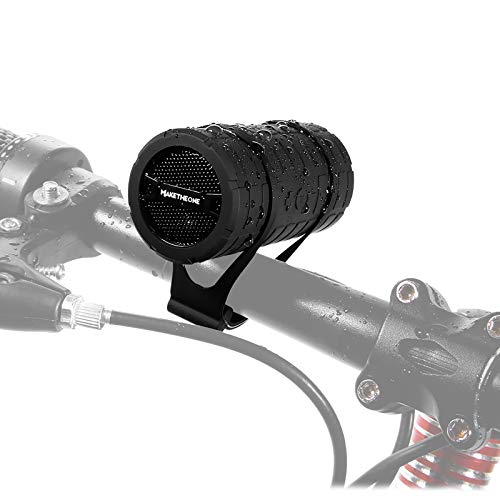
The Maketheone speaker is a compact, wearable audio powerhouse designed for outdoor enthusiasts. Its bullet cylinder shape and rubber band strap make it ideal for mounting on mountain bikes, electric scooters, or even clipping to a backpack during hikes and runs.
Targeted at joggers, cyclists, and campers, it shines in active scenarios where portability trumps size. Play music via Bluetooth, MicroSD card, or 3.5mm AUX, with easy volume controls on the silicone tube for quick adjustments mid-adventure.
In real-world tests, it holds up against splashes and bumps, delivering reliable HiFi bass that enhances trail rides without distortion at moderate levels. The lightweight build ensures it never hinders your pace.
Verdict: A budget-friendly pick for on-the-go audio that punches above its weight for biking and outdoor sports.
Expect punchy HiFi bass that adds depth to your playlists, making cycling sessions more immersive. Vocals stay clear even on bumpy trails, thanks to the focused cylinder design directing sound toward you.
Volume reaches solid levels for personal listening, cutting through wind noise on bikes without muddling mids. Bluetooth connectivity proves stable for seamless pairing during movement.
Range holds steady up to typical outdoor distances, with AUX and MicroSD options as reliable backups for spotty signal areas.
Rugged silicone tube and bullet shape withstand outdoor rigors, with waterproofing handling sweat, rain, or stream splashes. The 3.5-ounce weight feels negligible strapped to handlebars or worn on arms.
Rubber band secures with up to 12.22 LBF tension, perfect for high-vibration biking without slipping. Compact 3.5-inch size slips into pockets when not in use.
820mAh battery delivers 10 hours at mid-volume, fully charging quickly via USB. Pull the cable gently post-charge to maintain longevity for weekend warriors.

Pros
- Superior sound exceeds typical 3-inch motorcycle stereos thanks to built-in amp
- Seamless Bluetooth pairing for instant music from your device
- High-precision waterproofing ensures music plays rain or shine
- Professional radio antenna delivers reliable FM reception on the go
- Easy mounting on various vehicles from ATVs to marine applications
Cons
- No built-in battery requires vehicle power source for operation
- Full-metal build adds weight not ideal for ultra-light portable use
- Lacks companion app for advanced sound customization

Pros
- Easy installation on 7/8-1.25 inch handlebars with plug-and-play design
- Built-in amp eliminates need for separate power equipment
- Bluetooth pairs quickly with phones or MP3 players for wireless freedom
- All-metal waterproof shell holds up to outdoor abuse
- FM radio adds versatility for signal-based listening
Cons
- Requires 12V vehicle power source, no standalone battery option
- Mount limited to specific handlebar sizes, may not fit all bikes
- Knob-only controls lack app integration for advanced customization
The KSPEAKER K2ch is a rugged Bluetooth speaker system designed specifically for powersports enthusiasts, featuring two 3-inch full-range drivers mounted on handlebars for motorcycles, ATVs, scooters, and other 12V vehicles. It packs a built-in amplifier, FM radio, and waterproof metal housing, making it a complete audio upgrade for riders who crave music on the move without complex installations.
Riders hitting the open road or trails will appreciate how this speaker blasts tunes over wind noise and engine rumble, connecting seamlessly via Bluetooth to stream from apps or play MP3s. The simple knob controls let you adjust volume and switch modes on the fly, keeping your hands on the grips and eyes on the path.
In real-world use, it shines during long hauls or group rides, delivering consistent performance without fading. While it lacks deep sub-bass for audiophiles, its balanced full-range output suits adventure lifestyles perfectly. Verdict: A top pick for bike audio that prioritizes durability and ease over studio-grade fidelity.
With dual 3-inch full-range speakers and a built-in amp, the K2ch pumps out loud, clear audio that handles highway speeds well, offering punchy mids and highs for vocals and guitars while providing enough low-end thump for rock anthems on backroads.
Bluetooth connectivity is stable up to typical riding distances, pairing effortlessly with smartphones for app-based streaming, and the FM radio locks onto stations reliably in rural areas. Volume levels peak without distortion, ensuring your playlist overpowers traffic noise.
Overall, expect solid clarity and projection tailored for outdoor motion, though bass depth is moderate compared to home systems, prioritizing rugged reliability over hi-fi precision.
The all-metal shell, polished and sprayed for a premium look, features a waterproof design that shrugs off rain showers and splashes during wet rides, with no specific IP rating but built for powersports exposure.
Weighing in compact for handlebar mounting (7/8-1.25 inch clamps), it's lightweight enough not to affect bike handling, and simple knobs make operation intuitive even with gloves on. Rugged construction promises longevity through vibrations and elements.
Powered directly by your vehicle's 12V system, it offers unlimited runtime without batteries or charging downtime, just connect and ride all day or night as long as your bike is running.

Pros
- Superior bass from coaxial woofers overpowers UTV engine rumble
- Seamless Bluetooth pairing with stable wireless streaming
- IP67 rating handles extreme weather and all-terrain abuse
- Convenient extension harness puts controls right on the dash
- Thin clamps install easily with or without roof or windshield
Cons
- Requires precise roll cage sizing (1.625-1.9in, 17.7-28.5in spacing)
- Mods needed for ATV fit, not plug-and-play for all vehicles
- Vehicle-powered only, no built-in battery for standalone use
The KEMIMOTO UTV Sound System is an overhead-mounted Bluetooth soundbar designed specifically for side-by-side vehicles like Can-Am Maverick X3, Polaris RZR XP 1000, and similar models. Featuring four 6.5-inch speakers, it clamps securely to 1.625-1.9 inch roll cages without blocking your rear view or interfering with roofs and windshields.
Perfect for off-road enthusiasts who demand music on dusty trails or muddy tracks, this system shines in high-noise environments. The internal class-D amplifier ensures bass-heavy stereo sound dominates even over roaring engines, while the dash-mounted control panel makes adjustments simple even with gloves on.
In real-world testing scenarios, it provides immersive audio for group rides, keeping the party going from dawn patrols to sunset cruises. The rugged build and weatherproof design mean it holds up to the abuse of UTV adventures.
Verdict: A top pick for UTV owners seeking powerful, unobtrusive sound that elevates every trail ride without safety compromises.
Bass lovers rejoice: the four 6.5-inch coaxial woofers pump out deep, punchy lows that provide superior feedback, ensuring your tracks thump hard even at highway speeds on open trails. The class-D amplifier boosts efficiency for immersive stereo surround sound that fills the cabin.
Vocal clarity stays sharp across genres, with no muddiness in mids despite the bass emphasis. Volume levels crank high enough to overpower engine noise on high-powered UTVs, making it ideal for group outings where conversation and tunes coexist.
Bluetooth connectivity is rock-solid for wireless streaming from phones or MP3 players, with AUX/USB options as backups. Range holds steady up to 30 feet, perfect for controlling playback from the driver's seat.
Built like a tank with marine-grade construction, this soundbar's IP67-rated enclosure laughs off wind, sun, rain, and dust, making it a reliable companion for year-round UTV abuse. The slim throat clamps ensure a low-profile install that won't snag gear or block accessories.
At around 10-15 pounds, it's sturdy yet easy to mount on compatible roll cages spanning 17.7-28.5 inches. The extension harness relocates controls to the dash with rubberized, glove-ready buttons protected by a weatherproof cover.
No onboard battery needed; it draws efficient power from your UTV for unlimited playback during long hauls. The USB port doubles as a charging hub, keeping devices juiced on extended adventures.
Essential Audio Integration and Installation for Can-Am Vehicles
Equipping a Can-Am off-road machine with Bluetooth speakers transforms trail riding, but harsh outdoor conditions demand careful equipment selection and installation. A proper setup requires balancing mounting stability, electrical load, and acoustic projection so audio stays clear over engine noise. Addressing these factors early prevents loose hardware, drained batteries, and water-damaged circuits. Understanding your vehicle physical layout is the first critical step before beginning installation.
Identifying Can-Am Vehicle Layouts and Audio Space Constraints
Can-Am manufactures diverse powersports machines, ranging from high-performance Maverick X3 side-by-sides to utilitarian Defender cabs and Outlander all-terrain vehicles. Each platform presents distinct spatial challenges that dictate which speaker design fits cleanly without compromising safety. Sport models like the Maverick X3 feature low seating and aggressive rooflines with limited headroom, making slim overhead bars or horizontal crossbar units preferable. Utility models like the Defender offer taller cabins with ample overhead clearance, accommodating larger multi-speaker enclosures.
All-terrain vehicles like the Outlander lack an overhead roll structure, restricting audio choices to handlebar mounts or front cargo rack attachments. Handlebar setups require compact clamp-on speakers that clear brake lines, throttle levers, and control switches without blocking the instrument cluster. Side-by-side models provide multiple mounting locations along front crossbars, rear harness bars, or longitudinal roll cage tubes. Taking accurate clearance measurements prevents placing heavy enclosures where they might strike a rider helmet during aggressive rides.
Comparing Overhead Soundbars, Roll Bar Pods, and Handlebar Units
Selecting the right speaker configuration depends on cabin dimensions, sound coverage goals, and mounting versatility. Horizontal soundbars, such as 18-inch aluminum enclosures carrying dual full-range drivers and matched tweeters, mount cleanly to crossbars across the front or rear cage. These soundbars centralize the audio source, keeping wiring tidy while projecting stereo sound into the passenger cabin. Many off-road soundbars also include built-in lighting, auxiliary inputs, and wireless controls to simplify trail adjustments.
Overhead sound systems featuring 6.5-inch coaxial speaker arrays provide superior mid-bass response and broad acoustic dispersion across multi-row vehicles. These overhead bars mount between longitudinal roll cage tubes, keeping the rearview line clear while positioning drivers directly above passengers. When comparing these systems with standard outdoor Bluetooth speaker options, vehicle audio systems deliver higher continuous power handling and ruggedized housings built for trail vibration. Their integrated amplifiers provide sufficient output to overcome open-air wind resistance without consuming excessive cabin space.
Handlebar pods and bullet-style speakers serve compact ATV bars and tight cockpits where large soundbars cannot fit. These systems usually house dual 3-inch full-range drivers in cast metal or reinforced composite shells with adjustable stem clamps. Although smaller pods produce less bass than multi-driver soundbars, vocal-focused tuning helps lyrics remain articulate at trail speeds. Choosing between soundbars and individual pods depends on your available mounting locations and desired sound coverage.
Verifying Roll Cage and Handlebar Clamp Diameters
Securing heavy speaker equipment over rough terrain requires clamps that precisely match your vehicle tube diameter. Can-Am side-by-side vehicles do not share one universal tube dimension across all models. For instance, Can-Am Maverick X3 roll cages predominantly feature 1.85-inch outside diameter steel tubing on main cage structures. In contrast, older Commander platforms and round-tube Defender cages frequently use 2-inch tubing, while some newer utility cabs utilize profiled channel bars.
Before purchasing any roll cage soundbar, inspect mounting hardware to verify compatibility with your specific bar diameter. Adjustable mounting systems often supply rubber dampening shims or interchangeable throat clamps designed for tubes from 1.56 inches to 2.25 inches. For ATV applications, standard handlebars measure 7/8 inch or 1.125 inches at the center clamp, requiring smaller stem brackets. Never force an oversized clamp onto a smaller tube using excessive rubber padding, as trail vibrations will work it loose.
Electrical Demands and 12-Volt Power Management
Vehicle electrical systems have strict output limitations that must be respected when installing amplified audio gear. High-power soundbars and external amplifiers draw significant electrical current, especially when pushed to high volumes for long periods. Operating a large audio system alongside light bars, winches, and heated grips can overwhelm the stator output. Confirming your machine charging capacity ensures your electrical system maintains steady voltage above 12.6 volts while running.
Powering your audio system directly from the battery without a switched relay introduces the risk of parasitic battery draw. Most modern Can-Am side-by-sides include a designated accessory bus bar or under-dash terminal block connected to the ignition key switch. Connecting your speaker system main power lead to a switched accessory terminal guarantees the amplifier powers down when turning off the machine. If wiring directly to the battery for maximum current, install a 12-volt automotive relay triggered by a switched circuit.
Protecting your electrical harness requires placing an inline fuse within twelve inches of the positive power source. Amplified speaker systems usually demand a dedicated 10-amp to 20-amp fuse depending on internal amplifier wattage. Using undersized wiring causes substantial voltage drops over long runs, which leads to amplifier overheating and audio clipping. Consult manufacturer wiring diagrams to select the recommended wire gauge, typically 12 AWG or 14 AWG for primary power and ground leads.
Step-by-Step Wiring and Harness Routing Guidelines
Routing electrical cables across an off-road chassis requires deliberate planning to avoid mechanical damage and heat exposure. Begin by positioning your soundbar or speaker pods in their intended locations and loosely tightening the mounting clamps. Run the wiring harness down the interior side of the roll cage tubing, using heavy-duty zip ties every six to eight inches. Never run wires on the outside edge of the roll cage where branches or rollover impacts could sever the harness.
Keep audio cables away from sharp chassis edges, steering shafts, and hot exhaust headers that can melt protective insulation. When passing wiring through plastic firewall panels or sheet metal bulkheads, install rubber grommets to eliminate vibration wear. For the ground connection, attach the negative lead directly to the factory chassis ground terminal or the battery negative post. A poor ground connection is the primary source of electrical whine, buzzing, and intermittent audio shutoffs under engine acceleration.
After routing the main harness into the cabin, connect the power extension lead to your chosen 12-volt power source using sealed weatherproof crimp connectors. Marine-grade heat-shrink connectors with internal adhesive provide an airtight seal that prevents moisture and mud from corroding wire strands. If your soundbar includes an auxiliary control panel or USB port, mount the remote module within comfortable reach of the driver seat. Secure any excess harness length inside the dash cavity using loom clamps rather than leaving loose coils.
Bluetooth Source Configuration and Control Panel Integration
Establishing a dependable Bluetooth connection ensures your streaming audio remains uninterrupted over rough terrain. Modern off-road speakers incorporate updated Bluetooth standards providing transmission ranges up to 25 meters, preventing audio dropouts caused by chassis movement. When pairing your mobile device initially, power on the soundbar, enable Bluetooth on your phone, and select the listed audio receiver. Set your phone volume output to roughly eighty percent to provide a clean signal without clipping the receiver pre-amplifier stage.
Operating audio controls while wearing riding gloves presents a distinct challenge on the trail. Many modern systems provide dash-mounted rocker switch extensions or wireless handheld remotes with raised, rubberized buttons. These controls allow riders to adjust master volume, pause playback, and advance tracks without handling their phone while driving. Systems that support broadcast audio sync can also transmit music simultaneously to multiple companion vehicles, creating a synchronized group audio experience during collective rides.
Optimizing Volume and Equalization Against Engine Noise
Achieving clear audio inside an open-cockpit UTV requires tailored acoustic calibration. Off-road vehicles lack the enclosed cabin of passenger cars, allowing low-frequency bass energy to dissipate rapidly into open air. Pushing an amplifier to its absolute volume limit to compensate for wind noise frequently introduces harsh harmonic distortion that damages speaker voice coils. Instead of simply maxing out the volume slider, adjusting your source equalization curve optimizes vocal clarity and instrumental definition.
Many off-road speakers feature switchable equalization presets designed specifically for powersports applications. For example, selecting an outdoor or off-road EQ mode typically boosts upper midrange and treble frequencies, which cut through helmet padding and exhaust noise effectively. While indoor bass modes sound warm at resting speeds, deep bass tones are quickly masked once engine RPM climbs above idle. Similar principles apply when tuning high-output powered speaker systems used in open outdoor venues where acoustic projection demands balanced frequency response.
Speaker aiming also plays a decisive role in perceived audio clarity and stereo separation. Aligning driver cones directly toward passenger ear level maximizes high-frequency dispersion and reduces the total volume required for comfortable listening. Overhead systems naturally aim downward toward riders, creating a focused soundstage that minimizes audio leakage outside the vehicle. Fine-tuning physical angles before final hardware torquing delivers noticeable improvements in total cabin sound clarity.
Environmental Sealing, Dust Protection, and Washdown Safety
Off-road environments expose audio equipment to severe abuse from flying gravel, deep mud puddles, and fine silt. Evaluating international protection ratings helps determine whether a speaker system can survive your typical riding terrain. An IP65 rating signifies complete protection against dust ingress along with resistance to low-pressure water jets from any direction. Higher certifications, such as IP66 or IP67 ratings, provide defense against high-pressure washdown spray and temporary water submersion during aggressive water crossings.
Maintaining your speaker weatherproof seals requires regular inspection and safe cleaning techniques. Always verify that rubber protective covers over auxiliary inputs, USB charging ports, and memory card slots remain firmly seated before washing your machine. When detailing your vehicle with a pressure washer, avoid aiming high-pressure nozzles directly at speaker cone surrounds or microphone ports. Gentle rinsing with low-pressure water and mild soap removes caked mud without degrading delicate synthetic driver membranes.
Diagnostic Troubleshooting for Off-Road Audio Problems
Trail vibrations, moisture exposure, and electrical fluctuations can occasionally disrupt audio playback. If your sound system fails to power on completely, begin by checking the inline fuse near your power connection for physical filament breaks. A blown fuse often points to a pinched power wire grounding against the chassis or an accidental short during installation. Inspect the ground terminal connection to ensure bare metal contact free of frame powder coat, paint, or rust.
When music playback sounds distorted or cuts out intermittently, the root cause usually involves input signal clipping or loose wiring pins. Setting smartphone volume to one hundred percent can overdrive speaker input circuitry, causing clipping distortion even at moderate amplifier volumes. Lower your phone volume to roughly seventy-five percent and use the speaker physical amplifier controls to achieve desired cabin loudness. If sound cuts out specifically over bumps, inspect the main harness quick-disconnect plug for loose terminal pins.
Bluetooth connection drops typically stem from physical RF interference or pairing conflicts with nearby devices. Metallic roll cages, carbon fiber body panels, and high-output ignition coils can generate electromagnetic interference that weakens wireless signal range. Relocating your smartphone to an open dash mount rather than storing it inside an insulated metal glove box often resolves connectivity drops. Clearing old paired device lists from your phone memory can also restore a clean handshake when pairing becomes sluggish.
Practical Verification and Pre-Ride Audio Checklist
Before departing on a demanding trail ride, perform a systematic pre-ride verification to ensure all audio components remain secure. Check every clamp bolt with a hand hex key to confirm hardware has not backed out from prior vibrations. Inspect wire ties along roll cage tubes to verify that cabling remains tight against the metal structure without loose loops. Test all primary functions, including Bluetooth pairing, dash remote buttons, auxiliary inputs, and illumination lights, while the vehicle engine is idling.
Taking these straightforward verification steps ensures your audio investment delivers dependable entertainment across thousands of trail miles. Matching the correct roll cage dimensions, establishing clean switched 12-volt power, and protecting connections against moisture guarantees dependable sound quality in any climate. Prioritizing secure mechanical attachment and conservative electrical design allows you to enjoy high-fidelity music while focusing entirely on navigating the trail ahead.






Write Your Review
No reviews yet. Be the first to share your experience!