


Setting up public address equipment often leaves sound coordinators wondering about electrical demands and acoustic coverage. Knowing how many watts does a pa speaker use helps prevent tripped circuit breakers and distorted sound during critical announcements or events. While compact voice horns require very little continuous electrical energy, large venue cabinets pull substantially more current from the wall to project across crowded spaces. Understanding the difference between wall outlet power consumption and audio output wattage makes system planning much simpler. Evaluating larger powered PA speakers alongside compact voice units provides useful perspective on how driver size influences overall energy needs.
The actual power consumed by a public address setup depends heavily on whether you run active or passive cabinets, volume levels, and overall driver sensitivity. Matching speakers with suitable amplifiers ensures that voice announcements stay clean and intelligible without overheating internal voice coils. Using dedicated speaker selector units or zone distribution hardware can also alter total system resistance and distribution load across multiple horns. By examining technical specifications such as continuous wattage and peak ratings, equipment operators can assemble dependable audio rigs for indoor halls or outdoor fields.

Pros
- Exceptional volume at 100dB for large areas
- Featherweight 1.78 lbs design boosts portability
- Adjustable swivel bracket for precise sound direction
- Durable ABS housing withstands daily use
- Simple installation with included hardware
Cons
- Narrow 500Hz-5kHz range limits deep bass for music
- Requires external power source with no built-in battery
- Horn design prioritizes voice over full-spectrum audio
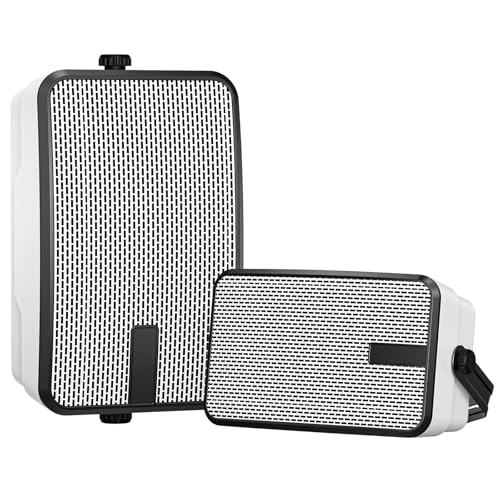
The Pyle 6-inch Portable PA Horn Speaker is a compact powerhouse designed for anyone needing reliable, loud audio projection without complexity. Ideal for event organizers, coaches, or homeowners hosting gatherings, it shines in scenarios like tailgating, backyard parties, sports fields, or indoor announcements where clear voice carry is key.
In real-world use, this speaker punches above its size with 50W peak power and 100dB SPL, ensuring your words reach far without feedback or muddiness. The horn shape focuses sound efficiently, making it perfect for directing announcements over noise, and its lightweight build means you can set it up anywhere in seconds.
Built from tough ABS material, it handles indoor humidity or outdoor dust without issue, backed by a versatile mounting bracket. While not for music lovers seeking bass, it's unbeatable for practical PA needs. Overall verdict: a smart, affordable pick for portable voice amplification that delivers every time.
Expect loud, focused projection from this Pyle horn speaker, hitting 100dB SPL with 50W peak power ideal for cutting through crowds at events. The 500Hz-5kHz frequency range delivers crisp vocal clarity and intelligible speech, making announcements stand out without distortion even at max volume.
Horn design excels in midrange punch for voices, perfect for referee calls or party shoutouts, though it skips deep bass typical of full-range speakers. Performance stays consistent indoors or outdoors, with efficient sound dispersion via the adjustable bracket for targeted coverage.
No Bluetooth means stable wired connectivity every time, eliminating dropouts for dependable use during long events.
Crafted from engineered ABS, this speaker boasts heavy-duty construction that resists impacts and weather exposure, ensuring longevity for frequent indoor or outdoor deployments. At just 1.78 lbs, its compact 6-inch size slips easily into a bag for on-the-go transport to beaches, fields, or venues.
The included 90-degree swiveling bracket offers flexible mounting on walls, poles, or tripods, adapting to any setup for optimal angle. Easy installation uses basic hardware, getting you amplified fast without hassle.
As a wired PA speaker, it lacks a battery and relies on external power for continuous operation, prioritizing reliability over recharge needs for plugged-in event use.

Pros
- Powerful 65W peak output with high SPL for loud projection
- Compact and lightweight for superior portability
- Durable ABS construction for indoor/outdoor reliability
- Versatile swivel mounting for flexible positioning
- Simple setup with all hardware included
Cons
- Frequency range limited to 500Hz-5kHz, best for voice not full music
- Requires external power source, no built-in battery
- 4-pack quantity may exceed needs for small-scale users
The Pyle 4-pack of 8-inch portable PA horn speakers is designed for anyone needing reliable voice projection in indoor or outdoor spaces, from event hosts and coaches to classroom teachers and safety announcers. These compact units excel at delivering announcements and alerts without complex setups.
Standout features include 65W peak power, a 500Hz-5kHz frequency response, and 101dB SPL, providing crisp, powerful audio that cuts through noise effectively. In real-world use, they handle crowds well for speeches or directions, with the 90-degree swivel bracket allowing precise aiming for optimal coverage.
Build quality shines with engineered ABS material that's both lightweight at 2.28 lbs per speaker and tough enough for all-weather durability. Installation is straightforward, thanks to the included mounting hardware, making them a go-to for quick deployments.
Potential drawbacks include the voice-focused frequency range, which limits music playback quality, and the need for an external power source. The 4-pack format suits group needs but might be overkill for solo users.
Overall, these speakers offer excellent value for portable PA needs, earning a strong recommendation for practical, high-volume applications where ease and endurance matter most.
Power: 65W Peak
Frequency Range: 500Hz - 5kHz
SPL: 101dB
Weight: 2.28 lbs per speaker
Material: Engineered ABS
Mounting: Adjustable 90-degree swivel bracket
Quantity: 4-Pack, Black
Understanding PA Speaker Wattage and Real-World Power Consumption
Real-World Wattage Draw for PA Speakers
A typical public address speaker draws far less continuous electrical power than its advertised peak rating suggests. In vocal paging applications, a compact horn speaker usually consumes between 5 and 25 watts of continuous audio power to project clear speech across an open area. Larger full-range PA cabinets deployed at concerts may draw several hundred watts from the electrical supply to reproduce heavy musical dynamics. Because human speech consists of dynamic peaks rather than unbroken tones, average power consumption remains a fraction of maximum burst capability. Understanding this gap between continuous operation and peak handling protects operators from buying oversized power supplies.
Passive horn units rely entirely on the power delivered through the speaker line by an external amplifier. The manufacturer listed 50W peak power rating on the Pyle 6″ Portable PA Horn Speaker indicates its short-burst ceiling rather than a steady electrical requirement. When driven with intelligible vocal announcements, this compact speaker typically operates on 10 to 15 watts of continuous amplifier output. This modest demand allows multiple paging horns to run simultaneously from a single commercial amplifier without straining local circuits. Evaluating true energy consumption requires looking past large headline numbers and focusing on continuous operational demands.
Audio Wattage Compared to Wall Outlet Power Consumption
Audio wattage delivered to a speaker voice coil is distinct from the electrical wattage drawn from a standard wall outlet. An amplifier acts as an energy converter, drawing alternating current from mains power and converting it into alternating audio voltage. No amplifier achieves perfect efficiency during this conversion process, meaning some energy is always lost as heat. Class D amplifiers frequently achieve 80 to 90 percent electrical efficiency, whereas Class AB amplifiers often operate around 50 to 60 percent. Consequently, an amplifier delivering 100 watts of continuous audio output might pull 120 to 200 watts from the electrical outlet.
Passive PA speakers do not connect to wall outlets, meaning their direct draw from mains power is zero. The electrical burden falls entirely on the external power amplifier driving the speaker cables. In active or powered PA speakers, the amplifier is built directly into the cabinet alongside the drivers. When calculating total system power for generator sizing, operators must always sum the wall draw of the amplifiers rather than merely adding up driver ratings. This distinction prevents costly calculation errors when planning mobile sound systems in remote outdoor locations.
Peak Power Handling Versus Continuous RMS Ratings
Marketing materials for public address gear frequently highlight peak power figures because larger numbers attract buyer attention. Peak power represents the absolute maximum wattage an audio component can endure for a brief transient burst before thermal destruction occurs. Continuous power, often referenced as RMS power handling, describes the steady wattage a driver can dissipate safely over sustained operating periods. A horn driver marketed with 65W peak power generally handles a continuous signal between 20 and 30 watts. Confusing these two metrics can lead an operator to overfeed a speaker, quickly warping delicate voice coils.
The four-unit bundle of the Pyle 4 Pack 8″ Portable PA Horn Speaker illustrates how peak power handling functions across multiple units. Each individual 8-inch horn lists a 65W peak rating, but running all four together does not mean the system draws 260 watts continuously. In everyday public address duty, an entire array of four horns may only demand 50 to 80 watts of continuous power to fill a large warehouse or parking area. Continuous ratings provide the realistic benchmark needed for dependable long-term system design. Looking strictly at continuous thermal ratings protects both the voice coils and the driving electronics.
Speaker Sensitivity and Acoustic Loudness
Wattage is a measurement of electrical energy, not a direct measurement of acoustic volume. Acoustic loudness is measured in Sound Pressure Level, or SPL, which depends heavily on driver sensitivity. Speaker sensitivity indicates how loud a unit plays in decibels when fed exactly one watt of power measured at a distance of one meter. Traditional dynamic cone speakers often exhibit sensitivities between 85 dB and 92 dB SPL, requiring considerable wattage to reach high volumes. In contrast, specialized horn-loaded public address speakers achieve much higher efficiency through acoustic impedance matching.
Specifications for the Pyle 6″ Portable PA Horn Speaker list a sensitivity rating of 100dB SPL, while the 8-inch model lists 101dB SPL. Because every 3 dB increase in volume requires doubling amplifier wattage, a horn rated at 100dB SPL requires only 1 watt to produce sound that a 91dB conventional speaker would need 8 watts to match. This acoustic efficiency explains why outdoor paging horns deliver commanding vocal clarity using modest amplifier wattage. Similar acoustic principles govern high-efficiency floorstanding speakers, where horn loading maximizes output while keeping amplifier strain low. Choosing high-sensitivity horns allows facilities to achieve expansive coverage without investing in heavy amplification.
Active Powered Cabinets Versus Passive Horn Arrays
Choosing between active cabinets and passive horn configurations fundamentally alters how an audio system manages electrical power. Active PA speakers combine audio processing, power amplification, and speaker drivers into a single rigid enclosure. Each active cabinet requires its own dedicated AC mains power cord, drawing electrical current directly from wall outlets or generators. This architecture simplifies signal routing for portable presentations but requires widespread access to mains electricity across the venue. In portable deployments, examining portable PA and Bluetooth speakers highlights how self-contained cabinets streamline small outdoor events.
Passive PA speakers, like compact paging horns, eliminate the need for electrical outlets at each mounting point. All electrical power flows through standard two-conductor speaker cable directly from a central amplifier rack. This architecture is especially advantageous for outdoor sports complexes, school campuses, and commercial warehouses where running electrical drops to every roof beam is impractical. Passive systems centralize power consumption at the amplifier rack, making it easier to install battery backup systems or surge suppression hardware. Installers must carefully calculate speaker wire gauge and total line resistance to avoid signal drop over long cable runs.
Frequency Bandwidth and Driver Energy Demands
The frequency spectrum a speaker is engineered to reproduce dramatically influences how much wattage it demands. Low-frequency sound reproduction requires large drivers to physically displace substantial volumes of air, demanding massive amounts of electrical current from an amplifier. Subwoofers and large bass-reflex woofers often require hundreds of watts just to generate punchy low-end energy. In sharp contrast, vocal announcements and emergency siren tones occupy the midrange frequencies where human hearing is most sensitive. Paging horns focus all their energy into this targeted vocal band rather than wasting wattage on deep sub-bass.
Both the 6-inch and 8-inch Pyle horn models feature a manufacturer-specified frequency response spanning 500Hz to 5kHz. By deliberately cutting off energy below 500Hz, these speakers prevent low-frequency rumble from entering the voice coil and causing mechanical distortion. Because speech intelligibility relies primarily on frequencies between 1kHz and 4kHz, focusing energy within this narrow window maximizes vocal penetration. Restricting the frequency band allows horn drivers to produce piercing announcements while drawing minimal wattage from the amplifier. Attempting to feed full-range music with heavy bass into a 500Hz horn wastes power and risks overheating the driver.
Coverage Needs in Indoor and Outdoor Installations
Selecting appropriate PA speakers requires balancing wattage requirements against the physical space you intend to cover. Small indoor facilities such as school corridors, workshops, and retail backrooms require modest output to overcome ambient noise. In these enclosed spaces, reflective walls conserve sound energy, allowing a 50W peak horn operating at 5 to 10 watts to provide crystal-clear announcements. The lightweight 1.78-pound design of the 6-inch Pyle horn makes it easy to mount on standard ceiling rafters or drywall studs using its included swiveling bracket. Indoor voice projection rarely requires running speakers near their maximum handling capacity.
Outdoor applications present much harsher acoustic challenges because sound energy dissipates rapidly without boundary walls to reflect it. Wind, vehicle traffic, and open air attenuation require higher sound pressure levels to reach listeners across athletic fields or parking lots. The 8-inch Pyle horn speaker offers 101dB SPL and 65W peak handling, providing slightly greater reach and acoustic dispersion for outdoor environments. Its engineered ABS housing and 90-degree adjustable bracket allow installers to angle sound downward toward listener ear level, preventing energy waste. Deploying four horns in a coordinated perimeter array distributes sound evenly while keeping individual speaker power demands modest.
Electrical Infrastructure, Generators, and Cable Sizing
Planning electrical infrastructure for public address installations requires calculating aggregate power loads before flipping the power switch. When running an amplifier from a portable generator or temporary electrical distribution box, you must account for peak surge demands alongside continuous draw. Generators can experience voltage sags when sudden musical transients or loud siren bursts demand instantaneous current spikes. Sizing your electrical supply with at least 30 percent headroom above total estimated amplifier consumption prevents unexpected thermal shutdowns. Safe planning also involves keeping audio gear on separate electrical circuits from lighting dimmers, refrigerators, and heavy motors.
Cable selection between the amplifier and passive PA speakers also impacts total system efficiency and electrical performance. Long cable runs introduce electrical resistance that consumes amplifier power before it ever reaches the speaker terminals. For runs under 50 feet driving standard 8-ohm loads, 16-gauge copper wire generally provides sufficient conductivity without noticeable signal loss. Runs exceeding 100 feet require thicker 14-gauge or 12-gauge conductors to minimize voltage drop and maintain tight amplifier control. Using proper wire gauge ensures that the wattage leaving your amplifier arrives intact at the speaker horn rather than dissipating as heat along the wire run.
Preventing Amplifier Clipping and Voice Coil Overheating
A widespread misconception in live audio is that connecting a speaker to an amplifier with lower wattage prevents driver damage. In reality, underpowering a PA speaker frequently causes more voice coil failures than moderate overpowering. When an amplifier lacks adequate headroom to reproduce dynamic peaks, pushing the master volume forces the output stage into clipping. Clipping squares off the audio waveform, generating intense harmonic distortion and sending sustained DC-like energy into the voice coil. This unnatural energy heat cannot dissipate quickly, causing delicate voice coils to melt and seize up.
To avoid amplifier clipping, operators should pair speakers with amplifiers capable of delivering clean continuous power matched to the speaker continuous rating. Maintaining roughly 20 to 50 percent amplifier headroom above the speaker continuous power handling keeps signals clean during sudden vocal peaks. When an announcer speaks forcefully or blows into a microphone, the extra headroom absorbs the transient without flattening the waveform into destructive distortion. Operators should monitor amplifier clip indicator lights vigilantly and reduce input gain whenever red warning lights flash. Clean, unclipped power preserves horn reliability across years of regular operation.
Practical System Verification and Setup Takeaways
Determining how many watts your public address system consumes comes down to understanding the acoustic task and equipment specifications. For basic vocal paging and voice alert duties, high-efficiency horn speakers drawing between 10 and 25 continuous watts can easily outproject standard speakers consuming ten times more power. Verifying system impedance and measuring amplifier line draw with a plug-in watt meter provides exact data for your specific setup. Matching proper wire gauge and ensuring adequate amplifier headroom eliminates clipping distortion while protecting sensitive driver assemblies.
Whether you install a single 6-inch horn for an indoor workshop or deploy a four-pack of 8-inch horns across an athletic field, thoughtful power management ensures dependable voice projection. Horns built with engineered ABS material and adjustable brackets simplify physical positioning for optimal audience coverage. Focusing your amplifier energy within the primary 500Hz to 5kHz speech spectrum delivers maximum intelligibility without wasting electricity on unnecessary low-frequency reproduction. With clean amplification and realistic wattage calculations, your public address setup will deliver intelligible sound whenever critical announcements must be heard.







Write Your Review
No reviews yet. Be the first to share your experience!