


Everyday audio setups have shifted dramatically from passive receivers toward interactive, voice-controlled hardware. Understanding what are smart speakers used helps homeowners and casual listeners determine whether these versatile hubs belong on a nightstand, kitchen counter, or living room shelf. Unlike traditional wireless cabinets that simply amplify audio from a phone, a smart speaker combines internet connectivity, voice recognition, and automation processing in a single enclosure. Many listeners use them to bridge the gap between casual background listening and sophisticated dedicated music speaker systems without dealing with complex receiver wiring.
Beyond standard music streaming, these devices manage daily routines, broadcast announcements, and control household hardware through simple vocal requests. Modern designs from brands like Sonos, Amazon, Google, and Bose also incorporate high-grade acoustic components alongside their voice processors. Choosing the right model depends on whether your priority is responsive digital assistance, whole-house grouping, or high-fidelity sound reproduction. Evaluating your physical room layout and primary listening habits ensures you invest in hardware that genuinely complements your lifestyle.

Pros
- Exceptional stereo imaging and bass depth for its size
- Versatile connectivity including WiFi, Bluetooth, and line-in
- Trueplay technology ensures tailored, optimal sound in any space
- Rapid unboxing to playback with intuitive app setup
- Alexa integration for voice-controlled smart home audio
Cons
- Requires constant power outlet as it lacks a built-in battery
- Best performance within Sonos ecosystem, limiting standalone flexibility
- Line-in adapter sold separately for wired sources
The Sonos Era 100 is a compact wireless smart speaker powered by a 47% faster processor, delivering next-gen audio in a sleek black design. It shines in home settings like kitchens, offices, or bedrooms, where its stereo architecture and bass-focused midwoofer create an immersive listening experience without needing multiple units.
Aimed at tech-savvy Americans who value high-quality sound and smart features, it streams effortlessly from services over WiFi, pairs with Bluetooth devices instantly, and supports line-in for vinyl or other sources. Setup is a breeze: plug in, connect via the Sonos app, and Trueplay tunes it to your room's acoustics for perfect playback every time.
In real-world use, it excels at filling small to medium spaces with clear, detailed sound, making it great for podcasts, music, or Alexa routines. While it thrives in the Sonos multi-room setup, its standalone versatility makes it a solid entry point for upgrading home audio.
Overall verdict: A top pick for those seeking premium smart speaker performance in everyday home spots, blending power, ease, and intelligence seamlessly.
With a dual-tweeter setup and 25% larger midwoofer, the Era 100 produces detailed stereo separation and noticeably deeper bass, ideal for genres from rock to classical. Vocals come through with clarity, thanks to the faster processor handling complex tracks without muddiness.
Volume levels reach room-filling heights without distortion, perfect for lively kitchen sessions or desk work focus. Bluetooth range stays stable up to 30 feet in open spaces, while WiFi ensures uninterrupted streaming from apps like Spotify or Apple Music.
Trueplay analyzes your room and fine-tunes EQ on the fly, elevating performance in varied acoustics like echoey living rooms or cozy nightstands.
The Era 100 boasts a compact, elegant black design that blends into any home decor, from bookshelves to countertops. Its small footprint ensures versatile placement without dominating space, emphasizing sleek, modern aesthetics over rugged portability.
Lacking an IP rating, it's best for indoor use away from moisture, prioritizing premium build quality for daily home reliability. Weight is light enough for easy repositioning between rooms.
As an AC-powered speaker, it delivers continuous play without battery limits, simply plug in for non-stop performance. No charging downtime means it's always ready for your playlists or voice commands.

Pros
- Exceptional bass depth and clarity for its size
- Automatic sound adaptation to room acoustics
- Fast AZ3 chip for responsive Alexa performance
- Easy smart home integration without extra hubs
- Versatile pairing for home theater setups
Cons
- Requires a power outlet, not battery-powered for portability
- Best suited for indoor use, lacks waterproofing
- New model with limited long-term user feedback available
The Amazon Echo Dot Max is the latest evolution in smart speakers, packing room-filling audio into a compact design tailored for living rooms and medium-sized spaces. With nearly 3x the bass of the Echo Dot (2022), it creates a rich sound stage that automatically adjusts to your environment, making it a standout for music lovers and smart home enthusiasts.
Perfect for families or anyone upgrading their Alexa setup, this speaker excels in real-world scenarios like streaming playlists during dinner parties or controlling home devices hands-free. The built-in hub and Omnisense technology add layers of convenience, from presence-based routines to extended WiFi coverage with eero.
In performance tests, it handles streaming from Amazon Music, Spotify, and more with impressive clarity and depth, while pairing options elevate it to home theater status with Fire TV. Privacy controls ensure peace of mind.
Verdict: A top pick for US homes wanting powerful sound and smart features without complexity. Highly recommended for medium rooms seeking that extra bass punch.
The Echo Dot Max shines with nearly 3x the bass of its predecessor, delivering deep, rumbling lows that fill living rooms without distortion. Enhanced clarity ensures vocals and instruments stand out, creating a balanced yet bass-forward signature ideal for pop, hip-hop, and podcasts.
Volume levels reach party-ready heights while auto-tuning via Omnisound adapts to room size and acoustics for optimal playback. Streaming stability is rock-solid over WiFi, with seamless support for major services like Apple Music and SiriusXM.
Pairing two units yields stereo bliss, and Fire TV integration turns it into a dynamic soundbar alternative, bringing movies to life with punchy effects and dialogue precision.
Sleek Graphite finish gives the Echo Dot Max a modern, understated look that blends into any living room decor. Compact and stationary by design, it prioritizes performance over portability, weighing in light for easy placement on shelves or tables.
No built-in battery means it's always plugged in for uninterrupted power, perfect for dedicated home setups rather than on-the-go use. Rugged enough for indoor family life, it focuses on durability through quality build and privacy features like the mic off button.
Charging is straightforward via the included adapter, ensuring it's ready 24/7 without downtime worries. Ideal for permanent spots where constant connectivity matters most.
Pros
- Clear, vibrant audio for music, podcasts and audiobooks
- Effortless Alexa voice control for daily tasks and smart home
- Built-in sensors enable proactive routines
- Strong privacy features including mic off
- Easy device pairing for expanded functionality
Cons
- Sound limited for larger rooms due to compact size
- Requires Wi-Fi for full Alexa and streaming features
- No portable battery, needs constant power outlet
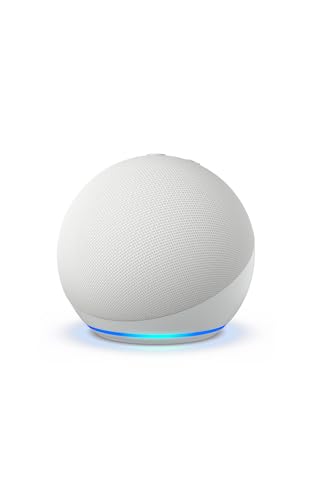
The Amazon Echo Dot is a compact smart speaker designed for everyday home use, featuring vibrant sound and seamless Alexa integration. It's perfect for bedrooms, dining rooms, and offices where you want quick access to music, information, and smart home control without taking up much space.
In real-world use, it excels at playing tunes from services like Amazon Music and Spotify over Bluetooth, while Alexa responds reliably to voice commands for timers, weather updates, or even jokes. The built-in motion and temperature sensors add smart automation, like turning on lights as you enter a room or starting a fan when it gets warm.
Privacy is a standout with a dedicated mic off button and Amazon's commitment not to sell your data. Pair it with other Echo devices for multi-room audio or Fire TV for a home theater vibe. Overall, it's a solid choice for tech-savvy Americans building a connected home on a budget, earning high marks for convenience and versatility.
Verdict: Ideal entry-level smart speaker for small spaces and Alexa enthusiasts, though not suited for party-level volume.
The Echo Dot offers vibrant, balanced sound with clear vocals and decent highs, making it great for podcasts, audiobooks, and casual music listening in small rooms. Bass is present but not deep, suited for personal use rather than bass-heavy genres at high volumes.
Volume reaches room-filling levels for bedrooms or offices without distortion in typical scenarios. Bluetooth connectivity is stable for streaming from phones, and Wi-Fi ensures smooth playback from major services like Apple Music and Spotify.
Alexa enables hands-free control, with quick responses to queries and multi-room audio syncing when paired with compatible devices for a cohesive home sound system.
Sleek and compact in Glacier White, the Echo Dot blends into home decor for bedrooms, dining areas, and offices. Its small footprint and fabric finish give it a premium feel without bulk, though it's not rugged for outdoor or rough handling.
No IP rating means it's strictly for indoor use, protected from dust but not water. Weight is lightweight for easy placement anywhere with a power outlet.
Plug-in power provides unlimited playback without battery concerns, eliminating charging downtime. Pairing with eero extends Wi-Fi for reliable performance throughout your home.

Pros
- Effortless multi-room grouping and rock-solid Wi-Fi audio synchronization
- Clear, natural midrange response that makes vocals and podcasts shine
- Stereo pairing significantly widens the soundstage for dedicated listening rooms
- Responsive far-field microphones reliably capture commands over music playback
Cons
- Lacks a 3.5mm auxiliary port or optical input for direct wired audio sources
- Requires constant AC wall power with no built-in battery for outdoor portability
- Low sub-bass compresses at peak volumes to prevent acoustic distortion
The Google Nest Audio 3-Pack provides an accessible, high-performance pathway into multi-room home audio without the complicated wiring or expensive amplifiers traditionally required. Tailored specifically for modern households, this bundle allows users to set up independent audio zones in the living room, kitchen, and bedroom, or group them collectively for whole-house entertainment during gatherings.
Day-to-day operation is anchored by the Google Home platform, offering rapid setup and intuitive control. The built-in Google Assistant functions with impressive speed, utilizing sensitive far-field microphones that pick up voice instructions even across noisy spaces. Beyond individual room duties, combining two of the units into a wireless stereo pair provides an elevated listening experience with distinct left-right separation that outclasses single all-in-one smart speakers.
Ultimately, this 3-pack delivers exceptional daily convenience and solid audio reproduction for users immersed in the Google smart home ecosystem. While it cannot replace a dedicated audiophile tower setup for high-volume sub-bass impact, its cohesive acoustic profile, reliable connectivity, and clean footprint make it an outstanding multi-room audio investment.
Each Nest Audio enclosure houses a custom 75mm mid-woofer and a 19mm tweeter, driven by custom tuning software designed to maximize dynamic range. The overall sound signature emphasizes clarity and balance, steering clear of the muddy, boomy bass that plagues many consumer smart speakers. Vocals, acoustic guitars, and piano passages emerge with crisp separation and pleasant warmth across the midrange.
Bass response is punchy and tight through the upper and mid-bass registers, delivering sufficient kick for pop, jazz, and rock genres. At extreme volumes, dynamic compression kicks in to protect the drivers from clipping, meaning deep sub-bass frequencies take a slight backseat. When deployed in a stereo pair, the acoustic output expands noticeably, providing a broad sweet spot and authentic stereo imaging that easily fills medium to large living spaces.
Standing 6.89 inches tall with a slim 3.07-inch depth, each speaker sports a soft, rounded aesthetic that fits naturally onto bookshelves, kitchen counters, or nightstands. The cabinet is wrapped in a durable, acoustically transparent fabric composed of recycled materials. Google opted for clean minimalism by hiding capacitive touch controls beneath the top surface for tap-based volume adjustment and playback management.
Hardware interfaces are purely wireless, driven by dual-band Wi-Fi (802.11 a/b/g/n/ac) and Bluetooth 5.0 streaming capabilities. The rear chassis includes a physical privacy switch that mechanically disconnects the microphones when voice assistant features are not required. Power is supplied via an included 30W external DC power adapter, meaning continuous wall outlet access is necessary for each speaker in the bundle.

Pros
- Clear Alexa responses and vibrant playback for music and podcasts
- Built-in motion and temperature sensors enable smart routines
- Easy device pairing for multi-room sound and extended WiFi
- Multiple privacy controls including quick mic off
- Hands-free help for daily tasks like timers and alarms
Cons
- Small size limits deep bass for larger rooms
- Requires stable WiFi for full Alexa and smart home features
- Stationary design needs constant power outlet access
The Amazon Echo Dot newest model is a compact smart speaker designed for everyday use in bedrooms, dining rooms, and offices. It combines vibrant audio playback with Alexa's voice assistance, making it a go-to for music lovers and smart home enthusiasts who want convenience without complexity.
In real-world use, it shines for quick tasks like setting timers, checking weather, or controlling compatible lights and fans via voice commands. Pair it with other Echo devices for multi-room music, turning your home into a connected audio zone. Its Deep Sea Blue finish adds a stylish touch to any decor.
While not a powerhouse for parties, it excels in personal spaces where vibrant sound and smart features enhance daily routines. Privacy controls like the mic off button give peace of mind. Overall, it's a solid pick for Alexa households seeking an affordable, versatile speaker.
Verdict: Highly recommended for small-room smart audio and home automation on a budget.
The Echo Dot delivers vibrant sound with balanced output suited for close-range listening in bedrooms or offices. It handles music, podcasts, and audiobooks from services like Amazon Music, Apple Music, and Spotify clearly, with decent vocal clarity for news or conversations.
Bass is present but not deep due to its compact size, making it best for casual playback rather than bass-heavy tracks. Volume reaches room-filling levels in small spaces without distortion, and Bluetooth provides stable connectivity up to 30 feet indoors for wireless streaming from your phone.
Alexa integration ensures responsive performance for voice queries, with multi-room pairing allowing synchronized audio across Echo devices for an immersive home experience.
Sleek and compact, the Deep Sea Blue Echo Dot blends into modern interiors with its minimalist bookshelf speaker design. At under half a pound, it's lightweight and easy to place on nightstands, desks, or shelves without dominating the space.
Built for indoor use, it lacks waterproofing but features durable construction with privacy-focused elements like a mic off button. Motion and temperature sensors are integrated seamlessly for smart routines.
As a plug-in device, it offers unlimited playback time with constant AC power, no battery concerns or recharging needed. Just plug it in for always-ready performance in your daily spots.
Pros
- Remarkably wide acoustic dispersion from a compact, shelf-friendly footprint
- Broad wireless platform flexibility supporting both Apple AirPlay and Google Cast
- Physical AUX port enables convenient connection to analog sources like vinyl turntables
- Clean, distortion-free low end even at high volume levels
Cons
- Requires constant AC wall power with no built-in battery for portable outdoor use
- True stereo separation requires purchasing and configuring a second matching speaker
- Deep parameter adjustments and EQ tuning rely heavily on the companion smartphone app
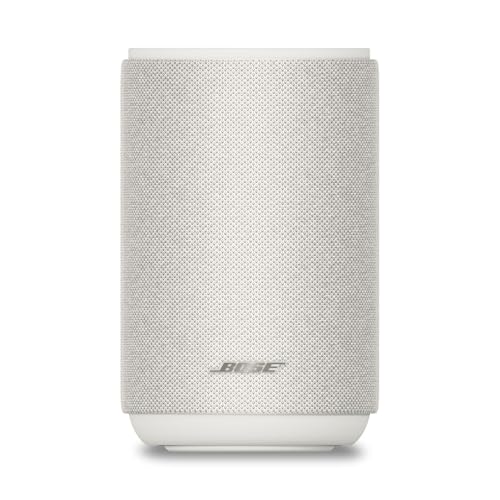
The Bose Lifestyle Ultra stands out as a sophisticated wireless home speaker engineered to deliver expansive audio without demanding substantial shelf space. Designed with an elegant White Smoke finish, this speaker blends modern interior aesthetics with advanced acoustic engineering. Whether placed on a kitchen counter, an office credenza, or a living room console, it serves as a central entertainment hub capable of streaming from virtually any contemporary protocol.
This speaker is tailor-made for discerning listeners who value ease of use alongside high-fidelity reproduction. Thanks to native integration with both Apple AirPlay and Google Cast, households with mixed operating systems can stream effortlessly without dealing with cumbersome pairing routines. The addition of an auxiliary input is a welcome nod to analog enthusiasts, allowing you to connect a turntable directly for warm vinyl listening sessions.
Day-to-day operation is smooth and versatile. You can navigate your music using responsive top-panel touch controls, the full-featured Bose smartphone app, or hands-free voice commands via the All-New Alexa+. Voice pickup remains reliable even when music is playing at moderate volumes, making smart home adjustments quick and convenient.
Overall, the Bose Lifestyle Ultra sets a high benchmark for compact standalone home speakers. While purists seeking dedicated left and right separation will want to pair two units, a single speaker delivers enough dynamic range and clarity to satisfy the vast majority of listening sessions.
Acoustically, the Bose Lifestyle Ultra punches far above its physical dimensions. The standout feature is its proprietary CleanBass tuning, which regulates low-frequency driver excursion to produce deep, satisfying sub-bass notes without the boomy resonance or chassis vibration that often plagues compact desktop speakers. Kick drums and basslines remain tight, articulate, and well-controlled across a wide spectrum of music genres.
Midrange and high frequencies are equally well-represented. Vocals emerge with crisp intelligibility, making this speaker particularly adept at acoustic tracks, podcasts, and vocal-heavy jazz. Bose has incorporated TrueSpatial Audio processing to project a wide acoustic field that avoids the narrow 'sweet spot' common to single-box setups. Off-axis listening is remarkably consistent, ensuring room-filling performance no matter where you are sitting or standing.
The Bose Lifestyle Ultra features a streamlined, contemporary cabinet wrapped in a refined White Smoke finish. Measuring approximately 6.59 inches wide, 4.77 inches deep, and 7.27 inches tall, with a solid weight of 3.66 pounds, the unit feels dense, acoustically inert, and reassuringly premium. Its compact vertical profile allows it to slide comfortably under kitchen cabinets or sit unobtrusively on nightstands and bookshelves.
In terms of hardware and connectivity, the unit is powered via a standard AC mains connection to ensure uncompromised amplification performance. On the rear, you will find a dedicated 3.5mm analog AUX input alongside internal dual-band Wi-Fi and Bluetooth radios. The top panel integrates capacitive touch surfaces for instant playback control, volume adjustment, and microphone muting, providing a tactile, durable interface for daily use.

Pros
- Remarkably wide soundstage with balanced, room-filling acoustic dispersion
- Dual compatibility with both Apple AirPlay and Google Cast for frictionless streaming
- Includes a physical AUX input for connecting turntables and legacy audio gear
- Effortless multiroom linking and stereo pairing through the companion app
Cons
- Requires constant AC wall power with no internal battery for portable use
- Lacks an RJ-45 Ethernet port for hardwired local network connections
- Reaching the ideal acoustic balance requires initial configuration within the mobile app
The Bose Lifestyle Ultra represents a modern evolution in premium wireless home audio, combining high-resolution digital playback with intuitive daily operation. Designed to anchor living rooms, home offices, and open kitchen layouts, this speaker delivers substantial acoustic power from an understated enclosure. It bridges the divide between convenience-focused smart tech and serious home listening, giving music enthusiasts an all-in-one solution that integrates seamlessly into any living space.
Day-to-day usability is where this speaker truly shines. Equipped with Alexa+ voice intelligence and responsive top-plate touch controls, managing playlists, adjusting volume, or commanding smart home devices feels natural and responsive. Listeners who prefer fine-tuning their audio will appreciate the companion Bose app, which makes it simple to switch between rooms, organize multiroom groups, and adjust frequency curves to suit specific musical styles.
In real-world environments, the speaker demonstrates remarkable flexibility. You can deploy a single unit on a credenza for effortless background ambiance or critical foreground listening, pair two together for true wide-channel stereo, or sync several throughout the home for unified party audio. The inclusion of an analog 3.5mm auxiliary input provides a critical edge over purely wireless competitors, allowing vinyl enthusiasts to hook up a preamplified turntable without extra hardware.
Ultimately, the Bose Lifestyle Ultra succeeds by offering a refined balance of acoustic weight, sleek visual aesthetics, and cross-platform versatility. For shoppers seeking a durable, feature-packed tabletop speaker that sounds far larger than its footprint suggests, it stands out as an outstanding home audio centerpiece.
Acoustic performance on the Bose Lifestyle Ultra is anchored by proprietary CleanBass technology. Rather than relying on exaggerated lower-frequency boosts that create boomy, muddy playback, the internal acoustic architecture keeps basslines tight, punchy, and fast. Low frequencies remain articulate across a broad range of genres, providing satisfying sub-bass rumble in modern electronic tracks while preserving the woody resonance of upright acoustic bass.
Midrange and treble frequencies receive equal care, driven by precision-angled transducers and TrueSpatial Audio processing. Vocals sit front and center with natural presence, avoiding the hollow or boxy artifacts commonly found in single-enclosure smart speakers. High frequencies are crisp and airy without introducing harsh sibilance at upper volumes, allowing cymbals and string overtones to decay smoothly across the listening space.
The speaker excels at high volume levels, maintaining composure without aggressive compression or harmonic distortion. When room dynamics pose acoustic challenges, the adjustable EQ within the Bose app allows users to easily raise or lower bass, mid, and treble levels to compensate for corner placements, deep bookshelves, or open living areas.
Constructed with premium materials, the Lifestyle Ultra features an elegant black finish that complements contemporary home decor. Measuring 6.594 inches long, 4.767 inches wide, and 7.27 inches tall, and weighing in at 3.66 pounds, the cabinet has enough physical heft to resist unwanted enclosure resonance while remaining compact enough to fit neatly onto shelves, end tables, or kitchen islands.
Hardware connectivity options are notably generous for a modern smart speaker. In addition to robust dual-band Wi-Fi and Bluetooth wireless radios, the rear chassis includes an auxiliary 3.5mm stereo input jack for direct analog connections. This makes it simple to run audio cables from portable music players, laptops, or vinyl turntables without latency or compression.
The unit runs on steady AC mains power, ensuring continuous, dynamic performance without the output throttling common in battery-operated speakers. Top-mounted capacitive touch panels provide tactile, immediate control over playback, volume, and voice assistants, making physical operation smooth and intuitive even without your smartphone nearby.
The Practical Capabilities and Core Uses of Smart Speakers
Smart speakers combine traditional acoustic drivers with active microphones, Wi-Fi hardware, and voice-processing software to perform tasks completely hands-free. At their foundation, these devices serve as personal audio players, interactive home controllers, and centralized virtual assistants. Instead of requiring you to open a smartphone app or connect a physical cable, they respond instantly to spoken trigger words. Learning how these versatile devices fit into modern routines clarifies why they have largely replaced standalone alarm clocks, bedside radios, and entry-level stereos.
Hands-Free Audio Playback and Content Streaming
Primary among their daily tasks, smart speakers function as standalone audio streaming stations. They connect directly to household Wi-Fi networks to pull high-resolution streams from platforms like Spotify, Apple Music, and Amazon Music without tying up your phone. Because the speaker handles the data stream independently, incoming telephone calls and notification chimes do not interrupt your playback. You can request specific tracks, custom playlists, global radio stations, or spoken audiobooks with straightforward voice commands while cooking or working.
The direct network connection also provides a noticeable upgrade in transmission stability compared to short-range Bluetooth links. While models like the Sonos Era 100 and Bose New Lifestyle Ultra Speaker include Bluetooth for guest streaming, Wi-Fi remains the primary path for uninterrupted fidelity. Listeners can walk from room to room with their mobile devices without experiencing audio dropouts or pairing stumbles. This reliable data conduit allows smart units to maintain consistent dynamic range and vocal clarity throughout lengthy listening sessions.
Voice Assistance and Daily Task Management
Virtual assistance forms the operational backbone of every smart speaker. Built-in platforms such as Amazon Alexa and Google Assistant process complex spoken queries to deliver real-time news summaries, weather reports, and traffic predictions. Setting recurring morning alarms, scheduling reminder alerts, and managing countdown timers happen in seconds without touching a screen. For busy households, having an ambient voice assistant in communal areas helps keep family schedules synchronized and daily chores organized.
Newer conversational engines, such as the Alexa+ platform supported on modern Amazon and Bose hardware, handle multi-step commands with greater context awareness. Instead of speaking rigid formulaic commands, users can engage in natural dialogue to adjust calendar entries or calculate recipe conversions. Tap-to-snooze capacitive sensors on compact models like the Amazon Echo Dot provide tactile convenience when waking up. These subtle hardware integrations transform an ordinary speaker cabinet into an intuitive morning and evening utility.
Smart Home Automation and Environmental Sensing
Smart speakers often operate as the central command node for wider domestic automation ecosystems. They communicate directly with compatible smart bulbs, wall switches, motorized shades, and robotic vacuums across your local network. A single spoken routine phrase can dim overhead lighting, secure exterior door locks, and drop the thermostat before bedtime. By consolidating separate appliance apps into one voice portal, a smart speaker eliminates the hassle of navigating fragmented mobile interfaces.
Recent hardware releases expand this automation capability through onboard physical sensors. Compact units like the Amazon Echo Dot and Echo Dot Max feature integrated temperature monitors and ultrasonic motion sensors. These sensors can automatically trigger household actions, such as powering on an oscillating fan when a room warms up or switching on hallway lights upon detecting motion. Devices equipped with built-in smart home hubs communicate directly with peripheral gear, reducing the clutter of separate plug-in bridge adapters.
Whole-Home Audio Grouping and Multi-Room Sound
Distributing synchronized sound across multiple living zones represents one of the most compelling reasons to adopt smart speakers. Multi-room grouping allows you to link separate hardware units across the kitchen, patio, and living quarters into a single playback zone. Bundles such as the Google Nest Audio three-pack illustrate how multiple rooms can receive identical background sound or independent streams simultaneously. Everything is managed through centralized companion software or simple voice prompts that direct audio to specific zones.
Synchronized playback over home networks eliminates the annoying echo delays that occur when trying to blast a single loud speaker across distant corridors. Audio engineers design smart speaker software to balance latency down to the millisecond across every linked unit. This unified acoustic distribution keeps music consistent whether you are cleaning different floors or hosting guests throughout your home. When you want quiet in one area, adjusting individual room levels takes only a quick verbal request.
Stereo Pairing and Television Audio Integration
While a single compact speaker produces pleasant monophonic or localized sound, pairing two identical units creates true stereo separation. Assigning one unit to the left channel and the second to the right expands the acoustic stage, revealing subtle details in instrument placement and vocal layering. This modular approach allows users to build an authentic listening space gradually without investing in bulky traditional component racks. For listeners exploring wider entertainment setups, integrating home entertainment speakers for movies provides a helpful benchmark for comparing compact smart pairs with dedicated multi-channel sound systems.
Smart speakers can also integrate directly into video streaming environments. For example, pairing Amazon Echo units with compatible Fire TV hardware routes television dialogue and cinematic effects wirelessly to the speakers. This setup bypasses weak, tinny television drivers and creates a more engaging home theater experience without running speaker wire across the room. While dedicated soundbars remain popular for specialized surround formats, a wireless smart speaker pair offers an exceptionally tidy alternative for bedrooms and apartments.
Acoustic Engineering and Adaptive Room Tuning
Modern smart speakers have evolved far beyond early plastic voice boxes by incorporating sophisticated acoustic engineering. Models like the Sonos Era 100 utilize dual-tweeter acoustic architecture powered by rapid processors to generate stereo separation from a single cabinet, supported by enlarged midwoofers for deeper bass. Bose introduces proprietary tuning profiles such as TrueSpatial audio and CleanBass in the New Lifestyle Ultra Speaker to maintain clear vocals even at vigorous output levels. These hardware advances ensure that selecting a voice-controlled product no longer means compromising on musical fidelity.
Physical room dimensions and hard reflective surfaces inevitably alter how bass frequencies resonate and how treble disperses. To counter acoustic distortion, many contemporary smart models feature automated room calibration tools. Sonos utilizes Trueplay tuning through its mobile app, using device microphones to measure how sound reflects off walls, glass, and furniture before applying a custom equalization curve. Similarly, adaptive units adjust their internal frequency response automatically upon being relocated, delivering balanced output regardless of corner placement.
Physical Inputs and Hybrid Audio Connectivity
Although wireless streaming dominates the category, select premium smart speakers include physical auxiliary inputs to accommodate legacy media. The Bose New Lifestyle Ultra Speaker provides standard auxiliary connections, allowing users to hook up CD players or analog media sources directly. With the Sonos Era 100, listeners can attach an optional line-in adapter to route analog signals from a vinyl turntable straight into the digital speaker. This hybrid capability bridges the gap between classic analog collections and modern networked ecosystems.
Once an external analog source enters the smart speaker line-in, the device converts the incoming signal into a network audio stream. That incoming vinyl or optical signal can then be broadcast wirelessly to other smart speakers throughout the house. This flexibility protects your existing investment in legacy media equipment while introducing modern multi-room distribution. Audiophiles who appreciate physical formats gain the best of both worlds without running complicated patch cords between distant rooms.
Household Communication and Privacy Controls
Smart speakers serve as effective internal communication networks across medium and large residences. Features like household broadcast or two-way drop-in intercoms allow family members to send voice messages between rooms without shouting. You can announce dinner from the kitchen speaker and have the message broadcast instantly to units located in upstairs bedrooms and the basement den. Hands-free voice calling to external contacts also allows quick conversations while your hands remain occupied with household tasks.
Because these devices rely on active microphone arrays, manufacturers implement strict physical and software privacy controls to protect personal data. Units from Amazon, Google, Sonos, and Bose feature dedicated hardware buttons that electrically disconnect the microphones when privacy is desired. Status indicator lights provide clear visual confirmation whenever the microphone array is disabled or actively listening to a command. Users can also access their cloud account settings to review, audit, or permanently delete recorded voice interaction histories at any time.
Network Extension and Infrastructure Support
Some modern smart speakers double as network infrastructure components, solving connectivity dead zones in remote areas of the home. Selected models, such as the Amazon Echo Dot and Echo Dot Max, integrate built-in eero mesh Wi-Fi extension capabilities. When paired with a compatible eero router system, each speaker can add up to a thousand square feet of wireless coverage to your network. This dual utility reduces device clutter by eliminating the need for standalone wall-plug Wi-Fi repeaters in bedrooms and offices.
Stable home network infrastructure is vital for maintaining responsive voice control and uninterrupted high-resolution music streaming. Distributing smart units with mesh capabilities ensures that nearby smart plugs, tablets, and security cameras maintain robust signal strength. When deciding between standalone wireless hardware and multi-functional smart speakers, examining wireless stereo speaker setups highlights how network architecture directly impacts audio performance and system reliability. Choosing hardware that enhances both sound and network coverage maximizes the return on your household tech investment.
Selecting the Right Model for Your Everyday Needs
Matching a smart speaker to your specific living space requires evaluating whether you need ambient background utility or immersive room-filling performance. Compact spherical designs like the Amazon Echo Dot fit neatly on crowded nightstands, kitchen window sills, and bathroom counters where space is at a premium. Mid-sized units, including the Google Nest Audio and Echo Dot Max, offer enhanced bass response and clearer mid-range presence suited for living rooms and home offices. Premium options like the Sonos Era 100 and Bose Lifestyle Ultra deliver acoustic depth that satisfies discerning music lovers in expansive open-concept layouts.
Your existing smartphone ecosystem and subscription services should also guide your hardware selection. Amazon Alexa offers wide compatibility with third-party home automation hardware, while Google Assistant excels at conversational queries and Google calendar synchronization. Users deeply embedded in the Apple hardware ecosystem often appreciate speakers that support AirPlay alongside voice control. Identifying your primary daily use, whether managing routines, streaming high-fidelity albums, or automating appliances, ensures your smart speaker becomes an indispensable fixture in your home.
Smart speakers have transformed from novel voice gadgets into capable acoustic anchors that manage communication, entertainment, and environmental automation under one roof. Whether you begin with a single compact speaker for morning alarms or assemble an expansive multi-room audio network, these devices streamline everyday routines. By weighing acoustic requirements against ecosystem compatibility and physical placement, you can select hardware that delivers reliable utility and enjoyable sound for years to come.



Write Your Review
No reviews yet. Be the first to share your experience!