


Clear audio reproduction depends heavily on understanding how driver configurations deliver sound across audible frequencies. In mobile and vehicle sound systems, upgrading factory sound often leads drivers to ask fundamental questions about coaxial and single-point speaker designs. A thorough what are full range speakers guide helps unpack how these drivers work, combining multiple audio elements into a unified physical footprint that reproduces low, mid, and high frequencies together. Understanding these fundamentals makes it much easier to select appropriate replacement components without complicating physical installation.
Many listeners encounter weak factory playback, distorted vocals, or muddy instrumentation when pushing entry-level sound systems. Upgrading to quality coaxial units, such as Punch series models from Rockford Fosgate, allows car audio enthusiasts to balance power handling with direct drop-in fitment. Whether you are assessing factory replacements or comparing configurations against dedicated music speaker solutions, identifying key dimensions and power ratings prevents common installation headaches. Focusing on clear specifications ensures your audio upgrade delivers balanced daily listening across every frequency.
Pros
- High 55W RMS power for strong performance
- Includes mounting hardware and grilles for quick setup
- Fits standard 6-inch locations with provided specs
- Renowned Rockford Fosgate quality and 1-year warranty
- Full-range 2-way audio covers all frequencies effectively
Cons
- Requires precise measurement of mounting depth and diameter
- May need 1/8-inch drill for new screw holes in some installs
- Grilles included but style may not match custom interiors
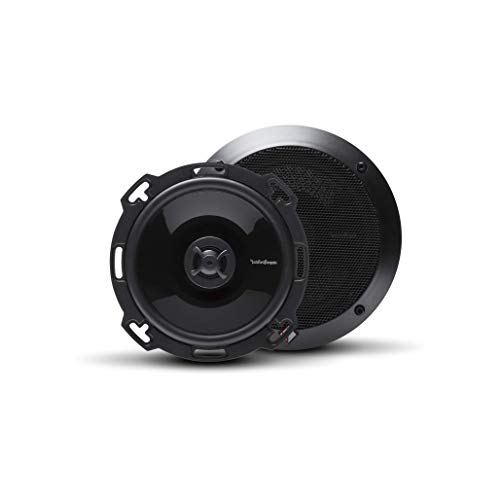
The Rockford Fosgate P16 Punch series consists of a pair of 6-inch 2-way coaxial full-range speakers crafted as a straightforward factory replacement for car audio systems. Designed for enthusiasts who demand superior sound without the hassle of custom fabrication, these speakers slot into standard mounting locations with minimal effort.
Targeted at daily commuters, road trippers, and entry-level car audio upgraders, the P16 shines in real-world scenarios like highway cruises or weekend getaways where factory speakers fall flat. Installation is user-friendly, complete with hardware, grilles, and an owner's guide featuring cutting templates, though measuring your spot beforehand is key for a perfect fit.
In performance tests based on specs, the 55W RMS and 110W max power handling deliver punchy output that elevates music enjoyment, from bass-heavy tracks to vocal-driven podcasts. The coaxial design ensures balanced sound staging right out of the box.
Overall verdict: A top pick for budget-conscious upgrades that punch above their weight, offering pro-level Rockford Fosgate reliability for transforming your ride's soundtrack.
The P16's 2-way coaxial setup provides full-range coverage with dedicated tweeters for crisp highs and robust midrange drivers for clear vocals, making it excel in mixed-genre playlists during long drives. Bass response is punchy for its size, handling 55W RMS without breakup at high volumes when paired with a solid head unit.
Volume levels scale impressively for cabin-filling sound, ideal for open-road blasting or quiet cabin listening. While not specifying wireless range, these wired speakers integrate seamlessly with factory or aftermarket amps for stable, interference-free performance.
Users appreciate the balanced signature that avoids muddiness, delivering detailed audio that makes every commute feel like a concert.
Sporting a sleek black finish, the P16 speakers boast Rockford Fosgate's legendary rugged build, designed to withstand daily car vibrations and temperature swings. At 5.05-inch mounting diameter and 1.93-inch depth, they fit most OEM locations, with included grilles adding a clean, factory-like look.
Weight is optimized for easy handling during installs, and the passive design draws power directly from your car's system for unlimited playback, no recharging needed. This eliminates battery concerns, focusing on durable construction that lasts through seasons of use.
Overall, the thoughtful design prioritizes seamless integration and longevity, perfect for American drivers tackling commutes, tailgates, or cross-country hauls.
Understanding Full-Range Audio Speakers and Coaxial Architecture
Audio reproduction relies on converting electrical energy into mechanical movement to create sound waves across the spectrum of human hearing. In audio systems, a full-range driver is engineered to cover the widest practical span of audible frequencies from a single speaker location. In automotive and space-limited environments, this concept most frequently takes the form of multi-way coaxial designs. Understanding these systems ensures that listeners select appropriate replacement units that fit their physical enclosures and match their amplifier power.
Defining Full-Range Speakers and Driver Mechanics
A true full-range speaker aims to reproduce the entire audible spectrum, typically spanning from approximately 20 hertz up to 20,000 hertz. In single-driver implementations, a single cone moves rapidly to handle high treble while simultaneously displacing air for lower bass notes. This approach avoids phase interference because all sound originates from a single point source. However, physical constraints make it difficult for one lightweight cone to deliver deep bass without compromising high-frequency clarity.
To overcome the physical trade-offs of a single cone, mobile audio systems commonly rely on coaxial full-range speakers. These units mount a secondary high-frequency driver directly over the center of a larger primary woofer cone. By integrating two distinct drivers onto a single basket, the speaker covers low, midrange, and high frequencies from one cutout location. This structural combination provides the acoustic benefits of multiple specialized drivers while preserving the simple mounting layout of a standard full-range unit.
How Coaxial Two-Way Full-Range Speakers Operate
Coaxial speakers operate by dividing incoming audio signals between their integrated drivers through an internal crossover network. In a two-way coaxial speaker, such as the Rockford Fosgate Punch series, a primary cone handles bass and midrange frequencies while an elevated tweeter manages upper treble. A simple passive capacitor or integrated filter directs high frequencies away from the main cone and into the tweeter. This division of labor prevents the larger cone from flexing unpredictably when attempting to reproduce rapid treble frequencies.
The physical architecture of a coaxial driver places the tweeter on a central bridge or post protruding through the woofer voice coil. Because both drivers share the same central axis, sound waves radiate outward from virtually the same acoustic center. This coaxial alignment improves imaging inside compact spaces such as vehicle cabins. Listeners receive clear vocal articulation and crisp cymbal hits without needing separate mounting locations for tweeters and mid-bass drivers.
Full-Range Coaxial Speakers Versus Component Speaker Systems
Choosing between full-range coaxial speakers and component systems represents one of the most critical decisions in system design. Coaxial speakers combine the woofer, tweeter, and basic crossover into a single drop-in package designed to fit standard factory cutouts. This all-in-one design significantly simplifies installation because owners do not need to cut custom holes or run complex external wiring harnesses. For everyday upgrades where ease of installation is paramount, coaxial designs offer reliable, balanced playback.
Component systems, in contrast, separate the woofer, tweeter, and crossover into distinct physical hardware units. This physical separation allows listeners to position tweeters higher on a dashboard or vehicle pillar, lifting the perceived soundstage closer to ear level. However, component setups demand significantly more installation labor, vehicle panel modification, and intricate cable routing. For many listeners upgrading factory sound, a well-engineered full-range coaxial driver provides substantial clarity improvements without requiring complex vehicle modifications.
Interpreting Power Handling: Continuous RMS Versus Peak Ratings
Evaluating speaker power specifications requires distinguishing between continuous root-mean-square wattage and peak power figures. Continuous power, commonly labeled as RMS, measures the steady electrical energy a speaker can safely handle over extended listening periods without thermal damage. For example, the Rockford Fosgate P142 provides a power handling rating of 30 Watts RMS, whereas larger models such as the P16 and P1650 handle up to 55 Watts RMS. Matching your amplifier or source head unit to these RMS figures prevents underpowering or overwhelming the speaker voice coil.
Peak or maximum wattage ratings indicate the brief bursts of power a speaker can tolerate during sudden musical transients. The P142 lists a 60 Watts Max rating, while both the P16 and P1650 specify 110 Watts Max capabilities. While peak numbers often appear prominently in marketing materials, audio system matching should always rely on continuous RMS ratings. Powering speakers with an amplifier that operates cleanly within the continuous RMS range ensures optimal dynamic response while avoiding severe waveform clipping that could overheat delicate internal windings.
Critical Dimensions, Mounting Depth, and Basket Fitment
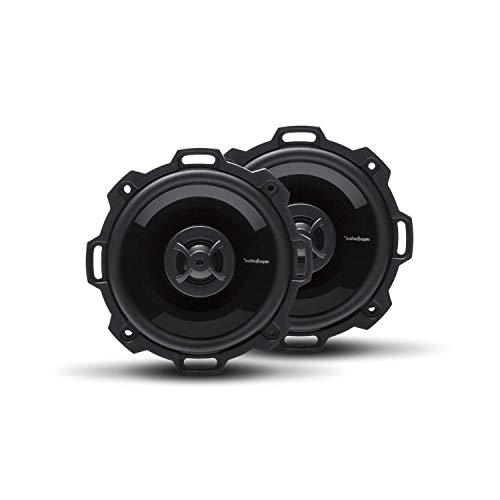
Physical dimensions represent the most frequent failure point when replacing vehicle audio drivers. Every vehicle door or speaker enclosure features distinct constraints regarding cutout diameter, rear basket depth, and front clearance beneath grilles. For instance, the compact Rockford Fosgate P142 requires a mounting diameter of 4.04 inches and a mounting depth of 1.75 inches. If your door cavity lacks adequate depth, the speaker magnet can collide with internal door mechanisms or window tracks when the glass is rolled down.
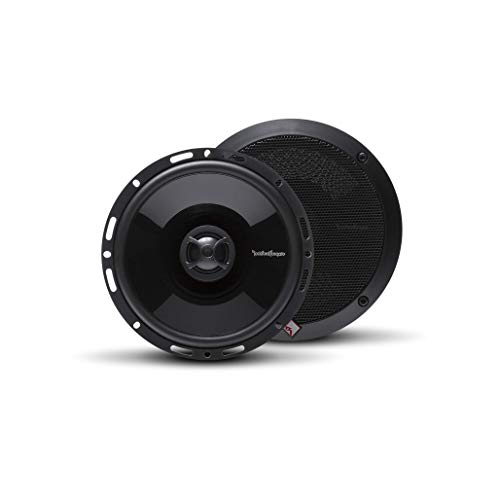
Larger drivers naturally demand more physical clearance within door panels and mounting baffles. The Rockford Fosgate P16 requires a mounting diameter of 5.05 inches with a depth of 1.93 inches, while the P1650 expands to a 5.51-inch mounting diameter and a 2.24-inch mounting depth. Measuring your exact mounting location prior to purchasing replacement hardware prevents expensive fitment surprises. Comparing these specifications against options like compact four inch speakers helps clarify how frame size directly dictates the physical feasibility of your installation.
Step-by-Step Installation Considerations for Vehicle Panels
Installing replacement full-range speakers begins with safely disconnecting your vehicle battery and carefully removing interior door cards or trim panels. Specialized plastic trim tools help release stubborn retaining clips without scratching delicate dashboard or door surfaces. Once the factory speaker is exposed, disconnecting the wiring harness and removing the original mounting screws reveals the bare cutout hole. Inspecting the cavity for moisture, debris, or rust ensures that the environment is suitable for new audio components.
Aligning the replacement speaker with existing screw holes determines whether custom drilling is required. If the factory mounting pattern does not align with the speaker frame, manufacturer guidelines recommend using a 1/8-inch drill bit to establish clean pilot holes for the included screws. Reading the included owner guide and utilizing supplied cutting templates helps prevent structural damage to door metal. Checking whether protective grilles are included, such as those supplied with the P16 and P1650, or omitted, as with the P142, dictates whether factory trim grilles must be retained.
Acoustic Limitations, Frequency Range, and Bass Expectations
A common misconception regarding full-range coaxial drivers is that they can replace the deep bass output of dedicated subwoofers. While full-range drivers capably handle lower midrange and standard midbass frequencies, their cone excursion and enclosure volume are inherently restricted. In mobile audio environments, vehicle doors function as imperfect acoustic enclosures that lack the airtight sealing required for sub-bass pressure. Expecting a four-inch or six-inch coaxial speaker to reproduce sub-bass frequencies below 50 hertz typically leads to listener disappointment.
Listeners seeking deep low-end punch often supplement full-range door speakers with specialized sub-bass hardware. When exploring speakers engineered for lower bass reproduction, you quickly discover that dedicated low-frequency drivers utilize heavier voice coils and larger cones to displace substantial air. Integrating full-range coaxial speakers with a dedicated subwoofer allows each driver to focus on its intended frequency band. This separation ensures that vocals, guitars, and brass remain distinct and clear while the low end remains tight and impactful.
Diagnosing Common Performance Issues and Audio Distortion
Sound degradation after installing new full-range speakers typically stems from installation errors rather than defective hardware. One common problem is acoustic cancellation caused by incorrect wiring polarity. If the positive and negative speaker leads are reversed on one side of a stereo pair, the two speakers will work out of phase. This phase mismatch cancels out midbass frequencies, leaving the audio sounding thin, hollow, and detached from the center of the listening space.
Mechanical buzzing or rattling provides another frequent diagnostic challenge during post-installation testing. Vibrations often occur when speaker baskets are fastened unevenly against irregular metal surfaces, twisting the frame and pinching the voice coil. Loose mounting screws or unsecured wire harnesses tapping against interior plastic panels can also create annoying rattles at specific volume levels. Verifying that all mounting hardware is torqued securely and applying closed-cell foam damping material around the speaker flange helps isolate unwanted mechanical noise.
Electrical Matching and Source Signal Considerations
Connecting replacement full-range speakers to a factory head unit or an aftermarket amplifier requires careful attention to electrical resistance and clean source signals. Most automotive coaxial speakers operate at a nominal impedance of 4 ohms, matching the standard output stage of factory head units. Supplying clean, unclipped audio signals from the source unit ensures that internal voice coils operate within their designed thermal limits. If a factory head unit produces high harmonic distortion at elevated volumes, even robust aftermarket speakers cannot mask the resulting harshness.
Adding an external amplifier provides cleaner headroom and allows speakers to reach their full dynamic potential without straining. Head units typically output modest continuous power, often falling below the RMS potential of robust drivers such as the Rockford Fosgate P16 or P1650. An outboard amplifier delivering clean RMS power close to the speaker rating delivers crisper transient attack and tighter midbass control. Setting amplifier input sensitivity correctly prevents pre-amp clipping, preserving delicate tweeter voice coils while ensuring reliable audio reproduction.
Practical Verification and System Tuning Takeaways
Completing a speaker installation requires structured audio verification before reinstalling interior door cards and trim panels. Powering on the head unit at low volume allows you to verify that each driver receives signal without unusual crackling or hiss. Gradually adjusting the left-to-right balance control confirms that both channels are operating at equivalent output levels. If one speaker sounds noticeably quieter or lacks midbass punch, wiring connections and amplifier gain settings should be rechecked immediately.
Playing familiar, well-recorded musical tracks provides a reliable benchmark for evaluating overall tonal balance and vocal clarity. Listen attentively to vocal sibilance and cymbal decay to confirm that integrated tweeters are delivering smooth, detailed high frequencies. Lower the vehicle windows completely to verify that the internal glass mechanisms do not contact the rear of the speaker magnet or wiring harness. Taking the time to execute these practical verification steps ensures your audio upgrade delivers dependable, high-fidelity sound for years to come.








Write Your Review
No reviews yet. Be the first to share your experience!