


Compact wireless audio gear often struggles to reproduce rich, physical low frequencies because small enclosures face real acoustic constraints. Learning %how to make a bluetooth speaker have more bass% requires understanding both boundary physics and digital audio settings rather than simply pushing the master volume to maximum levels. Placing your speaker against solid walls or adjusting streaming equalizers can instantly unlock punchier low-end performance without forcing the internal amplifier into harsh distortion. Listeners seeking deeper resonance can also evaluate speakers designed for deep bass to understand how dedicated hardware handles low-frequency reproduction.
Many small drivers cannot physically displace enough air on their own to create room-shaking rumble across open spaces. Fortunately, smart physical positioning, surface coupling, and software tuning allow you to extract the fullest possible acoustic response from existing drivers and passive radiators. Whether you are using a compact desktop cylinder, an experimental vibration unit, or a high-output outdoor boombox, slight setup adjustments yield noticeable improvements. Mastering these acoustic techniques ensures you get clean, articulate low frequencies across every music genre.
Pros
- Versatile bone conduction creates fun, instrument-like sounds on everyday objects
- True wireless stereo elevates solo play to full surround experience
- Compact portability fits any bag for on-the-go creativity
- Strong Bluetooth compatibility with major phones and tablets
- Powers up to 115dB for room-filling volume on ideal surfaces
Cons
- Sound quality shines brightest on hollow surfaces, less impressive standalone
- Volume and tone vary by object thickness and material
- Requires two units for full stereo, single unit is mono only
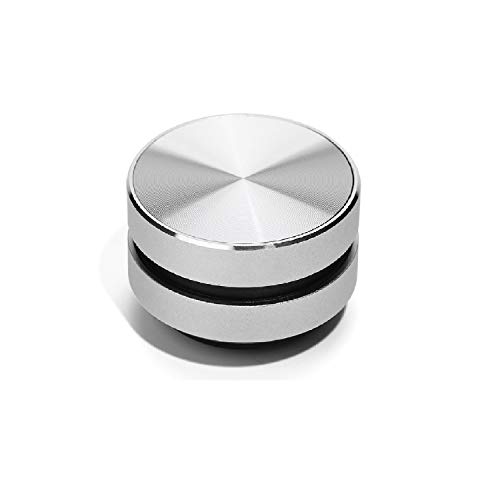
The Bigvapor Bone Conduction Speaker redefines portable audio by using vibration technology to turn any hollow object into a speaker. Stick it on a plastic box, guitar body, or even a dashboard, and enjoy a spectrum of sound effects that mimic different instruments. It's a game-changer for inventive users who want customizable audio without bulky gear.
Ideal for party hosts, travelers, or home tinkerers, this mini speaker pairs via Bluetooth with iPhones, Samsung devices, and tablets for music, calls, games, or podcasts. Two units connect automatically for true wireless stereo, delivering a surround experience perfect for tailgates or casual hangouts.
In real-world tests, it punches up to 115dB on thin hollow surfaces, creating lively vibes for small groups. While surface-dependent, its creativity factor makes it stand out from standard speakers. Verdict: A must-buy for fun-loving audio explorers seeking portable innovation.
Bone conduction tech vibrates surfaces for a dynamic sound signature that shifts from bassy thumps on buckets to crisp highs on glasses. Vocals stay clear for podcasts and calls, while volume hits 115dB on optimal thin objects, filling rooms without distortion.
Bluetooth range holds steady for stable streaming indoors or out, with TWS pairing two speakers for balanced 2.0 stereo. No companion app needed, but expect playful experimentation to dial in the best tone for movies or games.
FM radio adds versatility for live tunes, making it reliable for workouts where traditional speakers falter.
This ultra-mini design weighs next to nothing, making it the ultimate pocketable companion for hikes, beach days, or desk setups. Its rugged build handles daily tosses, though no official IP rating means keeping it dry during pool parties.
Portability reigns supreme, with a form factor that clings to surfaces via vibration alone, no clips required. Pair it with hollow finds like storage bins for extended play without bulk.
Battery life supports hours of vibes on a single charge, quick top-ups keep the party going. Focus on its lightweight freedom for all-day creativity without drain worries.


Pros
- Massive 100W output with dual subwoofers and tweeters for powerful stereo
- Exceptional 30-hour playtime on a single charge
- Stable Bluetooth 5.3 range up to 150 feet plus AUX option
- Vibrant LED lights and TWS for party-ready enhancements
- IPX6 waterproofing handles outdoor adventures confidently
Cons
- Bass-heavy profile may overpower mids in balanced listening scenarios
- Larger size from powerful drivers reduces ultra-portable convenience
- No companion app for sound customization or EQ adjustments
The LFS speaker is a 100W portable powerhouse designed for outdoor enthusiasts who demand loud, bass-driven audio on the go. With dual 3-inch subwoofers, tweeters, and passive radiators, it delivers beast-mode sound for beach bashes, camping trips, and backyard BBQs. Its IPX6 waterproof build and 30-hour battery make it a reliable companion for all-day adventures.
In real-world use, this speaker shines at high-volume parties where the deep bass shakes the ground and LED lights sync to the rhythm, creating an electric atmosphere. It pairs effortlessly with phones or laptops via Bluetooth 5.3, and TWS mode doubles the fun with stereo immersion from two units. Home users will appreciate its clarity for casual listening too.
While new to the market, its specs promise durability backed by a 24-month warranty. Ideal for tailgaters and party hosts, the LFS speaker earns a strong recommendation for anyone prioritizing power and playtime over compact size. Verdict: A top pick for lifestyle audio that survives the wild.
Bass lovers rejoice: the LFS speaker's 100W output, powered by two 35W subwoofers and double passive radiators, produces body-thumping lows that dominate at beach or pool parties. DSP technology ensures zero-distortion clarity even at max volume, with tweeters handling crisp highs for well-rounded stereo sound.
Vocal clarity stays strong in mids during podcasts or vocals, though the bass emphasis suits EDM and hip-hop best. Bluetooth 5.3 offers rock-solid connectivity up to 150 feet, far surpassing typical speakers, with instant pairing and AUX fallback for wired stability.
Volume levels rival bigger boomboxes, filling open spaces without muddiness, making it a standout for immersive outdoor audio.
Rugged IPX6 waterproofing shrugs off rain, splashes, dust, and snow, perfect for poolside or beach use without worry. The boombox-style build includes a carry handle for easy portability to campsites or tailgates, though its power-packed drivers add some heft for true on-the-go treks.
A massive rechargeable battery delivers a legit 30 hours of playtime at moderate volumes, outlasting weekend festivals. Charging time supports quick top-ups, keeping the party going with minimal downtime.
Multi-colored LED lights add flair without bulk, and the overall design balances toughness with style for American outdoor lifestyles.
Acoustic Techniques and Setup Strategies to Maximize Speaker Bass
Boosting the low-end performance of a wireless audio device begins with acoustic physics rather than arbitrary software boosts. Portable speakers rely on relatively small transducers that face physical aerodynamic limitations when reproducing sound waves below one hundred hertz. By altering boundary placement, matching vibration surfaces, calibrating source equalizers, and taking advantage of passive radiator dynamics, you can significantly enhance perceived low-frequency punch. Applying these targeted adjustments helps you bypass the thin playback common on compact systems.
Boundary Loading and Room Placement for Acoustic Bass Gain
Boundary loading is an effective, zero-cost method for increasing perceived low-end output from any wireless audio system. When a speaker operates out in the open, low frequencies radiate omnidirectionally across three hundred and sixty degrees, diluting acoustic energy. Placing the unit against a rigid back wall confines that energy into a hemispherical pattern, concentrating low-end output forward into the room. This physical shift increases perceived bass volume by roughly three decibels without demanding extra amplifier power.
Moving the enclosure into an interior room corner amplifies this acoustic boundary effect even further. Corner boundary loading forces sound waves into a tight ninety-degree reflective funnel, creating natural acoustic amplification for sub-bass and mid-bass frequencies. Listeners who keep their audio units sitting on open patio tables or kitchen islands miss out on this structural boost. Shifting the unit just inches from a corner immediately thickens kick drums and synth basslines.
The construction material behind and beneath the speaker also alters low-frequency clarity. Solid materials such as brick, dense drywall, stone countertops, and thick hardwood reflect sound waves cleanly back toward the listener. Soft materials like thick curtains, plush sofas, or lightweight hollow shelves absorb or rattle under low frequencies, muddying the sound profile. Selecting a dense, rigid boundary ensures that reflected bass remains articulate and well-defined rather than hollow or boomy.
Equalizer Calibration and Source-Side Audio Adjustments
Adjusting the internal equalizer on your smartphone, tablet, or streaming app offers direct control over frequency distribution. Popular streaming platforms like Spotify, Apple Music, and Amazon Music include built-in multi-band equalizers that allow manual frequency shaping. Boosting frequency sliders between sixty hertz and one hundred and twenty hertz adds warmth and body to bass-heavy music tracks. Avoid raising bands below forty hertz excessively, as small portable drivers rarely reproduce sub-audible tones cleanly.
Subtractive equalization is frequently more effective than simply boosting low-frequency sliders to maximum capacity. When you boost low bands too aggressively, digital signals easily exceed ceiling limits, forcing automatic limiter circuits into heavy compression. Instead of raising the low-end sliders to the maximum, try slightly dipping the mid-range frequencies around one kilohertz and three kilohertz. This subtractive adjustment preserves digital headroom while allowing the natural bass energy of the mix to stand out prominently.
Disabling aggressive volume-normalization features on your playback device can also rescue suppressed dynamic range. Certain audio normalization algorithms flatten dynamic peaks across diverse playlists, which robs bass notes of their natural punch. Setting your streaming application to stream audio at maximum resolution ensures clean transient response without lossy compression artifacts. Combining high-bitrate playback with thoughtful equalizer shaping guarantees that your speaker receives an uncompromised audio signal.
Surface Coupling and Exploiting Mechanical Resonance
Mechanical energy from speaker drivers travels directly into resting surfaces through vibration transfer. While conventional high-fidelity speakers isolate enclosures to prevent cabinet coloration, small portable audio units can actually benefit from resting on resonant furniture. Placing your speaker on a hollow wooden desk, a rigid cabinet top, or a storage chest allows physical vibrations to excite the larger surface area. This contact turns the furniture itself into an acoustic baffle, providing deeper tonal warmth and tactile feedback.
Specialized bone-conduction transducers take this mechanical coupling principle to an extreme degree. For instance, the Bigvapor Bone Conduction Speaker relies entirely on physical contact with hollow objects rather than a conventional cone diaphragm to project sound. Affixing this mini transducer to a hollow plastic bucket, a corrugated cardboard box, or an acoustic guitar body turns those lightweight objects into functional soundboards. Different materials yield drastically different low-frequency signatures, letting you experiment with varied enclosures to achieve custom bass resonance.
Regular portable speakers also exhibit noticeable surface interactions depending on their footings and base design. Rubberized base pads help prevent unwanted buzzing rattles while still transferring primary low-frequency vibrations into solid tabletops. If you notice an unpleasant vibrating rattle during heavy bass passages, place a thin mousepad or silicone mat beneath the speaker chassis. This dampens harsh high-frequency chassis buzz while still allowing deep lower-mid frequencies to couple smoothly with the resting surface.
Passive Radiator Dynamics and Enclosure Orientation
Many modern portable enclosures rely on passive radiators rather than open bass reflex ports to generate low-frequency extension. A passive radiator functions as an unpowered diaphragm that vibrates in direct sympathy with the internal air pressure created by active drivers. For example, the Cambridge Soundworks OontZ Cylinder uses a dedicated passive bass radiator alongside twin precision stereo drivers to deliver fuller low-end response. Because these radiators require open physical clearance to move air, their placement orientation directly dictates how much bass you hear.
Obstructing the passive radiator against a couch cushion or laying the speaker flat on its radiator face destroys bass efficiency immediately. If your cylindrical or rectangular speaker features side-firing or bottom-mounted passive radiators, ensure those diaphragms maintain at least two to three inches of open clearance. Elevating a downward-firing radiator slightly or pointing side radiators toward reflective walls lets the moving acoustic wave develop without mechanical restriction. Keeping the diaphragm unobstructed ensures maximum excursion and preserves low-end depth.
Higher-output party boomboxes incorporate even larger multi-driver arrays to handle significant air displacement. The Youngwolge LFS 100W speaker utilizes two three-inch thirty-five-watt subwoofers paired with double passive bass radiators to project impactful low frequencies across outdoor areas. When operating speakers with dual passive radiators, aligning the unit horizontally on a flat, dense surface provides balanced acoustic reflection for both bass elements. Proper physical alignment ensures that both passive cones work in acoustic symmetry, preventing phase cancellation and preserving low-frequency pressure.
Acoustic Summation Through True Wireless Stereo Pairing
Linking two compatible wireless units together creates a dramatic increase in available low-frequency headroom through acoustic summation. When two speakers reproduce the identical low-frequency signal in close proximity, their sound pressure waves combine in phase. This constructive interference yields up to a three to six decibel increase in perceived acoustic bass output compared to running a solitary speaker. Doubling the active driver surface area moves twice as much air, which fundamentally expands low-frequency physical presence.
True Wireless Stereo (TWS) pairing options are integrated directly into many contemporary models. Both the Cambridge Soundworks OontZ Cylinder and the Bigvapor Bone Conduction Speaker support wireless linking between two identical units. Setting two speakers up as a synchronized stereo pair provides discrete left and right separation while doubling the low-frequency driver displacement. Listeners seeking room-filling presence can also review outdoor speakers with subwoofers to see how dedicated subwoofers pair with multi-driver setups for high-volume open-air events.
Placement spacing plays a critical role when operating paired speakers for maximum low-end impact. Placing the two linked speakers roughly four to six feet apart along the same wall maintains cohesive stereo separation without causing phase cancellation in lower registers. If units are spaced too far apart across opposing corners, bass waves can collide out of phase, creating dead zones where low notes drop out. Keeping paired units along the same structural boundary maintains coherent low-frequency summation and delivers consistent bass punch.
Volume Thresholds and Digital Signal Processing Limits
Digital Signal Processing (DSP) chips inside modern wireless speakers actively monitor amplifier load and driver excursion to prevent hardware failure. When you push a small portable speaker past seventy or eighty percent volume, the internal DSP typically engages aggressive dynamic limiters. These limiters systematically attenuate low frequencies to protect small drivers from over-excursion and prevent audible acoustic distortion. Consequently, pushing master volume to one hundred percent often makes music sound harsh, bright, and distinctly hollow rather than deeper.
Operating your audio gear within the sixty-five to seventy-five percent volume range preserves the intended tonal balance. In this operating window, the internal amplifier delivers clean wattage without triggering harsh limiter threshold reductions. Basslines retain their natural dynamic envelope, and kick drums maintain satisfying transient snap. If you require higher acoustic volume in a broad gathering space, investing in larger hardware designed for large area Bluetooth speakers is far more effective than overdriving a compact unit past its physical limits.
Maintaining adequate battery charge also plays an overlooked role in low-frequency stability. When internal lithium-ion battery cells drop below twenty percent capacity, onboard battery management circuits often throttle amplifier output voltages to extend remaining runtime. This automatic power throttling reduces the electrical current available for demanding low-frequency transients, causing bass notes to sound noticeably flatter. Keeping your speaker charged above fifty percent ensures the internal amplifier rail receives steady voltage for full low-end reproduction.
Wired AUX Connections and Codec Compression Factors
Wireless Bluetooth transmissions rely on lossy compression codecs like SBC or AAC, which discard subtle audio data to stay within bandwidth constraints. While modern Bluetooth 5.3 and 5.4 connections provide stable wireless range, heavy compression algorithms can soften fast bass transients and reduce low-end definition. In contrast, using an analog 3.5 millimeter auxiliary audio cable bypasses wireless compression altogether. Models like the Youngwolge LFS 100W feature dedicated AUX inputs that accept direct, uncompressed analog signals from source DACs, preserving transient punch.
Analog auxiliary playback also eliminates wireless latency and minimizes digital processing overhead on compatible source devices. When playing music through a wired auxiliary cable, your smartphone or dedicated media player delivers an uncompressed line-level signal straight into the speaker amplifier stage. This direct electrical path ensures that fast synth basslines, double-kick metal drums, and intricate acoustic bass solos maintain sharp definition. Bypassing Bluetooth encoding steps helps prevent the muddy mid-bass overhang that occasionally occurs over congested wireless frequency bands.
If you rely purely on wireless playback, maintaining a close, unobstructed line of sight between your phone and speaker preserves codec stability. When Bluetooth connections encounter physical interference from walls or competing wireless signals, source devices automatically downgrade connection bitrates to avoid playback stutter. This automatic bitrate drop compresses high and low frequency extremes first, thinning out your soundstage. Keeping your source device within clear wireless range ensures the connection remains at top transmission bitrates for articulate audio quality.
Hardware Specifications That Determine Real-World Bass Potential
Even the most creative acoustic placement cannot overcome fundamental hardware boundaries if your speaker lacks sufficient driver displacement. A mini speaker equipped with a single one-inch full-range transducer simply cannot produce sub-bass frequencies below eighty hertz regardless of room positioning. When evaluating audio hardware, pay close attention to dedicated woofer dimensions, passive radiator surface area, and amplifier output capabilities. Larger driver cones move significantly more cubic centimeters of air per cycle, providing the physical foundation required for authentic bass impact.
Comparing different hardware tiers illustrates how driver architecture dictates low-end performance. Ultra-compact units like the Bigvapor Bone Conduction Speaker rely entirely on external objects for resonance, making them versatile experimental options for varied surfaces. Mid-sized cylinders like the Cambridge Soundworks OontZ Cylinder utilize fourteen watts of power and specialized passive radiators for everyday balanced desktop listening. High-power outdoor units like the Youngwolge LFS 100W combine dedicated three-inch subwoofers with dual radiators to generate deep, body-shaking bass across open environments without distortion.
Achieving fuller, punchier bass from your Bluetooth speaker is an exercise in combining proper room placement, clean source equalization, and sensible volume management. Positioning your enclosure near solid wall corners, keeping passive radiators unobstructed, and avoiding high-volume DSP limiting will instantly transform your daily listening experience. Match these acoustic strategies to your hardware’s physical design, and you will consistently enjoy rich, balanced low frequencies across every music playlist.




Write Your Review
No reviews yet. Be the first to share your experience!