


Planning a modern home audio setup often begins with figuring out your overall hardware investment and room coverage needs. When curious listeners ask how much are sonos speakers, the answer depends heavily on whether you need a compact bookshelf unit, a travel-friendly outdoor companion, or a dedicated streaming component to power existing passive loudspeakers. Sonos organizes its lineup across distinct listening roles, ranging from entry-level wireless speakers to advanced spatial audio hardware and custom architectural amplifiers. Understanding these categories allows you to map out your budget without paying for amplification channels, voice microphones, or weatherproofing features that your living space might not even require.
Investing in a connected audio ecosystem also means deciding between portable utility and permanent room integration. While listeners often compare these units against standalone waterproof Bluetooth designs, Sonos models emphasize unified Wi-Fi streaming, room-tuning software, and seamless multiroom synchronization over simple point-to-point wireless playback. That added software foundation influences hardware valuation across every tier, from entry-level standalone mono drivers to multi-driver home theater surrounds. Examining how individual features impact real-world pricing gives you a clearer path toward building a cohesive, scalable audio system for your home.

Pros
- Zero listening microphones for complete privacy in sensitive living spaces
- Impressive stereo separation and low-end punch from a compact desktop footprint
- Supports both high-res WiFi streaming and universal Bluetooth connectivity
- Effortless multiroom synchronization with existing Sonos soundbars and speakers
Cons
- Requires a proprietary Sonos adapter (sold separately) for 3.5mm line-in connections
- No built-in voice assistant capabilities for smart home voice commands
- Must remain tethered to a wall outlet as it does not include a battery
The Sonos Era 100 SL carries forward the legacy of the beloved Sonos One SL, reimagined with next-generation acoustic architecture and modern connectivity. Designed intentionally without built-in microphones, this speaker caters to audiophiles and privacy-minded consumers who want Sonos ecosystem integration without ambient voice listening in private bedrooms, home offices, or dens. Its crisp white finish and modern silhouette effortlessly blend into high-end decor while delivering substantial sonic upgrades over previous generations.
Setup is virtually effortless via the Sonos app on iOS or Android. Within minutes of plugging in, the Era 100 SL joins your local network, unlocks seamless streaming via Apple AirPlay 2, Spotify Connect, and the Sonos app, and introduces direct Bluetooth pairing for guests. For existing Sonos system owners, incorporating the Era 100 SL into an existing multiroom setup or assigning two units as dedicated rear surround channels for a soundbar takes only a few taps.
In everyday use, the speaker shines across diverse environments. As a desktop companion, it provides non-fatiguing, wide-dispersion sound that stays engaging even at low, conversational volumes. When pushed harder during social gatherings, it easily fills mid-sized rooms without noticeable distortion or dynamic compression, handling complex musical passages with composed composure.
Ultimately, the Sonos Era 100 SL is a standout performer in the compact wireless speaker category. By stripping away voice microphones in exchange for peace of mind, while simultaneously upgrading the audio driver array, Sonos has produced an accessible, premium speaker that balances convenience, acoustic precision, and privacy.
Under the grille, the Sonos Era 100 SL features a major acoustic redesign. Unlike traditional single-tweeter mono speakers in this class, the Era 100 SL incorporates two angled tweeters coupled with custom waveguides. This layout physically directs high frequencies to the left and right, creating a convincingly wide stereo soundfield from a single cabinet. Highs sound airy and articulate, rendering cymbals, acoustic strings, and breathy vocals with crisp precision without tilting into harsh sibilance.
Handling the lower registers is an enlarged midwoofer powered by custom class-D digital amplifiers. The driver delivers rich, textured midrange reproduction and surprisingly deep, resonant bass. Kick drums hit with authoritative punch, and basslines remain clean and defined rather than turning into muddy low-end boom. Trueplay tuning uses your mobile device to measure room reflections, smoothing out standing waves and room nodes to ensure flat, accurate sound reproduction whether placed on an open shelf or tucked against a drywall corner.
The Era 100 SL features a sleek cylindrical form factor measuring 4.72 inches deep, 5.19 inches wide, and 7.22 inches high, weighing just under 4.5 pounds. The enclosure is constructed from premium matte-finish polycarbonate with micro-perforated acoustic grilles. The top surface houses intuitive capacitive touch controls for play, pause, track skipping, and volume sliding, keeping the interface clean and tactile without physical buttons or microphone toggles.
Connectivity options have been modernized beyond standard WiFi streaming. The speaker supports dual-band WiFi 6 alongside Bluetooth 5.0 for quick playback from any phone, tablet, or laptop. Around the rear, a multi-purpose USB-C port provides optional line-in capabilities when paired with the Sonos Line-In Adapter, allowing you to connect a turntable, preamp, or CD player directly to your Sonos wireless network. The unit operates on standard 100-240V AC power via a flush-fitting, detachable power cable.

Pros
- Exceptional clarity and bass from precision drivers
- Rugged IP67 build survives water and dust exposure
- 10-hour rechargeable battery with fast USB-C or wireless charging
- Seamless Bluetooth and WiFi for stable, versatile connectivity
- Tactile buttons prevent accidental presses during active use
Cons
- Full features require WiFi and Sonos app setup
- No auxiliary input for wired connections
- Battery life shortens at max volume outdoors
The Sonos Roam 2 is a powerhouse portable speaker that brings premium Sonos audio to your on-the-go lifestyle. Ultra-compact and lightweight, it packs precision-engineered drivers for impressive clarity and bass that defies its size, making it perfect for beach outings, tailgating, or backyard barbecues.
Designed for active users, it features IP67 waterproof and dustproof protection, ensuring it thrives in harsh conditions like splashes, sand, or dust storms. With up to 10 hours of playtime, hands-free voice control via Alexa or Sonos Voice Control, and automatic Trueplay tuning, it adapts effortlessly to new environments for optimal sound.
In real-world use, the Roam 2 shines with stable Bluetooth connectivity and the option to expand into a multiroom system over WiFi. Its versatile design and tactile controls add practicality for everyday adventures. Verdict: A top pick for quality-conscious Americans seeking rugged, high-fidelity portable audio.
Precision drivers deliver deep, size-defying bass and exceptional vocal clarity, filling outdoor spaces with rich, balanced sound. Automatic Trueplay fine-tunes acoustics in real-time for every setting, from echoing patios to quiet home offices.
Volume reaches party levels without distortion, and Bluetooth range stays reliable up to 30 feet even through obstacles. WiFi mode enhances stability for multi-speaker setups, while voice controls keep hands-free operation smooth during hikes or workouts.
Overall, it excels in dynamic playback, making it a go-to for bass lovers and audiophiles who demand portability without compromise.
Built rugged with IP67 waterproof and dustproof ratings, the Roam 2 survives full submersion, drops, and dusty trails, ideal for beach days or construction sites. Its ultra-compact, lightweight form stands upright or lies on its side for flexible placement.
Tactile buttons offer intuitive control without accidental presses, and it charges via included USB-C cable or any compatible wireless pad for convenience on the road. The rechargeable battery provides up to 10 hours of playback, though real-world use at high volumes may trim it to 8 hours.
Charging takes about 2 hours to full, keeping downtime minimal for non-stop adventures.

Pros
- Outstanding three-dimensional spatial audio and Dolby Atmos height projection
- Seamless integration into existing Sonos multiroom and home theater ecosystems
- Dual wireless streaming with both Wi-Fi and direct Bluetooth pairing
- Clear, non-fatiguing vocal clarity and detailed high-frequency separation
Cons
- Analog line-in and wired Ethernet connectivity require purchasing a separate proprietary adapter
- Unique hourglass cabinet design requires thoughtful placement away from enclosed bookshelves to avoid muffling up-firing drivers
- Dolby Atmos Music playback is limited to select streaming platforms such as Apple Music and Amazon Music
The Sonos Era 300 represents a ground-up revolution in standalone home audio, intentionally built from the inside out to handle spatial audio and Dolby Atmos Music. Rather than relying on simple stereo left-and-right projection, this speaker introduces an unconventional cinched acoustic architecture packed with six drivers designed to fire sound into three distinct dimensions. For listeners seeking a single-cabinet system that can faithfully reproduce object-based audio mixes, it marks a significant leap beyond traditional smart speakers.
In daily listening, the Era 300 shines as either a standalone living room focal point or as the ultimate surround companion in a dedicated home theater. Paired as dual rear channels with a Sonos Arc or Beam Gen 2, it delivers authentic height and side surround channels that bring cinematic blockbusters to life with remarkable precision. Setup remains true to the Sonos ecosystem: straightforward, intuitive, and enhanced by Trueplay room-tuning technology via iOS or Android devices.
Real-world streaming is fluid thanks to simultaneous Wi-Fi and Bluetooth connectivity. Whether streaming spatial tracks from Apple Music or podcasts via Bluetooth from a smartphone, the speaker maintains stable reception with zero stutter. While its shape requires ample clearance around the top and sides for optimal sound dispersion, the resulting ambient immersion easily fills medium to large open-concept rooms.
Overall, the Sonos Era 300 sets a new benchmark for consumer spatial audio. While analog purists will need to buy an external adapter for wired turntable playback, the breathtaking soundstage, effortless control, and forward-looking feature set make it an indispensable audio upgrade for modern entertainment spaces.
Acoustically, the Era 300 delivers an articulate and remarkably cohesive frequency response anchored by two custom woofers and four compression tweeters. Low-end frequencies are tight, punchy, and controlled, avoiding the boomy mud often found in compact wireless speakers while still providing substantial sub-bass depth for modern pop and electronic music. Midrange frequencies, especially vocals and acoustic instruments, sit cleanly in the center of the mix with natural timbre and lifelike clarity.
The defining acoustic achievement of the Era 300 is its spatial soundstage. By utilizing carefully calculated directional waveguides, the speaker directs high frequencies toward the ceiling and surrounding walls, creating a wide acoustic bubble that lets instruments float above and around you. Even when listening to standard stereo mixes, the speaker smartly upmixes audio to take advantage of the driver array, ensuring you get expansive, balanced fidelity no matter where you stand in the room.
Built with sustainability and acoustic physics at the forefront, the Era 300 features a distinct hourglass silhouette measuring 6.65 inches high, 6.65 inches deep, and 7.44 inches wide, weighing in at nearly ten pounds. The heavy-duty matte finish cabinet incorporates post-consumer recycled plastics and is engineered to minimize internal resonance. Capacitive touch controls line the top panel, including an intuitive volume slider, dedicated track-skipping zones, and a physical microphone disconnect switch on the back for enhanced privacy.
Under the hood, the speaker is powered by six custom Class-D digital amplifiers precisely tuned to the driver geometry. Physical I/O is streamlined around a multi-purpose USB-C port that accommodates auxiliary audio lines or Ethernet via the optional Sonos line-in adapter. On the wireless front, it supports dual-band Wi-Fi 6, Bluetooth 5.0, and Apple AirPlay 2, drawing continuous power from a standard detachable AC power cord without the need for an external power brick.

Pros
- Substantial 125W per channel power output drives low-efficiency 4-ohm and 8-ohm speakers with ease
- Effortless multi-room ecosystem integration through the rock-solid Sonos app and AirPlay 2
- Direct HDMI ARC connection provides an outstanding low-latency audio boost for movies and gaming
- Clean, modern aesthetic with intelligent fanless thermal cooling for silent operation
Cons
- Higher investment compared to standard non-streaming integrated stereo amplifiers
- Does not include a dedicated physical handheld remote control
- Lacks an integrated 1/4-inch or 3.5mm front-panel headphone jack
The Sonos Amp represents the premier nexus between classic high-fidelity analog audio and modern multi-room convenience. Engineered for audiophiles, smart-home installers, and entertainment enthusiasts, this component takes the passive speakers you already love, whether they are legacy floorstanding towers, custom in-ceiling architectural pairs, or rugged outdoor backyard monitors, and integrates them into the award-winning Sonos ecosystem.
In practical day-to-day use, the Sonos Amp excels at versatility. Hooking up a turntable via the analog line-in allows you to spin vinyl in the living room while simultaneously broadcasting the record to wireless Sonos speakers throughout the house. Connecting the Amp to your television via HDMI ARC transforms your primary two-channel stereo setup into a dynamic, dialogue-forward home theater stage that synchronizes effortlessly with your standard TV remote.
Managing playback through the Sonos app is remarkably fast, offering unified search across virtually every major streaming service and high-resolution local library. When paired with Sonos Architectural speakers by Sonance, the system unlocks Trueplay room-tuning technology to optimize acoustic delivery specifically for the dimensions and materials of your space.
Ultimately, the Sonos Amp stands out as an indispensable component for anyone looking to modernize high-end passive speakers without sacrificing sound quality or physical aesthetic. It delivers reliable power, intuitive multi-source versatility, and bulletproof wireless connectivity that elevate home entertainment systems to modern standards.
Acoustically, the Sonos Amp punches far above its compact weight class by delivering an assertive 125 Watts per channel into 8-ohm loads. This generous power reserve translates into instantaneous transient response and tight, authoritative bass control. Low frequencies arrive with impact and physical weight, entirely free from the muddy overhang common in lower-wattage lifestyle receivers.
The midrange presentation is clean, articulate, and decidedly neutral, allowing vocals and acoustic instruments to maintain their natural timbre without artificial colorations. High frequencies benefit directly from the Amp's direct digital processing path, which bypasses superfluous analog conversions to provide pristine, airy treble extension with zero noticeable background hiss or static.
When utilized for television and film, the stereo imaging creates a broad, immersive soundstage that extends well past the physical boundaries of your speakers. Explosions, orchestral scores, and subtle ambient soundscapes are reproduced with broad dynamic contrast, while dialogue remains anchored and legible even during action-packed scenes.
The Sonos Amp is housed in a clean, minimalist matte black enclosure measuring just 2.52 by 8.54 by 8.54 inches, weighing a solid 4.63 pounds. Its deliberate square profile makes it perfectly suited for standard AV rack configurations, side-by-side installations, or stealth placement on an open media credenza. An advanced internal heatsink optimizes passive airflow, effectively drawing heat away from internal Class-D amplifier modules without the need for noisy cooling fans.
Hardware connectivity is both streamlined and robust. The rear panel accommodates custom threaded banana-plug speaker binding posts, a dedicated HDMI ARC port for low-latency TV audio, dual Ethernet ports for networked installations, and an analog stereo RCA line-in with auto-detect capabilities. Dual-band Wi-Fi and Apple AirPlay 2 protocols guarantee seamless wireless performance across your home network.
For deep bass extension, the Amp includes an auto-detecting mono RCA subwoofer output. When a powered subwoofer is plugged in, the system automatically detects the connection and applies a clean digital crossover adjustable between 50 Hz and 110 Hz via the Sonos app, efficiently relieving your main stereo speakers of low-frequency stress.
Pros
- Hardware-level microphone exclusion provides guaranteed privacy for sensitive rooms.
- Dual-tweeter design delivers noticeably wider stereo dispersion than previous generations.
- Supports both high-res WiFi streaming and convenient Bluetooth connectivity.
- Compact footprint fits neatly on nightstands, bookshelves, and kitchen counters.
- Simple app-guided setup and integration into existing Sonos ecosystems.
Cons
- Requires constant AC wall power and does not contain an internal rechargeable battery.
- Connecting analog devices like turntables requires a separate USB-C line-in adapter.
- Lacks voice assistant capabilities due to the intentional absence of microphones.
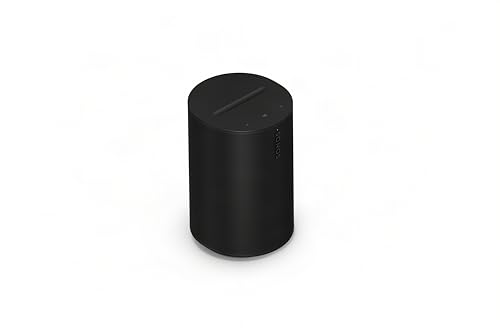
The Sonos Era 100 SL reimagines compact wireless home audio by delivering the impressive acoustic architecture of the renowned Era lineup while deliberately eliminating internal microphones. Engineered for privacy-minded listeners, home offices, and bedroom suites, this speaker brings refined modern aesthetics and effortless multi-room audio integration without smart assistant listening devices in your private sanctuary.
Setting up the Era 100 SL takes only minutes through the intuitive Sonos app, which walks you through network connection and acoustic calibration. In daily listening, the speaker performs impeccably across genres. It reproduces delicate acoustic picking with crisp realism and fills small to mid-sized rooms with effortless presence. The addition of low-latency Bluetooth connectivity makes it easy for visiting guests to stream audio without needing access to your secure local WiFi network.
Beyond standalone operation, the Era 100 SL excels when integrated into a broader home theater or multi-room layout. Pairing two of these units with a Sonos soundbar creates an immersive rear surround array with exceptional spatial detail. For listeners seeking pristine sound quality, rock-solid wireless stability, and complete privacy, the Era 100 SL stands out as a superb domestic audio solution.
Acoustically, the Era 100 SL represents a significant evolutionary step over traditional single-driver wireless speakers. By angling two high-output tweeters in opposing directions and pairing them with custom waveguides, the speaker pushes highs smoothly across the listening area, creating an expansive stereo sweet spot that defies its small stature. Vocals remain centered, rich, and articulate, avoiding the boxy sound common in compact enclosures.
The low-frequency reproduction is anchored by an enlarged midwoofer powered by dedicated Class-D digital amplifiers. Bass response is remarkably authoritative, delivering tight kicks and warm basslines without buzzing or port chuffing. With Sonos Trueplay tuning enabled, the speaker actively measures room reflections and adjusts the frequency curve to ensure tight, balanced low-end performance whether positioned out in the open or right against a wall.
Measuring 4.72 by 5.19 by 7.22 inches, the Era 100 SL showcases a refined cylindrical silhouette wrapped in an acoustically transparent, non-resonant polycarbonate enclosure. The smooth matte black finish blends into contemporary home decor, while top-mounted capacitive touch controls offer immediate volume adjustments, playback scrubbing, and track navigation without requiring your smartphone.
Hardware interfaces include modern dual-band WiFi and Bluetooth capabilities for flexible wireless operation across multiple sources. On the back, a multi-purpose USB-C connection allows you to route analog turntables, CD players, or auxiliary equipment directly into your Sonos network via an optional line-in adapter. Because this speaker is engineered for consistent domestic performance, it draws continuous power from an included AC cable rather than a temporary battery pack.
Understanding Sonos Speaker Pricing, Hardware Tiers, and System Investment
Investing in Sonos hardware involves choosing between distinct functional tiers that cater to different listening environments, physical footprints, and acoustic demands. The overall financial commitment varies significantly based on whether a listener selects a compact portable unit, an entry-level home bookshelf speaker, an advanced spatial audio model, or a dedicated component amplifier. Rather than offering one-size-fits-all hardware, the brand structures its ecosystem so users can start with a single standalone zone and expand over time. Understanding what drives these distinct pricing brackets allows buyers to allocate their audio budget toward the specific driver configurations, connectivity features, and room roles they actually need.
The Entry-Level Standalone Tier: Compact Bookshelf Audio
The entry-level stationary bracket represents the most accessible gateway into a whole-home wireless audio network. Within this segment, products like the Sonos Era 100 SL deliver rich, balanced stereo sound by utilizing dual angled tweeters paired with a dedicated midwoofer. This acoustic layout creates genuine high-frequency separation from a single compact enclosure, making it a capable choice for kitchens, bedrooms, and home offices. By focusing strictly on audio playback without built-in microphone arrays, this tier provides a lower cost barrier for privacy-conscious listeners who do not require voice-assistant features.
Hardware in this introductory category benefits from modern connectivity options that were historically absent from entry-level network speakers. Listeners can stream directly over local Wi-Fi networks, connect via Bluetooth when guests visit, or utilize a line-in connection through an optional auxiliary adapter. The inclusion of Trueplay tuning ensures that the speaker analyzes the unique reflective boundaries of the room to adjust its acoustic output accordingly. For many households, deploying a pair of these compact units in stereo creates a wide listening stage that rivals larger traditional speaker setups without cluttering valuable shelf space.
The Portable and Outdoor Tier: Battery-Powered Versatility
Portable network speakers occupy a specialized tier designed to bridge the gap between indoor multiroom streaming and outdoor adventure. Hardware such as the Roam 2 packages precision-engineered drivers into an ultra-compact, lightweight frame that can stand upright on a patio table or lay flat on a picnic blanket. To survive real-world travel, this tier incorporates an IP67 waterproof and dustproof rating, ensuring the enclosure handles rain, splashes, and dirt without operational failure. The integrated rechargeable battery supplies up to ten hours of continuous playback, giving listeners dependable off-grid endurance away from power outlets.
What distinguishes this category from standard portable Bluetooth speakers is its dual wireless architecture and intelligent software tuning. When connected to a home network, the speaker operates as a fully synchronized multiroom zone, and it automatically transitions to Bluetooth playback when taken beyond network range. Automatic Trueplay technology continuously recalibrates the frequency output based on the surrounding environment, whether resting against an outdoor wall or sitting on an open lawn. Tactile buttons prevent accidental presses during transport, while integrated voice control provides hands-free management when relaxing outdoors.
The Spatial Audio and Surround Tier: Multi-Driver Architectural Design
Moving into the mid-to-upper standalone tier introduces advanced acoustic engineering tailored for immersive spatial audio and Dolby Atmos playback. The Sonos Era 300 exemplifies this hardware classification by housing six optimally positioned drivers directed forward, sideways, and upward. Custom waveguides disperse sound waves across walls and toward the ceiling, creating an expansive, multidimensional soundstage from a single standalone chassis. Listeners who prioritize modern spatial music formats or high-fidelity multichannel recordings find that this multi-driver complexity warrants its higher hardware valuation.
Beyond standalone listening, this spatial audio tier serves a critical secondary function as high-performance rear surround channels in a larger living room theater. When paired with compatible home soundbars like the Beam or Arc, the upward-firing and lateral drivers create an enveloping, three-dimensional movie experience. Streaming operates smoothly over Wi-Fi, while Bluetooth support and auxiliary line-in compatibility maintain source versatility for turntables and digital media players. This dual identity as both a high-fidelity standalone music speaker and an advanced theater component makes it a flexible long-term investment.
The Component and Amplification Tier: Powering Passive Systems
The dedicated component tier represents the highest individual hardware investment in the lineup because it bridges traditional hi-fi equipment with modern streaming software. The Sonos Amp acts as a powerhouse designed to drive existing passive bookshelf, tower, in-ceiling, or outdoor architectural speakers. By utilizing direct digital input processing, the amplifier preserves signal purity without unnecessary analog conversion stages, resulting in clean, undistorted sound for music and television. This component is particularly appealing to homeowners who have already invested in premium architectural speakers and want to integrate them into a centralized streaming platform.
In addition to high-current speaker output, this amplification tier features specialized thermal management and versatile form-factor design. A custom-engineered heatsink optimizes airflow, allowing multiple units to be stacked in standard audiovisual equipment racks without overheating. The inclusion of an HDMI input enables seamless TV integration, providing high-fidelity stereo output for movies and gaming while supporting wireless surround speaker pairing. For extensive whole-home installations, combining this amplifier with architectural speakers delivers high-power audio across living rooms, patios, and entertainment spaces without cluttering interior decor with visible boxes.
Acoustic Architecture and How Driver Engineering Impacts Value
Evaluating speaker pricing requires an appreciation of the acoustic engineering concealed beneath the protective grilles. Traditional passive speakers rely on external amplifiers and internal passive crossover networks composed of capacitors and inductors to route frequencies between woofers and tweeters. In contrast, active streaming speakers feature dedicated, discrete internal class-D amplifiers individually paired to every single driver. This active design allows digital signal processing to control driver excursion, optimize crossover slopes in real time, and protect voice coils from destructive thermal clipping.
The physical complexity of the drivers also directly influences overall manufacturing and purchase costs. Compact two-way designs that utilize dual angled tweeters and an elliptical midwoofer require precise acoustic chambers to prevent internal standing waves from muddying vocal clarity. Step-up models incorporating multiple high-frequency compression drivers, dedicated mid-frequency cones, and upward-angled spatial drivers demand custom waveguide geometry to control room reflections. When buyers evaluate the cost of an active wireless speaker, they are purchasing a complete acoustic chain that includes custom transducers, precision amplification, and active digital processing.
Network Infrastructure, Connectivity, and Software Ecosystem Costs
Unlike basic wireless audio products that rely solely on point-to-point Bluetooth streaming, network-based audio hardware requires substantial ongoing software and protocol maintenance. Sonos units stream high-bandwidth audio directly over local Wi-Fi, pulling audio streams straight from cloud servers rather than draining the battery of a connected smartphone. This network architecture prevents phone notifications, ringtones, and incoming calls from interrupting household music playback. Managing multi-room audio synchronization across multiple rooms with sub-millisecond precision requires robust on-board microprocessors and continuous firmware optimization.
Connectivity options also shape the utility and cost balance across the current hardware generation. Modern iterations feature both Wi-Fi connectivity and Bluetooth pairing, giving users flexible access when streaming from guests’ mobile devices or playing stored local files. Users who want to integrate legacy analog sources, like vinyl turntables or external CD players, can utilize USB-C line-in adapters on supported models. Furthermore, proprietary software features like Trueplay tuning use acoustic measurement sweeps to correct room boundary reflections, delivering audio quality tailored specifically to your physical living environment.
Home Theater Integration and Multi-Room Expansion Math
Building a complete home entertainment system often begins with a single television soundbar and expands incrementally as budget allows. Integrating two wireless bookshelf speakers as rear surround channels transforms standard television audio into immersive multi-channel surround sound configurations without running long speaker cables across the room. Adding a dedicated wireless subwoofer further offloads low-frequency bass energy from the primary speakers, allowing the midwoofers and tweeters to reproduce dialogue and midrange detail with greater clarity. Because each piece communicates wirelessly over a dedicated local network, installation remains exceptionally clean and user-friendly.
The modular nature of this ecosystem means buyers do not need to purchase an entire multi-speaker home theater in a single transaction. A homeowner might start with a compact living room speaker for casual music listening, add a soundbar to the television several months later, and eventually group them together for entertaining. This modular flexibility reduces initial financial pressure while preserving a clear upgrade path toward whole-home audio distribution. Grouping rooms together through a unified smartphone application lets users play synchronized music across five different zones or stream independent audio tracks in separate bedrooms simultaneously.
Physical Placement, Room Acoustics, and Accessory Investments
Achieving balanced sound reproduction requires careful consideration of where each speaker sits relative to listening positions and room boundaries. Placing a compact speaker directly against a wall or inside a recessed bookshelf naturally reinforces lower bass frequencies through boundary loading, which can occasionally create boomy midbass resonance. Elevating speakers to ear level using dedicated floor speaker stands eliminates tabletop reflections and optimizes high-frequency dispersion toward seated listeners. When planning a budget, buyers should factor in the cost of appropriate stands, custom wall brackets, or surface isolation pads to maximize acoustic performance.
Cable routing and power outlet proximity also represent practical setup considerations that influence total ownership costs. While these units receive audio signals wirelessly over Wi-Fi or Bluetooth, stationary models still require a continuous connection to an AC wall outlet. In home theater setups where rear surround speakers are mounted high on perimeter walls, installing discrete cable raceways or hiring an electrician to add outlets may be necessary. For custom outdoor or architectural setups powered by an external amplifier, budget planning must also include appropriate in-wall speaker wire, banana plug connectors, and weatherproof junction boxes.
Long-Term Value, System Longevity, and Buyer Selection Logic
Determining whether a multiroom wireless audio system represents good value depends largely on your lifestyle and entertainment habits. Listeners seeking simple background music for a small patio or garage might find all the functionality they need in a portable, battery-powered model. Conversely, those building a primary listening room or high-end media space often achieve greater long-term satisfaction by investing in spatial audio speakers or high-power component amplifiers. Because Sonos maintains long software update lifecycles and backward compatibility across generations, hardware investments typically deliver years of reliable daily service without premature obsolescence.
Ultimately, understanding how hardware tiers correspond to audio capabilities empowers you to make an informed purchasing decision. Start by identifying the primary acoustic role of the space, whether that means private office listening, portable outdoor utility, or cinematic living room surround sound. Matching the specific driver layout, enclosure design, and amplification capacity to your room dimensions ensures that you achieve engaging, balanced audio reproduction. By taking advantage of modular ecosystem expansion, you can assemble a tailored, high-performance home audio network that grows comfortably alongside your listening ambitions.




Write Your Review
No reviews yet. Be the first to share your experience!