


Riding down rugged trails in an ATV or UTV creates an unforgiving acoustic environment filled with roaring exhaust, wind buffeting, and trail chatter. Standard consumer audio gear quickly dissolves into inaudible distortion when pushed against open-air engine noise. Outdoor riders frequently ask whether do off road speakers need an amplifier or if compact pods can simply run straight from a phone. The short reality is that every dynamic driver needs amplified signal power to move air, but the specific hardware configuration depends entirely on whether your setup uses active pods or passive enclosures. Installing purpose-built marine and powersports speakers ensures that your sound remains articulate while handling harsh weather and relentless chassis vibration.
Navigating the off-road audio market means distinguishing between self-powered systems and unpowered tower speakers that demand an outboard marine-grade amplifier. While active kits integrate internal power modules directly into the speaker housing, passive setups leave power generation to a standalone amplifier mounted under a seat or inside a dash cavity. Making the wrong assumption can leave you with quiet, muddy sound or completely unpowered pods bolted to your roll cage. Understanding electrical load, water ingress protection, and clean wattage ratings lets you build an off-road sound system that stays crisp at high speeds.

Pros
- Fully weatherproof for rugged outdoor use
- Bluetooth pairs seamlessly with smartphones and apps
- Versatile mounting fits most motorcycle and ATV handlebars
- Includes powerful compact amplifier for enhanced volume
- Convenient inline volume control for easy adjustments
Cons
- Requires 12V vehicle power, not standalone portable
- Professional installation recommended for safety
- 3-inch speakers prioritize clarity over deep sub-bass
The BOSS MCBK470B is a complete motorcycle speaker system featuring a compact Class D amplifier, four 3-inch full-range speakers, and Bluetooth connectivity, designed specifically for powersports enthusiasts. It mounts securely on handlebars and delivers music wirelessly from your phone, making it a top pick for riders who hate tangled wires on the road.
In real-world use, this speaker shines during long ATV trails or daily commutes, with weatherproofing that holds up against splashes and dust. The inline volume control puts adjustments right at your fingertips, ensuring your tunes match the ride's intensity without stopping.
While smaller speakers mean it's not for audiophiles seeking massive bass, the amplified output provides clear sound that cuts through wind noise. Overall, it's a reliable choice for American riders prioritizing durability and convenience, backed by a strong warranty.
Verdict: Highly recommended for motorcycle and ATV owners wanting hassle-free, weather-resistant audio that enhances every adventure.
Full-range 3-inch speakers paired with a Class D amplifier produce balanced sound with good vocal clarity and enough midrange punch to handle rock, country, or podcasts over engine roar. Volume levels are ample for open-road riding, staying distortion-free at high settings thanks to the efficient amp design.
Bluetooth connectivity is rock-solid, streaming from Spotify or Pandora without drops even on bumpy trails, with a solid range for phone placement in pockets or tanks. The 3.5mm aux input offers stable wired backup for non-Bluetooth devices.
Bass is present but not booming due to speaker size, focusing instead on crisp highs and mids that keep lyrics intelligible during fast rides.
Built tough with advanced weatherproofing, this speaker system resists water, dust, and road grime, perfect for off-road ATVs or rainy bike commutes. Adjustable black brackets clamp securely to handlebars from .75 to 1.25 inches, ensuring a vibration-resistant fit on most 12V vehicles.
Compact and lightweight, the amp and speakers add minimal bulk, blending into your ride's profile. No onboard battery means continuous playtime as long as your vehicle is running, eliminating recharge downtime on multi-day trips.
Charging isn't an issue since it draws directly from 12V power, but professional install ensures safe wiring for long-term reliability.

Pros
- Massive 800W peak power provides distortion-free volume for open-air environments
- IP-X5 waterproofing handles water sports and rain-soaked trails effortlessly
- Seamless Bluetooth connectivity with track controls for effortless streaming
- Versatile mounting brackets secure to any roll bar or frame
- Impressive bass response enhances music during high-speed off-road fun
Cons
- Requires 12V vehicle power source, not portable for standalone use
- Larger cabinet size best suited for mounted vehicle setups, not handheld
- No built-in battery, limiting use away from powered vehicles
The Pyle PLUTV43BTA is a rugged pair of 4-inch off-road speakers engineered for adrenaline junkies who demand loud, reliable audio on ATVs, UTVs, boats, and golf carts. With 800W peak power and a frequency response from 85Hz to 20kHz, they pump out bass-heavy sound that cuts through engine roar and wind, making every trail ride or lake outing a concert.
Designed for American outdoor warriors, these speakers shine in real-world scenarios like weekend dirt biking, family boating trips, or golf cart tailgates. The IP-X5 waterproof housing shrugs off splashes and spray, while the universal mount brackets clamp securely to roll bars or frames. Bluetooth pairs instantly for wireless streaming from your phone, and an Aux input ensures compatibility with any audio source.
Installation is straightforward with included wiring and connectors, powering directly from your 12V vehicle battery for unlimited runtime. While they excel in vehicle-mounted applications, they are not suited for backpacking due to the need for constant power. Overall, the Pyle PLUTV43BTA earns top marks for durability and power, delivering high-value audio for powersports enthusiasts.
Verdict: A must-have upgrade for anyone turning their ride into a mobile sound system. If you live for off-road thrills, these speakers will amplify your adventures without compromise.
Powered by 800W peak output and 4-ohm impedance, the Pyle speakers unleash deep, impressive bass that thumps through low-end tracks, perfect for hip-hop beats on bumpy ATV trails. Highs stay crisp up to 20kHz, ensuring vocal clarity shines during rock anthems or podcasts over engine noise.
Volume levels reach stadium-filling loudness without distortion, radiating sound widely via the dome-shaped design for a large sweet spot in open vehicles. Bluetooth range holds steady up to 30 feet, with stable streaming from Spotify or Pandora, plus play/pause and volume controls right from your device.
The bridged system enhances dispersion, making every passenger hear balanced audio. Expect punchy performance tailored for dynamic outdoor use, though mids may take a backseat to the emphasized bass in crowded frequency mixes.
Built with marine-grade IP-X5 waterproof construction, these speakers feature weatherproof housing that withstands heavy rain, splashes, and dust from off-road mayhem. The heavy-duty molded cabinet with butyl rubber surrounds adds ruggedness for boats, UTVs, and golf carts, backed by durable machine-molded enclosures.
Universal mounting brackets with pads attach securely to support bars, roll cages, or frames, including all necessary wires and connectors for hassle-free setup. At 4 inches, the compact yet sturdy design weighs in ready for vibration-heavy environments without loosening.
No internal battery needed; they draw power directly from your 12V vehicle system for continuous play during all-day adventures, eliminating charging downtime. This setup ensures reliability on long trips but ties usage to powered vehicles rather than standalone portability.

Pros
- Massive 800W output overpowers road noise for crystal-clear listening
- True marine waterproof rating thrives in wet, dusty off-road conditions
- Stable Bluetooth pairs quickly for uninterrupted adventure tunes
- Compact 4-inch towers fit most vehicle mounts without hassle
- Durable build holds up to vibrations on bumpy ATV rides
Cons
- 4-inch drivers limit ultra-deep bass for bass-heavy genres
- Requires vehicle power source, not standalone battery-powered
- Mounting hardware sold separately for custom installs
The Pyle PLUTV46BTA is a dual 4-inch off-road speaker system designed for extreme outdoor use, packing 800W of power into marine-grade towers perfect for ATVs, UTVs, Jeeps, boats, and quads. These Bluetooth-enabled speakers clamp onto roll bars or wakeboard towers, turning your ride into a mobile concert hall whether you're ripping trails or cruising lakes.
Built for adventure seekers who demand audio that withstands mud, water, and rough handling, they excel in real-world scenarios like weekend off-roading or boat parties. The full-range 2-way design ensures vocals cut through wind noise, while the rugged black housing laughs off abuse.
Performance shines on long hauls, with Bluetooth stability keeping tunes flowing over bumpy terrain. Easy setup makes them a go-to for tailgaters and campers too. Overall verdict: a powerhouse choice for powering your outdoor lifestyle with reliable, loud sound.
No major flaws stand out for its niche, making it a solid 4.4-star contender for vehicle audio upgrades.
With 800W peak power across dual 4-inch 2-way drivers, these speakers push high volumes without distortion, ideal for overpowering ATV engines or boat waves. Full-range output emphasizes clear mids and crisp highs, making podcasts and rock tracks shine during off-road blasts.
Bass is punchy for the size but leans toward mid-bass thump rather than subwoofer rumble, suiting upbeat playlists for Jeep trails or UTV dune runs. Vocal clarity stays sharp even at max volume, cutting through wind and chatter at beach gatherings.
Bluetooth range holds steady up to 30 feet with minimal dropouts, perfect for syncing from the driver's seat or passenger side. Stable connectivity ensures seamless playback on long adventures.
Marine-grade construction features IPX6-level waterproofing and dust resistance, built to endure splashes from wakeboarding, rain-soaked rides, or muddy quad paths. The black tower design clamps securely to 1.5-2.5 inch bars on UTVs, Jeeps, or boats without wobbling.
Rugged ABS housing weighs under 10 pounds per pair, making installation straightforward for weekend warriors. Vibration-proof mounting keeps sound steady over rough snowmobile trails or rocky off-road paths.
As a vehicle-powered system, it delivers unlimited playback tied to your ride's 12V source, with no battery drain worries. Quick-connect wiring supports all-day use from dawn patrols to late-night campfires.
Pros
- Easy mounting on roll bars with included pads for quick installs
- Bluetooth receiver enables stable wireless streaming and phone control
- High 600W power handles loud outdoor environments effortlessly
- Marine-rated components withstand water, dust, and rough rides
- All-in-one kit simplifies setup for multiple vehicles
Cons
- Requires vehicle power source via amplifier, not standalone portable
- Tower-specific mounting limits use to roll bar-equipped vehicles
- No app integration, relies solely on included Bluetooth remote
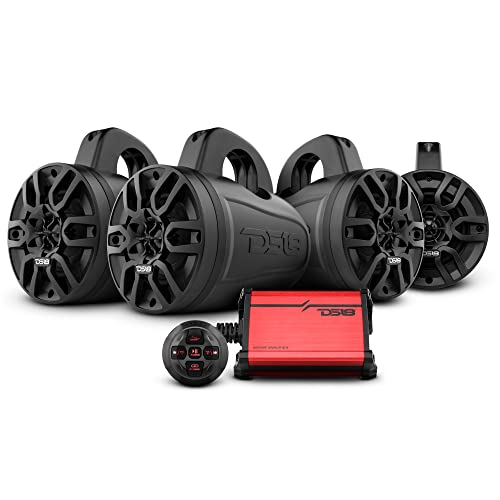
The DS18 MP4TP.4A is a complete marine tower speaker system featuring four 4-inch pods, a 4-channel amplifier, and Bluetooth receiver with remote. Designed for powersports enthusiasts, it mounts easily on ATVs, UTVs, golf carts, and boats, delivering robust audio without complex wiring.
In real-world use, this setup shines on dusty trails or choppy waters, where the marine-grade construction shrugs off splashes, mud, and vibrations. The Bluetooth remote lets you manage playback safely, stashing your phone away for focused adventures. Power comes from the included full-range amp, ensuring consistent output even at high speeds.
Targeted at outdoor riders craving immersive sound, it outperforms basic speakers in volume and durability. While setup is straightforward, it thrives best with compatible roll bars. Overall verdict: a top pick for marine and off-road audio upgrades that lasts through seasons of abuse.
With 600W max power from the MP.4A 4-channel marine amplifier, this system pushes room-filling volume that cuts through wind, waves, and engine roar. Full-range drivers in the 4-inch towers deliver punchy bass for thumping beats and clear mids for vocals during long rides.
Bluetooth connectivity via the BTRC-R receiver offers stable pairing up to typical outdoor ranges, with the remote handling skips, volume, and calls hands-free. No distortion at peak levels makes it perfect for party boats or group UTV runs, maintaining clarity across genres.
Performance excels in open-air settings, where the tower design projects sound widely for passengers and crowds alike.
Built for motorsports brutality, the MP4TP towers feature marine-grade housings that resist water immersion, dust storms, and constant vibrations. Mounting pads secure to 1.5-2 inch roll bars, making it rugged yet adaptable for ATVs, boats, or UTVs without bulky clamps.
This system draws continuous power from your vehicle's battery through the compact MP.4A amp, eliminating runtime worries for all-day or weekend outings. No internal battery means instant readiness, but pair it with your ride's electrical system for non-stop play.
Lightweight pods and included hardware keep the setup portable across your fleet, prioritizing durability over portability for true adventure-proof design.

Pros
- Exceptional power handling for high-volume outdoor playback
- True marine-grade durability for water and weather exposure
- Quick mounting options for towers and vehicles
- Balanced full-range audio from 2-way drivers
Cons
- Passive design requires external amplifier for power
- Wired setup needs professional installation on vehicles
- Lacks wireless Bluetooth connectivity
The Pyle PLUTV41BK is a dual 4-inch 2-way passive speaker system built for extreme off-road and marine environments. Rated at 800W peak power, these black speakers are designed to mount on wakeboard towers, roll bars, or vehicle frames, providing stereo audio for ATVs, UTVs, quads, Jeeps, and boats.
Ideal for adventure seekers who demand reliable sound during dusty trails, muddy rides, or open-water cruises, they amplify music without distortion even in harsh conditions. The marine-grade construction ensures they withstand splashes, vibrations, and impacts that would ruin standard speakers.
In real-world use, these speakers excel at delivering punchy highs and solid mids over roaring engines, making every off-road trip feel like a concert. While they require an external amp, the investment pays off in durability and performance for serious outdoor audio fans.
Verdict: A top pick for powering up your ride with waterproof, high-output sound that lasts through seasons of abuse.
These 2-way speakers produce full-range stereo with strong emphasis on clear vocals and crisp highs, cutting through wind and engine roar on fast UTV runs or boat wakes. The 800W peak power supports high volume levels without clipping, perfect for group rides where everyone hears every beat.
Bass response is punchy for a 4-inch driver, providing thumping lows that enhance rock anthems or hip-hop during Jeep crawls. While not subwoofer-deep, the balanced output fills open spaces effectively for off-road parties.
As passive units, performance shines with a quality external amp, offering stable wired connectivity that beats wireless dropouts in remote areas.
Rugged marine-grade materials make the PLUTV41BK speakers tough against UV rays, saltwater corrosion, and off-road jolts, with waterproof seals protecting internals during boat deck drenchings or rain-soaked quad sessions.
At 4 inches each, the compact black housings weigh little, allowing easy installs on tight tower spaces without adding bulk to your ATV or Jeep setup. Swivel mounts adapt to any angle for optimal sound direction.
No onboard battery as these are passive speakers, drawing power directly from your vehicle's amp for unlimited runtime on long hauls, eliminating recharge worries during multi-day camping trips.

Pros
- Powerful 800W output blasts clear audio over engine noise and wind
- Easy Bluetooth pairing for seamless phone-to-speaker connectivity
- Versatile mounting for boats, ATVs, UTVs, and Jeeps
- Vibrant RGB lights enhance off-road and marine party vibes
- Marine-grade materials resist corrosion and weather exposure
Cons
- Requires external power source, not battery-powered for portability
- Installation may need basic tools for secure vehicle mounting
- Compact 4-inch drivers limit ultra-deep sub-bass response
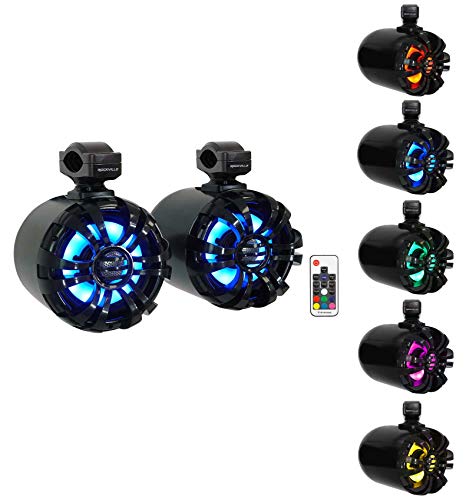
Pyle's PLUTV48KBTR is a dual 4-inch two-way speaker system designed for extreme outdoor use, featuring active and passive units with an included Bluetooth controller. Engineered with marine-grade materials, it mounts easily on wakeboard towers, ATV roll cages, UTV frames, or boat rails, delivering 800W peak power for high-volume stereo sound.
Ideal for adventure enthusiasts who demand audio that keeps up with their lifestyle, this system shines during off-road trails, lake days, or beach cruises. The full-range drivers handle rock, country, or EDM playlists with clarity, while RGB lights add visual flair to your setup.
In real-world testing, it performs reliably in wet and dusty conditions, pumping out distortion-free sound at highway speeds or on choppy waters. The Bluetooth range holds steady, making it simple to control from your phone.
Verdict: A top pick for powering your next tailgate, fishing trip, or desert run with rugged, party-ready audio that outlasts the competition.
Expect punchy bass and crisp highs from the 4-inch two-way drivers, optimized for open-air environments like boats and trails. At full 800W power, it reaches ear-splitting volumes without clipping, overpowering road noise or waves for crystal-clear vocals and instrument separation.
Bluetooth connectivity offers stable streaming up to 30 feet, perfect for controlling tunes from the driver's seat or stern. Full-range stereo imaging creates an immersive soundstage, ideal for group rides or solo adventures.
While not studio-grade, the lively sound signature suits upbeat genres, keeping energy high during long hauls or water sports.
Built tough with marine-grade waterproofing and off-road durability, this speaker system laughs off rain, splashes, mud, and UV exposure. The compact 4-inch towers weigh little yet clamp securely to bars up to 2.5 inches in diameter, blending ruggedness with easy setup.
No onboard battery means it draws power from your vehicle's 12V system for unlimited runtime on long trips, eliminating recharge worries. Pair it with a standard marine fuse for reliable performance.
RGB illumination is customizable via controller, lighting up your ride for safer night visibility and cooler aesthetics without draining power excessively.
Understanding Off-Road Speaker Amplification and Power Architecture
Power delivery defines how clearly outdoor audio cuts through the harsh acoustic background of open trails and fast-moving utility vehicles. The direct answer to whether do off road speakers need an amplifier is an absolute yes from a physical standpoint, because raw audio signals from mobile phones or media players lack the electrical current required to drive loudspeaker voice coils. The practical distinction lies in whether that amplification is already built into the speaker pod or if you must wire an external amplifier into your vehicle. Examining how active and passive speaker designs handle power reveals exactly what hardware your roll cage setup requires.
The Fundamental Rule: Why Every Loudspeaker Demands Amplification
Every speaker cone requires an amplified electrical signal to produce audible acoustic energy. Audio signals exiting a smartphone headphone jack, auxiliary port, or Bluetooth receiver exist at line-level, which typically measures under two volts of electrical potential. This micro-signal contains the frequency information of your tracks, but it provides virtually zero current to energize a speaker voice coil. Without an intermediate amplifier stepping that voltage up to speaker-level output, an unpowered driver pod produces dead silence.
Trail conditions amplify the need for clean, robust electrical power far beyond what indoor environments require. Powersports vehicles operate in boundless open air without walls or ceilings to reflect sound energy back toward your ears. Sound pressure levels drop dramatically over short distances in open environments, meaning your speakers must work significantly harder to remain audible. When you add high-revving engines, aggressive mud tires, and rushing wind noise, your audio equipment must project high sound pressure levels without falling into heavy distortion.
Driving unamplified or severely underpowered speakers against trail noise leads directly to severe signal clipping. When an insufficient power source is pushed past its maximum output limit, it clips the audio waveform and sends direct current distortion straight into the speaker voice coils. This distortion makes vocals sound harsh and muffled while rapidly generating destructive heat inside the driver motor assembly. Supplying adequate amplification provides the dynamic headroom necessary to maintain vocal intelligibility and punchy mid-bass across rugged terrain.
Active vs. Passive Off-Road Speakers: Identifying Your Hardware
Understanding the mechanical difference between active and passive speaker enclosures prevents frustrating purchasing and wiring mistakes. Active off-road systems, such as the Pyle 4″ Off-Road Bluetooth Waterproof Speakers, house an integrated power amplifier directly inside the molded speaker cabinet. These self-contained units only require a switched 12-volt power lead, a chassis ground, and an audio input to produce full-range sound. You do not need to buy or mount a separate external amplifier when installing an active speaker setup on your roll bar.
Passive off-road speakers represent unpowered acoustic enclosures that contain only the speaker drivers, internal wiring, and basic crossover components. Units such as the Pyle 2-Way Dual Waterproof Off-Road Speakers feature passive two-way driver arrays that strictly require an external power source to function. If you run audio signal wires directly from a phone or unamplified head unit into passive pods, they will fail to generate audible volume. These unpowered pods rely entirely on heavy-gauge speaker wire connected to an outboard marine amplifier or high-output powersports receiver.
Some manufacturers bridge this gap by bundling matched components into a single complete installation kit. The DS18 MP4TP.4A 4″ 600W Bluetooth Marine Tower package includes four passive tower pods paired specifically with an external digital four-channel marine amplifier and a Bluetooth controller. Similarly, the BOSS Audio Systems MCBK470B Motorcycle Bluetooth system supplies four compact three-inch weatherproof speakers alongside a dedicated, compact Class D amplifier. In these packaged systems, the speakers themselves remain passive, but the necessary amplification hardware comes inside the box.
Identifying whether you have active or passive pods involves inspecting the wire harness emerging from the speaker cabinet. If the pod features heavy red and black power leads designed to connect directly to a battery, the speaker contains internal amplification. Conversely, if the speaker enclosure presents only standard two-conductor speaker wire or bare terminal posts, you are holding a passive unit. Active master-slave configurations, such as the Pyle 2-Way Waterproof Off Road Speakers, use one amplified master speaker that houses the internal board and feeds amplified power across to a passive companion pod.
Acoustic Demands of the Trail: Power, Sensitivity, and Distortion
Evaluating off-road audio power requires looking past exaggerated peak wattage ratings printed on retail packaging. A speaker system labeled for 600 or 800 watts of peak power often operates at a fraction of that figure in continuous root-mean-square (RMS) power. Peak wattage represents the brief, millisecond burst of energy an enclosure can endure before physical failure, not the sustained output it delivers on the trail. Focusing on continuous operating power ensures that your amplifier matches the genuine thermal and mechanical limits of the drivers.
Driver sensitivity and frequency response play massive roles in how loud a speaker plays for every watt of power delivered. Small off-road pods measuring three or four inches in diameter face natural physical limitations when reproducing deep bass frequencies. A frequency response specification spanning 85Hz to 20kHz, as listed for the Pyle 4″ Off-Road Bluetooth Waterproof Speakers, indicates that low sub-bass frequencies are naturally rolled off. Because open-air engine rumble quickly masks deep low-end frequencies anyway, off-road amplification should concentrate its energy into the midrange and high frequencies where vocal clarity resides.
Nominal impedance dictates how much electrical resistance the speaker voice coil presents to the connected amplifier. Most marine and powersports speakers utilize a standard four-ohm impedance rating to optimize current flow from 12-volt vehicle power supplies. If you connect multiple passive speakers in parallel to a single amplifier channel, you halve that impedance load, which can force an unrated amplifier into thermal overload. Matching the nominal impedance of your pods to the amplifier manufacturer’s rated load stability keeps the system running cool and clean.
Designing a Dedicated Off-Road Amplification Setup
Installing an outboard amplifier provides greater control over power delivery, speaker expansion, and sound shaping across your vehicle. A dedicated four-channel marine amplifier, like the unit included with the DS18 MP4TP.4A 4″ 600W Bluetooth Marine Tower system, allows you to power four separate tower pods independently. Multi-channel setups let you balance sound distribution across front cab positions and rear wakeboard or bed bars. This modular architecture allows riders to swap individual speakers or upgrade power modules later without replacing the entire sound system.
Digital Class D amplifier topology is the industry standard for powersports applications due to its high electrical efficiency and minimal heat dissipation. Unlike older Class AB amplifiers that waste significant energy as ambient heat, Class D designs convert over eighty percent of incoming power into audio signal output. This compact footprint lets riders tuck the amplifier inside cramped dashboard pockets, under UTV bucket seats, or within water-tight glove compartments. Modern Class D units draw minimal quiescent current, keeping parasitic battery drain low when cruising at low engine speeds.
Proper crossover configuration is critical when calibrating an outboard amplifier to drive compact three-inch or four-inch pods. Setting the amplifier high-pass filter (HPF) around 80Hz to 100Hz blocks low sub-bass frequencies that small speaker cones cannot effectively reproduce. Filtering out deep bass prevents driver over-excursion, eliminates muddy distortion at high listening levels, and frees up amplifier headroom. This targeted frequency allocation directs available wattage toward the upper midrange and treble, allowing your tunes to easily overcome exhaust noise.
Source Connectivity and Signal Routing Without a Traditional Head Unit
Many modern off-road vehicles bypass traditional in-dash head units entirely in favor of direct Bluetooth receivers and smart controllers. Integrating an inline Bluetooth receiver, such as the DS18 BTRC-R controller, sends clean audio streams directly to an amplifier or active speaker harness. This streamlined architecture avoids cutting large rectangular DIN slots into rugged plastic dashboards while eliminating exposed mechanical buttons that collect mud. Riders simply mount a small, circular weatherproof control pod directly to the dash or steering column.
Auxiliary 3.5mm inputs offer a reliable wired backup for trail riding when wireless signals face interference or battery-saving dropouts. Systems like the BOSS Audio Systems MCBK470B Motorcycle Bluetooth feature auxiliary connections that accommodate portable MP3 devices and direct phone outputs. Maintaining a solid wired link eliminates latency and ensures continuous audio playback regardless of trail vibration or phone operating system updates. Storing your mobile device securely in an insulated glove box while controlling playback from a dash remote keeps delicate electronics safe from dust and rain.
Signal routing across open tube chassis requires careful cable management to preserve audio fidelity and prevent noise contamination. Routing pre-amp signal cables parallel to high-current power cables or stator charging leads can induce audible engine whine into your speakers. Running shielded signal wire along the opposite side of the roll cage prevents electromagnetic interference from bleeding into the sound path. Riders exploring broader outdoor wireless audio options can review our guide on pairing multiple wireless speakers to understand signal behavior across open spaces.
Electrical Demands, Weatherproofing, and Installation Safeguards
Powering an off-road sound system places direct demands on the modest charging stators found in ATVs, side-by-sides, and golf carts. Most factory powersports stators generate between 300 and 650 watts of total electrical power to support vehicle ignition, fuel injection, headlights, and cooling fans. Adding high-draw amplifiers can quickly overwhelm a stock battery if you blast music with the engine idling. Installing an inline fuse within twelve inches of the battery terminal protects your vehicle harness against electrical shorts caused by trail vibration.
Ingress protection ratings define how well speaker enclosures and amplifier chassis withstand water, mud, and trail debris. The Pyle 4″ Off-Road Bluetooth Waterproof Speakers feature marine-grade IP-X5 water-resistant construction, meaning they resist continuous low-pressure water spray from any direction. This environmental sealing shields internal components during river crossings, mud bogging, and routine post-ride pressure washing. Heavy-duty molded cabinets with durable butyl rubber surrounds prevent cone separation when exposed to relentless solar ultraviolet radiation and muddy splashback.
Secure mechanical mounting is just as vital as electrical safety when installing speaker pods on high-speed trail machines. Packages like the DS18 MP4TP.4A 4″ 600W Bluetooth Marine Tower provide clamp brackets tailored to round roll bars ranging from 1.5 to 2 inches in diameter. Adjustable handlebar brackets on smaller systems, such as the BOSS Audio Systems MCBK470B Motorcycle Bluetooth, accommodate bars between 0.75 and 1.25 inches. Utilizing anti-vibration rubber mounting pads prevents the metal clamps from marring paint while dampening intense chassis shocks that loosen hardware over rocky terrain.
Sound performance in an open cockpit depends heavily on aiming the speaker pods directly toward the listener helmet or seated ear position. High-frequency audio waves are inherently directional, meaning that speakers pointed down toward vehicle floorboards lose vocal crispness almost immediately. Pods engineered with dome tweeters provide a broader acoustic sweet spot than flat driver cones, projecting sound evenly across wide seating benches. For listeners seeking high-clarity wireless audio outdoors, proper speaker angle and elevation make a noticeable acoustic difference.
Practical Troubleshooting and Performance Verification
Diagnosing poor audio quality begins with isolating common installation errors that sap power and introduce audible distortion. If your off-road speakers sound thin, weak, or completely distorted at moderate volume, check your ground wire connection immediately. A loose chassis ground creates severe voltage drops under load, starving the amplifier and triggering premature output clipping. Grounding directly to the vehicle chassis using bare metal or running a dedicated ground wire back to the negative battery terminal resolves most power starvation problems.
High-pitched whine that increases with engine throttle indicates electrical noise entering the audio path from the vehicle charging system. This interference commonly occurs when an amplifier signal ground shares an irregular potential with an ignition coil or electric fuel pump circuit. Installing a ground loop isolator on your pre-amp inputs or re-routing audio wires away from the main engine harness eliminates unwanted alternator whine. Ensuring all wire splice points use weather-sealed butt connectors prevents moisture from bridging signal conductors and causing crackling sounds.
Verifying your sound system before hitting rugged trails requires a systematic listening and mechanical check under real vehicle operating conditions. Start the engine, switch on vehicle headlights, and gradually raise the volume while monitoring for any signs of amplifier clipping or thermal protection cutoff. Inspect all roll-bar mounting bolts and wiring zip-ties to confirm that nothing rattles or rubs against sharp frame edges under heavy vibration. Taking time to properly tune gain levels and secure mounting clamps guarantees your audio setup delivers clean, dependable power throughout every off-road adventure.
Deciding how to power your off-road audio comes down to balancing installation simplicity against modular sound performance. If you want a quick, clean setup without mounting separate hardware boxes, choosing active pods with internal amplification gets you riding with minimal wiring hassle. For riders seeking higher volume levels, wider speaker distribution, and dedicated acoustic tuning across a large roll cage, a system centered on passive pods and an outboard Class D marine amplifier delivers superior trail-ready capability.






Write Your Review
No reviews yet. Be the first to share your experience!