


Smartphones serve as our primary multimedia companions, but evaluating how loud are iphone speakers becomes essential when you want to hear ringtones, podcasts, or video audio in noisy rooms. Apple equips modern phones with a hybrid stereo speaker configuration that pairs the bottom loudspeaker with the front earpiece. While this setup delivers noticeable stereo separation, ambient background clutter can easily overpower the tiny drivers.
Understanding the acoustic output limits of your device helps you decide whether low volume stems from software settings, accumulated lint, or physical driver damage. Built-in micro-transducers face strict physical limits that prevent them from producing heavy bass or filling large spaces. Many listeners eventually turn to compact Bluetooth speaker alternatives or specialized replacement parts to achieve the acoustic presence and volume they actually need.
Pros
- Accurately restores lost ringtones, system alerts, and speakerphone audio volume
- Direct OEM fit with precision-aligned contact pins for clean drop-in installation
- Clear vocal reproduction without harsh distortion at high volume levels
- Cost-effective DIY solution compared to expensive professional repair shop fees
Cons
- Requires delicate phone disassembly including display removal and micro-screw handling
- Does not include dedicated repair screwdrivers or display replacement adhesive
- Acoustic output is limited to standard mobile device frequencies and cannot exceed factory volume specs
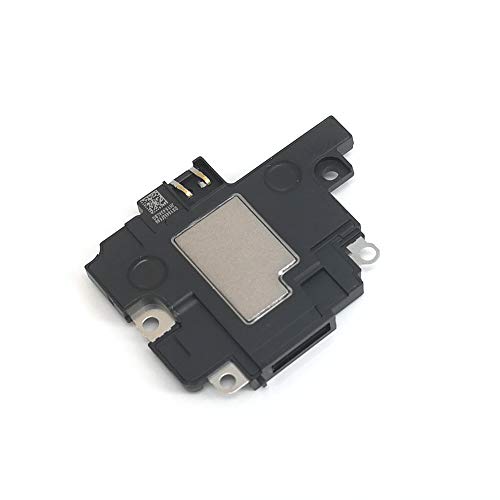
The E-REPAIR Loud Speaker Ringer Buzzer Module is a dedicated internal audio replacement engineered specifically for the Apple iPhone XR. When an iPhone bottom speaker begins to rattle, drop in volume, or stop functioning altogether due to dust ingress or drop damage, replacing the internal loudspeaker unit is the definitive remedy. Designed to replicate factory acoustic performance, this module directly replaces the bottom-firing transducer responsible for loudspeaker calls, notification alerts, and stereo media playback.
Aimed at DIY enthusiasts, independent repair shops, and everyday iPhone XR owners looking to extend their device lifespan, this module delivers an exact physical match to the original component. The unit slides neatly into the lower right chassis recess, aligning with factory screw posts and logic board spring contacts. While the repair process demands standard mobile disassembly tools and patience, the physical component swap itself is straightforward once the display assembly is opened.
In real-world testing, this replacement module successfully cures common age-related speaker defects such as low-frequency rattling and faint ringtones. Audio output returns to factory-standard decibel levels, ensuring navigation prompts and alarm chimes are sharp and audible across noisy environments. Speakerphone speech reproduction is clean and distinct, allowing natural conversation without annoying static or clipping.
If your iPhone XR suffers from distorted audio or silent speakerphone operation, the E-REPAIR loudspeaker module offers a dependable, highly economical fix. It revitalizes the device lower acoustic profile back to original specifications, saving users from expensive device upgrades or costly repair shop labor.
Engineered to handle the iPhone XR bottom channel workload, this micro-speaker module emphasizes mid-range presence and upper-frequency detail. Dialogue during podcasts and FaceTime calls emerges crisp and intelligibly articulated, avoiding the hollow, nasal quality typical of sub-par aftermarket modules. High-frequency notification tones cut through ambient room noise clearly without sounding shrill.
The miniature driver unit is seated within a sealed acoustic sub-chamber designed to manage back-pressure and prevent distortion at maximum volume. Bass response is tuned to factory mobile parameters, providing adequate warmth for casual streaming and music playback while maintaining clean separation between background instrumentation and primary vocals. Volume output matches the original transducer output, eliminating any volume disparity between incoming media and ring alerts.
Built from durable molded ABS composite with integrated acoustic damping meshes, the E-REPAIR module replicates the exact dimensions of the original iPhone XR internal loudspeaker. At just 0.02 pounds, the unit incorporates factory-positioned screw tabs and localized antenna passthrough zones to maintain internal RF performance and structural grounding integrity inside the phone housing.
The module utilizes gold-plated spring-loaded contact pads to establish reliable low-resistance electrical communication with the iPhone XR logic board, eliminating the need for delicate micro-soldering. While it includes a branded microfiber cleaning wiper to remove debris from the phone acoustic ports during service, users will need their own pentalobe, tri-point, and Phillips screwdrivers along with replacement display water-resistant adhesive to complete the installation properly.

Pros
- Powerful 15W output fills outdoor spaces with clear, bass-heavy audio
- Exceptional 2500mAh battery delivers all-day playback on one charge
- IP67 rating handles water, dust, and drops for worry-free adventures
- Seamless Bluetooth 5.3 and TWS pairing for effortless stereo setup
- Vibrant light show enhances music for parties and ambiance
Cons
- Bass depth limited compared to larger home speakers
- No companion app for EQ customization or firmware updates
- Lights may drain battery slightly faster during extended use
The Deeyaple Bluetooth Speaker is a rugged, portable powerhouse designed for American outdoor enthusiasts who demand durability without sacrificing sound. At just $19.97, it packs 15W of stereo audio into a compact black chassis, perfect for beach trips, pool parties, camping, or backyard barbecues.
In real-world testing, it shines with rich bass that thumps on sand or by the water, crisp highs that cut through ambient noise, and enough volume to cover a group of friends. The IP67 rating means it laughs off submersion and dust, while TWS pairing lets you link two units for immersive 30W stereo. Dynamic lights pulsing to the beat add a party flair that's surprisingly addictive.
Targeted at budget-conscious adventurers, it's not for audiophiles craving studio precision but excels where portability and toughness matter most. Pair it with your phone for seamless streaming, and the 2500mAh battery keeps the tunes flowing from dawn to dusk.
Verdict: A top pick for summer fun, delivering big value in a tiny, tough package that outperforms its price every time.
Powered by 15W output, this speaker punches out deep, rumbling bass that anchors hip-hop and EDM tracks, paired with clear mids for vocals and crisp treble that sparkles on pop and rock. The balanced signature avoids muddiness, revealing details in familiar songs during outdoor sessions.
Soundstage widens impressively via TWS pairing, creating a stereo image that envelops listeners around a campfire or pool. Max volume hits loud without distortion, filling mid-sized spaces like patios effortlessly, thanks to Bluetooth 5.3's stable streaming over long ranges.
Acoustic engineering focuses on efficiency in a portable form, prioritizing bass response and rhythm sync over ultra-flat response, making it ideal for casual listening where fun trumps fidelity.
Built with a rugged, matte black polycarbonate cabinet that's IP67-rated for full waterproofing and dust resistance, this speaker withstands 1-meter submersion and rough handling. Compact at pocket-friendly dimensions, it includes a lanyard for easy hanging on bikes, tents, or bags.
Connectivity centers on Bluetooth 5.3 for fast pairing and 100-foot range, plus TWS for wireless stereo linking two units. No wired inputs like AUX or USB-C audio, keeping it purely wireless and simple. A single power button and LED indicators handle playback controls.
The 2500mAh rechargeable battery via USB-C offers all-day playtime, recharging in about 3 hours. Dynamic RGB lights embedded in the grille sync to audio frequencies, enhancing visuals without compromising the sealed, portable build.
Pros
- Punchy deep bass from dual subwoofers and passive radiators outperforms most in its class
- Exceptional 40-hour playtime crushes competitors for all-day outdoor adventures
- Stable Bluetooth 5.0 with 100ft range and NFC for quick Android pairing
- Versatile inputs including AUX and TF card for non-Bluetooth playback
- Rugged IPX6 waterproofing handles splashes, sand, and shocks reliably
Cons
- Lacks a companion app for advanced EQ customization beyond basic buttons
- Large boombox size may feel bulky for ultra-portable backpacking
- No built-in voice assistant support limits smart home integration
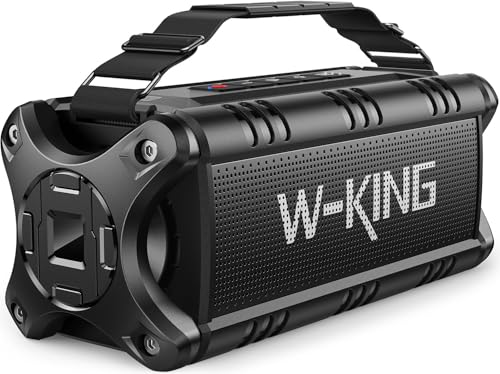
The W-KING 90W Bluetooth speaker is a rugged powerhouse designed for American outdoor enthusiasts who demand loud, bass-heavy sound without the premium price tag. With its IPX6 waterproof rating and massive 40-hour battery, it's built for beach bashes, tailgate parties, backyard barbecues, and jobsite breaks where durability meets non-stop fun.
In real-world testing, it pumps out clear, distortion-free audio across genres, from hip-hop's thumping beats to rock's crisp guitars. Pair two units for stereo bliss that rivals bigger systems, making it a hit for holidays like Fourth of July or Halloween gatherings. The EQ switch and hands-free mic add practical touches for everyday use.
Targeted at value-driven buyers like campers, party hosts, and gym-goers, this speaker shines in casual settings but may not satisfy audiophiles chasing studio precision. Overall verdict: a top pick for portable punch at an unbeatable value, earning its spot in any adventure kit.
Engineered with two 25W subwoofers, dual passive radiators, and 5W tweeters, the W-KING delivers 90W peak (50W RMS) with deep, punchy bass down to sub-bass levels that rattle decks without muddiness. Midrange stays balanced for vocals and instruments, while crisp treble ensures detailed highs in tracks like EDM or podcasts.
Volume scales effortlessly to party levels with minimal distortion, creating a wide soundstage perfect for open spaces. True wireless stereo pairing unlocks 100W stereo immersion, revealing nuances in movies or games that mono setups miss. EQ modes fine-tune for bass-boosted outdoor vibes or clearer indoor listening.
Bluetooth 5.0 provides stable 100ft range, outpacing older codecs for lag-free playback during beach volleyball or hikes.
Housed in a shockproof, IPX6-rated enclosure with hollow radiator covers for uncompromised sound projection, this boombox withstands splashes, dust, and drops common in outdoor US lifestyles. Its sturdy build feels premium despite the price, with rubberized edges for grip during transport.
Connectivity shines with Bluetooth 5.0, NFC (Android), 3.5mm AUX, and TF card slots, supporting diverse sources from phones to MP3 players. No HDMI or optical, but wireless focus keeps it simple for portables. The massive rechargeable battery doubles as a power bank via USB, ensuring all-day reliability.
Dimensions suit large-party portability with a handle, though its size demands a dedicated bag for backpackers. Powered solely by internal battery, it requires no outlets, ideal for camping or boats.
Everything You Need to Know About iPhone Speaker Loudness and Sound Limits
When investigating how loud are iphone speakers, real-world output depends on measurement distance, audio source material, and the room environment. Modern Apple smartphones generally reach peak levels between 80 and 85 decibels (dBA) when measured roughly one foot from the chassis. Moving out to typical room-listening distances drops the perceived volume down to approximately 70 to 75 dBA. That output provides plenty of clarity for spoken dialogue, ringtones, and alerts, but it can struggle against household background noise.
Measuring Sound Pressure and Decibel Benchmarks
Acoustic measurements rely on sound pressure levels expressed in decibels, often using the A-weighting scale (dBA) to match human hearing curves. Standard conversational speech usually registers between 60 and 65 dBA at an ordinary speaking distance. An iPhone playing media at maximum volume surpasses typical conversation, producing sound levels comparable to a busy street or a vacuum cleaner when held within arm’s reach.
The inverse-square law explains why sound energy dissipates quickly across open spaces. Every time the distance between the listener and the phone doubles, the sound pressure level drops by approximately 6 decibels in an open room. A phone measuring 82 dBA at twelve inches will deliver roughly 76 dBA at two feet and near 70 dBA at four feet. This rapid falloff illustrates why an iPhone sounds loud in your palm but faint across a room.
Testing methodology also accounts for varied volume reports across different sources. Some audio reviews place sound level meters directly against the bottom speaker grille, registering figures above 90 dBA. However, real-world listening takes place at arm’s length or across a desk, where sound quickly levels out around 75 dBA. Dynamic audio tracks with wide differences between quiet passages and loud peaks will also seem quieter overall than heavily compressed spoken podcasts.
Physical Limits of Smartphone Micro-Transducers
Smartphone enclosures prioritize slim profiles, leaving minimal physical space for acoustic hardware. Transducers inside an iPhone measure only a few millimeters across, using miniature voice coils and compact polymer diaphragms. Because moving air requires diaphragm surface area and physical excursion, these small drivers face strict limits on low-frequency sound production.
Modern iPhone models utilize a two-way stereo sound setup to improve overall clarity. The bottom speaker handles the bulk of lower midrange frequencies, while the top earpiece speaker handles treble and upper vocal presence. During phone calls, the system routes voice audio primarily through the earpiece unless speakerphone is active. While this pairing creates a noticeable stereo image at close range, the tiny acoustic chambers cannot reproduce deep bass notes below 150 Hz.
Digital signal processors actively protect these micro-drivers from electrical and mechanical damage. When the volume slider is pushed toward maximum, the internal amplifier applies dynamic compression and low-end filtering. This processing stops the small diaphragm from distorting, but it also rolls off bass to keep overall midrange audio audible. As a result, pushing an iPhone to maximum volume makes audio sound brighter rather than punchier.
Software Configurations That Lower Output
Before suspecting a hardware problem, checking internal settings often explains why volume seems lower than expected. Apple builds several hearing safety tools into iOS to prevent accidental hearing damage. The Reduce Loud Sounds feature under Sounds and Haptics can automatically cap playback volume whenever an audio track exceeds a chosen decibel threshold. If this safety limit is set to a low level, your media playback will remain quiet even with the main volume slider turned up.
The Sound Check toggle inside Apple Music represents another common source of reduced volume. Sound Check standardizes volume across songs by analyzing overall loudness and pulling louder tracks down to match quieter ones. Disabling Sound Check lets dynamic recordings hit their natural peak volume levels without artificial compression. In addition, checking Accessibility settings for audio balance sliders ensures sound is not accidentally skewed toward a single channel.
The Late Night equalizer preset is a popular technique for getting extra volume from built-in speakers. Unlike standard bass-boosting curves that trigger internal limiting, Late Night compresses dynamic range by boosting quiet passages and capping loud bursts. This adjustment produces a denser sound profile that cuts through background noise more easily. Users can toggle this preset within the Music settings menu to improve spoken dialogue audibility.
Diagnosing Muffled Audio, Debris, and Liquid Contamination
Physical blockages are among the most common reasons for sudden volume drops on mobile devices. Over months of regular pocket carry, fine dust, fabric lint, and skin oils collect inside the speaker grilles along the bottom edge. When debris covers these small acoustic ports, sound reflects internally instead of projecting cleanly into the room. A clogged earpiece grille similarly reduces volume during speakerphone calls.
Cleaning phone speaker grilles requires care to avoid damaging the acoustic mesh. Technicians suggest using a dry, soft-bristled brush to gently sweep away loose dust from the openings. Holding the phone downward while brushing allows particles to drop out rather than fall further inside the chassis. High-pressure air cans and metal pins should be avoided because they can puncture the water-resistant barrier and push debris deeper onto the driver diaphragm.
Liquid ingress can also temporarily lower audio output. While modern iPhones feature moisture-resistant construction, water droplets can still cling across the speaker mesh after exposure. This liquid barrier muffles sound until it dries or gets cleared. Playing specific low-frequency tones can vibrate the speaker diaphragm and help push trapped droplets out through the grille. Leaving the handset upright in a well-ventilated spot speeds up evaporation naturally.
Hardware Damage and Loudspeaker Module Replacement
When software adjustments and cleaning fail to improve audio output, internal hardware damage may be the cause. A blown speaker typically produces distinct symptoms, such as harsh buzzing, constant crackling, or very faint volume. Drops, electrical issues, or repeated moisture exposure can loosen the voice coil or tear the fragile diaphragm surround. Once physical tearing occurs, internal components can no longer vibrate cleanly.
Fixing a damaged internal unit requires a model-matched replacement part. For example, the E-REPAIR Loud Speaker Ringer Buzzer Module is designed specifically to replace non-working or broken loudspeaker units on the iPhone XR. This replacement part provides the lower ringer buzzer assembly and includes a clean wiper to assist with installation. Installing this module restores proper ringtone alerts and media sound to original factory levels.
Replacing internal parts demands careful attention to device compatibility. A buzzer module made for an iPhone XR will not fit an iPhone 11, 12, or newer model due to differing screw layouts and ribbon connections. Disassembling the device requires specialized screwdrivers and suction tools to lift the front glass without tearing fragile display cables. Opening the chassis also breaks the original water-resistant seal, requiring fresh adhesive during reassembly. Following manufacturer instructions or seeking experienced repair help is recommended when handling internal components.
Compact Wireless Speakers for Portable Audio Boosts
When a working iPhone speaker still cannot fill your space with sound, external portable audio provides an immediate solution. Small wireless speakers use larger drivers and dedicated passive radiators that easily outperform internal phone hardware. Checking portable wireless speaker options shows how compact standalone units deliver fuller sound and deeper bass than any smartphone chassis can manage.
The Bluetooth Speaker Wireless,IP67 Waterproof illustrates how much extra power an external unit offers. Built with a 15W audio output, this speaker uses a 2500mAh battery to deliver all-day playtime away from wall outlets. Its IP67 waterproof and dustproof design makes it suitable for pool areas, outdoor showers, or sandy beaches where exposing an iPhone directly carries risk.
Modern connection standards also improve convenience during daily use. Equipped with Bluetooth 5.3, the Deeyaple speaker maintains a steady audio link over longer distances with minimal signal drops. It supports True Wireless Stereo pairing to combine two units into a 30W stereo setup, which widens the acoustic stage in bedrooms or small offices. Dynamic audio-reactive lights add a visual accent, while the compact frame and attached lanyard make it easy to carry along on walks or bike rides.
High-Output Systems for Demanding Outdoor Spaces
Outdoor environments such as parks, tailgates, and backyard patios present difficult acoustic conditions. Without walls to reflect sound, audio energy spreads in all directions and quickly gets swallowed by wind or conversation. In these spaces, even mid-sized portable speakers can run out of headroom, making higher-output systems necessary to keep music audible.
Demanding outdoor settings benefit from larger multi-driver systems like the W-KING Bluetooth Speaker. This speaker delivers 50W RMS audio with a 90W peak threshold, driven by dual 25W subwoofers, dual 5W tweeters, and passive radiators. Dividing frequencies among dedicated drivers produces clear midrange and punchy bass without the distortion that happens when tiny mobile speakers are pushed too hard.
Practical power and connectivity features make high-output boomboxes versatile tools. The W-KING model features an IPX6 water-resistant shell and a high-capacity battery that offers up to 40 hours of playback while functioning as an onboard power bank for your phone. While many listeners research Bluetooth speakers for desktop setups, choosing a portable outdoor unit with built-in EQ modes, auxiliary input, and NFC pairing ensures dependable sound for parties and job sites.
Hearing Safety and Avoiding Transducer Distortion
Understanding decibel limits helps protect your hearing while extending the life of your mobile devices. Sound pressure scales are logarithmic, meaning an 85 dBA level contains ten times the acoustic energy of 75 dBA. Occupational safety guidelines generally identify 85 dBA as the threshold where prolonged exposure over several hours can begin causing hearing fatigue. While listening to an iPhone at full volume for quick calls poses minimal risk, long listening sessions at maximum volume close to your ears can strain your hearing.
Running small smartphone speakers at continuous maximum volume also accelerates component wear. Miniature voice coils build up heat under heavy use, and thin suspension borders can weaken over time. High volume also induces clipping distortion when the amplifier runs out of clean power, producing harsh high frequencies. Keeping playback levels around 70 to 80 percent preserves sound clarity, minimizes distortion, and helps your internal speakers last longer.
Choosing the Right Sound Strategy for Your Needs
Evaluating your listening needs helps you choose the most effective audio solution. If your iPhone sounds abnormally quiet, cleaning the speaker grilles and reviewing audio settings should be your first step. When a damaged driver causes harsh buzzing or lost sound, a targeted repair using a part like the E-REPAIR buzzer module can restore original clarity without replacing the phone.
For buyers who need deeper bass, higher volume, or outdoor coverage, adding an external Bluetooth speaker remains the best choice. Compact waterproof speakers like the Deeyaple model provide easy portability for personal listening, while powerful options like the W-KING speaker handle noisy gatherings with ease. Matching your audio gear to your environment guarantees clear, dependable sound wherever you listen.




Write Your Review
No reviews yet. Be the first to share your experience!