


A deteriorating speaker surround ruins audio performance long before the electrical driver fails. Over years of exposure to humidity, heat, and ultraviolet light, polyether or polyurethane foam surrounds dry out, crack, and crumble away. Learning how to replace foam on speakers allows audio enthusiasts and vehicle owners to restore vintage woofers and modern drivers without purchasing costly new speaker assemblies. When a surround deteriorates, the driver loses acoustic suspension, which creates distorted playback, voice coil rubbing, and a noticeable drop in low-frequency performance compared to healthy speakers with strong bass response.
The repair process requires patience, proper measurements, and the right adhesives rather than specialized engineering credentials. Beyond repairing physical driver surrounds on home stereo cabinets, car audio systems also rely on high-resilience foam rings and door baffles that seal drivers against vehicle trim panels to stop unwanted sound diffusion. Whether you are dealing with brittle driver edges on a classic twelve-inch home woofer or installing fresh self-adhesive foam rings inside a vehicle door, understanding the correct repair methods protects delicate voice coils and restores clean, dynamic sound to your audio system.
Pros
- Significantly tightens mid-bass response without upgrading factory amplifiers
- Durable closed-cell EPDM foam repels moisture and prevents mildew
- Strong self-adhesive backing stays bonded despite severe road vibrations
- Universal inner and outer diameter fits most standard 6.5-inch speaker setups
Cons
- Requires removing interior vehicle door cards for installation
- May require minor trimming on vehicles with exceptionally shallow door panels
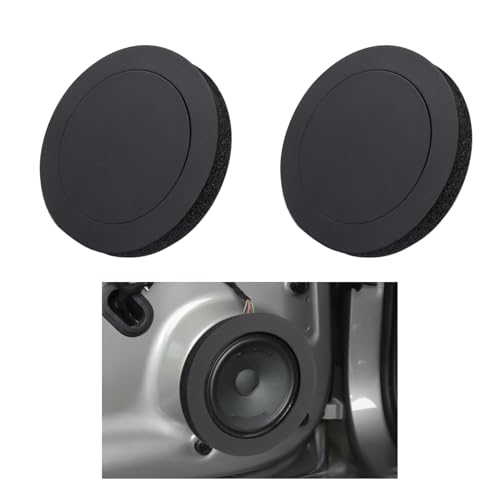
The IHOTDER 6.5-Inch Speaker Foam Enhancer Rings are designed to eliminate acoustic cancellation and sound dispersion behind interior car door panels. By creating a physical sound-dampening bridge between the speaker basket and the door trim, these gaskets channel acoustic energy directly into the passenger cabin. They are an essential upgrade for car audio hobbyists, daily commuters, and road-trippers looking to extract optimal sound from their aftermarket or factory drivers.
In real-world driving environments, installing these foam rings yields an immediate enhancement to overall audio separation. Standard door installations often allow sound waves to bounce aimlessly inside the hollow metallic door shell, resulting in boomy low-end frequencies and muffled dialogue. The dense EPDM foam serves as a targeted acoustic barrier that minimizes internal reflections, isolates mechanical vibrations, and projects full-spectrum audio directly outward.
For vehicle owners wanting to optimize their sound system without spending hundreds of dollars on custom fabrication, these enhancer rings are a practical investment. They deliver dependable soundproofing efficiency, strong resilience against moisture, and audibly crisper imaging the moment you turn up the volume.
When installed around the circumference of a door speaker, the IHOTDER foam rings dramatically sharpen performance across the dynamic audio spectrum. Mid-bass response gains noticeable authority and tightness because the ring seals off perimeter air gaps where phase cancellation typically drains punchiness. Low-frequency beats and bass guitar passages sound impactful and defined rather than hollow.
Midrange and vocal frequencies also benefit from improved clarity and forward presence. By absorbing stray reflected sound waves inside the door frame, vocal tracks and lead instruments cut through intrusive highway wind and tire noise with crisp articulation. The focused projection significantly widens the perceived soundstage, delivering a centered, lifelike listening experience at any volume level.
Constructed from high-grade EPDM foam, this speaker accessory is built to withstand the punishing environment inside vehicle doors. Unlike common open-cell foam rings that soak up moisture and degrade, this waterproof, closed-cell material actively resists condensation, rain runoff, and seasonal humidity. The lightweight construction adds virtually no bulk to the door panel, maintaining full structural flexibility through blistering summer heat and freezing winter temperatures.
Because this gasket operates as a passive mechanical acoustic enhancer for your speaker, it requires no battery cells, charging cables, or electrical connections. It works seamlessly alongside your existing audio components, providing permanent acoustic isolation without consuming power or needing maintenance over thousands of miles of travel.

Pros
- Durable, waterproof EPDM foam withstands demanding vehicle door environments.
- Noticeably tightens mid-bass response and cleans up vocal clarity.
- Strong adhesive backing allows for a rapid, hassle-free installation.
- Odorless design keeps your vehicle interior fresh in hot summer temperatures.
Cons
- Door clearance must be verified beforehand to ensure the 0.98-inch foam thickness fits behind the door panel.
- Sized specifically for 6 to 7 inch drivers and will not accommodate larger subwoofers or smaller dash speakers.
- Requires thorough degreasing of the speaker frame surface for maximum adhesive grip.
The Carleef 4-Pack 6.5-Inch Speaker Foam Ring set provides a simple yet transformative acoustic solution for car audio enthusiasts looking to extract maximum fidelity from their vehicle sound system. In standard automotive installations, speakers fire directly into the hollow cavities of the door card, resulting in acoustic diffusion, flutter echoes, and phase cancellations. These precision-cut EPDM rings bridge the critical gap between the speaker basket and the inner door trim, locking in sound pressure and directing every watt of power directly toward your ears.
This upgrade is tailor-made for everyday commuters, road-trip travelers, and audio hobbyists who want high-end acoustic treatment without complex fiberglassing or heavy sound-deadening mats. In real-world driving conditions, the rings effectively decouple speaker vibrations from plastic interior door panels, minimizing buzzing trim pieces and hollow road resonance. By keeping the sound focused inside the vehicle cabin, your music retains its dynamics even when competing with highway wind and tire rumble.
Ultimately, these Carleef foam rings offer an exceptional return on investment for anyone dissatisfied with weak factory audio or muddy aftermarket installations. With four included baffles, you can easily outfit front and rear passenger doors in a single afternoon. It is an essential, high-value addition that allows your car door drivers to perform at their absolute peak.
When installed on your door speakers, these high-resilience foam baffles significantly improve overall acoustic imaging and soundstage clarity. By sealing the forward perimeter of the cone, the rings prevent mid-range frequencies and high-energy vocals from diffusing into the hollow gaps behind the interior door panel. As a result, dialogue in podcasts sounds crisp and articulate, while lead vocals and rhythm instruments cut cleanly through the vehicle cabin.
Low-end performance also sees a dramatic enhancement. Car doors are prone to phase cancellation when rear sound waves bleed back around the front of the speaker frame, making bass sound hollow and anemic. These 0.98-inch thick foam baffles preserve forward bass impact, giving kick drums and synth basslines a punchier, tighter, and much more authoritative feel without requiring extra amplifier gain.
At louder listening volumes, the dense EPDM foam acts as an acoustic isolator, absorbing energy that would otherwise rattle sensitive door clips, window regulators, and trim fasteners. This leads to a cleaner volume ceiling with far less perceived distortion, allowing you to crank up your favorite playlists on the open highway while enjoying stable, articulate stereo performance.
Engineered for rugged automotive environments, the Carleef speaker rings are crafted from high-density, closed-cell EPDM foam. Unlike standard open-cell sponge materials that absorb moisture, EPDM is naturally waterproof, mold-resistant, and chemically stable. This rugged weather resistance ensures the rings will never rot or sag from rain condensation, winter humidity, or summer heatwaves inside vehicle doors.
Weighing under half a pound for the entire four-piece bundle, these lightweight baffles add virtually no bulk to your door hinges. Measuring 7.68 inches across with a 5.6-inch inner diameter, the rings conform neatly around virtually all standard 6-inch to 7-inch round drivers. The industrial-grade self-adhesive back adheres firmly to bare metal, plastic speaker adapter brackets, or metal speaker frames with just a few seconds of firm hand pressure.
Because these foam rings serve as passive acoustic isolators for your vehicle stereo, they require zero electrical wiring, internal battery power, or recharging downtime. They integrate seamlessly with your existing automotive electrical system, delivering continuous, maintenance-free sound isolation from the moment your door panels are snapped back into place.

Restoring Audio Clarity and Driver Suspension with New Foam
Replacing deteriorated speaker foam restores acoustic suspension and prevents expensive voice coil damage. When the outer suspension edge of a speaker driver crumbles, the cone loses structural alignment, which causes the voice coil to scrape against the magnetic gap during heavy excursion. Understanding the complete procedure for removing old residue, centering the cone, and seating fresh foam allows listeners to revive classic home stereo drivers and vehicle audio systems effectively. Taking your time during each stage of the repair prevents permanent voice coil deformation and returns clean, punchy acoustic reproduction to your sound setup.
Identifying Deteriorated Foam and Acoustic Symptoms
A speaker driver relies on its outer surround to maintain mechanical compliance while allowing linear piston movement. Most vintage audio woofers built between the nineteen-seventies and early two-thousands utilize polyurethane foam surrounds because the material offers high compliance and low mass. Ambient moisture, ozone, and ultraviolet radiation break down these chemical polymers over ten to twenty years. This progressive degradation, commonly termed foam rot, causes the pliable surround to become sticky, develop fine cracks, and eventually disintegrate into powder.
Listening to a speaker with decaying foam creates immediate acoustic warning signs that should never be ignored. As the foam loses tension, the driver produces hollow, flabby bass notes accompanied by noticeable buzzing or flapping during bass-heavy passages. If the surround separates completely from the cone or metal frame, the voice coil tilts slightly off-center within the tight magnetic gap. Continuing to feed amplified signals to a misaligned cone causes the voice coil wire insulation to scrape away against the magnet pole piece, which can permanently short out the driver.
Measuring Drivers and Selecting Compatible Replacement Surrounds
Selecting the correct replacement surround requires measuring four distinct physical dimensions rather than relying solely on the nominal frame diameter. Drivers marketed as twelve-inch models, such as those serviced by a Springfield Speaker repair kit, often feature varying cone angles and frame profiles. You must measure the outer diameter of the foam surround, the outer diameter of the raised roll, the inner diameter of the roll where it meets the cone, and the inner mounting flange width. Recording these measurements in millimeters ensures you purchase a surround that matches the physical geometry of your driver basket.
Choosing between traditional foam and modern butyl rubber surrounds is another critical decision for audio restorers. While butyl rubber resists atmospheric degradation far longer than standard foam, it possesses significantly higher mass and lower compliance. Installing heavy rubber on a delicate paper woofer designed specifically for compliant foam alters the resonant frequency and reduces driver sensitivity. For listeners who want to maintain the original acoustic character of vintage home entertainment speakers, high-compliance polyether foam remains the preferred material choice for accurate frequency response.
Gathering Essential Tools and Choosing the Right Adhesives
Using the correct adhesive determines whether your re-foaming project succeeds or fails prematurely. Specialized speaker repair adhesives typically consist of water-based polyvinyl acetate formulations that dry flexible and clear. These glues give the installer several minutes of repositioning time, which is essential for centering the voice coil properly before the bond sets. Never use standard superglue, epoxy, or solvent-heavy household adhesives, as they can melt polyurethane foam, dissolve paper cones, and dry into brittle edges that crack under mechanical vibration.
Preparing your mechanical toolkit ahead of time ensures an orderly and stress-free repair process. You will need a blunt utility knife or curved scraping chisel to strip dried glue from the metal basket frame without gouging the aluminum. High-purity isopropyl alcohol, cotton swabs, and lint-free microfiber towels are necessary for dissolving stubborn adhesive residues without leaving greasy films that compromise new glue joints. Having small spring clamps, wooden clothes pins, or round balance weights ready helps apply uniform pressure across the basket flange during curing.
Stripping Old Residue and Preparing Driver Surfaces
Begin the physical restoration by disconnecting the driver from its audio enclosure and working on a level, well-lit surface. Carefully unscrew the woofer mounting fasteners and lift the driver outward without letting your screwdriver slip into the delicate cone. Before disconnecting the internal wiring harness, note or mark the positive and negative terminals with a permanent marker to preserve proper acoustic phase during reassembly. Place the bare driver magnet-down on a soft cloth or foam pad to protect the frame from scratches and accidental impacts.
Scraping away deteriorated foam and hardened glue from the metal basket flange requires deliberate, controlled motions. Apply a small amount of isopropyl alcohol along the frame rim with a cotton swab and let it soften the factory adhesive for two to three minutes. Use your scraper blade held at a low angle to peel away the old surround remnants without gouging the underlying metal. Cleaning the outer lip of the moving speaker cone demands extraordinary gentleness, using a soft plastic edge or fingernail to remove foam residue without tearing the delicate paper fibers.
Attaching the Inner Foam Lip to the Speaker Cone
Always perform a comprehensive dry fit before applying any glue to the driver components. Set the new foam surround loosely over the cone and align the inner lip against the cone edge to verify concentric placement. Check whether the original factory configuration mounted the inner foam lip on top of the cone surface or underneath the back rim. Duplicating the original mounting position preserves factory cone depth, mass distribution, and voice coil resting height within the magnetic structure.
Once you verify the dry fit, apply a thin, continuous bead of water-based speaker adhesive around the inner mounting flange of the replacement surround. Spread the glue evenly with a small artist brush or the tip of a cotton swab to eliminate thick globs and dry spots. Carefully seat the glued surround against the cone, using your fingertips to press the inner lip firmly into place around the entire circumference. Allow this inner bond to cure for at least two to three hours before attempting to attach the outer basket flange.
Centering the Voice Coil and Securing the Basket Rim
Centering the voice coil represents the most critical mechanical step in any speaker surround replacement. The cylindrical voice coil moves inside a magnetic gap that often measures less than one millimeter in total clearance. If the surround is glued off-center, the voice coil former rubs against the magnetic pole piece during audio playback, resulting in harsh, rasping distortion and premature mechanical failure. Taking care during this alignment step ensures silent, frictionless piston movement across the entire frequency range.
Using a low-frequency test tone offers a reliable method for centering the driver without cutting open the factory dust cap. Connect the woofer terminals to an amplifier playing a clean thirty-hertz sine wave tone at very low volume to pull the voice coil into its natural magnetic center. While the driver oscillates without friction, apply your adhesive bead under the outer surround flange and seat it against the metal basket rim. Secure opposite quadrants sequentially to prevent uneven tension, clamping the perimeter until the glue cures firmly.
Installing Acoustic Foam Rings and Baffles in Vehicle Doors
Vehicle audio upgrades frequently utilize self-adhesive EPDM foam rings and baffles rather than traditional driver surround repair kits. Products such as IHOTDER speaker enhancers and carleef multi-pack foam rings serve a specialized acoustic isolation function in cars, trucks, and SUVs. These dense foam rings mount directly around the outer rim of door speakers to bridge the mechanical gap between the driver frame and the vehicle door panel. Closing this gap prevents acoustic energy from leaking behind the door trim and creating unwanted rattles.
Acoustic door rings significantly enhance sound quality by preventing frontwave and backwave cancellation in hollow door cavities. When door speakers fire directly into the cavity behind a plastic door card, soundwaves diffuse into the door frame and create acoustic reflections that muddy vocal clarity and diminish mid-bass punch. Installing these resilient foam rings directs acoustic output straight through the door speaker grille into the passenger cabin. This acoustic isolation is particularly valuable when installing high-efficiency aftermarket car speakers that produce substantial mid-bass energy inside reflective metal door structures.
Curing Requirements and Diagnostic Performance Checks
Allowing adequate curing time is essential before subjecting newly repaired speaker drivers to amplified audio signals. Water-based speaker repair adhesives require at least twenty-four hours in a dry, room-temperature environment to reach full chemical bonding strength. Rushing this process by playing music too soon can cause the flexible foam to shift under mechanical stress, pulling the voice coil permanently out of alignment. Keep the driver resting flat on your workbench until the adhesive turns completely transparent and feels firm to the touch.
Perform a manual tactile inspection once the adhesive has fully cured to confirm that the voice coil moves freely. Place your fingers symmetrically around the center dust cap and apply gentle, straight downward pressure on the speaker cone. The cone should travel downward smoothly and rebound instantly without any gritty resistance, clicking, or scraping sensations. If the cone moves freely, reinstall the driver into its enclosure and conduct a low-volume sweep test across lower bass frequencies to confirm clean acoustic reproduction.
Preventive Care and Environmental Protection for Speaker Foam
Protecting your freshly repaired speakers from environmental hazards significantly extends the functional lifespan of polyether foam surrounds. Ultraviolet radiation from direct sunlight accelerates the breakdown of synthetic foam polymers, causing them to dry out and crack prematurely. Position your home audio cabinets away from unshaded south-facing windows, or keep protective fabric grilles installed whenever the speakers are not being actively demonstrated. Simple acoustic cloth grilles block a substantial percentage of harmful ultraviolet rays while allowing clean audio transmission.
Controlling indoor humidity and ambient temperature also plays a major role in preserving speaker surround integrity. Storing vintage stereo equipment in damp basements, unconditioned attics, or humid garages promotes fungal growth that eats away at organic paper cones and deteriorates foam adhesives. Maintaining moderate indoor humidity levels around forty to fifty percent prevents moisture absorption in driver materials while preserving adhesive elasticity. For vehicle doors, verify that window seals and internal vapor barriers keep rainwater away from newly installed foam rings to prevent mold and moisture accumulation.
Replacing foam surrounds and installing acoustic foam rings provides an affordable, highly satisfying way to preserve high-fidelity sound across home stereo systems and vehicle setups. By measuring driver dimensions accurately, stripping old residues thoroughly, and taking time to center the voice coil with care, you can eliminate mechanical distortion and protect expensive driver components from irreversible damage. With proper curing and basic environmental protection against sunlight and moisture, your restored speaker drivers will deliver clean, dynamic, and balanced audio performance for many years to come.


Write Your Review
No reviews yet. Be the first to share your experience!