


Packing compact audio gear for an afternoon at the beach or an outdoor hike requires reliable playback without sudden silence. When listeners ask how long does a jam speaker last, they are usually evaluating two distinct factors: the continuous playtime on a single charge and the overall operational life of the device across multiple seasons. Compact models like the Jam Audio lineup balance physical durability with integrated lithium-ion cells, giving portable music fans a pocket-friendly way to enjoy sound on the go. Exploring alternative waterproof Bluetooth speakers shows how manufacturers approach outdoor durability differently, but understanding everyday battery performance remains key for any active user.
A speaker’s daily endurance depends heavily on playback volume, environmental conditions, and connection choices like Bluetooth versus a physical line-in cord. Hardware lifespan, on the other hand, hinges on the chemistry of internal rechargeable batteries and rugged exterior safeguards against dust, moisture, and accidental drops. Taking time to understand these technical boundaries ensures you get the most music out of every battery cycle while preserving the internal components for years of steady use.
Pros
- Extremely durable drop-resistant housing handles rough treatment on the trail
- Convenient built-in carabiner clip simplifies hands-free carrying
- Clear midrange tuning provides articulate vocal reproduction and podcast clarity
- Compact footprint fits comfortably into palm, pocket, or pack
Cons
- IP64 rating protects against splashes but will not survive full submersion in water
- Compact chassis limits deep sub-bass response on bass-heavy tracks
- 8-hour runtime is modest compared to modern multi-day powerhouses
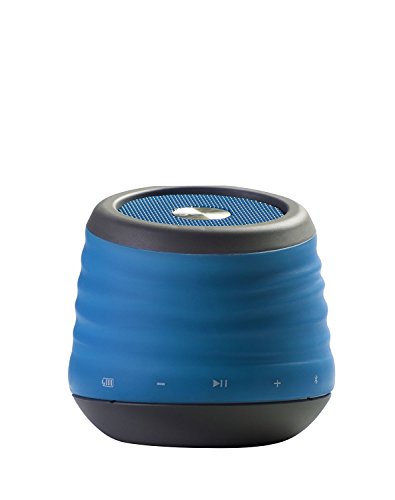
The Jam XT Extreme proves that you do not need a bulky boombox to enjoy reliable tunes in the great outdoors. Engineered with active lifestyles in mind, this compact speaker combines a rugged silicone-armored exterior with everyday acoustic clarity. It delivers a reassuringly dense feel in the hand, ready to withstand unexpected drops, trail grit, and afternoon showers with equal ease.
Targeted squarely at hikers, backpackers, and job-site workers, the speaker excels in environments where delicate electronics fear to tread. The fold-out carabiner clip is a standout utility feature, allowing you to quickly latch the unit onto your daypack or bicycle handlebars without needing secondary straps. It pairs seamlessly with both iOS and Android smartphones, establishing an immediate connection every time you power it on.
In everyday use, the speaker shines as a dependable companion for outdoor chores, beach cookouts, and campsite downtime. The built-in speakerphone picks up voices clearly, making it effortless to take quick calls without fishing your phone out of your pocket. An auxiliary line-in also guarantees support for legacy MP3 players or laptops whenever wireless pairing is not an option.
Ultimately, the Jam XT Extreme strikes an impressive balance between outdoor survivability and affordable functionality. While it is not designed to replace a multi-driver home stereo, its resilient build and ultra-portable footprint make it a top-tier recommendation for adventurous listeners who prioritize toughness above all else.
Acoustically, the Jam XT Extreme is tuned to deliver clean vocals and bright instrumentation that cut through ambient outdoor noise. Dialogue in podcasts, acoustic guitars, and classic rock tracks come through with surprising definition for a unit measuring barely three inches across. Because it avoids over-saturating the low end, vocal clarity remains consistently high even when listening at arms length.
Low-end bass performance is punchy and tight, though physics naturally dictates its boundaries. While you will not feel bone-rattling sub-bass vibrations, the speaker avoids muddying the midrange frequencies, ensuring tracks maintain an energetic and balanced sound profile. It pushes respectable volume levels that easily fill a campsite, patio table, or single-car garage without introducing harsh distortion.
Wireless performance stays rock-solid within its 30-foot operating range, maintaining a stable stream through light foliage or across a picnic clearing. The controls are responsive and easy to navigate by touch, allowing you to pause audio or accept incoming calls without breaking stride.
Built like a miniature tank, the Jam XT Extreme features an all-weather silicone skin with sealed port covers to block out external debris. Its official IP64 rating ensures solid resistance against splashing water from any angle as well as complete protection against dust and dirt ingress. Whether resting on dusty trail switchbacks or hung near a wet sink, the chassis handles environmental elements with absolute confidence.
Weighing in at just 0.55 pounds and measuring roughly 3.3 inches on each side, this speaker will never weigh down your pack. The integrated fold-out carabiner clip folds flush against the body when resting on flat surfaces, preventing any unwanted rolling or instability while the speaker rests on a picnic table or workbench.
The built-in rechargeable lithium-ion battery provides up to 8 hours of continuous audio playback, which easily covers a standard workday or day-long mountain ascent. Recharging is straightforward using the included USB cable, restoring the internal cell quickly so your gear is packed and ready for the next adventure.
Understanding the Lifespan and Playtime of Jam Audio Speakers
Evaluating the endurance of compact audio hardware involves looking at both immediate playback duration and multi-year mechanical durability. Knowing how long does a jam speaker last on a single afternoon outing gives you peace of mind before heading out the door, while estimating total years of ownership protects your gear investment. Real-world performance rarely follows a simple single-number rating because listening habits, charging practices, and environmental conditions continuously influence operational health. Understanding the core variables that affect battery capacity and physical longevity helps you set realistic expectations for your everyday sound equipment.
Single-Charge Battery Playtime: Rating Versus Reality
Manufacturer specifications for the JAM XT Extreme Wireless Speaker list an estimated runtime of up to 8 hours of wireless play from its built-in rechargeable lithium-ion battery. This benchmark serves as a helpful baseline for casual daily listening, though factory ratings are typically calculated under standardized laboratory conditions. Operating the speaker at moderate output levels around fifty percent volume allows the internal amplifier to draw power evenly without placing severe strain on the battery pack. When used indoors for background music at conversational volumes, reaching this eight-hour mark is entirely practical and achievable.
Pumping the output toward maximum volume dramatically increases the electrical current required by the acoustic transducer. High-volume playback can shorten battery life from the stated eight hours down to roughly four or five hours during demanding listening sessions. Continuous loud playback forces the internal amplifier to work near its thermal and electrical limits, which rapidly accelerates battery discharge. Balancing your volume preferences based on your immediate environment helps ensure the speaker stays powered throughout your entire outing.
How Audio Dynamics and Frequency Ranges Influence Drain
Acoustic reproduction demands fluctuating amounts of power depending on the sonic frequencies present in your favorite music tracks. Reproducing deep bass notes requires much more physical excursion from small speaker drivers than rendering mid-range vocals or delicate high frequencies. When a compact speaker pumps out bass-heavy tracks, the voice coils demand substantial current surges from the internal lithium-ion battery pack. These continuous energy spikes cause the battery voltage to dip faster than when playing flatter acoustic material.
Acoustic genres, podcasts, and spoken-word radio content draw a much steadier, lower current across the entire frequency spectrum. Listeners tuning into audiobooks or light acoustic recordings can routinely achieve playtimes very close to the listed eight-hour ceiling. Equalizer adjustments on your connected phone can also shift how hard the miniature woofer works during playback. Reducing excessive low-frequency boosts in software settings helps preserve stored battery energy without sacrificing vocal clarity.
Wireless Range and Connection Method Impact on Runtime
The JAM XT speaker features a listed 30-foot Bluetooth wireless range, allowing you to stream audio freely from compatible smartphones, tablets, or laptops. Operating your source device near the edge of that wireless threshold forces the Bluetooth receiver to spend additional energy maintaining signal integrity. Solid walls, furniture, and radio-frequency interference from other household electronics can further degrade signal efficiency, leading to higher power consumption. Keeping your streaming phone within ten to fifteen feet of the speaker minimizes packet retransmissions and helps preserve battery power.
Using the speaker’s dedicated auxiliary line-in jack offers an effective alternative when maximum runtime is your primary goal. Connecting an external media source via a standard 3.5 mm cable bypasses the active Bluetooth receiver entirely, eliminating wireless processing overhead. This wired configuration can help squeeze extra listening time out of a single charge while also providing a stable connection for non-Bluetooth gear. Carrying an auxiliary cable in your travel bag provides a dependable fallback whenever wireless pairing is unnecessary or battery reserves are running low.
Rechargeable Lithium-Ion Lifespan and Overall Service Years
Beyond single-day playtime, hardware lifespan measures how many years the device remains functional before the battery or internal circuitry fails. Most consumer rechargeable lithium-ion cells are engineered to provide approximately three hundred to five hundred complete charge cycles before capacity degrades noticeably. For an owner who charges their portable speaker once or twice a week, this cycle threshold translates to roughly three to five years of dependable service. Even after hitting that cycle ceiling, the speaker usually continues playing, albeit with reduced total operating hours between charges.
Battery degradation is a natural chemical process that gradually reduces the maximum capacity the internal cells can retain. After several hundred charge cycles, an eight-hour speaker might only hold enough charge for four to six hours of playback at moderate volume. The speaker remains fully functional for desktop listening or short outings, but the diminishing capacity signals that the internal chemistry is steadily aging. Understanding this chemical timeline helps you distinguish between normal cell aging and sudden hardware malfunctions.
Rugged Construction and IP64 Environmental Ingress Protection
Physical durability plays an equally vital role in determining whether a portable speaker survives long-term active use in rugged outdoor environments. The JAM XT Extreme features an IP64 rating, which designates high-level resistance against both solid particle ingress and liquid exposure. The first digit signifies complete protection against dust, sand, and fine dirt particles that could otherwise infiltrate the acoustic chamber or electronic circuitry. This dust-proof barrier prevents microscopic grit from settling into the voice coil gap or clogging delicate internal switches.
The second digit confirms that the housing is splash-proof against water spraying from any direction, making it suitable for pool decks, light rain, or dusty campsites. However, an IP64 classification does not mean the speaker is completely submersible or rated for high-pressure water jets. Comparing these ratings with larger portable outdoor audio gear highlights how different enclosures handle extreme weather, making protective port flaps crucial for keeping moisture away from sensitive charging ports. Keeping the protective rubber seal firmly closed prevents water drops from entering the electrical terminals and causing short circuits.
Drop Resistance and Mechanical Stress Protection
Portable audio hardware intended for outdoor recreation inevitably encounters accidental drops, bumps, and rough handling on abrasive surfaces. The JAM XT is designed with a drop-proof rubberized exterior bumper that helps absorb impact shocks before kinetic energy reaches delicate internal circuit boards. This rugged outer layer prevents cosmetic scuffs while dampening sudden shocks that might otherwise dislodge solder joints or damage driver voice coils. The shock-absorbing enclosure provides crucial protection when the speaker accidentally slips from a table or picnic bench.
The unit also incorporates a fold-out carabiner clip that secures the speaker to backpacks, tent poles, or belt loops during transit. Using the clip keeps the speaker elevated above muddy ground and damp surfaces, reducing unwanted physical abrasion during hikes or bike rides. It also prevents the speaker from rolling off uneven surfaces or tumbling down rocky trails when you set up camp. Taking advantage of these built-in mechanical safeguards helps prevent accidental drops and extends the overall mechanical life of the chassis.
Best Charging Habits to Maximize Battery Longevity
Applying proper charging routines is the most effective way to prevent premature battery wear in portable Bluetooth speakers. Lithium-ion cells experience the lowest chemical strain when maintained between twenty percent and eighty percent of their total charge capacity. Letting the speaker repeatedly drop to zero percent until it completely dies places significant stress on the internal cathode and anode structures. Plugging the speaker in before it shuts down unexpectedly preserves the chemical integrity of the cells over hundreds of cycles.
Whenever possible, recharge the speaker using the included USB charge cord and a certified, standard five-volt power adapter. Avoid leaving the device connected to a high-output quick charger for days at a time after the indicator light signals a full charge. Disconnecting the cable promptly after the battery finishes replenishment helps keep operating temperatures cool and protects delicate internal charging regulators. Following these disciplined charging practices prevents early battery degradation and ensures consistent performance across several seasons.
Temperature Extremes and Safe Storage Guidelines
Environmental temperature exerts an enormous influence on both immediate runtime and long-term chemical battery health. Operating or storing a wireless speaker in blistering heat, such as on a car dashboard under direct summer sunlight, rapidly degrades battery electrolyte compounds. High thermal levels can permanently slash total cell capacity and increase the risk of internal battery swelling or protective shutdown. Keeping the speaker in shaded, ventilated areas during hot summer gatherings prevents thermal stress from harming internal components.
Freezing winter weather can also temporarily inhibit ion flow, causing the speaker to report a dead battery prematurely during outdoor use. If you plan to store your speaker away during the off-season, keep it in a climate-controlled room at roughly fifty percent charge. Storing the unit fully depleted or completely charged for months at a time accelerates chemical capacity loss. Inspecting and topping up the battery every three to four months prevents deep self-discharge, ensuring the unit wakes up promptly when outdoor activities resume.
Routine Maintenance and Port Seal Inspection
Maintaining the physical seals on your speaker prevents common outdoor hazards from compromising the internal electronics over time. Dust, beach sand, and dried saltwater residue can collect around rubber port covers and speaker grilles after outdoor adventures. Wiping down the exterior with a soft, slightly damp cloth removes abrasive grit before it works its way into mechanical crevices. Avoiding harsh chemical cleaners or abrasive scouring pads protects the rubberized coating from cracking or peeling.
Always inspect the rubberized flap covering the USB charging input and auxiliary line-in jack before exposing the unit to moisture. If fine sand or lint prevents the flap from seating firmly into its groove, moisture can seep past the barrier and corrode the contacts. Checking the seal ensures the rated splash and dirt protection remains dependable throughout the product’s life. Keeping these connection interfaces clean and securely sealed ensures that unexpected splashes never turn into permanent hardware failures.
Recognizing Signs of Battery and Hardware Wear
Identifying when a portable speaker is nearing the end of its useful lifespan helps you avoid sudden hardware failures during travel. The most common early warning sign is an abrupt drop in battery performance, where a full charge depletes in less than two hours under moderate volume. You may also notice the speaker shutting off suddenly during heavy bass passages, indicating that the aging battery can no longer deliver necessary peak voltage. These symptoms reveal that the internal power cell has developed high internal resistance.
Other symptoms include a micro-USB charging port that requires constant jiggling of the cable to maintain a steady charging connection. Mechanical loosening of internal solder pads happens gradually after years of inserting and unplugging charging cables. Bluetooth pairing instability or repeated audio stuttering despite close proximity can also signal aging transceiver hardware. When physical connection points loosen or battery runtime becomes unmanageable, the practical service life of the device has likely come to an end.
Evaluating Long-Term Value and Realistic Replacement Expectations
Budget-friendly portable speakers are primarily engineered for convenient, worry-free entertainment rather than multi-decade heirloom operation. A rugged model that delivers three to five years of consistent outdoor playback provides excellent return on investment for active households. Because compact sealed enclosures generally do not feature user-replaceable batteries, replacement usually becomes more economical than attempting complex micro-soldering repairs. Understanding these design limits allows you to appreciate the practical value of compact audio gear without expecting industrial longevity.
If your speaker still holds several hours of charge and maintains clear sound without driver buzz or rattle, it remains a valuable tool for background listening. Knowing how long does a jam speaker last ultimately empowers you to plan your audio setup sensibly, balancing affordable grab-and-go convenience with realistic durability expectations. Treating the battery with care, closing protective port seals, and moderating listening volume will ensure your compact wireless speaker keeps the music playing across many memorable seasons.


Write Your Review
No reviews yet. Be the first to share your experience!