


Setting up a dedicated listening room or home theater often leads to a fundamental audio dilemma: do floor standing speakers need a subwoofer to achieve truly satisfying sound? Tower speakers command significant physical space and naturally offer larger cabinet volume than compact monitors, allowing them to reproduce fuller mid-bass without immediate assistance. For many casual listeners and music purists, a well-engineered pair of floorstanders provides plenty of low-end punch for acoustic instruments, rock kick drums, and vocal warmth. Exploring dedicated 2.1 speaker systems reveals how separate low-frequency drivers alter the listening field, but whether that extra cabinet is required depends largely on your source material.
The distinction between musical bass notes and cinematic low-frequency effects determines where tower speakers succeed alone and where a subwoofer becomes essential. Film soundtracks push frequencies down toward twenty hertz to create physical rumblings that even substantial floorstanding woofers struggle to generate cleanly. Additionally, amplifier power constraints and room acoustics can cause localized bass loss regardless of how capable your main speaker cabinets are. Understanding how speaker enclosure design, crossover frequencies, and listening spaces interact helps you decide if a standalone sub is an urgent requirement or an optional enhancement for your home sound system.

Pros
- Powerful subwoofer delivers punchy bass without distortion
- Multiple inputs ensure easy connectivity from any device
- Bluetooth streaming pairs quickly for wireless freedom
- USB port charges phones while playing music
- Compact tower footprint fits tight spaces perfectly
Cons
- Requires wall outlet for power with no built-in battery
- FM radio reception depends on location signal strength
- Lacks companion app for EQ customization
The GOgroove STW Bluetooth tower speaker is a floorstanding 2.1 audio powerhouse designed for compact living spaces. Standing at 38 inches tall with a sleek walnut finish, it combines a built-in powered subwoofer and dual drivers to deliver 120W peak power, making it perfect for apartments, dorms, studios, and home offices where big sound matters but space does not.
Targeted at music enthusiasts who want immersive home audio without bulky setups, the STW shines in real-world use by filling rooms with booming bass and crisp details during playlists, podcasts, or radio sessions. Its device dock lets you rest your phone while the side USB port keeps it charged, preventing interruptions during long streams.
Performance stands out with stable Bluetooth connectivity for effortless wireless playback, alongside AUX, USB drive MP3 support, and FM radio for variety. In everyday scenarios like background music for work or movie nights, it provides consistent clarity and volume without overwhelming neighbors.
Overall verdict: A top pick for budget-conscious buyers seeking versatile, space-saving sound that punches above its size. It transforms small areas into vibrant listening zones with reliable features and stylish design.
The STW's 2.1 configuration excels with a 30W subwoofer delivering deep, rumbling bass that vibrates floors in small rooms, paired with dual 15W drivers for balanced mids and highs. Vocals come through with amazing clarity, making it great for everything from hip-hop beats to talk radio.
At 120W peak power (60W RMS), it reaches high volumes without muddiness, ideal for parties or solo sessions in apartments. Bluetooth range stays solid up to 33 feet, with stable streaming that handles skips from doorways or walls in typical home layouts.
Switch between wireless, wired AUX, USB playback, or FM for flexibility, ensuring consistent performance across sources without dropouts or lag.
The 38.25 x 9.87 x 8.5-inch unibody tower offers a slim, floorstanding profile that accents modern lounges without dominating space. Its walnut woodgrain finish adds a premium, furniture-like touch to dorms or offices, while the sturdy build ensures stability on any surface.
Lacking a built-in battery, this AC-powered speaker runs continuously for unlimited playback, perfect for stationary home use. The side USB 1A port charges connected phones or tablets up to several hours, supporting all-day streams without device drain.
At around 20 pounds, it's easy to position but stays put during heavy bass, with no IP rating needed for indoor setups. The top dock cradles devices securely, enhancing convenience in everyday lifestyles.

Pros
- Wide adjustable width 4.5-9 inches fits popular brands securely
- Twist-lock height mechanism allows precise positioning without tools
- Deep threaded connections and wide base ensure superior stability
- Dual cable management options keep wires organized and hidden
Cons
- Not compatible with round or irregularly shaped speakers
- Cable holes may be too small for thick connectors, requiring straps
- Minimum height of 33.3 inches may be tall for low seating areas
The PERLESMITH PSSS2 speaker stands are a pair of height-adjustable floor stands designed for satellite, studio, and bookshelf speakers up to 11 lbs. They offer a robust solution for elevating your audio setup, compatible with brands like Bose, Harman Kardon, Polk, JBL, and Sony. Ideal for home theater buffs and music lovers in the US seeking to optimize sound without wall mounts.
In real-world use, these stands transform casual listening into an immersive experience by positioning speakers at ear level, enhancing surround sound for movies and music. The adjustable height from 33.3 to 45.1 inches lets you fine-tune for your room and seating, while the steel construction provides unwavering stability on any floor.
Assembly is straightforward with included hardware, and cable management keeps setups tidy. For anyone building or upgrading a home audio system, these stands deliver professional-grade support at an accessible level.
Verdict: A top pick for stable, customizable speaker elevation that punches above its weight in performance and ease.
By raising speakers to 33.3-45.1 inches, these stands optimize sound staging for deeper bass response and clearer highs in surround setups. Twist-lock adjustments ensure precise angling toward your listening position, minimizing floor reflections for balanced audio during action-packed films or bass-heavy tracks.
Volume levels benefit from stable placement that eliminates vibrations, delivering consistent output without distortion. The wide base and non-slip pads maintain positioning even at high volumes, perfect for lively home parties or late-night sessions.
Bluetooth or wired speaker performance shines with elevated positioning, improving overall clarity and immersion over tabletop placement.
Built from solid steel with a wide base and 20% deeper threaded holes, these stands offer rugged durability for long-term home use. Non-slip foot pads secure them on hardwood, carpet, or tile, ensuring they stay put through daily setups.
The adjustable width of 4.5-9 inches and 1.18x0.59-inch cable holes provide a sleek, modern look that blends into any US living room or media space. Hook-and-loop straps handle thicker cables effortlessly.
At under 11 lb capacity per stand, they support extended listening marathons without fatigue, backed by effortless assembly and responsive US support.

Pros
- Powerful punchy bass that fills large rooms
- Crisp highs without harshness or fatigue
- Bass reflex enclosure boosts low-end extension
- Durable build with classic aesthetic
- Removable grille for versatile styling
Cons
- Large floorstanding size suits bigger spaces only
- Requires external amplifier as passive speaker
- No wireless connectivity options
The Cerwin Vega SL-28 from the Mobile CV SL Series is a robust dual 8-inch 2-way floorstanding speaker built for delivering high-impact audio at home. Featuring large-motor woofers and a soft dome tweeter in a bass reflex cabinet, it excels in producing the kind of bass-heavy sound Cerwin Vega is famous for.
This speaker targets music fans, home theater buffs, and anyone wanting affordable power without skimping on quality. It's perfect for living rooms or dedicated listening spaces where you crave that live concert feel.
In everyday use, it thumps with tight, punchy bass on tracks like bass drops or explosions, while highs stay clear for vocals and instruments. The design ensures balanced output across genres.
Overall verdict: Excellent value for bass-forward home setups, combining classic looks with serious performance punch.
Bass depth comes alive with dual 8-inch woofers providing punchy, authoritative lows that rattle furniture during action scenes or EDM beats. The bass reflex cabinet extends response for fuller, deeper sound without boominess.
Vocal clarity and highs sparkle thanks to the 1-inch soft dome tweeter, cutting through mixes cleanly for sharp cymbals and intelligible dialogue. Volume scales to party levels with solid control.
Stable performance shines when wired to an AV receiver, covering rooms effectively for consistent playback across your space.
Classic styling with a removable grille offers a timeless vibe that matches wood furniture or sleek modern rooms, while the sturdy cabinet handles home vibrations well.
Rugged bass reflex construction stands firm on floors, though its floorstanding heft from dual woofers makes it a stationary powerhouse best for permanent setups.
Powered via AC through your amplifier, it delivers unlimited runtime without battery limits, keeping the music going as long as you want.

Pros
- Superior 2.1 audio with 30W sub and 2x15W drivers for balanced sound
- Multiple inputs including stable Bluetooth streaming
- Convenient side USB port charges phones while docked
- FM radio adds variety for news or local stations
- Space-efficient floorstanding build accents lounging areas
Cons
- Not portable; requires AC power outlet for operation
- Single tower unit lacks true stereo separation
- Larger footprint may overwhelm very tiny rooms
The GOgroove STW is a 38-inch Bluetooth tower speaker with a built-in powered subwoofer and dual drivers, designed for compact living spaces like apartments, dorms, studios, and offices. It stands alone as a floorstander, delivering 120W peak power without needing extra components, making setup simple and clutter-free.
In real-world use, it excels at filling rooms with vibrant sound, from thumping bass tracks to clear podcasts or radio broadcasts. The device dock and USB port let you charge your phone while streaming, perfect for all-day listening without battery worries on your gadgets.
Versatility shines with Bluetooth, AUX, USB flash drive playback, and FM radio, covering every audio need. While not for massive home theaters, it's a powerhouse for personal spaces seeking big audio impact.
Verdict: A smart pick for young professionals or students wanting premium sound on a budget in tight quarters. Its unibody design and multi-inputs make it a daily driver for music lovers.
Bass depth comes alive from the 30W built-in subwoofer, paired with dual 15W drivers for 60W RMS and 120W peak output, creating a full 2.1 sound signature that punches through in small to medium rooms without distortion at high volumes.
Vocal clarity stands out with amazing detail in mids and highs, making lyrics pop during streaming or FM radio. Volume levels handle parties or background music effortlessly, ideal for casual gatherings.
Bluetooth range offers reliable wireless streaming up to typical home distances, with stable connections for uninterrupted play. AUX and USB modes ensure low-latency wired performance for movies or direct file playback.
The 38.25-inch tall unibody tower measures just 9.87 x 8.5 inches at the base, providing a sleek, modern accent that saves floor space in apartments or dorms while standing firm without wobbling.
No internal battery means it's always plugged in for continuous power, but the side USB 1A port charges phones or tablets in the dock slot, preventing drain during extended use and supporting all-day sessions.
Build quality feels sturdy for daily home use, with a 3-year warranty backing longevity. Weight distribution keeps it stable, though its size suits stationary setups over portable ones.
Pros
- Exceptional build quality with premium piano black finish
- Bass-reflex port delivers powerful low-end response
- Gold-plated terminals for optimal connectivity and durability
- Removable grille for clean look or protection
- Ideal for high-fidelity home audio environments
Cons
- Only one speaker per package, requires purchase of second for stereo
- Floorstanding size may overwhelm smaller rooms
- Requires external amplifier for full performance
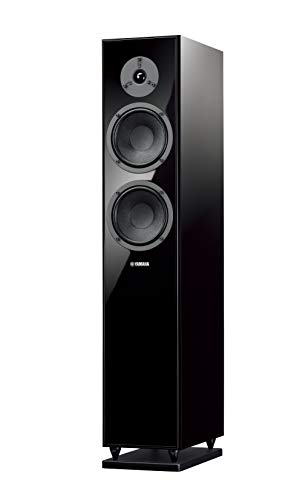
The Yamaha NS-F150 is a premium 2-way bass-reflex floorstanding speaker designed for serious home audio enthusiasts. Standing tall with a sleek piano black mirror finish, it brings professional-grade sound to living rooms, home theaters, or dedicated listening spaces. Ideal for those upgrading from bookshelf speakers, it pairs perfectly in stereo setups for balanced, expansive audio.
In real-world use, the NS-F150 excels at delivering detailed soundstages during movie marathons or vinyl sessions. Its bass-reflex design punches out deep lows without muddiness, while the 2-way driver setup ensures vocal clarity and instrument separation. Gold-plated terminals provide secure connections to amplifiers, minimizing signal loss for faithful reproduction.
While it demands space and a quality amp, the NS-F150 rewards with enduring performance and style. This speaker suits audiophiles prioritizing fidelity over portability, making it a cornerstone for immersive home entertainment.
Verdict: A top choice for building a high-end audio system that transforms everyday listening into a concert-like experience.
The NS-F150's 2-way bass-reflex design produces deep, controlled bass that fills medium to large rooms, perfect for action films or bass-heavy genres. Low frequencies extend impressively without boominess, thanks to the tuned port, creating a solid foundation for the overall sound.
Mids and highs shine with clarity, making vocals in jazz tracks or dialogue in movies stand out effortlessly. Volume levels scale smoothly to party-ready loudness without harshness, and it maintains composure across genres from rock to classical.
For home setups, connectivity via gold-plated terminals ensures stable, high-fidelity performance when paired with a receiver, delivering consistent audio quality over extended sessions.
Crafted with a striking piano black mirror finish, the NS-F150 adds a touch of luxury to any home interior, blending seamlessly with modern furniture. The removable grille offers flexibility, protecting drivers during daily use or revealing the internals for a minimalist vibe.
Its floorstanding form provides inherent stability, with a robust build that withstands years of placement in high-traffic areas. Gold-plated speaker terminals resist corrosion for reliable long-term connections.
As a mains-powered speaker, it offers unlimited playback without battery concerns, ideal for continuous home use like background music during gatherings or all-day streaming. Weighing in as a substantial unit, it stays planted firmly, prioritizing acoustic performance over portability.
Pros
- Remarkable midrange transparency and vocal clarity courtesy of the isolated internal sub-enclosure
- Punchy, controlled low-end performance that fills medium to large living spaces effortlessly
- Ultra-low distortion at high volume levels with clear, fatigue-free treble response
- Sturdy, resonance-free cabinet design with an elegant black ash finish that complements modern decor
Cons
- Revealing sound profile can accentuate compression artifacts on poorly mastered audio tracks
- Requires a capable amplifier or AV receiver with clean power to unlock its full dynamic headroom
- Deep 11.6-inch footprint needs adequate breathing room away from rear walls for optimal bass response
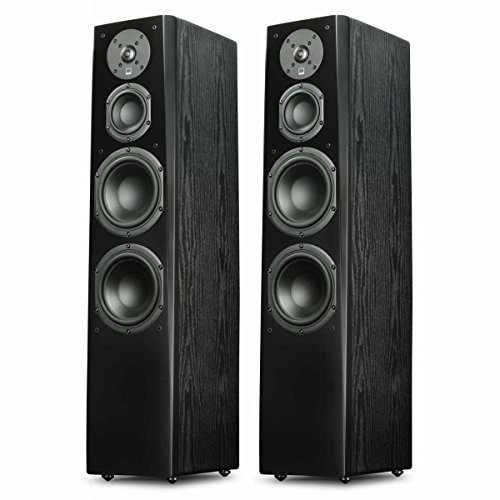
The SVS Prime Tower speakers represent an extraordinary benchmark in high-fidelity audio reproduction, combining precision engineering with audiophile-grade components to deliver uncompromising sound. Designed by SVS, a brand celebrated for acoustic innovation and subwoofer mastery, these floorstanding speakers bridge the gap between high-end boutique performance and everyday listening practicality. Built from the ground up to handle demanding dynamic swings, they serve as a formidable front stage anchor for movies, gaming, and critical stereo playback alike.
These towers are engineered specifically for audio enthusiasts and home theater aficionados who demand authentic acoustic reproduction without artificial sound coloration. Whether you are assembling a dedicated surround sound theater in a finished basement or curating an intimate listening room centered on vinyl records and lossless digital streaming, the Prime Towers adapt seamlessly. They provide the full-range authority needed to render thunderous cinematic crescendos while retaining the delicacy required for intimate acoustic guitar and orchestral tracks.
In real-world listening tests, the Prime Towers immediately impress with their expansive soundstage and uncanny imaging precision. The dedicated midrange chamber ensures that movie dialogue and lead vocals cut through complex soundtracks with striking realism, avoiding the midband congestion common in simpler multi-driver designs. Meanwhile, the twin woofers blend tight bass impact with rapid transient speed, easily keeping rhythm with frantic kick drums and low-frequency effects without bleeding into the lower midrange.
Ultimately, the SVS Prime Tower pair achieves a rare balance of analytical precision, dynamic slam, and long-term listenability. They do not merely reproduce sound; they draw you deeper into the source material by uncovering subtle background cues and dynamic textures you may have previously missed. For serious audio enthusiasts seeking floorstanding performance that punches well above its category, the Prime Towers stand as an undeniable triumph in acoustic design.
Acoustic performance in the SVS Prime Tower is driven by a sophisticated 3.5-way SoundMatch crossover topology. This proprietary crossover design minimizes driver phase issues and eliminates acoustic lobing, creating an expansive sweet spot that blankets the entire room with cohesive sound. The 1-inch aluminum dome tweeter offers pristine treble extension, yielding crisp highs and an airy atmosphere without slipping into harsh sibilance, even during intense, high-decibel movie scenes.
Vocal accuracy and midband presence are anchored by a separate 4.5-inch driver housed in its own hermetically sealed enclosure. This isolation eliminates air pressure interference from the bass drivers, resulting in clean, uncolored human voices and lifelike acoustic instruments. Below, the dual 6.5-inch polypropylene woofers deliver tight, articulate low-end authority that reaches deep into foundational bass registers. The bass remains musical and fast, producing visceral energy while retaining distinct pitch definition across every note.
Built with acoustically inert medium-density fiberboard and extensive internal bracing, the Prime Tower cabinets measure 36.6 inches high, 8 inches wide, and 11.6 inches deep. Weighing over 40 pounds apiece, each enclosure is engineered to eliminate internal standing waves and exterior resonance. The front baffle features strategically chamfered edges that mitigate high-frequency baffle diffraction, significantly sharpening stereo imaging and off-axis response. The premium black ash finish provides an understated, sophisticated look that fits naturally into any modern living room.
As passive floorstanding loudspeakers, the Prime Towers require clean amplification to unleash their true dynamic headroom. Featuring premium dual gold-plated 5-way binding posts on the rear panel, they support standard banana plugs, spade lugs, or bare wire configurations, with options for bi-wiring or bi-amping. SVS recommends pairing them with an amplifier or AV receiver capable of delivering clean power within the 20 to 250 watts per channel range, ensuring you extract every ounce of speed, detail, and low-end impact these towers are capable of producing.
Pros
- Exceptional high-frequency extension to 50kHz
- Powerful peak handling for loud, distortion-free playback
- Sturdy build enhances acoustic performance
- Versatile 3-way design suits music and movies
Cons
- Requires external amplifier or receiver
- Large floorstanding size needs ample space
- No built-in wireless connectivity
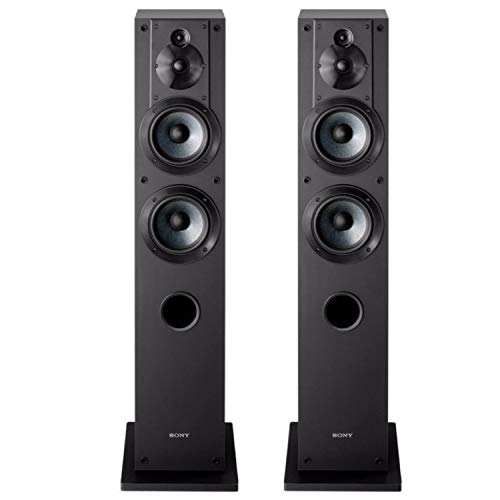
The Sony SS-CS3 is a pair of 3-way floorstanding speakers featuring four drivers, including a 1-inch polyester main tweeter and a 3/4-inch super tweeter. Designed for home audio enthusiasts, they excel in delivering high-resolution sound up to 50kHz, making them perfect for those upgrading their living room stereo or home theater system.
In real-world use, these speakers produce rich acoustics thanks to their robust cabinet and 145W peak power handling. Paired with a quality receiver, they fill medium to large rooms with clear, detailed sound ideal for music listening or movie nights.
Targeted at US buyers seeking wired hi-fi performance without portability needs, the SS-CS3 stands out for its value in immersive home setups. Overall verdict: A solid choice for balanced, high-fidelity audio that punches above its weight.
The 3-way design ensures deep bass from the woofer, clear mids, and extended highs up to 50kHz from the dual tweeters, creating a wide soundstage with excellent vocal clarity and instrument separation.
With 145W peak power and 6 Ohm impedance, these speakers handle high volumes without distortion, performing best with powerful amps for rock concerts or action films at home.
Stable wired connectivity via standard speaker terminals delivers reliable performance, outperforming budget bookshelf options in room-filling dynamics.
The strong cabinet design reduces resonances for purer sound, while the floorstanding form provides a stable base with a sleek black finish that blends into modern US living rooms.
At 6 Ohms, they match most home receivers easily, with no battery required as passive speakers draw power from your amp for unlimited playback.
Large footprint suits dedicated audio spaces but may overwhelm small apartments; rugged build promises longevity in home environments.
Evaluating the Need for a Subwoofer with Floorstanding Speakers
Floorstanding speakers do not universally require a subwoofer to deliver rich, balanced audio across typical listening environments. Their tall cabinets and multi-driver designs generate substantial low-frequency energy that easily outclasses compact bookshelf speakers. However, whether your audio setup demands a dedicated subwoofer depends on your media choices, listening room acoustics, and desire for deep bass extension. Looking at how cabinet design, listening habits, and electrical power interact reveals exactly when an external subwoofer is essential and when your towers can stand on their own.
Acoustic Physics of Floorstanding Speaker Cabinets
Internal cabinet volume gives floorstanding speakers a major acoustic advantage over compact monitor speakers. Reproducing low frequencies requires moving large amounts of air, which demands generous internal space and wider cone area. Because tower speakers extend from the floor to seated ear height, their enclosures provide the cubic volume needed for lower cabinet resonance. This physical space allows woofers to produce natural, effortless bass notes without requiring extreme driver excursion.
Driver configurations further elevate the bass output of quality floorstanding designs. Many towers feature dual woofers working in parallel, such as the dual 6.5-inch drivers on the SVS Prime Tower or dual 8-inch cones on the Cerwin Vega SL-28. Ported enclosures, such as the Yamaha NS-F150, use tuned bass-reflex vents to harness acoustic energy from behind the woofer cone. These ports reinforce output near the cabinet tuning frequency, helping towers reach cleanly down into the forty-hertz range.
Sophisticated crossover networks ensure each driver handles only the frequencies it reproduces most accurately. In three-way designs, dedicated woofers handle low octaves while separate drivers reproduce delicate vocals and midrange instruments. The Sony SS-CS3 uses a multi-driver layout to maintain tonal balance across the audio spectrum without taxing the lower woofers. This acoustic division delivers clean, punchy mid-bass that handles the vast majority of standard stereo listening without distortion.
Music Reproduction Demands vs. Home Theater Low-Frequency Effects
The frequency range of your everyday media determines whether you truly need an external subwoofer. Recorded acoustic and amplified music rarely dips below forty hertz, which matches the lowest note on a standard four-string electric bass. Kick drums, grand piano low notes, and synthesizers in popular music concentrate most of their punch between forty-five and ninety hertz. Because capable floorstanding speakers reproduce these frequencies with authority, stereo music listeners rarely find a standalone subwoofer strictly necessary.
Modern film soundtracks present completely different acoustic challenges through the dedicated low-frequency effects channel. Action movies, science fiction releases, and gaming titles direct massive sub-bass signals to the subwoofer track, often dropping down toward twenty hertz. Explosions, earthquakes, spaceship engines, and sweeping orchestral rumbles rely on frequencies below thirty hertz to produce tactile, physical impact in your room. Standard tower woofers generally lack the excursion and magnetic strength required to reproduce those subterranean rumbles at theater volume levels.
Dedicated home theaters benefit immensely from the specialized internal design of an active powered subwoofer. Powered subwoofers feature heavy cones, stiff surrounds, and high-wattage internal amplifiers designed specifically for continuous low-end transients. While on-wall speaker installations require a subwoofer just to produce basic bass, tower speakers provide respectable punch above forty hertz. Even so, dedicated movie spaces still need a subwoofer to deliver the visceral, room-shaking sensations modern sound mixers engineer into blockbuster films.
Amplifier Strain, Headroom, and Crossover Management
Deep bass reproduction places the highest electrical current demands on your stereo amplifier or surround receiver. Moving stiff woofer cones against air resistance drains far more electrical power than driving lightweight tweeter domes. When floorstanding speakers run full-range, your receiver channels a huge percentage of its output wattage into producing low-frequency notes. During intense dynamic movie scenes, this continuous drain can push budget amplifiers toward clipping, introducing harsh distortion across all audio frequencies.
Speaker impedance also drops sharply at certain low frequencies, creating a challenging electrical load for your amplifier. A speaker rated nominally at six ohms, such as the Sony SS-CS3, may dip much lower during demanding bass peaks. These low-impedance dips pull heavier electrical current from amplifier power supplies, creating extra heat and reducing dynamic stability. If your receiver lacks high-current capability, running floorstanders without a subwoofer can limit your system overall dynamic headroom.
Introducing an active subwoofer solves this electrical problem through modern receiver bass management. Setting an eighty-hertz crossover filters deep bass away from your towers and redirects those frequencies to the powered subwoofer. This handoff frees your main amplifier from heavy lifting, allowing it to drive the midrange and treble with effortless clarity. The result is improved dynamic impact, cleaner vocals, and lower total distortion from your floorstanding speakers when listening at spirited volumes.
Room Modes, Acoustic Nulls, and Placement Conflicts
Room acoustics frequently force listeners to compromise between precise stereo imaging and smooth bass response. Floorstanding speakers must be placed symmetrically relative to your seating area to establish a broad soundstage and clear vocal imaging. They also require proper spacing from side boundaries and subtle inward angling toward your ears. Unfortunately, the exact cabinet positions that create stunning stereo imaging rarely coincide with the room locations that produce smooth, even bass response.
Sound waves reflect between parallel walls, floorboards, and ceilings, creating standing waves called room modes. These reflections create acoustic peaks where bass sounds boomy and acoustic nulls where specific bass notes cancel out completely. If your sofa sits in a bass null relative to your tower speakers, low frequencies will sound weak regardless of woofer size. Shifting the towers closer to walls can reinforce bass volume, but doing so often muddies the midrange and ruins soundstage depth.
Adding a separate subwoofer unties low-frequency reproduction from your main stereo speaker positioning. You can leave your floorstanding speakers where they image best while placing the subwoofer in an acoustically favorable spot. Performing a standard subwoofer crawl reveals boundary locations that minimize cancellations and smooth out bass response across your seating area. This separation of acoustic roles gives you pristine stereo imaging and balanced, articulate bass simultaneously.
Integrated Tower Solutions and Small-Room Space Constraints
Not every home offers enough open floor area to fit both large floorstanding speakers and an external subwoofer enclosure. In apartments, bedrooms, and home offices, floor space is often strictly limited. Manufacturers have responded by creating powered vertical speaker systems, such as the GOgroove Bluetooth tower series, which incorporate a powered subwoofer directly inside a slim vertical cabinet. These single-tower designs save valuable square footage while still providing meaningful low-end reinforcement for compact listening areas.
All-in-one powered towers also simplify system setup by eliminating the need for bulky audio receivers and extensive speaker wiring. Built-in Bluetooth streaming, auxiliary connections, and USB playback make these towers convenient standalone audio hubs for casual everyday entertainment. While an internal thirty-watt active subwoofer cannot match the seismic output of an independent home theater sub, it produces enjoyable low-end warmth. For modest spaces, integrated towers deliver a tidy balance of physical convenience, aesthetic simplicity, and full-range sound.
Listeners working with tight spaces also consider satellite speakers mounted on height-adjustable stands, such as Perlesmith universal stands, paired with a compact subwoofer tucked away under furniture. Alternatively, exploring speakers designed for deep bass and clarity reveals wireless options that provide strong bass without occupying floor area. Assessing your room dimensions honestly helps you select an audio configuration that fills the room with rich sound without creating physical clutter.
Optimal Crossover Calibration and Subwoofer Integration
When you pair an active subwoofer with floorstanding speakers, proper calibration prevents the two components from competing with one another. A common error is leaving tower speakers set to full-range while running the subwoofer with an overlapping low-pass filter. When both the tower woofers and the subwoofer reproduce the same fifty-hertz frequencies, phase cancellations or boomy bass peaks frequently result. Calibrating your receiver settings ensures smooth frequency handoffs and clean acoustic integration across your entire speaker array.
Start by navigating to your AV receiver speaker setup menu and designating your front floorstanding speakers as small. Although calling tall tower speakers small feels unusual, this setting tells the digital processor to activate bass management crossovers. Next, choose an appropriate crossover frequency based on your tower woofer specifications. For capable floorstanders with six-inch or eight-inch woofers, an eighty-hertz or sixty-hertz crossover point creates a seamless transition to the subwoofer while maintaining clean mid-bass dynamics.
Adjusting the physical phase control and volume gain on your subwoofer completes the system calibration. Put on a familiar song featuring a steady acoustic or electric bassline and toggle the phase switch between zero and one hundred eighty degrees. Keep the switch in the position that produces the fullest, most natural low-end punch at your main seat. Finally, adjust the subwoofer volume knob so low frequencies blend naturally under your towers rather than overpowering your soundstage.
Scenarios Where You Can Skip the Subwoofer Completely
Certain listening environments and entertainment habits make a standalone subwoofer entirely unnecessary. Dedicated two-channel stereo listening rooms designed for jazz, classical, folk, or classic rock provide a prime example. Balanced floorstanding speakers like the Yamaha NS-F150 or SVS Prime Towers reproduce acoustic instruments with realistic pitch accuracy and agility. In these settings, the bass generated by large tower woofers feels cohesive, organic, and perfectly balanced with vocal frequencies.
Apartment buildings and shared-wall condominiums also present compelling reasons to avoid adding a powered subwoofer. Deep sub-bass waves below thirty-five hertz travel effortlessly through drywall, framing, and floor joists, often annoying neighbors even at modest listening levels. Floorstanding speakers produce satisfying mid-bass that remains far more contained within your personal living space. Sticking with towers alone lets you enjoy dynamic music and clear dialogue without creating noise disputes with adjacent residents.
Budget considerations also favor prioritizing high-quality floorstanding speakers over splitting funds between budget towers and a cheap subwoofer. Inexpensive subwoofers often sound boomy, one-note, and sluggish, which degrades your overall system performance. Putting your full speaker budget into well-braced, high-grade floorstanders guarantees cleaner midrange clarity, refined treble detail, and accurate bass response. You can always expand your setup with a high-performance subwoofer later if your listening space or movie habits demand deeper impact.
Practical Troubleshooting for Thin or Boomy Tower Bass
Before deciding your floorstanding speakers lack sufficient bass and buying extra gear, check your basic speaker setup. The most common cause of weak, hollow bass from stereo towers is inverted speaker wire polarity. If the positive wire connects to the negative terminal on one speaker while the other speaker is wired correctly, low frequencies cancel out across the room. Double-checking that positive terminals connect strictly to positive terminals across both channels often restores rich bass immediately.
Cabinet distance from walls and room corners also strongly affects the balance of low-frequency energy. If your floorstanding speakers feature rear-firing bass-reflex ports, placing them directly against a wall can create muddy, boomy resonance. Pulling the towers twelve to twenty inches out into the room tightens transient punch while preserving clarity. Conversely, if your towers sound thin, moving them slightly closer to back walls uses boundary reinforcement to boost low frequencies safely.
Source settings and audio formats can also create the false impression that your speakers lack bass capability. Many streaming applications, televisions, and gaming consoles feature dynamic range compression or night audio modes that intentionally strip away bass energy. Make sure your source device outputs an uncompressed, flat audio signal to your amplifier before judging low-end performance. Testing several well-mastered tracks across various musical styles confirms what your floorstanding speakers can actually achieve on their own.
Practical Guidance for Finalizing Your Speaker System
Deciding whether your floorstanding speakers require a subwoofer depends on balancing your entertainment habits with your room acoustic reality. If you primarily enjoy two-channel music, live recordings, or television drama in a typical living room, capable floorstanders provide all the punch and warmth you need. Their multi-driver arrays deliver full-range sound from crisp treble down through punchy drum beats without adding extra boxes or complicated wiring.
For home theater enthusiasts, action film lovers, and listeners who crave visceral sub-bass rumble, a dedicated powered subwoofer remains an invaluable addition. The subwoofer takes over challenging sub-thirty-hertz effects while freeing your main amplifier to drive your floorstanding speakers with pristine clarity and dynamic headroom. Starting with quality floorstanding speakers lets you enjoy superb sound right away, giving you time to evaluate whether adding a subwoofer will truly elevate your entertainment experience.




Write Your Review
No reviews yet. Be the first to share your experience!