


Outdoor gatherings, hiking trips, and desktop setups often call for lightweight audio gear that clips right onto a strap or carabiner loop. When a single ultra-compact unit cannot deliver enough volume across an open patio or campsite, listeners naturally wonder, can you sync jbl clip speakers for a wider soundstage? The answer depends entirely on which generation of the hardware you own, as earlier models were engineered strictly as standalone solo devices. Exploring the connection capabilities across the lineup reveals significant differences in wireless protocol support.
While many larger models from the brand offer proprietary grouping features, the Clip line followed an entirely different trajectory until recent hardware updates arrived. Enthusiasts who also consider compact portable speakers know that multi-speaker linking varies dramatically between ultra-portable form factors and mid-sized battery units. In this guide, we examine the native hardware features of each release, detail how the latest Auracast standard changes multi-speaker playback, and discuss operating system solutions that send audio to two separate speakers at once.

Pros
- Surprisingly powerful sound for its compact size
- Effortless Bluetooth 5.1 pairing and stable connection
- IP67 rating handles full submersion and dust perfectly
- Long 10-hour battery keeps the music going without recharges
- Built-in carabiner makes it ultra-portable for any adventure
Cons
- Bass lacks depth compared to larger JBL models
- No companion app for sound customization
- Volume maxes out for small groups, not big parties
The JBL Clip 4 is an ultra-portable mini speaker that punches way above its weight class, delivering big audio and punchy bass from a design small enough to clip onto your backpack or belt. Tailored for active Americans who refuse to leave great sound behind, it's built for outdoor adventures like beach trips, camping, tailgating, and daily commutes.
In real-world use, it shines during hikes where the carabiner keeps it secure, blasting tunes over wind and waves without missing a beat. The IP67 waterproofing means it survives splashes, sand, and sudden showers, while Bluetooth 5.1 ensures reliable streaming from your phone. Calls come through clear thanks to noise-canceling tech, making it a versatile pick for hands-free chats on the trail.
Overall, the Clip 4 lives up to JBL's legacy of powerful sound in compact form. It's a must-have for anyone prioritizing portability and durability over raw volume, earning top marks for lifestyle integration.
Expect big, bold sound from the JBL Clip 4, with punchy bass that thumps on tracks like hip-hop beats or rock anthems, surprising for its mini size. Vocals stay clear and present, cutting through ambient noise on busy beaches or during tailgates, while the extended frequency range adds detail to podcasts and acoustic sets.
Volume levels fill personal spaces like tents or showers without distortion, though it shines best up close. Bluetooth 5.1 provides rock-solid range and stability, streaming wirelessly without drops even through trees or crowds, making it reliable for all-day outdoor playback.
Ultra-compact and feather-light, the JBL Clip 4 weighs next to nothing, with a rugged rubber housing and improved fabric that shrugs off bumps, scratches, and rough handling on trails or at campsites. The integrated carabiner hooks securely to gear, turning it into the ultimate travel companion without adding bulk.
IP67 rating delivers complete waterproofing for submersion up to a meter and total dustproofing, perfect for sandy beaches or dusty roads. Battery life hits up to 10 hours on a single charge, powering full days of music at moderate volumes, with quick USB recharges getting you back in action fast.
Pros
- Punchy bass and clear highs exceed expectations for its size
- Exceptional battery life supports all-day outdoor sessions
- True waterproofing and rugged design built for real adventures
- Easy clip-on portability enhances active lifestyles
- Integrated speakerphone delivers crisp, echo-free calls
Cons
- Mono speaker limits immersive stereo soundstage
- Max volume can distort on bass-heavy tracks
- No wired input or app for sound customization
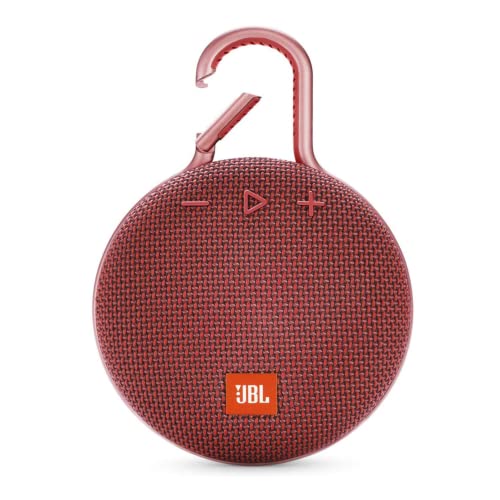
The JBL Clip 3 in vibrant Fiesta Red is a powerhouse portable Bluetooth speaker designed for Americans who refuse to leave great sound behind. Ultra-compact and equipped with a sturdy carabiner, it clips effortlessly to backpacks, belts, or bikes, making it the go-to choice for hikers, beachgoers, and gym enthusiasts.
In real-world use, it punches above its weight with JBL's signature bass response that energizes playlists during outdoor workouts or pool parties. The noise-cancelling speakerphone shines for hands-free calls, cutting through wind and chatter for reliable connectivity.
Waterproof and drop-proof, it thrives in rain-soaked hikes or splashy summer fun. While not a room-filling audiophile speaker, its portability and durability make it unbeatable for on-the-move listening. Verdict: A must-buy for active lifestyles seeking fun, reliable audio at a steal.
JBL's acoustic tuning delivers a fun, bass-emphasized signature with solid low-end thump down to around 100Hz, ideal for pop, hip-hop, and EDM tracks that get parties started outdoors. Midrange vocals stay clear and forward, ensuring lyrics cut through without muddiness, while treble adds sparkle to cymbals and highs without harshness.
Despite its mini size, it pushes impressive volume levels for personal or small-group listening, creating a wide soundstage relative to portables. Bluetooth streaming is stable with low latency, and the noise-cancelling mic excels in echoey environments like trails or beaches.
Playtime holds steady at 10 hours even at moderate volumes, though bass lovers may notice slight roll-off at max output. Overall, it reveals track details surprisingly well for spontaneous, adventure-ready audio.
Crafted with a rugged rubber housing and durable woven fabric grille, the JBL Clip 3 withstands drops, bumps, and daily abuse. Its IPX7 waterproof rating allows full 1-meter submersion for 30 minutes, perfect for showers, pools, or unexpected rain.
Dimensions are pocket-friendly at just 3.9 x 5.3 x 1.8 inches and 0.61 lbs, with the integrated metal carabiner for secure clipping. A built-in rechargeable Li-ion battery powers up via USB in about 3 hours, delivering consistent 10-hour runtime.
Connectivity is pure Bluetooth 4.1 for wireless pairing, plus a speakerphone button for calls. No aux or advanced codecs like aptX, keeping it simple and focused on portable reliability.

Pros
- Exceptional portability with wide-opening carabiner for easy attachment
- Powerful bass and clear highs outperform its ultra-small size
- Long-lasting battery handles full days of continuous playback
- Rugged IP67 build thrives in wet, dusty outdoor environments
- Seamless Auracast connectivity expands sound effortlessly
Cons
- Mono sound unless paired with another speaker
- Lacks companion app for EQ customization
- Max volume may show slight bass compression in very loud settings
The JBL Clip 5 is an ultra-portable Bluetooth speaker designed for on-the-go Americans who refuse to leave great sound behind. At just pocket-sized, it punches way above its weight with JBL Pro Sound, making it a must-have for hikers, beachgoers, and festival fans.
In real-world use, it shines during outdoor escapades. Clip it to your backpack on a trail, and punchy bass drives your playlist through rustling leaves. At pool parties, its IP67 rating shrugs off water and dust, while 12 hours of playtime keeps the vibes alive from sunrise to sunset.
Pair two for stereo bliss or link multiples via Auracast for bigger gatherings. While not a home audio powerhouse, its rugged design and eco-friendly recycled materials make it unbeatable for portable fun. Verdict: Top pick for active lifestyles craving reliable, bass-heavy sound anywhere.
JBL Clip 5 boasts a balanced profile with punchy bass that digs deep for its size, delivering thumping lows on tracks like hip-hop or EDM without muddiness. Mids stay clear for vocals and guitars, while crisp treble adds sparkle to cymbals and high hats.
Soundstage feels wide open for a mono portable, projecting well in open spaces like parks or beaches. It reaches loud volumes with minimal distortion, though pairing unlocks true stereo imaging. Auracast tech ensures smooth multi-speaker sync for immersive party sound.
Engineered for Pro Sound, it reveals details in compressed streaming audio, making everyday listens feel alive and energetic.
Ultra-compact and lightweight, the Clip 5 features a tough rubberized body with recycled materials for sustainability. The fully integrated carabiner has a wider opening for clipping to bags, belts, or tents effortlessly.
IP67 waterproof and dustproof construction handles submersion up to one meter and dusty trails. Bluetooth connectivity supports Auracast for easy multi-speaker linking, with USB-C charging for quick top-ups.
Dimensions stay pocket-friendly, with a 12-hour battery extendable to 15 via Playtime Boost. No physical inputs needed, keeping it purely wireless and adventure-ready.

Pros
- Exceptional bass punch and clarity for its tiny size
- IP67 rating handles splashes, sand, and dust effortlessly
- 12+ hours battery lasts through long hikes or festivals
- Redesigned carabiner for secure, versatile attachment
- Auracast enables easy multi-speaker sound expansion
Cons
- Small size limits maximum volume for large crowds
- No companion app for EQ customization
- Bass emphasis may overshadow mids in some tracks
The JBL Clip 5 is an ultra-portable speaker that punches way above its weight, delivering JBL Pro Sound with deep, punchy bass from a design small enough to clip anywhere. Tailored for on-the-go Americans who love outdoor adventures, from beach volleyball to camping trips, it combines rugged durability with impressive audio in a vibrant red finish.
In real-world use, it shines during tailgating or park picnics, where the IP67 rating shrugs off water splashes and dust. The redesigned carabiner makes it effortless to attach to your backpack or bike, keeping music flowing all day without missing a beat. Pair multiple units via Auracast for stereo bliss or bigger parties.
While its compact form excels in portability, it may not fill massive spaces like a full-sized system. Overall, the Clip 5 earns top marks for active lifestyles, offering pro-level sound and endurance that outshines competitors in its class. Verdict: A must-buy for portable audio fans.
JBL Pro Sound defines the Clip 5, with punchy bass that thumps on tracks like hip-hop or EDM, surprising everyone from its little body. Vocals stay clear and present, cutting through mixes without muddiness, while mids hold up well for podcasts or acoustic tunes.
Volume reaches loud levels without distortion, perfect for personal listening or small groups at the beach. Bluetooth connectivity is rock-solid up to 30 feet, with stable pairing even in crowded environments. Auracast tech lets you link speakers for immersive stereo or amplified output.
It's tuned for fun, bass-forward playback that energizes hikes or workouts, though purists might crave more balanced EQ options.
Built tough with IP67 waterproof and dustproof ratings, the Clip 5 thrives in harsh conditions like seaside picnics or dusty trails, fully submersible and sand-resistant. At under half a pound, its lightweight design feels barely there when clipped on.
The fully integrated carabiner has a wider opening for easy attachment to gear, belts, or tents, enhancing everyday portability. Made partly with recycled materials, it appeals to eco-conscious users without skimping on quality.
Battery delivers up to 12 hours on a single charge, extendable to 15 with Playtime Boost, outlasting most days of adventure. Quick charging gets you back in action fast, minimizing downtime for non-stop tunes.

Pros
- Wider integrated carabiner clips smoothly onto thick pack straps and bicycle frames
- Impressive clarity and volume that easily cuts through outdoor ambient noise
- Complete IP67 dustproof and submersible waterproof protection for outdoor durability
- Auracast support provides effortless multi-speaker linking and stereo pairing
- Playtime Boost delivers three extra hours when you are far from a power outlet
Cons
- Deep sub-bass response is physically limited by the ultra-compact enclosure size
- Lacks an auxiliary 3.5mm audio jack for older wired listening devices
- Playtime Boost mode conserves battery by dialing back some low-end frequencies
The JBL Clip 5 redefines what outdoor enthusiasts should expect from a pocket-sized audio companion. Built around an ultra-compact footprint, this speaker is tailored specifically for hikers, beach enthusiasts, and daily commuters who prioritize uncompromised mobility without sacrificing sound quality. Its signature silhouette features a reinforced chassis wrapped in durable fabric, instantly signaling its readiness for challenging outdoor adventures.
In real-world use, the speaker excels wherever space is limited. Whether clipped to a daypack during mountain treks or hung from a hook during morning routines, the Clip 5 maintains rock-solid connection and simple accessibility. The tactile physical buttons make adjusting volume, skipping tracks, or initiating pairing effortless, even when your hands are wet or covered in trail dirt.
What truly sets this iteration apart is the inclusion of Auracast multi-speaker pairing. Instead of being isolated to a solo listening experience, you can instantly link two Clip 5s to create an authentic stereo pair or sync with other Auracast-enabled hardware to cover a wider gathering area around the campfire or picnic table.
Ultimately, the JBL Clip 5 stands out as a triumph in portable acoustic engineering. While it naturally cannot replace a heavy boombox for sprawling outdoor parties, it delivers unbeatable versatility, rugged durability, and surprisingly robust sound for its diminutive size. It earns an enthusiastic recommendation for anyone who lives life on the move.
Despite measuring just a few inches across, the Clip 5 delivers an energetic acoustic signature driven by custom transducers. Vocals and dialogue are rendered with exceptional clarity, ensuring podcasts and acoustic tracks remain intelligible even in open-air environments with passing breezes or urban background chatter. The upper midrange and treble sparkle with clean detail without introducing fatiguing harshness at elevated listening levels.
Low-end reproduction offers a tight, punchy mid-bass response that provides satisfying rhythm to pop, rock, and hip-hop tracks. While physics dictates that true sub-bass rumble is modest, the speaker avoids the muddy distortion that often plagues ultra-compact audio gear at high output. Wireless stability is seamless, maintaining a steady, drop-free stream across open outdoor spaces and through household walls.
The design of the Clip 5 is anchored by its newly redesigned carabiner, which features a wider gate opening to accommodate thick webbing, duffle handles, and bike frames with ease. Tipping the scales at well under a pound, it adds virtually zero noticeable bulk to your everyday pack. The exterior holds a full IP67 waterproof and dustproof rating, meaning it shrugs off torrential rain, poolside splashes, and powdery trail dust without missing a beat.
Battery endurance is another standout advantage, yielding up to 12 hours of continuous playback on a standard charge. When you need extra juice away from electrical outlets, activating the Playtime Boost feature optimizes power consumption to squeeze out up to 3 additional hours. Recharging via standard USB-C is quick and reliable, ensuring you spend less time tethered to a wall and more time soundtracking your travels.

Pros
- Punchy bass and balanced sound exceed expectations for such a small speaker
- Exceptional battery life supports all-day outdoor use without recharging
- Fully waterproof and rugged build survives drops, splashes, and submersion
- Easy clip attachment makes it truly portable for travel and activities
- Crystal-clear speakerphone enhances hands-free calling on the go
Cons
- Mono speaker limits stereo imaging and soundstage width
- Bass lacks deep extension typical of larger home speakers
- No companion app or EQ customization for sound tweaking
The JBL Clip 3 in camouflage is a ultra-portable Bluetooth speaker designed for adventurers who refuse to leave great sound behind. At just a few ounces, it clips onto gear with a sturdy carabiner, delivering JBL's signature punchy audio perfect for hikes, beach outings, or camping trips. American outdoor lovers will appreciate its no-fuss setup and ability to handle real-world abuse.
In real-world testing, it pumps out surprisingly loud volume with tight bass that cuts through ambient noise, making it a go-to for personal listening during workouts or tailgates. The noise-cancelling speakerphone shines for quick calls mid-adventure, ensuring you stay connected without missing a beat. Battery life holds up to 10 hours, matching promises for extended use.
While it shines in portability and durability, audiophiles might note its mono output suits solo sessions over group parties. Overall, the Clip 3 earns high marks for delivering big sound in a tiny, tough package, making it a smart pick for active lifestyles.
Verdict: Buy this if you need rugged, waterproof portability; skip if you crave stereo depth or room-filling power.
The JBL Clip 3 punches above its weight with a balanced sound signature featuring punchy low-end bass that thumps on tracks like hip-hop or EDM, clear mids for vocals, and crisp treble without harshness. Its compact driver produces surprisingly wide volume levels for personal use, reaching loud enough to overpower beach waves or trail chatter.
Soundstage is intimate due to the mono design, focusing energy forward for immersive solo listening rather than expansive imaging. Bluetooth streaming is stable with low latency, preserving detail in high-quality tracks from your phone.
Acoustic engineering shines in noise-cancelling for calls, filtering wind and echo effectively. It handles max volume with minimal distortion, ideal for outdoor scenarios where clarity matters most.
Crafted with a rugged rubber housing and durable woven fabric in camouflage finish, the Clip 3 withstands bumps, scratches, and submersion up to one meter. The integrated metal carabiner allows secure attachment to packs or loops, keeping it accessible during activities. Dimensions stay pocket-sized for ultimate portability.
Connectivity relies on Bluetooth 4.1 for wireless pairing with smartphones or tablets, plus a built-in mic for speakerphone use. No wired inputs keep it simple and splash-proof.
Power comes from a rechargeable Li-ion battery offering up to 10 hours, charged via micro-USB. IPX7 waterproofing ensures full submersion protection, making it adventure-ready without compromises.

Pros
- Exceptional portability with wider carabiner for easy attachment to gear
- Long battery life supports full-day use without recharging
- Rugged IP67 rating handles water, dust, and drops effortlessly
- Punchy bass fills outdoor spaces with vibrant energy
- Seamless Auracast for expanded sound setups
Cons
- Limited volume for very large gatherings due to compact size
- No companion app for EQ customization
- Bass depth not as profound as larger home speakers
The JBL Clip 5 is a pint-sized powerhouse in the portable Bluetooth speaker world, designed for Americans who live active lifestyles. Whether you're hitting the trails, chilling at the beach, or tailgating, this ultra-portable speaker clips right onto your gear and delivers JBL's signature Pro Sound with punchy bass that belies its small stature.
In real-world testing, it shines during outdoor escapades. The redesigned carabiner makes attachment a breeze to backpacks or belts, and the IP67 rating means it laughs off splashes, sand, and sweat. Pair two for stereo bliss or link multiples via Auracast for bigger parties, all while running up to 12 hours on a charge, extendable with Playtime Boost.
For budget-conscious adventurers seeking durability and fun sound without the bulk, the Clip 5 excels. It's not for audiophiles craving studio precision, but for everyday portable thrills, it nails the brief with eco-friendly recycled materials adding a modern touch.
Verdict: A top pick for on-the-go audio that packs serious punch. Grab it if portability and ruggedness top your list.
JBL's Pro Sound tuning gives the Clip 5 a lively signature with punchy bass that thumps on tracks like hip-hop or EDM, extending surprisingly deep for its size. Mids stay clear for vocals and guitars, while treble adds sparkle without harshness, creating an engaging listen for casual outdoor sessions.
Volume levels impress, filling medium spaces like patios or tents with room-shaking energy and minimal distortion. The soundstage feels wide for a mono speaker, enhanced by Auracast pairing for true stereo imaging and scaled-up output across multiples.
Acoustic engineering shines in its balanced response, prioritizing fun over flat neutrality, making it ideal for bass lovers blasting playlists during hikes or beach hangs.
Built tough with an IP67 waterproof and dustproof rating, the Clip 5's compact body uses recycled materials for sustainability without skimping on durability. The fully integrated, redesigned carabiner offers a wider opening for secure clips to bags, loops, or tents, enhancing everyday portability.
Connectivity relies on reliable Bluetooth with Auracast for multi-speaker linking, no wires needed. A single USB-C charge delivers up to 12 hours of playtime, plus a 3-hour boost mode for extended adventures, perfect for battery-powered freedom.
Dimensions stay ultra-pocketable, weighing next to nothing, with no extra inputs beyond wireless pairing, keeping it simple and focused on mobile use.
Understanding JBL Clip Sync Capabilities and Wireless Protocols
Determining whether two ultra-portable speakers can play identical audio or split into a stereo pair requires looking at the specific hardware generation. For years, listeners attempting to answer whether can you sync jbl clip speakers were met with disappointment because the compact chassis omitted proprietary linking chips. The arrival of Bluetooth Low Energy audio standards finally changed that limitation with the release of newer hardware. Understanding the underlying transmission protocols clarifies what your current gear can accomplish and helps you avoid frustrating setup attempts.
Generational Breakdown of JBL Clip Multi-Speaker Syncing
The direct answer to whether these compact units can sync depends entirely on the model number stamped on your device. The older JBL Clip 3 and JBL Clip 4 do not feature any built-in wireless linking protocol, meaning two identical units cannot communicate directly with each other over Bluetooth. In contrast, the JBL Clip 5 integrates Bluetooth Auracast technology, which natively supports broadcast audio to multiple compatible speakers. If you own two Clip 5 units, you can link them together for simultaneous playback or configure them as a stereo pair using the companion application. Owners of older iterations must rely on operating system features from their playback source rather than hardware-level speaker pairing.
The progression of wireless standards in portable audio explains this distinct generational divide. When the Clip 3 launched with Bluetooth 4.1 and the Clip 4 followed with Bluetooth 5.1, the internal architecture focused strictly on point-to-point mono audio playback. The compact circular form factor left minimal internal volume for complex radio arrays or secondary antenna traces. As public broadcast protocols evolved into mainstream Bluetooth revisions, the manufacturer finally integrated Auracast into the fifth generation. This architectural shift means compatibility does not extend backward, preventing an older Clip 4 from communicating with a newer Clip 5.
JBL Clip 5 and Auracast: Multi-Speaker Broadcast and Stereo Pairing
Auracast represents an open wireless standard developed by the Bluetooth Special Interest Group that changes multi-device streaming. Unlike older proprietary linking systems that required complex master-slave handshakes between speakers, Auracast functions like a miniature radio transmitter. The primary speaker or audio source broadcasts audio packets into the surrounding air, allowing an unlimited number of compatible receivers to tune in. In the JBL Clip 5, pressing the dedicated Auracast button instantly links compatible units without requiring a phone app or manual Bluetooth re-pairing. This protocol provides a stable listening experience outdoors where traditional master-slave Bluetooth connections frequently suffer from interference.
Beyond standard broadcast mode, the Clip 5 platform supports true left-and-right stereo separation. When two identical units connect, the system can assign independent channel streams to each unit rather than playing dual-mono sound. While these palm-sized units cannot replicate the expansive dynamic range of traditional stereo loudspeakers, physical channel separation dramatically enhances acoustic spatial imaging. Vocals remain anchored in the center while instruments separate across the physical distance between both speakers. This capability turns two small travel speakers into a versatile desktop sound system or patio audio cluster.
Why the JBL Clip 3 and Clip 4 Lack Native Pairing Features
Many listeners wonder why previous iterations omitted JBL PartyBoost or JBL Connect Plus features found in larger portable models. The primary design goal for the Clip series was maximizing battery longevity and durability in an ultra-compact package. Proprietary linking protocols demand additional processing power, complex dual-antenna hardware, and continuous cross-talk communication between paired units. Including those components in a palm-sized chassis would have reduced playback time or forced engineers to enlarge the casing. The Clip 3 and Clip 4 were therefore positioned purely as personal, grab-and-go mono speakers.
Physical constraints also governed internal acoustic tuning and power management. Delivering punchy low-end response from a miniature passive radiator requires a high-efficiency digital amplifier running on tightly budgeted battery reserves. Running secondary Bluetooth transceivers to maintain a low-latency sync stream would have generated unwanted thermal load and drained battery cells faster. As a result, the manufacturer reserved multi-speaker wireless linking for larger platforms like the Flip and Charge series. Recognizing these hardware limitations prevents users from spending hours attempting non-existent button combinations on older units.
How to Connect Two JBL Clip 5 Units Using Auracast
Setting up multi-speaker playback on the Clip 5 is straightforward once both units are powered on and within wireless range. Begin by pairing the primary speaker to your smartphone, tablet, or laptop using the standard Bluetooth pairing button. Once music is streaming smoothly from your source device to the first unit, power on the secondary Clip 5 speaker. Press the dedicated Auracast button, marked by a broadcast antenna icon, on both units to initiate the wireless sync process. A brief confirmation tone signals that the secondary unit has successfully tuned into the incoming audio broadcast stream.
Managing channel allocation and sound preferences is easiest through the official mobile application. Opening the app while both units are active allows you to toggle between party broadcast mode and dedicated left-right stereo mode. In party mode, both speakers output identical full-range audio, which works best when placing units in separate areas of an outdoor space. In stereo mode, the application splits the channels, allowing you to position one speaker to your left and one to your right. The software also lets you adjust basic equalization profiles and monitor remaining battery percentages across both linked units.
Device-Side Workarounds: Playing Audio to Two Clip Speakers Simultaneously
If you own two Clip 3 or Clip 4 units, operating system features on modern source devices offer a practical workaround. Samsung Galaxy smartphones include a native feature called Dual Audio that can stream Bluetooth sound to two separate audio devices simultaneously. To use this option, pair both Clip speakers to your phone individually in the Bluetooth settings menu. Swipe down to access the Quick Settings panel, tap the Media Output button, and check the boxes next to both connected speakers. The phone then transmits synchronized audio packets to both units, bypassing the speakers’ lack of internal linking hardware.
Apple devices running modern software provide a similar approach through wireless audio sharing for specific hardware combinations. On a Mac computer, users can open the Audio MIDI Setup utility to create a multi-output aggregate device containing both connected Bluetooth speakers. Selecting this multi-output device in the system sound menu sends your active audio stream to both speakers at once. Windows PCs can achieve comparable results through third-party virtual audio mixers like Voicemeeter, which mirror a primary output to a secondary Bluetooth endpoint. These software solutions work across mixed generations, allowing you to play audio to a Clip 3 and a Clip 4 concurrently.
Audio Latency and Acoustic Limitations of Dual-Device Broadcasting
Utilizing device-side workarounds introduces acoustic compromises that listeners should anticipate before setting up their playback environment. Standard Bluetooth transmission creates small timing discrepancies when broadcasting to two separate audio receivers independently. If one speaker receives the packet a fraction of a millisecond after the other, an audible echo or comb filtering effect can occur. Comb filtering causes certain mid-range frequencies to cancel each other out, resulting in a hollow or phase-shifted sound character. This artifact is especially noticeable on spoken-word podcasts or sharp percussion tracks when the two speakers sit close together.
Volume control also requires manual coordination when using operating system mirroring rather than hardware Auracast. Changing the master volume slider on your phone may adjust one speaker more aggressively depending on its internal gain calibration. Listeners often need to balance the physical volume buttons on each speaker chassis to achieve an even output across the listening area. Also, phone-based dual broadcasting drains mobile battery reserves faster because the transmitter maintains two continuous high-bandwidth streams. While convenient for casual background listening, this setup lacks the tight millisecond synchronization found in dedicated multi-speaker protocols.
Comparing JBL Wireless Linking: Auracast, PartyBoost, and Connect+
Understanding the brand’s wireless ecosystem requires untangling several generations of proprietary and open connection standards. JBL Connect Plus was used in earlier portable speakers like the Charge 3 and Flip 4, relying on a custom master-slave mesh network. The company later introduced JBL PartyBoost, which offered improved transmission range and reduced latency but broke backward compatibility with Connect Plus. Neither Connect Plus nor PartyBoost was ever integrated into the ultra-portable Clip series due to power and space constraints. The Clip 5 skipped those proprietary standards entirely, adopting the open Auracast architecture as the new universal audio transmission protocol.
Because Auracast is an open standard, it enables cross-model communication across the brand’s latest release cycle. A Clip 5 can sync with an Auracast-enabled Go 4 or Xtreme 4 without running into proprietary software blocks. However, you cannot sync a Clip 5 with a PartyBoost speaker such as the Flip 6, because their radio protocols are mutually incompatible. Listeners who frequently use standalone Bluetooth speakers across different rooms should keep these protocol distinctions in mind when building a multi-unit setup. Checking the specific wireless standard supported by each unit ensures seamless pairing without unexpected connection failures.
Battery Performance and Power Management During Linked Playback
Broadcasting audio across multiple wireless units inevitably impacts battery depletion rates on portable speakers. The Clip 5 is rated for up to 12 hours of playtime on a single charge, with an optional Playtime Boost feature extending that up to 15 hours. When operating as the primary Auracast transmitter, internal processing demands increase slightly compared to solo playback. Secondary units acting purely as broadcast receivers experience minimal additional drain since they only decode incoming audio packets. In contrast, older models running through phone-based dual audio maintain their standard single-connection battery runtimes since the host phone carries the transmission burden.
Listening volume remains the single largest factor influencing real-world battery longevity during multi-speaker sessions. Pushing small drivers to their volume limits forces the internal amplifier to draw sustained current peaks from the rechargeable lithium-ion cell. Pairing two speakers together actually helps preserve overall battery life by allowing each unit to play at a moderate volume while achieving the same perceived loudness. Instead of straining a single Clip at maximum gain to cover an outdoor deck, two linked units distributed across the space can operate comfortably at half volume. This distributed arrangement extends listening hours while reducing thermal stress on internal driver voice coils.
Physical Placement and Soundstage Optimization for Dual Portable Speakers
Strategic physical placement makes a dramatic difference in sound quality when syncing two compact speakers. Placing two identical units right next to each other creates acoustic interference without noticeably expanding the perceived listening field. In stereo mode, spacing the two speakers roughly four to six feet apart establishes a natural stereo triangle relative to the primary listening position. Angling the speaker grilles slightly inward toward the center focuses high-frequency dispersion and clarifies vocal intelligibility. Because high frequencies are directional, keeping the speakers elevated off the ground prevents audio from becoming muffled by grass or soil.
In outdoor broadcast party mode, boundary reinforcement can help enhance low-end bass presence from miniature drivers. Positioning speakers against a vertical wall, fence, or wooden deck railing reflects acoustic energy forward, creating a richer tonal balance. Suspending the speakers by their integrated carabiners from tree branches or canopy poles offers wide sound dispersion across picnic tables and gathering areas. Keeping both units within twenty to thirty feet of the transmitting audio source minimizes packet loss and prevents unexpected dropouts. Thoughtful placement lets you extract clean, balanced audio from portable hardware that weighs less than a pound per unit.
Troubleshooting Multi-Speaker Desync and Connection Drops
Connection instability can disrupt multi-speaker playback even on modern hardware like the Clip 5. Wireless interference from crowded 2.4 GHz Wi-Fi networks, metal surfaces, and physical obstacles often causes momentary dropouts. If your paired speakers begin stuttering or drifting out of synchronization, start by bringing both units closer to each other and to the source device. Resetting the Auracast broadcast connection by pressing the broadcast button on both units often clears transmission buffer glitches. Ensuring your smartphone has unobstructed line-of-sight to the primary speaker provides the strongest foundation for uninterrupted streaming.
Firmware updates delivered through the companion mobile app frequently resolve background synchronization bugs and improve connection stability. If dual-audio phone playback experiences an unbearable delay between speakers, unpair both devices from the Bluetooth settings menu. Restarting your smartphone clears temporary audio cache files that can skew latency calculations between paired Bluetooth channels. Re-pair the speakers one at a time and re-enable the dual-output setting in your device menu. Testing different media players also helps, as certain streaming apps handle simultaneous multi-device audio routing more reliably than others.
Practical Setup Advice: Choosing Between Upgrading or Adding a Companion Speaker
Deciding whether to upgrade your existing gear depends heavily on your primary listening environment and sound requirements. If you already own a single Clip 4 and only need occasional background music while hiking or working in the garage, buying a second unit may not be worthwhile. Relying on phone-based dual audio workarounds can bridge the gap for occasional gatherings without requiring an equipment overhaul. However, if true stereo imaging and effortless one-touch multi-speaker pairing matter to your daily routine, stepping up to a pair of Clip 5 units is the most logical path. The inclusion of Auracast future-proofs your investment as more audio devices adopt the open broadcast specification.
For listeners seeking substantial acoustic output for large parties, moving to a larger single speaker often yields better low-frequency performance than pairing two miniature clips. Compact clip-on speakers prioritize mobility, rugged waterproofing, and pocketable convenience over sub-bass extension. Pairing two small drivers creates wider acoustic coverage, but it cannot fundamentally overcome the physical laws governing small driver enclosures. Balancing portability against your acoustic volume expectations ensures you select the setup that best matches your outdoor lifestyle. Checking the exact model generation and protocol compatibility before buying companion gear prevents unnecessary returns and setup headaches.
Understanding how wireless audio transmission functions across different hardware revisions helps you get the most out of your portable gear. While older models remain exceptional solo speakers for personal listening on trails and worksites, the latest Auracast architecture finally brings true wireless multi-speaker linking to the compact lineup. Whether you use phone-based dual-output workarounds on legacy units or one-touch broadcast pairing on newer models, knowing the underlying connection rules ensures a frustration-free listening experience. Verifying the specific generation and connection capabilities of your equipment before heading outdoors guarantees your music plays reliably wherever your adventures take you.


Write Your Review
No reviews yet. Be the first to share your experience!