


Building an expansive multiroom audio environment often leads music enthusiasts to ask: can you link bose soundtouch speakers across different rooms for synchronized playback? Setting up unified sound throughout an entire living space eliminates the volume dropouts and acoustic dead zones that occur when pushing a single speaker too loud. When properly configured, these connected units allow your favorite music, podcasts, and radio stations to follow you effortlessly from the living room to the patio without missing a beat.
The clear answer is yes, you can link compatible Bose SoundTouch systems together using your local Wi-Fi connection and the dedicated control software. Unlike older audio setups that required running physical speaker wire to traditional stereo loudspeakers, modern multiroom ecosystems distribute digital audio streams directly across home routers. Understanding the pairing process, network parameters, and software boundaries ensures your multi-speaker configuration delivers clean, uninterrupted audio throughout your living areas.


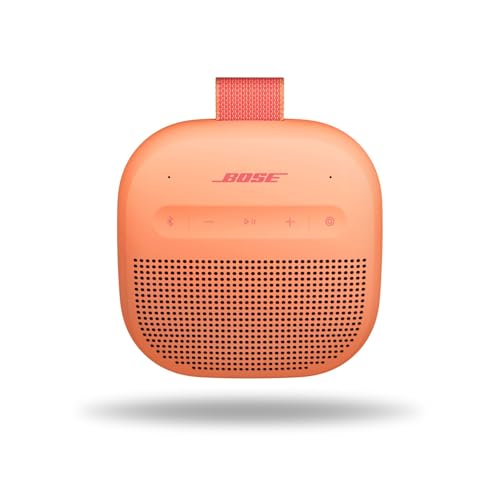
Pros
- Double the battery life of the previous generation, now reaching up to 12 hours
- Impressive low-frequency response and vocal clarity for a micro speaker
- Ultra-rugged IP67 waterproof and shockproof construction with a secure mounting strap
- Dedicated Bose app support with customizable bass, mid, and treble EQ controls
Cons
- Single-driver mono configuration requires pairing a second unit for true stereo imaging
- Deep bass naturally rolls off at top volume levels to prevent acoustic distortion
- Lacks an auxiliary 3.5mm input for legacy wired audio sources
The Bose SoundLink Micro (2nd Gen) represents a meaningful evolution in the ultra-portable audio space. Designed for listeners who refuse to sacrifice audio richness when on the move, this compact powerhouse fits snugly in the palm of your hand while producing an acoustic presence that easily outclasses typical micro-sized speakers. Whether strapped to a commuter backpack, clamped onto bicycle handlebars, or resting on a beach towel, it delivers signature warm voicing in an exceptionally durable format.
Tailored specifically for outdoor enthusiasts, travelers, and minimalist desktop listeners, the second-generation model addresses the primary limitation of its predecessor by doubling playback longevity to a full 12 hours. The inclusion of the Bose mobile companion app brings modern convenience, granting users tactile control over a three-band equalizer alongside simple management for Stereo and Party Mode pairing.
Real-world testing reveals that this palm-sized speaker excels in mid-to-close proximity listening environments. Vocals sound strikingly articulate, acoustic instruments preserve their natural timbre, and the internal passive radiators provide a tactile thump that gives modern pop, hip-hop, and rock tracks genuine energy. While extreme high-volume playback will inevitably cause the digital signal processing to compress lower frequencies, the overall presentation remains clean, composed, and devoid of harsh clipping.
Ultimately, the SoundLink Micro (2nd Gen) sets a high benchmark for grab-and-go outdoor audio. Its tough rubberized exterior, secure mounting strap, and balanced acoustic profile make it one of the most capable, travel-ready companions available for casual and active listeners alike.
Bose engineers have maximized the acoustic capabilities of the SoundLink Micro (2nd Gen) through a custom-engineered transducer paired with miniature passive radiators. The resulting sound signature is remarkably balanced, emphasizing punchy upper bass and a rich, intelligible midrange. Vocals and podcasts project with crisp articulation, cutting cleanly through outdoor ambient noise such as rushing wind or ocean waves.
In terms of frequency response, high frequencies remain crisp and smooth without veering into sibilance or fatiguing harshness. Bose incorporates advanced digital signal processing that dynamically monitors output levels; as you push the speaker toward higher volumes, the DSP gracefully trims extreme sub-bass to maintain total acoustic clarity and prevent distortion. While physical dimensions naturally limit sub-bass extension below 70Hz, the mid-bass presence provides ample punch and body.
For listeners seeking a wider soundstage, linking two SoundLink Micro units via the Bose app instantly creates a dedicated left-right stereo field or a synchronized party soundstage. The newly added in-app EQ also allows you to tune bass, midrange, and treble levels to compensate for challenging acoustic environments, whether mounted outdoors on a trail or placed inside a tiled shower.
Measuring just 4.09 by 4.09 inches with a depth of 1.69 inches and weighing less than three-quarters of a pound, the SoundLink Micro (2nd Gen) is built for effortless everyday carry. Its chassis is encased in a soft-touch, tear-resistant silicone exterior that naturally absorbs drops, repels dust, and resists scratches and corrosion. With a certified IP67 rating, the unit can survive accidental drops into water up to one meter deep for 30 minutes, making it completely poolside and trail-ready.
The hardware highlights include an improved, ultra-durable utility strap on the rear panel that snaps tight over belts, bike frames, and bag straps without loosening during rigorous motion. Tactile rubberized buttons on the perimeter handle power, Bluetooth pairing, volume adjustments, and track skipping, allowing for intuitive blind operation even when wearing gloves or operating with wet hands.
Internally, upgraded Bluetooth architecture provides a dependable wireless connection across a 30-foot operating range with reduced latency and improved bandwidth. Battery capacity has received a significant overhaul, delivering up to 12 hours of continuous playback on a single charge to keep your soundtrack playing from morning workouts through late evening campfires.

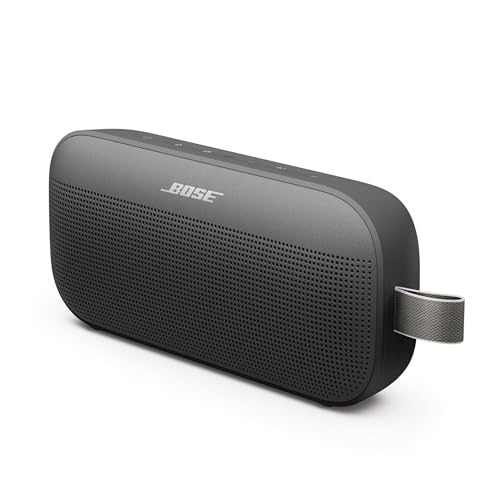
Pros
- Exceptional clarity and balanced highs with deep bass for a portable speaker
- Rugged IP67 build withstands water, dust, drops, and shocks effortlessly
- Long 12-hour battery and quick USB-C charging for all-day use
- Advanced Bluetooth 5.3 ensures stable connections and multipoint convenience
- PositionIQ delivers optimal sound whether standing, laying, or hanging
Cons
- Lacks wired aux input, relying solely on Bluetooth connectivity
- No companion app for EQ customization or advanced sound tweaks
- Battery life shortens at maximum volume with heavy bass usage
The Bose SoundLink Flex (2nd Gen) is a compact powerhouse designed for adventurers who refuse to compromise on sound quality. This portable Bluetooth speaker fits in your hand or clips to your bag, making it the ultimate companion for beach outings, hikes, camping trips, or poolside lounging. Its hi-fi audio shines in real-world scenarios, delivering bold tunes that cut through ambient noise without distortion.
For outdoor enthusiasts and casual listeners alike, it excels where larger speakers falter. Pair two units for stereo separation or party mode to amplify the fun, and PositionIQ ensures pristine sound regardless of how you position it, even in the shower. Bluetooth 5.3 provides rock-solid connectivity up to 30 feet, supporting multipoint for effortless switching between phone and tablet.
In performance tests, the Flex impresses with its balanced profile, revealing nuances in podcasts, playlists, and calls alike. While not a home audio substitute, it outperforms competitors in portability and durability. Verdict: A top pick for active Americans craving premium portable sound.
Bose tunes the SoundLink Flex for a clear, balanced signature with high-fidelity detail across the spectrum. Deep bass extends impressively for its size, providing punchy lows that thump on tracks like hip-hop or EDM without muddiness. Midrange clarity brings vocals and instruments to life, while crisp treble avoids harshness even at high volumes.
PositionIQ technology detects orientation and recalibrates the soundstage for consistent width and imaging, whether upright on a table or hanging from a shower caddy. Volume levels reach loud without breakup, filling medium spaces like patios or tents. Stereo mode with a second unit creates a wide, immersive stage perfect for gatherings.
Advanced Bluetooth 5.3 minimizes dropouts, and multipoint handles calls seamlessly mid-playback, making it versatile for music and hands-free use.
Rugged silicone exterior wraps the Bose SoundLink Flex in IP67-rated protection against water, dust, drops, shocks, and corrosion, ideal for harsh outdoor conditions. Its palm-sized form includes a utility loop for secure attachment to backpacks or belts, with dimensions small enough for pocket carry.
Connectivity centers on Bluetooth 5.3 for wireless pairing up to 30 feet, with multipoint for two devices. USB-C handles charging and playback, but no aux or other wired options are available. No power outlet needed; the built-in battery delivers up to 12 hours per charge, recharging quickly.
Hardware emphasizes portability over complexity, with no visible drivers or ports beyond essentials. This durable build prioritizes on-the-go reliability for US travelers and outdoor lovers.
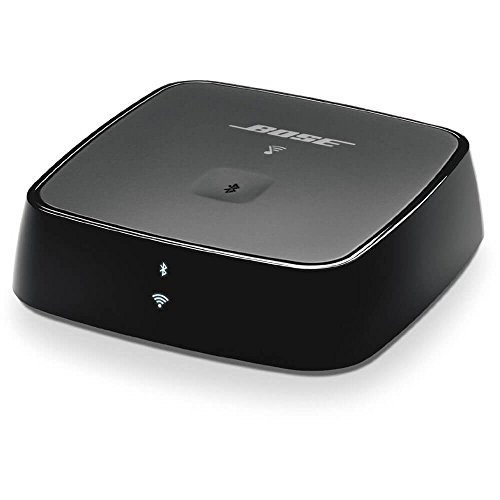
Pros
- Pristine, jitter-free digital optical output preserves high-fidelity sound
- Extremely compact, low-profile footprint easily tucks behind audio components
- Includes all necessary cables in the box (Optical, 3.5mm, and RCA)
- Stable dual-band Wi-Fi and Bluetooth connectivity with virtually zero dropouts
Cons
- Requires connection to external powered speakers or an integrated amplifier
- Lacks native Apple AirPlay 2 support for direct iOS casting
- SoundTouch companion app interface feels slightly dated compared to modern alternatives
The Bose Wireless Audio System Adapter is a dedicated streaming pre-amplifier bridge engineered to modernize your favorite analog audio gear. If you own a cherished vintage stereo receiver, an audiophile-grade integrated amplifier, or a pair of powered bookshelf monitors, this compact receiver delivers contemporary multi-room wireless convenience without requiring you to replace your high-performance audio hardware.
In real-world use, setup is refreshingly direct. Utilizing the SoundTouch companion app, you can connect the adapter to your local Wi-Fi network in minutes or simply switch over to Bluetooth when you want a quick direct link. The ecosystem allows for seamless integration into Amazon Alexa routines, giving you hands-free voice control over curated Spotify playlists, Pandora stations, and high-bitrate internet radio streams across your entire home.
For audio enthusiasts looking to preserve the warm acoustic character and authority of their existing speakers, this adapter bridges the gap between classic analog sound and modern digital convenience. It acts as an invisible, reliable streaming conduit that keeps your classic audio components relevant, versatile, and sounding their absolute best in today's digital landscape.
Because the Bose Wireless Audio System Adapter functions as a digital streaming bridge, its primary performance benchmark is absolute signal purity. It delivers a clean, neutral, and uncolored audio output that lets the natural frequency response of your external amplifier and speakers take center stage. High frequencies remain crisp and detailed without sounding bright or fatiguing, while the midrange retains the vocal clarity and texture intended by the original recording.
When utilizing the digital optical output, the adapter bypasses its internal conversion to feed bit-perfect digital audio directly to your receiver's DAC, maximizing dynamic range and ensuring tight, punchy low-end response. The soundstage remains expansive and stable, reproducing stereo separation accurately with zero audible background hiss or signal crosstalk, even at demanding listening volumes.
The adapter features an ultra-compact, minimalist square footprint measuring just 3.4 inches wide and 1 inch tall, weighing an imperceptible 0.3 pounds. The matte black enclosure is understated and durable, allowing it to tuck neatly behind stereo cabinets or sit discreetly atop an amplifier rack without drawing unwanted attention to itself.
Hardware connectivity is versatile and well-appointed for modern and vintage setups alike. The rear panel houses a 3.5mm audio output that supports both analog mini-stereo and mini-TOSLink optical digital audio, accompanied by a dedicated micro-USB power input. Bose thoughtfully supplies all necessary connection cables in the box, including 3.5mm mini-stereo, RCA adapter cables, and an optical digital cable, ensuring immediate plug-and-play capability with virtually any home theater or stereo system.
How Linking Bose SoundTouch Speakers Works in Home Audio
Linking multiple Bose SoundTouch units allows you to broadcast synchronized audio throughout your home using local network connectivity. Rather than using direct point-to-point connections between individual units, SoundTouch hardware coordinates playback through your home Wi-Fi router. The primary speaker receives the incoming music stream and acts as a local distribution hub, relaying digital packets to grouped secondary speakers. This coordinated server-client arrangement keeps audio perfectly in phase across different rooms, preventing annoying echoes or acoustic lag.
The Fundamentals of the Bose SoundTouch Multiroom Ecosystem
The SoundTouch ecosystem is built around dual-band Wi-Fi and Ethernet connectivity, depending on the specific model and hardware revision. Flagship units like the SoundTouch 30 deliver commanding output in spacious living rooms, while compact models like the SoundTouch 10 suit smaller bedrooms and kitchens. Because communication travels through your home router rather than direct line-of-sight signals, physical range is limited only by your local Wi-Fi coverage. The system natively handles popular digital formats including MP3, WMA, AAC, and Apple Lossless, ensuring clean transmission from local media libraries and major streaming platforms.
Central management takes place through the dedicated Bose SoundTouch application, which runs on iOS, Android, macOS, and Windows devices. The software identifies all active SoundTouch devices connected to your local network subnet, allowing you to select sources and adjust playback parameters. Hardware presets located on the top of each speaker also mirror your app configurations, offering instant access to your favorite stations. This tight integration between hardware controls and mobile software makes managing multi-speaker environments straightforward for daily listening.
Step-by-Step Procedure for Grouping SoundTouch Units in the App
Creating an active multi-speaker link begins with basic network preparation. Ensure that every SoundTouch speaker you intend to link is powered on and connected to the same Wi-Fi network name. If a speaker is mistakenly isolated on an independent guest network or separate frequency band with client isolation enabled, the app will fail to discover it. Launch the SoundTouch app on your phone or tablet and verify that all target rooms appear in the device list.
To initiate linked playback, select a music source and start playing audio through your primary room speaker. Next, tap the bottom control bar showing the active track to reveal the room management screen, and select the multi-speaker linking icon. You can check the boxes next to individual rooms you wish to add, or tap PLAY EVERYWHERE to broadcast music across every active unit in your home. The app provides a master volume slider for global adjustments, while expanding the volume tray lets you trim individual room levels to suit different acoustic spaces.
Multiroom Mirrored Audio Versus True Left-Right Stereo Pairing
Understanding the difference between multiroom party grouping and true stereo pairing helps prevent common setup mistakes. In standard multiroom mode, every linked speaker reproduces a mirrored mono or summed stereo signal so that listeners enjoy full-frequency music in any room. This mode allows you to group completely different hardware models together without issues, such as pairing a compact SoundTouch 10 in a hallway with a larger SoundTouch 20 in the dining area. Mirrored audio provides seamless background coverage as family members move freely throughout the home.
In contrast, true stereo pairing divides a two-channel audio recording into dedicated left and right signals for authentic spatial imaging. Achieving this within the SoundTouch platform strictly requires two identical speaker models, such as two SoundTouch 10 units placed in the same room. The software does not permit creating a stereo pair from dissimilar models because differing driver sizes, crossover frequencies, and cabinet dimensions would ruin acoustic balance. When set up correctly, an identical pair creates an engaging three-dimensional soundstage that rivals traditional separated stereo components.
Navigating the Ecosystem Divide Between SoundTouch and Bose Smart Speakers
A major compatibility consideration for prospective buyers is the hard divide between legacy SoundTouch products and newer Bose smart speakers. SoundTouch units rely on a proprietary network architecture managed exclusively through the SoundTouch mobile app. Modern products like the Bose Smart Ultra Soundbar and Portable Smart Speaker operate on a completely revised platform governed by the newer Bose App. Because these generations use incompatible network protocols, you cannot link a SoundTouch speaker with a newer Bose smart speaker over home Wi-Fi.
Attempting to add a SoundTouch speaker inside the modern Bose App will simply result in an error, as the software does not recognize the older hardware. Similarly, newer smart soundbars cannot be added as secondary zones within the legacy SoundTouch app. Certain modern soundbars offer Bose SimpleSync to stream Bluetooth audio to a single secondary speaker, but this bypasses Wi-Fi multiroom grouping and introduces latency compromises. Homeowners who want smooth, synchronized playback across rooms should stick to matching SoundTouch hardware rather than mixing incompatible product generations.
Incorporating Portable SoundLink Bluetooth Speakers into the Setup
Many music fans own portable Bluetooth speakers and wonder if they can link them into a home SoundTouch system. Portable models like the Bose SoundLink Micro and the Bose SoundLink Flex are designed specifically for direct-to-device wireless playback without built-in Wi-Fi radios. Because they lack network hardware and SoundTouch firmware, these portable models cannot join a SoundTouch Wi-Fi group directly through the SoundTouch app. They remain dedicated Bluetooth devices meant for travel, outdoor activities, and casual listening on the go.
When you want to link portable models together, you must use their own dedicated Bluetooth pairing methods. Two compatible SoundLink units can pair into Party Mode for expanded coverage or Stereo Mode for balanced channel separation. Listeners seeking rugged, travel-ready sound often compare portable Bluetooth speakers under 200 to find water-resistant options for outdoor use. While some later SoundTouch models can accept incoming Bluetooth streams from a phone and rebroadcast them across Wi-Fi to other SoundTouch units, portable SoundLink speakers cannot act as network receivers in that chain.
Connecting Legacy Audio Gear with the SoundTouch Wireless Adapter
If you own an existing component stereo system or powered monitors, you do not need to replace them to enjoy multiroom streaming. The Bose Wireless Audio System Adapter converts traditional stereo receivers, integrated amplifiers, and powered speakers into fully functional SoundTouch network zones. Once linked to your home Wi-Fi network, the adapter appears in the SoundTouch app alongside your all-in-one wireless speakers. This allows you to stream online music, internet radio, and local media through high-end vintage audio gear without losing multiroom functionality.
Physical connectivity on the rear of the adapter includes a 3.5mm auxiliary minijack, dual RCA analog jacks, and a digital optical TOSLink port. Using the optical digital connection allows external AV receivers or outboard digital-to-analog converters to handle final signal processing, ensuring excellent acoustic transparency. Music lovers who use dedicated desktop speakers for music can also connect the adapter to keep their desk setup synchronized with whole-home audio. The adapter effectively preserves your investment in quality analog components while providing modern wireless convenience.
Optimizing Your Wi-Fi Network for Stable Multi-Speaker Streaming
Consistent multi-speaker streaming demands a stable, low-latency home Wi-Fi environment. Because grouped SoundTouch speakers rely on constant multicast network traffic to maintain synchronization, minor packet drops can cause audible stuttering or dropped zones. If your wireless router struggles under heavy traffic, linked playback will quickly become unreliable. Placing your primary speaker in an area with robust Wi-Fi signal strength establishes a dependable foundation for the entire multiroom group.
Frequency band configuration plays a significant role in long-term stability. While some early SoundTouch hardware only operated on the crowded 2.4 GHz band, later iterations support 5 GHz connections for higher throughput and reduced interference. Routers that feature aggressive band steering can cause speakers to disconnect as they are pushed between frequencies. Assigning distinct network names to your 2.4 GHz and 5 GHz bands, or binding static IP addresses to each speaker through your router settings, eliminates intermittent connection dropouts across mesh networks.
Voice Assistant Control and Smart Home Integration Boundaries
Controlling linked SoundTouch speakers using voice commands is possible through the official Bose SoundTouch Control Skill for Amazon Alexa. Linking this skill allows an Amazon Echo device to power speakers on, change volume, pause tracks, or select numbered presets hands-free. This capability provides practical convenience when working in the kitchen or relaxing without your mobile phone nearby. The integration works seamlessly for basic playback commands directed toward specific named rooms.
However, voice grouping carries notable smart home limitations that audio owners must recognize. Bose SoundTouch speakers cannot be grouped into Amazon Alexa Multi-Room Music configurations alongside native Amazon Echo speakers. The Alexa platform treats the SoundTouch skill as an external control interface rather than an integrated hardware endpoint. Synchronized multiroom audio must therefore be established inside the Bose SoundTouch app, after which Alexa can control playback on the primary host speaker.
Diagnosing Common SoundTouch Linking Errors and Latency Issues
Network communication errors occasionally disrupt multiroom grouping, with the app displaying messages that a speaker cannot be reached. In most cases, this issue stems from mobile device discovery hiccups rather than permanent hardware failure. Toggling your phone’s Wi-Fi connection off and on or restarting the SoundTouch app usually forces a fresh discovery broadcast across the subnet. Confirming that your control device and speakers share the same subnet mask prevents discovery failures caused by network firewalls.
Audible echoes or slight delays between adjacent rooms indicate that one speaker is experiencing network latency or buffer starvation. If a speaker is positioned near structural steel, thick concrete, or dense plumbing, wireless reception drops significantly. Moving the affected unit a few feet away from large metal objects or connecting it via an Ethernet cable immediately resolves synchronization drift. If persistent errors occur, power cycling the modem, router, and all connected speakers restores clean routing tables without wiping your saved presets.
Practical Ownership Takeaways for Long-Term System Performance
Getting the most out of linked Bose SoundTouch speakers requires understanding the strengths and boundaries of the hardware platform. The six physical hardware presets remain one of the most useful features of the system, allowing family members to start synchronized multiroom audio with a single button press. Storing your most popular internet radio stations or streaming playlists to these presets ensures quick, reliable operation without opening an app. Simple physical controls make whole-home audio accessible to everyone in the household.
Maintaining a dedicated, well-organized home Wi-Fi network and sticking to compatible SoundTouch hardware will ensure years of dependable listening. While newer smart platforms have arrived on the market, existing SoundTouch systems remain highly capable performers for synchronized whole-home audio. Taking time to optimize speaker placement, configure clean network routing, and manage volume levels per room guarantees a rich, cohesive listening experience throughout your home.


Write Your Review
No reviews yet. Be the first to share your experience!