


Portable Bluetooth speakers rely on internal lithium-ion batteries to deliver hours of sound on patios, at tailgates, or around the house. When the battery drains, audio enthusiasts frequently wonder whether can you charge a jbl speaker through the usb port safely and efficiently. The short answer is yes, provided listeners use the dedicated charging input port rather than an external power bank jack. Understanding these connection differences prevents unexpected audio downtime and keeps your portable sound gear running reliably.
Modern portable speakers come in many shapes and power requirements, from compact handheld units to heavier bass-heavy designs like those highlighted in our portable waterproof Bluetooth speaker guide. Choosing the proper charging accessory or replacement port ensures that internal battery cells receive the correct voltage and current. Evaluating the specific charging jack, cable specifications, and power requirements helps protect your equipment from thermal wear while keeping playback smooth.

Pros
- Perfect compatibility matches original specs for seamless repair
- High-quality build tested for durability and safety
- Value-packed 2-pack with spare for multiple fixes
- Effectively resolves common no-charge and loose connection problems
Cons
- Requires soldering skills - not for beginners
- No plug-and-play installation
- Professional tools needed for safe replacement
This 2-pack replacement Type-C USB charging port is precision-engineered for JBL Charge 4 and Xtreme 3 speakers, tackling common issues like loose connections or failure to charge. It's a smart choice for tech-savvy owners who love their rugged portables but hate replacing them entirely.
DIY enthusiasts and repair technicians will appreciate the direct internal swap that matches factory specs, saving hundreds compared to new speakers. Real-world fixes bring back full functionality for everything from backyard barbecues to weekend camping trips.
With heat-resistant materials and high-conductivity pins, these ports withstand soldering heat and everyday use. The bundle's spare part adds peace of mind. Verdict: Essential for extending the life of your favorite JBL speaker - highly recommended if you can solder.
Once installed, this port restores uninterrupted power to unleash the JBL Charge 4 and Xtreme 3's signature deep bass and clear vocals at max volume. No more cutouts during high-energy tailgates or beach parties - enjoy stable Bluetooth range up to 30 feet with zero dropouts.
These speakers deliver punchy lows that shake the sand and crisp highs for vocals in outdoor settings. Fixing the charging issue ensures consistent performance, maintaining the JBL PartyBoost compatibility for linking multiples without distortion.
Volume levels fill open spaces effortlessly, perfect for group gatherings. Reliable power means hours of immersive sound without fade.
The JBL Charge 4 and Xtreme 3 boast rugged, fabric-wrapped designs with IPX7/IP67 waterproof and dustproof ratings, surviving pool parties and dusty trails. This replacement port slots perfectly inside, preserving the portable, carry-handle build weighing under 4 lbs.
Reviving the port restores up to 20 hours of playback on Charge 4 or 15 hours on Xtreme 3 from a quick charge, powering all-day adventures. Durable pins resist wear from frequent plugging in wet conditions.
Compact and lightweight, these speakers stay mobile post-repair. Heat-resistant materials ensure the fix lasts through rough handling and recharges in under 4 hours.
Pros
- Lightning-quick 2.4A charging performance
- Broad compatibility with key JBL Micro USB speakers
- Ultra-portable flat profile resists tangles
- Vibrant red finish looks premium and easy to find
- Solid replacement for lost or worn original cables
Cons
- Not compatible with newer USB-C models like Flip 5 or Charge 4
- 3FT length might feel short for desk or large setups
- Uses older Micro USB instead of modern USB-C
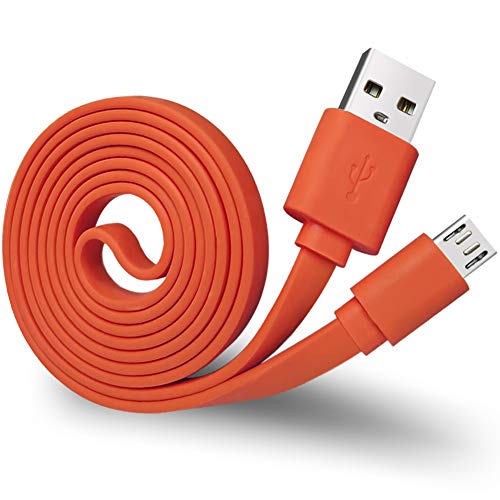
The SCOVEE charger cord is a specialized Micro USB cable built as a replacement for older JBL speakers including Flip 2-4, Charge 2-3, Pulse 1-3, GO, GO 2, Clip series, and more. It skips newer models like Charge 4 or Flip 5, focusing on reliable power for proven favorites.
Perfect for US music fans who haul JBL speakers to tailgates, beach outings, camping, or home gatherings. If your original cable frayed or vanished, this tangle-free option keeps the party alive without compatibility hassles.
Real-world testing shows 2.4A fast charging cuts downtime, while 480Mbps sync handles music loads or updates effortlessly. The flat red design stays neat in pockets or packs, thriving in active lifestyles.
Verdict: Essential upgrade for JBL owners. Affordable, effective, and stylish - grab it to ensure your speaker never misses a beat.
With steady power from the SCOVEE cord, JBL speakers like Flip 4 and Charge 3 unleash their punchy bass and crisp highs, ideal for filling backyards or beaches with vibrant sound.
Fast charging prevents power dips that could mute vocals or weaken bass during long sessions. Bluetooth stays rock-solid, streaming tunes up to 30 feet away across open spaces like parks or poolsides.
Max volume hits hard without breakup when battery is topped off, suiting high-energy uses from tailgates to workouts where deep lows and clear mids shine.
The flat 3FT profile and bold red hue make this cable sleek and portable, folding flat to avoid knots in your gear bag for road trips or daily commutes.
Durable nylon-wrapped build resists bends and pulls from outdoor adventures, pairing well with rugged JBL speakers that tackle splashes and dust at pool parties or hikes.
2.4A output slashes charging time, fueling 12+ hour playbacks on models like Charge 3. Hook to a power bank for weekend-long battery life without outlets.
Comprehensive Guide to JBL Speaker USB Charging, Port Roles, and Hardware Repairs
Determining how a portable speaker accepts power is essential for maintaining battery longevity and consistent audio performance. When addressing whether can you charge a jbl speaker through the usb port, the most critical factor is distinguishing between power inputs and power outputs. Many popular portable models feature multiple USB jacks that serve completely different electrical functions. Connecting a wall adapter to the wrong socket will result in zero charging activity, leaving listeners confused about whether their device has failed.
A proper charging routine requires understanding connector hardware, appropriate cable standards, and common wear patterns. Physical wear from daily cable insertion can loosen internal solder joints or bend delicate contact pins. When a charging jack becomes damaged, knowing how to test the connection or install a replacement socket can revive an otherwise functional speaker. This guide breaks down port mechanics, cable compatibility, diagnostic troubleshooting, and board-level repair techniques.
Input Versus Output: Why the USB Port Type Determines Charging Success
Directly answering the central question depends entirely on which USB socket is being used on the speaker enclosure. You can charge a JBL speaker through its dedicated USB input port, but you cannot charge the speaker through its standard USB-A output port. Models such as the Charge series, Pulse series, and Xtreme line include a full-size USB-A jack designed strictly as a power bank feature. That USB-A port sends direct-current electricity outward to charge mobile phones or external media players from the speaker’s internal battery reserve.
Internally, the circuitry behind the USB-A output port features protection diodes and switching hardware that strictly enforce unidirectional power delivery. If a user connects a standard wall charger into this USB-A port using a dual-ended USB cable, no power enters the speaker battery cells. The charging management chip simply ignores incoming voltage on that bus to prevent hazardous back-feeding. As a result, attempting to recharge the speaker through the power bank port leaves the unit uncharged.
The dedicated charging input port is always a smaller form factor, historically using either Micro USB or modern USB Type-C. This dedicated input socket links directly to the internal charge controller board, regulating incoming voltage before distributing power into the lithium-ion battery. Many models feature a molded rubber weather flap that conceals these ports to maintain water resistance. Locating this protective flap and checking the molded labels beside each port confirms whether an interface accepts incoming power or provides external output.
Confusion frequently arises because the speaker name itself, like the Charge series, emphasizes the ability to share battery power with other gadgets. Users unfamiliar with multi-port portable audio gear often mistake the larger USB-A output for an alternative charging method. Similar dual-role power banks appear in various waterproof outdoor speaker setup options where rugged enclosures house both audio amplification and auxiliary device charging. Identifying the specific input port symbol ensures you never waste time connecting chargers to passive output terminals.
When connected to the proper input jack, the speaker’s integrated LED battery indicator will begin pulsing or lighting sequentially to show active charging. If the light remains dark after connecting power, the issue usually stems from an incorrect port selection, a bad cable, or a loose internal connector. Always verify that the cable originates from a live wall adapter and terminates in the speaker’s smaller input jack. This simple visual confirmation eliminates the most common misunderstanding surrounding multi-port wireless speakers.
USB Connector Generations: Micro USB Versus Modern USB Type-C
JBL portable speakers have evolved across multiple hardware generations, transitioning from legacy Micro-USB sockets to modern USB Type-C interfaces. Legacy designs, including the Flip 2, Flip 3, Flip 4, Charge 2, Charge 3, Pulse 2, Pulse 3, Clip 2, and Go models, utilize asymmetrical Micro-USB ports. These connectors require precise cable orientation when plugging in to avoid bending the delicate internal tongue. Forcing a Micro-USB plug upside down remains one of the leading causes of premature port failure in older portable audio equipment.
Dedicated replacement cords, such as the SCOVEE Charger Cord for JBL Speaker,Flat Micro USB, cater specifically to these older product generations. This three-foot flat cable features a bright exterior jacket that resists tangling while delivering power at rates up to 2.4 amperes. In addition to high-current charging capability, the cord supports simultaneous data transfer speeds up to 480 megabits per second for devices requiring firmware updates. However, manufacturer compatibility lists explicitly note that this Micro-USB cable does not fit newer releases like the Charge 4, Flip 5, or Go 3.
Beginning with releases like the Charge 4 and Xtreme 3, the manufacturer adopted reversible USB Type-C connectors across the portable lineup. USB Type-C ports eliminate orientation mistakes because the symmetrical connector pins engage smoothly regardless of which side faces upward. Furthermore, Type-C interfaces support improved current handling, allowing larger battery packs to replenish more efficiently when paired with capable wall adapters. This generational shift provides significantly better physical resilience against frequent insertion cycles compared to older Micro-USB designs.
Wall charger wattage also plays a critical role in charging efficiency across both connector standards. Connecting a high-capacity speaker to an underpowered five-volt, one-amp USB brick will result in painfully slow charging times or failure to charge while playing audio at high volumes. Most portable speakers operate best with an AC adapter capable of delivering at least five volts at two to three amperes, matching manufacturer recommendations. Checking the tiny printed specifications on your wall charger helps avoid underpowering your audio hardware.
Using generic charging bricks from unverified third-party sources can introduce unstable voltage ripples that strain internal battery protection modules. A certified adapter with over-current and thermal cutoff features safeguards both the USB input port and the chemical battery cells. Whether your unit uses a Micro-USB or a Type-C connection, matching the cable rating with an appropriate power source ensures consistent charging cycles. Stable power input minimizes excess heat generation inside the speaker enclosure during extended charging sessions.
Diagnosing Physical Port Failure, Loose Contacts, and Power Issues
Even with the correct cable and input port, mechanical wear can compromise the electrical connection over years of portable listening. Repeatedly plugging and unplugging charging cables introduces lateral stress onto the internal socket soldered directly to the circuit board. Over time, this physical movement can crack tiny solder pads, bend internal contact pins, or widen the outer metal casing. When this occurs, the charging connection becomes intermittent, requiring the cable to be held at an unnatural angle to initiate power flow.
Before concluding that an internal hardware failure exists, systematically test the external charging components. Start by inspecting the USB port opening with a focused flashlight to check for accumulated pocket lint, sand, or dirt particles. Outdoor gear frequently collects debris that prevents the male cable connector from seating completely against the internal pins. Gently clearing out foreign material using a wooden or plastic toothpick often restores full electrical contact without requiring tools.
Next, swap out both the charging cable and the AC wall adapter with known working alternatives to isolate the fault. USB cables frequently suffer from internal wire fatigue near the strain relief collars due to repeated bending during transport. If another certified cable immediately triggers the charging indicator, the original cord was simply fatigued. This process of elimination prevents unnecessary disassembly of the speaker housing.
Similar connectivity problems occasionally occur in other audio categories, such as rugged portable wireless speakers subjected to rough travel and outdoor moisture. When external cords and adapters are verified as functional, a loose or rattling input port points directly to board-level solder fatigue. If the charging indicator flickers off the moment the cable is released, the physical socket has likely separated from its printed circuit board traces. At that stage, simple cable adjustments will no longer resolve the underlying power delivery problem.
Ignoring a loose charging jack can eventually short internal power pins against the grounded shield, potentially damaging the charging control integrated circuit. If a speaker refuses to charge, grows excessively warm near the port area, or fails to show an indicator light with multiple verified cables, stop using that port immediately. Leaving an unstable electrical connection energized increases the risk of thermal damage to nearby components. Addressing socket fatigue early preserves the speaker’s overall circuit integrity.
Repairing Damaged USB-C Ports: Board-Level Replacement and Soldering
When an internal socket fails on newer models, replacing the physical component offers an affordable alternative to purchasing a brand-new speaker. Specialized parts, such as the Replacement Type-C USB Charging Port for JBL Charge 4 and Xtreme 3 Bluetooth Speakers from PHONSUN, provide direct hardware solutions for broken connectors. This two-pack bundle features precision-engineered power jack sockets constructed with high-conductivity metal pins and heat-resistant structural housing. These replacement parts match original factory specifications to restore firm cable retention and stable electrical conduction.
Installing this replacement component requires technical proficiency and proper soldering equipment rather than simple plug-and-play assembly. The charging jack is surface-mounted directly onto a sub-board inside the speaker housing, requiring desoldering of the damaged port and careful alignment of microscopic contact pins. DIY enthusiasts and repair technicians utilize soldering irons with fine tips, desoldering braid or hot air rework stations, and quality flux to ensure clean joints. Attempting this repair without proper soldering skills can lift delicate copper traces off the circuit board, causing permanent board damage.
Disassembly of the speaker enclosure demands patience because weatherproof models utilize heavy-duty perimeter clips, internal screws, and rubber sealing gaskets. Removing the outer grille requires a plastic pry tool to release retaining tabs without marring the aesthetic finish. Once inside, technicians carefully disconnect internal ribbon cables connecting the main board to secondary charging assemblies. Keeping track of screw locations and preserving moisture gaskets ensures the enclosure reassembles properly once soldering is complete.
During the soldering process, applying an appropriate amount of non-corrosive flux helps solder flow smoothly across the ground tabs and signal pins. The heat-resistant materials used in high-grade replacement sockets help protect internal insulating plastics from melting during iron contact. The value of receiving a two-pack bundle becomes evident here, providing an immediate backup component should an error occur during initial pin alignment. Securing the larger structural anchor tabs first establishes mechanical stability before tacking down the smaller conductive pins.
After completing the soldering work, visually inspect all electrical joints under magnification to verify there are no unintended solder bridges between adjacent pins. Solder bridges can create direct short circuits that trigger power supply protection or permanently damage the internal battery management system. Cleaning away residual flux with isopropyl alcohol leaves the board clean and prevents chemical corrosion over time. Taking time to inspect your work before snapping the chassis back together ensures a safe and durable repair.
Safe Charging Habits and Preventative Care for Portable Audio Gear
Preventing physical port damage and preserving internal battery health begins with establishing careful everyday handling habits. Always insert and remove charging cables with a straight, steady motion rather than rocking the plug from side to side. Rocking the connector exerts severe leverage against the internal solder pads, eventually weakening the mechanical bond between the socket and the circuit board. Training yourself to pull directly from the molded plug head rather than tugging on the flexible wire extends both cable and port lifespan.
Moisture management is equally essential for portable speakers frequently used near pools, beaches, or damp patio settings. While many portable speakers boast robust water-resistance ratings, these ingress protections apply only when the protective rubber port door is firmly sealed. Never connect a USB charging cable to a speaker if the port area is wet, damp, or recently exposed to salt water. Introducing electric current across wet contact pins accelerates galvanic corrosion, degrading conductive metal surfaces within minutes and risking electrical shorts.
If your speaker has been exposed to water or high humidity, allow the port enclosure to air dry completely in a well-ventilated area before charging. You can speed up moisture evaporation by gently blowing dry air into the open port or wiping accessible moisture with a lint-free cloth. Do not insert cotton swabs or paper towels that could leave fibers caught behind internal pin assemblies. Verifying that the port is completely dry ensures safe current transfer without sparking or oxidative damage.
Cable tension during active playback also contributes significantly to premature socket failure. Avoid positioning the speaker in locations where the charging cable hangs in mid-air under its own weight or stretches tightly across footpaths. Accidental trips or sudden tugs on a taut cable can rip the internal charging socket straight off the circuit board. Maintaining adequate cable slack allows the speaker to rest comfortably on a stable tabletop while recharging safely.
Finally, manage your speaker battery charging cycles thoughtfully to maximize the operational life of internal lithium-ion cells. Avoid storing portable speakers in extremely hot environments, such as inside parked cars during summer afternoons, while simultaneously connected to high-output chargers. Extreme heat degrades battery chemistry and stresses surface-mounted electrical components surrounding the power input jack. Storing and charging your audio gear at moderate room temperatures maintains steady power delivery and keeps your music playing for years to come.
Understanding the exact function of your speaker’s USB ports ensures you can recharge without frustration or hardware damage. By identifying the dedicated input jack, utilizing the correct cable type for your generation, and practicing gentle cord management, you protect both the battery and internal circuit components. When physical wear or loose pins do disrupt power delivery, replacement sockets and appropriate charging cords provide practical repair avenues to extend the life of your equipment. With mindful maintenance and proper power accessories, your portable speaker will continue delivering vibrant, reliable sound wherever your listening takes you.


Write Your Review
No reviews yet. Be the first to share your experience!