

Streaming personal playlists or podcast episodes from a phone often feels restricted when smart voice commands do not support your specific media app. Many household listeners wonder whether can we use alexa echo dot as bluetooth speaker without relying strictly on active cloud connections or voice skills. The straightforward answer is that Amazon smart hardware includes built-in wireless reception, allowing you to link smartphones, tablets, or computers directly. For listeners who want richer audio across multiple rooms, integrating smart devices into a broader dual speaker setup can significantly expand overall room coverage.
Standard smart pucks provide decent speech clarity, but users often desire stronger low frequencies when playing music from local libraries. If your listening priorities demand substantial low-end punch, evaluating speakers with dedicated bass illustrates the difference between compact voice hubs and dedicated acoustic enclosures. Pairing an existing Echo Dot to a phone remains one of the most cost-effective ways to stream offline files, mobile video audio, and personal voice notes. Understanding the simple pairing commands, hardware profiles, and docking accessories ensures you get the most practical listening performance possible from your hardware.

Pros
- Deep bass and clear sound tailored to your room's acoustics
- Seamless multi-device pairing for richer audio across home
- Fast AZ3 chip powers quick Alexa responses and smart features
- Supports major streaming like Amazon Music, Spotify, and Apple Music
- Built-in hub simplifies smart home setup
Cons
- Designed for plugged-in use, not portable for outdoor settings
- Requires stable WiFi for full Alexa and streaming performance
- Limited color options to Glacier White
The Amazon Echo Dot Max is the newest powerhouse in Amazon's smart speaker lineup, packing room-filling audio with nearly 3x the bass of the 2022 Echo Dot into a compact design perfect for living rooms and medium-sized spaces. Powered by an AZ3 chip and Omnisound technology, it automatically fine-tunes sound to your environment, delivering deep bass and crisp clarity whether you're streaming playlists or pairing with other devices.
It's built for smart home enthusiasts who want more than just music: control lights, locks, and routines via voice, or let Omnisense detect presence and temperature to automate your day. Pair it with Fire TV for immersive home theater or link multiple Echos for whole-home sound that elevates parties and daily vibes.
In real-world use, it shines in cozy living areas, handling everything from podcast chatter to bass-heavy tracks without muddiness. Alexa+ makes interactions feel conversational and efficient. Verdict: A top upgrade for Alexa households craving bigger sound without the bulk.
Expect rich, immersive audio with nearly 3x the bass depth of prior Echo Dots, creating a personal soundstage that fills living rooms effortlessly. Vocals stay clear and detailed even at high volumes, while auto-adapting tech ensures balanced playback no matter the room size or furnishings.
Stream from Amazon Music, Spotify, Apple Music, or SiriusXM with stability over WiFi. Pair two units for stereo punch or connect to Fire TV for cinematic scenes that come alive. Volume reaches party levels without distortion, and the AZ3 chip keeps responses snappy during playback.
Bluetooth range supports nearby devices reliably, making it versatile for quick phone links alongside primary WiFi streaming.
Sleek Glacier White finish blends into modern living rooms, with a compact footprint ideal for shelves or tabletops in medium spaces. The built-in smart home hub and privacy microphone button add functionality without clutter, and Omnisense sensors enable hands-free automation.
Rugged enough for home use with multiple privacy layers, though it's not rated for dust or water exposure. Weight stays light for easy placement, focusing on stationary setups rather than portability.
As a mains-powered speaker, it offers unlimited playback without battery concerns, just plug in for non-stop music and Alexa access. No charging downtime means it's always ready for your routines.

Pros
- Exceptional bass depth and clarity for its size
- Seamless smart home integration without extra hubs
- Fast AZ3 chip for responsive performance
- Multi-room pairing enhances whole-home audio
- WiFi extension with eero for reliable streaming
Cons
- Stationary design requires a power outlet, not portable
- Best performance within Amazon ecosystem and services
- Larger footprint than standard Echo Dot models
The Amazon Echo Dot Max is the newest Alexa speaker designed to elevate audio in living rooms and medium-sized spaces. It combines powerful room-filling sound with smart home capabilities, powered by an AZ3 chip for quick responses and Omnisense technology for personalized routines based on your environment.
Perfect for families or tech-savvy homeowners who want more than basic playback, it streams from Amazon Music, Apple Music, Spotify, and SiriusXM while controlling thousands of compatible devices. Pair it with other Echos for multi-room music or Fire TV for cinematic home theater vibes that make movie nights epic.
In real-world use, the nearly 3x bass delivers thumping lows for parties or workouts without distortion, and Alexa+ handles complex requests conversationally. Its built-in hub simplifies setups, extending WiFi with eero to banish buffering.
Verdict: A top pick for anyone upgrading their smart home audio, offering pro-level sound and convenience in one sleek package.
The Echo Dot Max shines with nearly 3x the bass of the Echo Dot (2022), creating deep, rumbling lows that fill rooms with punchy energy ideal for bass-heavy genres or podcasts with clear vocals. Enhanced clarity ensures every detail cuts through, adapting automatically to your space for balanced playback.
Volume reaches party levels without muddiness, maintaining stability across streaming services. Pair two units for stereo richness or link with Fire TV for immersive scenes that rival dedicated systems.
Connectivity is rock-solid via WiFi, with device pairing enabling seamless multi-room sync and extended range through eero integration for lag-free performance.
Sleek in Amethyst, the Echo Dot Max fits modern living rooms with its compact yet powerful build, optimized for medium spaces without overwhelming decor. Privacy features like a mic off button add peace of mind for daily use.
As a plugged-in speaker, it offers unlimited playback without battery concerns, always ready for non-stop music or routines. No need for recharges means it powers through long gatherings or all-day background tunes.
Durable construction handles home life robustly, with the AZ3 chip ensuring snappy operation and Omnisense for smart adaptations to your routine.

Pros
- Enhanced bass from passive radiator fills rooms with rich low-end
- Stable Bluetooth connectivity for wireless streaming from multiple devices
- Up to 8 hours of playback on a single charge supports full-day use
- Color-changing lights add fun ambiance that syncs with music
- Dedicated Echo Dot dock simplifies portable Alexa setup
Cons
- Requires Wi-Fi for full Alexa functionality, limiting offline use
- Echo Dot sold separately, adding to overall setup cost
- No waterproof rating, so best kept indoors or in dry outdoor spots
The iHome iAV5 is a specialized portable speaker designed as a dock for the Amazon Echo Dot (2nd Gen), letting you take Alexa-powered audio and smart home control from room to room or even out to the deck. It combines Bluetooth streaming with Echo Dot integration, making it a seamless extension for Alexa enthusiasts who want more freedom than a stationary smart speaker allows.
Ideal for busy households or anyone integrating smart home devices, this speaker shines in everyday scenarios like bedside routines, kitchen multitasking, or casual outdoor lounging. The stereo sound and color-changing lights elevate music listening, while compatibility with iHome smartplugs expands control over lights and appliances.
In real-world use, it delivers consistent performance with no dropouts in Bluetooth range around the home, and the 8-hour battery holds up for extended sessions. Though not rugged for extreme conditions, its lightweight design makes it effortless to move. Overall verdict: a smart pick for Echo Dot owners craving portability, earning solid marks for convenience and fun features.
Stereo drivers paired with a passive radiator produce room-filling audio with noticeable bass depth, handling everything from podcasts to upbeat tracks without muddiness. Vocal clarity stands out during Alexa responses or Bluetooth streams, ensuring commands and lyrics cut through clearly even at higher volumes.
Volume levels reach party-ready loudness indoors, with minimal distortion, and the Bluetooth connection remains stable up to 30 feet through walls. Five color modes, including pulse-to-music, sync lights with the beat for an engaging visual experience that enhances performance during casual gatherings or solo chill sessions.
The compact, lightweight build with a dedicated MicroUSB dock for the Echo Dot makes it highly portable for home use, slipping easily into a bag for deck or patio moves. Color-changing LEDs offer five modes like slow blend or fast pulse, adding stylish flair without bulk.
Not rated for waterproof or dustproof use, it suits dry environments best to avoid damage. The internal rechargeable battery delivers up to 8 hours of playback at moderate volumes, with a full charge taking about 3-4 hours via USB, supporting worry-free all-day mobility around the house.
Using Your Alexa Echo Dot as a Bluetooth Speaker: Everything You Need to Know
Yes, you can use an Amazon Echo Dot as a standard Bluetooth speaker to stream audio directly from a smartphone, tablet, laptop, or any other compatible Bluetooth transmitter. The Echo Dot hardware includes a built-in Bluetooth receiver module alongside its primary Wi-Fi connectivity. When you switch the device into Bluetooth receiving mode, it accepts incoming audio streams just like a standard wireless speaker. You do not need an active music subscription or specialized Alexa skills to play your device’s audio tracks, mobile games, or video sound through the speaker.
How the Echo Dot Bluetooth Architecture Operates
Amazon smart speakers operate across two distinct wireless audio modes known as receiver mode and transmitter mode. In receiver mode, the Echo Dot functions as the physical audio destination for your external source hardware. In transmitter mode, the Echo Dot sends its own internal audio signal out to an external sound system or wireless speaker. Most users asking about mobile device playback want receiver mode so their phone audio plays through the Dot’s internal speaker.
Modern models like the Amazon Echo Dot Max (newest model) run on updated processing silicon, such as the AZ3 chip, which manages internal wireless connections and voice tasks smoothly. Even while functioning as an active Bluetooth receiver, the internal microphone array remains available by default unless manually muted with the physical privacy button. This dual operation means you can stream local podcasts from your phone while still issuing standard voice commands to adjust volume levels or ask for time checks. The device automatically attenuates background streaming when you speak the wake word.
Quick Setup: Pairing Your Echo Dot Using Voice Commands
The fastest method to pair your Echo Dot to a phone, tablet, or computer is through voice control. Begin by opening the Bluetooth settings screen on your mobile phone or computer so the operating system actively searches for nearby hardware. Once your phone screen displays its search animation, speak clearly to the Echo Dot and say, “Alexa, pair.” The light ring will pulse blue to indicate that the internal receiver has entered discovery mode.
Within several seconds, your Echo Dot will surface in the list of available devices on your source screen. Tap or click on the Echo device name to complete the initial digital handshake, and Alexa will announce confirmation through the speaker once the link succeeds. When you finish listening, simply say, “Alexa, disconnect,” to end the active stream. Next time you want to play audio, say, “Alexa, connect to my phone,” and the speaker automatically reconnects without repeating discovery.
Manual Setup: Pairing Through the Alexa Mobile App
Voice pairing is remarkably quick, but manual pairing through the official Alexa app is useful when operating in noisy rooms or setting up devices from a distance. To begin, open the Alexa application on your mobile device and navigate to the Devices tab located at the bottom of the interface. Select the Echo & Alexa option and locate the specific Echo Dot unit you wish to configure from the equipment list. This menu lets you manage hardware settings directly without issuing verbal commands.
Scroll down through the hardware settings menu, select the Bluetooth Connections section, and tap on “Pair a New Device” while your phone’s Bluetooth toggle is enabled. The app will finalize the wireless protocol exchange and register the source device profile within seconds. This manual method allows you to review previously paired phones, rename connections, and remove obsolete devices that you no longer own. Keeping your paired device list tidy prevents accidental audio rerouting when multiple family members share the same living space.
Two-Way Bluetooth: Using the Echo Dot as an Audio Transmitter
Many listeners overlook the fact that an Echo Dot can also broadcast its sound outward to more powerful speaker hardware. In this transmitter configuration, Alexa serves as the media player while external speakers provide the physical acoustic amplification. If you own an expansive living room setup or a Bluetooth speaker for large spaces, routing the Echo Dot audio to that external system dramatically improves sound projection. This configuration is popular for owners who love Alexa voice requests but desire richer acoustic scale.
To configure outgoing transmission, access the Bluetooth Connections section inside the Alexa app and select “Pair a New Device” while putting your external speaker into pairing mode. Once linked, any voice-requested music, news briefings, or timer chimes will output through the external sound system instead of the Echo Dot’s small internal driver. Note that the Echo Dot cannot operate as both a receiver and a transmitter simultaneously. You cannot stream audio from your laptop to the Echo Dot over Bluetooth while simultaneously broadcasting that stream to an external speaker.
Audio Quality, Codecs, and Latency Expectations
Understanding acoustic limitations is vital when using smart speakers for general media playback. Standard Echo Dot units primarily utilize the baseline SBC audio codec for wireless transmission. While SBC provides adequate frequency response for spoken-word podcasts, audiobooks, and casual background music, it does not support high-resolution lossless audio formats. Listeners seeking audiophile-grade detail may notice subtle compression artifacts during complex instrumental passages.
Latency is another technical factor to keep in mind when watching videos or playing mobile games on your phone. Because the Bluetooth transmission pipeline introduces a slight processing buffer, video dialogue may show a minor lip-sync delay on certain mobile platforms. In addition, small drivers are engineered primarily for vocal intelligibility rather than deep sub-bass frequencies. If your priority is listening outdoors with heavy low-end impact, pairing your phone with an outdoor speaker with a subwoofer delivers much greater physical presence.
Echo Dot Hardware Variations and Acoustic Capabilities
Amazon has refined the physical driver structure and internal acoustics across successive hardware generations. Newer releases like the Amazon Echo Dot Max (newest model) incorporate room-filling sound and nearly three times the bass output of earlier iterations. This substantial increase in lower-frequency extension makes modern Dot units far more satisfying as everyday music speakers. The larger internal acoustic cavity provides deeper resonance without producing harsh rattling at higher volume settings.
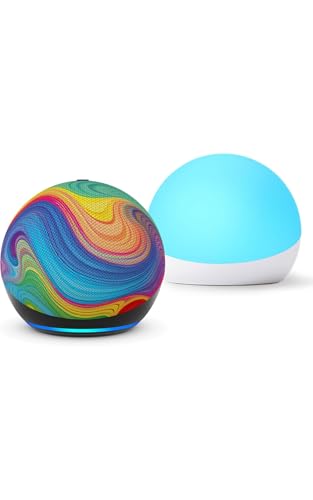
In family households, specialized units like the Amazon Echo Dot Kids (newest model) provide balanced vocal clarity along with integrated parental control features. Parents can pair a tablet to stream educational audiobooks while relying on built-in software filters to keep listening content appropriate. Advanced models also feature room-adaptation sensors that adjust equalization automatically based on surrounding boundaries. This active tuning ensures that spoken vocals remain legible even when the speaker sits close to walls or corners.
Solving the Portability Challenge: Battery Bases and Docking Stations
The standard Amazon Echo Dot is designed strictly as a stationary countertop device requiring a continuous wall outlet connection. If you attempt to carry the Dot outdoors or move it across rooms, unplugging the power adapter instantly shuts down the speaker. This tethered requirement contrasts sharply with standard portable Bluetooth speakers that carry integrated rechargeable lithium-ion battery packs. The absence of an internal battery restricts the device to locations within cord reach of an electrical socket.
Third-party accessory manufacturers developed specialized docking stations to overcome this stationary limitation. The iHome iAV5 Color Changing Bluetooth Rechargeable speaker base illustrates how an accessory can convert a standard Echo Dot into a mobile audio companion. This dock incorporates a dedicated rechargeable battery, a passive radiator for augmented bass response, and dynamic color-changing lighting modes. When mounted into a compatible dock, the Echo Dot gains the freedom to operate on patios, decks, and bedside tables without trailing power cords.
Troubleshooting Bluetooth Disconnects and Audio Drops
Stuttering audio and unexpected disconnections are common challenges when streaming wireless sound in modern homes. Because Bluetooth shares the crowded 2.4 gigahertz frequency band with household Wi-Fi networks and microwave appliances, radio interference can disrupt continuous playback. Placing your Echo Dot at least three feet away from your Wi-Fi router often resolves intermittent audio stutter. Ensuring an unobstructed line of sight between your phone and the Echo Dot also strengthens the wireless link.
Another frequent issue occurs when the Echo Dot unintentionally connects to a secondary paired device in your household. If multiple family members have paired their smartphones to the same Echo Dot, the speaker may latch onto an inactive phone in an adjacent room. You can fix this behavior by opening the Alexa app, navigating to Bluetooth Connections, and manually disconnecting background devices. If connection problems persist, instructing Alexa to forget all paired devices clears the internal table, allowing you to establish a fresh connection.
Wi-Fi Versus Bluetooth: Which Playback Mode Should You Choose?
Choosing between native Wi-Fi streaming and local Bluetooth playback depends primarily on your audio source and media habits. Streaming over Wi-Fi allows the Echo Dot to pull digital audio files directly from cloud servers like Amazon Music, Spotify, or Apple Music. This direct cloud link frees up your smartphone completely, meaning incoming telephone calls or message alerts will not interrupt room playback. It also delivers slightly higher digital stream reliability across wide living areas.
Bluetooth streaming proves superior whenever you listen to content that lacks native Alexa voice integration. Media formats such as YouTube video sound, specialized podcast apps, downloaded voice memos, and foreign language learning applications stream effortlessly over Bluetooth. Furthermore, if your home internet connection experiences an outage, you can still play locally stored music from your phone through the Echo Dot via Bluetooth. Knowing when to rely on cloud playback versus local Bluetooth streaming maximizes convenience while preserving mobile battery life.
Practical Setup Verification and Everyday Advice
Transforming an Echo Dot into a Bluetooth speaker is an effortless process that breathes extra utility into smart home equipment. Whether you want to enjoy an audiobook from your tablet or share a video soundtrack across the room, the built-in Bluetooth receiver delivers dependable performance. Simple voice commands make switching between smart assistance and passive speaker duties quick and seamless. You gain a versatile desktop sound solution without spending extra money on separate audio gear.
For listeners who need room-filling dynamics or cordless portability, pairing the device with acoustic battery docks or stepping up to newer hardware provides notable enhancements. Keeping software updated and managing paired device profiles will keep your wireless listening experience stable and hassle-free. Take advantage of both wireless modes to enjoy flexible audio streaming throughout your living space.


Write Your Review
No reviews yet. Be the first to share your experience!