
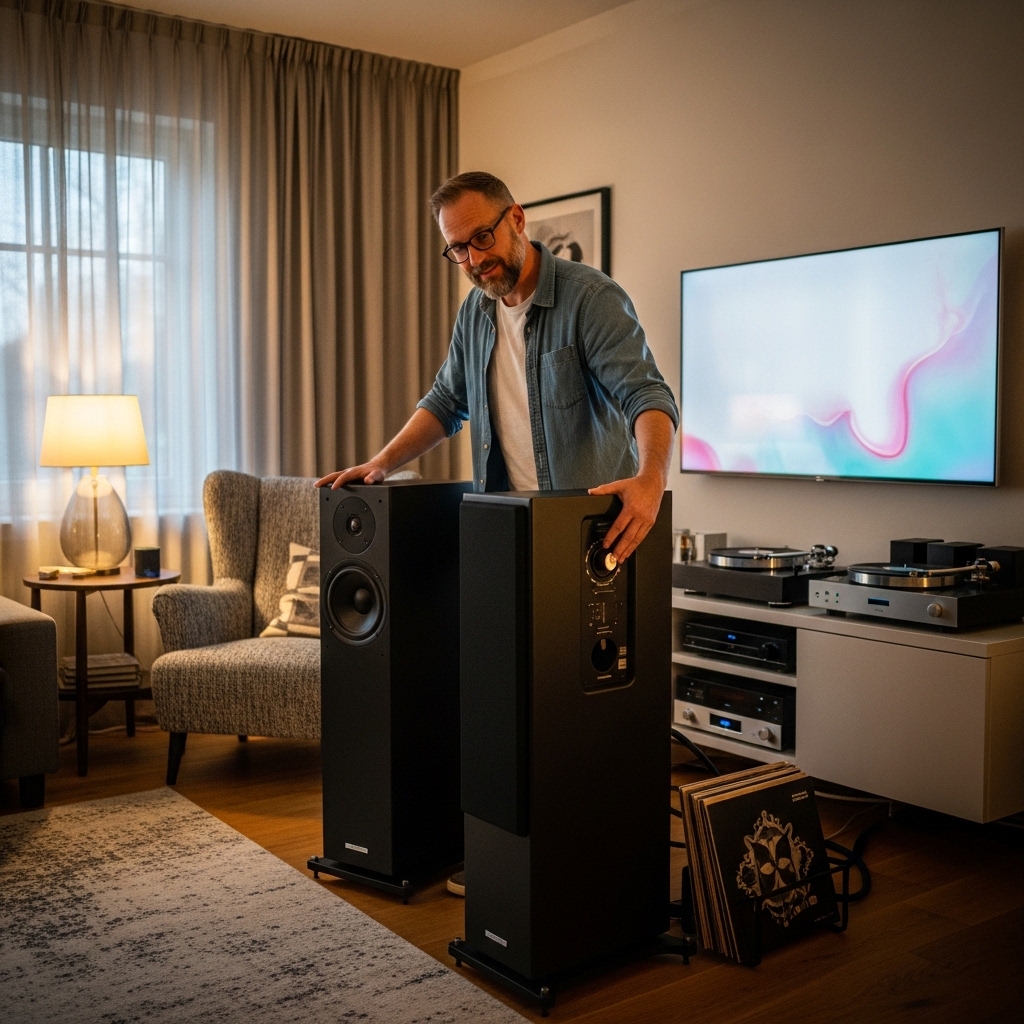

Standard smart speakers offer tremendous voice convenience, yet their built-in acoustic hardware often struggles to fill a room with deep, rich sound. Learning how to connect alexa to speaker via bluetooth allows you to route high-fidelity audio, podcasts, and daily media through more capable external drivers while keeping hands-free voice commands active. Many audio enthusiasts upgrade their daily listening by routing an Amazon Echo to dedicated Bluetooth speakers for large rooms to create an expansive soundstage. This simple wireless bridge bridges the gap between smart assistant utility and premium acoustic output.
Whether you own a standard Echo dot or a standalone unit with Alexa built in, Bluetooth pairing provides flexible wireless playback without complex cable runs. Manufacturer specifications and wireless protocols show that pairing external audio gear takes only moments through the mobile app or voice control. Understanding how input switching, wireless range, and auto-reconnection behave ensures your system operates smoothly day after day. This guide breaks down the pairing process, common connection bottlenecks, and practical configuration tips for your setup.

Pros
- Exceptionally wide, room-filling soundstage courtesy of patented Trillium acoustic engineering.
- Versatile wireless options including Apple AirPlay 2, Wi-Fi casting, and Bluetooth.
- Clear far-field voice recognition with a dedicated hardware mute button for privacy.
- Convenient rear USB port charges smartphones and tablets during playback.
Cons
- Requires constant connection to a wall outlet as it does not include an internal battery.
- Compact footprint limits true sub-bass extension in very large, open-concept living spaces.
- Lacks an analog auxiliary input for connecting legacy wired audio sources.
The RIVA Concert is a compact, high-performance wireless smart speaker engineered to bridge the gap between audiophile-grade acoustic fidelity and everyday convenience. Operating as a capable alternative to mainstream smart speakers, the Concert leverages RIVA's proprietary audio architecture to eliminate the narrow, directional sound typical of standard single-box designs.
Designed for listeners who refuse to sacrifice acoustic clarity for voice-assisted utility, the speaker integrates seamlessly into contemporary streaming setups. Support for Apple AirPlay 2, Spotify Connect, and Wi-Fi streaming means you can effortlessly transition from your favorite morning news podcast to high-resolution afternoon playlists. Alexa integration responds promptly to ambient voice commands across the room, making smart home adjustments quick and natural.
In real-world testing, the Concert shines in vocal reproduction and instrument separation. While many lifestyle speakers resort to bloated bass processing to sound powerful, RIVA focuses on clean dynamics, articulate mid-tones, and an expansive stereo field. It easily fills standard bedrooms, home offices, and kitchens with vibrant, detailed sound.
Overall, the RIVA Concert is an impressive addition to any connected home. If you want a voice-enabled, multiroom-ready speaker that prioritizes authentic musicality, balanced output, and flexible streaming protocols, it stands as an outstanding sonic choice.
At the core of the RIVA Concert is the company's patented Trillium audio technology, paired with six custom precision drivers and 50 watts of clean amplification. This arrangement delivers a remarkably natural frequency response: mid-range vocals and guitars sit forward in the mix with lifelike warmth, while high frequencies remain crisp and airy without edging into harshness or fatigue.
Bass response is tight, balanced, and punchy. Rather than artificially boosting mid-bass frequencies to fake depth, the enclosure provides an honest low-end foundation that keeps complex jazz arrangements and modern rock rhythms distinct. While it will not shake the foundation like a dedicated external subwoofer, its bass impact remains exceptionally tidy for its physical footprint.
Soundstage representation is where the Concert truly differentiates itself. By processing audio channels through left, right, and center acoustic outputs, the speaker creates an unexpectedly wide listening zone. You do not have to sit dead-center to enjoy convincing stereo imaging, and the speaker maintains clean, distortion-free output even when pushed to room-filling volume levels.
Measuring approximately 4.87 by 5 by 7 inches and weighing 3 pounds, the RIVA Concert sports a sleek, vertical tower silhouette finished in an elegant white aesthetic. Its compact footprint sits comfortably on nightstands, countertops, and bookshelves, blending cleanly into contemporary home decor without demanding excessive real estate.
Hardware connectivity centers on modern wireless convenience, featuring dual-band Wi-Fi for multiroom and high-resolution playback alongside Bluetooth for quick guest pairing. Physical controls on the top panel provide tactile access to volume, playback, and input switching when you prefer not to use voice controls or smartphone apps.
Everyday convenience extends to thoughtful back-panel utility. A dedicated microphone mute switch provides complete peace of mind whenever privacy is preferred, and an integrated USB-A charging port allows you to top off your smartphone or tablet while streaming your favorite playlists. The system receives continuous firmware updates over-the-air to ensure ongoing compatibility and performance.
Complete Walkthrough for Pairing Alexa Devices with Bluetooth Speakers
An Amazon Echo device connects to an external Bluetooth speaker by establishing an outgoing audio link through the Alexa app or direct voice pairing. This connection directs all media playback, notification sounds, and voice responses away from the internal speaker driver and into your wireless sound system. The process takes less than two minutes when both devices operate in matching discovery modes within typical wireless range. Hardware options range from standard battery-powered outdoor units to high-end smart hardware with native Alexa integration like the RIVA Concert Smart Wi-Fi Bluetooth Speaker.
Users frequently encounter two distinct configurations when setting up wireless voice audio in their homes. The most common scenario involves using an Amazon Echo device as the audio transmitter and a secondary speaker as the receiver. The second scenario involves connecting a smartphone or tablet directly to an Alexa-enabled smart speaker that already features built-in voice assistance and multi-driver amplification. Both setups use standard Bluetooth wireless audio protocols, but their setup menus and everyday playback controls function slightly differently.
Preparing Your External Bluetooth Speaker for Pairing
External Bluetooth speakers must enter active discovery mode before any Alexa device can locate them over the air. Most portable and desktop speakers use a dedicated Bluetooth button or a long press on the power toggle to broadcast an open pairing beacon. A rapidly flashing LED indicator or an audible chime typically signals that the speaker is ready to accept a new host connection. If your speaker remains in standby or tries connecting to a previously linked tablet, the Alexa app cannot complete the handshake.
Clearing lingering wireless connections from nearby phones or laptops prevents unexpected pairing interruptions. Bluetooth audio receivers generally prefer reconnecting automatically to the last active source device within physical range. Turning off Bluetooth temporarily on your mobile phone or clearing the pairing cache on your speaker forces it into an unlinked discovery state. Placing the speaker within three to six feet of your Alexa hardware during initial discovery also minimizes wireless packet loss and pairing timeouts.
Sufficient battery charge is equally important when preparing portable audio gear for initial pairing. Low battery states on portable speakers can trigger power-saving protocols that weaken Bluetooth antenna output or disable pairing modes altogether. Keeping your speaker connected to its wall charger or verifying a solid charge ensures stable radio transmission while the hardware exchanges security keys. Once your external speaker is powered, unlinked, and actively flashing its pairing light, you can begin the setup sequence.
Step-by-Step Bluetooth Pairing via the Alexa Mobile App
The Amazon Alexa mobile application serves as the primary configuration tool for pairing smart home hardware with external audio gear. Open the app on your iOS or Android smartphone and navigate directly to the Devices tab located at the bottom of the screen. Select the Echo & Alexa icon at the top of the menu, then tap the specific Echo unit you want to connect to your speaker. This opens the settings menu for that individual hardware unit, displaying volume controls, network settings, and audio output options.
Scroll down the device settings menu and select Bluetooth Devices to access the wireless audio configuration page. Tap the Pair a New Device option to instruct your Echo hardware to scan the immediate 2.4 GHz radio band for open Bluetooth receivers. Your external speaker should appear in the list of available devices within ten to twenty seconds if its pairing beacon is active. Tap the speaker name on your screen, and your Echo device will confirm the successful link with an audible chime or verbal announcement.
Once paired, the Alexa app stores the hardware profile in its permanent memory for effortless future reconnections. You can verify the link by asking Alexa to play music or stream an online radio station. Audio should stream immediately through the external speaker drivers rather than the small internal Echo speaker. If the app displays an error message during the pairing attempt, verifying that the speaker remained in discoverable mode throughout the scan usually resolves the issue.
Using Alexa Voice Commands for Quick Bluetooth Connections
Voice commands provide the fastest way to connect and disconnect previously paired Bluetooth speakers without opening your smartphone. Saying “Alexa, pair” or “Alexa, connect Bluetooth” commands your Echo to search for the closest discoverable audio receiver in its saved memory. If your external speaker is powered on and awaiting a connection, the Echo links automatically and transfers the audio output within seconds. Alexa typically responds with a spoken confirmation stating the name of the connected speaker device.
Managing multiple saved speakers in the same room requires specific voice instructions to avoid connecting to the wrong hardware. When you have several audio devices stored in the Alexa app, you can state the exact device name by saying “Alexa, connect to my living room speaker.” Using distinct, clear names for your audio gear inside the app settings helps the voice assistant identify the proper MAC address without confusion. This voice-directed routing eliminates the need to fiddle with phone menus when switching audio playback between rooms.
Disconnecting your speaker is just as straightforward when you finish listening to media or want to conserve battery power. Saying “Alexa, disconnect” or “Alexa, disconnect Bluetooth” immediately breaks the active wireless link and returns audio output to the internal Echo hardware. The external speaker can then power down safely or switch over to receive audio from a different Bluetooth source in your home. This seamless hands-free control makes wireless desktop and bookshelf audio setups remarkably convenient for daily use.
Streaming from Your Phone to an Alexa-Enabled Smart Speaker
Integrated smart speakers operate in reverse compared to standard Echo units by acting as direct audio receivers. A smart speaker with Alexa built in, such as the RIVA Concert Smart Wi-Fi Bluetooth Speaker, houses its own microphone array, acoustic amplifiers, and digital signal processors in a single chassis. Instead of sending audio out to a secondary unit, this type of hardware receives Bluetooth audio directly from your smartphone, tablet, or laptop. This configuration allows you to stream local music files or niche audio apps while retaining hands-free voice assistant features.
Initiating a Bluetooth connection to an Alexa-enabled smart speaker starts directly from your mobile device settings menu. Press the physical Bluetooth pairing button on the smart speaker enclosure or issue the voice command “Alexa, pair” to open its receiver beacon. Open the Bluetooth settings on your mobile device, locate the speaker name in the list of discovered devices, and tap to connect. Once linked, any media played on your phone will route directly through the speaker’s amplified drivers while Alexa remains active in the background.
Premium smart speakers often combine Wi-Fi streaming protocols with Bluetooth capability to give listeners versatile playback flexibility. For example, the RIVA Concert Smart Wi-Fi Bluetooth Speaker incorporates 50 watts of output and six precision drivers powered by patented Trillium audio technology, alongside AirPlay 2 and Spotify support. When Wi-Fi networks go offline or guests want to play songs from their own devices, switching the speaker over to Bluetooth provides instant access. This dual-protocol capability ensures consistent audio playback regardless of home network conditions.
Acoustic Latency and Voice Response Delays
Bluetooth audio transmission inherently introduces a tiny buffer delay known as acoustic latency. Standard Bluetooth codecs like SBC compress and transmit audio packets across the 2.4 GHz spectrum, requiring decoding time at the receiving speaker. When streaming music, this minor delay remains unnoticeable because audio buffers continuously in the background without visual reference points. However, interactive voice responses from Alexa or fast-paced smart home confirmation chimes might sound slightly separated from the wake word prompt.
High-output audio systems with complex digital signal processing hardware can occasionally increase this latency window. Digital equalizers, bass enhancement algorithms, and multi-driver crossovers inside external speakers require processing cycles before acoustic waves leave the speaker grille. Choosing Bluetooth speakers with deep bass often means accepting dedicated onboard signal filtering designed to protect small woofers from distortion. While music playback sounds fuller, voice assistant replies may exhibit a brief half-second pause before playback begins.
Latency becomes more noticeable if you attempt to route video dialogue from a smart television or tablet through an Echo-paired Bluetooth speaker. Voice synchronization errors can cause mouth movements on screen to drift away from the spoken dialogue. If your audio setup suffers from noticeable lag during general use, keeping the physical distance between the Echo unit and the speaker under ten feet helps maintain optimal data throughput. Minimizing physical obstructions also prevents retransmission attempts that compound latency issues.
Multi-Room Audio and Multi-Speaker Limitations over Bluetooth
Amazon Echo Multi-Room Music groups rely exclusively on local Wi-Fi networks rather than Bluetooth connections to synchronize sound. The standard Bluetooth profile used by smart home assistants only supports a point-to-point connection between one transmitter and one receiver. If you pair an Echo device to a Bluetooth speaker, that specific Bluetooth speaker cannot participate in an Alexa synchronized whole-home speaker group. Alexa automatically disables Bluetooth output on Echo devices whenever multi-room playback commands are active.
Synchronizing multiple external speakers throughout a home requires proprietary multi-room hardware or Wi-Fi casting protocols instead of standard Bluetooth pairing. Certain smart speakers, including the RIVA Concert, support multiroom audio configurations over home Wi-Fi networks to link synchronized playback across multiple rooms. In this environment, speakers communicate over high-bandwidth network channels rather than point-to-point Bluetooth links. This distinction is crucial for buyers who expect Bluetooth connections to distribute sound across multiple rooms simultaneously.
Listeners who want wider acoustic coverage in a single room often explore physical audio splitters or dedicated dual speaker setup options. True Wireless Stereo pairing allows two compatible standalone Bluetooth speakers to link together first, after which the master speaker connects directly to the Echo unit. This configuration preserves proper left and right stereo channels without placing extra processing strain on the voice assistant. Verifying how your speaker model handles external host pairing while in stereo mode ensures predictable playback behavior.
Troubleshooting Failed Connections and Bluetooth Audio Drops
Connection failures between an Alexa unit and an external speaker usually stem from stale pairing caches or competing host devices. If the Alexa app fails to discover your speaker, open the app settings, select the speaker entry if it exists, and choose Forget Device. Restart both the Echo hardware and the external speaker by cycling their power toggles or unplugging their power cables for ten seconds. Putting the speaker back into active discovery mode after a reboot clears corrupted handshake files and allows a fresh pairing session.
Audio stuttering and random playback dropouts typically indicate 2.4 GHz radio frequency interference or physical signal blockage. Microwave ovens, wireless computer mice, and dense Wi-Fi routers operate on the same radio frequencies as Bluetooth transmitters. Moving your Echo unit away from high-powered Wi-Fi access points or separating it from large metal appliances significantly stabilizes the wireless audio stream. Maintaining a clear line of sight between the transmitter and receiver also prevents human bodies or thick furniture from absorbing radio signals.
Independent hardware volume controls represent another frequent source of user confusion during Bluetooth playback. Both the Echo device and the external speaker feature distinct digital volume settings that operate independently. If music sounds extremely quiet or completely silent, your external speaker volume may be dialed down despite Alexa volume being set to maximum. Setting the external speaker volume to approximately eighty percent and using Alexa voice commands for everyday adjustments produces clean, distortion-free output.
Maintaining a Reliable Daily Bluetooth Connection
Auto-sleep power saving features built into portable battery-powered speakers can interrupt continuous smart home audio setups. Many portable Bluetooth models automatically power down after fifteen minutes of silence to conserve their internal lithium-ion batteries. When the speaker enters sleep mode, the Echo device loses its audio link and defaults back to its internal speaker driver. Connecting your external speaker to continuous AC power or selecting a desktop speaker designed without aggressive auto-shutoff keeps the wireless link active around the clock.
Firmware updates provided by manufacturers help eliminate software bugs that disrupt Bluetooth stability and voice assistant communication. Modern connected speakers frequently receive over-the-air updates through companion mobile applications to refine audio codecs and Bluetooth handshakes. Keeping your smartphone app, Echo firmware, and speaker software up to date ensures ongoing compatibility as streaming protocols evolve. Regularly checking for firmware patches prevents unexpected disconnections after major smart assistant operating system updates.
Configuring your audio setup with the correct pairing sequence, volume balance, and wireless placement ensures years of dependable sound. Pairing Alexa to an external speaker combines the unmatched convenience of voice automation with the acoustic depth of full-range audio drivers. Taking a few moments to establish clean wireless pathways and stable power connections transforms any standard room into an intuitive entertainment hub. With your devices properly paired and calibrated, you can enjoy seamless hands-free audio whenever you speak.


Write Your Review
No reviews yet. Be the first to share your experience!