
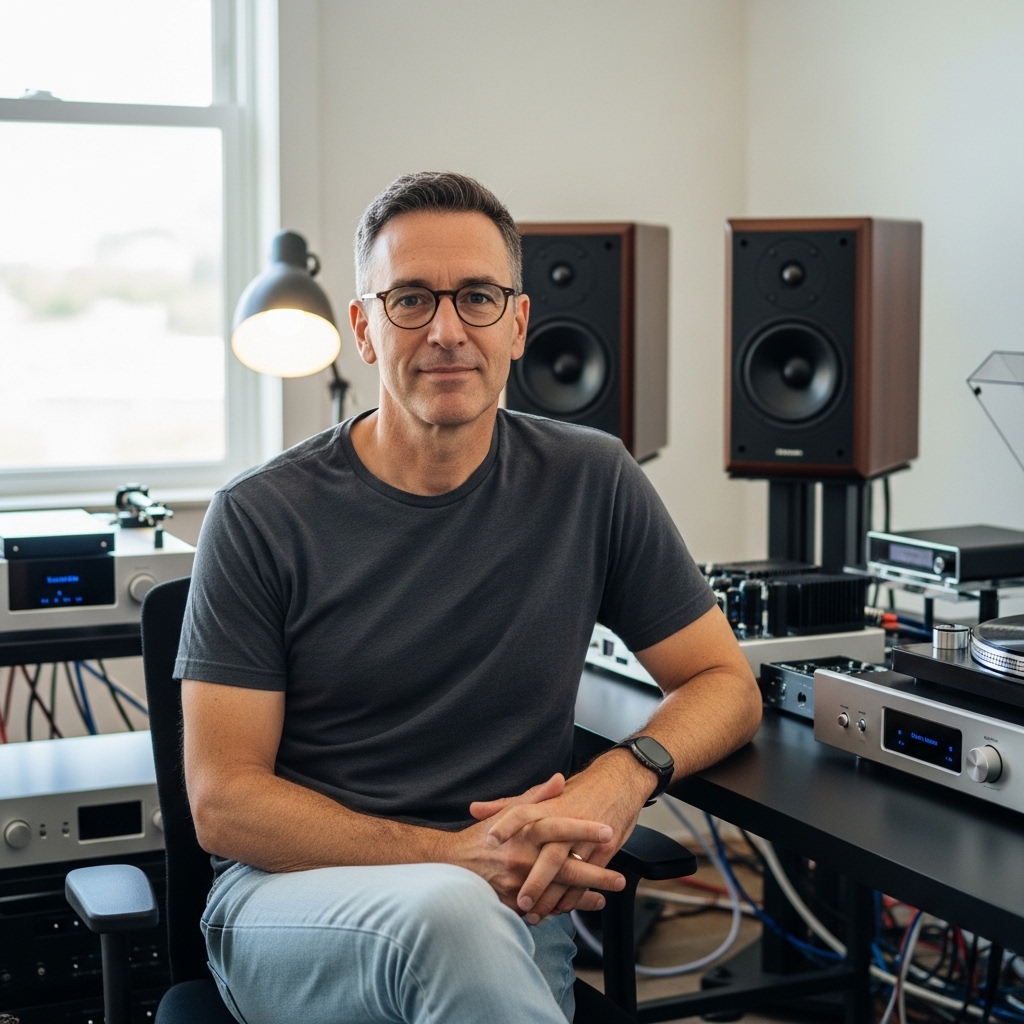

Many music lovers hold onto vintage sound gear because older drivers and wooden cabinets often deliver warmer sound than modern plastic compact boxes. You might wonder, can i convert my speakers to bluetooth without replacing your favorite setup or running messy cables across the living room? The short answer is an absolute yes, and you do not need an advanced engineering background to make it happen. Adding wireless audio streaming to older gear requires only an external receiver adapter plugged into the auxiliary or line inputs on your existing amplifier or powered cabinet. This simple upgrade lets you stream high-definition playlists from any modern smartphone, tablet, or laptop directly to traditional stereo loudspeakers that have served your home for decades.
Choosing the right adapter setup depends mainly on whether your gear has built-in amplification and what audio connectors are available on the back panel. Basic analog converters handle routine streaming through standard headphone jacks, while higher-end receivers incorporate dedicated digital-to-analog converters and high-resolution codecs like LDAC or aptX HD. Modern wireless chips also minimize latency and prevent audio dropouts, giving your legacy hardware the same convenience as modern smart devices. Understanding these fundamental connections helps you avoid low-volume issues, signal interference, and unnecessary gear purchases while breathing fresh life into your sound space.

Pros
- Supports LDAC codec for uncompressed 24-bit/96kHz wireless streaming
- Rock-solid Bluetooth 6.0 connection with ultra-low latency
- Both RCA and 3.5mm AUX ports support modern and vintage audio gear
- Generous 15-hour battery life with convenient pass-through charging
Cons
- RCA cable is not included in the packaging
- Certain mobile devices require manual reconnection if disconnected while powered on
- Full Hi-Res LDAC playback requires a compatible Android or dedicated digital audio player
The UGREEN Bluetooth 6.0 Audio Receiver provides an elegant and cost-effective solution for bridging the gap between legacy analog hardware and modern wireless streaming. Rather than retiring a beloved vintage stereo receiver or a set of premium wired speakers, this palm-sized adapter brings them straight into the high-resolution digital era. Backed by official Hi-Res Audio certification and the high-bitrate LDAC codec, it treats wireless transmission as a high-fidelity medium rather than a compromise.
Targeted at music enthusiasts, vinyl lovers wanting quick digital convenience, and everyday listeners looking to modernize their living room entertainment centers, this device is straightforward to configure. Pairing is virtually instant thanks to the modern Bluetooth 6.0 architecture, which maintains a dependable wireless connection across standard living room distances. Dual-pairing functionality adds everyday convenience, letting two users keep their phones connected simultaneously for shared listening sessions.
In real-world testing, the audio output is remarkably quiet with zero noticeable background hiss or hum across both the 3.5mm and RCA lines. While Apple devices default to standard AAC due to iOS limitations, Android users and dedicated digital audio player owners can unleash the full 24-bit/96kHz stream via LDAC. The unit also works flawlessly when kept permanently connected to a USB-C power source, functioning as a permanent component in a component rack or media console.
Ultimately, this adapter stands out by avoiding the muffled, compressed acoustics typical of budget Bluetooth receivers. If you want to revitalize your existing stereo system with transparent, reliable, and high-fidelity sound, the UGREEN Bluetooth 6.0 receiver represents one of the most effective audio upgrades available.
Acoustic performance is where this receiver truly excels, primarily due to its onboard LDAC decoding capability. By delivering sampling rates up to 24-bit/96kHz at high bitrates, the adapter maintains the micro-dynamics and textural depth often lost over basic Bluetooth codecs. Low frequencies hit with firm control and punch without blooming into the lower midrange, ensuring bass guitars and synth lines retain their natural definition.
The midrange presentation remains clear, organic, and forward, offering lifelike vocal timbre across genres from acoustic folk to vocal jazz. Up top, treble extension is airy and articulate, steering clear of the harsh sibilance or metallic grain that plagues entry-level adapters. Cymbals, guitar plucks, and ambient room reflections sustain cleanly, creating a wide and convincing stereo soundstage through competent powered monitors or traditional floorstanding speakers.
Latency performance is equally commendable courtesy of the Bluetooth 6.0 protocol. Audio synchronization issues during video playback or casual gaming are virtually imperceptible, making this unit just as capable hooked up to an older soundbar for movie nights as it is for dedicated music listening sessions.
Crafted with a sleek, minimalist footprint, the adapter measures approximately 2.8 by 2.6 inches and sits less than an inch high, weighing barely over two ounces. Its low-profile matte housing rests discreetly on top of an amplifier, shelf, or turntable stand without cluttering your audio setup. Clean labeling and a single multi-function control surface keep operation simple and clutter-free.
Connectivity is well thought out for legacy and modern audio setups alike. The rear panel provides a 3.5mm auxiliary stereo jack alongside classic left and right RCA outputs, giving you the flexibility to drive vintage integrated amplifiers, powered studio monitors, or portable boomboxes. A modern USB-C port handles power and recharging duties, ensuring compatibility with standard modern chargers.
Under the hood, an integrated rechargeable battery yields up to 15 hours of continuous playback on a single charge, requiring approximately 2 hours to replenish from empty. Crucially, the internal circuitry supports play-and-charge functionality, allowing you to leave the adapter permanently wired to power for seamless integration into home stereo racks.

Pros
- Uncompromised sound quality with native LDAC and aptX HD high-resolution codec support
- Exceptional 100-foot wireless range with zero audio dropouts through walls
- High-performance 32-bit DAC delivers noticeably richer, wider audio than standard Bluetooth adapters
- Dual optical and analog outputs allow flexible integration with modern and vintage gear
Cons
- Lacks a companion mobile app for personalized EQ adjustments
- No integrated hardware volume control on the receiver unit
- External antenna must be attached for peak signal performance, adding slight rear height
The Auris bluMe HD is a purpose-built high-resolution wireless audio adapter designed to modernize traditional hi-fi audio systems without compromising sound quality. Aimed squarely at audiophiles and music lovers who own classic stereo receivers, integrated amplifiers, or premium active speakers, this device eliminates the need to retire well-loved analog components just to enjoy the convenience of modern smartphone and computer streaming.
Setting up the bluMe HD takes under a minute, requiring simply a connection to wall power and a single audio cable linked to your sound system. Thanks to its external precision antenna and Bluetooth 5.3 processing, real-world connection strength is remarkably robust. It maintains an uninterrupted audio stream across multiple rooms, through walls, and well beyond the standard short-range limits typical of inexpensive wireless receivers.
Beneath the surface, the bluMe HD distinguishes itself through pure audiophile hardware. Its built-in 384kHz/32-bit upsampling DAC and broad codec roster, including LDAC and aptX HD, ensure full preservation of harmonic detail, bass weight, and spatial imaging. Unlike basic Bluetooth devices that sound flat and thin, audio decoded through the bluMe HD presents exceptional depth, crisp transient attack, and analog-style warmth.
Ultimately, the Auris bluMe HD serves as an indispensable bridge between vintage acoustic performance and modern streaming convenience. It is an exceptionally crafted upgrade that gives classic home stereo setups a genuine second life with uncompromised sound fidelity.
In terms of acoustic performance, the Auris bluMe HD delivers a balanced, uncolored sound signature that respects the natural tonality of your existing speakers. Low frequencies arrive with satisfying authority and articulate punch, avoiding the bloated, slow bass typical of lesser conversion chips. The midrange remains open and transparent, presenting human vocals, pianos, and acoustic instruments with lifelike presence and delicate texture.
Treble response is airy, fast, and remarkably free of the harsh, fatiguing grain often introduced by inferior wireless decoders. When paired with high-resolution streaming services via LDAC, the dynamic range opens up significantly. Subtle reverberations, background instrumentation, and room acoustics are cleanly rendered across an impressively wide and cohesive stereo soundstage.
Compact and discreet, the bluMe HD measures just 2.95 by 3.5 inches and weighs a lightweight 0.32 pounds. Its enclosure is milled from solid anodized aluminum in an attractive matte black finish. This rigid metal housing is not merely decorative; it provides vital shielding against RF and electromagnetic interference from neighboring AV equipment, ensuring completely silent background noise levels.
The rear panel is thoughtfully engineered with both analog stereo RCA outputs and a digital optical SPDIF connection, making it universally compatible with vintage integrated amps, modern DACs, and AV receivers alike. Powered by a standard micro-USB connection, it relies on continuous clean power to drive its output stage, providing the necessary signal strength to match line-level inputs on any high-end audio setup.

Pros
- High-bitrate LDAC decoding preserves pristine audio clarity and dynamic range
- Next-generation Bluetooth 6.0 ensures instant connectivity with no audio dropouts
- Multi-point pairing allows seamless switching between two connected phones or tablets
- Compact, clean footprint tucks away neatly behind audio racks and television stands
Cons
- Operates exclusively as a receiver and cannot transmit audio from TVs to Bluetooth headphones
- Requires a continuous USB power connection because it lacks an internal rechargeable battery
- LDAC streaming requires a compatible Android device, defaulting to standard codecs on iOS
The UGREEN Bluetooth 6.0 LDAC Audio Adapter is engineered to breathe wireless functionality into traditional home stereo equipment, active bookshelf speakers, and vintage AV receivers. Many music enthusiasts hesitate to retire classic amplifiers that deliver rich analog warmth simply because they lack modern streaming features. This compact adapter bridges the gap by providing high-resolution wireless streaming straight to standard 3.5mm AUX and dual RCA stereo inputs.
Setup is genuinely plug and play in real-world use. Once connected to a USB power source and hooked up to your amplifier, the unit enters pairing mode immediately. Thanks to the updated Bluetooth 6.0 chipset, device recognition is fast, and the receiver holds a rock-solid connection with smartphones, laptops, and tablets up to 33 feet away. Dual-device pairing also makes sharing music effortless during gatherings, allowing two users to alternate playlists without tedious pairing cycles.
Ultimately, this adapter is a high-value upgrade for listeners who want to bring modern streaming convenience to their favorite analog setups. While it functions strictly as a receiver rather than a transmitter, its audio purity, low latency, and dependable connectivity make it a top-tier choice for any home audio renovation.
Acoustic fidelity is where this adapter stands out, driven primarily by its native support for Sony Hi-Res certified LDAC decoding. By processing wireless audio streams up to 24-bit/96kHz, the receiver preserves high-frequency micro-details that standard SBC or AAC compression tends to truncate. Cymbals and brass retain an airy, natural decay, while acoustic guitars display crisp string resonance without harsh sibilance.
Across the low-end and midrange frequencies, the adapter maintains a balanced, uncolored sound profile. Bass notes hit with tight definition and punch without bleeding into the lower mids, ensuring that male and female vocals remain centered, articulate, and clear. Furthermore, the enhanced bandwidth of Bluetooth 6.0 minimizes audio-video sync issues, making it well-suited for streaming concert performances or television sound to existing stereo monitors.
The exterior of the UGREEN receiver is constructed from specialized flame-retardant PC material, providing superior heat tolerance and structural safety in tight entertainment centers. Its compact, low-profile footprint allows it to sit unobtrusively alongside preamps, turntables, or compact desktop amplifiers without adding visual clutter to your living space.
For hardware connections, the rear panel includes both a 3.5mm auxiliary port and dedicated left/right RCA jacks to ensure broad compatibility with modern and vintage gear alike. The receiver is powered via a standard USB port, guaranteeing continuous, stable operation without the eventual battery wear or recharge cycles typical of portable wireless dongles.
How to Convert Any Wired Speakers to Bluetooth
Turning wired audio hardware into a modern wireless sound station is straightforward once you understand how signals travel from your phone to the drivers. A Bluetooth audio adapter works as an external bridge, receiving wireless digital audio streams over radio frequencies and outputting an analog or digital signal to your equipment. You do not need to tear open speaker cabinets, solder circuit boards, or alter internal wiring. As long as your system has an available input jack or an amplifier capable of powering the speakers, adding wireless capability takes only minutes.
Active Powered Speakers Versus Passive Speakers: Crucial Wiring Differences
Before purchasing any wireless adapter, you must determine whether your speakers are powered or passive. Powered speakers, also known as active speakers, contain their own internal power amplifiers and plug directly into an electrical wall outlet. These units typically feature volume knobs, power switches, and analog input jacks on the rear panel. When converting active monitors, you can plug a Bluetooth receiver directly into the speaker inputs because the internal amplifier provides sufficient power to drive the speaker cones.
Passive speakers do not possess built-in amplification and rely on two bare speaker wire terminals or binding posts on the back. These units cannot produce sound when connected directly to a small Bluetooth adapter because line-level signals lack the electrical current required to move mechanical drivers. If you have passive speakers, your Bluetooth adapter must connect to an external integrated amplifier, stereo receiver, or compact desktop amp. The amplifier receives the line-level audio signal from the wireless receiver, magnifies the electrical current, and delivers the necessary wattage to your passive speakers through standard copper wire.
Mismatches often occur when listeners mistakenly plug an audio receiver adapter directly into passive speaker terminals using adapter cables. Doing so results in silence or faint, distorted sound that barely registers across the room. Always verify your amplification path before connecting new components to ensure every link receives proper signal strength. Checking the back of your cabinets immediately clarifies whether you need a standalone receiver or an amplifier-receiver combination.
Understanding Audio Ports: RCA, 3.5mm AUX, and Optical SPDIF
Audio receivers rely on standard output jacks to transfer sound to your sound system. The two most common analog ports are standard 3.5mm auxiliary jacks and dual RCA stereo jacks with separate red and white plugs. A 3.5mm auxiliary cable is identical to a standard headphone connector, making it ideal for compact desktop speakers and soundbars. Dual RCA connectors separate the left and right audio channels physically, providing secure physical contact and minimal channel crosstalk for larger home stereo receivers.
Higher-end receivers often provide digital optical SPDIF outputs alongside conventional analog connections. An optical connection transmits audio data using pulsed light over fiber optic cables rather than electrical voltages over copper wires. This digital transfer bypasses electrical interference, hums, and ground loops that occasionally plague analog cables. When using optical output, the digital-to-analog conversion happens inside your AV receiver or external high-end DAC rather than inside the compact Bluetooth adapter.
Models like the Auris Blume HD Long Range Bluetooth 5.3 Music adapter provide both analog RCA outputs and digital optical SPDIF connections for maximum system flexibility. Meanwhile, compact units such as the UGREEN Bluetooth 6.0 Receiver with LDAC supply versatile 3.5mm and RCA analog jacks to accommodate standard stereo amplifiers. Inspecting the available input ports on your stereo helps you pick an adapter that integrates smoothly without requiring messy chains of extra adapters.
Audio Codecs and Fidelity: LDAC, aptX HD, and Standard SBC
Bluetooth audio transmission relies on software algorithms known as codecs to compress digital music files before sending them over the air. The basic default codec supported by all Bluetooth hardware is Subband Coding, commonly abbreviated as SBC. While SBC works reliably across virtually every smartphone and computer, it compresses audio data aggressively and can smear subtle high-frequency details. If you listen to acoustic recordings or dynamic jazz on high-grade speakers, basic compression codecs may leave your music sounding flat.
Advanced codecs significantly improve sound quality by transmitting substantially larger amounts of audio data per second. Qualcomm aptX HD and Sony LDAC represent two premier high-resolution Bluetooth codecs capable of handling up to 24-bit audio resolution. LDAC supports data transfer rates up to 990 kilobits per second at sample rates reaching 96 kilohertz, preserving complex instrumental separation and treble transients. To enjoy high-resolution decoding, both your transmitting smartphone and your Bluetooth receiver must support the specific codec.
Adapters like the UGREEN Bluetooth 6.0 LDAC Audio Adapter for TV carry official Hi-Res Audio certification due to their integrated LDAC decoding capabilities. Audiophile-oriented adapters also integrate premium digital-to-analog converters, such as the 384kHz and 32-bit upsampling DAC found inside the Auris Blume HD unit. A superior internal DAC translates compressed digital bits into a smooth analog wave, ensuring that your converted stereo system delivers warmth, clarity, and deep bass impact.
Bluetooth Receivers Versus Transmitters: Avoiding Setup Confusion
Confusion frequently arises regarding the difference between a Bluetooth receiver and a Bluetooth transmitter. A Bluetooth receiver takes wireless audio signals emitted by your phone or computer and routes them into your speakers through a physical cable. This is the exact device you need when you ask if you can convert existing wired speakers to wireless operation. The receiver acts as an ear for your sound system, catching the wireless broadcast and feeding it into the amplifier.
Conversely, a Bluetooth transmitter performs the opposite role by taking a wired audio output and broadcasting it wirelessly across the room. People use transmitters to send audio from older televisions, CD players, or record players to wireless headphones. If you accidentally purchase a transmitter instead of a receiver, you will not be able to send music from your smartphone to your wired speakers. Dedicated receivers focus entirely on clean audio output.
When selecting your gear, verify that the product description explicitly identifies the unit as a Bluetooth audio receiver. Models like the UGREEN Bluetooth 6.0 Receiver with LDAC are purpose-built receivers designed specifically to feed wired stereos and home audio systems. Ensuring you have a dedicated receiving component prevents frustrating setup hurdles and guarantees direct compatibility with your mobile devices.
Step-by-Step Installation: Connecting and Powering Your Adapter
Connecting a Bluetooth receiver to your audio hardware requires only a few minutes and zero special tools. First, turn off the power to your amplifier or powered speakers to protect your drivers from accidental pops or electrical surges. Connect the included audio cable from the receiver output into an unused line-level input on your sound gear, such as AUX, CD, Tape, or Line In. Never connect a Bluetooth adapter into a turntable Phono input, as phono preamplifiers apply heavy equalization that will severely distort line-level signals.
Next, connect your Bluetooth adapter to a steady power source using its designated power cable. Some compact units, such as the UGREEN Bluetooth 6.0 Receiver with LDAC, feature an internal rechargeable battery offering up to 15 hours of continuous playback alongside USB-C charging. Other tabletop units rely entirely on continuous external DC power supplies to sustain high-output DAC chips and external antenna circuits. Powering the adapter from a clean wall outlet helps prevent electrical hum that can travel through shared USB ports.
Once power and audio cables are firmly seated, turn on your amplifier and switch its source selector to the matching input channel. Put your Bluetooth receiver into pairing mode, open the Bluetooth settings menu on your smartphone or computer, and select the adapter from the list of available devices. Start playing an audio track at moderate phone volume, gradually turning up your amplifier volume control until you reach a comfortable listening level. This gradual adjustment prevents sudden volume blasts that could startle listeners or damage delicate speaker tweeters.
Signal Range, Antenna Design, and Multi-Device Dual Pairing
Physical listening space dictates how robust your wireless reception needs to be. Basic adapters with internal antennas typically offer reliable transmission up to 30 feet within a clear line of sight. However, moving between different rooms or passing through plaster and drywall can cause standard Bluetooth signals to stutter or drop out entirely. If you want the freedom to walk around your home with your phone in your pocket, antenna engineering becomes an important factor.
High-performance receivers address wireless range limitations by incorporating external adjustable antennas and high-gain receiver circuits. The Auris Blume HD Long Range Bluetooth 5.3 Music adapter utilizes a precision-tuned external antenna and specialized internal circuitry to maintain connections across distances exceeding 100 feet through multiple interior walls. This extended range ensures steady playback even when hosting gatherings or moving freely between living areas, patios, and kitchens.
Another convenient feature found on modern adapters is multipoint dual pairing. Dual pairing allows two source devices, such as two smartphones or a phone and a laptop, to link with the receiver at the same time. While both devices remain connected, one device pauses playback so the second device can share music without tedious disconnect and reconnect procedures. If you are comparing your adapted setup to standalone Bluetooth speakers, dual device pairing provides identical wireless convenience while utilizing the superior acoustic scale of full-size stereo cabinets.
Troubleshooting Common Issues: Ground Loops, Low Volume, and Latency
Even properly connected adapters occasionally run into audio hiccups that require minor adjustments. One common problem is an annoying low-frequency hum or buzzing sound that emerges through the speakers when no music plays. This hum is almost always caused by a ground loop, which occurs when your audio adapter and amplifier share electrical paths with differing ground potentials. You can eliminate this buzz by plugging both devices into the same surge protector, powering the adapter from a battery, or inserting an inexpensive 3.5mm ground loop isolator between the adapter and the input jack.
Unexpectedly low volume represents another frequent complaint among users converting older audio gear. In many cases, mobile operating systems treat Bluetooth output volume and internal system volume as separate controls. If your phone volume is set to fifty percent, the input signal reaching your amplifier remains too weak to produce robust sound. Enable absolute volume or volume synchronization in your device settings, or simply max out your phone output volume while using the amplifier knob for master level adjustments.
Audio latency can also create minor annoyances, especially when routing television dialogue or video game sound through your converted speakers. Bluetooth 6.0 adapters, including the UGREEN Bluetooth 6.0 LDAC Audio Adapter for TV, provide optimized audio-video synchronization to minimize speech delays. If you notice lip-sync discrepancies while streaming video, selecting an adapter with low latency codecs or adjusting audio delay sliders in your television sound menu will align the sound perfectly with the picture.
Evaluating Converted Systems Against Buying All-in-One Wireless Speakers
Deciding whether to convert your existing speakers or replace them with a brand new all-in-one wireless unit comes down to physical space, aesthetic taste, and acoustic performance. Traditional wired stereo speakers feature large wooden enclosures, substantial magnetic drivers, and generous physical separation between the left and right channels. These physical attributes produce a wide, natural stereo image and convincing bass depth that compact all-in-one wireless tabletop units struggle to match. Converting quality vintage speakers allows you to enjoy modern wireless streaming without giving up superior acoustic engineering.
Upgrading your current gear is also remarkably cost-effective compared to buying an entirely new high-fidelity sound system. A dependable Bluetooth receiver costs a fraction of a new powered speaker pair while preserving hardware that has decades of operational life remaining. You can also evaluate your converted rig by testing audio clarity on your sound system with dynamic reference tracks, verifying that your vintage cabinets retain their rich tonal balance across all frequencies. Maintaining classic audio gear reduces electronic waste while delivering a listening experience tailored to your exact personal preferences.
Ultimately, converting wired speakers to Bluetooth offers the best balance of modern streaming convenience and authentic high-fidelity sound reproduction. Whether you choose a compact battery-powered receiver with high-resolution LDAC support or an audiophile-grade adapter with optical connectivity and an extended antenna, the upgrade process remains simple and accessible. With the right adapter matched to your amplification setup, your favorite wired speakers will continue delivering exceptional wireless audio for years to come.




Write Your Review
No reviews yet. Be the first to share your experience!