


Driving down the road with an upgraded car stereo system often leads drivers to wonder just how much acoustic energy a vehicle cabin can endure. Enthusiasts frequently hear wild stories from sound competitions where windshields crack or side windows buckle under intense acoustic force. When planning an audio upgrade, curious listeners often ask whether can car speakers break glass during spirited listening sessions or if those catastrophic failures are purely internet myths. Upgrading to component speaker upgrades can dramatically improve tonal balance and soundstage clarity, but pushing volume levels toward maximum output raises valid questions about physical stress on automotive hardware.
The reality of sound transmission inside an automobile involves complex acoustic physics, structural resonance, and the immense mechanical integrity of automotive safety glass. Standard factory setups and daily-driver aftermarket speakers operate within safe mechanical and acoustic thresholds that protect both passengers and vehicle hardware. Understanding the differences between standard frequency reproduction, high-displacement low-frequency pressure, and the specific breaking thresholds of tempered glass helps drivers separate automotive audio myths from genuine physical risks.

Pros
- Exceptional clarity and responsiveness across full frequency range
- High power handling with 100W RMS for dynamic performance
- Durable construction with butyl rubber surround for longevity
- High sensitivity allows loud output without needing an amp
- Easy impedance match for seamless car integration
Cons
- 5.25-inch size limits deepest sub-bass for larger vehicles
- Requires cutting or adapter for non-standard installs
- 20oz magnet adds some weight for door panel mounting
The Pyle 5.25-inch 3-way car speakers come as a pair, designed to upgrade your vehicle's audio system with a 20oz magnet structure, blue poly injection cone, and non-fatiguing butyl rubber surround. They handle 100W RMS and 200W peak power, making them a solid choice for drivers tired of weak factory speakers.
Ideal for American commuters, daily drivers, and road trippers in sedans, trucks, or SUVs, these speakers target budget-conscious enthusiasts who want pro-level sound without premium prices. Their 4-ohm impedance and 89dB sensitivity ensure compatibility with most stock stereos, delivering immediate improvements in volume and detail.
In real-world use, they shine on long hauls with clear vocals, punchy mids, and extended highs, transforming podcasts, rock anthems, or country tunes into immersive experiences. The 1-inch ASV voice coil keeps things cool under pressure, minimizing distortion even at high volumes.
Verdict: A top pick for value-driven car audio upgrades, offering reliable performance that punches above its weight for everyday driving adventures.
With a 100Hz-20kHz frequency response, these speakers provide solid bass depth for their size, capturing kick drums and guitar riffs with authority while neodymium dome tweeters deliver sparkling highs for cymbals and vocals. The 3-way design ensures balanced output, avoiding muddiness in busy tracks.
Vocal clarity stands out, making lyrics pop during commutes or family road trips, and volume levels reach concert-like peaks thanks to 89dB sensitivity and 200W peak handling. Expect zero fatigue over hours of play, with the blue poly cone maintaining tight control.
As wired coaxial units, they integrate directly into car doors for stable, lossless performance without Bluetooth dropouts, focusing power on pure analog sound reproduction.
Built tough for car environments, the non-fatiguing butyl rubber surround and high-temp ASV voice coil resist vibration and heat from bumpy roads, ensuring long-term reliability without warping or failure.
Compact 5.25-inch size with 20oz magnet fits standard door panels easily, though the blue poly cone and robust build add slight weight best handled during install. No battery needed; they draw power directly from your car's system for unlimited runtime.
Rugged design withstands daily wear in trucks or sedans, with 4-ohm rating simplifying wiring to stock head units and amps alike for hassle-free setup.

Pros
- Massive 800W power rating for high-output pro applications
- Low distortion and extended response up to 6500 Hz
- Rugged aluminum voice coil on fiberglass former for durability
- Efficient design maximizes output in small enclosures
- Clear mids ideal for vocals in live or car audio
Cons
- Requires custom enclosure and amplifier for optimal performance
- Not plug-and-play for casual home stereo setups
- Professional installation recommended for best results
The PRV Audio 10MB800FT is a 10-inch midbass speaker built for pro audio demands, blending powerful low-end punch with articulate midrange. Designed for high SPL output in compact enclosures, it excels in automotive systems or stage monitors where space is limited but performance is not.
Audio professionals and car enthusiasts will appreciate its rugged construction and efficiency, making it a go-to for 2- or 3-way setups. In real-world use, it pushes clean sound at extreme volumes, handling 800 watts program power without breaking a sweat.
Whether upgrading a car audio rig for tailgating blasts or reinforcing live PA systems, this speaker delivers reliable midbass that stands out. Overall verdict: a solid choice for those chasing pro-grade output with everyday toughness.
Its focus on midbass clarity makes it less ideal for full-range solo use, but paired right, it transforms systems into beasts.
Bass response extends deep for impactful midbass punch, combining with low distortion to keep sound tight even at peak volumes. Midrange from 650 Hz to 1500 Hz offers smooth vocal reproduction, cutting through mixes in live or car environments.
High SPL capability ensures room-filling or vehicle-shaking output, useful up to 6500 Hz for versatile system integration. Power handling shines in demanding scenarios, maintaining clarity under continuous heavy loads.
Ideal for pro setups needing focused midbass without muddiness, it outperforms in multi-driver arrays where precision matters.
Rugged build features a 2.5-inch inside/out aluminum voice coil on fiberglass former, built for hi-temp operation and longevity in pro use. Ventilated voice coil gap minimizes power compression, ensuring consistent performance during long sessions.
Solid structure suits compact enclosures for car audio or stage wedges, with no unnecessary bulk for easy integration. As a pro component speaker, it draws power directly from amplifiers, eliminating battery concerns for unlimited runtime in powered setups.
Weight and size optimize for professional installs, prioritizing durability over portability for fixed or vehicle applications.
The Physics, Mechanics, and Reality of Sound Waves Breaking Vehicle Glass
Acoustic energy moving through an enclosed passenger cabin produces measurable physical forces against interior panels, metal frames, and window panes. Understanding how these mechanical pressure waves interact with automotive glass requires separating internet folklore from real-world acoustic science. The short answer is clear for daily drivers: standard car speakers cannot break automotive glass under normal or even extreme listening conditions.
Direct Answer: Can Standard Car Speakers Actually Shatter Automotive Glass?
Everyday full-range speakers and component sets lack the physical cone area and displacement necessary to shatter vehicle windows. Automotive glass is engineered to withstand severe road vibration, high wind buffeting, temperature extremes, and direct physical impacts from road debris. Standard door speakers and dash tweeters focus on moving small amounts of air rapidly to reproduce vocal frequencies and instrumental overtones. Because their physical displacement is minimal, the pressure waves they generate cannot overcome the structural resistance of vehicle safety glass.
Even when powered by high-output external amplifiers, standard speakers distort or suffer voice coil failure long before generating hazardous acoustic force. A typical door speaker operating at maximum volume produces sound pressure levels well below the threshold of structural glass failure. If an audio system is pushed past its mechanical limits, the speaker cones will tear or the voice coils will burn out completely. The audio equipment will destroy itself long before the surrounding window glass experiences dangerous stress levels.
Stories describing broken car windows from sound systems almost always trace back to extreme sound pressure level competition vehicles rather than daily drivers. Those custom demonstration platforms use specialized subwoofer walls occupying the entire rear cabin, powered by tens of thousands of watts. Comparing an everyday vehicle sound system to an acoustic competition build overlooks the fundamental differences in power, driver displacement, and enclosure design. For normal vehicles, your windows are entirely safe from your sound system.
Sound Pressure Levels and Acoustic Displacement
Sound waves consist of rapid compressions and rarefactions of air molecules traveling outward from an oscillating speaker cone. The intensity of these pressure changes is measured using the decibel scale, which is logarithmic rather than linear in nature. An increase of ten decibels represents a tenfold multiplication of acoustic energy, making higher decibel levels exponentially more powerful. Standard vehicle sound systems typically peak between ninety and one hundred and ten decibels during loud playback.
Physical damage to automotive safety glass generally requires sound pressure levels exceeding one hundred and sixty or even one hundred and seventy decibels. Generating this extraordinary pressure requires displacing tremendous volumes of air within a sealed chamber. Large subwoofers with long-throw surrounds and multi-inch cone excursion can pump substantial air volume back and forth within a cabin. In contrast, midrange woofers and tweeters have cone excursions measured in tiny fractions of an inch, making high-pressure displacement physically impossible.
Frequency plays an equally decisive role in how sound waves transfer energy into physical structures. High-frequency treble notes have very short wavelengths that bounce off rigid glass surfaces without transferring significant mechanical force. Low-frequency bass waves produce long physical wavelengths that match the dimensional proportions of an automobile interior. While low bass can pressurize a cabin, smaller full-range drivers cannot produce the subterranean frequencies required to generate that level of air displacement.
Automotive Safety Glass Engineering: Tempered vs Laminated
Automobile windows are fundamentally different from household window panes or delicate drinking glasses. Modern vehicles use specialized safety glass designed specifically to protect vehicle occupants from severe collisions and external impacts. Windshields utilize laminated glass construction, which sandwiches a durable sheet of polyvinyl butyral between two distinct layers of glass. Side windows and rear backlights are typically manufactured from chemically or thermally tempered safety glass.
Tempered glass undergoes a thermal treatment process where the outer surfaces are cooled rapidly while the interior core cools slowly. This manufacturing technique creates intense compressive stresses on the exterior surfaces balanced by tensile forces on the inside. Because of this surface compression, tempered glass can flex significantly under physical load and resist heavy impacts without cracking. If a catastrophic fracture does occur, the internal tension causes the pane to crumble into tiny, dull pellets rather than dangerous shards.
Laminated windshields provide even greater structural integrity because the flexible plastic interlayer bonds the glass sheets together. When subjected to severe mechanical stress or impact, laminated glass flexes and develops spiderweb cracks while remaining securely intact within its structural frame. This resilient sandwich structure dampens acoustic energy exceptionally well, converting sound vibrations into negligible frictional heat. Acoustic sound waves from standard car speakers cannot overcome the combined tensile strength and damping properties of automotive laminated glass.
Acoustic Resonance and the Shattering Pitch Theory
A widespread urban legend suggests that playing a specific resonant musical note through car speakers can shatter windows instantaneously. This concept draws inspiration from classic demonstrations of an operatic singer breaking a fine crystal glass using sustained vocal resonance. In laboratory settings, breaking a crystal goblet requires an unyielding, thin material with high natural resonance and virtually zero internal damping. The singer must match the exact resonant pitch for several continuous seconds at high volume until energy accumulation causes structural failure.
Automotive windows behave in a completely different manner because they are mounted inside heavily damped vehicle door frames. Rubber weatherstripping, dense polyurethane adhesives, and flexible mastic seals surround every window pane in a modern vehicle. These mounting materials act as mechanical shock absorbers that quickly dissipate vibrational energy before it can accumulate into a destructive resonant state. The structural damping provided by the vehicle frame prevents continuous resonance from multiplying unchecked.
Furthermore, automotive safety glass does not possess a single, sharp resonant frequency like a fragile wine glass. The irregular curved contours, variable thickness, and multi-layered construction of vehicle glass spread resonant points across a broad vibrational spectrum. Even if a driver played a continuous tone through their audio system, the window would simply absorb the vibration harmlessly. Resonant pitch shattering remains a scientific reality for crystal glassware, but it does not apply to installed vehicle glass.
Extreme SPL Competition Builds vs Daily Driver Systems
Internet videos depicting windshields flexing wildly or shattering into pieces almost exclusively feature extreme sound pressure level competition vehicles. These specialized exhibition platforms are custom engineered from the chassis up to generate record-breaking acoustic output. Competitors build heavy wooden or fiberglass enclosures reinforced with steel bars and structural resin that seal off the entire rear cabin. Multiple high-output alternators and massive banks of lithium batteries feed dozens of high-power subwoofers.
When glass does fail in a competition vehicle, the root cause is almost always mechanical body flex rather than pure acoustic air pressure. The violent bass vibrations cause the steel roof, door pillars, and window channels to twist and distort rhythmically. This physical distortion bends the metal frame supporting the windshield, putting enormous shearing forces on the glass perimeter. If a microscopic rock chip or edge imperfection already exists, that mechanical twisting causes the crack to propagate instantly across the pane.
Daily-driver vehicles do not generate the immense structural flex required to twist automotive window frames. Replacing worn factory units with compact vehicle speakers provides clear vocal reproduction without taxing the vehicle chassis. Everyday passenger cars retain their structural stiffness because standard audio upgrades produce modest sound pressure levels that stay well within normal operating envelopes. The extreme forces seen in competition lanes bear no resemblance to daily driving audio setups.
Output Capabilities of Standard Speaker Configurations
Examining the physical design of aftermarket speakers illustrates why standard upgrades remain completely safe for vehicle glass. Entry-level coaxial options, such as the Pyle 5.25” Car Sound Speaker (Pair), utilize lightweight blue poly injection cones paired with non-fatiguing butyl rubber surrounds. These three-way systems incorporate a half-inch neodymium film dome tweeter and a one-inch high-temperature voice coil operating at four ohms impedance. Their frequency response spans from one hundred hertz to twenty kilohertz with an eighty-nine decibel sensitivity rating.
These specifications indicate that compact coaxial drivers are optimized for broad frequency coverage rather than massive physical air displacement. The twenty-ounce magnet structure and one-hundred-watt continuous power rating allow the speaker to produce clean, articulate audio for daily commuting. Because these drivers produce very little low-end excursion below one hundred hertz, they generate negligible acoustic pressure inside the door cavity. Their acoustic energy disperses evenly into the passenger cabin without placing physical strain on window seals or glass panes.
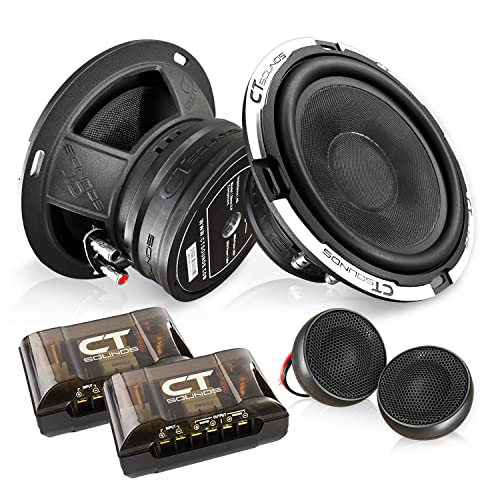
Stepping up to premium component sets introduces greater dynamic headroom and tonal accuracy across the audio spectrum. The CT Sounds Meso 6.5” 320 Watt 2-Way system incorporates separate midrange woofers, twenty-five-millimeter silk-dome tweeters, and dedicated passive crossover networks. Built with a four-ohm impedance and power handling rated for one hundred and sixty watts continuous power per set, these speakers deliver punchy midbass and crisp highs. Even when driven hard by an aftermarket amplifier, these component drivers produce musical clarity rather than destructive pressure waves.
High-efficiency pro audio drivers push volume capabilities even further for listeners who demand high sound pressure levels. The PRV AUDIO 10 inch Midbass Speaker 10MB800FT features an eight-ohm impedance, a two-and-a-half-inch voice coil, and eight-hundred-watt continuous program power capability. Engineered for high acoustic output from six hundred and fifty hertz through fifteen hundred hertz, this driver delivers vocal projection and midbass presence. Despite its high output in open-air setups, its operating frequency range does not pressurize sealed cabins the way deep subwoofers do.
Real Interior Acoustic Risks: Hearing Protection and Resonance
While your vehicle windows remain safe from speaker damage, human ears are far more vulnerable to acoustic energy. The human auditory system is composed of delicate sensory hair cells within the cochlea that cannot regenerate once damaged. Sustained exposure to sound pressure levels above eighty-five decibels can cause permanent noise-induced hearing loss over time. High-output car audio systems can easily reach one hundred decibels or more, posing an immediate risk to long-term hearing health.
The enclosed nature of an automotive interior compounds the acoustic impact on passengers through boundary reflections. Hard glass windshields and side windows reflect high-frequency sound waves directly back into the passenger compartment, creating harsh acoustic spikes. This reflective environment causes listening fatigue, ear discomfort, and temporary threshold shifts much faster than open-air listening. Pushing car speakers to extreme volume levels damages the listener’s eardrums long before it threatens the vehicle’s structural glass.
Responsible listening habits and proper volume management protect both your hearing and your audio equipment. Utilizing earplugs during extreme audio testing or keeping daily driving volumes at moderate levels preserves auditory sensitivity for the future. Many modern head units include programmable volume limiters that prevent sudden volume spikes from surprising the driver. Prioritizing clear sound reproduction over raw, uncomfortably loud volume delivers a superior driving experience without any physical health consequences.
Mechanical Stress Points, Window Regulators, and Cabin Rattles
Although car speakers will not break window glass directly, heavy acoustic output can impact the mechanical components inside your doors. Door-mounted speakers share space with window regulators, motorized lift tracks, electronic lock actuators, and wiring harnesses. Strong midbass vibrations can cause mounting screws to loosen over time, leading to annoying rattles and buzzing noises. In older vehicles, chronic vibration can accelerate the wear of plastic window guide clips inside the door cavity.
Window regulators support the weight of the side glass while allowing it to roll smoothly up and down within the door track. If loose speaker installations vibrate excessively against the door shell, the window tracking mechanism can become misaligned. A misaligned window may bind inside the rubber channels, placing unnecessary electrical strain on the power window motor. Ensuring that aftermarket speakers are mounted securely to rigid adapter plates prevents these mechanical vibrations from transferring into the window hardware.
Installing vibration-damping material inside the door panels offers an effective solution for minimizing mechanical buzzes and rattles. Butyl-based sound deadening mats absorb unwanted metal resonance, creating a more solid enclosure for door-mounted speakers. This treatment improves the midbass response of your audio system while shielding delicate window mechanisms from excessive vibration. By stabilizing the door assembly, drivers enjoy improved sound fidelity without risking damage to internal door components.
Sound System Tuning for Optimal Fidelity and Safety
Proper audio calibration ensures that car speakers perform at their highest potential without overdriving delicate components. Setting the amplifier gain correctly matches the output voltage of your head unit to the input sensitivity of the amplifier. Many enthusiasts mistakenly treat gain controls as volume knobs, resulting in clipped audio signals that overheat voice coils and distort music. A properly calibrated audio system produces clean, dynamic sound across all volume levels without inducing thermal stress.
Configuring high-pass filters protects door-mounted coaxial and component speakers from low-frequency distortion. Smaller drivers should not be forced to reproduce deep sub-bass frequencies below eighty hertz that they cannot physically handle. Diverting these demanding sub-bass frequencies allows the midrange woofers to operate cleanly and produce accurate vocals. This crossover division enhances system longevity and keeps power delivery balanced across all channels.
Automotive safety glass is engineered to withstand severe physical demands, making everyday audio-induced breakage a total non-issue. By focusing on proper installation, clean signal amplification, and hearing safety, drivers can enjoy their favorite music without worry. High-quality car speakers enhance the driving environment through rich tonal balance and clear details rather than destructive pressure. Safe listening habits keep both your vehicle components and your hearing in top condition for years to come.




Write Your Review
No reviews yet. Be the first to share your experience!