


Setting up a responsive sound environment often leads listeners to explore how their voice assistant coordinates with standalone sound systems. When an Amazon Echo speaker lacks the output volume or low-end depth needed for a broader living room, many listeners wonder whether can alexa connect to another bluetooth speaker for higher fidelity playback. The connection protocol enables an Echo hardware unit to act as a wireless audio transmitter, routing music and voice responses directly to an external unit. If you are comparing configurations across multiple rooms, our dual speaker setup guide outlines how paired hardware distributes sound across wider spaces.
Beyond standard Echo gadgets, modern smart speakers from brands like Bose, PHILIPS, RIVA frequently integrate Alexa voice assistants straight into their internal architecture. These high-output units combine native voice command recognition with wireless streaming over both local Wi-Fi and Bluetooth channels. Listeners seeking balanced acoustic projection often compare these all-in-one smart enclosures with dedicated 40W Bluetooth speaker guide alternatives. Understanding the exact pairing modes between smart hardware and external wireless audio ensures reliable playback without unexpected audio drops.

Pros
- Remarkable height channel separation and expansive soundstage from a compact chassis
- A.I. Dialogue Mode ensures spoken dialogue remains clear without fatiguing treble
- Broad wireless casting support including AirPlay 2, Chromecast, and Spotify Connect
- Sleek build quality with a premium matte finish and wraparound metal grille
Cons
- Low-end sub-bass response is limited on deep movie rumbles without a separate subwoofer
- Lacks auxiliary HDMI passthrough inputs, requiring an eARC connection on your TV
- Upward-firing height channels perform best under flat, standard-height ceilings
The Bose Smart Dolby Atmos Soundbar represents a refined evolution in compact home theater audio, engineered specifically for listeners who want cinematic spatial realism without occupying excessive entertainment console space. Featuring a low-profile silhouette, this soundbar incorporates proprietary acoustic engineering that delivers an audio presence far beyond its physical dimensions. Whether placed in a primary living area or an intimate bedroom media setup, it acts as a capable centerpiece that transforms standard television viewing into an engaging acoustic experience.
Built for film buffs and casual streamers alike, the unit excels at rendering complex, multi-layered movie soundtracks. Bose employs its proprietary TrueSpace technology to dynamically upmix conventional stereo and 5.1 channel content, giving non-Atmos media convincing vertical dimension and width. The newly integrated A.I. Dialogue Mode targets a common pain point in modern cinema by continuously balancing voice clarity against roaring background sound effects, preventing the need to constantly adjust the volume during action sequences.
Day-to-day usability is straightforward thanks to an extensive suite of wireless connectivity protocols. With Apple AirPlay 2, Chromecast built-in, and Spotify Connect integrated directly into the system, high-resolution audio streaming is instantaneous from iOS and Android devices. Onboard Amazon Alexa, boosted by Bose Voice4Video technology, provides genuine convenience by giving you full hands-free authority over sound levels, television power, and connected cable boxes.
In summary, this soundbar hits the sweet spot between minimalist aesthetics and acoustic horsepower. While audiophiles seeking subterranean bass rumble will want to add a companion wireless bass module down the line, the standalone bar provides commendable balance, stunning vocal clarity, and expansive height effects. It is a premier soundbar choice for those who value compact elegance, modern streaming convenience, and theater-like immersion.
Behind the grille, the acoustic array is powered by five precision transducers, including two upward-firing drivers positioned to bounce spatial audio cues off your ceiling. This deliberate hardware arrangement provides authentic Dolby Atmos reproduction, constructing a three-dimensional sound field that extends well beyond the edges of the physical speaker. High frequencies are crisp and airy, steering clear of the harsh sibilance that often plagues smaller speakers when driven at high output levels.
Midrange reproduction stands out as the acoustic highlight, elevated by the active A.I. Dialogue Mode. Voices are anchored securely in the center channel, cutting through chaotic action sequences with natural resonance and exceptional intelligibility. While the small internal chambers generate punchy, controlled mid-bass suitable for typical television programming and music, frequencies below 50Hz naturally roll off, making an external subwoofer a worthwhile addition for dedicated action movie enthusiasts.
Measuring 27.34 inches wide, 4.09 inches deep, and just 2.21 inches tall, the cabinet is carefully dimensioned to slide beneath the lower edge of most modern flat-panel televisions without blocking the infrared sensor or picture area. The matte black top plate is paired with a micro-perforated wraparound metal grille, creating a clean, modern aesthetic that resists fingerprints and fits seamlessly into any contemporary living room. At roughly 6.9 pounds, the dense cabinet effectively suppresses unwanted cabinet resonance during loud playback.
Physical connectivity is streamlined and focused on modern digital audio standards, anchored by an HDMI eARC port for uncompressed Dolby Atmos passthrough, alongside an optical digital audio input for legacy displays. Wireless duties are managed over dual-band Wi-Fi and Bluetooth, with full control available through the Bose Music companion app or the included tactile remote. An internal power supply connects directly with a standard AC cable, keeping setup clutter-free with no external power bricks.

Pros
- Exceptional room-filling stereo from one compact speaker
- Superior voice recognition across the room with eight-mic array
- Versatile playback via Wi-Fi, Bluetooth, and Alexa integration
- Intuitive controls for quick access during home gatherings
Cons
- Designed for home use, lacks portability for outdoor adventures
- Relies on power outlet, no built-in battery for cordless operation
- Premium build may feel overkill for casual listeners
The Bose Home Speaker 500 is a smart stationary speaker that packs impressive stereo sound into a single unit, perfect for American homes craving premium audio without cluttering space with multiple devices. Tailored for tech-savvy families or individuals who integrate Alexa into daily life, it shines in living rooms, kitchens, or offices where voice commands handle music selection effortlessly.
In real-world use, it delivers consistent performance during dinner parties or movie nights, with sound spreading evenly across walls for an enveloping experience. The custom eight-microphone array picks up commands reliably, even amidst chatter or bass-heavy tracks, making it a hassle-free addition to smart ecosystems.
While it excels in controlled home environments, it is not suited for mobile lifestyles. Overall verdict: A top pick for stationary smart audio, offering luxury sound and convenience that elevates everyday home listening.
Bose Home Speaker 500 produces deep, room-filling bass and clear vocals, creating a wide stereo soundstage from one speaker that rivals multi-unit setups. Volume levels handle lively home gatherings without distortion, maintaining balance across genres from podcasts to rock anthems.
Bluetooth connectivity is stable up to 30 feet, pairing quickly with phones or tablets for on-the-go playlist switches. Wi-Fi integration with services like Amazon Music ensures high-quality streaming, while the mic array guarantees Alexa responds accurately over blasting tunes.
This setup delivers lifestyle wins like background music for cooking marathons or immersive sound for virtual workouts, with vocal clarity cutting through for easy voice navigation.
Sleek black design blends into modern US homes, with a compact footprint ideal for shelves or countertops. It lacks ruggedness or IP ratings, prioritizing indoor elegance over outdoor durability, and weighs just enough for stability without portability.
No built-in battery means it plugs directly into the wall for unlimited playback, perfect for all-day home use like weekend barbecues indoors or continuous office background audio. Charging is irrelevant as it runs continuously on AC power, avoiding downtime during long sessions.
This stationary focus suits buyers wanting reliable, always-on performance for family rooms, freeing up space from bulky portables.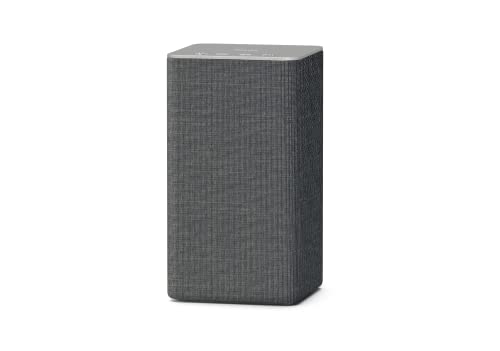
Pros
- Robust multi-room and surround sound expandability via DTS Play-Fi
- Broad streaming protocol support including AirPlay 2, Chromecast, and Spotify Connect
- Atmospheric built-in LED lighting integrates with Philips Ambilight TVs
- Full, punchy low-end response aided by dual passive radiators
Cons
- Requires a wired AC wall outlet with no built-in battery for portable use
- Initial DTS Play-Fi network setup can occasionally be finicky
- Lacks integrated microphones and requires an external smart speaker for voice commands
The Philips W6205 wireless home speaker is engineered to bridge the gap between standalone streaming convenience and modular home theater expansion. Serving as a centerpiece for multi-room listening, it pairs modern networking standards like Apple AirPlay 2 and Google Chromecast with the robust DTS Play-Fi ecosystem. Whether positioned on a living room credenza or a bedroom nightstand, it delivers a versatile audio foundation for contemporary smart homes.
Designed primarily for audio enthusiasts and smart home owners seeking flexible connectivity, this speaker eliminates the common constraints of standard Bluetooth devices. Through Wi-Fi streaming, users can broadcast uncompressed hi-res audio from platforms like Spotify Connect and Tidal Connect without interruption from phone calls or app alerts. It also integrates smoothly with Amazon Echo and Google Assistant ecosystems, enabling voice-guided playback through paired smart assistants.
In everyday use, the Philips W6205 shines in its modularity. While a single unit provides substantial room-filling output, the ability to pair two speakers for dedicated left-right stereo separation elevates the listening experience significantly. Furthermore, users owning compatible DTS Play-Fi soundbars can easily configure a pair of W6205 units as wireless rear surround channels, producing an immersive cinematic soundscape without running speaker wires across the floor.
Ultimately, the Philips W6205 represents a well-rounded audio solution that balances expansive connectivity, warm acoustic tuning, and stylish design. For consumers invested in whole-home audio or those looking to complement an existing Philips Ambilight setup, it stands out as an exceptionally capable wireless performer.
Acoustically, the Philips W6205 punches well above its footprint thanks to a carefully tuned 40W driver setup. Under the hood, an active woofer works in harmony with two opposing passive radiators to generate deep, tactile low frequencies that remain controlled and punchy. Bass-heavy tracks benefit from a rich foundation that avoids the muddy bloom typical of smaller single-driver wireless speakers.
The dedicated high-frequency tweeter handles the upper register with clarity and sparkle, keeping vocals distinct and acoustic instruments detailed. Midrange frequencies remain clear and intelligible, making the speaker equally adept at handling spoken-word podcasts, movie dialogue, and complex multi-instrumental tracks. Even as the volume climbs, dynamic range compression is kept in check, ensuring clear sound reproduction without harsh distortion.
The dispersion pattern is wide and welcoming, projecting sound evenly across mid-to-large-sized rooms. For listeners seeking a true audiophile presentation, connecting a second W6205 over a 5 GHz Wi-Fi network unlocks zero-latency stereo separation that expands the acoustic image, creating a defined center channel and wide spatial imaging.
The Philips W6205 features an elegant, pillared silhouette finished in a neutral gray acoustic fabric that blends effortlessly into modern living room and office decors. Measuring approximately 12.5 inches in height and just under 7 inches in width and depth, its compact vertical footprint allows it to sit neatly on side tables, bookshelves, or media consoles without demanding excessive surface space.
A unique hardware highlight is the integrated LED mood lighting built into the speaker cabinet. When paired with a compatible Philips Ambilight television, the speaker extends the visual spectacle beyond the screen by synchronizing colors to match the on-screen action. For standalone listening, the LEDs can be set to pulse gently with your favorite tracks or configured to cast a warm ambient glow.
In terms of hardware architecture, the speaker relies on dedicated AC mains power to deliver sustained 40W amplification, prioritizing acoustic authority over battery portability. Connectivity is dominated by dual-band Wi-Fi and Bluetooth for universal mobile compatibility, while the Philips Entertainment app provides intuitive network configuration, source selection, and multi-room grouping across the DTS Play-Fi platform.

Pros
- Exceptionally wide, room-filling soundstage courtesy of patented Trillium acoustic engineering.
- Versatile wireless options including Apple AirPlay 2, Wi-Fi casting, and Bluetooth.
- Clear far-field voice recognition with a dedicated hardware mute button for privacy.
- Convenient rear USB port charges smartphones and tablets during playback.
Cons
- Requires constant connection to a wall outlet as it does not include an internal battery.
- Compact footprint limits true sub-bass extension in very large, open-concept living spaces.
- Lacks an analog auxiliary input for connecting legacy wired audio sources.
The RIVA Concert is a compact, high-performance wireless smart speaker engineered to bridge the gap between audiophile-grade acoustic fidelity and everyday convenience. Operating as a capable alternative to mainstream smart speakers, the Concert leverages RIVA's proprietary audio architecture to eliminate the narrow, directional sound typical of standard single-box designs.
Designed for listeners who refuse to sacrifice acoustic clarity for voice-assisted utility, the speaker integrates seamlessly into contemporary streaming setups. Support for Apple AirPlay 2, Spotify Connect, and Wi-Fi streaming means you can effortlessly transition from your favorite morning news podcast to high-resolution afternoon playlists. Alexa integration responds promptly to ambient voice commands across the room, making smart home adjustments quick and natural.
In real-world testing, the Concert shines in vocal reproduction and instrument separation. While many lifestyle speakers resort to bloated bass processing to sound powerful, RIVA focuses on clean dynamics, articulate mid-tones, and an expansive stereo field. It easily fills standard bedrooms, home offices, and kitchens with vibrant, detailed sound.
Overall, the RIVA Concert is an impressive addition to any connected home. If you want a voice-enabled, multiroom-ready speaker that prioritizes authentic musicality, balanced output, and flexible streaming protocols, it stands as an outstanding sonic choice.
At the core of the RIVA Concert is the company's patented Trillium audio technology, paired with six custom precision drivers and 50 watts of clean amplification. This arrangement delivers a remarkably natural frequency response: mid-range vocals and guitars sit forward in the mix with lifelike warmth, while high frequencies remain crisp and airy without edging into harshness or fatigue.
Bass response is tight, balanced, and punchy. Rather than artificially boosting mid-bass frequencies to fake depth, the enclosure provides an honest low-end foundation that keeps complex jazz arrangements and modern rock rhythms distinct. While it will not shake the foundation like a dedicated external subwoofer, its bass impact remains exceptionally tidy for its physical footprint.
Soundstage representation is where the Concert truly differentiates itself. By processing audio channels through left, right, and center acoustic outputs, the speaker creates an unexpectedly wide listening zone. You do not have to sit dead-center to enjoy convincing stereo imaging, and the speaker maintains clean, distortion-free output even when pushed to room-filling volume levels.
Measuring approximately 4.87 by 5 by 7 inches and weighing 3 pounds, the RIVA Concert sports a sleek, vertical tower silhouette finished in an elegant white aesthetic. Its compact footprint sits comfortably on nightstands, countertops, and bookshelves, blending cleanly into contemporary home decor without demanding excessive real estate.
Hardware connectivity centers on modern wireless convenience, featuring dual-band Wi-Fi for multiroom and high-resolution playback alongside Bluetooth for quick guest pairing. Physical controls on the top panel provide tactile access to volume, playback, and input switching when you prefer not to use voice controls or smartphone apps.
Everyday convenience extends to thoughtful back-panel utility. A dedicated microphone mute switch provides complete peace of mind whenever privacy is preferred, and an integrated USB-A charging port allows you to top off your smartphone or tablet while streaming your favorite playlists. The system receives continuous firmware updates over-the-air to ensure ongoing compatibility and performance.
Connecting Alexa to External Bluetooth Speakers: Setup, Capabilities, and Audio Distribution
An Amazon Alexa-enabled Echo device can connect directly to an external Bluetooth speaker to serve as an audio transmitter. This configuration routes streaming music, podcasts, alarms, and spoken voice responses away from the internal Echo driver and through the external speaker hardware. In addition, standalone smart speakers equipped with built-in Alexa can operate in reverse by pairing with smartphones or tablets as wireless audio receivers. Knowing which role each device plays is essential for establishing stable wireless playback across your home audio system.
How the Alexa Bluetooth Audio Workflow Functions
The wireless link between Alexa hardware and an external audio unit relies on standard Bluetooth profiles, primarily the Advanced Audio Distribution Profile known as A2DP. When configured as a transmitter, the Alexa device encodes outgoing audio and sends the stream wirelessly to the paired speaker. The external Bluetooth speaker functions purely as an output sink, receiving the audio stream without processing voice commands or managing cloud requests. This relationship allows listeners to upgrade their acoustic volume while keeping hands-free voice control accessible on the original Alexa unit.
Smart speakers with Alexa built in operate somewhat differently from basic Amazon Echo hardware. Products such as the Bose Home Speaker 500: Smart Bluetooth Speaker or the RIVA Concert Smart Wi-Fi Bluetooth Speaker contain their own microphone arrays and processing chips alongside native Bluetooth transceivers. These hybrid systems can receive Bluetooth audio from mobile phones while maintaining active cloud connections over local Wi-Fi networks. Distinguishing between an Echo sending audio outward and a third-party smart speaker receiving audio inward helps prevent common configuration mistakes during initial pairing.
Audio routing priority always favors the most recently established active connection on an Alexa device. Once an external Bluetooth speaker establishes an active handshake with an Echo, the Echo mutes its internal playback drivers immediately. Spoken notifications, timers, and streaming audio shift entirely to the external sound system. If the external unit powers off or disconnects, the Echo automatically restores audio playback to its internal speaker array without manual intervention.
Step-by-Step Pairing Through the Alexa Mobile App
Establishing an initial Bluetooth link between an Echo and an external speaker requires the mobile Alexa application on iOS or Android. Before launching the software, ensure the external Bluetooth speaker is powered on and placed into active pairing mode. Most portable speakers indicate pairing mode through a rapidly flashing LED indicator or a distinct acoustic prompt. Keeping both devices within three feet of each other during this initial step minimizes handshake errors and discovery timeouts.
Open the Alexa application and navigate directly to the Devices tab located along the bottom navigation bar. Select the specific Echo device you wish to use as your audio source, then tap the settings gear in the upper right corner. Scroll down to the Bluetooth Connections menu option and choose the command to pair a new device. The application will scan the local 2.4 GHz frequency spectrum for available broadcasting peripherals within range.
Once the name of your external Bluetooth speaker appears on the mobile screen, tap the listing to confirm the wireless link. The Echo device will announce the successful connection with a brief spoken confirmation or chime. From this point forward, the external speaker remains stored in the Echo memory bank as a recognized peripheral. You can return to this menu at any time to disconnect the stream or remove the paired hardware profile permanently.
Voice Commands for Automatic Connection and Reconnection
Managing Bluetooth connections does not require opening the smartphone application once initial pairing is complete. Users can issue straightforward voice commands directly to the Alexa microphone array to initiate wireless handshakes. Speaking the command “Alexa, connect to my speaker” prompts the system to search for the most recently linked Bluetooth audio device. If the external speaker is powered on and within reception range, the connection establishes within a few seconds.
Disconnecting the audio output operates with similar simplicity through standard spoken prompts. Stating “Alexa, disconnect Bluetooth” severs the active link immediately and reroutes all audio back to the Echo internal driver. This voice shortcut is particularly useful when you need to take a portable speaker into another room or switch off external amplifiers. The Echo retains the hardware pairing data in memory so subsequent reconnections require no additional configuration steps.
When multiple Bluetooth peripherals have been paired with a single Echo unit, specific naming conventions become essential. You can prompt the assistant by specifying the exact product name, such as “Alexa, connect to Bose speaker.” If the voice assistant fails to recognize the exact phrase, assigning a simple, customized name in the Alexa app avoids confusion. Clear naming prevents the assistant from inadvertently connecting to nearby Bluetooth headphones or family members’ devices.
Wi-Fi Multi-Room Audio Versus Direct Bluetooth Audio Transmission
A common point of confusion for home audio enthusiasts involves the difference between Bluetooth pairing and Alexa Multi-Room Music groups. Direct Bluetooth transmission sends audio from one source to one receiver over short-range radio frequencies. In contrast, multi-room speaker grouping functions exclusively over local Wi-Fi networks using proprietary synchronization protocols. When an Echo unit is added to an Alexa Multi-Room Music group, its outbound Bluetooth audio capability is generally disabled during group playback sessions.
Listeners aiming to fill multiple living areas simultaneously must rely on compatible Wi-Fi protocols rather than standard Bluetooth links. Many audio fans exploring dynamic sound distribution also review Bluetooth speakers with deep bass for dedicated single-room listening corners where standalone power matters most. Wi-Fi networks provide the high bandwidth and tight packet timing required to keep multiple speakers in sync across separate rooms. Bluetooth lacks the multi-node broadcasting architecture needed to synchronize audio playback across three or four standalone devices without noticeable drift.
Certain modern smart speakers resolve this protocol conflict by integrating both systems under advanced network architectures. For instance, the Philips W6205 Wireless Home Speaker utilizes DTS Play-Fi alongside Bluetooth, letting listeners integrate the unit into whole-home Wi-Fi ecosystems. You can ask an Echo or Google Assistant device to target the Philips speaker over the network without occupying the Echo’s Bluetooth radio. This hybrid arrangement preserves high-resolution network streaming while leaving Bluetooth available for direct phone connections.
Hardware Acoustic Differences and Smart Speaker Integration
Connecting a compact Echo Dot to a larger audio system offers immediate acoustic benefits, but selecting the right hardware category requires attention to driver design. A dedicated soundbar, such as the Bose Smart Dolby Atmos Soundbar, integrates five distinct transducers including upward-firing channels and proprietary TrueSpace processing. When utilized as an Alexa-enabled entertainment centerpiece, it handles voice recognition internally while decoding complex spatial soundstages. Routing basic Echo audio into a sophisticated multichannel system can dramatically elevate dialogue clarity and dynamic range.
Standalone wireless speakers like the Bose Home Speaker 500: Smart Bluetooth Speaker take a different acoustic approach by utilizing opposing drivers to project wall-to-wall stereo sound. This unit integrates an eight-microphone array designed specifically to capture voice prompts over loud playback or across noisy rooms. Because Alexa is built into the speaker hardware itself, there is no need to pair a separate Echo device to enjoy voice interaction. Listeners can bypass external Bluetooth transmission entirely by commanding the speaker to stream directly over local Wi-Fi.
For balanced sound in mid-sized spaces, the RIVA Concert Smart Wi-Fi Bluetooth Speaker incorporates six custom drivers delivering 50 watts of output backed by Trillium audio processing. This compact design maintains an expansive stereo soundstage from a single enclosure while offering built-in Alexa voice control and multiroom Wi-Fi expansion. Units like the RIVA Concert also feature physical microphone mute switches and USB charging ports for added everyday utility. Evaluating these hardware configurations helps buyers determine whether pairing an existing Echo to a Bluetooth speaker makes more sense than investing in an integrated smart speaker.
Troubleshooting Bluetooth Audio Drops, Lag, and Reconnection Failures
Unexpected audio dropouts between an Echo and an external Bluetooth speaker usually stem from physical distance or radio frequency congestion. Both Bluetooth and standard home Wi-Fi commonly operate on the 2.4 GHz frequency band, leading to packet collisions in dense wireless environments. If you notice stuttering playback, moving the external speaker away from wireless routers and microwave ovens often restores signal stability. When planning audio coverage across expansive living areas, reviewing Bluetooth speakers for large rooms can help identify hardware with robust wireless reception capabilities.
Another frequent issue involves aggressive power-saving sleep modes built into battery-powered portable speakers. When no audio plays for several minutes, many portable speakers automatically power down internal amplifiers to conserve battery charge. Once the speaker enters sleep mode, the active Bluetooth connection drops, forcing the Echo to revert to its internal driver. To maintain an uninterrupted connection with Alexa, look for external speakers that offer an option to disable auto-sleep when connected to a continuous power outlet.
Reconnection failures can also occur if an external speaker is paired with multiple source devices simultaneously, such as a laptop and a smartphone. Bluetooth speakers typically reconnect to the first recognized broadcasting device they encounter upon power-up. If your external speaker links to your phone automatically, it will reject connection attempts from the Alexa unit. Disabling Bluetooth on secondary devices or clearing older pairing profiles ensures your smart speaker establishes priority without interference.
Audio Latency Considerations for Video Streaming and Spoken Responses
Bluetooth audio transmission inherently introduces slight signal delay due to the time required to compress, transmit, and buffer audio packets. While a delay of 150 to 250 milliseconds is barely noticeable during music playback, it becomes apparent during spoken interactions. When an Echo speaks through a Bluetooth speaker, listeners may notice a brief hesitation between the blue light ring activating and the voice output beginning. This latency is normal behavior caused by standard SBC codec processing over consumer Bluetooth links.
Latency creates more significant challenges when pairing an Alexa-enabled TV or Fire TV streamer with a Bluetooth speaker. If audio processing lags behind video rendering, spoken dialogue will fall out of sync with actors’ lip movements on screen. Many streaming platforms and soundbars include manual audio delay adjustments to help align sound with visual playback. However, dedicated wired connections like HDMI ARC or optical audio remain preferable for latency-sensitive television setups.
For pure music streaming and casual podcasts, minor transmission delay does not degrade listening quality. The incoming digital stream buffers sufficiently on the receiving speaker to maintain continuous, smooth playback without stuttering. Only high-precision applications like competitive gaming or interactive video require ultra-low latency protocols. Recognizing these technical boundaries helps set realistic expectations when combining smart home assistants with external wireless speakers.
Practical Audio Routing Scenarios and System Maintenance
Choosing between a Bluetooth connection and an auxiliary cable connection depends largely on your physical speaker placement. If your external speaker sits directly adjacent to your Echo device, a 3.5 mm analog stereo cable provides zero latency and eliminates wireless interference entirely. However, if the speaker sits across the room on a bookshelf or kitchen counter, Bluetooth offers a clutter-free solution without visible wires. Assessing room layout and cable management needs allows you to choose the most dependable setup for daily use.
Keeping your hardware operating smoothly involves periodic software and firmware maintenance. Amazon regularly pushes over-the-air updates to Echo units, while smart speakers from Bose, Philips, and RIVA receive updates through their respective companion applications. Keeping firmware current ensures that Bluetooth handshakes, security patches, and voice recognition algorithms remain compatible with modern wireless standards. Restarting both devices occasionally also clears lingering memory caches and resolves minor pairing glitches.
Connecting Alexa to an external Bluetooth speaker remains one of the simplest ways to expand sound output without rewiring your home. Whether you pair a basic Echo to a battery-powered outdoor unit or invest in an all-in-one smart speaker with Alexa built in, matching your audio needs to the appropriate wireless protocol ensures consistent performance. By understanding transmitter roles, managing sleep timers, and optimizing placement, you can enjoy room-filling sound backed by intuitive voice commands throughout your home.


Write Your Review
No reviews yet. Be the first to share your experience!