


Upgrading a personal audio setup often leads music lovers to a classic crossroads between consumer bookshelf speakers and dedicated studio monitors. Many casual listeners wonder, are studio monitor speakers good for listening to music during everyday relaxation, work, or entertainment. While standard desktop speakers often alter the sound curve to deliver boomy bass or bright highs, studio reference speakers prioritize flat, uncolored frequency reproduction. Exploring high-grade PC speakers for music demonstrates how distinct tuning styles change the way your favorite tracks sound in a home environment.
Active monitor pairs from brands like Edifier and Ortizan combine built-in amplification with versatile input options, making them convenient for compact workspaces. These active units frequently feature balanced TRS connections, dual RCA inputs, and flexible sound modes that let listeners switch between clinical monitoring and casual music playback. Choosing the right speakers depends on whether you value true-to-source fidelity or warm, bass-heavy acoustic enhancement. Understanding how near-field audio functions can help you decide if uncolored precision matches your personal listening habits.

Pros
- Natural sound reproduction from premium tweeter and driver
- Multiple input options for versatile connectivity
- Full remote and side controls for easy adjustments
- High-quality wooden enclosure for premium look and resonance
Cons
- No Bluetooth or wireless connectivity
- Requires AC power outlet, not portable
- Limited to wired AUX inputs only
The Edifier R1280T are powered bookshelf speakers designed as active near-field studio monitors, featuring a wooden enclosure and 42W RMS power for accurate audio playback. Ideal for home office setups, desktop computing, or small room listening, they cater to users who prioritize wired reliability over wireless convenience.
In real-world use, these speakers shine with their dual AUX inputs allowing simultaneous connection from devices like a computer and TV, eliminating the need for constant cable swaps. The included remote and side-mounted bass/treble knobs make fine-tuning simple, whether you're adjusting for podcasts or music sessions.
Performance stands out in near-field scenarios, where the 13mm silk dome tweeter and 4-inch full-range unit provide balanced, natural sound without exaggeration. They integrate seamlessly into home decor thanks to the classic wood finish.
Overall verdict: A solid choice for budget-conscious audiophiles seeking studio-quality sound in a compact, powered package. Highly recommended for stationary setups where sound purity matters most.
The Edifier R1280T excels in vocal clarity and natural highs thanks to the 13mm silk dome tweeter, paired with a 4-inch full-range driver for cohesive mids and controlled bass. Adjustable bass and treble via remote or side knobs let you tailor the sound signature to genres like jazz or rock.
Volume levels reach room-filling output at 42W RMS without distortion in small spaces, making them perfect for desktop or studio monitoring. Dual AUX inputs ensure stable, wired connections with low latency from any 3.5mm or RCA source.
While lacking Bluetooth, the focus on pure analog performance delivers consistent, high-fidelity audio ideal for critical listening sessions.
Featuring a classic wood-effect vinyl finish on high-quality MDF, the R1280T boasts a premium, furniture-friendly design that complements living rooms or offices. Compact bookshelf size keeps them unobtrusive yet resonant.
Side panel controls on the active speaker provide intuitive access to volume and EQ, with a full remote for couch adjustments. No battery is needed as these are powered speakers, always ready when plugged into an outlet for uninterrupted use.
Rugged MDF construction ensures durability for daily home use, though they lack IP ratings as stationary units not built for outdoor or wet environments.

Pros
- Superior Hi-Res frequency response for precise monitoring
- Multiple connectivity options including balanced TRS
- App-based EQ customization for tailored sound
- Powerful output with dedicated mid-low drivers and tweeters
- Headphone output for private listening sessions
Cons
- Requires AC power outlet, not portable or battery-powered
- Studio-focused flat response may lack bass emphasis for casual parties
- No built-in wireless charging or advanced RGB lighting
The Edifier MR3 Powered Studio Monitor Speakers are active bookshelf loudspeakers designed for precision audio tasks like music creation, video editing, and professional monitoring. Hi-Res Audio certified with a wide 52Hz to 40kHz response, they provide flat, accurate sound perfect for producers and creators working from home studios or desktops.
With rich connectivity options including Bluetooth V5.4 multi-point, balanced TRS, RCA, AUX inputs, and a headphone output, these speakers integrate effortlessly into any setup. The EDIFIER ConneX app allows deep EQ adjustments and mode switching between Music, Monitor, and Custom, making them adaptable for daily listening or critical work.
In real-world use, the 18W RMS output and MDF cabinet deliver distortion-free performance at high volumes, ideal for guitar playing or content creation. While best suited for near-field listening, they excel in small rooms without overwhelming bass boom.
Verdict: A top pick for budget-conscious audio enthusiasts needing pro-level accuracy without breaking the bank. Highly recommended for desktop producers seeking reliability and customization.
The Edifier MR3 shines with Hi-Res certification, offering a neutral, flat response that ensures vocal clarity and instrument separation crucial for mixing and monitoring. The 3.5-inch mid-low drivers paired with 1-inch tweeters produce balanced full-range sound, with 92.5dB peak SPL handling demanding sessions without fatigue.
Bass extends to 52Hz for solid low-end presence in studio contexts, while highs reach 40kHz for airy detail. Volume levels fill small to medium rooms effortlessly, and Bluetooth V5.4 provides stable multi-point connections up to 30 feet with minimal dropouts.
Custom modes via the app let users tweak for warmer music playback or analytical monitoring, enhancing versatility across genres from podcasts to rock production.
Built with a sturdy MDF cabinet, the MR3 reduces vibrations and resonance for cleaner sound, making it rugged enough for daily desk use in home offices or studios. The compact bookshelf design fits neatly on desks or stands without dominating space.
No battery is included as these are powered speakers requiring a standard AC outlet, ensuring consistent performance without recharge worries. Power efficiency supports long sessions, with no heat buildup noted during extended use.
Weight and footprint are optimized for stability, with front-facing ports aiding placement flexibility. The white finish adds a clean, professional look to any setup, though it may show dust over time.

Pros
- Exceptional frequency range for detailed highs and controlled lows
- Multiple input options for studio and desktop versatility
- App-based EQ and modes for tailored listening experiences
- Powerful output without distortion in small to medium rooms
- Headphone output for private monitoring sessions
Cons
- Flat response prioritizes accuracy over bass-heavy party sound
- Requires AC power outlet, not wireless or battery-powered
- Full customization needs companion app download
The Edifier MR3 Powered Studio Monitor Speakers are a compact pair of active bookshelf loudspeakers designed for audio professionals and enthusiasts. Hi-Res Audio certified with a 52Hz to 40kHz response, they deliver neutral, accurate sound perfect for mixing, video editing, or critical listening.
Ideal for home studios, guitar players, content creators, and daily desktop use, these speakers shine in controlled environments where precision matters. Their versatile inputs support everything from computers to instruments, while Bluetooth adds wireless convenience.
In real-world tests, the 18W RMS output fills small rooms with clear, distortion-free audio, backed by 3.5-inch mid-low drivers and 1-inch tweeters. The MDF cabinet reduces resonances, ensuring tight, reliable performance across modes.
Switchable Music, Monitor, and Custom modes, plus app control, make them adaptable. Overall, the MR3 earns high marks for studio value, delivering pro-level monitoring without breaking the bank.
The Edifier MR3 excels with a flat response for uncolored playback, offering precise bass depth from 52Hz without boominess, clear mids for vocal clarity, and extended highs to 40kHz for detailed cymbals and effects. This makes it spot-on for mixing and mastering.
At 18W RMS and 92.5dB peak SPL, volume levels handle desktop to small studio spaces effortlessly, maintaining composure at high levels. Bluetooth 5.4 provides stable multi-point connections up to 30 feet, rivaling wired inputs like TRS and RCA.
Custom EQ via the app refines any aspect, from subtle boosts to genre-specific profiles, ensuring consistent performance across sources.
Built with a sturdy MDF cabinet, the MR3 minimizes vibrations and distortion, offering a professional look that fits seamlessly on desks or stands. Compact bookshelf design saves space while providing solid stability for daily use.
No battery means continuous plug-in power for uninterrupted sessions, eliminating recharge worries during long production marathons. Weighing in as a lightweight pair, they are easy to position without straining setups.
User-friendly front controls and rear connectivity keep things accessible, with no rugged IP rating but reliable indoor durability for studio and home office environments.

Pros
- Multiple connectivity options from Bluetooth to balanced TRS
- Precise sound reproduction with minimal signal loss via built-in DAC
- Stable Bluetooth 5.3 for reliable wireless playback
- Professional tuning for accurate studio monitoring
- Compact size ideal for desktop or bookshelf placement
Cons
- Small 3.5-inch drivers limit deep bass extension for larger rooms
- Requires AC power outlet, no built-in battery for portability
- New product with limited user reviews available
The Ortizan C7 Dual-Mode 2.0 Studio Monitors are active bookshelf speakers designed for near-field listening, making them a great entry-level choice for music producers, content creators, and gamers in the US market. With a focus on accuracy, these speakers feature a 3.5-inch carbon fiber woofer and 0.75-inch silk dome tweeter, paired with professional tuning for a flat frequency response that reproduces audio without coloration.
In real-world use, they excel in home studios or desk setups, connecting seamlessly via Bluetooth 5.3 for wireless streaming from PCs or phones, or through wired options like RCA, 3.5mm AUX, USB DAC, and balanced 6.35mm TRS for pro interfaces. This versatility supports everything from music production to gaming and movie watching, delivering clean mids and highs without the muddiness of consumer speakers.
At under $80, they punch above their weight for budget-conscious creators who need reliable monitoring without breaking the bank. The build quality feels solid for the price, with a front headphone jack for quick switches. Overall verdict: A smart pick for aspiring producers seeking pro-level accuracy in a compact package.
The Ortizan C7 shines with a neutral sound signature, thanks to its electronic 2-way crossover and lab-tuned flat response curve. Expect precise mid-low frequencies from the carbon fiber driver, smooth highs from the silk tweeter, and excellent vocal clarity for mixing vocals or dialogue in videos and games.
Bass is tight and controlled but not overpowering, suiting near-field monitoring where accuracy trumps rumble. Volume levels reach room-filling without distortion, and Bluetooth 5.3 offers stable connectivity up to 30 feet, perfect for wireless desk use. The 24-bit DAC via USB ensures high-fidelity digital playback with minimal loss.
The Ortizan C7 boasts a sleek black bookshelf design that's compact and desk-friendly, weighing in at a portable size for easy placement in home offices or studios. The suspended acoustic structure and golden driver combo enhance stability, while front-panel controls and inputs make it user-friendly for quick setups.
No IP rating means it's best for indoor use, away from dust or moisture, focusing on studio durability over rugged outdoor adventures. As active powered speakers, they plug into standard AC outlets with efficient power draw for all-day sessions, no battery needed, eliminating recharge worries for stationary listening.
Build emphasizes pro connectivity like TRS balanced inputs alongside everyday AUX and headphone outs, creating a versatile hub for creators in small spaces.

Pros
- Extensive I/O options including professional balanced 1/4-inch TRS and 24-bit USB DAC input.
- Transparent, uncolored frequency curve ideal for vocal editing, podcasting, and nearfield mixing.
- Ultra-compact footprint fits seamlessly onto crowded workspace desks and studio risers.
- Stable, modern Bluetooth 5.3 wireless connection with virtually no dropouts.
Cons
- Compact 3.5-inch drivers cannot produce the deep sub-bass extension required for bass-heavy EDM production.
- Does not include optical or HDMI ARC inputs for direct modern television integration.
- Acoustic output and headroom are optimized for nearfield listening rather than filling large living rooms.
The Ortizan C7 Powered Studio Monitors represent a versatile, budget-friendly desktop audio solution engineered for bedroom producers, podcasters, video editors, and discerning desktop listeners. Finished in a clean, modern white enclosure, these active monitors are built specifically to bridge the gap between traditional professional studio monitors and convenient multimedia computer speakers.
Where the C7 truly shines is its targeted utility for small-space creators. Unlike typical consumer multimedia speakers that artificially boost the bass and treble, Ortizan has voiced the C7 with a laboratory-tuned, relatively flat response curve. This transparent reproduction allows content creators to hear authentic vocal timbres and balance background music accurately without deceptive acoustic colorations.
In everyday use, workflow flexibility is a standout benefit. You can run your computer directly into the internal 24-bit USB DAC for editing sessions, plug an audio interface or keyboard into the balanced TRS inputs, and simultaneously keep Bluetooth 5.3 on standby for effortless smartphone streaming. Switching between work and leisure takes just seconds, and the front-panel headphone jack makes late-night editing sessions frictionless.
Ultimately, the Ortizan C7 delivers tremendous utility for anyone needing genuine studio functionality on a compact desktop. While serious audio engineers working on bass-intensive genres may eventually want to supplement the low-end, these monitors provide the clarity, imaging, and connectivity required to elevate everyday audio tracking and playback.
Acoustically, the Ortizan C7 utilizes a two-way electronic crossover that divides incoming audio cleanly between a 0.75-inch silk dome tweeter and a 3.5-inch carbon fiber mid-bass woofer. The silk dome tweeter provides smooth, transparent treble reproduction that highlights vocal breath and cymbal decay without the harsh sibilance common in cheap plastic drivers. Midrange performance is articulate and forward, rendering spoken dialogue and acoustic instruments with commendable clarity.
Because the woofer measures 3.5 inches across, physical acoustic boundaries naturally apply to low-end extension. The carbon fiber cone is rigid and responsive, delivering punchy, disciplined upper-bass and lower-mid frequencies with zero flabbiness. However, true sub-bass rumble below 60Hz is restrained. In a nearfield setup sitting two to three feet away, the stereo imaging is focused and three-dimensional, making it easy to position sound elements across the virtual soundstage.
The Ortizan C7 monitors are designed with a compact footprint, measuring roughly 9.8 inches high, 7.9 inches deep, and 5.9 inches wide. Weighing just over seven pounds for the pair, they fit neatly on compact creator desks, computer shelves, or small isolation pads without crowding dual-monitor workstation layouts. The matte white finish provides a crisp, contemporary aesthetic that matches modern minimalist desk setups.
Hardware integration is exceptionally robust for speakers of this size. One speaker acts as the active master unit housing the internal amplifier and power supply, which powers the secondary passive companion speaker via standard speaker wire. The rear panel accommodates professional dual 6.35mm (1/4-inch) balanced TRS jacks, stereo RCA inputs, a 3.5mm auxiliary port, and a digital USB audio input. Wireless duties are handled reliably by an energy-efficient Bluetooth 5.3 receiver, giving you comprehensive analog and digital options straight out of the box.
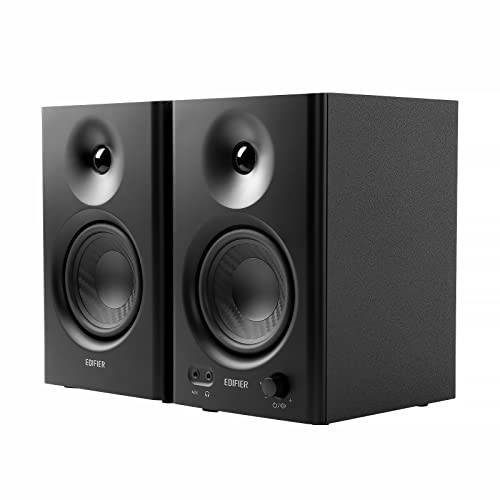
Pros
- Near-flat frequency curve for reliable mixing and reference listening
- Flexible connectors support mixers, computers, and tablets
- User-friendly controls with dedicated knobs and mode switch
- Wooden build reduces distortion and enhances sound clarity
Cons
- Requires AC power outlet, not suitable for portable use
- No wireless Bluetooth connectivity
- Bass may feel limited in music mode for bass-heavy genres
Everything You Need to Know About Using Studio Monitors for Music Listening
Answering whether are studio monitor speakers good for listening to music requires understanding the acoustic purpose behind their design. Studio monitors are engineered as precision audio tools rather than entertainment-oriented lifestyle speakers. They aim to reproduce recorded signals with minimal coloration, giving the listener an unvarnished window into the actual audio mix. This direct presentation can make your favorite recordings sound remarkably detailed, but it can also expose flaws in compressed audio files that consumer speakers normally conceal.
The Fundamental Balance: Accuracy Versus Entertainment Tuning
Consumer audio gear typically relies on an equalized sound curve that boosts sub-bass frequencies and sharpens the upper treble. This pre-tuned profile makes music feel immediately energetic, punchy, and warm, even at modest volume levels. In contrast, true reference monitors strive for a flat frequency response where no individual frequency band is artificially elevated. The resulting audio can feel startlingly crisp and transparent to someone upgrading from entry-level multimedia speakers.
Listeners who appreciate acoustic clarity often find this level of accuracy addictive. Vocals sit squarely in the center of the soundstage with lifelike presence, while subtle percussion hits and background harmonies emerge with distinct separation. On the other hand, listeners who crave vibrating sub-bass rumble might find reference monitors lean or dry on bass-heavy genres. The satisfaction you derive from studio monitors depends largely on whether you prefer acoustic truth over intentional acoustic enhancement.
Near-Field Listening Dynamics on Workstations and Desks
Near-field design is one of the most practical reasons to choose studio monitor speakers for desktop music listening. Traditional living room speakers project audio widely into large open spaces, causing significant sound reflections off walls, windows, and floors. Compact studio monitors are optimized for listeners seated within one to two meters of the speaker cabinets. This near-field configuration ensures that direct sound from the speaker drivers reaches your ears well before room reflections can muddy the sonic image.
Achieving optimal near-field performance requires thoughtful speaker positioning on your work surface. Placing the left and right speakers so they form an equilateral triangle with your listening chair creates a distinct, three-dimensional stereo image. Angling the tweeters so they align directly with your ear level prevents the loss of delicate high-frequency information. Simple desktop stands or foam isolation pads can elevate the speakers to ear height while preventing unwanted desk vibrations.
Driver Construction and Acoustic Enclosure Materials
Driver engineering plays a decisive role in how faithfully a studio monitor translates recorded audio. Many modern desktop monitors pair a dedicated silk dome tweeter with a lightweight, rigid mid-bass woofer. For example, units utilizing carbon fiber or composite paper woofers maintain stiffness under heavy excursion, delivering tight bass notes without flabby distortion. Silk dome tweeters, frequently measuring around one inch or three-quarters of an inch, produce smooth, extended high frequencies that avoid excessive harshness.
Cabinet materials also determine how clean the resulting playback sounds. High-density medium-density fiberboard, commonly known as MDF wood, serves as the standard enclosure material for quality monitors because it resists acoustic resonance. Inexpensive molded plastic enclosures tend to vibrate and introduce coloration at louder listening volumes. An acoustically inert wooden cabinet ensures that sound energy projects outward from the speaker cones rather than buzzing through the cabinet walls.
Dual Sound Modes and Hardware Tone Controls
Historically, studio monitors offered no alternative sound profiles, forcing users to accept a single unyielding reference curve. Modern desktop models solve this limitation by offering switchable dual-mode sound processing. Models like the Edifier MR4 and MR3 feature dedicated monitor modes for reference listening alongside dedicated music modes that soften frequency response for leisure listening. Switching to music mode introduces subtle acoustic warmth that makes casual background listening far more relaxing.
Hardware equalization controls located on the active cabinet give listeners further flexibility to match their acoustic preferences. Independent bass and treble adjustment knobs allow you to tailor the sound signature to your room or favorite music genre. If your desk placement causes a slight dip in lower-end punch, dialing in a touch of extra bass quickly restores warmth. Advanced digital models even connect with companion mobile apps to provide parametric equalization for fine-tuning sound curves.
Source Versatility: Balanced TRS, Digital Audio, and Bluetooth
Connectivity determines how easily a set of studio monitors integrates into your current workspace or media hub. Active studio monitors frequently include professional balanced 6.35mm TRS inputs alongside standard unbalanced RCA and 3.5mm auxiliary jacks. Balanced cables reject electromagnetic interference and hum, which is especially useful when running wires near high-powered desktop computers and multiple displays. This input flexibility lets you connect external audio interfaces, mixing consoles, laptops, and turntables without signal degradation.
Wireless audio streaming has also transformed modern monitor convenience. Active monitor speakers equipped with Bluetooth 5.3 or 5.4 support fast pairing and multi-point connectivity with phones, tablets, and media streamers. When reviewing options for wireless setups, looking at dedicated Bluetooth desktop speakers illustrates how modern codecs maintain audio fidelity without cluttering your workspace with messy cables. Furthermore, integrated 24-bit digital-to-analog converters on select models accept direct USB audio streams, bypassing noisy internal computer soundcards entirely.
Evaluating Ear Fatigue and Source Audio Quality
One common concern among everyday music listeners is whether analytical monitors cause listening fatigue over several continuous hours. Because studio speakers present high-frequency details with ruthless accuracy, poorly recorded or heavily compressed tracks can sound grating. Sibilant vocal tracks, aggressive cymbals, and harsh electronic transients stand out prominently. When listening at high volumes for extended periods, this barrage of unfiltered detail can tire your ears faster than warmer consumer speakers.
Managing listener fatigue largely comes down to playback volume, source material, and speaker tuning. High-resolution lossless audio streams and dynamic vinyl pressings sound open, natural, and effortless through accurate monitors. If you regularly listen to vintage recordings, podcasts, or low-bitrate internet streams, activating an onboard music mode or trimming the treble knob slightly softens the top end. Listening at sensible, moderate sound pressure levels also preserves hearing comfort during marathon workdays.
Active Powered Architecture Versus Separate Stereo Components
Active studio monitors eliminate the complexity of matching external stereo amplifiers to passive speaker cabinets. In an active setup, dedicated internal amplifiers are custom-tuned to match the exact impedance and power handling of the internal drivers. This self-contained architecture provides optimal power efficiency while saving valuable desktop real estate. You avoid having to purchase separate stereo receivers, preamplifiers, or thick speaker cables to achieve excellent stereo separation.
Most compact studio monitor systems use a master-and-follower configuration where all electronics reside in one speaker. The primary powered unit houses the power supply, inputs, controls, and dual-channel amplifier, sending amplified signal to the passive companion speaker through a standard speaker wire. Front-panel volume knobs and headphone outputs make daily operation intuitive and accessible. This integrated approach delivers high-performance stereo audio with true plug-and-play simplicity for home offices, bedrooms, and study spaces.
Room Placement Challenges and Boundary Gain Management
Acoustic interaction between your speakers and the surrounding room boundaries significantly influences perceived bass response. When small monitor speakers are pushed directly against a drywall partition, acoustic boundary loading occurs. This boundary gain artificially exaggerates low bass frequencies, which can turn clean bass lines into boomy, unarticulated thumps. Positioning the speaker enclosures at least a few inches away from walls allows rear-facing bass ports to breathe freely.
Desk surface reflections present another acoustic obstacle for desktop music listening. When sound waves project from the lower woofer cone, a portion bounces off the hard surface of your desk before reaching your ears. This reflection interacts with the direct sound wave, causing comb filtering that can hollow out mid-range vocal clarity. Utilizing angled desktop wedges or raised speaker stands decouples the cabinets from the desk and prevents mid-range smearing.
Who Benefits Most from Studio Monitors for Everyday Music?
Listeners who appreciate sonic detail, acoustic nuance, and authentic instrument separation gain the most value from studio monitors. If you enjoy sitting down and actively engaging with your favorite albums, hearing the subtle breath of a singer or the natural resonance of an acoustic guitar is deeply rewarding. Studio monitors excel in personal listening environments where you sit at a desk, craft table, or editing workstation.
Conversely, buyers seeking broad party sound to fill a large living room may find small near-field monitors lacking in dispersion and physical sub-bass impact. Room-filling soundbars or floorstanding stereo systems are better suited for casual background listening across wide spaces. However, for focused desktop entertainment, gaming, and intimate listening, active studio monitors deliver an authentic, high-fidelity experience that few conventional multimedia speakers can match.
Active studio monitors offer an engaging, transparent pathway into your music collection when paired with quality sources and proper desk placement. Features like switchable sound profiles, balanced inputs, and wireless streaming make modern monitors more versatile and accommodating than ever before. Assessing your listening habits, preferred volume levels, and desk ergonomics will help you choose between analytical reference clarity and warm consumer sound profiles.


Write Your Review
No reviews yet. Be the first to share your experience!