


Building an audio system that balances punchy dynamics with low-end authority often leads to questions about enclosure design. Many listeners wonder whether are ported speakers good for everyday listening or if sealed cabinets provide a cleaner overall response. Bass-reflex designs incorporate an engineered opening that channels acoustic energy from the rear of the speaker cone into the room. When paired with clean and balanced home speakers, a vented cabinet can significantly enhance efficiency and bass extension without demanding massive amplifier wattage.
Achieving satisfying results depends heavily on your listening environment, driver specifications, and acoustic goals. Compact rooms or vehicle trunks benefit from different enclosure volumes than open living spaces. Some audio enthusiasts prefer the tight response of acoustic-suspension setups, while others rely on vented boxes to drive traditional passive stereo speakers with greater low-frequency authority. Exploring how ported enclosures interact with your audio equipment will help you decide if this classic cabinet style suits your setup.

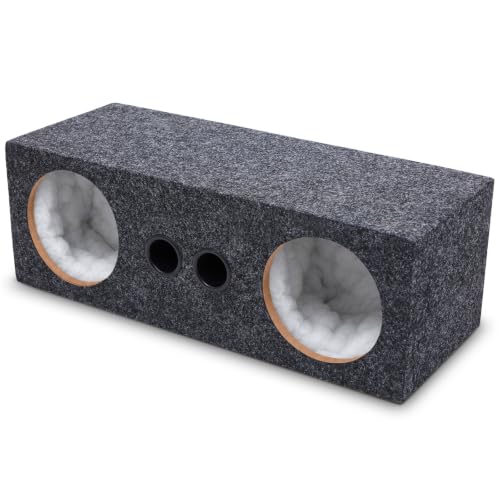


Acoustic Design Principles and Ported Speaker Performance
Selecting an enclosure design represents a critical decision in building or upgrading any audio system. A well-designed vented enclosure harnesses acoustic energy that would otherwise remain trapped inside a sealed box. By allowing the driver cone and internal air volume to work together, ported systems provide distinct advantages in efficiency and low-frequency reach across diverse environments.
Direct Evaluation: When Vented Enclosures Excel
Ported speakers excel when your primary audio priorities are high volume, extended bass depth, and electrical efficiency. In a traditional sealed cabinet, the backward motion of the speaker cone pushes against trapped air, requiring substantial amplifier power. Vented enclosures alleviate this restriction by directing rearward sound waves through an open port to reinforce forward output.
Acoustic efficiency remains the standout advantage of a vented cabinet across almost every application. Because the port contributes useful acoustic energy near its resonance point, the speaker cone experiences reduced physical excursion while producing impressive sound pressure. This reduction in cone movement lowers mechanical stress on the driver suspension and helps modest amplifiers deliver robust sound without clipping.
These performance advantages come with physical and acoustic trade-offs that listeners must consider. Ported cabinets require larger internal air volumes than sealed alternatives to accommodate the necessary port duct and tuning parameters. Below the enclosure tuning frequency, a ported woofer loses acoustic resistance and can experience excessive cone motion if not properly filtered.
The Physical Mechanics of Bass Reflex Tuning
The underlying physics of a ported enclosure relies on the acoustic phenomenon known as Helmholtz resonance. When a speaker driver moves backward, it compresses the air trapped inside the wooden cabinet. At the specific tuning frequency determined by duct length and box volume, air exiting the vent moves in phase with the forward radiation of the woofer cone.
Controlling driver excursion near the box tuning frequency is where vented designs demonstrate their greatest engineering strength. As the system approaches resonance, acoustic impedance inside the cabinet reaches a peak, which restricts physical cone movement. The vibrating plug of air inside the port produces the vast majority of audible sound waves rather than the driver cone itself.
A critical operational shift occurs when audio signals drop lower than the enclosure tuning point. Once playback frequency falls beneath resonance, the trapped air ceases to act as an acoustic spring, leaving the driver vulnerable to bottoming out. Incorporating an active high-pass filter into your amplifier resolves this problem by cutting off inaudible, potentially damaging sub-bass frequencies.
Ported Cabinets Compared to Sealed Enclosures
Comparing ported and sealed enclosures reveals fundamental differences in transient response, roll-off slopes, and tonal character. Sealed boxes feature an acoustic-suspension design where trapped air acts as a constant restoring force on the speaker cone. This mechanical damping enables sealed speakers to start and stop cone motion with exceptional precision, making them popular for tight acoustic recordings.
Low-frequency roll-off characteristics also separate these two cabinet configurations in measurable ways. Sealed enclosures feature a gradual low-end roll-off of roughly 12 decibels per octave, allowing them to produce usable deep bass beneath their cutoff. Ported designs maintain a flatter response down to the tuning frequency but drop off steeply at roughly 24 decibels per octave below that point.
Space limitations and amplifier power requirements frequently dictate which cabinet design makes practical sense for a buyer. Sealed enclosures occupy significantly less physical space, making them simpler to place in compact living rooms or vehicle trunks. Ported enclosures demand roughly 30 to 50 percent more internal airspace, but their superior efficiency means you do not need an oversized amplifier.
Driver Sizing, Airspace, and Matching Considerations
Installing an audio driver into a vented enclosure requires careful alignment between driver specifications and internal cabinet volume. Every woofer carries electromechanical parameters that dictate whether it operates effectively in an open, ported structure. Subwoofers with moderate total Q values and durable suspension assemblies thrive in vented boxes, while ultra-stiff drivers often perform better in sealed enclosures.
Driver diameter plays a major role in determining the overall volume and port dimensions required for clean sound. Compact 6.5-inch and 8-inch drivers require modest airspace and narrower ports to maintain control, while larger 10-inch and 12-inch subwoofers demand spacious chambers. If you explore deep bass portable audio setups, you will notice that even compact systems use miniature passive radiators or tuned vents to maximize driver efficiency.
Mismatches between driver size and enclosure volume create distinct sonic defects that degrade the listening experience. Installing a large 12-inch subwoofer into an undersized vented box raises system resonance, creating an exaggerated mid-bass hump. Verifying the manufacturer recommended net internal airspace ensures your driver performs reliably without uncontrolled cone excursion.
Cabinet Construction, Materials, and Wall Rigidity
Cabinet construction quality directly influences whether a ported speaker sounds clean and authoritative or hollow and muddy. Vented enclosures endure extreme air pressure fluctuations as the woofer pushes and pulls against the internal volume. Medium-density fiberboard, commonly known as MDF, serves as the standard material for speaker boxes because dense 5/8-inch or 3/4-inch panels resist flexing under heavy excursion.
Structural rigidity becomes even more vital when building or purchasing multi-driver boxes such as dual 10-inch or dual 12-inch enclosures. The massive surface area of larger enclosure panels creates prime opportunities for unwanted cabinet resonance and wall flex. Quality enclosures incorporate internal divider walls, robust corner blocks, or dedicated cross-braces between opposing panels to eliminate panel vibration.
Sealing the perimeter joints and terminal cups represents another essential manufacturing detail that maintains system performance. Even though a ported box has an intentional opening, all other seams must remain completely airtight to preserve proper Helmholtz resonance. Air leaking through an unsealed joint or terminal cup creates distracting whistling noises and degrades intended tuning.
Automotive Audio and Trunk Space Integration
Automotive sound systems represent one of the most common and rewarding environments for deploying ported subwoofer boxes. Vehicle cabins are compact acoustic environments that provide substantial transfer function gain, commonly referred to as cabin gain. Combining this natural vehicle gain with the high efficiency of a ported enclosure produces massive, deep bass from moderate system power.
Enclosure dimensions and trunk space availability require practical compromises when selecting car audio equipment. Dual 10-inch and dual 12-inch ported enclosures deliver immense acoustic output, but their substantial outer dimensions consume considerable cargo room. If you have already added coaxial vehicle speaker upgrades in your doors, adding a vented subwoofer enclosure fills out the bottom audio octaves that small door speakers cannot reproduce.
Box placement and firing orientation inside a vehicle trunk dramatically affect overall tonal balance and cabin pressure. Pointing a ported enclosure toward the rear bumper frequently yields the strongest bass reinforcement because sound waves load against the vehicle boundary before reflecting forward. Securing the enclosure firmly with mounting brackets prevents dangerous box shifting during sudden vehicle stops.
Home Audio, Bookshelf Enclosures, and Wall Clearance
Ported designs are widely utilized in home audio, spanning everything from compact bookshelf monitors to large floorstanding towers. In a residential listening room, vented enclosures provide rich, full-bodied musical playback without requiring separate active subwoofers for casual listening. The natural acoustic extension of a vented box helps small 6.5-inch or 8-inch two-way speakers reproduce acoustic bass lines convincingly.
Room placement and boundary loading present specific challenges when integrating vented speakers into a residential environment. Many modern bookshelf speakers feature rear-firing ports to keep the front baffle clean and reduce visible port turbulence. Placing a rear-ported cabinet directly against a drywall surface or corner forces the vent to interact with the boundary wall, creating an unnatural, boomy resonance around 100 Hertz.
Maintaining adequate clearance between the rear vent and adjacent walls preserves clean, articulate bass performance. A practical guideline is to leave a distance at least equal to the diameter of the port duct between the cabinet and the wall surface. If furniture arrangements force you to place speakers near walls, front-ported enclosures or foam port bungs provide cleaner results.
Managing Port Air Velocity, Chuffing, and Phase Alignment
Port chuffing represents the most prevalent acoustic issue associated with poorly engineered or undersized vented enclosures. When an audio track demands high excursion near the box tuning frequency, immense volumes of air rush through the port duct. If the cross-sectional area of the vent is too narrow, air velocity accelerates to turbulent speeds, causing an audible chuffing or fluttering sound.
Enclosure designers utilize specialized port geometries to keep air velocities well below the threshold of audible turbulence. Rectangular slot ports built along the perimeter of the box provide expansive surface area that allows air to move freely during high-volume passages. Circular ports often incorporate flared aerodynamic lips to smooth air transitions and prevent boundary layer separation.
Acoustic phase alignment between the ported enclosure and the main stereo speakers represents another critical setup consideration. Because the sound exiting a vent undergoes an acoustic phase shift relative to the forward driver cone, sound waves can interfere destructively at the crossover frequency. Adjusting the phase switch on your amplifier aligns these acoustic waves, restoring full, impactful low-end punch.
Practical Verification and Setup Steps Before Final Installation
Performing thorough operational checks before permanently mounting or bolting down your speaker enclosure saves time and prevents equipment damage. Begin by verifying the mechanical seal around the driver mounting flange and the speaker terminal cup. Leaks around the driver frame or screw holes disrupt internal pressure dynamics and introduce subtle whistling noises during heavy bass playback.
Configuring crossover and subsonic settings on your amplifier or receiver protects your equipment while optimizing sound quality. Set the low-pass filter to route low frequencies cleanly to the vented woofer while preventing higher vocal tones from leaking into the bass chamber. Adjust the amplifier subsonic filter to engage slightly below the enclosure tuning point to protect the woofer from uncontrolled excursion.
Listening to a familiar reference track while walking around your listening space confirms whether enclosure placement suits room acoustics. Low-frequency sound waves create room modes, producing spots with overwhelming bass alongside acoustic nulls where bass disappears entirely. Shifting the enclosure position slightly or rotating its firing direction can smooth out room interactions and provide balanced acoustic coverage across your seating area.
Ported speakers provide an exceptional balance of acoustic efficiency, extended bass reach, and high dynamic output when built with solid materials and properly matched to compatible drivers. While they demand more physical space and require thoughtful boundary placement, their ability to produce room-energizing sound with modest amplifier power makes them a premier choice for audio enthusiasts. By understanding the operational mechanics and taking time to calibrate crossover points and enclosure placement, you can enjoy clean, authoritative sound that transforms your daily listening experience.


Write Your Review
No reviews yet. Be the first to share your experience!