


Upgrading vehicle audio often starts with frustration over muffled vocals, strained highs, and factory speakers that distort the moment you turn up the volume. Drivers seeking concert-level loudness often encounter DS18, a brand renowned in the mobile audio community for high-output, pro-audio style drivers. Deciding whether these components match your daily driving needs is the focus of this Are Ds18 Speakers Good Step By Step Guide. Achieving crisp, powerful sound depends heavily on matching driver capabilities to your vehicle acoustic space and amplifier power rather than relying solely on brand hype.
While standard factory units offer balanced but quiet playback, professional-style midranges and super tweeters focus on exceptional projection and sensitivity. Exploring quality component speaker upgrades for car audio can completely transform your daily commute when done correctly. In this guide, we break down driver design, power requirements, crossover integration, and acoustic trade-offs. This analysis helps you determine whether a dedicated high-output package from DS18 will deliver the exact listening experience you want inside your vehicle.
Pros
- Tremendous volume capability and vocal clarity without early distortion
- Bullet phase plugs enhance directivity and high-mid efficiency
- Integrated capacitor filters protect tweeters without requiring external crossover boxes
- Rugged pro-audio build quality handles continuous high-wattage abuse
Cons
- Requires a dedicated subwoofer to fill in low sub-bass frequencies
- Super tweeters can sound overly bright without proper head-unit EQ adjustments
- Large magnet structures and tweeter housings may require custom door pod mounting
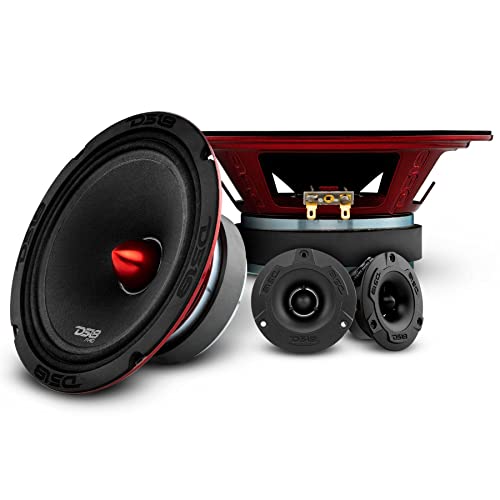
The DS18 Mid and High Car Speaker Package is an aggressive, high-output solution tailored specifically for car audio enthusiasts who want their audio heard loud and clear. DS18 is legendary in the mobile audio world for bridging pro-audio stage performance with automotive acoustics, and this setup combines two heavy-hitting drivers: the PRO-X6.4BM 6.5-inch midrange loudspeakers and the PRO-TW220 1-inch ferrite super tweeters. Rather than aiming for subtle desktop nuances, this package exists to shatter sound boundaries inside your vehicle.
This bundle is targeted directly at enthusiasts who run heavy subwoofers and find that their stock or standard coaxial speakers are completely overwhelmed by bass. If you regularly cruise with the windows down or display your vehicle at car meets, standard speakers simply run out of steam. The DS18 combo answers the bell with extraordinary vocal presence and biting top-end sparkle that ensures every guitar rift, synth line, and vocal track remains clean and coherent over heavy road noise.
In real-world testing, these drivers thrive when connected to a clean multi-channel aftermarket amplifier. Running them off a factory head unit will severely bottleneck their dynamic potential. When fed their rated RMS wattage, the midranges snap with rapid response, and the super tweeters launch highs with pinpoint accuracy. Installation is streamlined thanks to pre-installed capacitor filters on the tweeters, though you should verify your door mounting depth given the generous magnet size.
Overall, this DS18 combo is one of the most cost-effective methods to achieve massive sound pressure levels without sacrificing vocal intelligibility. While it leans towards a bright, forward sound profile, proper equalization makes it an unbeatable driver package for anyone looking to build a true concert on wheels.
Acoustically, this package represents classic pro-audio tuning: elevated sensitivity, fast transient response, and immense headroom. The PRO-X6.4BM 6.5-inch drivers excel in the critical 500Hz to 5kHz band, delivering an open, forward midrange that places singers right in front of your dashboard. The aluminum bullet phase plug helps smooth out high-midrange frequencies and prevents cone breakup, yielding sharp snare impacts and crystal-clear vocals even at ear-splitting volumes.
Handling the top end are the PRO-TW220 super tweeters, which inject immediate energy and air into the soundstage. Capable of handling 225 watts RMS with an integrated capacitor crossover filter, these tweeters shrug off high electrical power while delivering razor-sharp cymbal crashes and high-register harmonics up to 20kHz. Because super tweeters have directional output, careful aiming will significantly expand your cabin soundstage.
It is important to remember that these speakers are engineered for mid-to-high frequency projection rather than low-end bass extension. They do not produce sub-bass rumble, so pairing them with a dedicated subwoofer is mandatory for a balanced, full-range listening experience. Once supported by proper low-end reinforcement, the overall acoustic output is thunderous, vibrant, and effortlessly articulate.
Every component in this DS18 package is overbuilt to endure continuous high-volume demands. The PRO-X6.4BM midranges feature stamped steel baskets, non-pressed paper cones for rapid response, and high-strength cloth surrounds that allow linear movement during heavy excursions. A signature red aluminum bullet dust cap acts as an acoustic guide while aiding voice coil cooling during long listening sessions.
The PRO-TW220 tweeters utilize rigid aluminum diaphragms backed by beefy ferrite motor structures, ensuring efficient thermal dissipation under heavy power. To protect these sensitive high-frequency diaphragms from destructive low-frequency energy, DS18 integrates high-pass capacitor filters directly onto the terminals, eliminating the need to mount bulky external crossover boxes behind your door panels.
Both the midrange drivers and tweeters run on standard 4-ohm impedance voice coils, granting great flexibility for amplifier matching. Given the package shipping weight of nearly 13 pounds, these drivers feature substantial magnets. Potential buyers should measure their vehicle factory door speaker depth and tweeter pods beforehand, as shallow door frames may necessitate spacer rings or custom fiberglass pods for proper fitment.
Evaluating DS18 Speakers: A Step-by-Step Audio Performance Guide
DS18 speakers deliver impressive vocal clarity and exceptional sound output, making them a standout choice for listeners who prioritize raw volume and live-concert presence. Unlike conventional factory replacements that focus on subdued, soft-toned background audio, DS18 specializes in pro-audio vehicle components designed to cut through ambient road noise and heavy bass. However, labeling them as universally good depends on your specific audio goals, vehicle setup, and supporting equipment. Getting the most out of these drivers requires understanding their high-efficiency design, power requirements, and system integration needs.
The DS18 Sound Signature and Design Philosophy
The core philosophy behind DS18 engineering centers on high sound pressure levels and pro-audio styling. Standard automotive speakers typically feature rubber surrounds and polypropylene cones engineered to deliver a broad, forgiving frequency response with modest bass output. In contrast, DS18 midrange drivers frequently utilize treated paper cones, accordion cloth surrounds, and oversized voice coils. This architecture prioritizes sensitivity and rapid cone movement, translating into remarkably clear vocals and snappy mid-band instrument reproduction.
Complementing these midranges are bullet-style super tweeters engineered with aluminum diaphragms and heavy ferrite magnets. These tweeters are voiced to produce piercing, highly defined treble frequencies that remain articulate even at extreme volumes. Listeners who love open-air cruising, tailgating, or competitive car audio setups often find this sonic signature exhilarating. On the other hand, drivers who prefer warm, mellow acoustic jazz with zero ear fatigue might find the aggressive treble profile slightly intense without proper equalization.
Step 1: Evaluating Driver Specifications and Power Requirements
The first step in determining whether DS18 speakers suit your vehicle is examining real-world power demands. The DS18 Mid and High Car Speaker Package pairs a set of PRO-X6.4BM 6.5-inch midrange drivers with PRO-TW220 super tweeters. The midrange drivers are rated at 250 watts RMS and 500 watts maximum power at 4 ohms, while the tweeters handle 225 watts RMS and 350 watts maximum at 4 ohms. These ratings reflect substantial power capacities that far exceed standard automotive speaker capabilities.
Powering these drivers directly from a factory head unit or modest aftermarket stereo will result in severe underpowering and underwhelming performance. A built-in car radio amplifier typically provides between 15 and 22 watts RMS per channel, which barely scratches the surface of what high-output drivers require to wake up. Without a dedicated multichannel amplifier capable of delivering clean RMS power, you risk driving the head unit into clipping distortion. Clean external amplification is essential to hear the dynamics and clarity these components are built to produce.
Impedance matching also demands careful verification during this evaluation phase. Both the midrange drivers and super tweeters in this package operate at a nominal 4-ohm impedance. If you plan to wire the midrange and tweeter in parallel onto a single amplifier channel, the combined nominal load will drop to 2 ohms. Ensure your selected amplifier is stable at the final impedance load to prevent thermal protection shutoffs or equipment damage.
Step 2: Assessing Frequency Distribution and Subwoofer Dependency
Understanding the true frequency range of pro-audio drivers is the second critical evaluation step. The PRO-X6.4BM is a dedicated midrange driver designed to reproduce the most critical portions of the audible spectrum, specifically male and female vocals, brass, and guitars. Because it uses a stiff accordion surround, its cone excursion is limited to maintain high efficiency and control at high volumes. Consequently, it does not produce deep sub-bass frequencies below 100 Hz.
Expecting a pro-audio 6.5-inch driver to provide thump or low-end rumble will inevitably lead to disappointment. In a well-planned vehicle audio system, DS18 midranges handle the vocal spectrum while dedicated subwoofers reproduce low bass notes. If you install these speakers without a subwoofer, your car audio system will sound bright, vocal-forward, and somewhat thin on bass-heavy tracks. Pairing these midranges with an active subwoofer restores musical balance and provides a full, dynamic soundstage.
Meanwhile, the PRO-TW220 super tweeters handle upper register details, covering crisp cymbal hits, synthesizer transients, and vocal harmonics. Their high sensitivity ensures that high-frequency energy reaches your ears without sounding muffled by vehicle upholstery or road vibration. When combined with proper mid-bass support and deep sub-bass, this setup produces a punchy, concert-like presentation that standard factory speakers cannot replicate.
Step 3: Verifying Vehicle Fit, Mounting Depth, and Enclosure Space
The physical installation of high-output components requires evaluating your vehicle door cavities and dash locations. High-power speakers utilize substantially larger motor structures than conventional aftermarket speakers. The PRO-X6.4BM features a beefy ferrite magnet and a vented pole piece, which increases overall mounting depth. You must measure the clearance behind your door card to confirm the magnet will not interfere with dropping window glass or internal door bracing.
Super tweeters introduce separate mounting considerations due to their bullet horn housing and solid metal construction. Unlike tiny flush-mount silk dome tweeters that fit into factory sail panels, bullet tweeters are significantly wider and deeper. You will often need custom mounting baffles, fiberglass pods, or modified A-pillars to secure them properly. Taking accurate measurements before purchase avoids frustrating physical clearance issues during installation.
Door panel preparation also plays a major role in how these speakers perform acoustically. The rigid vibration and thin sheet metal of vehicle doors can rattle loudly when exposed to high sound pressure levels. Applying butyl-based sound deadening material inside the door shell and behind the speaker baffle seals acoustic air leaks. This simple step prevents cancellation of mid-bass energy and eliminates unwanted panel resonance.
Step 4: Configuring Crossovers and High-Pass Filters
Setting proper crossover points is the most crucial operational step to ensure longevity and sound quality. Super tweeters can be instantly destroyed if subjected to low-frequency signals that force excessive diaphragm excursion. The PRO-TW220 tweeters come equipped with an integrated capacitor filter that acts as a basic passive high-pass barrier. This built-in capacitor blocks lower midrange frequencies from entering the delicate voice coil.
Relying solely on an inline capacitor, however, is not always sufficient in high-power amplified configurations. An active high-pass filter on your amplifier or digital signal processor (DSP) provides much steeper cutoff slopes and added protection. Setting an electronic crossover around 3,500 Hz to 4,000 Hz for the tweeters ensures crystal-clear response and prevents thermal stress. This extra layer of crossover filtering keeps the audio clean when driving the system at party-level volumes.
Similarly, the 6.5-inch midrange drivers must be protected from sub-bass frequencies that cause distortion. You should configure the high-pass filter on the midrange amplifier channels to cut off frequencies below 100 Hz to 120 Hz. Relieving the midranges of deep bass duties allows the voice coils to run cooler and significantly increases power handling. This filtration strategy guarantees that your music remains articulate, clean, and completely free of muddy bottom-end distortion.
Step 5: Amplifier Matching, Gain Staging, and Safe Wiring
Proper amplifier gain calibration ensures that your DS18 drivers deliver maximum clarity without dangerous signal clipping. Many vehicle owners make the mistake of treating the amplifier gain knob as a volume control. In reality, the gain setting matches the amplifier input sensitivity to the output voltage of your head unit. Setting the gain too high introduces severe harmonic distortion, which can overheat voice coils and blow high-efficiency tweeters within seconds.
Using a digital multimeter or an oscilloscope to adjust amplifier gains provides an accurate and safe calibration method. By playing a 1 kHz test tone for midranges and a 0 dB reference tone, you can set the target voltage based on your amplifier RMS rating. Unlike simpler audio installations that rely on basic plug-and-play compact aftermarket coaxial speakers, high-output component sets demand precise electrical alignment. Clean wattage delivers explosive sound dynamics while protecting your investment from premature failure.
Speaker wire gauge and secure electrical terminals also warrant careful attention during system assembly. High-current pro audio setups benefit from oxygen-free copper speaker wire ranging from 14-gauge to 16-gauge to prevent power loss over vehicle wire runs. Ensure that all spade or push terminals fit snugly and are insulated with heat-shrink tubing to avoid accidental chassis grounding. Solid wiring practices maintain reliable current flow and prevent intermittent cutouts over bumpy roads.
Step 6: In-Car Acoustic Tuning and Critical Sound Testing
Once the speakers are securely mounted and wired, in-car acoustic tuning tailors the sound to your cabin dimensions. Car interiors present challenging acoustic environments filled with reflective glass surfaces and sound-absorbing fabric seats. Bullet tweeters can sometimes sound overly bright when pointed directly at the listener off reflective windshield glass. Utilizing your head unit multi-band equalizer to tame peak frequencies between 4 kHz and 8 kHz creates a smoother, more natural high-end profile.
Evaluating your tuning progress requires playing diverse, high-fidelity reference recordings. Utilizing well-produced tracks to demo audio systems allows you to evaluate vocal separation, horn dispersion, and dynamic punch across different musical styles. Listen carefully to vocal placement in the center of the dash and verify that cymbals sound crisp without producing harsh sibilance on spoken consonants. Subtle equalizer adjustments can transform raw volume into an enjoyable, articulate listening experience.
Time alignment is another advanced tuning parameter that significantly benefits high-efficiency component installations. Because the driver side speakers are physically closer to your ears than the passenger side speakers, sound arrives at different times. If your head unit or digital signal processor supports time delay, delaying the near-side channels by milliseconds centers the acoustic image. This creates the illusion that the band is performing directly in front of you on the vehicle hood.
Practical Trade-Offs and Ideal Vehicle Applications
Determining whether DS18 speakers are the right upgrade boils down to balancing practical benefits against trade-offs. The standout advantage of DS18 components is unrivaled output efficiency and vocal clarity for your investment. They excel in open-air vehicles like convertibles, trail-ready utility vehicles, and cars with loud aftermarket exhaust systems. If your primary goal is to hear lyrics and crisp instrumentals clearly at highway speeds with windows down, DS18 performs exceptionally well.
The primary trade-off involves system complexity and the necessity of supporting equipment. These speakers cannot simply replace factory paper cones in an untreated vehicle running off a factory radio. You must commit to installing an external amplifier, configuring crossovers properly, and incorporating a subwoofer for lower bass frequencies. For listeners who want a simple, drop-in replacement that runs on low factory power, traditional coaxial car speakers remain a more practical choice.
DS18 speakers are undeniably good at what they were engineered to do: delivering massive volume, exceptional vocal presence, and crisp high frequencies. When matched with clean amplifier power, proper crossover filtration, and low-end bass reinforcement, this hardware delivers a thrilling concert experience on wheels. Following a disciplined, step-by-step installation and tuning approach ensures that your system sounds powerful, durable, and balanced on every drive.







Write Your Review
No reviews yet. Be the first to share your experience!