


Selecting the right audio gear often brings vintage and long-standing models into question, especially when shoppers wonder if Are Bose 201 Speakers Any Good for modern home setups. Many listeners seek a warm, room-filling sound without cluttering their living areas with massive floorstanding cabinets. The Bose 201 series, particularly the 201-V bookshelf loudspeakers, has maintained a dedicated following because of its unique horizontal profile and proprietary acoustic design. Understanding whether these compact bookshelf units fit your listening habits requires looking at driver configuration, amplification demands, and room acoustics.
Unlike modern powered smart hubs, these passive bookshelf units rely on an external stereo receiver or integrated amplifier to drive their drivers. Audiophiles comparing them against traditional stereo loudspeakers quickly notice how the reflected sound technology changes stereo imaging across a seating area. Whether you want to spin vinyl records, upgrade your television audio, or assemble a multi-channel media room, assessing their acoustic strengths helps prevent buyer regret. Let us explore how these classic speakers hold up against contemporary listening expectations and what companion gear makes them perform their best.
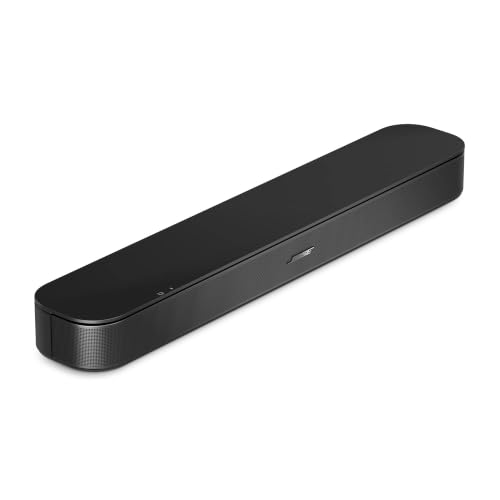

Pros
- Incredibly small size blends into any home decor
- Effortless wireless connection to Bose Soundbar
- Brings immersive surround sound to music, movies, and TV
- Reliable 30-foot wireless range for versatile positioning
- Easy setup with just power adapters and receivers
Cons
- Requires compatible Bose Soundbar for full functionality
- Bass performance enhanced only with optional module
- Needs nearby power outlets for adapters

Pros
- Exceptionally rich low-end and vocal clarity defying its compact one-pound footprint.
- Tough IP67 build floats on water and easily resists dust, sand, and accidental drops.
- PositionIQ automatically recalibrates acoustics based on placement angle.
- Bluetooth 5.3 multipoint effortlessly juggles connections between phone and laptop.
Cons
- Single-speaker setup operates in mono unless paired with a secondary Bose unit.
- Battery life maxes out at 12 hours, trailing some larger outdoor portable alternatives.
- No 3.5mm auxiliary port for legacy wired listening.
The Bose SoundLink Flex Bluetooth Speaker (2nd Gen) establishes a high benchmark for what listeners should expect from a compact travel speaker. Clad in a sleek, limited-edition Rosewood Mauve finish, this iteration refines an already beloved outdoor companion. Bose integrates upgraded Bluetooth 5.3 wireless tech alongside its proven acoustic engineering, making it a compelling choice for everyday carry.
Aimed at active listeners, travelers, and outdoor enthusiasts, the SoundLink Flex fits neatly into backpacks or beach totes without weighing you down. Whether you need an acoustic boost while working in a home office, relaxing beside the pool, or cooking dinner, the speaker adapts smoothly to any environment. Its integrated utility loop lets you clip it to a carabiner or hook, keeping the music accessible wherever your day takes you.
In real-world testing, the SoundLink Flex 2nd Gen excels across challenging conditions. Its IP67 rating ensures complete resistance against dust, debris, and prolonged water exposure, and it even floats back to the surface if accidentally dropped into a lake or pool. The silicone exterior absorbs bumps and drops with ease, shielding the delicate internal drivers from shock while preserving the speaker's refined aesthetic.
Ultimately, the SoundLink Flex 2nd Gen delivers on the classic Bose promise of premium, full-bodied sound from an unassuming package. For audio enthusiasts seeking dependable durability without compromising on sonic warmth, clarity, and convenience, this ultra-portable speaker is an effortless recommendation.
Despite its small profile, the SoundLink Flex (2nd Gen) outputs a surprisingly full-range acoustic profile. A bespoke full-range transducer paired with dual passive radiators delivers substantial low-frequency punch. Bass notes land with satisfying weight and presence without muddying the midrange, allowing acoustic guitars, podcasts, and lead vocals to cut through with pristine clarity. Highs remain crisp and detailed, avoiding the shrill, fatiguing edge common in smaller portable speakers.
One of the standout acoustic features is Bose PositionIQ technology. By utilizing an internal orientation sensor, the speaker detects whether it is lying flat on a picnic table, standing upright on a shelf, or hanging from a backpack strap. It then recalibrates the digital signal processing to provide an even, natural EQ curve regardless of orientation, ensuring consistent soundstage dispersion.
Volume capabilities are impressive for a unit weighing just over a pound, maintaining impressive composure with minimal distortion even when pushed into higher registers. For wider soundstages, listeners can use the Bose app to link a second compatible Bose speaker in Stereo Mode for dedicated left and right separation, or Party Mode to broadcast matched sound across larger open-air gatherings.
The hardware architecture of the SoundLink Flex (2nd Gen) emphasizes resilience and tactile quality. Measuring 3.56 by 7.93 by 2.06 inches and weighing just 1.13 pounds, it is engineered for easy one-handed carry. Its chassis pairs a powder-coated steel grille with an impact-resistant, soft-touch silicone casing that resists corrosion, peeling, and UV degradation under harsh sun exposure.
Connectivity receives a meaningful boost via modern Bluetooth 5.3, providing an ultra-stable connection up to 30 feet. The inclusion of multipoint capability enables smooth switching between two audio sources, such as your laptop and smartphone, without manual re-pairing. On-device buttons along the top panel are sealed beneath the silicone skin, offering responsive tactile feedback for volume, power, playback, and pairing.
Power is handled by an internal lithium-ion battery delivering up to 12 hours of continuous playback depending on listening levels. Recharging takes place through a protected, moisture-resistant USB-C input port, allowing quick top-offs using standard portable battery banks, car chargers, or wall adapters.
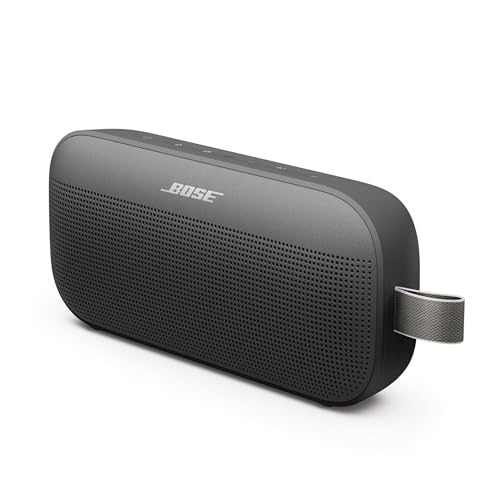
Pros
- Exceptional clarity and balanced highs with deep bass for a portable speaker
- Rugged IP67 build withstands water, dust, drops, and shocks effortlessly
- Long 12-hour battery and quick USB-C charging for all-day use
- Advanced Bluetooth 5.3 ensures stable connections and multipoint convenience
- PositionIQ delivers optimal sound whether standing, laying, or hanging
Cons
- Lacks wired aux input, relying solely on Bluetooth connectivity
- No companion app for EQ customization or advanced sound tweaks
- Battery life shortens at maximum volume with heavy bass usage
The Bose SoundLink Flex (2nd Gen) is a compact powerhouse designed for adventurers who refuse to compromise on sound quality. This portable Bluetooth speaker fits in your hand or clips to your bag, making it the ultimate companion for beach outings, hikes, camping trips, or poolside lounging. Its hi-fi audio shines in real-world scenarios, delivering bold tunes that cut through ambient noise without distortion.
For outdoor enthusiasts and casual listeners alike, it excels where larger speakers falter. Pair two units for stereo separation or party mode to amplify the fun, and PositionIQ ensures pristine sound regardless of how you position it, even in the shower. Bluetooth 5.3 provides rock-solid connectivity up to 30 feet, supporting multipoint for effortless switching between phone and tablet.
In performance tests, the Flex impresses with its balanced profile, revealing nuances in podcasts, playlists, and calls alike. While not a home audio substitute, it outperforms competitors in portability and durability. Verdict: A top pick for active Americans craving premium portable sound.
Bose tunes the SoundLink Flex for a clear, balanced signature with high-fidelity detail across the spectrum. Deep bass extends impressively for its size, providing punchy lows that thump on tracks like hip-hop or EDM without muddiness. Midrange clarity brings vocals and instruments to life, while crisp treble avoids harshness even at high volumes.
PositionIQ technology detects orientation and recalibrates the soundstage for consistent width and imaging, whether upright on a table or hanging from a shower caddy. Volume levels reach loud without breakup, filling medium spaces like patios or tents. Stereo mode with a second unit creates a wide, immersive stage perfect for gatherings.
Advanced Bluetooth 5.3 minimizes dropouts, and multipoint handles calls seamlessly mid-playback, making it versatile for music and hands-free use.
Rugged silicone exterior wraps the Bose SoundLink Flex in IP67-rated protection against water, dust, drops, shocks, and corrosion, ideal for harsh outdoor conditions. Its palm-sized form includes a utility loop for secure attachment to backpacks or belts, with dimensions small enough for pocket carry.
Connectivity centers on Bluetooth 5.3 for wireless pairing up to 30 feet, with multipoint for two devices. USB-C handles charging and playback, but no aux or other wired options are available. No power outlet needed; the built-in battery delivers up to 12 hours per charge, recharging quickly.
Hardware emphasizes portability over complexity, with no visible drivers or ports beyond essentials. This durable build prioritizes on-the-go reliability for US travelers and outdoor lovers.


Pros
- Expansive soundstage eliminates the narrow sweet spot found in traditional directional bookshelf speakers
- Clean, articulate midrange reproduction renders vocals and acoustic instruments naturally
- Compact horizontal footprint integrates neatly into standard entertainment centers
- Well-engineered bass reflex port keeps low frequencies punchy without audible port chuffing
Cons
- Passive design requires an external stereo receiver or amplifier to power the pair
- Low-end extension rolls off near 50 Hz, meaning deep cinematic bass requires a dedicated subwoofer
- Horizontal cabinet layout limits vertical mounting options on standard narrow speaker stands
The Bose 201 Series V Direct/Reflecting stereo loudspeakers represent a classic, time-tested approach to room-filling audio. Engineered for music lovers and home theater builders who want expansive dispersion without complex multi-speaker setups, these passive bookshelf speakers blend seamlessly into conventional living spaces. Unlike standard forward-firing speakers, the 201-V uses angled acoustic drivers that reflect sound off adjacent walls, turning ordinary rooms into rich listening environments.
In everyday listening, the standout characteristic is the lack of an unforgiving sweet spot. Whether seated directly between the speakers, moving around the living area, or relaxing off to the side, listeners experience a coherent and lively stereo image. Vocal reproduction is smooth and forward, making acoustic tracks, podcasts, and spoken dialogue in television programming sound clear and natural. Bass output is punchy and tight for its compact footprint, though listeners who crave earth-shaking sub-bass will appreciate adding a companion powered subwoofer.
Ultimately, the Bose 201-V speakers deliver dependable performance for dedicated stereo listening and surround sound builds alike. Pair them with a reliable 10 to 120-watt stereo receiver or integrate them as surround channels in a multi-channel configuration. For anyone seeking proven Bose engineering with natural, fatigue-free audio in a clean form factor, the 201-V continues to offer great utility for home audio enthusiasts.
Acoustically, the Bose 201 Series V stands out due to its proprietary Stereo Everywhere speaker technology. Instead of beaming high frequencies directly forward in a narrow acoustic cone, the 2-inch Stereo Targeting tweeter angles outward, dispersing clean highs across the entire room. High frequencies remain crisp and detailed without ever turning harsh or sibilant, making marathon listening sessions effortless and non-fatiguing.
Low frequencies are handled by a long-excursion 6.5-inch woofer paired with unique port geometry. The flared bass-reflex port minimizes air turbulence, allowing clean bass notes to resonate without cabinet vibration or audible air chuffing. While these compact enclosures cannot reproduce sub-bass frequencies below 50 Hz, the upper-bass punch and lush midrange provide a warm, satisfying foundation for rock, jazz, classical arrangements, and cinematic scores.
Constructed from dense composite materials with a durable black finish, each Bose 201-V cabinet measures 8.62 inches high, 13.75 inches wide, and 8 inches deep. Its horizontal form factor was deliberately engineered to sit flat on standard media consoles, low-profile credenzas, or deep bookshelf units. The curved cloth grille protects the front-facing woofer while shielding the angled outward tweeter assembly from dust and accidental impacts.
As passive loudspeakers, the 201-V pair requires an external amplifier or AV receiver rated between 10 and 120 watts per channel at 4 to 8 ohms. The rear panel features spring-clip speaker wire terminals compatible with standard bare wire connections. For optimal performance, placement should allow a few inches of clearance from side and rear walls to let the reflected soundstage bloom naturally.

Pros
- Remarkably wide soundstage with balanced, room-filling acoustic dispersion
- Dual compatibility with both Apple AirPlay and Google Cast for frictionless streaming
- Includes a physical AUX input for connecting turntables and legacy audio gear
- Effortless multiroom linking and stereo pairing through the companion app
Cons
- Requires constant AC wall power with no internal battery for portable use
- Lacks an RJ-45 Ethernet port for hardwired local network connections
- Reaching the ideal acoustic balance requires initial configuration within the mobile app
The Bose Lifestyle Ultra represents a modern evolution in premium wireless home audio, combining high-resolution digital playback with intuitive daily operation. Designed to anchor living rooms, home offices, and open kitchen layouts, this speaker delivers substantial acoustic power from an understated enclosure. It bridges the divide between convenience-focused smart tech and serious home listening, giving music enthusiasts an all-in-one solution that integrates seamlessly into any living space.
Day-to-day usability is where this speaker truly shines. Equipped with Alexa+ voice intelligence and responsive top-plate touch controls, managing playlists, adjusting volume, or commanding smart home devices feels natural and responsive. Listeners who prefer fine-tuning their audio will appreciate the companion Bose app, which makes it simple to switch between rooms, organize multiroom groups, and adjust frequency curves to suit specific musical styles.
In real-world environments, the speaker demonstrates remarkable flexibility. You can deploy a single unit on a credenza for effortless background ambiance or critical foreground listening, pair two together for true wide-channel stereo, or sync several throughout the home for unified party audio. The inclusion of an analog 3.5mm auxiliary input provides a critical edge over purely wireless competitors, allowing vinyl enthusiasts to hook up a preamplified turntable without extra hardware.
Ultimately, the Bose Lifestyle Ultra succeeds by offering a refined balance of acoustic weight, sleek visual aesthetics, and cross-platform versatility. For shoppers seeking a durable, feature-packed tabletop speaker that sounds far larger than its footprint suggests, it stands out as an outstanding home audio centerpiece.
Acoustic performance on the Bose Lifestyle Ultra is anchored by proprietary CleanBass technology. Rather than relying on exaggerated lower-frequency boosts that create boomy, muddy playback, the internal acoustic architecture keeps basslines tight, punchy, and fast. Low frequencies remain articulate across a broad range of genres, providing satisfying sub-bass rumble in modern electronic tracks while preserving the woody resonance of upright acoustic bass.
Midrange and treble frequencies receive equal care, driven by precision-angled transducers and TrueSpatial Audio processing. Vocals sit front and center with natural presence, avoiding the hollow or boxy artifacts commonly found in single-enclosure smart speakers. High frequencies are crisp and airy without introducing harsh sibilance at upper volumes, allowing cymbals and string overtones to decay smoothly across the listening space.
The speaker excels at high volume levels, maintaining composure without aggressive compression or harmonic distortion. When room dynamics pose acoustic challenges, the adjustable EQ within the Bose app allows users to easily raise or lower bass, mid, and treble levels to compensate for corner placements, deep bookshelves, or open living areas.
Constructed with premium materials, the Lifestyle Ultra features an elegant black finish that complements contemporary home decor. Measuring 6.594 inches long, 4.767 inches wide, and 7.27 inches tall, and weighing in at 3.66 pounds, the cabinet has enough physical heft to resist unwanted enclosure resonance while remaining compact enough to fit neatly onto shelves, end tables, or kitchen islands.
Hardware connectivity options are notably generous for a modern smart speaker. In addition to robust dual-band Wi-Fi and Bluetooth wireless radios, the rear chassis includes an auxiliary 3.5mm stereo input jack for direct analog connections. This makes it simple to run audio cables from portable music players, laptops, or vinyl turntables without latency or compression.
The unit runs on steady AC mains power, ensuring continuous, dynamic performance without the output throttling common in battery-operated speakers. Top-mounted capacitive touch panels provide tactile, immediate control over playback, volume, and voice assistants, making physical operation smooth and intuitive even without your smartphone nearby.
Evaluating Sound Quality, Architecture, and Usability of Bose 201 Speakers
The short answer to whether these bookshelf units remain worthwhile is a qualified yes, provided your room layout and listening preferences align with their distinctive acoustic profile. The Bose 201-V stereo loudspeakers were engineered to solve a common living room issue: the restrictive sweet spot of standard stereo monitors. By distributing acoustic energy across a wider listening area, they create a forgiving soundstage where music remains enjoyable from nearly any chair. Listeners who understand their passive requirements and specific acoustic tuning usually find them dependable, engaging, and remarkably easy to live with over long sessions.
The Core Acoustic Design: Stereo Everywhere and Direct/Reflecting Drivers
The engineering philosophy behind the 201 series focuses heavily on how sound interacts with physical room boundaries. Bose equips each 201 cabinet with a long-excursion 6.5-inch woofer and an angled 2-inch Stereo Targeting tweeter. Instead of firing all frequencies directly at the listener, the proprietary driver orientation blends direct acoustic energy with reflected waves bounced off nearby walls. This proprietary Stereo Everywhere technology creates an expansive soundstage that feels much larger than the physical dimensions of the cabinet.
This wide dispersion pattern differentiates the 201 from conventional studio monitors that demand precise triangular positioning. Traditional bookshelf speakers often create a narrow sweet spot where stereo imaging collapses if you move a few feet off-center. In contrast, the angled tweeter in the 201 casts highs diagonally across the room, maintaining balanced vocal presence regardless of where you stand. The unique port geometry on the front baffle also smooths airflow, allowing the compact enclosure to produce clean lower midrange and upper bass notes without excessive cabinet vibration.
Sound Profile Evaluation: Midrange Warmth, Treble Dispersion, and Bass Limits
When evaluating sonic performance, the midrange represents the strongest attribute of the 201-V cabinet. Vocals, acoustic guitars, and piano passages emerge with a warm, natural tonality that avoids the harshness common in overly bright modern budget speakers. Spoken dialogue in television broadcasts and podcasts remains articulate and intelligible, making these units versatile for mixed media setups. The paper cone woofer delivers smooth response across the vocal band, which keeps lead instruments prominent and easy on the ears.
Treble response leans toward smooth dispersion rather than surgical detail or airy sparkle. The 2-inch Stereo Targeting tweeter emphasizes broad distribution, ensuring percussion and brass do not become piercing at higher volumes. While you might not hear the micro-reverb trails found in high-end dome tweeters, you gain a forgiving presentation that flatters compressed audio streams and older vinyl recordings. It is an approachable sound signature designed for long-term enjoyment without listening fatigue.
Bass response is clean, punchy, and well-behaved in the upper and mid-bass regions, though physical laws limit extreme low-end extension. The 6.5-inch woofer provides satisfying rhythm for rock, jazz, and pop, but it will not reproduce the deep sub-bass frequencies demanded by modern electronic music or cinematic explosions. Listeners seeking room-shaking cinematic rumbles will benefit from pairing the speakers with a dedicated powered subwoofer. For everyday music listening, the bass tuning remains pleasing, articulate, and free from boomy enclosure resonances.
Amplifier Matching and Power Requirements for Passive Cabinets
Because the 201-V is a passive loudspeaker system, it requires an external stereo receiver, integrated amplifier, or home theater processor to produce sound. Bose designed these speakers with standard nominal impedance ratings, allowing them to pair smoothly with most commercial receivers rated from 10 to 120 watts per channel. Using an amplifier with adequate headroom ensures the 6.5-inch woofer moves cleanly without distortion during dynamic musical peaks. Connecting them to underpowered amplifiers driven near their limit can cause clipping, which risks damaging the delicate tweeters.
Speaker wire selection and terminal connections play a critical role in maintaining signal integrity over long runs. The spring clip terminals on the rear panel accept bare wire up to standard household gauges, which simplifies the physical installation process. For runs under thirty feet, standard 16-gauge copper speaker wire delivers plenty of conductivity without signal degradation. If you route cables across larger living rooms or through baseboards, stepping up to 14-gauge wire helps prevent subtle insertion losses over extended distances.
Modern users should also note that these speakers lack built-in Bluetooth, Wi-Fi, optical ports, or internal volume controls. If your source device is a smartphone, modern television, or streaming box, your central amplifier or AV receiver must supply those digital connections. Integrating a modern stereo receiver with HDMI-ARC or optical inputs allows the classic 201s to anchor a contemporary home entertainment hub. Investing in a solid, clean receiver ensures the speakers deliver their full dynamic capability across all your favorite media formats.
Room Placement Strategies and Horizontal Orientation
Physical placement directly impacts the tonal balance and spatial imaging produced by the 201-V loudspeakers. Unlike standard upright bookshelf models, these speakers are specifically engineered to sit horizontally on shelves, consoles, or stands. The cabinets are mirror-imaged, labeled left and right, ensuring the angled tweeters fire inward toward each other or outward toward side walls depending on your room width. Placing the speakers on their correct respective sides ensures the reflective soundstage develops properly across the listening area.
Distance from adjacent walls significantly shapes both high-frequency reflection and low-frequency reinforcement. Leaving roughly twelve to eighteen inches of breathing room between the rear of the speaker and the back wall helps the front port breathe while keeping mid-bass clear. Similarly, allowing space along the outer edge lets the angled tweeter reflect sound off the side walls to create the intended spacious effect. Shoving the cabinets tightly into fully enclosed cubbies or deep recesses suffocates the soundstage and muddies the lower midrange.
Home Theater Roles: Front Channels, Surround Duty, and System Synergy
Beyond traditional two-channel stereo duty, the 201-V excels in multi-channel home theater installations. Their horizontal form factor makes them convenient for placement flanking a flat-panel display on low media consoles. When configured as front left and right channels, their broad dispersion creates a seamless soundstage that bridges smoothly across widescreen viewing angles. Viewers sitting far off-center still perceive audio that matches the on-screen action, eliminating the hollow center gap that narrow speakers often suffer from.
These speakers also serve admirably as rear surround channels in a 5.1 or 7.1 surround sound environment. Because ambient cinema effects benefit from diffuse, non-directional audio, the Direct/Reflecting design fills the back of the room with immersive environmental sound. Rain, crowd murmurs, and vehicle pans feel natural and expansive rather than localized to a pinpoint box behind your head. Bose historically recommended pairing them with their VCS-10 center channel or 161 surround satellites for consistent tonal voice matching across all channels.
Comparing the 201-V to the Step-Up 301-V Bookshelf System
Shoppers exploring the classic Bose catalog often compare the 201-V with its larger sibling, the 301-V stereo loudspeaker. The primary difference lies in physical enclosure dimensions, driver size, and high-frequency configuration. While the 201 houses a 6.5-inch woofer and a single 2-inch tweeter, the 301 incorporates an 8-inch woofer alongside two separate high-frequency drivers. One tweeter in the 301 fires forward while the second fires rearward, generating an even more pronounced direct and reflected acoustic field.
The larger woofer in the 301 provides noticeably deeper bass extension and greater overall acoustic output. For expansive open-concept living rooms or listeners who host loud gatherings, the 301 offers greater headroom without straining the amplifier. However, that extra power comes with a significantly larger cabinet footprint that demands substantial shelf depth and sturdier mounting surfaces. The 201 remains far easier to tuck onto standard living room shelves, smaller desks, or secondary bedroom media setups.
Modern Audio Ecosystems: Passive Classics vs Active Smart Speakers
The audio landscape has evolved dramatically toward self-contained wireless systems, creating an interesting contrast with traditional passive models. If you prefer all-in-one simplicity, exploring modern portable speaker alternatives from Bose illustrates how convenient Bluetooth and battery power have become. Contemporary units like the Bose SoundLink Flex offer waterproof durability and automatic acoustic tuning in a handheld format. Similarly, active television solutions like the Bose TV Speaker integrate dedicated dialogue processing, digital HDMI inputs, and internal amplification into a single slim bar.
Passive speakers like the 201 appeal to an entirely different ownership mindset focused on longevity and component flexibility. While smart speakers can suffer from software obsolescence or outdated wireless protocols, passive cabinets can easily last for decades with basic care. You can update your streaming sources, replace your receiver, or add modern network streamers without discarding your speaker cabinets. This modularity gives traditional passive stereo systems a timeless quality that wireless gadgets rarely match.
Choosing between these formats depends primarily on whether you value minimal cabling or physical soundstage separation. A compact Bluetooth speaker or single soundbar cannot physically match the genuine stereo width generated by two widely spaced 201 cabinets. Conversely, if your space lacks room for an external amplifier and routed speaker wires, modern smart hubs provide cleaner cable management. For those interested in compact, accessible wireless listening, exploring various budget-friendly wireless audio options can reveal practical ways to add music to secondary rooms without running complex amplifier setups.
Common Setup Challenges, Troubleshooting, and Maintenance
Getting the best performance out of the 201 series requires addressing a few frequent installation oversights. One common mistake is wiring the speakers out of acoustic phase, which happens when positive and negative terminals are reversed on one channel. When out of phase, the woofers cancel each other out, resulting in a thin, hollow sound that completely lacks bass impact and central vocal focus. Always verify that the red positive terminal on your amplifier connects strictly to the red positive terminal on each speaker cabinet.
Maintaining these passive speakers over years of ownership is straightforward and requires minimal effort. Dusting the grilles with a soft dry brush or vacuum brush attachment keeps airborne particulate from settling into the paper cone surrounds. Avoid using liquid chemical cleaners, aerosol polishes, or heavy solvents on the vinyl veneer and cloth grilles, as moisture can degrade internal adhesives. Inspecting speaker wire ends annually for oxidation or fraying ensures clean electrical contact and prevents intermittent signal dropouts.
Practical Buying Decision: Who Should Choose the Bose 201 Today?
Deciding whether the Bose 201-V is the right choice comes down to your room layout, existing equipment, and listening style. If you already own an audio receiver, enjoy casual music playback across a wide living area, and want warm, fatigue-free audio, these speakers remain an excellent option. Their compact horizontal profile fits easily where taller tower speakers cannot, and their forgiving soundstage accommodates active family spaces where listeners rarely sit in a rigid sweet spot.
On the other hand, listeners who crave laser-sharp imaging, analytical studio detail, or wall-rattling sub-bass will be better served by modern studio monitors paired with a dedicated subwoofer. Furthermore, anyone wanting a plug-and-play solution without external amplifiers or visible speaker wire should lean toward modern smart soundbars or active wireless speakers. When paired with capable amplification and placed with care, the Bose 201 stands as an enduring, capable loudspeaker that delivers spacious, enjoyable audio across a variety of home environments.




Write Your Review
No reviews yet. Be the first to share your experience!