


Walking into a commercial cinema reveals a massive room framed by shadowed acoustic panels and rows of perimeter drivers. Many moviegoers wonder exactly how many speakers are in a movie theater when they experience sound sweeping seamlessly overhead and rumbling through the floor. Commercial cinema audio relies on specialized speaker arrays engineered to deliver balanced frequency response across hundreds of individual seats. While a neighborhood multiplex might hide dozens of drivers behind perforated screens, residential listeners can recreate similar immersion with carefully placed home entertainment speaker systems that match their room dimensions.
Audio reproduction in a large auditorium requires distinct hardware zones for dialogue clarity, surround ambiance, and low-frequency effects. Understanding the mechanical differences between commercial screening rooms and domestic environments prevents common setup mistakes like purchasing mismatched drivers or overloading an amplifier. Whether you want to understand professional multiplex architecture or adapt multi-channel audio for a private media space, examining real cinema driver configurations provides practical clarity. Exploring the exact driver roles reveals why physical speaker numbers differ dramatically across various screening formats.

Pros
- Massive 1000W peak power fills large rooms without distortion
- Multiple connectivity options for all devices
- Built-in FM radio and 5-band EQ for custom sound tuning
- Full remote control for effortless operation
- All necessary cables and mounts for quick installation
Cons
- Requires ample space for full 5.1 speaker array
- Powered system needs constant outlet access
- LED lights may distract in quiet viewing sessions
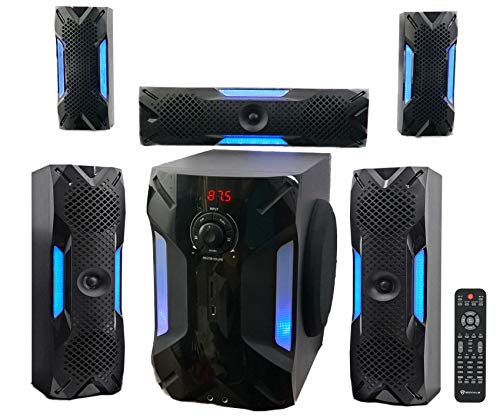
The Rockville HTS56 is a complete 5.1 channel home theater system packing 1000W peak power, featuring five satellite speakers and a robust 8-inch subwoofer. It's designed for Americans craving theater-like audio in their living rooms without breaking the bank, supporting movies, music playback, and lively karaoke sessions.
Ideal for families or casual entertainers, it shines in setups like weekend movie marathons or neighborhood gatherings. Real-world use reveals punchy surround effects that pull you into the action, with Bluetooth making it simple to stream playlists from smartphones or tablets.
Setup is straightforward thanks to included 30-foot cables, mounting kits, and a clear manual, getting you immersive sound fast. While not ultra-premium, its feature-packed design delivers serious value for home entertainment upgrades.
Verdict: A solid pick for immersive home audio on a budget, especially if you love karaoke or bass-heavy content.
Bass performance stands out with the 8-inch subwoofer delivering deep, rumbling lows that enhance explosions in movies and thumps in music tracks. The five satellites provide clear surround imaging, creating a wide soundstage for true 5.1 immersion.
Vocal clarity shines during dialogue-heavy films or karaoke, aided by the 5-band EQ for tweaking mids and highs. At peak volume, the 1000W output fills medium to large rooms effortlessly without muddiness.
Bluetooth connectivity offers stable wireless range up close, with optical and RCA inputs ensuring rock-solid performance from TVs or DVD players. FM radio adds variety for casual listening.
Solid build with durable satellite speakers and a sturdy subwoofer enclosure, complete with mounting brackets for wall or shelf placement. LED lights on speakers and sub add fun visual effects like beat-sync blinking, controllable via remote.
The system prioritizes stationary home use with no battery, allowing continuous playback as long as powered. Weight distribution suits permanent setups, with long signal cables reducing clutter.
Compact satellites blend into decor, while the sub demands floor space for optimal bass. Overall design focuses on reliability for long movie sessions or parties.
Commercial Cinema Sound Configurations and Home Theater Translation
Determining how many speakers are in a movie theater depends on auditorium size, audio formats, and room acoustics. A standard commercial theater typically runs between 16 and 30 physical speaker cabinets, while premium large-format auditoriums often operate between 40 and 64 or more drivers. Understanding how these speakers function together clarifies the difference between traditional channel audio and modern spatial sound formats.
Standard Auditoriums Versus Premium Formats
Traditional cinema rooms built for 5.1 or 7.1 channel soundtracks rely on a predictable layout scaled to room length. In these conventional rooms, three large speaker assemblies sit directly behind the screen, accompanied by two to four subwoofers. Along the side and rear walls, acoustic designers install strings of identical surround speakers, usually numbering between 10 and 16 units. This brings the total speaker count in a classic commercial screening room to roughly 16 to 24 separate cabinets.
Premium large-format auditoriums such as Dolby Cinema and IMAX expand this driver count significantly to produce immersive three-dimensional sound fields. In an Atmos-certified auditorium, sound engineers place distinct speaker enclosures along the ceiling, expand the side wall arrays, and add subwoofers near the rear corners. These advanced spatial installations frequently feature 48 to 64 discrete speakers, with each unit wired back to an independent amplifier channel. The physical layout ensures that sound designers can pan individual audio objects accurately across three dimensions.
Venue operators choose their speaker counts based on room volume, seating geometry, and target sound pressure levels. A smaller boutique cinema with fifty seats may achieve uniform coverage using twelve to sixteen speakers. Conversely, a large theater seating five hundred patrons demands dozens of cabinets to prevent acoustic hot spots and dead zones. Proper spatial balance ensures that patrons sitting near the back wall hear the same tonal balance as viewers in the center sweet spot.
Behind the Perforated Screen: The Front Stage Channels
The front stage is the acoustic anchor of any cinema auditorium, responsible for rendering dialogue, action, and musical themes. Commercial screens feature tiny perforations that permit acoustic energy to pass directly through the fabric without muffling higher frequencies. Behind this material, technicians mount three massive speaker assemblies known as the left, center, and right stage channels. In exceptionally wide auditoriums, operators occasionally install five front screen channels to eliminate gaps in the stereo image across a massive canvas.
Each front screen enclosure is typically a multi-way horn-loaded speaker cabinet capable of wide dynamic range and controlled dispersion. Horn flares direct high and mid frequencies down toward the audience seating plane rather than scattering energy against the ceiling. The center channel speaker handles the vast majority of dialogue, creating the acoustic illusion that voices originate directly from actors mouths. This physical placement makes on-screen conversations feel completely natural regardless of where you sit.
Specialized cinema stage cabinets also handle substantial lower mid-range frequencies before handing off deeper signals to dedicated subwoofers. Because front speakers carry the primary weight of every soundtrack, cinema installers dedicate high-current commercial amplifiers to drive them cleanly without thermal distortion. Ensuring identical tonal matching among left, center, and right drivers prevents jarring shifts when sound effects pan across the visual screen. These front stage assemblies represent the most critical acoustic investment in the entire auditorium build.
Subwoofer Placement and Low-Frequency Management
Low-frequency reproduction in a movie theater demands moving tremendous volumes of air across vast auditorium spaces. Installers place between two and eight industrial subwoofers behind the screen, often arranged in ground stacks to maximize room gain. These cabinets routinely house dual 18-inch drivers capable of extending bass response down to 20Hz or lower. Multiplying the physical cabinet count prevents individual drivers from distorting during high-impact explosions, earthquakes, or thunderous orchestral passages.
Modern spatial audio specifications also call for additional bass reinforcement placed away from the primary front screen area. Some high-end venues install dedicated bass management subwoofers along the rear wall or suspended from structural ceiling trusses. Integrating multiple dedicated bass speakers throughout a room helps smooth out standing waves that create boomy or hollow bass notes. This distributed low-frequency approach ensures consistent bass impact across every row of seating rather than concentrating pressure in select spots.
Low-frequency effects channels receive discrete audio tracks mixed specifically for tactile physical sensations. Commercial subwoofers rely on heavy internal bracing and dense wooden enclosures to handle thousands of continuous watts. In private listening setups, listeners achieve similar low-end impact on a scaled-down level by pairing capable powered subwoofers with multi-channel satellite speakers. Proper bass management remains essential whether balancing an eight-subwoofer cinema array or tuning a single domestic subwoofer.
Surround Arrays Along Side and Rear Walls
The perimeter walls of a commercial movie theater host the surround speakers responsible for ambient room reflections and off-screen environmental sound. In a typical mid-sized auditorium, you will see between four and eight surround speakers mounted along each side wall, with another four to six drivers placed across the back wall. Installers angle these speakers downward toward the ear height of seated viewers to optimize direct sound arrival. High wall placement prevents patrons seated in outer aisles from being overwhelmed by the nearest driver.
Acoustic design in cinema surrounds emphasizes wide horizontal dispersion so adjacent speakers blend together into a continuous audio field. If the drivers had narrow projection angles, listeners would perceive distracting gaps as sound moves from the front screen toward the rear corners. Commercial surround cabinets frequently incorporate dual high-frequency tweeters or wide-dispersion wave guides to create seamless coverage. The resulting audio envelops the viewer in ambient forest sounds, falling rain, or echoing dialogue without pinpointing the exact physical cabinet location.
Budget home theater designs often borrow this multi-speaker surround approach by using compact, high-efficiency satellite enclosures. Compact mountable units like the Theater Solutions TS30B Mountable Indoor Speakers illustrate how passive acoustic enclosures can be positioned on walls using included brackets. The product description highlights a full-range 2.5-inch poly treated cone woofer and durable ABS cabinets rated for 20 to 200 watts per channel, making such speakers easy to mount in secondary listening positions. Positioning compact satellite pairs along side walls helps recreate the ambient sound wrapping found in commercial theaters.
Channel Counts Versus Physical Speaker Quantities
A fundamental source of confusion regarding movie theater sound is the difference between audio channels and physical speaker counts. An audio channel represents a distinct, isolated audio track recorded into the film soundtrack mix. In a traditional 5.1 channel mix, there are only five discrete main audio tracks: left, center, right, left surround, and right surround, plus low-frequency effects. Even though there are only two surround channels in 5.1, a theater might utilize fourteen physical speakers along the walls to playback those two surround tracks.
Cinema engineers split and amplify a single surround channel across multiple physical speakers so sound covers a massive auditorium evenly. If a commercial theater attempted to use only one physical left surround speaker for a large room, listeners seated near that speaker would experience deafening volume while distant viewers heard nothing. Distributing the channel across six or eight identical cabinets provides balanced ambient coverage without localized distortion. In contrast, residential environments with modest square footage generally use one physical speaker per surround channel.
Home listening spaces rarely require duplicated surround speakers because the listening distance to the sofa is typically under fifteen feet. Simple stereo speaker configurations or direct five-channel home layouts easily provide the necessary coverage without needing extensive driver arrays. When consumers see twenty speakers on a theater wall, they are observing an engineering solution for wide audience coverage rather than twenty independent soundtrack stems. Recognizing this distinction helps audio enthusiasts design sensible home setups without overbuilding their physical speaker counts.
Object-Based Audio and Height Speaker Integration
The emergence of object-based audio platforms like Dolby Atmos fundamentally changed how cinema engineers deploy overhead and surround speakers. Instead of locking audio elements into fixed channel tracks, sound designers assign coordinate metadata to individual sounds like helicopters, flying debris, or musical instruments. Modern cinema rendering processors calculate the exact trajectory of that object and route audio dynamically across specific overhead and wall speakers. To execute these pinpoint acoustic trajectories, every speaker cabinet in an immersive cinema is powered by an independent amplifier channel.
Overhead speakers in a commercial Atmos auditorium hang in two parallel rows along the ceiling, extending from the front screen to the back wall. Depending on the length of the hall, installers mount between eight and sixteen ceiling speakers to establish vertical acoustic localization. These ceiling units work in tandem with side and rear wall speakers to move audio convincingly above the heads of patrons. The result is a hemispherical dome of sound that pulls the audience directly into the film environment.
Bringing object-based height audio into domestic listening rooms requires careful planning regarding ceiling construction and speaker dispersion. Home theater enthusiasts either install in-ceiling speakers directly above their seating position or use upward-firing modules that reflect sound off flat drywall ceilings. A typical home Atmos setup uses two or four height channels, denoted as 5.1.2 or 7.1.4 configurations. While residential setups utilize far fewer height drivers than a cinema auditorium, the core acoustic illusion of overhead movement remains remarkably authentic.
Translating Commercial Cinema Audio to Home Systems
Replicating the visceral movie theater experience at home does not require dozens of wall-mounted cabinets or complex commercial wiring schemes. Modern packaged 5.1 channel systems provide an efficient way to achieve genuine multi-directional audio without investing in separate professional racks. Complete packages like the Rockville HTS56 1000W 5.1 Channel Home Theater incorporate five dedicated satellite speakers alongside an 8-inch powered subwoofer. The manufacturer lists multiple input options including Bluetooth, optical, and RCA inputs, allowing direct connection to modern televisions and media players.
Integrated systems simplify setup because the primary amplifier and audio processing circuitry reside inside the powered subwoofer enclosure. With included speaker cables extending up to 30 feet and mounting hardware supplied in the box, users can position the center, front, and rear surround speakers without specialized tools. The system also includes auxiliary entertainment options such as karaoke microphone inputs and customizable LED display lighting modes. For compact living rooms and game rooms, an all-in-one 5.1 package establishes clear dialogue, rear directional cues, and impactful low frequencies.
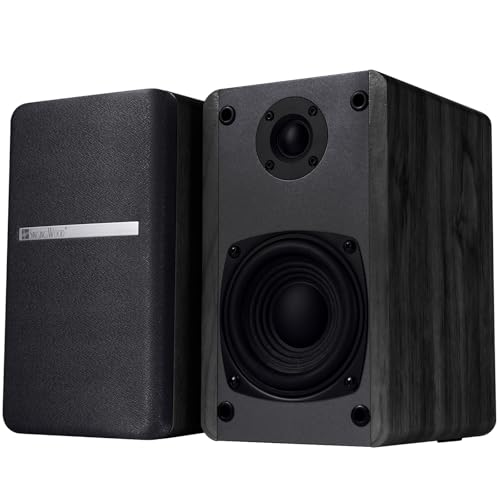
Selecting the right approach between an all-in-one powered package and separate component-based audio depends on room dimensions and upgrade goals. Multi-driver packages deliver immediate multi-channel surround without requiring an external audio receiver. On the other hand, separate passive bookshelf pairs connected to an independent multi-channel receiver offer greater flexibility for future expansion and custom equalization. Both approaches prove that delivering balanced cinematic sound in a home relies on smart acoustic geometry rather than overwhelming physical speaker counts.
Acoustic Calibration and Room Treatment Realities
Commercial cinema sound quality relies just as heavily on acoustic architectural treatment as it does on the raw number of physical speakers. The perimeter walls and ceiling structures of commercial theaters are lined with thick fiberglass insulation, acoustic baffles, and porous drapery. These materials absorb unwanted mid-range and high-frequency reflections that would otherwise bounce off concrete walls and smear dialogue intelligibility. Without rigorous acoustic damping, even sixty high-end cinema speakers would sound harsh, muddy, and chaotic inside an echoing hall.
Professional acoustic technicians use real-time spectrum analyzers and calibrated microphones to tune each speaker channel with precision parametric equalization. They align the arrival time of audio signals using digital delay lines so sound from distant front speakers reaches the audience simultaneously with local surround cues. In domestic listening environments, modern AV receivers offer automated microphone calibration routines like Audyssey or YPAO to resolve similar room boundary issues. Running these calibration routines optimizes phase relationships and compensates for irregular furniture placement or reflective glass windows.
Adding simple acoustic treatments like thick area rugs, heavy curtains, and fabric-covered furniture dramatically enhances any home surround sound performance. Placing absorbing panels at primary wall reflection points tightens dialogue clarity and broadens the perceived soundstage of compact bookshelf speakers. Ultimately, achieving reference theater sound comes down to balancing driver placement, amplification power, and acoustic reflections. By understanding how commercial cinemas deploy their drivers, you can craft a focused home listening environment that delivers thrilling cinematic impact.




Write Your Review
No reviews yet. Be the first to share your experience!