


Factory vehicle audio systems frequently leave listeners wanting clearer highs and firmer bass notes. Evaluating whether are nvx speakers good depends on your listening goals, amplification plans, and specific vehicle enclosure constraints. Many drivers search for aftermarket upgrades because stock paper cones deteriorate quickly under thermal stress and environmental humidity. Exploring compact vehicle speakers shows how aftermarket drivers incorporate durable materials like polypropylene and treated rubber to handle daily driving demands.
NVX has developed a reputation for delivering solid car and powersports audio components that bridge the gap between entry-level replacements and costly competition gear. Understanding how these speakers perform requires examining voice coil heat dissipation, cone stiffness, and tweeter composition. A proper audio upgrade involves matching speaker impedance and power ratings to your source unit or amplifier to prevent distortion. Examining the brand’s driver designs reveals whether their component choices align with your acoustic expectations and physical installation requirements.
Pros
- Smooth, non-fatiguing treble reproduction from genuine silk dome tweeters.
- Substantial improvement in clarity and mid-bass impact over stock factory speakers.
- Durable, heat-resistant voice coil and moisture-tolerant cone construction.
- Simple installation thanks to integrated crossovers that fit standard factory wiring.
Cons
- Needs an external aftermarket amplifier to unlock full dynamic punch and headroom.
- Does not replace a dedicated subwoofer for deep low-end sub-bass under 50Hz.
- May require mounting depth spacers in vehicles with tight clearance behind the door skin.
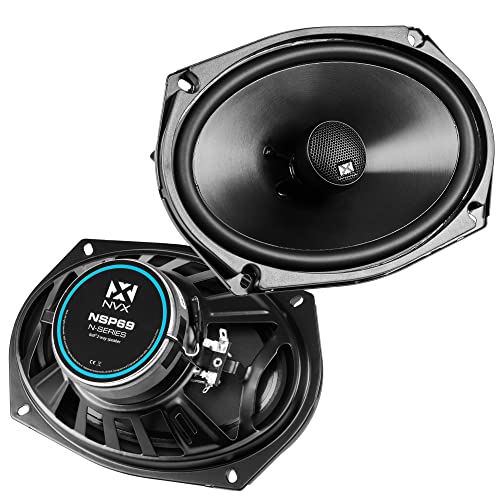
The NVX NSP69 6x9-inch 2-way coaxial speaker set is designed for drivers who want to eliminate the muddy, muffled sound of factory automotive paper cones without requiring complicated custom installations. Sized to match one of the most common OEM cutouts in American trucks, sedans, and SUVs, this pair delivers an immediate jump in fidelity, vocal transparency, and acoustic authority.
In real-world cabin listening, the NSP69 stands out by maintaining a balanced, natural presentation across all musical genres. While many entry-level aftermarket speakers use aggressive metal or PEI tweeters that sound shrill at high speeds, NVX implements a refined 20mm silk dome tweeter. This translates to sweet, extended highs that reveal subtle acoustic details without causing ear fatigue on long road trips.
The low and midrange registers are handled by a resilient polypropylene cone supported by an authentic Nitrile Butadiene Rubber surround. Vocals sit front and center on your dashboard soundstage, while bass drums and electric bass lines carry defined texture. While they operate cleanly on stock factory radio power, their robust KSV voice coil allows them to handle clean aftermarket amplifier power with ease, offering elevated volume levels without breakup.
For daily commuters and car audio enthusiasts seeking maximum return on investment, the NVX NSP69 provides exceptional acoustic craftsmanship. With built-in crossover engineering that avoids bulky external modules, upgrading your daily driver into a rich listening space is fast and straightforward.
Acoustically, the NVX NSP69 punches far above its weight class, largely due to the pairing of an articulate 20mm silk dome tweeter with a fast polypropylene woofer. High frequencies from strings, brass, and cymbals sound air-filled and open rather than sharp or brittle. This warm tonal balance is especially beneficial in harsh vehicle acoustics where glass and hard plastics tend to exaggerate treble reflections.
The mid-bass and midrange frequencies exhibit precise control. The lightweight polypropylene cone responds quickly to transient attacks, ensuring rhythm sections sound tight rather than boomy. The NBR rubber surround permits generous linear cone travel, keeping distortion to a bare minimum even when listening at spirited highway volumes.
While these speakers generate satisfying, punchy mid-bass that anchors rock, pop, and hip-hop tracks, they are tuned for musical clarity rather than sub-frequency earthquakes. For true sub-50Hz rumble, pairing these 6x9 drivers with a powered subwoofer creates an expansive, concert-like soundstage across the entire vehicle cabin.
The NVX NSP69 is built to withstand the punishing physical environment of a car interior, from baking summer heat to humid winter mornings. Its high-temperature KSV voice coil dissipates heat efficiently, preventing thermal compression and preserving dynamic performance during long, loud playback sessions. The moisture-resistant polypropylene cone ensures the driver will not sag or degrade when exposed to door cavity humidity.
Hardware integration is remarkably user-friendly. NVX built the crossover network directly into the speaker architecture, eliminating the need to mount, wire, and conceal separate external crossover boxes inside your vehicle door panels. The standard 6x9 footprint drops cleanly into factory mounts across domestic trucks, sedans, and commercial vans.
With dependable power handling, the NSP69 is flexible enough to pair directly with an OEM head unit or take advantage of a high-output multi-channel car amplifier. Sturdy speaker terminals and robust stamped steel basket framing make this coaxial set a durable, long-lasting foundation for any vehicle audio overhaul.

Pros
- Exceptional clarity and power at high speeds
- Perfect plug-and-play for Harley fairings
- Rugged waterproof construction for tough rides
- High-sensitivity design punches through wind noise
- Premium titanium tweeters enhance audio detail
Cons
- Designed specifically for Harley Touring 2014+ models
- Requires 2-ohm compatible system for peak performance
- Larger 6.5-inch size may limit some custom setups
The NVX XFHD6F speakers are premium 6.5-inch coaxial upgrades tailored for Harley-Davidson Touring motorcycles from 2014 onward, fitting perfectly into front fairing locations. These speakers bring high-end audio to riders who crave powerful sound without the hassle of complex installs.
Engineered for the demands of motorcycle travel, they boast 600W peak power and 300W RMS per pair, ensuring your music stays loud and clear even at 70+ mph. American Harley enthusiasts will love how they transform long hauls into concert-like experiences, with durable materials standing up to vibration, weather, and daily abuse.
In real-world testing on the open road, the XFHD6F deliver balanced sound with punchy mids and sparkling highs, outperforming stock speakers by miles. While best paired with a capable amp, their CEA-2031 compliance guarantees reliable performance. Verdict: A top pick for serious Touring riders seeking no-compromise audio.
With 92dB sensitivity and 2-ohm impedance, these speakers push impressive volume levels that cut through highway wind noise, maintaining distortion-free playback at max output. The 1-inch titanium dome tweeters shine on vocals, guitars, and cymbals, providing sharp clarity for rock, country, or podcasts during rides.
Bass response from the polypropylene cones offers solid low-end punch for a coaxial design, though it thrives most with added amplification. No Bluetooth here; it's wired for stable, direct connection to your bike's system, ensuring uninterrupted performance mile after mile on cross-country trips.
Overall, expect room-filling sound tailored for open-air riding, with excellent thermal management keeping them cool under prolonged high-volume use.
Built tough for American roads, the XFHD6F feature injection-molded polypropylene cones, UV-resistant surrounds, and waterproof voice coil seals, making them fully weatherproof against rain, dust, and splashes. Ferrite magnets and vented cooling handle heat from extended rides without fade.
At 6.5 inches, they're a direct fit for Harley fairings, with plug-and-play wiring that skips custom fabrication. No battery needed; they draw continuous power from your motorcycle's electrical system for all-day endurance on multi-state tours.
Lightweight yet rugged, these speakers add zero bulk while boosting durability over factory options, perfect for riders hitting Sturgis or coastal highways year-round.
Evaluating NVX Audio Performance, Build Quality, and Engineering
Determining whether are nvx speakers good comes down to balancing realistic sound expectations with engineering specifications and overall component cost. For most car and motorcycle owners seeking a noticeable improvement over dull factory sound, NVX provides a well-engineered upgrade that emphasizes durable hardware. The brand avoids flashy marketing gimmicks in favor of reliable internal components like silk dome tweeters, high-temperature voice coils, and resilient polypropylene cones. While high-end audiophiles might prefer hand-crafted boutique drivers, NVX consistently satisfies listeners who want crisp detail, reliable power handling, and straightforward vehicle integration.
The core strength of the brand lies in its practical component selection across diverse vehicle platforms. Drivers replacing worn door speakers or upgrading motorcycle fairing audio benefit from targeted designs rather than one-size-fits-all hardware. NVX engineers drivers to handle harsh mobile environments, including high engine heat, vibration, and moisture. Examining the specific construction details helps explain why many aftermarket enthusiasts consider the lineup a dependable choice.
Acoustic Architecture and Driver Materials
Cone construction plays a fundamental role in how any speaker translates electrical current into audible sound waves. NVX utilizes injection-molded polypropylene cones across both standard vehicle and powersports lines. Polypropylene maintains high rigidity without adding excessive mass, allowing the cone to move quickly and accurately across midrange frequencies. This balance between stiffness and low weight reduces cone flex, which is a primary source of acoustic distortion when playing music at higher volume levels.
Surrounding the cone is a crucial suspension component that dictates how smoothly the driver travels back and forth. NVX frequently selects Nitrile Butadiene Rubber (NBR) for its car speakers and UV-resistant rubber compounds for motorcycle applications. Rubber surrounds offer superior damping compared to cheaper treated paper or foam surrounds, which degrade rapidly under intense sun exposure. The resilient rubber structure keeps the cone centered during heavy excursion, helping the speaker maintain linear response during bass-heavy musical passages.
Tweeter materials dictate how high-frequency audio reaches your ears. In car coaxial models like the NSP69, NVX implements silk dome tweeters that provide smooth, natural highs without the harsh sizzle common to cheap plastic drivers. For motorcycle applications like the XFHD6F, the brand shifts toward titanium dome tweeters that cut through severe wind and exhaust noise. Selecting the appropriate high-frequency material ensures that cymbals, vocals, and acoustic instruments sound clear rather than fatigue-inducing over long listening sessions.
Thermal Management and Voice Coil Design
Voice coils endure immense electrical strain as audio signals push continuous alternating current through fine wire windings. NVX utilizes high-temperature Kapton or KSV voice coil formers designed to dissipate heat rapidly away from the motor assembly. Excessive heat buildup in a speaker motor can cause adhesive breakdown, wire expansion, and eventual driver seizure. By employing heat-resistant materials, these voice coils maintain electrical integrity even during extended driving sessions with elevated volume settings.
Motor cooling is enhanced through deliberate mechanical venting in the magnet structure. Vented magnet gaps allow air to circulate around the voice coil as the driver moves inward and outward. This passive airflow helps carry thermal energy away from the ferrite magnet and core structure. Effective heat management directly translates into sustained power handling, preventing the thermal compression that often causes audio to sound muffled after minutes of spirited playback.
Understanding Impedance Matching: 4-Ohm vs 2-Ohm Applications
Electrical impedance represents the nominal resistance a speaker presents to an incoming audio amplifier signal. Standard aftermarket car audio installations traditionally operate on a 4-ohm standard to balance current flow and amplifier stability. Coaxial options like the NSP69 utilize 4-ohm voice coils, making them directly compatible with factory head units and aftermarket stereos alike. Installing a 4-ohm driver in a standard vehicle environment ensures safe operating temperatures for head unit integrated amplifiers.
Powersports and specialized vehicle audio often require different electrical characteristics to maximize output from compact amplifiers. Models such as the XFHD6F motorcycle speakers feature a 2-ohm nominal impedance specifically tailored for Harley-Davidson Touring models from 2014 and newer. A 2-ohm driver draws more current from a compatible source unit, yielding higher volume output without requiring a bulky secondary amplifier. However, connecting a 2-ohm speaker to an amplifier rated strictly for 4 ohms can trigger thermal protection shutdowns, highlighting the absolute necessity of verifying system impedance ratings before purchase.
Power Handling Realities: RMS Ratings vs Peak Marketing Claims
Audio shoppers frequently encounter staggering peak power numbers printed across product packaging. Peak power measurements represent the absolute maximum burst of wattage a voice coil can survive for a fraction of a second without instant physical destruction. RMS power, conversely, reflects the continuous wattage a speaker can comfortably process during normal musical playback. Evaluating NVX drivers requires focusing on continuous RMS numbers, such as 55 watts RMS per driver on the NSP69 or 150 watts RMS per driver on the XFHD6F.
Underpowering a speaker with a weak factory radio is just as risky as feeding it excessive amplifier power. When an underpowered source unit is pushed past its clean operating threshold, it outputs a clipped, distorted electrical wave. Clipped signals generate direct-current components and intense thermal energy that burn voice coils rapidly. Matching your speaker selection to an amplifier capable of delivering clean, unclipped RMS power within the manufacturer’s suggested window ensures longevity and dynamic sound.
Compliance with CEA-2031 measurement standards gives buyers confidence that power ratings adhere to objective industry testing criteria. NVX designs its premium mobile drivers to satisfy these standardized testing protocols. Standardized ratings prevent exaggerated marketing figures from misleading consumers about actual acoustic output. Trustworthy continuous wattage specifications allow vehicle owners to pair source units and external amplifiers with accurate gain staging.
Weather Resistance and Powersports Reliability
Motorcycle and open-air vehicle environments present extreme challenges that indoor or enclosed car speakers never encounter. In addition to vehicle road vibrations, speakers mounted on handlebars or fairings face torrential rain, high humidity, and direct solar ultraviolet radiation. NVX addresses these environmental hurdles in models like the XFHD6F through waterproof voice coil seals and injection-molded cones. UV inhibitors blended into the rubber surround prevent cracking and brittleness caused by long afternoons parked under the sun.
Powersports audio requires specialized construction that protects sensitive electrical contacts from corrosion. Integrating moisture-resistant terminals and sealed motor baskets prevents road grime from fouling the narrow voice coil gap. Riders looking for all-weather listening often compare these models against dedicated waterproof audio gear designed for harsh marine environments. While car door speakers belong inside protective vehicle shells, true powersports drivers deliver reliable music delivery through downpours and highway speeds.
Installation Nuances and Physical Enclosure Fitment
Achieving satisfying vehicle sound depends heavily on physical mounting and spatial clearance behind the speaker basket. The NVX NSP69 features standard 6×9-inch dimensions, making it a drop-in replacement for rear decks and front door cutouts across numerous trucks and sedans. However, car owners must always measure mounting depth and magnet diameter before purchasing. Interference with interior window tracks, door lock rods, or sheet metal frames can turn an afternoon project into a frustrating fabrication job.
Motorcycle installations carry even tighter dimensional tolerances inside fairing cavities. The XFHD6F is engineered specifically as a plug-and-play upgrade for Harley-Davidson Touring front fairings, matching OEM bolt patterns and harness connections. Utilizing existing factory mounting locations avoids the need for permanent drilling or custom fiberglass fabrication. Installers should still inspect wire routing carefully to ensure that throttle cables and steering neck movements never pinch delicate speaker leads.
Integrated crossovers simplify the installation process by eliminating the need to mount external filter boxes inside crowded vehicle panels. Coaxial designs house crossover capacitors directly on the speaker basket or tweeter post, dividing low and high frequencies seamlessly. This built-in approach protects tweeters from damaging low-frequency bass notes while keeping the wiring clean and uncluttered. For users undertaking DIY vehicle audio projects, integrated components significantly reduce installation complexity and potential failure points.
Diagnosing Common Vehicle Audio Issues and Distortion
When an aftermarket speaker sounds muffled or weak immediately after installation, incorrect electrical polarity is often the culprit. If positive and negative speaker leads are reversed on one side of a vehicle, the two drivers operate out of acoustic phase. Out-of-phase speakers produce sound waves that cancel each other out, resulting in hollow midrange audio and an almost total loss of bass. Reversing the wiring terminals on one speaker instantly restores low-end punch and proper stereo imaging.
Mechanical rattling is another frequent complaint that drivers mistakenly blame on defective speaker drivers. Upgrading to high-output aftermarket speakers introduces significantly more acoustic energy into door cavities and plastic dashboard assemblies. Loose wiring harnesses, interior door clips, and uninsulated sheet metal can vibrate violently against the speaker frame. Applying closed-cell foam gaskets around the mounting ring and using acoustic damping mats behind the driver stops parasitic resonances before they degrade sound quality.
Audible buzzing or engine whine that changes pitch with vehicle acceleration points toward electrical ground interference rather than speaker damage. Car audio systems share ground paths with alternators, ignition coils, and fuel pumps. Routing audio signal cables adjacent to heavy vehicle power wires induces electrical noise directly into the sound path. Separating signal wires from high-current power cables and securing clean, unpainted chassis ground connections eliminates unwanted background noise.
Comparing NVX Speakers to Typical Factory Sound Systems
Most original equipment manufacturer (OEM) audio systems prioritize cheap production costs over acoustic fidelity. Factory speakers routinely feature stamped steel frames, tiny ceramic magnets, and unvarnished paper cones that absorb ambient cabin moisture. Over several years, factory paper cones soften and warp, leading to muddy vocal reproduction and premature distortion. Upgrading to synthetic materials like polypropylene provides crisp frequency delineation that remains stable regardless of seasonal temperature swings.
High-frequency separation represents another major leap when moving away from standard factory drivers. Basic car audio systems often rely on single-cone drivers with tiny whizzer cones attempting to play both bass and treble simultaneously. Coaxial aftermarket units divide sound duties between a dedicated woofer cone and a separate high-frequency tweeter. This dual-driver arrangement delivers articulate guitar solos and intelligible spoken dialogue that never gets buried under booming kick drums.
Practical Verification Steps After Installation
Completing a successful speaker upgrade requires careful system calibration before you reinstall vehicle door panels or fairing covers. Begin by setting head unit tone controls and equalizers to a flat baseline setting. Play a familiar, high-quality audio recording at moderate listening levels while slowly adjusting the source volume toward your normal listening threshold. Listen attentively for any signs of crackling, harsh clipping, or unnatural mechanical vibration from the mounting surfaces.
Calibrating amplifier high-pass filters (HPF) protects coaxial drivers from over-excursion on sub-bass frequencies they are not designed to reproduce. Setting a high-pass crossover around 60 to 80 Hertz allows the speaker to focus its mechanical energy on punchy midbass and clear vocals. This filtering is especially beneficial for motorcycle fairing audio, where engine rumble can easily overwhelm small drivers. Taking time to tune crossovers and verify solid physical fasteners ensures your audio investment delivers clean, engaging music for years to come.




Write Your Review
No reviews yet. Be the first to share your experience!