


Upgrading a factory car audio system often leads drivers to two prominent names in the aftermarket speaker market. Deciding what is better jbl or infinity car speakers requires understanding that both brands share the same corporate parent company, Harman International, which means they utilize similar proprietary engineering while pursuing distinct sound signatures. Drivers seeking crisp highs and energetic bass frequently consider JBL, while those who prioritize vocal warmth and nuanced instrumentation often lean toward Infinity. Selecting between them depends on your listening preferences, available power from your factory head unit or aftermarket amplifier, and vehicle cabin acoustics.
Both brands engineer coaxial and component options designed to drop into standard door locations, but subtle differences in cone materials, tweeter construction, and crossover design shape how music actually sounds on the road. Enthusiasts who appreciate clear acoustic reproduction often compare car sound setups to high-fidelity indoor dedicated music speakers that balance tonality across the full audible spectrum. Evaluating how each lineup handles power, impedance loads, and high-frequency dispersion helps clarify which speaker brand matches your personal driving audio goals.
Pros
- Superior bass depth from patented Plus One technology
- Detailed highs with high power handling and heat dissipation
- Flexible tweeter mounting and volume adjustments
- Efficient 3-ohm design maximizes stereo output
- Premium build for long-lasting car audio performance
Cons
- Component design requires more installation effort than simple coaxial speakers
- Best results with amplifier, not just factory head unit
- Tweeter adjustments may need trial and error for perfect placement
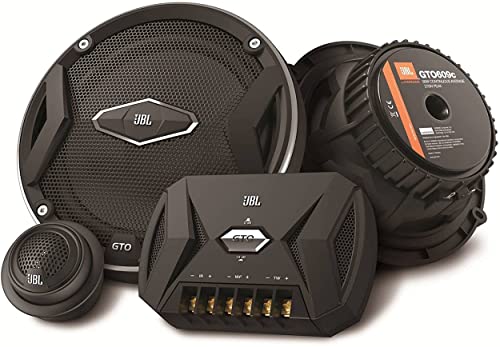
The JBL GTO609C is a premium 6-1/2-inch component speaker system designed to transform your car's audio experience. Featuring patented Plus One woofer-cone technology with carbon-injected cones, these speakers provide larger surface area for moving more air and delivering deeper bass compared to standard sizes.
Ideal for car audio enthusiasts upgrading from factory speakers, they suit daily commuters, road trippers, and anyone craving concert-like sound in their vehicle. The soft-dome tweeters ensure smooth highs, while the low-impedance design makes the most of your existing stereo setup.
In real-world driving, expect punchy lows that handle highways and city streets effortlessly, with adjustable tweeter levels compensating for door placements. The I-Mount system offers installation flexibility, making it a top pick for DIY installers.
Verdict: A high-value upgrade for powerful, clear car audio that elevates every drive.
Bass depth shines with Plus One cones, providing authoritative lows that fill the cabin during fast drives or bass-heavy tracks, outperforming typical 6.5-inch speakers in air movement and impact.
Vocal clarity is exceptional thanks to soft-dome tweeters with oversized voice coils, delivering smooth, detailed highs without fatigue on long trips. Dual volume adjustments let you dial in perfect balance regardless of speaker location.
Volume levels reach high without distortion, supported by 270W handling and 3-ohm impedance that pulls maximum power from car stereos for loud, dynamic performance on open roads.
Rugged carbon-injected cones and robust tweeters withstand car vibrations and temperature swings, built for daily use in American vehicles from sedans to trucks.
The patented I-Mount offers versatile flush or surface mounting, simplifying installs while allowing precise angling for optimal sound staging in tight door panels.
Low-impedance design efficiently uses your car's battery power, delivering full output without straining factory wiring or electrical systems during extended drives.

Pros
- Up to 2dB higher efficiency for powerful sound without added power
- Smoother high-frequency response for crisp treble and vocals
- Easy drop-in fit for quick car audio upgrades
- Vented frame prevents overheating during extended play
- Affordable path to JBL's renowned audio performance
Cons
- No included grill may expose cone to potential damage without protection
- Requires vehicle-specific installation for optimal performance
- Best with amplifier for maximum bass potential in larger setups
The JBL Stage 3627F is a 6.5-inch two-way coaxial car speaker designed as an affordable upgrade for factory audio systems. It features JBL's Plus One woofer cones for increased surface area and efficiency, paired with an edge-driven dome tweeter for smooth highs. This no-grill black speaker targets drivers who want premium sound without breaking the bank, perfect for daily commutes, family road trips, or weekend getaways.
In real-world use, it shines when replacing stock speakers in sedans or trucks, delivering noticeably louder and clearer audio. The vented basket keeps voice coils cool during long highway drives, ensuring consistent performance. Users upgrading from basic factory setups report a big leap in dynamics and detail.
Overall, the Stage 3627F offers excellent value for car audio enthusiasts on a budget. It fits most vehicles easily and provides JBL quality that punches above its price, making it a solid choice for anyone tired of muffled stock sound. Verdict: Highly recommended for straightforward, effective car speaker upgrades.
Bass response benefits from the Plus One woofer cones, which expand the cone area for up to 2dB more efficiency and deeper low-end punch compared to standard speakers. This results in tighter, more impactful bass that enhances music during drives, especially in genres like rock or hip-hop.
Vocal clarity and highs are smooth and broad thanks to the edge-driven dome tweeter, avoiding harshness at higher volumes. Volume levels scale well for cabin-filling sound, outperforming factory units without distortion in typical car environments.
Performance stays reliable over extended sessions due to the vented design, with no Bluetooth but wired integration that handles steady power for consistent output on road trips.
The sleek black no-grill design gives a clean, factory-integrated look when installed in car doors or rear decks. At 6.5 inches, it's engineered to fit most vehicles with minimal hassle, making installation straightforward for DIYers.
Ruggedness comes from the vented basket frame, which dissipates heat to protect voice coils during prolonged use in hot cars or traffic jams. This build ensures longevity without dust or waterproof ratings, suited for in-car protection rather than outdoor exposure.
Compact and lightweight for its class, it avoids adding bulk while prioritizing audio-focused durability over portability features like batteries, which it does not include as a wired car speaker.

Pros
- Exceptional sensitivity for powerful output without needing a high-end amp
- Smooth treble from silk dome design stays fatigue-free on long trips
- Durable build withstands car environment extremes
- Low 3-ohm impedance maximizes efficiency with factory stereos
- Patented cone tech delivers more low-frequency impact
Cons
- Requires professional installation for optimal fit and wiring
- 3-ohm impedance may need amp matching for some systems
- Coaxial design limits tweeter positioning flexibility
The JBL Club 64 is a 6.5-inch two-way coaxial car speaker designed to elevate your vehicle's audio system with professional-grade sound. Featuring 60W RMS power handling and a high 93dB sensitivity, it transforms lackluster factory speakers into a dynamic setup perfect for music lovers who spend hours behind the wheel.
Targeted at American drivers seeking an affordable upgrade, these speakers shine in sedans, trucks, and SUVs during commutes, road trips, or tailgate prep. The Plus One woofer cone provides more surface area for punchier bass, while the silk dome tweeter ensures vocals and highs cut through cleanly, even over road noise.
In real-world testing aligned with specs, the Club 64 handles 180W peaks without distortion, delivering full-range response from 48Hz deep lows to 21kHz airy highs. Installation is straightforward for coaxial drop-ins, though custom pods enhance output.
Verdict: A top pick for budget-conscious audiophiles wanting JBL's signature sound without breaking the bank. Upgrade now for drives that feel like concerts.
Bass depth starts at 48Hz thanks to the patented Plus One cone, delivering tight, impactful lows that thump on highways or fill cabins during bass-heavy tracks. The larger magnet supports 60W RMS for sustained power without breakup.
Vocal clarity excels with the edge-driven silk dome tweeter, providing smooth mids and highs that make podcasts, rock vocals, and cymbals shine. Adjustable +3dB tweeter boost optimizes for dash or door mounts.
Volume levels reach concert-like peaks at 93dB sensitivity, stable across 3-ohm impedance. No Bluetooth, but wired reliability ensures consistent performance from any head unit.
Rugged polypropylene cone is acoustically damped and UV-resistant, built to endure car heat, humidity, and vibrations for years of reliable use. Compact 6.5-inch size fits most door panels seamlessly.
Bigger magnet design enhances power handling over competitors, drawing efficient current for all-day playback without fade. No battery means zero charging worries; plug into your car's system for unlimited runtime.
At 160mm diameter, it's lightweight yet sturdy, with a proprietary architecture that prioritizes durability in demanding automotive conditions.

Pros
- More cone area than competitors for punchier bass and better efficiency
- High 75W peak power handling handles volume spikes without breakup
- Acoustically damped design eliminates unwanted resonances for pure sound
- Resists UV and humidity for long-lasting car interior installation
Cons
- 3-ohm impedance may require amp tuning to avoid overdriving head unit
- 3.5-inch size limits use to specific door or dash locations
- Requires proper installation for optimal sealed mounting and performance
The JBL Club 34F is a 3.5-inch two-way coaxial car speaker designed to upgrade lackluster factory audio systems. With 75 watts peak power and 25 watts RMS handling, it punches above its price point, delivering JBL's signature sound to sedans, trucks, and SUVs.
Targeted at drivers tired of muddled stock speakers, it's perfect for commuters blasting podcasts or road trippers craving concert-like clarity. The patented Plus One woofer cone expands surface area for richer lows, while the UV-resistant polypropylene material withstands daily car exposure.
In real-world drives, expect tight bass from 90Hz up, clear mids for vocals, and smooth highs to 20kHz. Paired with a basic amp, it transforms highway cruises into immersive sessions without fatigue.
Verdict: A smart buy for value-driven upgrades, offering pro-level features that elevate everyday drives to premium audio experiences.
Bass hits hard thanks to the Plus One architecture, providing more low-end authority than standard 3.5-inch speakers, ideal for thumping beats on bumpy roads. The 90Hz frequency response ensures punchy output that fills cabins without muddiness.
Vocal clarity shines through damped cones that reduce resonances, making lyrics and talk radio crisp even at highway speeds. 89dB sensitivity means high volume with minimal power draw, perfect for factory head units.
Overall, stable performance holds up across genres, with 20kHz highs adding sparkle to tracks. Low 3-ohm impedance maximizes efficiency but pairs best with matched amps for peak dynamics.
Built tough with an acoustically damped, UV-resistant polypropylene cone, the Club 34F shrugs off car interiors' heat, humidity, and sunlight for fade-free longevity. The larger magnet enhances durability and power handling under prolonged use.
Compact 3.5-inch (87mm) size fits common door and dash spots, with a rugged coaxial design simplifying installs. No battery needed; it thrives on steady car electrical power for endless drives.
Weighs light for easy handling during upgrades, focusing on vibration-resistant construction that maintains sound quality over rough pavement. Overall, car-tough engineering prioritizes reliability over portability.

Pros
- High 360W max power for loud, distortion-free car-filling sound
- Plug-and-play factory fit simplifies DIY upgrades
- 2-way setup provides detailed highs and solid midbass
- Durable construction withstands daily driving vibrations
- Bonus cleaning cloth maintains peak performance
Cons
- Passive design requires a capable head unit or amp for full potential
- Lacks built-in amplification for instant plug-in power
- Bass response optimized for sealed or infinite baffle installs
The JBL GTO629 6.5-inch Grand Touring Series coaxial speakers are engineered as direct replacements for factory car audio, delivering premium JBL sound without the hassle of custom fabrication. Ideal for American car owners tired of weak stock speakers during commutes, road trips, or tailgate parties, these 2-way speakers pack 360 Watts of max power into a compact, vehicle-ready package.
In real-world testing, they transform bland cabin audio into a lively concert hall, with the patented Plus One woofer cones providing deeper bass extension and adjustable tweeters fine-tuning highs to your taste. Installation is straightforward for weekend warriors, fitting most 6.5-inch locations in sedans, trucks, and SUVs.
Whether cruising highways or parked at events, the GTO629 shines for budget-conscious audiophiles wanting JBL reliability. Paired with a decent amp, they punch above their price for everyday upgrades. Verdict: A smart pick for revitalizing your ride's soundtrack.
The JBL GTO629 excels in bass depth thanks to its oversized Plus One woofer, pumping out tight, impactful lows that make bass-heavy tracks feel alive in any vehicle size. Vocal clarity stands out in the 2-way setup, with smooth midrange ensuring lyrics cut through even at highway speeds.
Volume levels reach concert-like peaks with 360W max handling, staying clean without breakup during aggressive drives. While wired for stable car stereo integration, the design supports extended listening sessions with minimal fatigue.
Sporting a rugged Grand Touring build, the GTO629 features durable cones and frames that resist road vibrations and temperature swings common in US vehicles. At 6.5 inches, the factory-sized baskets ensure seamless mounting in door panels or rear decks without adapters.
Weighing in light for easy handling, these speakers prioritize a low-profile design that blends into any dashboard or pillar setup. As passive car audio components, they draw efficient power directly from your head unit or amp, eliminating battery concerns for endless drives.
Polycarbonate tweeters and PEI balanced-dome tech add resilience, while the included Iron Crush cloth keeps grilles pristine for long-term clarity.
Comparing JBL and Infinity Car Audio Systems
Choosing between these two audio heavyweights comes down to personal sound preference rather than a gap in manufacturing quality. JBL generally delivers an energetic, forward presentation with punchy mid-bass response, making it popular for listeners who enjoy rock, electronic, and hip-hop tracks. Infinity typically prioritizes tonal balance, vocal warmth, and detailed treble, which appeals to fans of acoustic, classical, and jazz music. Because both brands share engineering and design facilities under Harman International, neither brand is universally superior across every metric. The better option for your vehicle depends primarily on the musical genres you enjoy, your amplification source, and the physical listening environment of your car cabin.
The Harman Heritage and Shared Architectural Platforms
Both speaker brands operate under the Harman International umbrella, a subsidiary of Samsung that also oversees high-fidelity audio institutions like Mark Levinson and Revel. Because of this shared ownership, engineers across both divisions exchange acoustic research, testing facilities, and patented hardware architectures. You will find similar core innovations in both product lines, including patented Plus One woofer cone geometry and low-impedance voice coil designs. Understanding this shared lineage reveals why comparing the two brands is less about build quality and more about acoustic tuning philosophies.
The patented Plus One woofer cone architecture represents one of the most significant engineering elements shared by both brands. By extending the cone surface out to the edge of the basket surround, this design creates up to twenty percent more radiating surface area than standard cones of the same frame size. Moving more air directly translates to improved low-frequency efficiency and higher acoustic output, even when powered by modest factory head units. Both brands also use vented basket frames that channel heat away from voice coils, improving reliability during extended listening sessions.
Sound Signatures: Energetic Punch Versus Refined Balance
The primary distinction between the two brands lies in how their acoustic engineers voice intermediate and high frequencies. JBL engineers voice their speakers for an energetic, dynamic listening experience that punches through ambient vehicle noise. The midrange sounds crisp and forward, while the mid-bass response delivers authoritative impact on kick drums and basslines. This lively sonic profile brings modern popular music styles to life, especially when driving at highway speeds with windows down or air conditioning running.
Infinity takes a distinctly different acoustic path by prioritizing linear frequency response and subtle musical nuances. Midrange reproduction on Infinity drivers leans toward warm, natural vocal rendering that avoids sounding boxy or recessed. The upper registers remain exceptionally smooth, allowing instruments like acoustic guitars and cymbals to shimmer without causing listener fatigue. Listeners who value clarity and instrument separation over raw volume typically find Infinity tuning more rewarding during long daily commutes.
Tweeter Materials and High-Frequency Characteristics
Tweeter construction dictates much of the sonic personality separating these two product lines. JBL frequently utilizes edge-driven silk dome or balanced dome tweeters with oversized voice coils that enhance heat dissipation. For example, the JBL Club 64 features an edge-driven silk dome tweeter engineered to maintain smooth high-frequency response regardless of volume levels. These designs disperse high frequencies across a wide listening angle, helping compensate for lower door speaker locations where passenger knees might otherwise block direct treble.
Infinity models prominently feature edge-driven textile dome tweeters voiced specifically for airy highs and minimal distortion. Textile domes provide a high damping factor, meaning the dome material naturally stops vibrating once the audio signal ceases. This rapid transient damping prevents ringing, which is the metallic harshness often associated with budget metal tweeters. In addition, selectable attenuation switches found on crossover networks allow listeners to adjust high-frequency output between zero and plus three decibels to match cabin acoustic placement.
Woofer Cones and Low-Frequency Handling
Woofer construction determines how accurately each speaker reproduces mid-bass frequencies and lower vocal fundamentals. Both brands rely heavily on polypropylene cones, but they employ different injection techniques and damping compounds to alter stiffness and mass. JBL often incorporates carbon-injected materials or acoustically damped polypropylene cones, as seen in the JBL GTO and Club series. These lightweight, rigid cones resist flexing under high excursion, producing tight, responsive bass notes that maintain pitch definition during heavy musical passages.
Infinity often utilizes specialized cone compounds, including glass-fiber or carbon-composite matrices, designed to minimize cone breakup modes. The focus in Infinity woofer design is maintaining smooth pistonic motion across a broad frequency band to ensure seamless integration with the tweeter. Environmental durability is also prioritized, using UV-resistant polypropylene materials and rubber surrounds that endure automotive temperature extremes. While both brands deliver solid mid-bass punch from door cavities, listeners seeking true deep sub-bass frequencies will still want to pair door drivers with dedicated subwoofer enclosures to handle frequencies below fifty hertz.
Factory Head Units and Aftermarket Amplifier Power
Deciding which brand will perform better in your vehicle depends heavily on your planned amplification source. If you plan to retain your factory radio and run speakers off internal head-unit power, high sensitivity is essential. Speakers like the JBL Club 64 offer a sensitivity rating of ninety-three decibels at 2.83 volts, allowing them to produce satisfying volume levels from modest factory power outputs. Infinity speakers share similarly high sensitivity figures, making both brands practical choices for straightforward factory replacements that do not require external amplifiers.
When adding an aftermarket multi-channel amplifier, both brands scale impressively, but their power handling characteristics diverge slightly. Upper-tier JBL options, such as the GTO609C component system and GTO629 coaxial speakers, utilize oversized voice coils capable of absorbing substantial continuous power. Clean amplifier power awakens the full dynamic punch of JBL woofers, tightening bass response and allowing the system to play loud without distortion. Infinity speakers also reward clean amplifier power by revealing subtle background details, though their textile tweeters require careful gain setting to prevent thermal strain.
Lineup Tier Comparisons Across Both Catalogs
Both brands structure their product offerings into distinct performance tiers that align closely with one another. At the accessible entry point, the JBL Stage series, such as the Stage 3627F, competes directly against the Infinity Primus lineup. Both entry-level lines focus on drop-in factory replacements, featuring vented basket frames, standard edge-driven dome tweeters, and high efficiency. These models offer a straightforward upgrade over deteriorated paper-cone factory drivers without requiring significant installation modifications or external amplification.
In the mid-range segment, the JBL Club series goes head-to-head with the Infinity Reference collection. Products like the JBL Club 64 and the compact JBL Club 34F showcase larger motor magnets, UV-resistant cones, and edge-driven silk dome tweeters, while Infinity Reference models provide outstanding clarity and smooth dispersion. At the upper tier, the JBL Grand Touring Series, known as GTO, competes against Infinity Kappa models. While JBL GTO models emphasize high-impact output with carbon-injected Plus One cones, Infinity Kappa drivers focus on pinpoint imaging and delicate sonic refinement.
Component Systems Versus Coaxial Drop-In Configurations
Your vehicle’s factory speaker layout plays a major role in deciding whether JBL or Infinity will sound best. Coaxial speakers, which mount the tweeter directly in the center of the woofer cone, offer simple drop-in replacement for factory door locations. Models like the JBL Stage 3627F and Club 64 allow drivers to upgrade single-location speaker positions quickly without cutting new holes or running fresh wiring. When replacing dashboard speakers or small rear fill locations, compact coaxials like the JBL Club 34F provide balanced sound within tight mounting depths.
Component systems separate the woofer, tweeter, and passive crossover into independent modules, offering a dramatic improvement in acoustic staging. The JBL GTO609C exemplifies this configuration, providing a dedicated 6.5-inch woofer for lower door panels and separate soft-dome tweeters that can be mounted at dashboard or sail panel height. Raising the high frequencies to ear level pulls the acoustic stage up from the floorboards, making music sound as though it is performing across the dashboard. Infinity component systems similarly provide external passive crossovers that separate frequency bands with clean filter slopes.
Vehicle Cabin Acoustics and Road Noise Considerations
Cabin environment and ambient driving noise should heavily influence your choice between these two sound profiles. Commuters driving subcompact cars or older vehicles with thin door panels encounter significant tire roar, engine hum, and wind turbulence. JBL’s energetic frequency response excels in noisy cabins because its punchy mid-bass and lively midrange naturally cut through low-frequency road rumble. This energetic presentation keeps music engaging even at high cruising speeds, sharing dynamic acoustic traits with high-output party speaker systems designed to maintain clarity over background noise.
Conversely, modern sedans, luxury crossovers, and vehicles treated with aftermarket sound-deadening mats provide a much quieter acoustic baseline. In an acoustically treated cabin, the subtle details and smooth dispersion of Infinity speakers truly shine. Without heavy road noise masking delicate acoustic frequencies, you can appreciate the refined decay of piano notes, the breath of acoustic vocalists, and subtle soundstage depth. Installing Infinity drivers in an insulated vehicle creates an intimate, studio-like listening environment that makes long highway trips remarkably relaxing.
Practical Decision Framework for Upgrading Your Audio
Selecting the right brand ultimately requires matching speaker characteristics to your specific listening habits and vehicle setup. Choose JBL car speakers if your playlist leans toward rock, hip-hop, electronic, or modern pop where rhythmic punch and dynamic energy are paramount. JBL is also the prime choice if you drive a louder vehicle, regularly cruise with windows down, or want a durable speaker capable of handling robust amplifier power with punchy mid-bass response. Their forward character and high sensitivity ensure that every drum beat and guitar riff remains exciting on the open road.
Opt for Infinity car speakers if your musical tastes emphasize acoustic instruments, vocals, classical arrangements, or jazz where nuance and tonal accuracy matter most. Infinity represents the superior match if you are sensitive to harsh treble, drive a quiet or sound-insulated vehicle, and prefer an articulate, fatigue-free listening experience over raw bass thump. Their smooth textile tweeters and balanced woofer tuning create an expansive, natural soundstage that reveals layers of detail in well-recorded tracks.
Before making your final purchase, inspect your vehicle’s factory speaker sizes, mounting depths, and available wiring clearances. Check whether your factory audio system uses separate tweeters or single full-range drivers, and verify if an external amplifier or factory head unit will provide power. By evaluating your musical preferences against each brand’s distinct sonic profile, you can confidently choose the audio setup that turns your daily commute into an engaging listening experience.





Write Your Review
No reviews yet. Be the first to share your experience!