


Setting up a home theater audio package can elevate movie night, but discovering silent rear channels quickly turns excitement into confusion. Many listeners run into issues where audio appears completely absent from their rear satellite units during ordinary television viewing. If you find yourself asking %why canaet i hear my bose surround speakers%, the underlying reason is rarely a hardware defect. In most homes, the issue stems from two-channel audio signals, misconfigured television audio outputs, or conservative channel balance settings in your mobile control app. Exploring a full multichannel surround sound system highlights how rear channels behave differently than front left, center, and right audio channels.
Modern wireless surround units, such as the Bose Surround Speakers or the Bose Surround Speakers 700, rely on dedicated wireless receivers that communicate directly with a compatible central soundbar. Because these satellite units handle directional effects rather than continuous speech, listeners often assume the speakers are silent when the playing track simply contains no rear audio data. By systematically assessing signal formats, receiver status indicators, and sound balance profiles, you can restore full acoustic immersion across your entire living area. Understanding how discrete audio tracks function ensures you get the cinematic balance your entertainment system was built to provide.

Pros
- Remarkably wide 360-degree soundstage eliminates narrow sweet spots.
- Sleek extruded aluminum enclosure looks and feels exceptionally premium.
- Reliable wireless signal transmission eliminates the need to run long audio cables across the room.
- Clear, fatigue-free treble reproduction for distinct dialogue reflections and ambient cues.
Cons
- Proprietary design works strictly with compatible Bose soundbars and cannot run independently.
- External wireless receivers and power bricks still require thoughtful cable concealment.
- Premium price point compared to standard compact rear satellites.
Even the most advanced modern soundbars face physical limitations when trying to project sound to the back of a large living room. The Bose Surround Speakers 700 are engineered to solve that exact problem by supplying genuine rear-channel audio. Acting as dedicated satellite channels for Bose soundbars, these speakers transform front-heavy soundstage setups into a fully realized, three-dimensional acoustic bubble.
Setup is refreshingly straightforward for home theater enthusiasts who want to avoid cutting into walls. Each speaker connects via discreet wire to a dedicated wireless receiver module, which automatically syncs with your soundbar through the Bose Music app. Running the ADAPTiQ audio calibration tunes the satellites specifically to your room dimensions, upholstery, and seating positions, ensuring balanced volume levels right out of the gate.
In real-world testing, the speakers shine by delivering nuanced spatial cues rather than merely blasting loud volume. During chaotic action sequences or quiet suspenseful films, environmental details such as rustling leaves, breaking glass, and off-camera dialogue project with pinpoint accuracy. The sound flows naturally into the room without drawing undue attention to the physical speaker boxes.
Ultimately, the Bose Surround Speakers 700 are an indispensable upgrade for anyone who already owns a compatible Bose soundbar and wants authentic cinematic immersion. They demand an investment, but their refined acoustic dispersion, high-end build, and effortless setup make them a standout addition to any premium entertainment space.
Unlike conventional surround speakers that fire sound strictly forward and create a narrow listening sweet spot, the Bose Surround Speakers 700 feature dual-opposing drivers that project audio omnidirectionally. This 360-degree dispersion mimics how sound reflects in the real world, allowing ambient effects and directional cues to wrap seamlessly around the listener regardless of where they sit on the couch.
Acoustically, these satellites are voiced to emphasize high-frequency precision and midrange clarity. Whispers, subtle footsteps, and bullet trajectories cut through the air with clean distinction, completely free of harsh sibilance or distortion even at elevated volumes. Because they are designed to operate within a multi-channel ecosystem, low-end bass frequencies are cross-filtered to your soundbar or dedicated subwoofer, leaving these satellites free to deliver pristine, uncolored ambient detail.
Measuring just 1.84 inches wide by 1.84 inches deep and 5.77 inches tall, the Bose Surround Speakers 700 boast one of the most compact footprints in the home theater category. The cabinet is crafted from single-piece extruded aluminum with micro-perforated grilles, providing a sophisticated appearance that matches the clean lines of contemporary televisions and Bose soundbars.
Audio transmission from the soundbar to the rear channels is handled wirelessly over a low-latency 2.4 GHz connection. However, buyers should note that each satellite is tethered by speaker wire to an included power supply brick and wireless receiver. This design eliminates long runs of cable from the front of the room to the back, though you will still need nearby AC wall outlets behind your couch to power the units.

Pros
- Incredibly small size blends into any home decor
- Effortless wireless connection to Bose Soundbar
- Brings immersive surround sound to music, movies, and TV
- Reliable 30-foot wireless range for versatile positioning
- Easy setup with just power adapters and receivers
Cons
- Requires compatible Bose Soundbar for full functionality
- Bass performance enhanced only with optional module
- Needs nearby power outlets for adapters

Pros
- Smallest Bose speakers ever for unobtrusive home setups
- Quick wireless connection to Bose soundbar
- Immersive surround sound enhances entertainment
- 30-foot range allows versatile room placement
- Easy plug-and-play installation
Cons
- Requires a compatible Bose soundbar to function
- Needs nearby power outlets for adapters
- No standalone use without soundbar
The Bose Surround Speakers in white are the smallest speakers Bose has ever designed, perfect for enhancing your home entertainment system without dominating your space. They wirelessly connect to a Bose soundbar, delivering full immersive surround sound for movies, TV shows, and music.
Ideal for living rooms or dedicated home theaters, these speakers are for anyone upgrading their audio setup who wants cinema-like experiences at home. Setup is straightforward: plug adapters into power and pair the receivers with your soundbar in minutes.
In real-world use, they expand soundstages effectively, making action scenes pulse with energy. Adding the Bose Bass Module 700 elevates bass to a visceral level. Overall, they offer premium Bose quality in a tiny package.
Verdict: A must-have add-on for Bose soundbar owners seeking true surround sound without bulky speakers.
These speakers excel in creating immersive surround sound, filling rooms with detailed audio from all directions for movies and TV. Vocals remain clear while effects wrap around you, enhancing every scene.
Volume levels scale well for home use, maintaining clarity at high outputs. Pairing with the Bose Bass Module 700 adds deep, thunderous bass that you feel physically, perfect for action films.
Wireless range reaches 30 feet with stable connectivity to the soundbar, ensuring reliable performance across typical living spaces.
Standing less than 4 inches tall, these white speakers blend seamlessly into any decor, prioritizing your entertainment over visible gear. Their compact size makes them easy to place on shelves or walls.
Built for home use with wireless receivers, they require plugging adapters into a power source, offering continuous play without battery concerns. No IP ratings for waterproofing, as they are designed for indoor setups.
Weight is minimal due to the small form factor, aiding discreet installation. Focus on reliable power connection ensures uninterrupted sessions during long movie marathons.

Pros
- Turnkey 5.1-channel wireless surround setup with effortless synchronization out of the box
- Remarkable vocal projection and center channel clarity across low and high volume levels
- Versatile streaming support across Apple, Google, and Spotify digital platforms
- Compact, premium design that fits neatly underneath modern televisions without blocking the screen
Cons
- Lacks HDMI passthrough ports, requiring your television to support HDMI eARC or ARC
- Bass Module 500 delivers tight low-end but does not match the room-shaking subterranean power of the larger Module 700
- Wireless rear surround speakers still require nearby AC outlets to power their individual adapters
The Bose Smart Dolby Atmos Soundbar Bundle represents a comprehensive home cinema package designed for listeners who demand cinematic immersion without the complexity of component-based audio systems. By packaging the main Atmos soundbar with a dedicated Bass Module 500 and a pair of discreet wireless rear surround speakers, Bose delivers a turnkey multi-channel solution. It is engineered primarily for living rooms and media dens where high-performance sound needs to coexist with modern interior design.
Setup and calibration are handled smoothly through the companion Bose Music app, which links each wireless component in minutes. In everyday use, what sets this setup apart is the proprietary Bose TrueSpace upmixing algorithm. While native Dolby Atmos audio streams sound remarkably tall and dimensional, standard 5.1 and stereo streaming sources also benefit from calculated height effects, making broadcast sports, classic cinema, and serialized dramas feel significantly more expansive.
During intense movie playback, the system manages dynamics with audiophile finesse. Directional effects pan smoothly across the front and rear perimeter, pulling you into the middle of action sequences. Speech remains centered and intelligible even during chaotic explosions, thanks to the automated A.I. Dialogue Mode. For buyers seeking a stylish, high-performing surround experience with minimal setup friction, this bundled configuration delivers superior acoustic balance and long-term satisfaction.
Acoustically, this system achieves a clean, balanced sonic presentation anchored by upward-firing and horizontal transducers within the primary bar. High frequencies are crisp and well-extended, allowing subtle environmental sound effects like falling rain or distant footsteps to ring out naturally without piercing harshness. Midrange presentation is forward and articulate, which ensures dialogue remains front and center regardless of background mixing levels.
Low frequencies are expertly handled by the wireless Bass Module 500. This compact subwoofer uses QuietPort technology to eliminate turbulent port noise, yielding punchy, responsive low-end that adds weight to film scores and kick drums. The addition of the rear satellite speakers completes the acoustic perimeter, creating genuine 360-degree spatial localization that virtualized standalone soundbars simply cannot replicate.
The soundbar features a low-profile silhouette finished with a matte top surface and an acoustic metal grille that rejects glare from your television display. Measuring slim enough to slide under the majority of modern TV stands, the soundbar blends seamlessly into modern decor. The rear surround speakers share a similarly discrete design language, allowing them to sit unobtrusively on end tables, speaker stands, or rear wall mounts.
Hardware connectivity centers around an HDMI eARC port for uncompressed multi-channel audio return, complemented by an optical digital input for legacy systems. On the wireless front, dual-band Wi-Fi, Bluetooth, Apple AirPlay 2, and Chromecast provide comprehensive streaming compatibility. Each component runs on standard AC wall power, allowing the sub and surrounds to communicate with the main soundbar via robust wireless RF links.
Pros
- Exceptional clarity and balanced highs with deep bass for a portable speaker
- Rugged IP67 build withstands water, dust, drops, and shocks effortlessly
- Long 12-hour battery and quick USB-C charging for all-day use
- Advanced Bluetooth 5.3 ensures stable connections and multipoint convenience
- PositionIQ delivers optimal sound whether standing, laying, or hanging
Cons
- Lacks wired aux input, relying solely on Bluetooth connectivity
- No companion app for EQ customization or advanced sound tweaks
- Battery life shortens at maximum volume with heavy bass usage
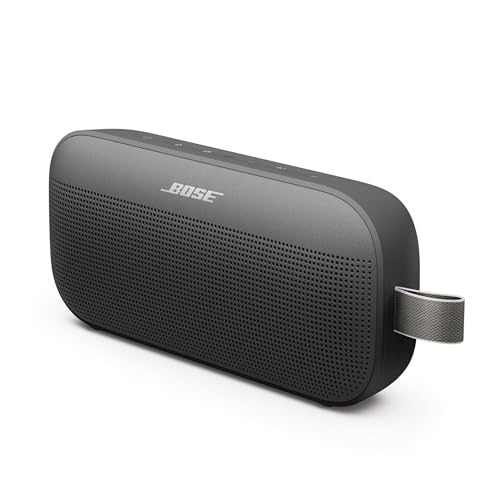
The Bose SoundLink Flex (2nd Gen) is a compact powerhouse designed for adventurers who refuse to compromise on sound quality. This portable Bluetooth speaker fits in your hand or clips to your bag, making it the ultimate companion for beach outings, hikes, camping trips, or poolside lounging. Its hi-fi audio shines in real-world scenarios, delivering bold tunes that cut through ambient noise without distortion.
For outdoor enthusiasts and casual listeners alike, it excels where larger speakers falter. Pair two units for stereo separation or party mode to amplify the fun, and PositionIQ ensures pristine sound regardless of how you position it, even in the shower. Bluetooth 5.3 provides rock-solid connectivity up to 30 feet, supporting multipoint for effortless switching between phone and tablet.
In performance tests, the Flex impresses with its balanced profile, revealing nuances in podcasts, playlists, and calls alike. While not a home audio substitute, it outperforms competitors in portability and durability. Verdict: A top pick for active Americans craving premium portable sound.
Bose tunes the SoundLink Flex for a clear, balanced signature with high-fidelity detail across the spectrum. Deep bass extends impressively for its size, providing punchy lows that thump on tracks like hip-hop or EDM without muddiness. Midrange clarity brings vocals and instruments to life, while crisp treble avoids harshness even at high volumes.
PositionIQ technology detects orientation and recalibrates the soundstage for consistent width and imaging, whether upright on a table or hanging from a shower caddy. Volume levels reach loud without breakup, filling medium spaces like patios or tents. Stereo mode with a second unit creates a wide, immersive stage perfect for gatherings.
Advanced Bluetooth 5.3 minimizes dropouts, and multipoint handles calls seamlessly mid-playback, making it versatile for music and hands-free use.
Rugged silicone exterior wraps the Bose SoundLink Flex in IP67-rated protection against water, dust, drops, shocks, and corrosion, ideal for harsh outdoor conditions. Its palm-sized form includes a utility loop for secure attachment to backpacks or belts, with dimensions small enough for pocket carry.
Connectivity centers on Bluetooth 5.3 for wireless pairing up to 30 feet, with multipoint for two devices. USB-C handles charging and playback, but no aux or other wired options are available. No power outlet needed; the built-in battery delivers up to 12 hours per charge, recharging quickly.
Hardware emphasizes portability over complexity, with no visible drivers or ports beyond essentials. This durable build prioritizes on-the-go reliability for US travelers and outdoor lovers.
Pros
- True wireless rear surround for immersive home audio
- Simple plug-and-play connection to Bose soundbars
- Enhances overall acoustic performance and aesthetics
- Cinematic sound expansion without cables cluttering your space
Cons
- Requires a compatible Bose soundbar to function
- Needs nearby power outlets for speaker adapters
- Not standalone speakers for independent use
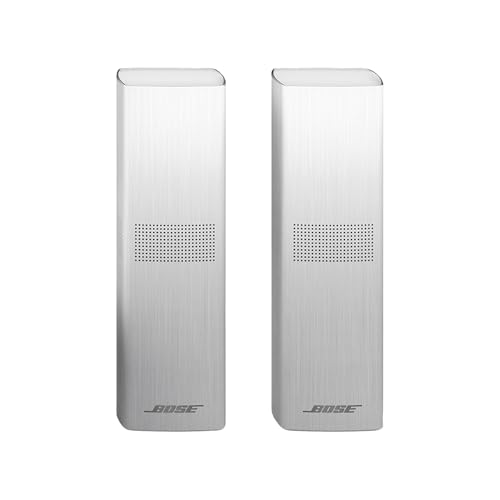
The Bose Surround Speakers 700 in white are wireless rear speakers crafted to elevate your Bose soundbar setup into a full cinematic experience. They match the sleek design and superior acoustics of newer Bose soundbars, delivering surround sound that wraps around your room.
Ideal for movie buffs, sports fans, and gamers who want to feel every explosion and cheer, these speakers turn ordinary TV watching into an immersive event. Simply connect the wireless receivers to your soundbar and power the adapters, and you're set up in minutes without complex wiring.
In real-world use, they expand soundstages dramatically, creating a sense of being in the action. Pairing with the Bose Bass Module 700 adds thunderous lows for ultimate impact.
Verdict: A must-have upgrade for Bose soundbar owners seeking pro-level home theater without the hassle.
Bose Surround Speakers 700 produce cinematic surround sound with precise spatial audio that positions effects behind and around you. Vocals remain clear while ambient sounds fill the room, enhancing dialogue and action sequences.
Volume levels scale effortlessly for large rooms, maintaining balance without distortion. Wireless connectivity to the soundbar is stable and quick, supporting extended viewing sessions.
For deeper bass, adding the Bose Bass Module 700 delivers visceral thunder, transforming bass from heard to felt across movies and music.
Sleek Arctic white finish blends seamlessly with modern decor and Bose soundbars, creating a cohesive home theater aesthetic. Compact design allows flexible rear placement without visual clutter.
No battery needed; simply plug adapters into power sources for continuous, uninterrupted playback. This eliminates charging downtime, perfect for binge-watching marathons.
While not ruggedized for outdoors, the sturdy build suits permanent indoor setups with reliable wireless performance.

Pros
- Expansive soundstage eliminates the narrow sweet spot found in traditional directional bookshelf speakers
- Clean, articulate midrange reproduction renders vocals and acoustic instruments naturally
- Compact horizontal footprint integrates neatly into standard entertainment centers
- Well-engineered bass reflex port keeps low frequencies punchy without audible port chuffing
Cons
- Passive design requires an external stereo receiver or amplifier to power the pair
- Low-end extension rolls off near 50 Hz, meaning deep cinematic bass requires a dedicated subwoofer
- Horizontal cabinet layout limits vertical mounting options on standard narrow speaker stands
The Bose 201 Series V Direct/Reflecting stereo loudspeakers represent a classic, time-tested approach to room-filling audio. Engineered for music lovers and home theater builders who want expansive dispersion without complex multi-speaker setups, these passive bookshelf speakers blend seamlessly into conventional living spaces. Unlike standard forward-firing speakers, the 201-V uses angled acoustic drivers that reflect sound off adjacent walls, turning ordinary rooms into rich listening environments.
In everyday listening, the standout characteristic is the lack of an unforgiving sweet spot. Whether seated directly between the speakers, moving around the living area, or relaxing off to the side, listeners experience a coherent and lively stereo image. Vocal reproduction is smooth and forward, making acoustic tracks, podcasts, and spoken dialogue in television programming sound clear and natural. Bass output is punchy and tight for its compact footprint, though listeners who crave earth-shaking sub-bass will appreciate adding a companion powered subwoofer.
Ultimately, the Bose 201-V speakers deliver dependable performance for dedicated stereo listening and surround sound builds alike. Pair them with a reliable 10 to 120-watt stereo receiver or integrate them as surround channels in a multi-channel configuration. For anyone seeking proven Bose engineering with natural, fatigue-free audio in a clean form factor, the 201-V continues to offer great utility for home audio enthusiasts.
Acoustically, the Bose 201 Series V stands out due to its proprietary Stereo Everywhere speaker technology. Instead of beaming high frequencies directly forward in a narrow acoustic cone, the 2-inch Stereo Targeting tweeter angles outward, dispersing clean highs across the entire room. High frequencies remain crisp and detailed without ever turning harsh or sibilant, making marathon listening sessions effortless and non-fatiguing.
Low frequencies are handled by a long-excursion 6.5-inch woofer paired with unique port geometry. The flared bass-reflex port minimizes air turbulence, allowing clean bass notes to resonate without cabinet vibration or audible air chuffing. While these compact enclosures cannot reproduce sub-bass frequencies below 50 Hz, the upper-bass punch and lush midrange provide a warm, satisfying foundation for rock, jazz, classical arrangements, and cinematic scores.
Constructed from dense composite materials with a durable black finish, each Bose 201-V cabinet measures 8.62 inches high, 13.75 inches wide, and 8 inches deep. Its horizontal form factor was deliberately engineered to sit flat on standard media consoles, low-profile credenzas, or deep bookshelf units. The curved cloth grille protects the front-facing woofer while shielding the angled outward tweeter assembly from dust and accidental impacts.
As passive loudspeakers, the 201-V pair requires an external amplifier or AV receiver rated between 10 and 120 watts per channel at 4 to 8 ohms. The rear panel features spring-clip speaker wire terminals compatible with standard bare wire connections. For optimal performance, placement should allow a few inches of clearance from side and rear walls to let the reflected soundstage bloom naturally.

Pros
- Exceptional vocal clarity focused on speech enhancement
- Quick and simple setup with included optical cable
- Bluetooth connectivity supports up to three devices
- Included remote for easy control of key sound modes
- Compact dimensions ideal for small spaces
Cons
- Deep bass requires separate Bose module purchase
- HDMI cable and wall brackets sold separately
- Limited to first powered-on device for auto Bluetooth connect
The Bose TV Speaker is a compact all-in-one soundbar designed to solve the common issue of muffled TV audio. With its focus on simplicity, it delivers clearer speech and more natural sound from a small footprint, making it perfect for anyone tired of straining to hear dialogue over background noise during evening binge sessions or family movie nights.
Targeted at everyday TV enthusiasts, this speaker shines in living rooms where space is at a premium. Its two angled full-range drivers create a wider soundstage, pulling you into the action without needing a full home theater system. Real-world use reveals reliable performance for daily viewing, with Bluetooth adding versatility for casual music streaming.
Setup is a breeze with the included optical cable or optional HDMI-ARC, and the remote lets you tweak settings on the fly. While it excels at clarity, pairing it with a Bose bass module unlocks even more potential. Overall, it's a smart, no-fuss upgrade for better TV sound that punches above its size.
Verdict: Highly recommended for straightforward TV audio improvement, especially if dialogue clarity is your top priority.
Bose prioritizes vocal clarity with dedicated dialogue enhancement, ensuring crisp pronunciation even in noisy scenes. The two angled full-range drivers produce wide, natural sound that feels spatial and realistic, elevating standard TV broadcasts to a more engaging level without distortion at normal volumes.
Bass is present but leans light for a compact unit; adding a Bose Bass Module 500 or 700 via a simple cable delivers the depth needed for action movies. Volume levels fill small to medium rooms effectively, and Bluetooth connectivity is stable for streaming music or podcasts from up to three devices, auto-connecting to the first one powered on.
HDMI-ARC and optical inputs ensure low-latency TV sync, making lip-sync issues a thing of the past for seamless viewing.
At just over 2 inches tall, 23 inches wide, and 4 inches deep, this sleek black soundbar slips easily in front of most TVs or mounts to walls with optional brackets. Its minimalist build complements modern setups, staying out of sight while delivering big audio improvements.
No battery here; it plugs into a standard outlet with a 5-foot power cord for continuous operation, perfect for stationary home use without recharging worries. The included compact remote measures 4.1 by 1.6 inches, fitting comfortably in hand for quick adjustments.
Durability suits everyday living room placement, with expandability via bass modules using a standard 3.5mm cable. Weight is light at under a pound, making repositioning effortless.

Pros
- Remarkably wide soundstage with balanced, room-filling acoustic dispersion
- Dual compatibility with both Apple AirPlay and Google Cast for frictionless streaming
- Includes a physical AUX input for connecting turntables and legacy audio gear
- Effortless multiroom linking and stereo pairing through the companion app
Cons
- Requires constant AC wall power with no internal battery for portable use
- Lacks an RJ-45 Ethernet port for hardwired local network connections
- Reaching the ideal acoustic balance requires initial configuration within the mobile app
The Bose Lifestyle Ultra represents a modern evolution in premium wireless home audio, combining high-resolution digital playback with intuitive daily operation. Designed to anchor living rooms, home offices, and open kitchen layouts, this speaker delivers substantial acoustic power from an understated enclosure. It bridges the divide between convenience-focused smart tech and serious home listening, giving music enthusiasts an all-in-one solution that integrates seamlessly into any living space.
Day-to-day usability is where this speaker truly shines. Equipped with Alexa+ voice intelligence and responsive top-plate touch controls, managing playlists, adjusting volume, or commanding smart home devices feels natural and responsive. Listeners who prefer fine-tuning their audio will appreciate the companion Bose app, which makes it simple to switch between rooms, organize multiroom groups, and adjust frequency curves to suit specific musical styles.
In real-world environments, the speaker demonstrates remarkable flexibility. You can deploy a single unit on a credenza for effortless background ambiance or critical foreground listening, pair two together for true wide-channel stereo, or sync several throughout the home for unified party audio. The inclusion of an analog 3.5mm auxiliary input provides a critical edge over purely wireless competitors, allowing vinyl enthusiasts to hook up a preamplified turntable without extra hardware.
Ultimately, the Bose Lifestyle Ultra succeeds by offering a refined balance of acoustic weight, sleek visual aesthetics, and cross-platform versatility. For shoppers seeking a durable, feature-packed tabletop speaker that sounds far larger than its footprint suggests, it stands out as an outstanding home audio centerpiece.
Acoustic performance on the Bose Lifestyle Ultra is anchored by proprietary CleanBass technology. Rather than relying on exaggerated lower-frequency boosts that create boomy, muddy playback, the internal acoustic architecture keeps basslines tight, punchy, and fast. Low frequencies remain articulate across a broad range of genres, providing satisfying sub-bass rumble in modern electronic tracks while preserving the woody resonance of upright acoustic bass.
Midrange and treble frequencies receive equal care, driven by precision-angled transducers and TrueSpatial Audio processing. Vocals sit front and center with natural presence, avoiding the hollow or boxy artifacts commonly found in single-enclosure smart speakers. High frequencies are crisp and airy without introducing harsh sibilance at upper volumes, allowing cymbals and string overtones to decay smoothly across the listening space.
The speaker excels at high volume levels, maintaining composure without aggressive compression or harmonic distortion. When room dynamics pose acoustic challenges, the adjustable EQ within the Bose app allows users to easily raise or lower bass, mid, and treble levels to compensate for corner placements, deep bookshelves, or open living areas.
Constructed with premium materials, the Lifestyle Ultra features an elegant black finish that complements contemporary home decor. Measuring 6.594 inches long, 4.767 inches wide, and 7.27 inches tall, and weighing in at 3.66 pounds, the cabinet has enough physical heft to resist unwanted enclosure resonance while remaining compact enough to fit neatly onto shelves, end tables, or kitchen islands.
Hardware connectivity options are notably generous for a modern smart speaker. In addition to robust dual-band Wi-Fi and Bluetooth wireless radios, the rear chassis includes an auxiliary 3.5mm stereo input jack for direct analog connections. This makes it simple to run audio cables from portable music players, laptops, or vinyl turntables without latency or compression.
The unit runs on steady AC mains power, ensuring continuous, dynamic performance without the output throttling common in battery-operated speakers. Top-mounted capacitive touch panels provide tactile, immediate control over playback, volume, and voice assistants, making physical operation smooth and intuitive even without your smartphone nearby.
Diagnosing and Resolving Quiet or Inactive Bose Surround Speakers
Troubleshooting silent rear audio channels requires separating actual hardware malfunctions from standard surround sound behavior. Most listeners expect rear satellite units to mirror the continuous speech and background music delivered by the central soundbar. However, surround speakers are specifically engineered to provide directional cues and atmospheric ambience rather than constant, loud output. Systematically examining your broadcast content, TV audio output settings, software sliders, and wireless pairing hardware will quickly pinpoint why your rear speakers seem quiet or unresponsive.
Surround Sound Dynamics: Ambient Effects Versus Primary Channels
The most frequent cause of perceived rear speaker silence is the nature of the audio content being played. Front soundbar channels carry dialogue, primary musical themes, and on-screen action, while rear speakers only activate during specific surround cues. Standard television programming, daytime broadcasts, talk shows, news programs, and many online streaming videos are produced strictly in two-channel stereo format. When a soundbar receives a standard stereo signal without applying upmixing processing, the rear speakers remain completely silent because no surround channel data exists.
Streaming movies and cinematic games, on the other hand, utilize dedicated multi-channel audio tracks such as Dolby Digital, Dolby Digital Plus, or Dolby Atmos. In these productions, the rear satellites only reproduce subtle atmospheric background sounds like falling rain, crowd noise, or off-screen footsteps. If an action sequence does not feature a passing vehicle or directional sound effect, your rear speakers will stay idle. Understanding this deliberate acoustic separation helps prevent mistaking intended cinematic sound design for a malfunctioning audio system.
Audio Input Formats and TV Digital Output Settings
Even when you watch modern 4K streaming movies that advertise multi-channel audio, your television settings might be downgrading the signal. Many modern smart televisions default their digital audio output format to standard PCM stereo. When set to PCM, the television downmixes all incoming multi-channel tracks into a basic two-channel stream before sending it to the soundbar. As a result, the soundbar receives zero surround information to route to your rear satellite speakers.
To correct this issue, navigate into your television audio setup menu and locate the digital sound output options. Change the audio format setting from PCM to Auto, Bitstream, or Passthrough. These settings instruct the television to pass the encoded multi-channel bitstream directly through the HDMI eARC or optical connection untouched. Once the soundbar receives an authentic multi-channel stream, its internal processor decodes the discrete rear channels and sends the appropriate signal to your surround units.
In addition to television system menus, individual streaming applications on smart platforms feature their own independent audio preferences. Media apps often offer multiple audio stream selections within the movie playback screen. Always verify that the selected language track specifies five-point-one or spatial sound rather than basic stereo. If an external streaming stick, cable box, or gaming console connects to the television, ensure its internal audio output is also configured for bitstream or uncompressed multi-channel pass-through.
Mobile App Channel Level Adjustments and Volume Offsets
When content formats and television output configurations are correct, low volume levels within the manufacturer app often explain quiet rear channels. Companion applications like the Bose Music app provide independent level controls for paired accessory speakers. By default, the surround speaker level is set to zero, which represents the neutral factory balance. In many residential living spaces, acoustic absorption from carpeting, curtains, and upholstered furniture makes this factory level sound barely audible from normal seating positions.
Open your mobile audio application, select your central soundbar, and access the audio settings menu. Locate the surround speakers channel slider and increase the level into the positive range, such as positive forty or higher. This adjustment raises the relative output of the rear satellite drivers without distorting the overall system volume. Listen to a familiar scene while testing different slider increments until the rear effects match your personal listening preference.
Features like dialogue enhancement modes can also alter perceived surround balance. The Bose New Smart Dolby Atmos Soundbar, for instance, includes specialized speech clarity algorithms that prioritize center-channel frequencies. While this feature makes actor dialogue crisp and intelligible, it deliberately suppresses certain background ambient effects to keep vocal tracks prominent. If you notice surround channels becoming faint during dramatic conversations, temporarily disengage dialogue enhancement modes to determine if full ambient sound returns.
Room Calibration Effects: How Automated Tuning Impacts Volume Balance
Automated room calibration systems optimize home theater frequency response based on room reflections and listener distance. During the setup process, a specialized headset measures sound pulses at multiple seating locations across the room. If the calibration headset is placed too close to the rear satellites during measurement, the algorithm assumes the speakers are overpowered. Consequently, the calibration software aggressively lowers the rear channel output to prevent harsh high-frequency reflections.
If your rear speakers became noticeably quieter following a room calibration routine, running a fresh calibration cycle can resolve the imbalance. Ensure that all measurement positions are located within your actual primary listening zone, maintaining reasonable clearance from rear wall surfaces. Alternatively, you can disable the calibration profile entirely within your mobile app to verify if factory channel levels provide a more dynamic rear presence. Comparing the calibrated sound against the uncalibrated profile helps you judge whether room correction hindered your rear surround clarity.
Wireless Receiver Status: Interpreting Indicator Lights and Pairing States
Wireless satellite speakers do not connect directly to household alternating current outlets; they receive amplified signals from dedicated wireless receiver boxes. Each satellite speaker connects via speaker wire to its assigned wireless receiver module, which plugs into a standard wall outlet. These receiver boxes feature an LED status light that communicates network connectivity with the central soundbar. Checking this light is a critical diagnostic step when determining whether the satellites are receiving an active wireless link.
A solid white indicator light confirms that the wireless receiver is successfully paired and actively communicating with the soundbar. If the indicator light glows amber, the receiver is disconnected or sitting in pairing standby mode. A blinking amber indicator indicates that the module is actively searching for a pairing signal from the primary soundbar. If the status light is completely dark, inspect the power adapter, cord connections, and household wall outlet to ensure the unit is receiving electrical power.
When a receiver shows an amber light, re-establishing the wireless pairing connection becomes necessary. Within your smartphone application, navigate to the accessory management menu to remove and re-add the surround speakers. Most receivers feature a small physical button or pinhole reset switch on their chassis that initiates pairing mode. Power cycling both the soundbar and the wireless receivers by unplugging them for thirty seconds frequently clears temporary network handshake errors.
Speaker Terminal Wiring and Adapter Block Connections
Physical wiring faults between the wireless receiver box and the satellite speaker can interrupt audio delivery even when the wireless link is solid. Models like the Bose Surround Speakers, White and Bose Surround Sound System for Home Theater, Black utilize two-pin adapter blocks that fasten directly to two-conductor speaker leads. If the tiny terminal screws on these adapter blocks are loose, bare copper strands may fail to make reliable electrical contact. A loose wire can cause intermittent sound dropouts, crackling, or complete signal loss.
Inspect each connection point to verify that the positive and negative leads match the color-coded polarity markings on both the receiver and the speaker terminal. Crossing positive and negative conductors places the drivers out of acoustic phase, causing severe cancellation of midrange frequencies that makes the speaker sound hollow and quiet. Strip back fresh wire ends if copper strands appear frayed, oxidized, or bent. Ensuring tight, secure screw terminations guarantees that amplified audio flows without resistance into the driver voice coils.
Soundbar Model Compatibility: Distinguishing Supported Central Units
System compatibility is another crucial consideration when adding satellite speakers to an existing television setup. Audio brands manufacture diverse home audio components designed for distinctly different entertainment roles. For example, compact models like the Bose TV Speaker – Soundbar for TV with Bluetooth focus exclusively on dialogue enhancement in small rooms. While that soundbar supports wired connection to an external bass module, it does not support wireless surround satellite speakers.
In contrast, premium soundbars like the Smart Soundbar series are explicitly engineered to host wireless accessory channels. If you attempt to link wireless surround units to an unsupported soundbar, the companion app will fail to register the accessory units. Always review the product documentation to confirm that your specific soundbar model lists wireless surround expansion as a supported feature. Pairing satellite speakers with an incompatible central speaker results in total silence regardless of how many resets you perform.
Placement, Height, and Physical Boundary Interactions
The physical location of your rear satellite units strongly dictates how sound waves travel to your ears. Placing rear speakers inside enclosed bookshelves, behind sofa cushions, or on the floor heavily dampens high-frequency detail. Higher frequencies are highly directional, meaning any physical obstruction between the speaker grille and your listening position absorbs ambient clarity. Mounting satellites on dedicated speaker stands or securing them to the rear wall elevates the drivers to proper ear level.
Positioning rear speakers slightly behind and to the sides of the primary seating area creates the most natural sound envelope. The manufacturer recommends maintaining a clear line of sight between the speaker grilles and the listener heads for optimal dispersion. Keeping satellite speakers within thirty feet of the primary soundbar prevents packet loss and maintains high-quality wireless signal integrity. Proper physical elevation and spacing ensure that even quiet ambient effects reach your ears without getting lost in room furnishings.
Mitigating Wireless Interference and Signal Drops
Wireless surround receivers communicate with the central soundbar over radio frequency bands that are shared with common household electronics. Wi-Fi routers, mesh network nodes, baby monitors, microwave ovens, and smart home hubs operating on the two-point-four gigahertz spectrum can introduce packet interference. When radio interference disrupts the data transmission stream between the soundbar and receiver, the receiver often mutes the output to prevent loud digital pops. This automated muting behavior can be easily misinterpreted as a dead speaker or weak amplification.
To minimize wireless congestion, ensure that your Wi-Fi router or mesh access point sits at least three to four feet away from your soundbar and wireless receivers. Avoid hiding wireless receiver boxes inside dense metal media consoles or behind metallic television mounting brackets, as metal significantly blocks radio signals. If your home network router allows manual channel selection, shifting your home Wi-Fi network to a less congested band reduces competition. Providing a clear radio path allows the soundbar to transmit steady audio packets to your rear satellite units.
Diagnostic Audio Testing: Verifying Multi-Channel Channel Separation
Once you have adjusted television outputs, confirmed wireless pairing, and elevated your speakers, verifying your setup requires appropriate test media. Do not rely on casual television broadcasts or standard music streaming playlists to test surround channel functionality. Instead, search for dedicated five-point-one channel check files on supported streaming platforms or insert a multi-channel Blu-ray disc. These specialized audio tracks isolate each audio channel sequentially, announcing each channel through its designated speaker.
When the test track reaches the left surround and right surround channels, sound should emanate clearly and distinctly from your rear satellites. If sound plays properly during channel isolation tests, your system is fully functional and ready for cinematic content. Any subsequent lack of rear output during normal viewing simply indicates that the chosen television program lacks surround audio information. Keeping a reliable multi-channel test file accessible allows you to quickly re-verify channel performance whenever audio doubts arise.
Restoring clear, immersive performance from your rear sound system relies on methodical diagnosis rather than complex technical repairs. By ensuring that your television passes discrete bitstream signals, your wireless receivers display healthy pairing lights, and your mobile app surround levels are properly boosted, you eliminate the common roadblocks that cause rear channel silence. Taking the time to optimize speaker placement and eliminate wireless congestion allows your home theater to deliver the dynamic, enveloping soundstage its engineers intended.


Write Your Review
No reviews yet. Be the first to share your experience!