
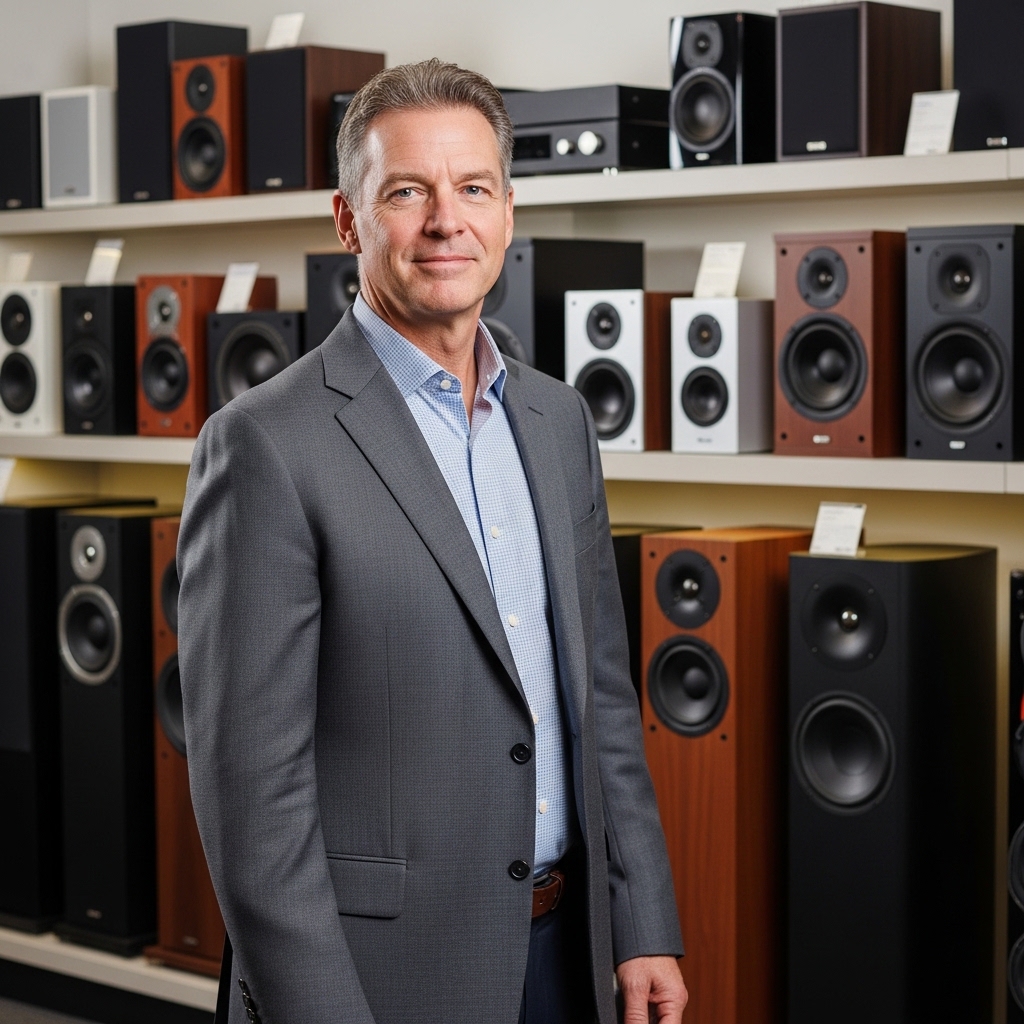

Compact desktop monitors and tabletop radios often produce surprisingly balanced audio despite their modest cabinet enclosures. Many listeners wonder how small enclosures prevent distortion while maintaining clean bass and distinct dialogue. The central technology behind this balance is digital signal processing. Understanding what is dsp in speakers helps clarify how modern powered designs refine incoming sound waves before sending them to the drivers. In traditional setups, passive crossover networks rely on physical capacitors and inductors to route frequencies, but digital systems calculate these adjustments with mathematical precision.
Modern desktop audio, streaming radios, and powered home music speakers frequently integrate internal chips that equalize audio signals in real time. These integrated processors adjust frequency response, safeguard voice coils from over-excursion, and stabilize dynamic output across varying volume levels. Buyers evaluating models with built-in digital processing can better determine whether an active sound system fits their desk setup, living room, or office. Exploring how internal signal management operates makes it far simpler to choose equipment that delivers dependable audio clarity without unwanted rattles or harsh peaks.

Pros
- Direct WiFi streaming via Spotify Connect eliminates phone audio interruptions
- Clean, articulate dialogue reproduction ideal for news, podcasts, and talk shows
- Companion Frontier OkTiv app makes station navigation and setup effortless
- Complete bedroom utility with dual alarms, snooze, and sleep timer modes
Cons
- Requires constant mains power with no integrated battery for portable outings
- Single-enclosure driver design does not provide wide stereo separation
- Compact footprint limits deep sub-bass response on bass-heavy music genres
The Majority Touro is a feature-packed desktop audio hub designed to bridge the gap between traditional broadcast radio and modern wireless streaming. Built around the capable Frontier VX chipset, this compact unit gives listeners instantaneous access to tens of thousands of global internet radio stations, podcasts, and traditional FM broadcasts. For users seeking an all-in-one audio solution that does not rely on tying up a smartphone, the Touro offers a self-sufficient listening station that fits naturally into any modern living space.
In everyday use, the Touro excels on kitchen countertops, nightstands, and office credenzas. Operating the radio is straightforward thanks to direct hardware buttons and the companion Frontier OkTiv app. The app allows you to search worldwide directories by country or genre, assign quick presets, and adjust volume levels from across the room. Integration with Spotify Connect is particularly smooth, offloading streaming duties directly to the speaker so music playback continues uninterrupted even when taking calls or stepping away.
Beyond daytime streaming, the Majority Touro serves as an advanced bedside clock radio. Dual independent alarms allow you to wake up to your favorite FM station, internet broadcast, or buzzer tone, while the configurable sleep timer ensures nighttime listening winds down automatically. While it lacks internal battery power for outdoor portability, its comprehensive connectivity, reliable network performance, and versatile source options make it an outstanding, high-value addition to daily home routines.
Acoustically, the Majority Touro is engineered for clarity, balance, and vocal intelligibility. At the core of its acoustic architecture is a dedicated Digital Signal Processor (DSP) that continuously balances frequencies to prevent distortion at moderate-to-high volumes. Spoken-word programming, such as NPR broadcasts, morning talk radio, and audiobooks, comes through with exceptional crispness, ensuring voices never sound muddy or muffled.
To support musical playback, Majority incorporated an integrated rear bass port into the Touro enclosure. This acoustic tuning allows the speaker to generate a respectable amount of low-end body for its compact dimensions, giving acoustic guitars, upright bass, and drum grooves a punchy, warm foundation. While it naturally cannot replicate the physical sub-bass rumble of a stand-alone subwoofer, the low end remains clean and tight without encroaching on the midrange.
Treble response is clean and fatigue-free, avoiding the harshness often found in entry-level tabletop radios. The speaker easily produces enough volume to fill a bedroom, kitchen, or personal office space with lively sound. While the single-driver architecture focuses audio locally rather than creating a sprawling stereo soundstage, its dispersion is wide enough to deliver an enjoyable, room-filling ambient listening experience.
The Majority Touro sports a clean, minimalist aesthetic finished in an unobtrusive matte black casing that blends effortlessly with home decor. Measuring 7.8 by 11.4 by 5.15 inches and weighing approximately 2.53 pounds, it maintains a compact desktop footprint that preserves valuable nightstand or counter space while remaining solid and vibration-free on flat surfaces.
Under the hood, the device is powered by the responsive Frontier VX platform, delivering rapid network handshakes over WiFi alongside dependable Bluetooth connectivity for local streaming from phones, tablets, or computers. For terrestrial broadcasts, an integrated FM tuner ensures clear analog reception when internet connectivity is unavailable. The front interface features a readable digital display for tracking station names, track metadata, and current time.
The Touro is designed specifically for stationary home use and comes supplied with a dedicated mains power adapter. By running on continuous AC power rather than a finite internal battery, users never have to worry about the speaker powering down overnight or missing an early morning alarm, ensuring reliable, round-the-clock operation.
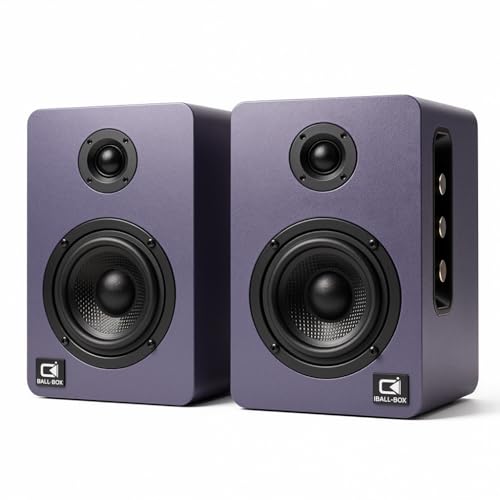
The Engineering and Practical Role of Digital Signal Processing in Modern Speakers
Digital signal processing, commonly abbreviated as DSP, refers to specialized mathematical manipulation of audio signals within the digital domain before amplification. In powered speakers, an onboard microchip analyzes incoming digital audio data or digitized analog signals and modifies frequency curves, phase alignment, and timing. This process allows speaker engineers to correct physical acoustic limitations inherent to small enclosures, uneven driver responses, and cabinet diffraction. Rather than relying solely on acoustic chamber shaping or passive electrical components, modern audio hardware uses computational algorithms to shape the sonic output.
Defining Digital Signal Processing in Powered Audio
At its most fundamental level, a digital signal processor is a dedicated microprocessor optimized to perform rapid calculations on streams of digital audio data. Audio enters the processor as discrete numerical values representing sound amplitude at specific microsecond intervals. The processor applies algorithmic filters that alter amplitude, delay specific frequency bands, or limit extreme audio peaks. Once calculations conclude, the corrected digital stream passes to a digital-to-analog converter and then directly to the power amplifier stage.
This architecture contrasts sharply with traditional analog sound systems. Passive systems route full-range amplified signals through capacitors, inductors, and resistors inside the cabinet to split sound between tweeters and woofers. Those passive components inevitably generate heat, introduce phase shifts, and waste valuable amplifier energy. By handling these delicate audio corrections inside a microprocessor prior to final amplification, DSP preserves signal integrity and provides far greater control over driver behavior.
How the Digital Signal Path Operates Inside an Active Speaker
Understanding the journey of an audio signal inside a DSP speaker clarifies why active designs perform so consistently. When an audio source connects via a digital input such as optical or USB-C, the internal processor receives native binary pulses without initial conversion. If you connect an analog source using a standard 3.5mm auxiliary cable, the speaker must first pass the voltage signal through an analog-to-digital converter. Once digitized, the DSP chip executes its programmed filtering routines in microsecond cycles.
After the digital processing finishes, the manipulated numerical stream moves through a dedicated digital-to-analog converter chip. This converter reconstructs smooth analog electrical waveforms that represent the newly sculpted audio profile. The reconstructed signal then feeds the power amplifier, which boosts voltage and current to physically move the speaker voice coils. Because this entire manipulation occurs at line-level voltages, signal degradation remains minimal throughout the electronic chain.
Active Crossovers Versus Traditional Passive Filter Networks
One of the primary responsibilities assigned to onboard DSP is acting as an active digital crossover. Traditional passive crossovers sit between the power amplifier and the individual speaker drivers, operating under high voltage and current loads. These analog coils and capacitors often suffer from component tolerances, temperature drift, and gradual physical wear over years of ownership. Standard analog crossover slopes are also typically gentle, causing wide frequency overlap where both woofer and tweeter reproduce the same notes simultaneously.
Digital crossovers operate before amplification, allowing engineers to program extremely steep crossover slopes with surgical accuracy. A digital filter can cleanly separate low frequencies intended for a carbon-fiber woofer from high frequencies destined for a silk-dome tweeter. This steep attenuation prevents mid-bass energy from entering fragile tweeter domes where it would create distortion. As discussed in our analysis of two-channel and subwoofer audio setups, precise frequency handoffs keep audio transitions seamless between drivers.
Dynamic Range Control, Compression, and Driver Protection
Physical speaker drivers possess strict mechanical and thermal limits that dictate how far a cone can travel and how much heat a voice coil can dissipate. When a listener turns up the volume on a non-DSP speaker, unexpected dynamic spikes in movies or music can push drivers past their physical limits. This mechanical over-excursion causes harsh bottoming-out noises, coil scraping, and potential permanent driver failure. In unmanaged systems, preventing such damage requires setting master gain low or risking system destruction.
DSP prevents mechanical damage by executing real-time multiband limiting and compression algorithms. The processor constantly monitors signal amplitude across specific frequency bands, identifying deep bass notes that demand excessive cone movement. When a dangerous spike occurs, the algorithm temporarily attenuates only that problematic frequency range for a fraction of a second. The midrange vocals and treble details remain untouched, preserving clarity while shielding the woofer from physical harm.
Frequency Correction and Enclosure Acoustic Compensation
Every speaker enclosure introduces acoustic colorations caused by internal standing waves, front baffle reflections, and cabinet panel resonances. Small desk speakers, for instance, frequently suffer from baffle diffraction, where high frequencies scatter off cabinet edges and create peaks or dips in frequency response. In passive cabinets, correcting these subtle irregularities requires complex analog networks that add cost and diminish sensitivity. DSP enables engineers to measure these enclosure quirks during factory development and flash corrective inverse equalization curves directly into the chip.
If an acoustic measurement reveals a stubborn three-decibel dip at two kilohertz due to cabinet shape, the processor can apply a precise digital boost to fill that gap. Conversely, if a rear bass reflex port creates an unwanted resonance peak around one hundred hertz, an internal notch filter flattens the response. These micro-adjustments turn imperfect physical enclosures into remarkably neutral acoustic transducers. The end result is a flatter, more transparent frequency curve that accurately represents the original audio recording.
Low-Volume Listening and Perceptual Equalization
Human hearing does not perceive sound frequencies linearly across different listening volumes. According to established psychoacoustic principles such as the Fletcher-Munson curves, the human ear loses sensitivity to deep bass and extreme treble when volume levels drop. At conversational background levels, an unadjusted flat speaker can sound thin, hollow, and devoid of low-end warmth. Listeners often feel compelled to crank the volume simply to hear the bass line clearly.
Advanced digital signal processing solves this perceptual issue through adaptive loudness contours. When the master volume dial is lowered, the processor can automatically apply compensatory boost curves to low-frequency and high-frequency bands. This dynamic equalization restores perceived tonal balance, making late-night listening and desk work sound full and engaging. As the listener increases volume toward maximum output, the processor gently rolls back the boost to prevent driver over-excursion.
High-Resolution Audio Processing and Conversion Standards
The internal computational precision of a DSP chip plays a substantial role in maintaining audio fidelity. Basic digital processors operate at sixteen-bit depths, which can introduce subtle rounding errors and quantization noise during complex multi-stage filtering. Modern powered desktop monitors frequently incorporate twenty-four-bit processors capable of handling sample rates of forty-eight kilohertz, ninety-six kilohertz, or higher. This expanded numerical headroom ensures that subtle reverberations, instrumental decays, and dynamic nuances remain pristine.
When a powered speaker accepts a 24-bit wired optical or USB-C connection, it bypasses the noisy internal sound card of a host computer or television. The clean digital stream flows straight into the speaker processor without encountering ground loop hum or motherboard interference. To truly evaluate the transparency gained from clean digital conversion, listeners often play demanding reference tracks to test speaker sound across diverse musical genres. High-resolution processing ensures that complex orchestral arrangements or dense electronic mixes retain distinct instrumental separation.
Hardware Amplification Headroom and Integrated Chipsets
A digital signal processor relies heavily on the capabilities of the power amplifier driving the speaker drivers. If an amplifier operates at the edge of its electrical limit, even the most sophisticated digital filtering cannot prevent analog clipping distortion. Many modern desktop audio systems address this challenge by pairing DSP chips with robust Class-D amplifiers, such as hardware platforms designed by Texas Instruments. These amplifiers deliver clean, efficient power with minimal thermal dissipation, fitting neatly into compact enclosures.
Using an amplifier rated for higher power than the continuous speaker output provides essential dynamic headroom. When a sudden musical transient requires a rapid burst of energy, the amplifier responds instantly without flat-topping the audio waveform. The integrated DSP coordinates with the amplifier stage to maintain clean output across the entire volume sweep. This synergy between digital calculation and efficient power delivery yields audio that sounds effortless rather than strained during intense gaming sequences or dynamic movie soundtracks.
Latency and Processing Delays Across Different Media
Because a digital signal processor performs calculations on audio frames, it introduces a minuscule time delay known as latency. For music listening, an audio delay of five to twenty milliseconds is completely undetectable because there is no visual anchor. However, when using powered speakers for competitive PC gaming, video editing, or television viewing, noticeable audio lag can disrupt synchronization between lips and speech. Understanding processing delay helps users configure their entertainment setups effectively.
Modern audio processors execute filtering routines in a matter of a few milliseconds, keeping latency well below the threshold of human visual perception. Latency concerns primarily emerge when speakers rely on wireless connections, such as standard Bluetooth codecs, where transmission buffering adds to internal processing time. Utilizing wired digital inputs like optical SPDIF or USB-C minimizes transmission latency, leaving only the near-instantaneous DSP calculation. For real-time monitoring and competitive gaming, hardwired digital connections provide the tightest possible audiovisual alignment.
Physical Tone Dials Versus Software-Based Equalization Curves
Many modern powered speakers offer front or rear rotary knobs for treble and bass adjustment alongside internal DSP profiles. Some users wonder why a digital speaker still provides physical analog dials on the cabinet exterior. In a properly engineered DSP speaker, these tone knobs do not insert old-fashioned passive analog tone stacks into the signal path. Instead, the dials act as rotary encoders or potentiometers that send position data to the DSP chip, instructing it to adjust its internal equalization algorithms.
This hybrid approach provides the tactile convenience of physical dials without the phase distortion associated with analog tone circuits. Listeners can quickly trim high-frequency brightness to suit a reflective room or boost lower octaves without opening a computer application. In specialized devices like internet streaming radios, DSP processing is often managed through companion smartphone applications. App-based controls let users select preset equalization curves tailored to news podcasts, acoustic music, or late-night listening directly over Wi-Fi.
Optimizing Source Inputs and Avoiding Double-Processing
Achieving clean performance from a DSP-enabled speaker system requires thoughtful management of the entire audio chain. A frequent mistake among desktop users is running aggressive software equalizers on a computer while simultaneously boosting hardware tone dials on the speakers. Stacking multiple equalizer stages can push digital signals into clipping before sound ever reaches the speaker processor. If an operating system sends an over-boosted, digitally clipped signal, the speaker processor will merely amplify that distorted waveform.
The most dependable strategy involves setting software volume controls and computer media players to a neutral, bit-perfect output. Allow the speaker onboard processor to handle acoustic shaping, driver protection, and crossover duties as originally engineered by the manufacturer. If you connect an external preamplifier, DAC, or media streamer, feed the speaker a clean line-level signal with flat tone settings. This clean source handoff ensures the internal DSP algorithms operate with maximum dynamic range and zero pre-existing digital artifacts.
Selecting the Right Speaker Architecture for Your Listening Space
Choosing between traditional passive monitors and modern DSP-equipped active speakers depends on your listening environment, source equipment, and space constraints. Active DSP speakers condense digital converters, preamplifiers, processors, and multi-channel power amplifiers into self-contained cabinets. For home offices, dorm rooms, and compact media consoles, this integrated design eliminates bulky external amplifier stacks and simplifies cable routing. You simply plug in your power cable and run a single digital or analog wire to your computer or television.
Conversely, audiophiles who enjoy swapping external power amplifiers, tube preamps, and standalone DAC units may find all-in-one DSP systems less modular. In a fully integrated speaker, the digital conversion and amplification stages are permanently matched to the physical drivers. For everyday listening, multimedia tasks, and compact entertainment setups, that tight engineering integration is precisely what makes DSP speakers so compelling. Dedicated internal processing ensures the drivers perform at their theoretical peak without demanding complicated calibration equipment from the end user.
Evaluating digital signal processing in modern speakers ultimately comes down to appreciating how software precision elevates hardware potential. By handling crossover separation, dynamic protection, and enclosure resonance correction inside an integrated microchip, DSP allows compact cabinets to produce clean, expansive sound that was once achievable only with substantially larger enclosures. Paying attention to connection methods, proper source gain structure, and realistic room placement ensures your audio setup takes full advantage of these internal computational benefits for years of engaging listening.




Write Your Review
No reviews yet. Be the first to share your experience!