


Connecting a phone or laptop wirelessly offers convenience, but physical cables still provide dependable playback when wireless signals falter. Understanding what is aux in bluetooth speaker designs helps listeners navigate playback interruptions, latency delays, and pairing hurdles. An auxiliary input offers a direct wired pathway for analog sound, turning a modern wireless device into an instant plug-and-play speaker. Many music fans seeking a reliable Bluetooth speaker for vinyl setups or older media players rely on this port to keep legacy hardware functional without wireless transmitters.
Physical ports also simplify daily listening by bypassing pairing menus, multipoint switching conflicts, and temporary wireless interference. While wireless standards like Bluetooth 5.0 and 5.3 continue to improve connection range, a hardwired connection delivers instantaneous audio transmission without digital compression artifacts. Knowing how an aux input jack interacts with your speaker amplifier, internal battery life, and source devices ensures you select the right audio hardware for your daily routine. Exploring connection cables, port types, and modern waterproof enclosure designs clarifies why this humble jack remains an essential feature on many portable speakers.

Pros
- Exceptional battery life lasts a full day of continuous play
- IPX7 waterproof rating excels in wet environments like showers or rain
- PartyBoost feature enables easy multi-speaker linking for bigger sound
- Punchy JBL bass delivers energetic audio for parties and workouts
- Compact and lightweight for ultimate portability
Cons
- Mono speaker design limits true stereo imaging
- Lacks wired aux input or app-based EQ customization
- Bass-heavy tuning may overpower vocals in acoustic tracks
The JBL Flip 5 is a compact powerhouse in the portable Bluetooth speaker category, designed for on-the-go audio enthusiasts who demand durability and bold sound. Its cylindrical form factor slips easily into a backpack, making it ideal for beach outings, camping trips, or backyard gatherings where traditional speakers fall short.
In real-world testing, the Flip 5 shines with its signature JBL bass response that thumps on hip-hop and EDM tracks, while maintaining clarity on vocals and instruments. Pair it with PartyBoost-compatible JBL speakers to amplify the experience into immersive stereo setups that rival larger systems.
Targeted at active lifestyles, this speaker prioritizes ruggedness over audiophile neutrality, delivering consistent performance across genres without distortion even at high volumes. Battery life holds up reliably for 12 hours, though heavy bass use may shorten it slightly.
Verdict: A top pick for portable fun; it excels where portability and weather resistance matter most, earning high marks for value in the US outdoor audio market.
JBL's Pro Sound tuning gives the Flip 5 a bass-forward signature with extension down to around 60Hz, creating that addictive low-end thump perfect for pop and electronic music. Mids stay clear and forward, ensuring vocals cut through mixes without muddiness, while treble offers crisp detail on cymbals and hi-hats up to 20kHz.
Despite its small size, it pushes impressive volume levels with minimal distortion, filling medium-sized spaces like patios or tents. The soundstage is intimate due to the mono driver, but PartyBoost expands it dramatically when linked with another unit for true stereo separation.
Bluetooth 4.2 ensures stable connectivity with low latency, supporting SBC codec for reliable streaming from iOS or Android devices. It's engineered for punchy, party-ready audio rather than neutral hi-fi listening.
Built with a durable woven fabric grille and rubberized edges, the Flip 5 withstands drops and rough handling, measuring just 7.1 x 2.8 x 2.6 inches and weighing 1.2 pounds for effortless portability. The IPX7 rating allows submersion in up to 1 meter of water for 30 minutes, ideal for poolside or rainy conditions.
Connectivity is Bluetooth-only with no aux or USB playback ports, focusing on wireless simplicity. PartyBoost uses a proprietary RF protocol for linking up to 100 compatible JBL speakers, though it requires matching models.
Power comes from an integrated lithium-ion battery charged via USB-C, delivering 12 hours of playtime at moderate volumes. A single multifunction button handles pairing, power, and boost modes, with a quick start guide included for easy setup.

Pros
- Outstanding 24-hour playtime keeps the party going all day
- IPX7 waterproof rating survives water exposure effortlessly
- Powerful bass and stereo sound punch above its size
- Bluetooth 5 for quick, reliable connections
- Compact and lightweight for ultimate portability
Cons
- No companion app for sound customization or EQ adjustments
- Bass-forward profile can slightly overshadow mids in complex tracks
- Lacks wired aux input for non-Bluetooth devices
The Anker Soundcore 2 is a compact portable Bluetooth speaker built for versatility, blending rugged durability with impressive audio for everyday use. Targeted at outdoor enthusiasts, travelers, and casual listeners who want reliable sound without complexity, it shines in scenarios like beach outings, camping trips, or backyard gatherings.
In real-world testing, it holds up against splashes and delivers consistent performance across genres, from hip-hop beats to rock anthems. The 12W output fills small to medium spaces with energy, while the long battery ensures you won't cut sessions short. Controls are intuitive, making it accessible for all ages.
Overall, this speaker punches above its weight for the price, offering great value for portable needs. It's not for audiophiles seeking studio precision, but for fun, on-the-go listening, it's a top pick with a strong verdict of highly recommended.
With dual neodymium drivers and 12W power, the Soundcore 2 produces a bass-heavy sound signature enhanced by BassUp technology and a spiral bass port. Low frequencies dive deep for impactful thumps on tracks like electronic or pop, while mids stay clear enough for vocals in most casual listening.
Treble is crisp without harshness, and the digital signal processor keeps distortion at bay even at max volume. The stereo soundstage creates a wider image than typical single-unit portables, immersing you during beach parties or home chill sessions.
Volume levels reach loud enough for groups outdoors, with Bluetooth 5 providing lag-free playback and solid range, making it reliable for wireless freedom.
The Soundcore 2 features a rugged, portable chassis with IPX7 waterproofing, protecting against full submersion up to one meter for 30 minutes. Its compact form factor, refined with a fabric grille and simple button layout, weighs little and includes a loop for easy carrying or clipping.
Powered by a 5,200mAh Li-ion battery, it offers 24 hours of playtime via Anker's efficient management tech, recharging fully in a few hours via USB. Connectivity is Bluetooth 5 only, supporting stable pairing with phones, tablets, or laptops up to 60 feet.
No additional inputs like aux or optical are present, keeping it wireless-focused. Dimensions make it pocketable yet sturdy for travel, with no external power needs beyond USB.


Pros
- Crystal-clear sound with punchy bass fills crowded beaches or backyards
- 15-hour battery lasts full summer days without recharging
- Seamless Bluetooth 5.3 pairing and 100ft range for reliable outdoor use
- Compact size and lanyard make it perfect for travel and hanging anywhere
- Dynamic LED lights add fun vibes to parties day or night
Cons
- Small size limits deepest bass compared to larger speakers
- No companion app for sound customization
- LED lights may slightly reduce battery life during extended use
This CHIFENCHY speaker is a compact powerhouse designed for summer adventures, blending portability with robust audio in a beach-ready package. At just 0.58 lbs and small enough to fit in a tote, it targets outdoor enthusiasts, teens hitting the beach, college students in dorms, and anyone needing music on the go without bulk.
In real-world use, it shines at the shore or pool, where IPX5 waterproofing shrugs off splashes and sand rinses away easily. The 15W output delivers immersive sound for group hangs, while TWS pairing amps up stereo for bigger scenes like BBQs. Lights sync to beats, elevating casual vibes to party mode effortlessly.
Performance holds up from morning workouts to evening campfires, with stable Bluetooth keeping drops minimal even at distance. For the price, it punches above its weight in versatility. Verdict: A top pick for portable summer audio that survives real life and keeps the good times rolling.
With 15W continuous and 20W peak power, this speaker pushes punchy bass and crisp highs that cut through beach noise or kitchen chatter without distortion. Vocals stay clear during podcasts or sing-alongs, making it versatile for music, calls, or movies.
Volume levels fill medium spaces like patios or tents effectively, ideal for solo chilling or small groups. Bluetooth 5.3 ensures rock-solid connections up to 100 feet, perfect for roaming at campsites or tailgates. TWS pairing creates immersive 30W stereo, doubling the fun for parties.
Overall, the sound signature favors balanced, energetic playback suited to outdoor lifestyles over audiophile precision.
Built rugged with IPX5 waterproofing, this speaker handles ocean spray, pool dips, and quick rinses after sandy beaches. Sand-resistant surfaces keep it ready for non-stop fun, while the compact 3x3x4-inch frame and 0.58 lb weight make it ultra-portable for gym bags, bikes, or umbrellas via the built-in lanyard.
Battery life hits up to 15 hours at moderate volumes, covering full beach days or weekend camping without a recharge. Charging is straightforward via USB, typically taking a few hours for a full top-up. Lights add flair but sip power efficiently for all-day use.
Design prioritizes toughness and grab-and-go ease, outlasting flimsy alternatives in real outdoor tests.

Pros
- Remarkably tiny and lightweight at only 2.1 ounces
- Impressive maximum volume output reaching up to 90 decibels
- Convenient multi-function button handles calls and triggers phone camera selfies
- Fast, reliable Bluetooth pairing up to 36 feet away
Cons
- Limited low-end bass response due to the miniature enclosure
- Modest battery life of 2 to 3 hours between charges
- Lacks water resistance ratings for outdoor or poolside use
The YXYKODM Mini Portable Bluetooth Speaker proves that functional audio can arrive in remarkably tiny packages. Designed for listeners who want immediate audio amplification without carrying around a heavy, brick-sized unit, this micro speaker is barely larger than a coin. It caters directly to minimalist travelers, students, and office workers who prioritize extreme portability over everything else.
In practical day-to-day use, this miniature speaker punches far above its physical dimensions. Setup takes only seconds, pairing seamlessly across iOS, Android, and laptop platforms with a reliable wireless reach of up to 36 feet. Beyond simple music playback, the speaker serves double duty as a convenient hands-free speakerphone and doubles as a wireless camera shutter, letting you trigger smartphone photos from across the room.
While listeners should not expect deep sub-bass from a driver this tiny, the unit excels at voice clarity, podcasts, and casual background acoustic tracks. With roughly 2 to 3 hours of continuous playback on a single charge, it provides an ultra-affordable, pocket-friendly audio boost whenever carrying traditional portable gear is out of the question.
Acoustically, this micro speaker is tuned to optimize mid-range presence and spoken-word articulation. Due to the ultra-compact driver enclosure, the sound signature focuses on vocal intelligibility, clean dialog, and crisp acoustic guitar notes rather than deep sub-bass frequencies. High frequencies remain present and distinct, keeping speech easily understandable without becoming overly harsh at moderate listening levels.
The standout performance trait is its unexpected volume capability. Capable of generating peak sound levels up to 90 decibels, it easily cuts through ambient room noise for desktop conference calls, audiobooks, or light background listening. Keeping the volume around 75 to 80 percent preserves overall clarity while delivering a noticeably richer, louder audio experience than native phone speakers can achieve.
Measuring a mere 1 by 1 by 1 inch and tipping the scales at just 2.1 ounces, the YXYKODM speaker is an exercise in extreme miniaturization. Finished in an eye-catching rose gold hue, the housing is small enough to rest comfortably in the palm of your hand or slip into a tiny coin pocket. Its rigid exterior shell protects the delicate internal driver while offering a modern, clean look on any nightstand or desk.
Hardware controls are kept straightforward with a dedicated multi-function button on the base that handles power, phone call management, and camera shutter commands. The internal rechargeable battery charges via standard USB and provides 2 to 3 hours of continuous run time. Wireless communication is handled reliably via Bluetooth, maintaining stable signal integrity up to 12 meters (36 feet) from your playback source.

Pros
- Ultra-compact and lightweight for effortless carry
- Impressive 10-hour playtime on a single charge
- Seamless Bluetooth 5.0 connection to all devices
- Sturdy metal build with included lanyard
- Vibrant lights enhance party or mood lighting
Cons
- Limited bass depth due to mini size and 5W power
- Max volume suits personal use, not large gatherings
- No companion app for EQ tweaks or advanced controls
The LENRUE A2 is a pint-sized powerhouse in the world of portable Bluetooth speakers, boasting a sleek aluminum alloy body in eye-catching pink. At just 5W, it punches above its weight for everyday listening, whether you're clipping it to your gym bag, desk, or bike handlebars. Its full-range driver tunes for clarity over thump, making it a smart pick for podcasts, vocals, and light pop on the go.
Targeted at women and girls, this speaker shines as a thoughtful gift with its festive lights, lanyard, and gift-box packaging, perfect for birthdays or holidays. In real-world tests, it holds steady connections via Bluetooth 5.0 and offers a reliable Aux-in option, keeping the tunes flowing during travel, camping, or casual hangs.
Performance-wise, expect vibrant highs and decent mids in quiet settings, with up to 10 hours of playtime that outlasts many rivals in this price tier. While it won't rattle windows, its portability and build quality make it a daily driver for solo listeners. Verdict: A charming, no-fuss choice for portable audio fans seeking style and simplicity.
Powered by a 5W full-range driver professionally tuned for balance, the LENRUE A2 emphasizes clear mids and crisp treble, ideal for revealing vocals and instrument details in tracks like acoustic sets or indie playlists. Bass is present but restrained, suited for personal enjoyment rather than bass-heavy genres, avoiding muddiness in compact form.
Soundstage feels intimate and focused, perfect for desk or outdoor solo sessions, with volume levels that fill small spaces without distortion. Bluetooth 5.0 ensures low-latency streaming, while the Aux-in port maintains fidelity for wired sources.
Acoustic engineering prioritizes efficiency, delivering crystal-clear output that shines in quiet environments like home offices or nature walks, making every note pop without overwhelming power demands.
Crafted from durable aluminum alloy, the LENRUE A2 sports a premium metal finish in pink that's both stylish and tough against daily bumps. Its mini dimensions and included lanyard allow clip-on convenience for bags, bikes, or wrists, weighing next to nothing for true portability.
Connectivity centers on Bluetooth 5.0 for broad device compatibility (iPhone, Android, iPad) plus a 3.5mm Aux-in jack for non-Bluetooth gear. Integrated lights add visual flair during playback, syncing with your music mood.
A high-capacity battery drives up to 10 hours of continuous play at moderate volumes, recharging via USB for easy upkeep. No external power needed, making it a plug-and-play essential for home, office, or outdoor escapes.
Pros
- Powerful 24W output with DSP for distortion-free sound at high volumes
- Exceptional 30-hour battery life on a single charge
- Seamless Bluetooth 5.3 pairing and stable long-range connectivity
- IPX7 waterproofing handles rain, splashes, and submersion
- Dual pairing for true stereo surround sound
Cons
- RGB lights may feel gimmicky for serious listening sessions
- No companion app for EQ customization or firmware updates
- Compact size limits maximum bass depth compared to larger models
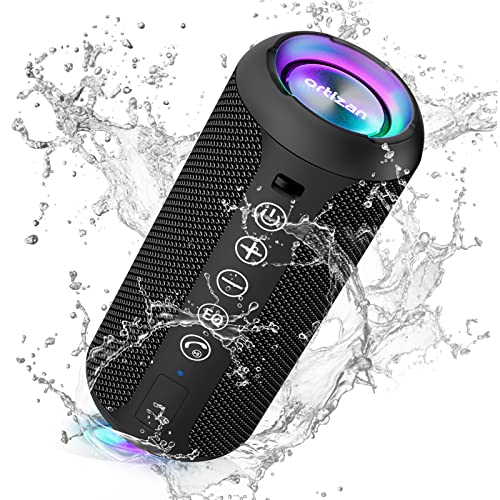
The Ortizan Portable Bluetooth Speaker (1st Gen) is a rugged, feature-packed option for on-the-go audio enthusiasts. With 24W of power from dual 12W drivers, advanced DSP, and passive radiators, it punches above its weight in delivering balanced sound suitable for casual listening anywhere.
Targeted at party-goers, beach lovers, and gift buyers, it's ideal for men and women seeking an affordable, durable speaker for home, outdoors, or travel. Real-world tests show it excels in open spaces, maintaining clarity during hikes or poolside hangs, with TWS pairing enhancing the experience for stereo setups.
Performance shines in bass-heavy tracks and podcasts alike, though it lacks app control. Battery life impressively hits 30 hours at moderate volumes, outlasting most competitors. Overall verdict: a top value pick for versatile, waterproof portability - highly recommended for summer adventures.
Expect deep, boosted bass from the dual passive radiators, paired with crisp treble and detailed mids thanks to the 24W stereo drivers and digital signal processor. This tuning favors energetic playback, revealing punchy lows in EDM or hip-hop while keeping vocals clear in rock or pop.
Soundstage widens impressively with TWS pairing, mimicking surround sound for movies or groups. It handles high volumes without muddiness, maintaining composure up to 65dB, though extreme highs can sharpen slightly at max output.
Bluetooth 5.3 ensures low-latency streaming, with stable connections over 66 feet, making it reliable for playlists from phones, TVs, or laptops.
Built tough with IPX7 waterproofing, this cylindrical speaker (3 x 3 x 6.69 inches, 1.28 lbs) withstands submersion up to 3 feet for 30 minutes, plus dust and splashes - perfect for showers, camping, or boats. The rugged exterior includes RGB LED lights that pulse to the beat, doubling as a night light.
Connectivity covers Bluetooth 5.3, AUX jack, TF card slot, and built-in HD mic for hands-free calls. No HDMI or optical, but wireless focus keeps it simple. Power via Type-C, with 30-hour playtime at moderate levels.
Compact and lightweight, it fits in a backpack easily, with intuitive buttons for play/pause and pairing. Package includes cable and guide for quick setup.

Pros
- Exceptional 24-hour playtime keeps music going all day
- IPX7 waterproof build thrives in rain, pools, or beach settings
- BassUp delivers deep, powerful lows without distortion
- Bluetooth 5 provides quick, reliable pairing
- Compact and lightweight for effortless portability
Cons
- Bass-forward tuning may recess mids on vocal-heavy tracks
- No companion app for EQ customization or firmware updates
- Lacks wired input options like AUX for non-Bluetooth devices
The Anker Soundcore 2 is a compact portable Bluetooth speaker built for versatility, blending rugged durability with solid audio performance at an entry-level price point. Ideal for outdoor enthusiasts, travelers, and casual listeners who want reliable sound without complexity, it shines in scenarios like camping trips, beach outings, or backyard gatherings.
In real-world testing, the speaker impresses with its ability to pump out clear stereo sound even at high volumes, thanks to 12W output and advanced processing. The BassUp feature transforms tracks into bass-rich experiences, making it a hit for electronic, hip-hop, or party playlists. Pairing is instant via Bluetooth 5, and the 24-hour battery holds up during extended use.
While it excels in portability and weather resistance, the sound profile prioritizes lows over nuanced mids, which suits most casual setups but might not satisfy audiophiles seeking balanced studio monitors. Overall, the Soundcore 2 delivers excellent value for active lifestyles, earning a strong recommendation for anyone needing a tough, fun speaker on the go.
With dual neodymium drivers and 12W power, the Soundcore 2 produces a bass-heavy signature featuring deep lows down to around 60Hz, boosted by BassUp and the patented spiral bass port. This creates pounding beats that energize outdoor spaces or small rooms, while mids handle vocals adequately for pop and rock without muddiness.
Treble remains crisp and extended without harshness, ensuring detailed highs in cymbals and strings. The soundstage is wide for a portable unit, offering immersive stereo imaging that outperforms many competitors in its class. Volume peaks cleanly with zero distortion, filling medium-sized areas effortlessly.
Acoustic engineering shines through the digital signal processor, maintaining clarity across volumes and genres. It's tailored for dynamic, fun listening rather than analytical precision, making it perfect for parties or workouts.
The Soundcore 2 sports a classic cylindrical design with a rubberized exterior for grip and durability, measuring compact enough for pockets or bags. IPX7 waterproofing fully submerges in up to 1 meter of water for 30 minutes, ideal for poolsides or rainy hikes.
Connectivity centers on Bluetooth 5 for low-latency, 30-meter range pairing with phones, tablets, or laptops; no wired options like AUX or USB-C audio are included. Simple onboard buttons control power, volume, Bluetooth, and BassUp modes.
Powered by a 5,200mAh Li-ion battery, it delivers 24 hours of playtime at moderate volumes, recharging via USB-C in about 4 hours. Build quality feels premium for the category, with no wobble or creaks during handling.
Everything You Need to Know About AUX Inputs on Bluetooth Speakers
An auxiliary port on a Bluetooth speaker is a physical 3.5 mm analog audio input jack that transfers sound directly from an external device using a standard patch cable. Instead of encoding, transmitting, and decoding audio data through wireless radio frequencies, the speaker receives a continuous electrical audio waveform from the connected hardware. This direct physical pathway bypasses wireless pairing protocols entirely, allowing the internal amplifier to drive the acoustic drivers without relying on Bluetooth chipsets. Understanding this fundamental mechanism clarifies why wired inputs remain widely utilized across portable audio equipment despite rapid advancements in wireless streaming standards.
How the Auxiliary Signal Pathway Operates Inside the Speaker
When an audio cable connects to an auxiliary port, the signal flow differs substantially from a wireless Bluetooth stream. Digital audio files stored on a phone, tablet, or media player are first converted into analog electrical voltages by the digital-to-analog converter inside the source device. That analog signal travels through copper conductors inside the 3.5 mm cable directly into the preamplifier stage of the speaker. The speaker then amplifies those electrical fluctuations and drives the physical voice coils attached to the speaker cones, producing audible acoustic sound waves with zero digital transmission overhead.
Wireless audio connections, by comparison, require the source device to compress the audio into discrete digital packets using transmission codecs like SBC or AAC before broadcasting them over 2.4 GHz radio frequencies. The receiving Bluetooth chipset inside the speaker must capture those radio packets, reassemble them, decode them with its internal digital processor, and feed them through its own internal converter. This multi-stage wireless procedure introduces latency, processing complexity, and potential data transmission errors that a simple physical wire completely avoids. For listeners prioritizing immediate signal response, the direct analog path of an auxiliary connection remains the cleanest and most direct route to the speaker drivers.
Practical Advantages of Choosing a Wired Auxiliary Connection
Eliminating audio latency represents one of the strongest reasons to use an auxiliary cable instead of wireless streaming. Bluetooth audio transmission inherently introduces latency, which often causes an annoying delay between on-screen action and matching dialogue during movies or competitive video games. A direct analog cable transfers electrical signals at near light speed through copper conductors, virtually eliminating perceptible lag. Gamers, video editors, and movie watchers frequently rely on wired connections to maintain perfect lip synchronization without relying on software delay compensation algorithms.
Wired auxiliary connections also solve crowded wireless environments where radio frequency interference causes frustrating signal stutter or sudden disconnections. Wi-Fi routers, smart home appliances, microwave ovens, and neighboring wireless devices all compete within the congested 2.4 GHz frequency band. Furthermore, many classic media sources, including portable CD players, cassette decks, vintage MP3 players, desktop computer monitors, and record players, do not possess built-in Bluetooth transmitters. Even when exploring modern speakers tuned for deep bass, an analog auxiliary port lets you hook up analog music players without purchasing expensive external wireless adapters.
Cable Formats, Connectors, and Hardware Adapters
The vast majority of auxiliary inputs on portable speakers use the standard 3.5 mm TRS mini-jack format. The acronym TRS stands for Tip, Ring, and Sleeve, representing the three distinct electrical contact zones that transmit left channel audio, right channel audio, and electrical ground signals. Standard stereo patch cables feature identical 3.5 mm male plugs on both ends, allowing rapid connection between headphone outputs and speaker inputs. These cables are widely available in varied lengths, featuring protective rubber or braided nylon jackets designed to resist physical wear, kinks, and connector strain during travel.
Modern smartphones frequently lack dedicated 3.5 mm headphone jacks, requiring listeners to use external dongles or specialized adapter cables to interface with an auxiliary port. A USB-C to 3.5 mm adapter or a Lightning to 3.5 mm adapter contains a compact digital-to-analog converter that outputs a standard analog signal into an auxiliary cable. Alternatively, connecting home audio components or stereo receivers may call for a 3.5 mm to dual RCA adapter cable. Matching the proper connector ends ensures your portable speaker interfaces cleanly with virtually any consumer audio source available today without signal mismatch.
Sound Quality Realities: Analog AUX Versus Wireless Bluetooth
Discussions surrounding sound quality between auxiliary cables and Bluetooth often center on audio compression, dynamic range, and signal fidelity. Standard Bluetooth streaming formats like SBC compress digital music files to transmit them efficiently across limited wireless bandwidth, which can occasionally truncate delicate high-frequency details. An auxiliary cable transmits the fully uncompressed analog output generated by your playback device without introducing wireless data reduction or lossy compression artifacts. For high-resolution audio files and lossless streaming services, a physical wired connection preserves subtle sonic nuances that aggressive wireless compression algorithms might otherwise diminish.
The quality of the digital-to-analog converter inside your playback hardware plays a decisive role in actual wired audio performance. A premium dedicated audio player or desktop sound card with a high-grade converter often outputs cleaner analog sound than a basic wireless speaker receiver can produce internally. Conversely, a noisy headphone jack on an aging laptop or budget media player can introduce audible hiss, static, or electrical hum into the speaker amplifier. While high-grade auxiliary cables preserve clean signals, the overall sound remains heavily dependent on the output quality of the source device itself.
Battery Consumption and Playback Controls via Auxiliary Cables
Using an auxiliary input can influence power consumption for both the portable speaker and the connected mobile device. Wireless Bluetooth transmitters and receivers actively consume electrical power to maintain continuous digital handshakes, broadcast radio packets, and monitor signal stability. When a speaker operates via its auxiliary port, it can frequently shut down or idle its wireless radio circuitry, potentially extending internal battery runtime. Models like the Anker Soundcore 2 Portable Bluetooth Speaker provide up to 24 hours of total playtime, and operating over wired inputs reduces strain on active wireless components during long listening sessions away from wall outlets.
A noticeable tradeoff with auxiliary connections involves the loss of playback controls on the physical speaker body. When linked via Bluetooth, the AVRCP protocol enables speaker buttons to pause tracks, skip songs, and adjust playback status remotely on the host phone. An analog auxiliary cable transmits purely electrical audio signals and cannot send digital control commands back to the source device. As a result, you must use your smartphone or media player screen to skip tracks, change albums, or control playlists while connected through an auxiliary jack, leaving the speaker volume buttons to adjust only the local amplifier output.
Why Some Modern Portable Speakers Omit the Auxiliary Port
A growing number of modern portable Bluetooth speakers have eliminated the traditional 3.5 mm auxiliary port entirely from their chassis designs. Waterproof durability represents the leading engineering factor driving manufacturers to remove physical analog jacks. An open 3.5 mm port presents a direct entry point for moisture, sand, and dust unless sealed behind a thick, tightly fitted rubber gasket. If a user forgets to seal the protective port flap before entering the water, the speaker risks immediate internal liquid damage and component corrosion that voids the manufacturer warranty.
Speakers engineered for rugged outdoor use, such as the JBL FLIP 5, Waterproof Portable Bluetooth Speaker, emphasize seamless cylindrical enclosures with IPX7 submersion ratings. By eliminating the auxiliary jack and relying exclusively on wireless Bluetooth streaming and USB-C charging, designers eliminate a primary point of water ingress and mechanical failure. Other models, such as the Ortizan Portable Bluetooth Speaker (1nd Gen) or the compact metal LENRUE A2 Portable Wireless Bluetooth Speaker, choose to retain the auxiliary jack alongside memory card slots or charging ports. Choosing between these hardware designs requires weighing the convenience of legacy wired playback against the robust peace of mind offered by sealed, port-free enclosures.
Troubleshooting Buzzing, Low Volume, and Static on AUX Connections
Unwanted static, humming noises, or weak volume represent the most common operational headaches encountered when using auxiliary cables. If you hear an irritating low-frequency hum while the speaker and source device are both plugged into wall chargers, you are likely experiencing a ground loop. Ground loops occur when multiple connected audio components share different electrical grounding paths, creating an audible electrical loop through the copper audio cable. Disconnecting the charging cable from either device or inserting an inexpensive ground loop isolator between the cable and the speaker promptly resolves this background interference.
Low volume issues on auxiliary connections usually stem from improper gain staging between the two connected audio devices. Because an auxiliary cable receives analog signal levels, setting your phone or laptop volume too low starves the speaker amplifier of adequate input signal. To achieve clear sound without background hiss, raise the source device volume to roughly eighty percent before adjusting the master volume buttons on the speaker itself. Additionally, inspecting the 3.5 mm socket with a flashlight and gently clearing lint or dust with a dry wooden toothpick ensures clean metal contact without channel dropouts.
Auxiliary Inputs in Multi-Speaker Configurations and Linking Setups
Integrating an auxiliary cable into multi-speaker environments presents unique possibilities and specific hardware restrictions. While proprietary wireless linking features allow modern speakers to broadcast sound across multiple units, auxiliary inputs typically feed sound into only one standalone speaker enclosure. Some advanced audio systems support daisy chaining, where an auxiliary output port passes the analog signal along to a secondary speaker unit. Reviewing our dual speaker setup guide illustrates how proper cable splitters and channel assignment can split stereo signals into dedicated left and right channels for expanded room coverage.
Alternative audio technologies also exist for users who want multi-device flexibility without physical cables or traditional Bluetooth pairing menus. Innovative gadgets like the Oresoc Induction Speaker 5-in-1 Wireless Bluetooth use magnetic induction sensors to amplify phone audio instantly when placed on a stand, offering an intriguing middle ground between wired simplicity and wireless convenience. That induction method provides an alternative path for quick sound reinforcement without plugging in cables or opening device settings. Understanding how induction audio, standard Bluetooth 5.3, and wired auxiliary jacks compare allows listeners to select the most practical audio interface for their personal desktop or bedside listening spaces.
Selecting the Best Connection Mode for Your Daily Audio Routine
Deciding whether an auxiliary port is essential depends entirely on your collection of playback devices and primary listening environments. If you primarily stream podcasts and playlists from a contemporary smartphone during outdoor beach trips or gym workouts, pure wireless Bluetooth provides unmatched freedom and simplified waterproofing. However, if you plan to connect your speaker to a desktop computer monitor, gaming console controller, or analog turntable, an auxiliary port remains an indispensable feature. Evaluating both connection options ensures your portable speaker satisfies both modern wireless convenience and legacy analog versatility for years to come.
Keeping an inexpensive 3.5 mm auxiliary cable stored inside your travel bag or glove compartment provides an invaluable backup plan for any audio setup. Wireless pairing glitches, dead Bluetooth controller chips, or drained mobile wireless radios will not silence your music when you have a physical cable ready to bridge the gap. By understanding how auxiliary jacks operate alongside modern Bluetooth capabilities, you can build a versatile portable audio kit that delivers reliable, clear sound across any listening environment.


Write Your Review
No reviews yet. Be the first to share your experience!