


Language learners often encounter significant hurdles when bridging the gap between Spanish syntax and English pronunciation. Understanding how to teach english to spanish speakers requires a balanced strategy that pairs structured printed curriculum with clear acoustic feedback for auditory discrimination. Spanish phonology features five pure vowel sounds, whereas English utilizes over a dozen nuanced vowels and subtle consonant clusters that can sound nearly identical to an untrained ear. Connecting instructional exercises with a reliable bluetooth home speaker system for clear sound allows learners to distinguish critical phonetic boundaries during spoken dialogues. This structured auditory and visual combination helps students build confidence without feeling overwhelmed by complex grammar rules.
Effective language instruction relies on steady progression from basic everyday vocabulary to independent conversational fluency. Instructors and self-directed learners benefit from dedicated reference materials, systematic level-based textbooks, and consistent daily speaking exercises. Clear vocal reproduction in the study space ensures that subtle word endings like past-tense verb suffixes remain clearly audible during listening drills. Combining systematic curriculum texts with targeted pronunciation practice creates an engaging environment where language acquisition feels natural and rewarding. Setting up a dedicated study space with accessible reference tools establishes the foundation for lasting linguistic proficiency.




Core Principles for Teaching English to Spanish Speakers
Instructional success when guiding Spanish speakers toward English fluency hinges on understanding how the two languages interact. Instructors must address acoustic contrast, structural grammar variations, and visual vocabulary acquisition in a systematic manner. Establishing a steady learning environment that blends phonological training with progressive reading materials creates a durable framework for ongoing progress.
Addressing Core Phonetic Differences and Pronunciation Hurdles
Spanish and English share the Latin alphabet, but their underlying phonetic systems operate on distinct rules. Spanish possesses five clear vowel sounds that rarely change regardless of surrounding letters. English features over twelve vowel sounds, along with varied diphthongs that shift based on syllable stress. Students frequently struggle to distinguish minimal pairs such as ship and sheep because Spanish lacks those intermediate vowel heights. Instructors can resolve this confusion by isolating vowel production through repetitive vocal exercises.
Consonant articulation presents another significant hurdle for native Spanish speakers. The English sounds for the letters b and v require distinct physical mechanics, whereas Spanish treats them almost interchangeably. In addition, English words frequently feature final consonant clusters such as desks or helped, which do not occur naturally in Spanish. Learners often drop the trailing consonant or insert a neutral vowel sound to ease pronunciation. Isolating these terminal sounds with slow repetition helps learners build the oral muscle memory required for natural speech.
Initial s consonant combinations create a predictable pronunciation pattern that requires targeted intervention. In Spanish, words never begin with an s followed immediately by another consonant without a preceding vowel e, as seen in escuela. Consequently, Spanish speakers often say eschool or estart when reading English text aloud. Pointing out this unconscious phonetic transfer gives learners conscious control over their speech production. Practicing continuous sound linking helps eliminate the unintended initial vowel sound.
Optimizing Audio Clarity and Listening Environments for Speech Recognition
Auditory perception serves as the bedrock of spoken language development. When a learner cannot clearly perceive the acoustic difference between subtle phonemes, reproducing those sounds accurately becomes difficult. Most English speech consonants rely on higher frequency bands between two and five kilohertz for intelligibility. Standard built-in laptop speakers often lack the frequency resolution needed to deliver crisp sibilants and stop consonants. Deploying a balanced audio playback system ensures that subtle phonetic variations remain crisp and audible across the study area.
Classroom environments and home study spaces benefit substantially from intentional speaker placement and acoustic management. Position speakers at ear level toward the listener to prevent boundary reflections from muddying spoken consonant definition. Setting up home wifi speakers for clear playback can distribute speech lessons evenly throughout an instructional room without distortion. Avoid excessive low-frequency resonance that can mask vocal midbands during recorded pronunciation drills. A clean audio signal allows students to detect the delicate aspiration of English voiceless stops.
Volume calibration plays an equally vital role during intensive listening sessions. Raising the volume too high can introduce acoustic distortion that fatigues the listener and obscures delicate vowel transitions. Conversely, playback that is too quiet forces students to strain, causing them to miss unstressed function words and grammatical particles. Maintaining a natural conversational volume mirrors real-world communication while preserving high vocal fidelity. Quality acoustic output gives learners the confidence to mimic native pitch contours and cadence accurately.
Structuring Beginner Lessons with Progressive Coursebooks
Beginning language instruction requires a systematic foundation that limits cognitive overwhelm. Early lessons should concentrate on essential communicative vocabulary, predictable phonetic patterns, and fundamental sentence construction. Using a structured curriculum text such as How to Teach English to a Spanish Speaker Level 1 gives teachers and learners an organized path forward. This approach introduces essential survival phrases and primary grammatical structures before advancing toward abstract concepts. Grounding instruction in a structured framework ensures that students master daily essentials before confronting irregular forms.
Supplemental introductory texts help reinforce fundamental concepts through varied explanations. Incorporating How to Teach English to a Spanish Speaker allows instructors to clarify basic structural differences between the two languages early in the learning process. The book emphasizes practical lesson delivery methods designed to establish immediate classroom rapport and build early speaking momentum. Short practice sessions help reinforce newly introduced sentence patterns without exhausting the learner’s attention span. Guided oral practice creates a reliable bridge between printed text and spoken application.
Repetitive written exercises reinforce the oral skills developed during classroom interaction. Utilizing resources like Preston Lee’s Beginner English For Spanish provides accessible bilingual explanations that students can review independently outside lesson hours. Consistent workbook drills help solidify basic subject-verb agreement, common noun plurals, and essential question structures. Self-guided practice builds learner autonomy while allowing instructors to pinpoint specific conceptual gaps during follow-up reviews. Combining guided dialogue with targeted independent study establishes an effective daily learning rhythm.
Leveraging Visual Dictionaries to Bypass Translation Fatigue
Mental translation between Spanish and English can create a cognitive bottleneck that slows conversational response times. When learners translate words back into their native language before responding, their speaking rhythm becomes fragmented. Visual learning tools provide an effective alternative by linking target vocabulary directly to concrete imagery. Working with Merriam-Webster’s Spanish-English Visual enables students to connect English nouns directly with real-world objects. This visual reference method eliminates the middle translation step and accelerates long-term lexical retention.
Visual dictionaries excel at demystifying complex technical, domestic, and vocational terminology. Learners can explore full-color illustrations of everyday settings, mechanical assemblies, and natural environments to acquire domain-specific terminology. Seeing related terms clustered within a unified visual scene helps students understand context and usage without wading through dense bilingual definitions. This contextual learning proves particularly beneficial for adult learners preparing for English-speaking workplaces. Visual anchors also make abstract spatial prepositions, such as under and through, much easier to comprehend.
Instructors can integrate visual dictionaries into interactive classroom games and descriptive speaking exercises. Asking a student to describe a detailed illustration forces them to retrieve newly learned adjectives and prepositional phrases in real time. This active retrieval strengthens cognitive pathways and reinforces correct sentence structures under low-pressure conditions. Over time, students build a comprehensive visual catalog in memory that supports spontaneous speech production. Visual engagement keeps learners energized and reduces the frustration often associated with memorizing long vocabulary lists.
Advancing Intermediate Grammar and Sentence Scaffolding
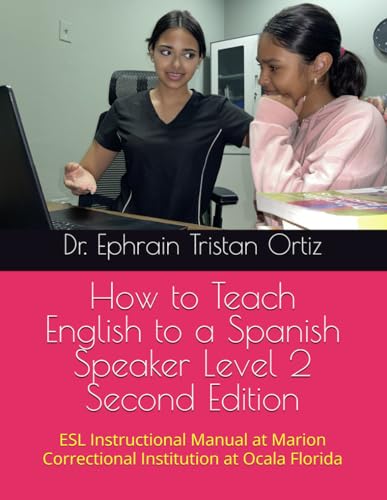
Moving from basic vocabulary into intermediate communication requires a shift toward complex grammatical scaffolding. As students expand their expressive abilities, sentence structure discrepancies between Spanish and English become more prominent. Moving into How to Teach English to a Spanish Speaker Level 2 helps learners tackle intermediate grammar challenges with targeted guidance. This stage focuses heavily on auxiliary verb mechanics, compound tenses, and relative clauses that give speech greater nuance. Addressing these structural differences methodically prevents students from plateauing at a basic communication level.
Subject pronoun omission represents one of the most persistent syntactic challenges for native Spanish speakers. Because Spanish is a pro-drop language with highly inflected verb endings, subject pronouns are routinely omitted in casual speech. English, in contrast, strictly requires explicit subject pronouns in almost all non-imperative clauses. Students frequently produce sentences like is raining or went to the store because the grammatical actor feels implied to them. Practicing dummy pronouns such as it and there reinforces the mandatory nature of English subject positioning.
Intermediate learners must also master the complex auxiliary verb system used for English questions and negatives. In Spanish, transforming a statement into a question simply involves altering vocal inflection or inverting word order. English relies on dummy operators like do, does, and did, which carry no inherent lexical meaning in negative or interrogative clauses. Incorporating How to Teach English to a Spanish Speaker Level 3 guides students through advanced conditional phrasing and modal verb combinations. Methodical drills with auxiliary verbs help learners internalize natural English question patterns without hesitation.
Navigating False Friends and Lexical Traps with Precise Dictionaries
Cognates offer an immediate boost to beginner reading comprehension, but they also harbor treacherous false friends. Words that look nearly identical in Spanish and English often carry completely different meanings due to distinct etymological divergence. For instance, the Spanish word actual means current or present, while the English word actual translates to real or factual. Similarly, éxito means success rather than a physical exit, and embarazada signifies pregnant rather than embarrassed. Highlighting these false cognates early saves students from awkward social misunderstandings and professional miscommunications.
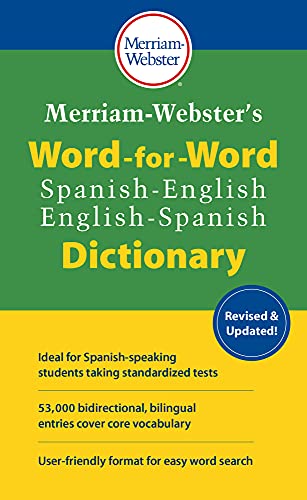
Prepositional mapping presents another major lexical hurdle that requires careful disambiguation. Spanish speakers frequently rely on the versatile preposition en to cover a wide array of spatial and temporal relationships. English divides those same situations among in, on, and at, each carrying specific boundary rules. A student might say on the car or in the bus due to direct linguistic interference from their native tongue. Using a clear reference text like Merriam-Webster’s Word-for-Word Spanish-English helps learners check direct equivalents and clarify testing requirements. Consistent contrastive drills help fix appropriate prepositional pairings in long-term memory.
Literal translation often fails when dealing with phrasal verbs, idioms, and compound expressions. Spanish forms verbal concepts primarily through single inflected roots, whereas English relies heavily on multi-word phrasal combinations. Verbs like get up, get over, get along, and get through share a common root but describe unrelated concepts. Having students maintain a personal reference journal of verified phrasal verbs accelerates their grasp of natural vernacular English. Precise bilingual dictionaries provide the necessary reality check when intuitive word-for-word substitutions fall short.
Integrating Spoken Dialogues and Audio Playback into Daily Routines
Daily conversational practice transforms theoretical grammatical knowledge into spontaneous communicative ability. Reading textbook exercises silently builds passive recognition, but verbalizing dialogues cements acoustic and motor speech pathways. Directing students to listen to natural conversational recordings through dedicated music speakers exposes them to natural vocal cadence and reduced forms. Hearing native speakers connect words naturally reveals how sounds blend together in real conversation. Practicing vocal shadowing, where the learner speaks simultaneously along with high-fidelity audio, sharpens intonation and conversational timing.
English and Spanish operate on entirely distinct rhythmic timing systems that impact overall intelligibility. Spanish is a syllable-timed language where each syllable receives roughly equal duration and acoustic weight during speech. English operates on a stress-timed metric, where stressed syllables occur at relatively regular intervals while unstressed vowels compress into the schwa sound. Spanish speakers who pronounce every English syllable with equal emphasis sound overly deliberate and robotic. Practicing sentence stress drills helps learners recognize which content words require acoustic emphasis and which functional words compress naturally.
Structured role-playing exercises encourage students to apply newly acquired phrases within realistic communicative scenarios. Simulating practical interactions, such as ordering food, resolving customer service inquiries, or participating in workplace meetings, builds conversational stamina. Instructors should provide targeted feedback on vocal clarity and pacing rather than interrupting every grammatical slip. Recording these dialogue sessions and playing them back on clear desktop monitors enables students to evaluate their own pronunciation progress objectively. Self-assessment builds acute auditory awareness that accelerates self-correction during everyday conversations.
Measuring Progress and Maintaining Long-Term Conversational Confidence
Evaluating language development requires diverse assessment methods that extend beyond standard multiple-choice grammar tests. Periodic speaking assessments, dictation tasks, and spontaneous conversational prompts give a realistic picture of overall communicative competence. Instructors should observe whether a student applies newly mastered phonemes and auxiliary structures naturally without explicit prompting. Documenting noticeable improvements in speech flow and listening comprehension reinforces the student’s motivation to tackle more demanding linguistic material. Constructive feedback highlights tangible milestones while outlining specific phonetic areas that warrant further practice.
Long-term language mastery depends on cultivating sustainable daily study habits and maintaining emotional resilience. Language acquisition is an ongoing journey that inevitably includes temporary plateaus, pronunciation setbacks, and moments of hesitation. Encouraging students to engage with English podcasts, audiobooks, and conversational exchange groups keeps learning fresh and personally meaningful. Celebrating communicative breakthroughs reinforces confidence and helps students view language mistakes as natural stepping stones toward fluency. With structured textbooks, clear audio resources, and dedicated practice routines, Spanish speakers can achieve genuine communicative confidence in English.









Write Your Review
No reviews yet. Be the first to share your experience!