


Many listeners face sudden silence when a portable audio device quietly shuts down during a quiet workday or background playback session. Most modern wireless units feature automated energy-saving timers designed to power down internal amplifiers after several minutes of silence. Understanding how to keep bluetooth speaker always on requires addressing how source devices transmit digital audio signals, how standby circuits detect active streams, and how power inputs affect internal sleep timers. Whether you are running ambient soundscapes, waiting for communication alerts, or streaming daily podcasts, unwanted shutdowns disrupt continuous listening.
Hardware designs and internal firmware limits vary significantly across compact portable units, wearable audio accessories, and high-output Bluetooth speaker options. Certain wireless models remain active indefinitely whenever connected to a reliable charging source, while other designs power down regardless of whether a charging cable is attached. Exploring source-level audio keep-alive techniques, silent playback loops, and operating system power configurations provides a dependable path toward uninterrupted audio. With the proper adjustments, you can maintain continuous wireless audio output without dealing with unexpected shut-offs throughout the day.
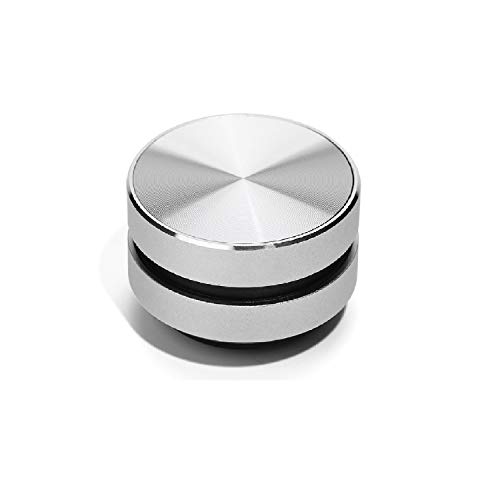
Pros
- Versatile bone conduction creates fun, instrument-like sounds on everyday objects
- True wireless stereo elevates solo play to full surround experience
- Compact portability fits any bag for on-the-go creativity
- Strong Bluetooth compatibility with major phones and tablets
- Powers up to 115dB for room-filling volume on ideal surfaces
Cons
- Sound quality shines brightest on hollow surfaces, less impressive standalone
- Volume and tone vary by object thickness and material
- Requires two units for full stereo, single unit is mono only
The Bigvapor Bone Conduction Speaker redefines portable audio by using vibration technology to turn any hollow object into a speaker. Stick it on a plastic box, guitar body, or even a dashboard, and enjoy a spectrum of sound effects that mimic different instruments. It's a game-changer for inventive users who want customizable audio without bulky gear.
Ideal for party hosts, travelers, or home tinkerers, this mini speaker pairs via Bluetooth with iPhones, Samsung devices, and tablets for music, calls, games, or podcasts. Two units connect automatically for true wireless stereo, delivering a surround experience perfect for tailgates or casual hangouts.
In real-world tests, it punches up to 115dB on thin hollow surfaces, creating lively vibes for small groups. While surface-dependent, its creativity factor makes it stand out from standard speakers. Verdict: A must-buy for fun-loving audio explorers seeking portable innovation.
Bone conduction tech vibrates surfaces for a dynamic sound signature that shifts from bassy thumps on buckets to crisp highs on glasses. Vocals stay clear for podcasts and calls, while volume hits 115dB on optimal thin objects, filling rooms without distortion.
Bluetooth range holds steady for stable streaming indoors or out, with TWS pairing two speakers for balanced 2.0 stereo. No companion app needed, but expect playful experimentation to dial in the best tone for movies or games.
FM radio adds versatility for live tunes, making it reliable for workouts where traditional speakers falter.
This ultra-mini design weighs next to nothing, making it the ultimate pocketable companion for hikes, beach days, or desk setups. Its rugged build handles daily tosses, though no official IP rating means keeping it dry during pool parties.
Portability reigns supreme, with a form factor that clings to surfaces via vibration alone, no clips required. Pair it with hollow finds like storage bins for extended play without bulk.
Battery life supports hours of vibes on a single charge, quick top-ups keep the party going. Focus on its lightweight freedom for all-day creativity without drain worries.

Pros
- Impressive vocal volume capable of cutting through loud ambient work environments.
- Firm spring-loaded clip stays securely in place during vigorous movement.
- Exceptional 20-plus hour battery life for an ultra-compact portable form factor.
- Safer open-air listening alternative to earbuds for enhanced situational awareness.
Cons
- Limited low-end sub-bass response due to the compact micro-driver housing.
- Audio can exhibit high-frequency sharpness at the absolute maximum volume limit.
- Single driver mono configuration lacks a wide stereo soundstage.
The AA AUDIO ACCESSORY Wearable Clip-On Bluetooth Speaker is engineered specifically for users who need personal soundtrack capability without isolating themselves from their surroundings. For warehouse workers, construction crews, utility operators, and avid hikers, standard in-ear monitors pose significant safety hazards. This micro-sized speaker solves that problem by anchoring directly to your shirt collar, harness, or backpack strap to project sound directly toward your ears.
In practical everyday testing, the speaker excels through its rugged utility. The reinforced tension clip is noticeably stronger than standard badge-style accessories, preventing the unit from flying off when bending down or running. Its tactile control interface is another highlight: distinct, raised buttons allow you to easily pause, skip, or answer incoming phone calls blind, even with heavy work gloves on.
Call quality through the integrated microphone is clean and intelligible for quick job updates and phone conversations. Voice assistant integration functions seamlessly, allowing hands-free dialing or weather checks via Siri and Google Assistant with a single tap. It effectively turns into a wearable personal communication pod.
Ultimately, this wearable speaker fills a vital niche for outdoor enthusiasts and physical laborers. While it does not pretend to deliver concert-hall audiophile bass, its combination of high acoustic volume, day-spanning battery life, and tough build makes it a dependable daily tool for on-the-go listening.
Acoustically, the AA AUDIO ACCESSORY speaker is tuned with an emphasis on upper midrange and treble clarity. This targeted frequency response allows spoken-word podcasts, audiobooks, and vocal tracks to punch cleanly through ambient noise. Because it utilizes a compact, highly efficient driver, the speaker naturally rolls off in the deep sub-bass register below 150Hz, avoiding the muddy distortion that often plagues tiny enclosures.
Volume headroom is remarkably high for an enclosure measuring just three inches tall. With the ability to hit peaks up to 120dB, the micro-driver produces enough sound pressure to be heard over commercial lawn mowers, table saws, and busy street traffic. For everyday listening, setting the speaker between 60% and 80% volume produces an optimal balance of crisp highs, clean dialog, and battery conservation.
Measuring an ultra-portable 1.4 by 1.8 by 3 inches, this unit is small enough to fit inside a pocket yet sturdy enough to survive demanding environments. The impact-resistant matte black plastic housing protects internal components against daily drops, while waterproof sealing keeps moisture and dirt from reaching the driver cone during unexpected rain showers.
Hardware performance is driven by an upgraded 800mAh rechargeable lithium-ion battery cell. This provides up to 20 continuous hours of playback at loud listening levels, easily outpacing smaller wearable competitors that average only 4 to 6 hours. Reliable Bluetooth wireless connectivity ensures a strong, stutter-free link to iOS and Android smartphones over standard operational distances.
Preventing Unwanted Auto Shut-Off on Bluetooth Speakers
Keeping a wireless speaker continuously powered on requires preventing its internal standby timer from triggering due to signal absence. Most manufacturers program audio hardware to power down automatically after ten to twenty minutes of silence to conserve battery reserves. By maintaining a continuous low-level audio stream, configuring host device output parameters, and providing continuous power, you can successfully bypass these automated shut-off routines. The following sections outline the technical steps and hardware configurations needed to achieve reliable, continuous playback.
The Mechanics of Auto-Sleep and Signal Detection
Automated sleep timers in Bluetooth audio devices operate by monitoring incoming audio data packets and line-level voltages. When a paired smartphone, computer, or media player stops transmitting an active waveform, the internal digital signal processor registers an idle state. If this silence continues past a preset threshold, the amplifier circuit cuts power to protect the internal battery. This process happens automatically at the firmware level, meaning the speaker does not differentiate between intentional pauses and forgotten connections.
Understanding this threshold is essential for keeping the connection alive without blasting unwanted noise into your living space. Standby circuits generally look for an audio signal amplitude that rises above a specific decibel floor. If an incoming audio stream drops below this detection limit, the speaker treats the playback as complete silence and starts its countdown. Bypassing this behavior means you must feed the amplifier a continuous stream that remains technically active while remaining acoustically unobtrusive.
Some speakers couple this sleep timer to their Bluetooth radio connection status rather than direct audio streaming. If an active Bluetooth link exists, certain firmware builds remain awake indefinitely as long as the host device maintains an open channel. However, modern power-saving profiles on mobile operating systems frequently put idle Bluetooth channels into low-power states. This software-level suspension mimics disconnection, causing the external speaker to initiate its scheduled power-down sequence.
Continuous Low-Level Audio and Inaudible Keep-Alive Signals
The most reliable method to keep an active connection from sleeping is transmitting a continuous, imperceptible audio track. An audio file containing sub-audible low frequencies or an ultra-low-volume sound loop prevents the digital processor from reading total silence. Because the playback stream never truly stops, the internal timer never begins its countdown toward shutdown. You can create or download simple looping tracks of near-silent pink noise, low-frequency hums, or ambient nature sounds to accomplish this goal.
Setting the playback volume correctly on both the source and the speaker ensures this workaround functions effectively. If your source device volume is set near zero while the speaker volume is high, the speaker might fail to register the digital signal amplitude. Increasing the media volume on your phone or computer to fifty percent while keeping the silent track low avoids triggering sleep mode. This balanced gain structure keeps the data stream robust enough for the receiving hardware to recognize ongoing playback.
Dedicated keep-alive audio files can be looped endlessly using standard media player applications or web browser tabs. Several online tools and local playlist files are designed specifically to ping wireless speakers with a brief, inaudible tone every few minutes. This periodic signal resets the auto-sleep timer repeatedly without requiring constant active music. For desktop users, leaving a looping silent media file active in the background represents the simplest software solution available.
Maintaining Continuous Power Delivery and Charging Quirks
Power delivery methods play an equally crucial role in determining whether a speaker stays operational over extended periods. Many portable speakers switch to different power-management profiles depending on whether they run on internal batteries or external current. Supplying steady current via a dedicated wall adapter often extends or completely disables the auto-off timer on select models. Connecting your audio equipment to a reliable AC wall plug is usually the first physical step in preventing shutdowns.
Using portable power banks introduces a separate technical complication that frequently causes unintended shut-offs. Modern external power banks feature smart circuitry that shuts off their output ports when the connected device draws minimal current. When a Bluetooth speaker reaches full charge, its current draw drops significantly, prompting the battery pack to cut output entirely. Once external power drops, the speaker reverts to its internal cell and executes its standard battery-saving shutdown routine.
To avoid this automatic power bank shut-off, select power banks that include a designated low-current or trickle-charge mode. These modes disable the minimum current draw sensor, allowing continuous electrical flow regardless of battery charge state. Alternatively, using a standard wall charger eliminates power-bank cut-offs altogether. A stable power supply ensures the internal electronics have constant operational current to support sustained wireless standby.
Host Device Power Settings on Mobile and Desktop Platforms
Host operating systems often cause speaker disconnections through their own internal battery optimization frameworks. On Android devices, aggressive background task management frequently puts streaming audio apps to sleep when the screen turns off. To keep audio streaming reliably, you should exempt your primary media playback apps from battery optimization in system settings. Allowing background activity ensures that keep-alive streams and continuous audio tracks remain uninterrupted when your phone locks.
Desktop operating systems like Windows and macOS incorporate energy saver settings that power down wireless adapters during idle periods. In Windows Device Manager, users can inspect the properties of their Bluetooth adapter and uncheck the option allowing the system to turn off the device to save power. Disabling this setting maintains a constant connection state between the computer and the external speaker. Similarly, setting your computer sleep timers to prevent full system sleep keeps background audio services running smoothly.
Mobile users on iOS can adjust audio routing and auto-lock durations to keep active sessions alive during work hours. Setting display auto-lock to longer intervals or using guided access can keep essential audio monitoring apps running continuously. When a phone remains powered and active, its Bluetooth stack maintains a high-priority connection with connected peripherals. These host-side adjustments ensure that disconnections originate neither from software crashes nor unintended wireless sleep cycles.
Wearable and Specialized Form Factor Considerations
Compact and wearable audio designs feature unique battery architecture that directly affects continuous operation. For instance, the AA AUDIO ACCESSORY Wearable Bluetooth Speaker Clip includes an 800mAh battery rated for over twenty hours of continuous playtime and delivers up to 120dB of audio output. Because this wearable unit is tailored for on-the-go utility with an integrated clip and built-in microphone for hands-free calls, its internal circuits are tuned for high efficiency. Keeping a compact clip-on speaker awake requires steady audio signals or prompt voice assistant interactions to prevent its portable battery saver from engaging.
Specialized acoustic hardware like the Bigvapor Bone Conduction Speaker handles continuous playback through a completely different physical mechanism. This compact bone conduction transducer turns hollow surfaces like plastic boxes, photo frames, or acoustic boxes into sound resonators, capable of reaching up to 115dB depending on surface placement. The unit also includes True Wireless Stereo capability and a built-in FM radio mode. Switching this speaker into FM radio mode provides continuous analog audio reception that bypasses external Bluetooth idle timers entirely, making it easy to maintain continuous background sound.
Evaluating the intended use case of your specific hardware helps determine the most effective approach for ongoing power. Wearable clip models excel when paired with active mobile devices that deliver frequent notifications, communication calls, or continuous music. Surface-conduction speakers offer alternative operational modes like radio reception that operate independently of paired host devices. Selecting the right audio input path based on product capabilities makes continuous operation far easier to achieve.
High-Output Enclosures and Large-Area Audio Configurations
Power management behaviors in compact speakers often contrast sharply with systems engineered for larger physical spaces. Dedicated outdoor Bluetooth speaker configurations frequently employ heavier power delivery systems and larger amplifiers that handle constant electrical current with ease. These robust outdoor units are often built to remain operational throughout long gatherings, making their auto-off settings easier to adjust via physical switches or companion smartphone software. Their higher thermal mass also helps dissipate electrical heat during uninterrupted playback.
Similarly, setups designed for broad coverage, such as Bluetooth speaker coverage solutions, regularly accommodate continuous power through dedicated AC adapters. When planning audio for large rooms, workshops, or outdoor spaces, choosing speakers with accessible power management settings is much more efficient than troubleshooting small portable sleep timers. These larger systems often allow users to disable auto-standby completely inside their companion utility apps. Knowing the physical design limits of your audio hardware helps you choose between software tricks and dedicated permanent installations.
Thermal Management and Battery Longevity in Constant Power Mode
Keeping any battery-powered electronic device connected to external power indefinitely introduces important thermal and maintenance considerations. Lithium-ion batteries generate internal heat during simultaneous charging and discharging cycles. If a compact speaker remains tethered to a high-output wall charger in a poorly ventilated area, sustained elevated temperatures can degrade chemical cell capacity over time. Ensuring proper ambient airflow around the speaker enclosure helps protect internal components during long-term operation.
To preserve long-term battery health while maintaining an always-on state, inspect the manufacturer guidelines regarding continuous charging. Some modern speakers include pass-through power circuits that power the amplifier directly while bypassing fully charged battery cells. For speakers lacking this smart pass-through capability, occasionally unplugging the unit and allowing the cell to cycle down can help maintain balanced battery health. Practicing safe charging habits prevents overheating and ensures reliable operation across months of daily use.
Diagnostic Troubleshooting for Premature Disconnections and Standby Triggers
If your speaker continues to power down despite streaming continuous audio, systematic troubleshooting will isolate the exact failure point. Start by testing the Bluetooth connection with a secondary host device like a tablet or alternate laptop. If the speaker stays awake on a laptop but shuts down when paired to a phone, the issue lies in the phone battery optimization settings. Isolating the source device confirms whether software management or internal speaker hardware triggers the shut-off.
Next, check the stability of your physical charging cable and electrical supply. A loose micro-USB or USB-C connector can cause micro-interruptions in charging current, leading the internal circuit to register a disconnect event. When the speaker senses that power has been removed, it may reset its operational profile and drop back into sleep mode. Replacing frayed cords or testing a different wall plug ensures that unstable voltage is not resetting the power board.
Finally, inspect whether the speaker features a dedicated companion app with an adjustable auto-power-off timer. Several wireless speaker brands provide mobile applications where users can toggle the sleep timer between five minutes, thirty minutes, or permanently off. If an official application exists for your speaker model, checking these internal software preferences can resolve the shutdown behavior instantly. Exploring manufacturer app toggles provides an official, clean path to maintaining active audio without workaround tracks.
Practical Verification and Long-Term Setup Stability
Verifying that your speaker remains operational requires conducting a controlled test over several hours. Set up your chosen keep-alive method, connect steady external power, and leave the equipment running without touching controls. Check back after thirty minutes, sixty minutes, and two hours to confirm the indicator light remains active and the Bluetooth link holds. If the connection survives past the usual auto-off window, your continuous playback setup is properly configured.
Maintaining a dependable always-on audio setup comes down to balancing signal transmission, source settings, and continuous power delivery. Whether you utilize looped ambient audio tracks, modify system Bluetooth properties, or employ built-in FM radio features, preventing signal silence is the universal key. Taking the time to configure these hardware and software parameters ensures seamless background sound and responsive voice alerts whenever you need them.


Write Your Review
No reviews yet. Be the first to share your experience!