
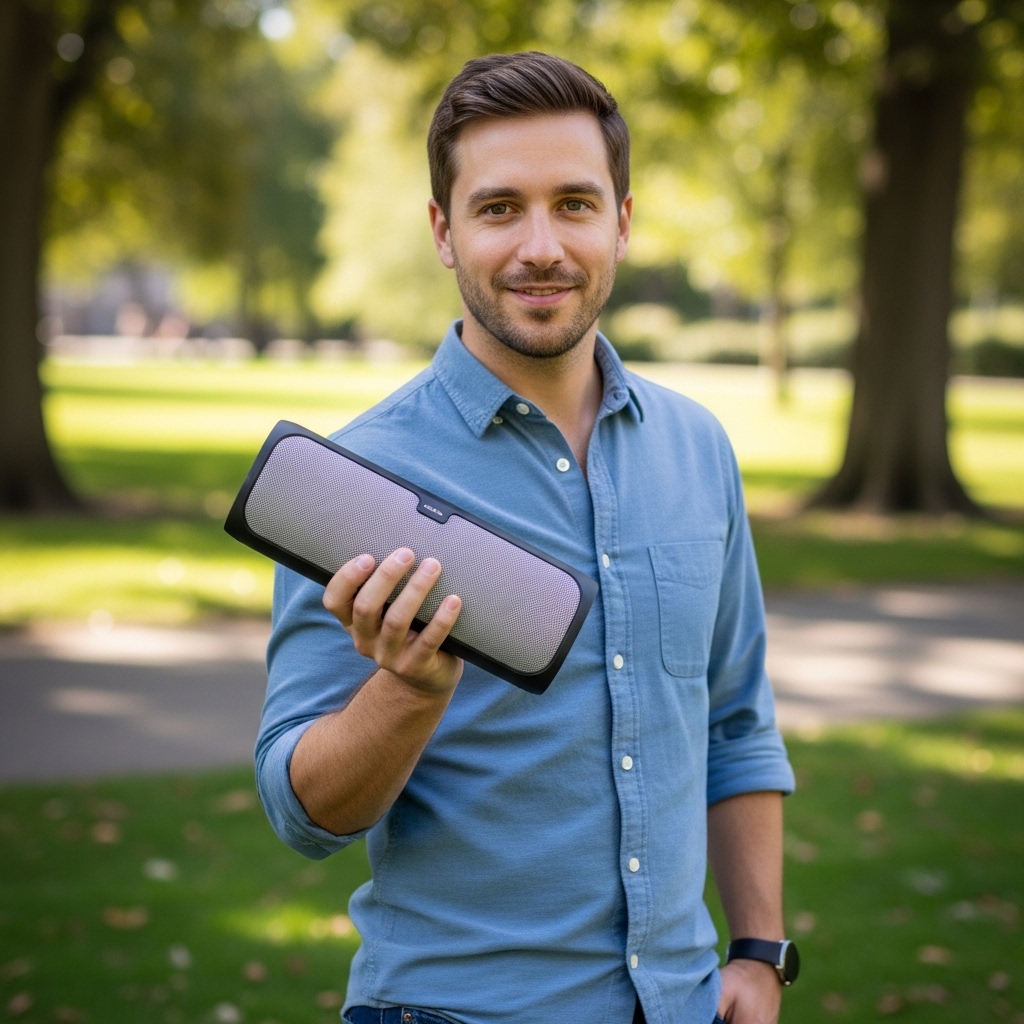

Streaming your favorite playlists from a smartphone turns any room into an engaging listening space, but phone speakers rarely deliver full acoustic impact. Dedicated active monitors, bookshelf stereo pairs, and home theater receivers offer the dynamic range and bass weight that handheld devices cannot produce alone. Figuring out how to connect speakers to iphone allows music listeners to unlock cleaner vocal clarity and punchier bass response across various rooms in the house. Wireless pairing provides convenient everyday listening, while hardwired connections eliminate wireless lag for high-resolution playback. If you are comparing versatile gear, our review of portable Bluetooth audio options highlights models built for reliable room-filling sound.
Different hardware generations require specific connection pathways, ranging from traditional Bluetooth protocols to physical Lightning and USB-C adapters. Modern iPhones handle audio output differently depending on whether your speaker system is active, passive, or connected through an external digital-to-analog converter. Selecting the right physical adapter or wireless protocol prevents unwanted distortion, ground hum, and signal dropouts. Understanding these audio routes ensures your playback remains steady whether you are playing games at a desk or hosting a gathering on the patio. Taking time to establish clean signal routing keeps your speakers performing at their intended acoustic potential.


Pros
- Delivers pristine 24-bit/48kHz lossless audio with zero audible hum or background hiss.
- Enables simultaneous 2.4A rapid charging without throttling playback volume or quality.
- Instant plug-and-play operation with no drivers, Bluetooth pairing, or extra apps required.
- Compact, travel-ready design built with reinforced strain relief for daily use.
Cons
- Does not support in-line microphones or hands-free phone calls.
- Incompatible with Apple CarPlay and direct data transfer cables.
- Designed for Lightning ports only, excluding newer USB-C iPhone models.
The Ocbuo 2-in-1 Lightning to 3.5mm Aux Adapter addresses one of the biggest pain points for mobile audiophiles and daily commuters: the absence of a dedicated headphone jack on modern mobile devices. Designed for listeners who prefer the uncompressed dynamic range of wired car stereos, home audio setups, or studio headphones, this handy splitter lets you stream uninterrupted high-fidelity sound while supplying your iPhone or iPad with fast 2.4A charging current.
In everyday use, the adapter delivers dependable, interference-free transmission. Whether connected to an auxiliary jack during long road trips or driving powered desktop speakers at your workstation, it maintains a snug, secure fit. You get instant access to your music library, high-res streaming services, and video soundtracks without sacrificing your battery level during extended listening sessions.
While it excels as a dedicated audio passthrough bridge, buyers should keep its specific capabilities in mind. The adapter is engineered purely for media playback and power delivery, meaning in-line mic controls, hands-free phone calls, and Apple CarPlay data transfer are not supported. For users seeking an ultra-affordable, travel-ready way to link Apple devices to traditional 3.5mm speaker systems while powering up, this adapter represents outstanding everyday value.
Acoustic fidelity is where this adapter stands well above generic audio dongles. Integrated with an internal digital-to-analog converter capable of handling up to 24-bit/48kHz audio streams, it faithfully reproduces the low-end punch, vocal warmth, and crisp high-frequency details of your favorite tracks. When plugged into high-performance car subwoofers or bookshelf speakers, bass notes maintain articulate definition without distortion or loose roll-off.
Crucially, the internal circuitry is shielded to suppress ground-loop noise and electromagnetic interference that frequently plague dual-function charging adapters. The result is an expansive stereo soundstage and completely silent backgrounds between tracks. For mobile gaming and video streaming, the hardwired connection provides instantaneous, zero-latency response so that action and audio cues sync perfectly.
Engineered for maximum portability and resilience, the adapter weighs less than an ounce and features a distinctive blue finish that is easy to spot inside a backpack or glove box. The low-profile splitter separates into a standard female 3.5mm audio jack and an Apple Lightning charging receptacle, allowing power cords and aux lines to run neatly side-by-side without excess bulk or cable strain.
The Lightning connector is encased in robust molding with flexible strain relief, built to endure repeated bends and everyday handling. Adhering to strict MFi specification guidelines, the unit safely channels up to 2.4A of charging current to ensure rapid replenishment for your iPhone or iPad while completely preventing unsupported accessory error messages.
Practical Methods for Connecting External Speakers to an iPhone
Connecting an iPhone to standalone speakers transforms casual mobile playback into a rich listening experience with greater dynamic presence. The best connection method depends on your speaker configuration, your iPhone port design, and your listening priorities. Wireless links provide convenience across the room, whereas wired cables ensure uncompressed audio transmission without wireless interference. Evaluating your existing equipment helps you select the cleanest and most dependable audio pathway.
Listeners often face confusion when balancing active speaker inputs against the physical output options of Apple devices. Newer iPhone models feature reversible USB-C ports, while earlier generations rely on proprietary Lightning interfaces. Neither connector features a dedicated analog headphone jack, meaning external hardware is required for physical links. Matching the right cable or wireless receiver to your speaker terminal is the first step toward distortion-free sound.
Identifying Your iPhone Port and Speaker Architecture
Every audio setup begins with identifying the physical port on your smartphone and the input connections on your speaker system. Apple transitioned to USB-C ports starting with the iPhone 15 family, whereas older devices from the iPhone 5 through the iPhone 14 lineup utilize the Lightning connector. On the speaker side, you must distinguish between active powered speakers with built-in amplification and passive speakers requiring an external receiver. Active monitors often provide 3.5 mm auxiliary jacks, RCA stereo inputs, or balanced XLR terminals, while passive cabinets connect via raw speaker wire.
Connecting directly from a phone to a passive speaker cabinet will not produce audible sound because mobile hardware cannot deliver speaker-level electrical wattage. Active desktop monitors and standalone powered cabinets house their own internal amplifier circuits, making direct mobile connection straightforward. In contrast, passive bookshelf or tower speakers require a dedicated receiver or integrated amplifier between the phone and the binding posts. Knowing which speaker architecture you possess avoids purchasing incorrect adapters or risking weak, distorted audio output.
Pairing Wirelessly Using Standard Bluetooth
Bluetooth represents the most universal wireless route for streaming audio from an iPhone to external speakers. Most portable outdoor speakers, desktop units, and modern soundbars feature integrated Bluetooth receivers that pair in seconds. Placing your speaker into pairing mode makes it discoverable within iOS Settings under the Bluetooth menu. Once paired, your iPhone routes music, podcasts, and video audio directly to the speaker without any physical tether.
Managing playback is simple through the iOS Control Center, where you can select the active Bluetooth output destination and adjust volume sliders. Apple devices utilize the AAC Bluetooth codec, which delivers reliable audio compression and broad compatibility across consumer speakers. Bluetooth connections operate within a standard physical range of approximately thirty feet before physical walls or household appliances cause signal dropouts. For listeners exploring wider wireless sound stages, our guide on connecting two Bluetooth speakers at once provides practical instructions for broader coverage.
Wireless convenience does come with minor tradeoffs in latency and acoustic compression compared to dedicated wired links. Action-heavy video games or fast-paced video content may exhibit slight lip-sync delay over basic Bluetooth streams. Incoming phone calls can interrupt playback unless you manage notifications or set your device to specific focus modes. For relaxed daily listening or outdoor entertainment, however, Bluetooth remains the quickest and most flexible audio solution.
Streaming High-Fidelity Audio over Wi-Fi and AirPlay
AirPlay provides a substantial acoustic upgrade over Bluetooth by streaming audio data over your home Wi-Fi network instead of a direct point-to-point wireless link. Network-enabled smart speakers, modern AV receivers, and soundbars compatible with AirPlay receive full-bandwidth audio without the compression artifacts common to standard Bluetooth codecs. To use AirPlay, both your iPhone and your target speaker must be connected to the exact same local Wi-Fi network. Opening the iOS Control Center and tapping the AirPlay icon reveals all available networked audio gear in your residence.
AirPlay 2 expands this functionality by supporting synchronized multiroom playback across multiple compatible speakers in different living spaces. You can control individual room volume levels independently from your lock screen or use Siri voice commands to direct playback. Because Wi-Fi networks offer significantly higher bandwidth than Bluetooth, AirPlay easily supports 16-bit 44.1 kHz CD-quality audio streams. Another distinct advantage is that incoming telephone calls or message pings do not abruptly blast through the main speakers during music playback.
Wired Connections for Lightning-Equipped iPhones
Owners of an iPhone 14 or earlier model must use an adapter to interface with standard 3.5 mm auxiliary or RCA speaker inputs. The iPhone Headphone Adapter with Charge 2-in-1 offers a practical solution by splitting the Lightning connector into a 3.5 mm female auxiliary port and a dedicated charging pass-through. This dual-port design addresses a major frustration of wired listening by letting you power the device while streaming music continuously. Without a charging splitter, lengthy listening sessions quickly drain mobile battery reserves.
Manufacturer specifications for this Ocbuo adapter highlight MFi certification to prevent compatibility error messages on iOS devices. The built-in digital-to-analog converter supports audio resolution up to 24-bit at 48 kHz, providing clean sound for car stereos, powered desktop speakers, and home Hi-Fi systems. The 2.4A fast charging capability keeps your phone charged during high-volume playback or movie streaming sessions. However, the manufacturer notes that this specific splitter is engineered for audio playback only and does not support microphone calls or data transfer functions.
Connecting this adapter to your speaker system requires a standard 3.5 mm male-to-male auxiliary cable or a 3.5 mm-to-RCA stereo split cable. Insert the Lightning jack into your phone, attach the auxiliary cord to the female 3.5 mm port, and seat the other end firmly into your active speaker. Ensure the auxiliary cable is fully inserted to avoid channel dropouts or crackling static. Once plugged in, iOS instantly routes system audio through the wired accessory without requiring extra third-party software.
Direct Pro-Audio and Studio Connections for USB-C iPhones
Starting with the iPhone 15 series, Apple adopted universal USB-C ports that output clean digital audio signals to modern peripherals. For users connecting to professional studio monitors, mixing consoles, or stage equipment, the PDEEY USB C to XLR Cable 6.6 FT bridges mobile devices directly to balanced inputs. Studio monitors typically utilize XLR or quarter-inch TRS jacks rather than consumer 3.5 mm auxiliary ports. This specialized cable eliminates the need for bulky external audio interfaces on desktop workstations or small performance setups.
The listed specifications for the PDEEY cable feature an integrated high-precision decoding chip supporting 24-bit audio resolution up to 96 kHz. Its braided exterior and gold-plated XLR male connector are designed to endure regular handling and resist oxidation over time. The male XLR terminal plugs directly into the balanced input port of active studio monitors, power amplifiers, or mixing consoles. Importantly, manufacturer details state this cable operates strictly as an output line from your phone to a speaker, meaning it cannot serve as an audio input for microphones or instrument recording.
Direct USB-C digital audio routing ensures low distortion and maintains sound fidelity without converting signals multiple times through cheap consumer dongles. Because studio monitors feature independent power amplifiers for each cabinet, using a single XLR cable outputs one mono channel unless split across two distinct lines. When hooking up a stereo pair of studio monitors, a dual-channel cable splitter or dedicated interface may be required for true left and right separation. Verifying input sensitivity on your active studio monitors also ensures the mobile device provides adequate signal without causing preamplifier clipping.
Integrating an iPhone into Passive Speaker and Receiver Setups
Passive speakers remain the backbone of high-performance stereo setups and multi-channel home theater rooms. Because passive drivers lack built-in amplifiers, your iPhone must connect directly to the preamplifier or line input of an AV receiver, integrated amplifier, or power amp. The receiver acts as the central hub, amplifying the low-voltage analog signal from your phone into sufficient wattage to drive speaker voice coils. Trying to run passive speakers directly from phone adapters produces silence or microscopic volume levels that cannot fill a room.
The most reliable method for connecting an iPhone to an AV receiver involves running an adapter cable from the phone into the rear RCA auxiliary inputs. You can use a Lightning or USB-C to 3.5 mm adapter paired with a 3.5 mm-to-dual-RCA cable, connecting red and white plugs into the receiver CD or AUX inputs. Alternatively, modern receivers with built-in Bluetooth or AirPlay allow wireless streaming straight from your phone while sending amplified power through traditional speaker wire. If you are curating gear for compact living rooms, reading about compact speakers with rich bass can help you evaluate driver sizes and enclosure designs that match your amplifier power.
Proper gain staging is essential when linking a mobile device to an external stereo receiver. Set your iPhone output volume to approximately seventy-five to eighty percent, then use the receiver physical volume knob to control overall listening loudness. Setting the phone volume to maximum can introduce unwanted digital clipping into the receiver preamplifier stage, causing harsh high frequencies. Conversely, keeping the mobile volume too low forces the receiver amplifier to work excessively hard, raising the audible background noise floor.
Audio Settings and Quality Optimization in iOS
Adjusting built-in iOS software settings can significantly improve your listening experience across both wired and wireless setups. In the iOS Music settings menu, you can configure Apple Music to stream in Lossless or High-Resolution Lossless formats over Wi-Fi and wired connections. Standard Bluetooth cannot transmit full lossless resolution due to wireless bandwidth limitations, but hardwired DAC adapters take full advantage of uncompressed files. Enabling Lossless playback delivers subtle acoustic details, instrument separation, and dynamic headroom that compressed audio files discard.
Managing equalization and audio processing within iOS is equally important for balanced frequency response. Features like Sound Check normalize volume differences across varied tracks, preventing sudden blasts of sound when shuffling diverse playlists. Avoid stacking multiple equalizers by disabling iOS EQ presets if your connected speaker system already features physical bass and treble adjustment knobs. Stacking digital and analog equalizers often leads to muddy bass bloat, recessed midrange clarity, or unnatural vocal sibilance.
Troubleshooting Buzzing, Dropouts, and Playback Errors
Wired connections between smartphones and amplified speakers can occasionally produce annoying buzzing or low-frequency electrical hum. This issue frequently stems from a ground loop, which occurs when both the powered speaker and the charging iPhone are plugged into separate wall outlets. Disconnecting the charging cable temporarily helps isolate whether electrical interference is originating from the wall charger. If charging is essential during playback, plugging all audio equipment and power bricks into a single surge-protected power strip often resolves the hum.
Wireless connections face different challenges, most commonly manifesting as intermittent audio stuttering or complete signal dropouts. Physical obstructions like thick concrete walls, metallic furniture, and competing 2.4 GHz Wi-Fi routers can degrade standard Bluetooth stability. Resetting the Bluetooth connection by toggling Airplane Mode or forgetting and re-pairing the speaker in iOS Settings often restores smooth transmission. Keeping the phone within direct line of sight of the speaker receiver provides the most dependable wireless performance.
If your iPhone fails to route sound to an attached wired adapter, inspect the physical port for accumulated pocket lint or dust. Debris lodged inside a Lightning or USB-C connector prevents proper electrical contact with adapter pins, causing the phone to default to internal speakers. Gently clearing the port with a wooden toothpick or compressed air can instantly restore reliable wired audio detection. Testing the adapter on a secondary device also verifies whether the cable hardware itself remains fully functional.
Practical Takeaways for Connecting Speakers to an iPhone
Achieving dependable, high-fidelity sound from your iPhone comes down to matching your device connector with the correct speaker input. Lightning-equipped devices benefit from dedicated charging splitters to maintain battery power, while newer USB-C models can leverage high-resolution studio cables for balanced monitors. Wireless users can prioritize Bluetooth for quick convenience or rely on AirPlay for multiroom network fidelity and uncompressed audio streaming. Taking time to inspect cable condition and verify speaker amplification requirements prevents frustrating setup snags.
Maintaining clean signal pathways, modest mobile output volume levels, and appropriate amplifier matching ensures long-term speaker safety and clear acoustic reproduction. Whether you are assembling a desktop workstation, setting up patio entertainment, or connecting to a living room stereo receiver, reliable connectivity brings your music to life. Always confirm physical cable orientation and respect manufacturer power guidelines when integrating mobile devices into home audio systems. With the right adapters and proper audio settings in place, your iPhone serves as a versatile and capable digital sound source.


Write Your Review
No reviews yet. Be the first to share your experience!