


Matching a classic acoustic design with the right stereo amplifier often creates confusion regarding power handling and system headroom. Loudspeakers do not generate power on their own, yet buyers frequently search for How Many Watts Is The Bose 901 Speaker to determine what kind of receiver or amplifier they need to drive them properly. Pairing an underpowered stereo receiver with demanding vintage multi-driver cabinets can lead to premature distortion, overheating, or even damaged voice coils.
Understanding the electrical relationship between amplifier output wattage and speaker power ratings ensures clean dynamics across all volume levels. While modern audio setups often rely on efficient active cabinets or specialized floorstanding stereo speakers, legacy direct-reflecting speakers require specific attention to continuous RMS power. By reviewing official manufacturer specifications and the operational demands of external equalization, listeners can easily assemble a reliable, high-performance sound system.
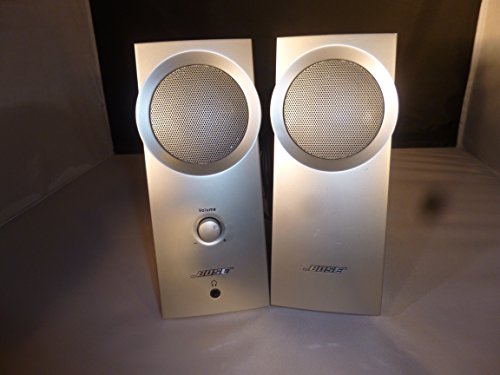
Pros
- Expansive stereo imaging creates an impressively wide soundstage for compact desktop speakers
- Dual line-in connectivity eliminates the need to swap audio cables between computer and phone
- Complete magnetic shielding prevents screen interference and signal noise on crowded desks
- Front-mounted volume knob and 3.5mm headphone pass-through offer effortless accessibility
Cons
- Lacks integrated Bluetooth wireless connectivity, requiring standard wired 3.5mm line inputs
- Does not include dedicated physical bass and treble adjustment dials for custom equalization
- External AC power transformer adds slight cable clutter behind tight workstation desks
The Bose Companion 2 Multimedia Speaker System provides a clean, effective audio upgrade for desktop setups, laptops, and home offices. Designed specifically for nearfield computer listening, this two-piece system replaces thin, tinny built-in monitor audio with warm, room-filling sound. Whether you are editing audio, participating in remote video conferences, or enjoying music while working, these speakers deliver dependable clarity without requiring a floor-hogging subwoofer enclosure.
In practical daily use, the Companion 2 excels at nearfield immersion. Bose incorporates proprietary TrueSpace digital signal processing to acoustically widen the stereo presentation, making acoustic instruments, game effects, and film dialogue feel like they originate from well beyond the physical speakers. The installation process is completely hassle-free: connect the primary speaker to your computer line-out, plug in the AC adapter, and you are ready to listen.
For everyday multimedia tasks, streaming playlists, and YouTube consumption, the system punches far above its compact desktop profile. While discerning audiophiles might miss wireless streaming codecs or customizable equalizer toggles, the dependable build and balanced output make this system a reliable everyday companion. It remains a smart workstation enhancement for professionals, students, and casual creators alike.
Acoustically, the Bose Companion 2 punches above its physical weight class thanks to an integrated bass port and automated tonal balance circuitry. The rear-ported enclosure allows the compact internal drivers to push tight, articulate low-end frequencies, giving kick drums and cinematic impact sequences surprising heft without distorting. Midrange clarity is especially pronounced, ensuring podcasts, vocal tracks, and video meetings sound lifelike and distinct.
The defining performance feature is the TrueSpace digital processing engine, which artificially expands the sweet spot for close-range listeners. Rather than sounding boxy or constrained to two desktop towers, the stereo field feels natural and open. Even at lower evening volumes, the automatic tonal balancing preserves lower frequencies, preventing the sound from becoming flat or lifeless.
Constructed in a functional grey desktop chassis, each Companion 2 satellite measures 7.4 inches tall, 7.6 inches deep, and 3.5 inches wide. This narrow footprint fits neatly next to widescreen displays and compact laptop setups. The right satellite acts as the master control unit, featuring a smooth front-facing volume knob that doubles as the power switch, alongside a convenient 3.5mm stereo headphone jack.
Around the back, the system houses dual line-in audio ports, enabling simultaneous connections to a primary PC and a secondary portable music player without cable swapping. Additionally, both speaker cabinets are fully magnetically shielded, ensuring they will not induce flickering, discoloration, or electronic interference when situated in close proximity to computer monitors or sensitive external hard drives.

Pros
- Smallest Bose speakers ever for unobtrusive home setups
- Quick wireless connection to Bose soundbar
- Immersive surround sound enhances entertainment
- 30-foot range allows versatile room placement
- Easy plug-and-play installation
Cons
- Requires a compatible Bose soundbar to function
- Needs nearby power outlets for adapters
- No standalone use without soundbar
The Bose Surround Speakers in white are the smallest speakers Bose has ever designed, perfect for enhancing your home entertainment system without dominating your space. They wirelessly connect to a Bose soundbar, delivering full immersive surround sound for movies, TV shows, and music.
Ideal for living rooms or dedicated home theaters, these speakers are for anyone upgrading their audio setup who wants cinema-like experiences at home. Setup is straightforward: plug adapters into power and pair the receivers with your soundbar in minutes.
In real-world use, they expand soundstages effectively, making action scenes pulse with energy. Adding the Bose Bass Module 700 elevates bass to a visceral level. Overall, they offer premium Bose quality in a tiny package.
Verdict: A must-have add-on for Bose soundbar owners seeking true surround sound without bulky speakers.
These speakers excel in creating immersive surround sound, filling rooms with detailed audio from all directions for movies and TV. Vocals remain clear while effects wrap around you, enhancing every scene.
Volume levels scale well for home use, maintaining clarity at high outputs. Pairing with the Bose Bass Module 700 adds deep, thunderous bass that you feel physically, perfect for action films.
Wireless range reaches 30 feet with stable connectivity to the soundbar, ensuring reliable performance across typical living spaces.
Standing less than 4 inches tall, these white speakers blend seamlessly into any decor, prioritizing your entertainment over visible gear. Their compact size makes them easy to place on shelves or walls.
Built for home use with wireless receivers, they require plugging adapters into a power source, offering continuous play without battery concerns. No IP ratings for waterproofing, as they are designed for indoor setups.
Weight is minimal due to the small form factor, aiding discreet installation. Focus on reliable power connection ensures uninterrupted sessions during long movie marathons.
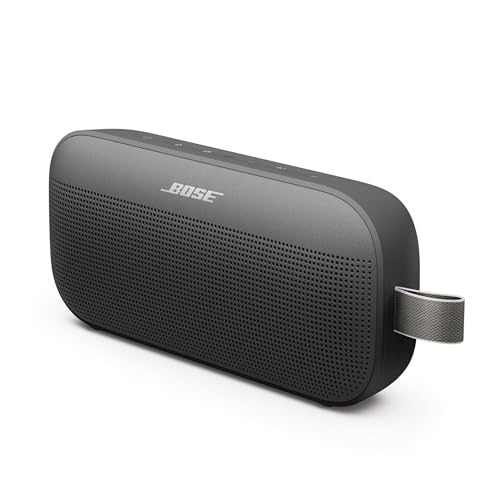
Pros
- Exceptional clarity and balanced highs with deep bass for a portable speaker
- Rugged IP67 build withstands water, dust, drops, and shocks effortlessly
- Long 12-hour battery and quick USB-C charging for all-day use
- Advanced Bluetooth 5.3 ensures stable connections and multipoint convenience
- PositionIQ delivers optimal sound whether standing, laying, or hanging
Cons
- Lacks wired aux input, relying solely on Bluetooth connectivity
- No companion app for EQ customization or advanced sound tweaks
- Battery life shortens at maximum volume with heavy bass usage
The Bose SoundLink Flex (2nd Gen) is a compact powerhouse designed for adventurers who refuse to compromise on sound quality. This portable Bluetooth speaker fits in your hand or clips to your bag, making it the ultimate companion for beach outings, hikes, camping trips, or poolside lounging. Its hi-fi audio shines in real-world scenarios, delivering bold tunes that cut through ambient noise without distortion.
For outdoor enthusiasts and casual listeners alike, it excels where larger speakers falter. Pair two units for stereo separation or party mode to amplify the fun, and PositionIQ ensures pristine sound regardless of how you position it, even in the shower. Bluetooth 5.3 provides rock-solid connectivity up to 30 feet, supporting multipoint for effortless switching between phone and tablet.
In performance tests, the Flex impresses with its balanced profile, revealing nuances in podcasts, playlists, and calls alike. While not a home audio substitute, it outperforms competitors in portability and durability. Verdict: A top pick for active Americans craving premium portable sound.
Bose tunes the SoundLink Flex for a clear, balanced signature with high-fidelity detail across the spectrum. Deep bass extends impressively for its size, providing punchy lows that thump on tracks like hip-hop or EDM without muddiness. Midrange clarity brings vocals and instruments to life, while crisp treble avoids harshness even at high volumes.
PositionIQ technology detects orientation and recalibrates the soundstage for consistent width and imaging, whether upright on a table or hanging from a shower caddy. Volume levels reach loud without breakup, filling medium spaces like patios or tents. Stereo mode with a second unit creates a wide, immersive stage perfect for gatherings.
Advanced Bluetooth 5.3 minimizes dropouts, and multipoint handles calls seamlessly mid-playback, making it versatile for music and hands-free use.
Rugged silicone exterior wraps the Bose SoundLink Flex in IP67-rated protection against water, dust, drops, shocks, and corrosion, ideal for harsh outdoor conditions. Its palm-sized form includes a utility loop for secure attachment to backpacks or belts, with dimensions small enough for pocket carry.
Connectivity centers on Bluetooth 5.3 for wireless pairing up to 30 feet, with multipoint for two devices. USB-C handles charging and playback, but no aux or other wired options are available. No power outlet needed; the built-in battery delivers up to 12 hours per charge, recharging quickly.
Hardware emphasizes portability over complexity, with no visible drivers or ports beyond essentials. This durable build prioritizes on-the-go reliability for US travelers and outdoor lovers.

Pros
- Incredible dynamic range that delivers authoritative sub-bass without unwanted boomy reverberation
- Convenient wireless integration via Wi-Fi that eliminates the mess of long interconnect cables
- Heavy, acoustically inert cabinet design stops chassis vibration in its tracks
- Straightforward setup and bass customization using the companion Bose smartphone app
Cons
- Locked strictly into the wireless Bose home audio ecosystem with no traditional wired RCA inputs
- Substantial 33-pound weight makes lifting and adjusting placement a deliberate chore
- No on-cabinet physical EQ or volume dials, requiring the mobile app for acoustic adjustments
The Bose Lifestyle Ultra Subwoofer is engineered specifically to bring cinematic weight and concert-level low end to modern living spaces. Serving as a dedicated low-frequency anchor for compatible Bose smart soundbars and surround speakers, this wireless module targets movie lovers, audiophiles, and gamers who crave true acoustic impact without sacrificing interior aesthetics. It addresses one of the most common complaints in home audio: the clutter of running thick, cumbersome cables across the floor to deliver powerful bass.
In real-world testing, the Lifestyle Ultra distinguishes itself by how effortlessly it blends into the soundstage. Rather than drawing attention to its physical location with localized rumble or loose cabinet rattles, it creates an expansive, omnipresent foundation of bass. Whether delivering the subtle, ambient atmospheric rumble of a thriller or the percussive impact of action set-pieces, the subwoofer provides instant transient response that feels natural and immersive.
For music listening, the subwoofer excels at rhythmic agility. Bass-heavy electronic tracks retain punch and definition, while acoustic upright bass passages in jazz tracks remain articulate and textured rather than muddy. The integration via the Bose app allows you to dial in precise output levels to match your room boundaries, ensuring the bass never overpowers dialogue or high-frequency details.
Ultimately, the Bose Lifestyle Ultra Subwoofer is a premium low-end solution designed for listeners who prioritize both audio performance and minimalist living spaces. While it requires compatible Bose hardware to operate, the resulting synergy produces a refined, theater-quality performance that elevates your entire home entertainment experience.
At the heart of the Lifestyle Ultra Subwoofer is Bose CleanBass technology, a proprietary acoustic innovation that actively minimizes unwanted harmonic resonance. By optimizing internal airflow and driver excursion, the system prevents the cabinet buzzing and mechanical distortions that often plague standard subwoofers during heavy bass scenes. The result is deep, articulate bass extension that remains tight and accurate whether played at late-night conversational volumes or party-level output.
The subwoofer creates a cohesive, room-filling soundfield that anchors both multichannel surround sound and standard stereo audio. In action films, low-frequency effects such as explosions and roaring engines are rendered with physical, tactile authority. Importantly, it crosses over smoothly with compatible Bose soundbars, ensuring that the critical lower-midrange frequencies remain clear and voices never sound muffled or swallowed by the bass line.
Crafted with a minimalist architectural profile, the Bose Lifestyle Ultra Subwoofer measures 11.6 by 11.6 by 12.87 inches and weighs in at a hefty 33.73 pounds. This dense, heavy construction is intentional, providing an acoustically inert enclosure that grounds the internal high-excursion transducer and prevents physical movement across hard flooring surfaces during heavy playback. The premium matte black finish resists fingerprints and fits cleanly alongside modern entertainment furniture.
Hardware connectivity is streamlined for wireless operation. The unit connects seamlessly over home Wi-Fi directly to compatible Bose soundbars and smart speakers, requiring only a single standard AC power cord to run. Audio adjustments, system pairing, and firmware maintenance are handled digitally through the Bose app, eliminating the need for analog dials, switches, or complex calibration gear on the cabinet itself.

Pros
- Surprisingly powerful volume and bass for a palm-sized speaker
- Rugged IP67 rating handles water, dust, and shocks effortlessly
- Extended 12-hour battery outlasts most competitors in its class
- Seamless Bluetooth connectivity with 30-foot range
- Bose app unlocks EQ tweaks and multi-speaker pairing
Cons
- Small size limits maximum volume and soundstage for large gatherings
- No wired input options like aux for non-Bluetooth devices
- Premium price for a compact speaker without built-in voice assistant
The Bose SoundLink Micro 2nd Gen is a pint-sized powerhouse designed for those who refuse to compromise on sound quality during outdoor escapades. This ultra-portable Bluetooth speaker slips into your pocket or clips to your backpack, delivering Bose's signature audio clarity wherever life takes you.
Perfect for hikers, beachgoers, and festival fans, it shines in real-world scenarios like splashing through waves or enduring dusty trails. Its rugged construction and long battery ensure it keeps pace with your active lifestyle, while app-based controls let you fine-tune the experience on the fly.
In performance tests, the Micro impresses with bass that defies its dimensions and highs that cut through ambient noise. Pair two for stereo bliss, and you have a versatile setup for solo jams or group hangs. Verdict: A top pick for portable audio purists who demand durability and detail without the bulk.
Bose tunes the SoundLink Micro for a balanced signature with impressive low-end extension down to sub-bass levels unexpected from such a small driver. Mids stay clear for vocals and instruments, while treble sparkles without harshness, creating an engaging listen across genres from hip-hop to podcasts.
Volume peaks loudly enough for personal outdoor use, maintaining composure without distortion. The soundstage feels wide for a mono unit, enhanced by Party Mode when linking pairs for true stereo imaging and doubled output.
Bluetooth bandwidth improvements ensure low-latency streaming, preserving dynamics in high-res tracks via the Bose app's adjustable EQ for personalized bass boost or treble roll-off.
Crafted with a silicone exterior over a rugged chassis, this speaker resists shocks, rust, and corrosion, backed by IP67 waterproofing for full submersion up to one meter. Its tear-drop shape measures just pocket-friendly dimensions with a flexible utility strap for secure attachment.
Connectivity centers on advanced Bluetooth with 30-foot range and multi-point pairing support. No physical ports clutter the design, keeping it sealed against elements; control comes via intuitive buttons and the Bose app for firmware updates and settings.
Power draws from a rechargeable battery delivering up to 12 hours of playtime, charged via USB-C. Lightweight at under half a pound, it prioritizes portability without sacrificing Bose's premium acoustic engineering.

Pros
- Powerful, bass-heavy sound fills outdoor spaces effortlessly
- Rugged IP67 rating handles water, dust, and rough handling
- Long 20-hour battery with quick USB-C recharging and phone power bank feature
- Easy app control for EQ tweaks and multi-speaker pairing
- Compact portable design with handy carrying loop
Cons
- Full charge requires about 5 hours, longer than some rivals
- Limited user reviews as a newer release
- No wired audio input beyond USB-C charging
The Bose SoundLink Plus is a rugged portable Bluetooth speaker built for Americans who live active lifestyles, from beach volleyball to backyard barbecues. Its compact size slips easily into a backpack, delivering bold sound that punches above its weight wherever you take it.
In real-world use, it shines during outdoor gatherings, where booming bass and clear vocals cut through ambient noise without distortion. The IP67 rating means it laughs off poolside splashes or dusty camping trips, and the 20-hour battery ensures it outlasts your playlist.
Pair it with another unit for stereo separation, or sync with Bose home systems via SimpleSync for whole-house audio. While the Bose app unlocks EQ tweaks and updates, some may wish for faster charging. Overall, it's a top pick for portable power, earning strong appeal for on-the-go audiophiles.
Verdict: If you need durable, bass-forward sound for adventures, the SoundLink Plus delivers reliable performance that justifies its premium build.
Bose tunes the SoundLink Plus for energetic playback with deep, booming bass that rattles beach coolers and energizes tailgates. Midrange stays clear for vocals and guitars, while treble adds sparkle without harshness, thanks to app-based EQ adjustments for bass, mids, and highs.
Soundstage expands impressively for a portable, especially in stereo mode with a second speaker, creating balanced immersion. It reaches high volumes cleanly, handling peaks in EDM or hip-hop without muddiness, making it a standout for casual listening and parties.
Bluetooth connectivity is stable over distance, with SimpleSync extending performance to home setups. Battery powers consistent output for 20 hours, ideal for all-day events.
Crafted with a tough exterior, the SoundLink Plus boasts IP67 dust and water resistance, plus shock and rust-proofing for real-world durability. Its portable dimensions and integrated carrying loop make it gym-bag or backpack ready, weighing in light for effortless transport.
Connectivity centers on Bluetooth with easy pairing, plus USB-C for charging your phone as a power bank. No traditional aux or optical inputs, but the Bose app handles firmware updates, battery checks, device management, and multi-speaker linking.
Power comes from a rechargeable battery offering up to 20 hours, recharging in about 5 hours via USB-C. Pairing options include Party Mode for synced playback or Stereo Mode for wider imaging, with SimpleSync for Bose ecosystem integration.

Pros
- Broad acoustic dispersion eliminates narrow sweet spots for multiple listeners
- Clear, highly articulate midrange reproduction makes movie dialogue easy to understand
- Compact form factor and lightweight construction simplify shelf or wall placement
- Includes dedicated mounting brackets and hardware straight out of the box
Cons
- Limited low-frequency extension requires an external powered subwoofer for full-range movie impact
- Requires a standalone AV receiver or stereo amplifier to supply power
- Spring-clip speaker wire terminals limit the use of thicker gauge speaker cables
The Bose 161 speaker system is an enduring favorite among home audio enthusiasts who appreciate space efficiency without compromising spatial depth. Designed to function seamlessly as either primary stereo monitors or surround satellite channels, these passive speakers bring Bose's classic philosophy of wide dispersion to modest spaces. For listeners building a modular 5.1 surround sound rig or outfitting an office with clean stereo sound, the Bose 161 presents a straightforward, lifestyle-friendly audio solution.
In everyday listening tests, the standout characteristic of the Bose 161 is how effortlessly it disperses sound. Traditional bookshelf speakers often project audio along a narrow beam, forcing the listener to sit directly between them for balanced imaging. By contrast, Bose's Articulated Array driver layout angles the internal components outward, spreading sound evenly across the room. Whether you are moving around the kitchen or sitting off-axis on the sofa, vocal clarity and stereo separation remain surprisingly consistent.
When incorporated into a multi-channel home theater setup, these speakers excel at handling surround sound effects. Ambient noises, orchestral score swells, and atmospheric film details transition smoothly between channels. Dialogue and upper-frequency details emerge cleanly without sounding overly bright or fatiguing during long movie marathons. While they lack the deep thumping bass necessary for modern action blockbusters on their own, pairing them with an active subwoofer creates a cohesive, full-range cinema experience.
Ultimately, the Bose 161 system delivers dependable build quality and expansive acoustic imaging. It is an ideal pick for movie fans wanting reliable rear surrounds or apartment residents looking for clutter-free stereo audio. As long as you pair them with a capable receiver and a dedicated subwoofer, these speakers will elevate your daily entertainment without monopolizing precious living space.
Acoustic performance on the Bose 161 is driven by Bose's proprietary Twiddler drivers. These specialized 2.5-inch transducers are engineered to move significant volumes of air relative to their compact size, effectively bridging the gap between midrange clarity and upper-treble sparkle. The result is a smooth, balanced reproduction of speech and instrumentation. Acoustic guitars, snare drums, and spoken vocals maintain clear definition without harsh sibilance or nasal coloration.
The signature acoustic strength of this system lies in its soundstage presentation. Thanks to the physical angling of the internal drivers, the listening area feels substantially wider than the physical distance between the cabinets. This broad dispersion pattern ensures that sound effects in movies feel natural and three-dimensional, avoiding the boxy sensation that frequently plagues traditional mini-satellite speakers.
Because the enclosures are relatively small, bass performance rolls off before reaching deep sub-bass frequencies. Listeners will notice tight, punchy upper-bass response, but low-end rumble and heavy synth drops will feel attenuated. To get the most dynamic range and punch from the Bose 161 system, routing low frequencies below 80 Hz or 100 Hz to a standalone powered subwoofer via your AV receiver's crossover settings is strongly recommended.
Visually, the Bose 161 breaks away from conventional rectangular audio boxes. Each speaker measures 5 inches high, 11 inches wide, and 4.2 inches deep, showcasing a gently curved front baffle wrapped in a sleek black finish. Weighing just over three pounds per unit, the lightweight high-impact molded resin cabinet dampens unwanted internal resonance while offering exceptional durability for wall or shelf mounting.
On the rear panel, you will find recessed spring-clip terminals designed for bare speaker wire. While these terminals make quick work of standard 16-gauge or 18-gauge wiring, they do not accommodate thick audiophile cables or heavy banana plugs. Bose thoughtfully includes custom metal mounting brackets in the package, giving users the freedom to secure each speaker firmly to drywall or studs with variable tilt options for optimal angling.
As passive speakers, the Bose 161 units have no onboard digital inputs, HDMI ports, or Bluetooth transceivers. They require an external amplifier or AV receiver capable of delivering between 10 and 100 watts per channel across a 4 to 8 ohm load. When matched with a modern receiver, they integrate effortlessly into automated room-calibration systems, ensuring proper volume matching and tonal harmony across your entire entertainment setup.

Pros
- Consistent, authentic 360-degree dispersion eliminates acoustic dead zones
- Up to 17 hours of battery life provides dependable multi-day casual playback
- Premium seamless aluminum chassis with protective bumpers guards against daily bumps
- Intuitive multi-device pairing and voice prompts streamline wireless setup
Cons
- Charges via an older Micro-USB port instead of modern USB-C
- IP55 rating resists splashes but is not fully submersible in water
- Bass output rolls off slightly at maximum volume levels to prevent driver distortion
The Bose SoundLink Revolve+ (Series II) is a premium portable Bluetooth speaker engineered to distribute immersive, balanced audio uniformly in every direction. Building upon the legacy of the original Revolve family, this updated model introduces longer battery endurance and enhanced acoustic output inside a distinctive lantern-style enclosure. It is specifically tailored for listeners who want high-fidelity background and foreground sound that can freely move between the home office, patio, and weekend outings.
In practical day-to-day use, the Revolve+ II shines as an effortless audio companion. The built-in flexible fabric handle makes transporting the two-pound speaker natural, while the silicone bumpers on the top and bottom offer peace of mind when setting it down on rough surfaces. The multi-connect feature allows two smartphones to stay paired at once, eliminating the friction of disconnecting and reconnecting when trading off playlist duties with friends.
Everyday integration is bolstered by Bose SimpleSync, which lets you tether the Revolve+ II to compatible Bose home theater gear or smart speakers. You can listen to the big game from the kitchen while the main soundbar powers the living room, ensuring perfectly synchronized playback. While it lacks the fully submersible waterproofing found on some rugged outdoor speakers, its IP55 splash resistance easily handles sudden rain showers or poolside splashes.
Ultimately, the SoundLink Revolve+ II stands out for its refined soundstage and effortless usability. Despite relying on an older charging port format, its dependable build quality, clean vocal clarity, and expansive 360-degree projection make it a top-tier choice for buyers seeking portable acoustic excellence.
The acoustic architecture of the SoundLink Revolve+ II centers around a downward-firing full-range transducer directed into an omnidirectional acoustic deflector. This unique internal setup scatters sound evenly in a full 360-degree circle, avoiding the directional beaming typical of traditional forward-facing portable speakers. Midrange frequencies are exceptionally articulate, allowing spoken word, podcast dialogue, and lead vocals to cut through ambient outdoor noise cleanly.
Low-end reproduction is reinforced by dual-opposing passive radiators that minimize physical vibration while extending bass reach. You get a surprisingly warm, resonant low-end presence on bass-driven tracks without cabinet rattle. Bose utilizes an active digital signal processor to keep the audio clean across the entire dynamic range, though deep sub-bass frequencies are slightly curtailed at peak volume to preserve clarity and eliminate distortion.
Crafted with a sleek seamless anodized aluminum body, the Revolve+ II measures 4.13 by 4.13 by 7.25 inches and weighs two pounds. The enclosure lacks visible seams or rough edges, creating an elegant aesthetic that blends well with contemporary home decor. Soft-touch silicone control buttons across the top panel offer responsive tactile feedback for volume, playback, multi-function control, and Bluetooth pairing.
Connectivity includes Bluetooth wireless with voice prompts and a 3.5mm auxiliary audio input for legacy analog sources. Power is supplied by a rechargeable lithium-ion battery delivering up to 17 hours of continuous listening per charge. Recharging occurs via a Micro-B USB port, and the base of the unit includes dedicated contact pins compatible with an optional Bose charging cradle for seamless drop-and-go desktop charging.
Understanding Bose 901 Wattage, Power Handling, and System Demands
The direct answer to how many watts is the bose 901 speaker depends on the generation, but the speakers themselves do not produce wattage. Instead, passive loudspeakers possess a power handling rating that specifies the electrical wattage they can safely accept from an external amplifier. For the Bose 901 Series VI, the official manufacturer specification lists compatibility with receivers or amplifiers rated from 10 to 450 watts RMS per channel into 8 ohms. This wide rating reflects the speaker design and its ability to operate across various amplification tiers.
Earlier generations of the system featured slightly lower maximum continuous thresholds, though all versions share similar acoustic requirements. Series I and Series II models typically recommended amplifiers between 20 and 270 watts per channel. Meanwhile, Series III through Series VI expanded maximum continuous power handling up to 450 watts per channel at 8 ohms. Evaluating these numbers requires examining not just the raw wattage label, but also how acoustic design and equalization dictate true power draw.
Manufacturer Power Ratings Across Bose 901 Generations
Bose produced the 901 direct-reflecting loudspeaker across six distinct generations spanning several decades. The original Series I and Series II models utilized acoustic suspension sealed enclosures with cloth-surround drivers, necessitating a stable 20 to 25 watts of clean power simply to achieve modest listening levels. With the launch of Series III, Bose transitioned to a ported Acoustic Matrix enclosure and upgraded drivers with high-efficiency motor structures. This structural update enabled the Series III, IV, V, and VI to handle up to 450 watts of continuous program material without mechanical failure.
While the nominal power handling climbed significantly with later iterations, the minimum wattage threshold technically dropped to 10 watts per channel. However, running a 10-watt amplifier into these large multi-driver cabinets in an average domestic living room creates severe acoustic limitations. Low-wattage amplification will run out of voltage headroom rapidly when reproducing dynamic musical peaks. Therefore, the 10-watt specification merely indicates the threshold at which sound emerges rather than an optimal operational target.
Audio hobbyists pairing vintage hardware must also consider the nominal 8-ohm impedance rating assigned to the speaker cabinets. Unlike some specialized high-end monitors that present complex 4-ohm or 2-ohm dips, the Bose 901 presents a relatively benign electrical load to modern solid-state electronics. Even so, driving nine parallel and series-wired drivers per cabinet still demands a power amplifier with sturdy current reserves. Verifying your amplifier continuous RMS rating into an 8-ohm load prevents unexpected thermal shutdowns.
Why the Active Equalizer Dramatically Increases Amplifier Power Demands
The primary reason the Bose 901 requires substantial amplifier wattage involves its proprietary external active equalizer unit. Unlike conventional multi-way loudspeakers that utilize passive internal crossover networks separating woofers and tweeters, the 901 cabinet contains nine identical 4.5-inch full-range drivers. To achieve balanced frequency response across the audible spectrum from these small cones, Bose engineers designed an outboard equalizer that aggressively boosts low-bass and high-treble frequencies. This processing unit sits between the source preamplifier and the main power amplifier stage.
In the deep bass region near 30 to 35 Hz, the dedicated active equalizer can apply up to 18 to 20 dB of boost to compensate for natural cone roll-off. In electrical audio engineering, every 3 dB increase in acoustic output requires doubling the amplifier wattage output. A 10 dB boost demands ten times the electrical power, while an 18 dB boost requires approximately sixty-four times the power from your amplifier. Consequently, a baseline passage playing at just two watts of midrange energy suddenly demands over one hundred watts of clean power when a deep bass transient occurs.
Without a robust amplifier backing the system, this massive low-frequency boost causes average stereo receivers to clip quickly. Clipping happens when an amplifier attempts to deliver higher voltage than its internal power supply rails can supply, flattening the tops of the audio waveforms. This clipped signal produces harsh harmonic distortion that rapidly overheats the voice coils of the speaker drivers. Understanding this equalization curve makes it clear why audio listeners typically recommend amplifiers rated for 100 to 250 watts RMS per channel despite the theoretical 10-watt minimum.
Direct and Reflecting Acoustics and Room Dispersion Losses
The acoustic architecture of the Bose 901 introduces another layer to the wattage equation because sound energy is distributed differently than in standard front-firing cabinets. Each cabinet positions eight drivers facing backward toward the rear wall at angles, while only a single driver faces forward toward the primary listening zone. This Direct/Reflecting design bounces approximately 89 percent of the acoustic energy off room boundaries to simulate the expansive reverberation of a live performance space. While this produces a remarkably wide soundfield, reflected sound loses acoustic intensity compared to direct beam sound.
Because sound waves lose acoustic energy as they bounce off drywall, plaster, curtains, or furnishings, more total sound power is required to reach a specific sound pressure level at the listening chair. In an acoustically soft room with plush carpeting, heavy drapes, and overstuffed upholstery, high frequencies get absorbed rapidly by the environment. To overcome these boundary losses, the listener must rotate the volume knob further clockwise, increasing the wattage demand on the driving amplifier.
Listeners who install their cabinets in larger rooms or open-concept floor plans will discover that power requirements scale rapidly with room volume. A moderate-sized den might sound sufficiently energetic with an 80-watt receiver, but a vaulted great room easily swallows that acoustic output. When aiming for lifelike concert volume in expansive spaces, selecting a dedicated power amplifier capable of delivering 200 watts continuous per channel provides the clean output required without stressing the system.
Minimum vs Recommended Amplifier Wattage for Daily Listening
Distinguishing between minimum operational wattage and realistic recommended power levels helps buyers make informed amplification decisions. While Bose listed 10 watts RMS per channel as the absolute lower boundary for Series VI, that figure only applies to small rooms at modest background volume. For typical residential listening, an amplifier providing between 100 and 200 watts RMS per channel into 8 ohms represents a balanced target for headroom and dynamic punch. This provides enough clean overhead to handle dynamic orchestral swings or percussive rock tracks without entering distortion.
Selecting an amplifier at the upper threshold of the 450-watt limit is rarely necessary for residential environments, but high power brings distinct benefits. High-current amplifiers running well below their maximum capabilities generate lower harmonic distortion and run cooler during extended playback sessions. Conversely, using an entry-level receiver rated for 40 watts per channel forces the internal transistors to work near their thermal limits, compromising audio clarity. Clean headroom protects your speakers far more effectively than low-wattage amplification ever could.
When budgeting for amplification, looking at dynamic power and continuous RMS ratings side by side offers valuable insight. Peak or dynamic wattage numbers frequently advertised on consumer electronics only reflect short millisecond bursts rather than steady-state performance. A dependable stereo amplifier should deliver its continuous wattage across the full 20 Hz to 20 kHz bandwidth with minimal total harmonic distortion. Investing in clean, high-current power ensures your loudspeaker investment delivers its intended performance for years to come.
Comparing Bose 901 Power Handling to Modern Bose Speaker Systems
Comparing vintage direct-reflecting speakers with modern Bose speaker offerings highlights a significant evolution in system architecture and power consumption. Modern consumer audio systems often rely on active, self-amplified designs or compact passive satellite channels tailored to multichannel home theater receivers. For example, contemporary Bose Surround Speakers, White bypass traditional receiver wattage ratings altogether by utilizing wireless power adapters and dedicated internal amplifiers designed specifically for surround channels. This self-contained structure eliminates the need for calculating external amplifier headroom or managing outboard equalizers.
Similarly, desktop multimedia systems like the Bose Companion 2; Multimedia Speaker System integrate internal digital signal processing and built-in amplification directly into the enclosure. Instead of requiring 100 to 250 watts of external muscle, these active desktop monitors achieve balanced sound at close range using modest internal wattage tailored specifically to their drivers. For home theater bass augmentation, dedicated powered units such as the Bose New Lifestyle Ultra Subwoofer handle low frequencies with built-in amplification, freeing main speakers from deep-bass equalization stress. If you are comparing different multi-room setups, exploring our powered speaker guide illustrates how integrated active designs differ from legacy passive setups.
In portable scenarios, speakers such as the Bose SoundLink Flex Bluetooth Speaker (2nd Gen), Bose SoundLink Micro Portable Bluetooth Speaker, Bose SoundLink Plus Portable Bluetooth Speaker, and Bose SoundLink Revolve+ (Series II) operate entirely from rechargeable batteries with integrated micro-amplifiers. Meanwhile, passive options like the Bose 161 Speaker System (Black) handle 10 to 100 watts per channel into standard 4-to-8-ohm receiver outputs, providing an easy-to-drive alternative for ambient or surround channels. While classic 901 cabinets demand heavy external wattage, modern Bose hardware demonstrates how efficient DSP and internal power supplies streamline domestic listening.
Routing Equalizers and Safeguarding Systems Against Clipping
Successfully operating a high-power vintage setup requires integrating the active equalizer properly into your stereo signal chain. Because the equalizer applies extensive gain boosts, inserting it incorrectly can degrade audio quality or overdrive source components. The ideal connection method uses an integrated amplifier or stereo receiver equipped with a dedicated Tape Monitor loop or separate Pre-Out and Main-In RCA terminals. This routing ensures the equalized signal reaches the power output stage immediately before driving the speaker wire terminals.
In setups featuring multiple audio zones or secondary pairs of speakers, power management becomes even more critical. Connecting multiple speaker pairs directly to a single amplifier output can dangerously drop total impedance below safe operating levels, triggering amplifier fault protection. Utilizing an impedance-matching speaker selector switch preserves a safe electrical load when routing audio across multiple rooms or systems. Maintaining proper impedance prevents amplifier clipping and keeps both your electronics and speaker voice coils operating safely.
To protect your speakers over long listening sessions, always pay close attention to audible warning signs of amplifier distress. If bass transients begin to sound muddy, distorted, or accompanied by mechanical popping, reduce the system volume immediately. Most speaker voice coil failures stem from clipped signals generated by small amplifiers driven past their limits rather than clean high-wattage spikes. Operating a capable amplifier within a conservative power envelope guarantees clean dynamics and reliable acoustic performance.
Setup Verification and Practical Power Takeaways
Before powering on your audio system for regular entertainment, verify that all speaker cables and equalizer interconnects are seated securely. Utilizing quality 14-gauge or 16-gauge copper speaker wire ensures minimal resistance along the cable run, preserving the damping factor of your amplifier. Polarity must be strictly observed on both left and right channels, ensuring positive terminals connect to positive and negative connect to negative. Inverted speaker polarity causes severe acoustic phase cancellation, causing bass to drop off and forcing you to apply unnecessary volume.
Positioning your cabinets at the manufacturer-recommended distance of 12 to 18 inches from the rear wall also optimizes acoustic efficiency. Placing the rear reflective drivers too close or too far from reflective walls alters the intended boundary gain and degrades sound pressure levels. When positioned properly, room acoustic reflections work alongside the drivers rather than against them, maximizing sound projection without demanding excessive wattage.
Ultimately, answering how many watts is the bose 901 speaker reveals that while the official continuous power handling reaches up to 450 watts RMS per channel, real-world success centers on supplying clean, robust current. Providing a dedicated 100 to 250-watt amplifier with a properly routed active equalizer delivers the deep bass, sweeping dynamics, and expansive room-filling sound the direct-reflecting system was created to deliver. By matching appropriate power reserves with careful room placement, listeners can enjoy balanced fidelity across any musical genre.


Write Your Review
No reviews yet. Be the first to share your experience!