


Evaluating audio equipment often begins when standard television speakers muffle spoken dialogue or when music lacks physical presence in a living room. Listeners comparing audio brands frequently encounter the wide catalog offered by Sony, which spans compact soundbars, multi-driver floorstanding towers, and rugged portable units. This does sony make good speakers guide explores how the brand balances acoustic clarity, modern connectivity, and long-term hardware reliability across several distinct listening categories. Finding suitable home entertainment speakers requires matching specific driver configurations to room acoustics rather than relying purely on name recognition.
Different listening environments present unique challenges that expose the strengths and limitations of any speaker design. Compact spaces benefit from soundbars with dedicated voice enhancement features, while dedicated home theaters demand wider dynamic range and precise surround sound mapping. Understanding specifications such as speaker impedance, driver materials, wireless protocols, and weather resistance helps clarify whether a particular model fulfills your daily audio needs. By examining hardware attributes and practical setup requirements, listeners can make informed decisions based on verified product capabilities.

Pros
- Easy plug-and-play setup with HDMI ARC and Bluetooth
- Compact size fits perfectly in small rooms or home offices
- Voice enhancement clarifies dialogue in shows and meetings
- Bass Reflex delivers surprisingly deep low-end for its size
- Wall-mountable for flexible placement options
Cons
- 2.0-channel setup lacks dedicated subwoofer for ultra-deep bass
- Best suited for small spaces, may not fill larger rooms adequately
- No app control, relies on remote for adjustments
The Sony S100F is a compact 2.0-channel soundbar designed to elevate TV audio in small living spaces or home offices. With its Bass Reflex speaker and integrated tweeter, it punches above its size, delivering clear dialogue and solid bass without needing extra components.
Ideal for remote workers or apartment dwellers, it shines in enhancing conference calls via voice mode or making late-night TV watching more engaging. Bluetooth lets you stream music easily, while HDMI ARC ensures simple TV integration.
In real-world use, setup takes minutes, and S-Force Pro Front Surround simulates immersive audio from the front. It's a smart pick for those wanting better sound without complexity.
Verdict: Excellent value for compact, clear audio upgrades in everyday setups.
Bass depth comes from the Bass Reflex port, providing punchy lows that enhance movies and music without muddiness, though it won't rival larger systems with subs.
Vocal clarity excels thanks to the integrated tweeter and voice enhancement feature, making hushed dialogue in dramas or remote meeting participants sharp and natural.
Volume levels fill small rooms effortlessly, with stable Bluetooth range up to 30 feet for reliable streaming from phones or laptops. S-Force Pro adds a sense of surround without rear speakers.
This slim black soundbar measures compactly to match any decor, perfect for desks or under TVs in tight spaces. Wall-mountable with included template for cable-free looks.
Rugged enough for daily home use, though not rated for dust or water exposure, so keep it indoors. Weighs lightly for easy handling and mounting.
Powered by AC cord for continuous playback with no battery limits or charging downtime, ensuring all-day reliability in home offices or living rooms.

Pros
- Effortless wireless pairing with compatible Sony soundbars and receivers
- Built-in battery enables cord-free placement anywhere in the room
- Omnidirectional design delivers balanced, room-filling sound
- Up-firing drivers enhance vertical audio for true surround immersion
Cons
- Volume maxes lower when running on battery versus plugged in
- Requires manual power button press to turn on in battery mode
- Performance varies with source content and battery charge level
The Sony SA-RS5 are optional wireless rear speakers designed to elevate compatible BRAVIA Theater soundbars like BAR 8 and BAR 9, or HT-A7000, HT-A5000, HT-A3000 systems, and STR-AN1000 receivers. They add true surround sound without the hassle of running cables, perfect for homeowners wanting a clutter-free home theater upgrade.
In real-world use, these speakers shine in living rooms or dedicated media spaces, mapping 360 Spatial Sound to optimize audio based on your setup. The built-in battery allows placement behind your seating area without nearby outlets, making installation a breeze. Activate Sound Field Optimization with a single button for tailored performance.
While volume dips slightly on battery power and requires a manual on switch in that mode, the immersive up-firing audio and flexible design make them a smart add-on for Sony ecosystem users. Verdict: Essential for wireless surround sound enthusiasts seeking pro-level home cinema without compromises.
With 360 Spatial Sound Mapping and up-firing speakers, the SA-RS5 deliver deep, enveloping surround effects that place sounds precisely around and above you. Omnidirectional block design ensures room-filling audio with clear highs and balanced mids, ideal for movies and gaming.
Volume handles immersive scenes well when plugged in, though it reduces on battery to preserve life, depending on content. Direct wireless connection provides stable, low-latency performance with compatible Sony gear, eliminating dropouts common in standard Bluetooth setups. Sound Field Optimization adapts output to your space for consistent clarity.
Expect strong rear channel impact for action films, with vocals staying crisp amid effects, making these a step up from basic stereo soundbars.
The compact, omnidirectional block design mounts easily on walls or stands freely, fitting seamlessly into modern homes without bulky wiring. No power outlet needed thanks to the built-in battery, offering true placement freedom for optimal surround positioning.
Battery lasts up to 10 hours per charge, perfect for extended movie marathons or parties, with quick charging to minimize downtime. Note that full volume requires AC power, and battery mode needs a power button press to activate, unlike auto-on when plugged in.
Durable build handles everyday home use, blending portability with home theater permanence for users tired of tethered speakers.

Pros
- Effortless wireless pairing with select Sony soundbars and AV receivers
- Room-filling omnidirectional audio enhances surround effects
- Simple wall-mount option for clean home theater setups
- Clear and expansive sound from two-way driver design
- Reliable direct connection without interference
Cons
- Requires compatible Sony soundbar or receiver, not standalone
- Limited to specific BRAVIA and HT-A models
- Setup confined to wired power sources despite wireless audio
The Sony SA-RS3S are optional wireless rear speakers designed exclusively for select Sony home theater systems, including BRAVIA Theater BAR 8 and BAR 9, HT-A7000/A5000/A3000/S2000 soundbars, and the STR-AN1000 AV receiver. They elevate your audio setup by adding true rear channel surround sound, perfect for anyone serious about immersive home entertainment.
Ideal for living rooms or dedicated media spaces, these speakers target tech-savvy consumers who already own compatible Sony gear and want to upgrade from basic stereo to full surround without complex wiring. Real-world use shows they blend seamlessly, creating a wide soundstage for action movies, sports, and gaming sessions.
Performance shines in delivering balanced, room-filling audio that makes dialogue crisp and effects dynamic. While not portable, their stability and ease make them a smart add-on for frequent viewers. Verdict: A worthwhile investment for Sony ecosystem users seeking pro-level home theater sound.
With an omnidirectional block design and two-way speakers, the SA-RS3S produce clear, expansive sound that fills the room evenly, excelling in surround effects like overhead flyovers or rear ambushes in films. Vocal clarity stands out, ensuring dialogue cuts through without muddiness, while volume levels maintain composure even during intense scenes.
Direct wireless connectivity to compatible soundbars offers stable transmission with minimal latency, mimicking a wired setup. Bass integrates well from the fronts, providing depth without overpowering mids, making it great for both movies and music playback through your AV system.
The compact, wall-mountable design allows versatile placement, tucking neatly behind couches or on side walls for a clutter-free look. Built tough for home use, they handle daily setups without issues, though lacking rugged outdoor ratings.
No battery needed; these speakers draw power from standard outlets, ensuring uninterrupted performance during long movie marathons or binge sessions. Lightweight construction eases installation, focusing on stability over portability for permanent theater integration.
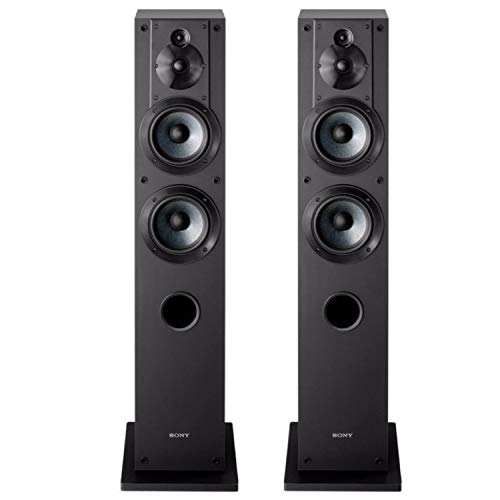
Pros
- Exceptional high-frequency extension to 50kHz
- Powerful peak handling for loud, distortion-free playback
- Sturdy build enhances acoustic performance
- Versatile 3-way design suits music and movies
Cons
- Requires external amplifier or receiver
- Large floorstanding size needs ample space
- No built-in wireless connectivity
The Sony SS-CS3 is a pair of 3-way floorstanding speakers featuring four drivers, including a 1-inch polyester main tweeter and a 3/4-inch super tweeter. Designed for home audio enthusiasts, they excel in delivering high-resolution sound up to 50kHz, making them perfect for those upgrading their living room stereo or home theater system.
In real-world use, these speakers produce rich acoustics thanks to their robust cabinet and 145W peak power handling. Paired with a quality receiver, they fill medium to large rooms with clear, detailed sound ideal for music listening or movie nights.
Targeted at US buyers seeking wired hi-fi performance without portability needs, the SS-CS3 stands out for its value in immersive home setups. Overall verdict: A solid choice for balanced, high-fidelity audio that punches above its weight.
The 3-way design ensures deep bass from the woofer, clear mids, and extended highs up to 50kHz from the dual tweeters, creating a wide soundstage with excellent vocal clarity and instrument separation.
With 145W peak power and 6 Ohm impedance, these speakers handle high volumes without distortion, performing best with powerful amps for rock concerts or action films at home.
Stable wired connectivity via standard speaker terminals delivers reliable performance, outperforming budget bookshelf options in room-filling dynamics.
The strong cabinet design reduces resonances for purer sound, while the floorstanding form provides a stable base with a sleek black finish that blends into modern US living rooms.
At 6 Ohms, they match most home receivers easily, with no battery required as passive speakers draw power from your amp for unlimited playback.
Large footprint suits dedicated audio spaces but may overwhelm small apartments; rugged build promises longevity in home environments.

Pros
- Remarkable bass response and volume output for an ultra-compact cylinder
- Rock-solid IP67 dustproof and waterproof rating provides genuine outdoor peace of mind
- Exceptional 16-hour battery life outlasts most competitors in its size class
- Clever multiway strap makes carrying and hanging simple in any environment
- Integrated microphone delivers clear hands-free speakerphone capability
Cons
- Sub-bass begins to compress and lose definition when pushed past 85% volume
- Mono driver setup requires purchasing a second unit to achieve true stereo separation
- No companion app support for custom EQ adjustments
The Sony SRS-XB13 is an ultra-compact powerhouse engineered for music enthusiasts who refuse to leave quality sound behind. Positioned squarely in the travel-friendly portable speaker category, this pint-sized unit combines Sony's proven EXTRA BASS acoustic architecture with rugged, go-anywhere engineering. Whether you need a durable companion for mountain hikes, a reliable shower speaker, or a desktop audio booster, the SRS-XB13 is built to perform in real-world environments.
In everyday use, the speaker shines through its sheer convenience and functional design. Weighing just over half a pound and measuring less than four and a half inches tall, it slides easily into a water bottle pocket or gym duffle. The included multiway strap is one of its best practical touches, allowing you to hang the unit from a canopy strut, backpack daisy chain, or bicycle handlebar without fear of it slipping loose. Quick Bluetooth connectivity and a sensitive built-in microphone make switching between your favorite playlists and hands-free speakerphone calls effortless.
Outdoors, where small speakers typically lose their low-end punch and clarity, the SRS-XB13 manages to hold its own. Sony incorporated a specialized Sound Diffusion Processor that distributes audio upward and outward, keeping acoustic dispersion wide rather than laser-focused in one narrow direction. While it naturally cannot replace a multi-driver home theater system, it delivers surprisingly robust sound that easily covers a patio table, campsite, or picnic blanket.
Overall, the Sony SRS-XB13 stands out as a high-value champion in the ultra-portable category. By pairing resilient IP67 construction with long-lasting battery endurance and warm, energetic sound, Sony has crafted a pocket-sized speaker that outperforms expectations. For active listeners seeking an affordable, dependable sound system that laughs off dirt and water, the SRS-XB13 is an exceptional choice.
Acoustically, the Sony SRS-XB13 outpunches its compact form factor through smart interior packaging. At its core sits an upward-firing full-range driver coupled with an inverted passive radiator at the base. This specialized EXTRA BASS design maximizes low-frequency resonance, giving kick drums, basslines, and electronic beats a satisfying, tangible thump without muddying the vocal registers.
The midrange remains remarkably articulate, allowing podcasts, audiobooks, and vocal-heavy genres like acoustic folk and pop to project with clarity. Highs are clean and smooth, steering clear of the harsh, tinny fatigue that often plagues small single-driver travel speakers. Sony's Sound Diffusion Processor uses digital signal processing to spread frequencies horizontally, producing an open acoustic presentation that feels much larger than the tiny cylinder producing it.
While the speaker performs admirably across a wide range of listening levels, listeners should keep physical limitations in mind. Pushing the volume past eighty-five percent on sub-bass-heavy hip-hop tracks will introduce slight dynamic compression as the internal limiter protects the driver. For users who want broader dispersion and true spatial imaging, linking two SRS-XB13 units together wirelessly creates a dedicated left and right stereo field that dramatically elevates the listening experience.
Designed with durability as a top priority, the Sony SRS-XB13 features a rugged cylindrical enclosure measuring 3.43 by 3.43 by 4.41 inches and weighing approximately 0.56 pounds. The exterior is wrapped in a tactile, high-durability matte composite that resists scratches and dings, topped by an impact-resistant metal speaker grille. With its official IP67 rating, the chassis is entirely sealed against fine dust particles and can withstand water submersion up to one meter for thirty minutes, making beach sand and accidental poolside splashes completely non-threatening.
Physical controls are integrated into a recessed silicone strip near the bottom edge. These tactile buttons provide responsive click feedback for power, Bluetooth pairing, volume adjustment, and play/pause functions, allowing easy operation even with wet hands. Tucked securely behind a thick waterproof rubber gasket is a modern USB Type-C port, standardizing your charging setup so you can use the same cable as your modern smartphone or tablet.
Power management is another major highlight of the XB13 hardware. The internal rechargeable battery offers up to 16 hours of continuous playback at moderate volume levels, easily lasting through full weekend camping trips or multiple workdays without reaching for an outlet. Furthermore, your paired mobile device displays a real-time battery status percentage, eliminating the guesswork from keeping your speaker powered and ready to roll.

Evaluating Sony Speaker Performance Across Audio Categories
Sony produces audio equipment that serves casual mobile listeners, everyday television viewers, and multi-channel home theater enthusiasts. Determining whether the company makes good speakers depends on the specific product category under consideration and your acoustic expectations. The brand generally emphasizes clear vocal reproduction, accessible digital processing, and practical physical integration across its catalog. Examining the engineering choices behind their soundbars, rear surround channels, passive floorstanding towers, and portable Bluetooth speakers reveals distinct performance profiles tailored to different listening environments.
The Foundation of Sony Audio Engineering and Acoustic Tuning
Digital signal processing stands out as one of the primary pillars of Sony audio engineering. Proprietary processing technologies such as S-Force Front Surround and Sound Field Optimization attempt to simulate wider acoustic soundstages without requiring complex multi-channel installations. These processing modes help smaller physical enclosures project sound into larger spaces by manipulating phase and frequency distribution. While purist audiophiles often prefer uncolored acoustic reproduction through passive components, everyday listeners usually appreciate the enhanced intelligibility that active digital processing provides.
Acoustic tuning across the brand lineup typically prioritizes vocal clarity and accessible low-frequency response. Many consumer models feature bass reflex ports or tuned passive radiators to maintain low-end presence within relatively compact enclosures. Compact designs naturally encounter physical limits when reproducing sub-bass frequencies below fifty hertz without a dedicated standalone subwoofer cabinet. High-frequency reproduction remains clean on models equipped with dedicated tweeters, although entry-level systems may soften extreme upper treble to prevent harshness on compressed streaming audio.
Compact Soundbars and Television Dialogue Clarity
Television soundbars represent one of the most common entry points for listeners seeking an upgrade over built-in screen speakers. Compact models like the Sony S100F 2.0ch Soundbar with Bass Reflex address the fundamental problem of muffled movie dialogue in smaller living spaces. This two-channel design incorporates an integrated tweeter alongside bass reflex architecture to separate high-frequency vocal consonants from mid-range background effects. Built-in voice enhancement modes alter frequency curves to elevate human speech, making hushed conversations easier to decipher during late-night viewing.
Physical integration remains straightforward due to slim enclosure profiles that fit comfortably beneath most television displays or mount directly against drywall. The inclusion of HDMI ARC allows the soundbar to synchronize power and volume commands directly with a television remote, eliminating clutter from multiple controllers. S-Force Pro Front Surround attempts to emulate a multi-speaker listening field using only two forward-firing drivers. Virtual surround cannot fully replicate physical speakers positioned behind the listener, but it effectively broadens the soundstage beyond the television frame.
Acoustic limitations in two-channel soundbars primarily center around deep low-end reproduction and extreme volume ceilings. Without an external subwoofer cabinet, bass reflex ports can only produce low-mid frequencies suitable for casual viewing rather than room-shaking cinematic explosions. Listeners with expansive living rooms or dedicated theater spaces might find two-channel systems inadequate for dynamic blockbuster soundtracks. For secondary bedrooms, home offices, and apartment living rooms, however, these compact soundbars offer a reliable balance of speech clarity and space-saving utility.
Modular Wireless Surround Speakers for Immersive Theater
Creating an immersive home theater traditionally required routing extensive speaker cables across baseboards and under carpeting. Modern multi-channel systems resolve this wiring friction through dedicated wireless rear satellite speakers designed to pair directly with compatible soundbars and AV receivers. Hardware like the Sony SA-RS5 Wireless Rear Speakers with Built-in battery exemplifies this modular approach by removing both audio cables and continuous power cords from the listening area. Up-firing drivers bounce height effects off flat ceilings, while integrated rechargeable batteries support up to ten hours of cable-free playback.
Spatial calibration on advanced wireless units relies on internal microphones and automated acoustic measurement routines. Pressing the onboard optimize button engages Sound Field Optimization, which measures the distance between the satellites, the primary soundbar, and room boundaries. This calibration routine enables 360 Spatial Sound Mapping, creating phantom sound sources that simulate speakers positioned between physical hardware locations. Listeners can position these omnidirectional block enclosures on side tables or mount them to rear walls without worrying about permanent electrical outlets nearby.
For permanent installations where power outlets are easily accessible behind the seating area, the Sony SA-RS3S Wireless Rear Speakers for BRAVIA offer a wired-power alternative. These two-way satellite units feature dedicated woofer and tweeter drivers housed within a compact omnidirectional block enclosure. Direct wireless pairing links the rear channels to compatible BRAVIA Theater soundbars or multi-channel AV receivers without manual network configuration. These satellites do not include upward-firing drivers, but their two-way acoustic design maintains clear directional panning and distinct surround effects across movies and video games.
Passive Floorstanding Towers and High-Resolution Audio
Listeners seeking uncompressed two-channel stereo or traditional component-based surround sound often turn to passive floorstanding towers. The Sony SS-CS3 3-Way 4-Driver Floor-Standing Speaker pair operates within this classic audio category, requiring an external amplifier or AV receiver for power. Its four-driver configuration divides the frequency spectrum between dual woofers, a one-inch polyester main tweeter, and a three-quarter-inch super tweeter. This multi-driver division allows each component to focus on its optimal frequency range, supporting high-resolution audio reproduction up to fifty kilohertz.
Electrical matching is an essential consideration when connecting passive floorstanding speakers to an audio receiver. The SS-CS3 features a nominal impedance of 6 Ohms and handles peak power inputs up to 145 Watts per channel. Connecting six-ohm speakers to an amplifier designed solely for eight-ohm loads can cause the amplifier to run hotter during extended high-volume listening sessions. Verifying that your receiver supports six-ohm speaker loads prevents unexpected thermal shutdowns and ensures stable acoustic output across dynamic musical passages.
Cabinet design and driver staging play major roles in how floorstanding speakers perform within a listening room. Solid internal cabinet bracing suppresses unwanted structural resonance that can muddy acoustic instruments and vocal recordings. Large tower enclosures provide deeper natural bass response than compact bookshelf speakers, but they also require careful placement away from room corners to avoid boomy acoustic reflections. Listeners seeking balanced stereo imaging will appreciate the wide high-frequency dispersion provided by the secondary super tweeter during focused listening sessions.
Rugged Portable Bluetooth Speakers and Weather Protection
Portable audio hardware requires a very different engineering philosophy focused on physical resilience, efficient power consumption, and wide sound dispersion. Compact travel speakers like the Sony SRS-XB13 EXTRA BASS Wireless Bluetooth incorporate an IP67 rating, indicating complete protection against dust ingress and water submersion up to one meter. An upward-firing driver combined with an internal Sound Diffusion Processor expands audio projection far beyond the footprint of the enclosure. A multiway strap allows users to hang the speaker from backpacks, shower rods, or outdoor gear while maintaining up to sixteen hours of battery operation.
Step-up portable models like the Sony SRS-XB23 EXTRA BASS Wireless Bluetooth introduce non-circular driver geometry to improve acoustic output. The proprietary X-Balanced Speaker Unit maximizes diaphragm area relative to the speaker dimensions, increasing sound pressure while reducing driver excursion. This controlled excursion helps suppress distortion when playing music at higher volumes during outdoor gatherings or beach trips. Dual passive radiators located at the cylindrical ends enhance low-frequency punch, producing deeper bass than typical single-driver travel units can manage.
Wireless synchronization options expand the flexibility of these portable speakers for outdoor social gatherings. The Party Connect protocol allows listeners to link up to one hundred compatible Sony wireless speakers together, synchronizing audio across a large backyard or patio area. For dedicated stereo separation, pairing two identical units creates distinct left and right audio channels for desktop or poolside listening. If you are comparing different portable solutions, checking our detailed look at loud portable speakers can help identify models that maintain output clarity in noisy outdoor environments.
Physical Connections, Wireless Protocols, and Compatibility
Evaluating any speaker purchase requires careful attention to physical inputs and supported transmission protocols. Modern soundbars rely heavily on HDMI ARC connections to pass multichannel audio formats directly from a television display. When using an older television without HDMI ARC, optical digital audio connections provide a reliable alternative for delivering stereo and compressed surround signals. Passive speakers like the SS-CS3 towers rely entirely on standard speaker wire binding posts, which require raw wire or banana plugs connected to a standalone amplifier.
Wireless connectivity introduces additional compatibility variables that affect audio quality and synchronization latency. Bluetooth streaming enables convenient wireless playback from smartphones, tablets, and personal computers without routing network cables. Standard Bluetooth codecs can introduce slight audio latency that may become noticeable during competitive gaming or video playback if latency compensation is absent. Dedicated rear surround speakers avoid Bluetooth entirely, utilizing proprietary direct wireless connections with matching soundbars to ensure millisecond-accurate surround channel synchronization.
Component matching within home theater ecosystems is another critical detail that prospective buyers must verify. Optional wireless rear speakers such as the SA-RS5 and SA-RS3S are engineered specifically for select BRAVIA Theater soundbars and the STR-AN1000 AV receiver. Attempting to pair these wireless satellites with third-party soundbars or unsupported legacy receivers will result in an unpairable system. Always confirm the exact model compatibility listed by the manufacturer before purchasing wireless expansion components for an existing entertainment setup.
Room Acoustics, Boundary Placement, and Sound Dispersion
Acoustic performance is fundamentally tied to the physical dimensions and surface materials of the listening room. Compact soundbars and miniature travel speakers easily fill small bedrooms or home offices where walls reflect sound efficiently. In large open-concept living rooms, however, small speakers struggle to project acoustic energy, leading to compressed dynamics and strained vocal output. Listeners evaluating speakers built for bass must recognize that low-frequency waves require adequate physical cabinet volume and driver surface area to energize large rooms.
Speaker placement relative to room boundaries dramatically influences tonal balance across mid-range and low-frequency bands. Placing floorstanding towers too close to drywall corners amplifies bass resonance, often resulting in a boomy and undefined sound profile. Pulling tower speakers at least one to two feet away from rear and side walls allows bass reflex ports to breathe naturally and sharpens stereo imaging. Similarly, rear surround speakers deliver the most convincing spatial immersion when placed slightly behind and to the sides of the primary listening position at ear level.
Ceiling height and room geometry also dictate the effectiveness of up-firing spatial audio hardware. Speakers that utilize upward-angled drivers rely on flat, reflective ceilings between eight and twelve feet in height to bounce sound downward toward the listener. Vaulted, angled, or heavily textured acoustic ceilings scatter sound waves unpredictably, degrading the intended spatial effect. In rooms with irregular acoustic architecture, standard direct-radiating wall-mounted surround speakers generally provide more consistent sound delivery than ceiling-reflective designs.
System Configuration and Setup Verification
Reviewing the specific audio goals and physical constraints of your listening space ensures you choose the right hardware category. Sony provides capable audio hardware across entry-level, wireless modular, and traditional hi-fi categories, but each system serves distinct listening habits. Television viewers primarily struggling with dialogue clarity will gain substantial improvements from a compact soundbar featuring dedicated center voice processing. Conversely, dedicated music listeners will achieve superior instrument separation and dynamic scale by investing in a stereo pair of passive floorstanding towers driven by a capable amplifier.
Setting up your speakers properly ensures you extract the maximum performance from your hardware investment. Verify that audio output settings on your television or source device are configured to output uncompressed PCM or compatible bitstream formats over HDMI or optical cables. For wireless and portable units, keeping firmware up to date through official mobile applications resolves connection glitches and optimizes battery management over time. Taking a systematic approach to placement, source configuration, and electrical compatibility will ensure your selected speakers deliver clean, satisfying audio for years to come.




Write Your Review
No reviews yet. Be the first to share your experience!